
Features
When floods strike: How nations keep food on the table

Insights from global adaptation strategies
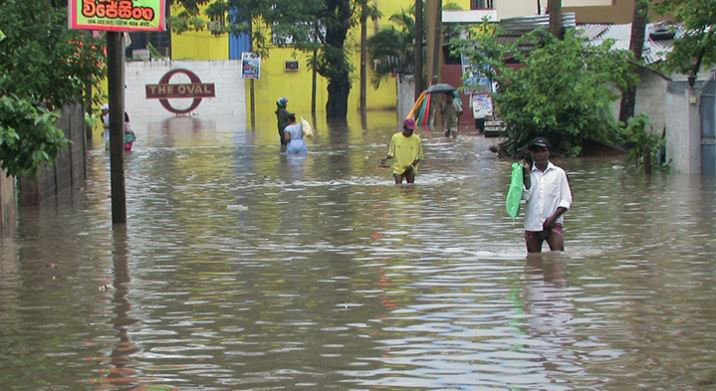
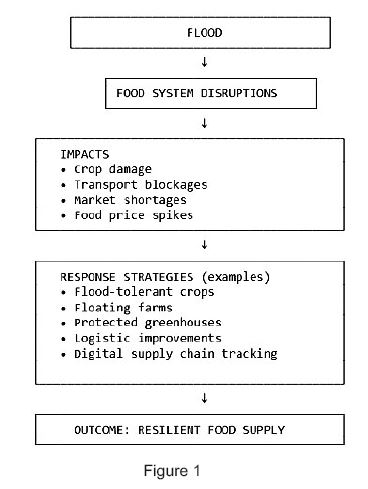
Sri Lanka has been heavily affected by floods, and extreme flooding is rapidly becoming one of the most disruptive climate hazards worldwide. The consequences extend far beyond damaged infrastructure and displaced communities. The food systems and supply networks are among the hardest hit. Floods disrupt food systems through multiple pathways. Croplands are submerged, livestock are lost, and soils become degraded due to erosion or sediment deposition. Infrastructural facilities like roads, bridges, retail shops, storage warehouses, and sales centres are damaged or rendered inaccessible. Without functioning food supply networks, even unaffected food-producing regions struggle to continue daily lives in such disasters. Poor households, particularly those dependent on farming or informal rural economies, face sharp food price increases and income loss, increasing vulnerability and food insecurity.
Many countries now recognie that traditional emergency responses alone are no longer enough. Instead, they are adopting a combination of short-term stabilisation measures and long-term strategies to strengthen food supply chains against recurrent floods. The most common immediate response is the provision of emergency food and cash assistance. Governments, the World Food Programme, and other humanitarian organisations often deliver food, ready-to-eat rations, livestock feed, and livelihood support to affected communities.
Alongside these immediate measures, some nations are implementing long-term strategic actions. These include technology- and data-driven approaches to improve flood preparedness. Early warning systems, using satellite data, hydrological models, and advanced weather forecasting, allow farmers and supply chain operators to prepare for potential disruptions. Digital platforms provide market intelligence, logistics updates, and risk notifications to producers, wholesalers, and transporters. This article highlights examples of such strategies from countries that experience frequent flooding.
China: Grain Reserves and Strategic Preparedness
China maintains a large strategic grain reserve system for rice, wheat, and maize; managed by NFSRA-National Food and Strategic Reserves Administration and Sinograin (China Grain Reserves Corporation (Sinograin Group), funded by the Chinese government, that underpins national food security and enables macro-control of markets during supply shocks. Moreover, improvements in supply chain digitization and hydrological monitoring, the country has strengthened its ability to maintain stable food availability during extreme weather events.
Bangladesh: Turning Vulnerability into Resilience
In recent years, Bangladesh has stood out as one of the world’s most flood-exposed countries, yet it has successfully turned vulnerability into adaptive resilience. Floating agriculture, flood-tolerant rice varieties, and community-run grain reserves now help stabilise food supplies when farmland is submerged. Investments in early-warning systems and river-basin management have further reduced crop losses and protected rural livelihoods.
Netherlands, Japan: High-Tech Models of Flood Resilience
The Netherlands offers a highly technical model. After catastrophic flooding in 1953, the country completely redesigned its water governance approach. Farmland is protected behind sea barriers, rivers are carefully controlled, and land-use zoning is adaptive. Vertical farming and climate-controlled greenhouses ensure year-round food production, even during extreme events. Japan provides another example of diversified flood resilience. Following repeated typhoon-induced floods, the country shifted toward protected agriculture, insurance-backed farming, and automated logistics systems. Cold storage networks and digital supply tracking ensure that food continues to reach consumers, even when roads are cut off. While these strategies require significant capital and investment, their gradual implementation provides substantial long-term benefits.
Pakistan, Thailand, Indonesia, and Vietnam: Reform in Response to Recurrent Floods
In contrast, Pakistan and Thailand illustrate both the consequences of climate vulnerability and the benefits of proactive reform. The 2022 floods in Pakistan submerged about one-third of the country, destroying crops and disrupting trade networks. In response, the country has placed greater emphasis on climate-resilient farming, water governance reforms, and satellite-based crop monitoring. Pakistan as well as India is promoting crop diversification and adjusting planting schedules to help farmers avoid the peak monsoon flood periods.
Thailand has invested in flood zoning and improved farm infrastructure that keep markets supplied even during severe flooding. Meanwhile, Indonesia and Vietnam are actively advancing flood-adapted land-use planning and climate-resilient agriculture. For instance, In Vietnam’s Mekong Delta, pilot projects integrate flood-risk mapping, adaptive cropping strategies, and ecosystem-based approaches to reduce vulnerability in agricultural and distribution areas. In Indonesia, government-supported initiatives and regional projects are strengthening flood-risk-informed spatial planning, adaptive farming practices, and community-based water management to improve resilience in flood-prone regions. (See Figure 1)
 The Global Lesson: Resilience Requires Early Investment
The global evidence is clear: countries that invest early in climate-adaptive agriculture and resilient logistics are better able to feed their populations, even during extreme floods. Building a resilient future depends not only on how we grow food but also on how we protect, store, and transport it. Strengthening infrastructure is therefore central to stabilising food supply chains while maintaining food quality, even during prolonged disruptions. Resilient storage systems, regional grain reserves, efficient cold chains, improved farming infrastructure, and digital supply mapping help reduce panic buying, food waste, and price shocks after floods, while ensuring that production capacity remains secure.
Persistent Challenges
However, despite these advances, many flood-exposed countries still face significant challenges. Resources are often insufficient to upgrade infrastructure or support vulnerable rural populations. Institutional coordination across the agriculture, disaster management, transport, and environmental sectors remains weak. Moreover, the frequency and scale of climate-driven floods are exceeding the design limits of older disaster-planning frameworks. As a result, the gap between exposure and resilience continues to widen. These challenges are highly relevant to Sri Lanka as well and require deliberate, gradual efforts to phase them out.
The Role of International Trade and global markets
When domestic production falls in such situations, international trade serves as an important buffer. When domestic production is temporarily reduced, imports and regional trade flows can help stabilise food availability. Such examples are available from other countries. For instance, In October 2024, floods in Bangladesh reportedly destroyed about 1.1 million tonnes of rice. In response, the government moved to import large volumes of rice and allowed accelerated or private-sector imports of rice to stabilize supply and curb food price inflation. This demonstrates how, when domestic production fails, international trade/livestock/food imports (from trade partners) acted as a crucial buffer to ensure availability of staple food for the population. However, this approach relies on well-functioning global markets, strong diplomatic relationships, and adequate foreign exchange, making it less reliable for economically fragile nations. For example, importing frozen vegetables to Sri Lanka from other countries can help address supply shortages, but considerations such as affordability, proper storage and selling mechanisms, cooking guidance, and nutritional benefits are essential, especially when these foods are not widely familiar to local populations.
Marketing and Distribution Strategies during Floods
Ensuring that food reaches consumers during floods requires innovative marketing and distribution strategies that address both supply- and demand-side challenges. Short-term interventions often include direct cash or food transfers, mobile markets, and temporary distribution centres in areas where conventional marketplaces become inaccessible. Price stabilisation measures, such as temporary caps or subsidies on staple foods, help prevent sharp inflation and protect vulnerable households. Awareness campaigns also play a role by educating consumers on safe storage, cooking methods, and the nutritional value of unfamiliar imported items, helping sustain effective demand.
Some countries have integrated technology to support these efforts; in this regard, adaptive supply chain strategies are increasingly used. Digital platforms provide farmers, wholesalers, and retailers with real-time market information, logistics updates, and flood-risk alerts, enabling them to reroute deliveries or adjust production schedules. Diversified delivery routes, using alternative roads, river transport, drones, or mobile cold-storage units, have proven essential for maintaining the flow of perishable goods such as vegetables, dairy, and frozen products. A notable example is Japan, where automated logistics systems and advanced cold-storage networks help keep supermarkets stocked even during severe typhoon-induced flooding.
The Importance of Research, Coordination, and Long-Term Commitment
Global experience also shows that research and development, strong institutional coordination, and sustained national commitment are fundamental pillars of flood-resilient food systems. Countries that have successfully reduced the impacts of recurrent floods consistently invest in agricultural innovation, cross-sector collaboration, and long-term planning.
Awareness Leads to Preparedness
As the summary, global evidence shows that countries that act early, plan strategically, and invest in resilience can protect both people and food systems. As Sri Lanka considers long-term strategies for food security under climate change, learning from flood-affected nations can help guide policy, planning, and public understanding. Awareness is the first step which preparedness must follow. These international experiences offer valuable lessons on how to protect food systems through proactive planning and integrated actions.
(Premaratne (BSc, MPhil, LLB) isSenior Lecturer in Agricultural Economics Department of Agricultural Systems, Faculty of Agriculture, Rajarata University. Views are personal.)
Key References·
Cabinet Secretariat, Government of Japan, 2021. Fundamental Plan for National Resilience – Food, Agriculture, Forestry and Fisheries / Logistics & Food Supply Chains. Tokyo: Cabinet Secretariat.
· Delta Programme Commissioner, 2022. Delta Programme 2023 (English – Print Version). The Hague: Netherlands Delta Programme.
· Hasanuddin University, 2025. ‘Sustainable resilience in flood-prone rice farming: adaptive strategies and risk-sharing around Tempe Lake, Indonesia’, Sustainability. Available at: https://www.mdpi.com/2071-1050/17/6/2456 [Accessed 3 December 2025].
· Mekong Urban Flood Resilience and Drainage Programme (TUEWAS), 2019–2021. Integrated urban flood and drainage planning for Mekong cities. TUEWAS / MRC initiative.
· Ministry of Agriculture and Rural Affairs, People’s Republic of China, 2025. ‘China’s summer grain procurement surpasses 50 mln tonnes’, English Ministry website, 4 July.
· National Food and Strategic Reserves Administration (China) 2024, ‘China purchases over 400 mln tonnes of grain in 2023’, GOV.cn, 9 January. Available at: https://english.www.gov.cn/archive/statistics/202401/09/content_WS659d1020c6d0868f4e8e2e46.html
· Pakistan: 2022 Floods Response Plan, 2022. United Nations / Government of Pakistan, UN Digital Library.
· Shigemitsu, M. & Gray, E., 2021. ‘Building the resilience of Japan’s agricultural sector to typhoons and heavy rain’, OECD Food, Agriculture and Fisheries Papers, No. 159. Paris: OECD Publishing.
· UNDP & GCF, 2023. Enhancing Climate Resilience in Thailand through Effective Water Management and Sustainable Agriculture (E WMSA): Project Factsheet. UNDP, Bangkok.
· United Nations Development Programme (UNDP), 2025. ‘Rice Bank revives hope in flood hit hill tracts, Bangladesh’, UNDP, 19 June.
· World Bank, 2022. ‘Bangladesh: World Bank supports food security and higher incomes of farmers vulnerable to climate change’, World Bank press release, 15 March.


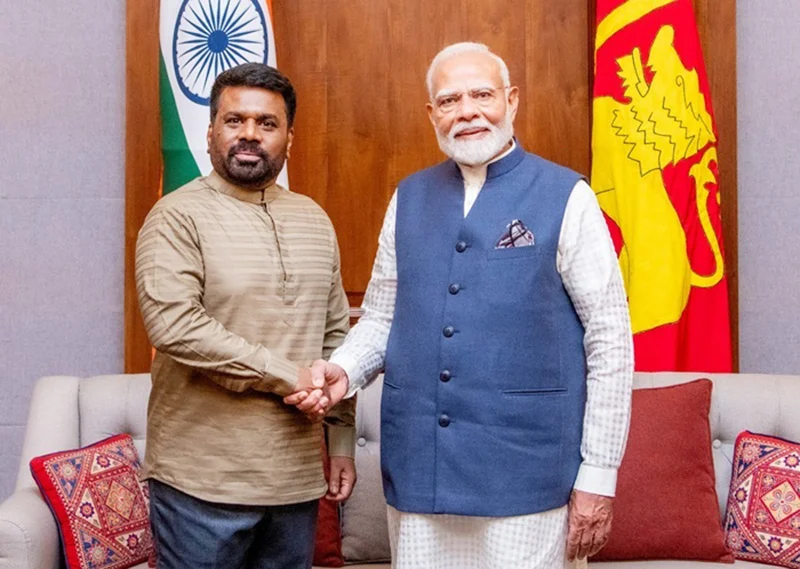
Indian Prime Minister Narendra Modi once again signaled the priority India places on Sri Lanka by swiftly dispatching a shipload of petrol following a telephone conversation with President Anura Kumara Dissanayake. The Indian Prime Minister’s gesture came at a cost to India, where there have been periodic supply constraints and regional imbalances in fuel distribution, even if not a countrywide shortage. Under Prime Minister Modi, India has demonstrated to Sri Lanka an abundance of goodwill, whether it be the USD 4 billion it extended in assistance to Sri Lanka when it faced international bankruptcy in 2022 or its support in the aftermath of the Ditwah cyclone disaster that affected large parts of the country four months ago. India’s assistance in 2022 was widely acknowledged as critical in stabilising Sri Lanka at a moment of acute crisis.
This record of assistance suggests that India sees Sri Lanka not merely as a neighbour but as a partner whose stability is in its own interest. In contrast to Sri Lanka’s roughly USD 90 billion economy, India’s USD 4,500 billion economy, growing at over 6 percent, underlines the vast asymmetry in economic scale and the importance of Sri Lanka engaging India. A study by the Germany-based Kiel Institute for the World Economy identifies Sri Lanka as the second most vulnerable country in the world to severe food price surges due to its heavy reliance on imported energy and fertilisers. Income per capita remains around the 2018 level after the economic collapse of 2022. The poverty level has risen sharply and includes a quarter of the population. These indicators underline the urgency of sustained economic recovery and the importance of external partnerships, including with India.
It is, however, important for Sri Lanka not to abdicate its own responsibilities for improving the lives of its people or become dependent and take this Indian assistance for granted. A long unresolved issue that Sri Lanka has been content to leave the burden to India concerns the approximately 90,000 Sri Lankan refugees who continue to live in India, many of them for over three decades. Only recently has a government leader, Minister Bimal Rathnayake, publicly acknowledged their existence and called on them to return. This is a reminder that even as Sri Lanka receives support, it must also take ownership of its own unfinished responsibilities.
Missing Investment
A missing factor in Sri Lanka’s economic development has long been the paucity of foreign investment. In the past this was due to political instability caused by internal conflict, weaknesses in the rule of law, and high levels of corruption. There are now significant improvements in this regard. There is now a window to attract investment from development partners, including India. In his discussions with President Dissanayake, Prime Minister Modi is reported to have referred to the British era oil storage tanks in Trincomalee. These were originally constructed to service the British naval fleet in the Indian Ocean. In 1987, under the Indo Lanka Peace Accord, Sri Lanka agreed to develop these tanks in partnership with India. A further agreement was signed in 2022 involving the Ceylon Petroleum Corporation and the Lanka Indian Oil Corporation to jointly develop the facility.
However, progress has been slow and the project remains only partially implemented. The value of these oil storage tanks has become clearer in the context of global energy uncertainty and tensions in the Middle East. Energy analysts have pointed out that strategic storage facilities can provide countries with greater resilience in times of supply disruption. The Trincomalee tanks could become a significant strategic asset not only for Sri Lanka but also for regional energy security. However, historical baggage continues to stand in the way of Sri Lanka’s deeper economic linkage with India. Both ancient and modern history shape perceptions on both sides.
The asymmetry in size and power between the two countries is a persistent concern within Sri Lanka. India is a regional power, while Sri Lanka is a small country. This imbalance creates both opportunities for partnership and anxieties about overdependence. The present government too has entered into economic and infrastructure agreements with India, but many of these have yet to move beyond initial stages. This has caused frustration to the Indian government, which sees its efforts to support Sri Lanka’s development as not being sufficiently appreciated or effectively utilised. From India’s perspective, delays and hesitation can appear as a lack of commitment. From Sri Lanka’s perspective, caution is often driven by domestic political sensitivities and concerns about sovereignty.
Power Imbalance
At the same time, global developments offer a cautionary lesson. The behaviour of major powers in the contemporary international system shows that states often act in their own interests, sometimes at the expense of smaller partners. What is being seen in the world today is that past friendships and commitments can be abandoned if a bigger and more powerful country can see an opportunity for itself. The plight of Denmark (Greenland) and Canada (51st state) give disturbing messages. Analysts in the field of International Relations frequently point out that power asymmetries shape outcomes in bilateral relations. As one widely cited observation by Lord Parlmeston, a 19th century prime minister of Great Britain is that “nations have no permanent friends or allies, they only have permanent interests.” While this may be an overly stark formulation, it captures an underlying reality that small states must navigate carefully.
For Sri Lanka, this means maintaining a balance. It needs to clearly acknowledge the partnership that India is offering in the area of economic development, as well as in education, connectivity, and technological advancement. India has extended scholarships, supported digital infrastructure, and promoted cross border links that can contribute to Sri Lanka’s long term growth. These are tangible benefits that should not be undervalued. At the same time, Sri Lanka needs to ensure that it does not become overly dependent on Indian largesse or drift into a position where it functions as an appendage of its much larger neighbour. Economic dependence can translate into political vulnerability if not carefully managed. The appropriate response is not to distance itself from India, but to broaden its partnerships. Engaging with a diverse range of countries and institutions can provide Sri Lanka with greater autonomy and resilience.
A hard headed assessment would recognise that India’s support is both genuine and interest driven. India has a clear stake in ensuring that Sri Lanka remains stable, prosperous, and aligned with its broader regional outlook. Sri Lanka needs to move forward with agreed projects such as the Trincomalee oil tanks, improve implementation capacity, and demonstrate reliability as a partner. This does not preclude it from actively seeking investment and cooperation from other partners in Asia and beyond. The path ahead is therefore one of balanced engagement. Sri Lanka can and should welcome India’s partnership while strengthening its own institutions, fulfilling its domestic responsibilities, and diversifying its external relations. This approach can transform a relationship shaped by asymmetry into one defined by mutual benefit and confidence.
by Jehan Perera
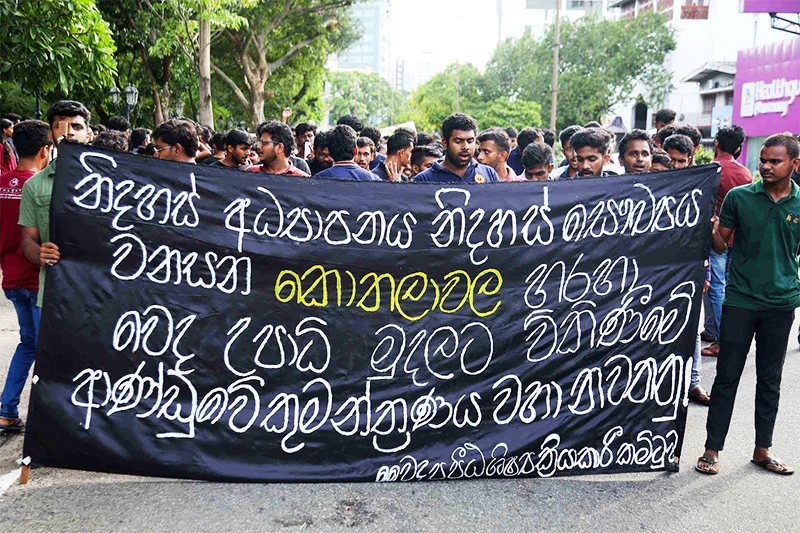
 This Article is formed from listening to university students from across the country for two research initiatives, one on academic freedom and another on higher education policy. In speaking with students, the fears they carry could not be ignored. Students navigate university education, with anxieties about their future and fears that they and their university education are inadequate, all while managing their families’ daily struggles. I explore students’ anxieties and the extent to which we, the public, and higher education policies must take responsibility for their experiences.
The Neoliberal University
For decades, universities have been transforming. Neoliberal policies, promoted by the World Bank, have reduced public education expenditure and weakened the State’s commitment to public institutions. These policies frame individuals as responsible for their success and failure, minimising structural realities, such as poverty and precarity. They instrumentalise education, treat students as “products” for a “competitive’ job market, while education markets feed on students’ insecurities. Students are made to feel lacking in “soft skills”, or skills seemingly necessary to navigate classed-corporate structures, and lacking in technical skills, or those needed to operate technologies used within the private sector.
Student activists and, sometimes teachers, have challenged this worldview, demanding State commitment to free education. Governments sometimes yield but also fear the consequences of student politics and have long waged campaigns to discredit student activism. It is within this context that students pursue education.
Portrayal of students
A Peradeniya student told me student-organised events must meet “high standards”, because of the negative public perceptions of university students. I understood what she meant; I had heard of our ‘ungrateful’, ‘wasteful’, ‘unemployable’, and ‘entitled’ students. The media and decades of government propaganda have reinforced these depictions.
About 10 years ago, when government moves to privatise higher education were strong, a corporate executive, complaining about traffic caused by “yet another useless protest”, was unable to explain why they protested. News coverage, I realised, framed these protests as public inconveniences, rarely addressing students’ demands. A prominent advocate, of neoliberal educational policy, reinforced this narrative, saying “state university students make up just 10 percent of their cohorts”, gesturing dismissively as if to say their concerns were insignificant. Such language belittles student activists and youth, renders them voiceless and allows their concerns, such as classed worldviews, and access barriers to and privatisation of education, to be easily dismissed.
It is in this environment that the conception of the useless university student, fighting for no reason, has developed. Students must carry this misrepresentation, irrespective of their own involvement in activism.
Not being good enough
Attacks on free higher education and the absence of meaningful reforms designed to address students’ problems, now weigh on students’ minds. Students question whether their education is relevant and current, pointing to outdated equipment, software, and curricula. University administrators acknowledge these constraints, which reflect Sri Lanka’s ranking as one of the lowest in the world for the public funding of education and higher education.
Rarely has the World Bank, so influential in driving educational policy, highlighted the public funding crisis and, instead, emphasises technological deficiencies, the public sector’s “monopoly” of higher education and limited private sector involvement. It downplays the reality that few families can privately afford such funding arrangements.
Students are also bombarded with fee-levying programmes, promising skills and access to jobs, preying on students’ insecurities. Many, while struggling to make ends meet, enrol in off-campus pricy professional courses, such as in accountancy, marketing, or English.
The arts student
Some students worry their education is too theoretical and “Arts-focused.” A student from the University of Colombo described having to justify her decision to pursue an arts degree. The public, she said, saw this as a waste of her time and the country’s resources. She courageously wore this identity, yet questioned if she was, in fact, unemployable as she was being led to believe.
She does not, however, draw on the fact that arts education has long been the “cheap” option that governments have offered when pressured to expand higher education. While arts education may need fewer laboratories and equipment, they require adequate investments on teachers, strong on content and pedagogy, to closely engage with individual students; aspects of arts education which have systematically been disregarded.
As access broadens, particularly in the arts, more students from marginalised backgrounds have entered universities; students who may feel alien in systems aligned with corporate interests. Thus, students quite different from the classed conception of the “employable graduate,” whose education has systematically been under-funded, graduate from arts programmes frustrated, diffident, and ill-suited for jobs to which they are expected to aspire.
The dysfunctional university
Students voice criticisms of their teachers, as myopic, unworldly, and unfair. Their perspective reflects the universities’ culture of hierarchy and its intolerance of difference, on the one hand, and the weak institutional structures on the other. They are symptoms of years of neglect and attempts by governments to delegitimise universities, to shed themselves of the burden of funding higher education through anti-public sector rhetoric.
Some students, marginalised for being anti-rag, women, or ethnic minorities, feel an added layer of burdens. Anti-rag students, or more often, students who do not submit to university hierarchies, whether enforced by students or staff, are ostracised, demeaned and sometimes subjected to violence. Students unable to speak the institution’s dominant language face inadequate institutional support. Women describe being ignored and silenced in student union activities and left out of student leadership positions.
Furthermore, quality assurance processes rarely prioritise academic freedom or students’ right to exist as they wish, except when they complement the process of creating a desirable graduate for the job market. These processes focus on moulding professionals and technicians, as one would form clay, disregarding students’ anxieties from being alienated from themselves by such efforts.
Problems at home
Beyond the campus, parents face debt, illness, and precarious work. Students are acutely aware of these struggles. Some describe parents collapsing from the strain and sometimes leaving them to carry the family’s difficulties. A student described feeling guilty for being at the University while his family struggled to survive. To ease the burden on their families, students earn incomes by providing tuition, delivering food, and carrying out microbusinesses.
Tied to their concerns over having to depend on their families, is their fear of being “unemployable”, a term that places the blame of unemployment on students’ skill deficiencies. Little in this discourse connects the lack of decent work and jobs for them and their parents to the weak economy and job markets into which successive batches of graduates must transition. Much of the available jobs in the country are those that require little in the form of education, and those, too do little to provide a living wage. Students must, therefore, compete for a limited number and breadth of frankly not very desirable work. Yet, it is they who must feel the weight of unemployability.
Committing to students
Universities frequently fail to recognise students’ worries. Instead, we, coopt neoliberal discourses, telling students to become more marketable and competitive, do and learn more, be confident, improve English, learn to inhabit those classed spaces with ease; often without the support that should accompany these messages.
We expect these students, insecure and anxious, to think critically, and demonstrate curiosity and higher-order analyses. When they collapse under the pressure, universities respond by providing mental health services. While such services are needed, they risk individualising and pathologising systemic problems. They represent yet again the inherent flaws with solutions that emerge from neoliberal ideological positions that treat individuals as the source of all success and failure. Such perspectives are likely to reinforce students’ anxieties, rather than address them.
As Sri Lanka revisits education policy reforms, there is an opportunity to change our framings of education and to recognise these concerns of students as central to any policy. The state must renew its commitment to free education and move from the neoliberal logic that has guided successive reform efforts; we, as the public, must restore our hope and expectations from free education. Education across disciplines, the arts, as well as STEM (science, technology, engineering and mathematics), must be strengthened. Students’ freedom to inhabit university spaces as they wish, must be respected and protected by institutions. Education policies must be tied to broader economic and labour reforms that ensure families can safely earn a living wage and graduates can access a rich range of decent meaningful work.
(Shamala Kumar teaches at the University of Peradeniya)
Kuppi is a politics and pedagogy happening on the margins of the lecture hall that parodies, subverts, and simultaneously reaffirms social hierarchies.
by Shamala Kumar

 Mihiri Chethana Gunawardena is certainly on the right track, in the music scene.
The plus factor, where Mihiri is concerned, is that she has music deeply rooted in her upbringing, and is now doing her thing in the Maldives.
Her father, Clifton Gunawardena, was a student of the legendary Premasiri Kemadasa and former rhythm guitarist of the Super 7 band.
Mihiri took to music, after her higher studies, and her first performance was with her father, while employed.

Mihiri Chethana Gunawardena
After eight years of balancing both worlds – working and music – she chose to follow her true calling and embraced music as her full-time profession.
Over the years, Mihiri has worked with some of the top bands in the local scene, including D Major, C Plus from Negombo, Heat with Aubrey, Mirage, D Zone Warehouse Project and Freeze.
In fact, she even put together her own band, Faith, in 2017, performing at numerous events, and weddings, before the Covid pandemic paused their journey.
What’s more, her singing career has taken her across borders –performing twice in Dhaka, Bangladesh, with the late Anil Bharathi and the late Roney Leitch, and multiple times in the Maldives, including a special New Year’s Eve performance with D Major.

In the Maldives, on a one-month contract
Last year, Mihiri was in Dubai, along with the group Knights, for the Ananda UAE 2025 dance.
She continues to grow as a solo artiste, now working closely with the renowned Wildfire guitarist Derek Wikramanayake, and performing, as a freelance musician, travelling around the world.
Right now, she is in the Maldives, on a one-month contract, marking a new chapter in her evolution as a solo vocalist.
On her return, she says, she hopes to create fresh cover songs and original music for her fans.
Mihiri believes in spreading joy and positivity through her singing, and peace and happiness for everyone around her, and for the world, through music.

Steps are taken to accelerate the recovery efforts following Cyclone Ditwah despite Global Economic Challenges

Qalandars fine Afridi for violating security protocols

Sooryavanshi, Archer, Burger demolish Chennai Super Kings

Showers may occur at a few places in the Western and Sabaragamuwa provinces and in Galle and Matara districts after 2.00 pm

Burning of low-grade coal at N’cholai plant increases pollution: Parliament

Tariff shock from 01 April as power costs climb across the board

‘Dates have the highest sugar content to fight Coronavirus’

Sunday Island 27 December – Headlines

#SundayIsland 17th December – Headlines

Sunday Island – 28th March

Sunday Island Headlines – 21 March

Sunday Island – 21st February – Headlines
-

 News6 days ago
Senior citizens above 70 years to receive March allowances on Thursday (26)
-

 Features3 days ago
A World Order in Crisis: War, Power, and Resistance
-

 News4 days ago
Energy Minister indicted on corruption charges ahead of no-faith motion against him
-

 News5 days ago
US dodges question on AKD’s claim SL denied permission for military aircraft to land
-

 Business5 days ago
Dialog Unveils Dialog Play Mini with Netflix and Apple TV
-

 News6 days ago
CEB Engineers warn public to be prepared for power cuts after New Year
-

 Sports4 days ago
SLC to hold EGM in April
-
 Latest News5 days ago
A strong Technical and Vocational Education and Training (TVET) system equips individuals with practical, relevant, and future-oriented skills helping to innovate responsibly towards a greener and sustainable future – PM