
Editorial
When chickens come home …


Tuesday 19th October, 2021
The world is mourning the death of a senior British lawmaker. The coldblooded murder of Sir David Amess, which shook the world, has been widely condemned. The British government lost no time in calling the savage crime an act of terrorism, and the British MPs declared equally fast that terror would not win. They no doubt mean what they say anent the assassination of Sir David and threats to them as well as their country’s national security, but the question is whether they have the same concern for the other nations affected by terror.
Scientists who experiment with dangerous germs to produce biological weapons run the risk of being hoist with their own petard. The same could be said of the powerful countries that use terrorism to advance their hidden agendas, Britain is no exception. It has been harbouring various terror activists, and some of its MPs are unashamedly abusing their positions to help further the interests of foreign terrorist groups in return for votes and other such favours.
Following the killing of Sir David, there have been strident calls for stern action against terrorism. They must be heeded. Curiously, this is not the way Britain reacted to the assassination of Sri Lanka’s Foreign Minister Lakshman Kadirgamar in 2005, or the killing of any other political leader for that matter. It together with the other self-appointed Co-Chairs of what was then known as Sri Lanka’s peace process pressured Colombo to continue to negotiate with the LTTE, which killed Kadirgamar. That the LTTE had assassinated President Ranasinghe Premadasa, Opposition Leader Gamini Dissanayake, former Indian Prime Minister Rajiv Gandhi and a large number of Sri Lankan Tamil political leaders also did not matter to the UK, and other western nations.
Britain’s counterterror strategy has not worked. It was to safeguard British national security interests that the UK joined forces with the US to wage war on Afghanistan. In 2009, the then British PM Gordon Brown publicly called the Afghan mission a ‘patriotic duty’ to keep the streets of Britain safe from terror attacks. His Foreign Secretary David Miliband also maintained that the Afghan war would ensure the safety of Britain. But they thought wrong.
Much is being spoken about the radicalisation of some Muslim youth, who carry out terrorist attacks in various parts of the world, and the role that the ISIS plays therein. The UK, the US and their allies must take responsibility for creating conditions for the emergence of ISIS, through their invasion of Iraq. The West has also provided a perfect foil for Islamic extremists by carrying out hostile campaigns against the Muslims. If the US had cared to develop Afghanistan after achieving its strategic goal of getting rid of the Russians from that country, the Taliban would not have been able to emerge so powerful. The UK and the US also provided assistance to terror groups in Iraq and Syria and thereby facilitated the development of the ISIS terror network. In 2015, the UK suddenly terminated criminal proceedings against a man accused of being involved in terrorism in Syria, when it became known that the British intelligence had provided arms and other military assistance to the terrorist group, of which the accused had been a member!
It is high time the British Parliament realised the danger of its members being swayed by the agents of terrorists, who offer votes, etc., in return for various favours they receive. The need for the UK to abandon its double standards on terrorism cannot be overemphasised. Chickens come home to roost.
Terrorism is an evil—never a justifiable means to an end—which must be eliminated in all its forms and manifestations for the sake of humanity. Time was when the western powers laboured under the delusion that they were too strong to be affected by terrorism, which they were using to further their interests, but today they have become as vulnerable as others. The World Health Organization’s pithy slogan as regards the current pandemic is applicable to the scourge of terrorism as well: No country is safe until every country is safe.


Monday 26th January, 2026
Prime Minister Dr. Harini Amarasuriya and Opposition Leader Sajith Premadasa have agreed on the appointment of three civil society (CS) representatives to the Constitutional Council (CC) to succeed Dr. Anula Wijesundere, Dr. Prathap Ramanujam and Prof. Dinesha Samararatne. The new members are Austin Fernando, Prof. Wasantha Seneviratne and Ranjith Ariyaratne, according to media reports.
The new CC appointments have come at a very crucial time. The National Audit Office (NAO) remains headless because the NPP government’s efforts to appoint one of its cronies as the Auditor General (AG) have met with stiff resistance. The CC, by majority decision, rejected three nominations made by President Anura Kumara Dissanayake, who had overlooked the Acting AG, the most eligible candidate in the NAO. Dr. Wijesundere, Dr. Ramanujam and Prof. Samararatne acted as an effective counterweight to the government members of the CC. President Dissanayake kept the NAO without a head. The Opposition claimed that the government was waiting until the departure of the three CS members to manipulate the CC and appoint a person of its choice as the AG.
The three outgoing CS members were instrumental in changing the public perception that the CC was a mere rubber stamp for the Executive. There has been a controversy over the appointment of the head of the Commission to Investigate Allegations of Bribery or Corruption, with the Opposition insisting that the government succeeded in misleading the CC into overlooking the most eligible candidate. However, overall, the three CS representatives carried out their duties and functions commendably well.
The outgoing CS members have set a very high bar. One can only hope that their departure will not help President Dissanayake render the CC malleable, and their successors, together with the Opposition members of the CC will continue to thwart the Executive’s efforts to undermine the independence and integrity of the NAO.
The CC has reportedly declined a Right to Information request for naming its members who voted for and against a person nominated by President Dissanayake for the post of AG. The public has a right to know how the CC members vote in respect of vital appointments. Nevertheless, information about voting at CC meetings cannot be kept secret; it is leaked to the media.
A protracted delay in appointing the AG or the elevation of a crony of the government to that post will increase the risk of mismanagement of state funds, erode public trust and confidence in the NAO, undermine legislative oversight and impair fiscal discipline. Most of all, the government’s failure to appoint a competent, independent person of integrity as AG will diminish donor confidence, especially at a time when the country is seeking funds from the international community for disaster relief and rebuilding. There is no way the government can justify its refusal to appoint the Acting Auditor General as the head of the supreme audit institution. There are other deserving officials in the NAO, and they must not be overlooked.
The Bar Association of Sri Lanka has called upon President Dissanayake to appoint a person with proven competence, integrity, and independence, who commands wide acceptance as the Auditor General forthwith. It has stressed the need to appoint a nonpartisan professional to that post to safeguard the integrity of the NAO and inspire the confidence of both citizens and international partners in the financial governance of the State. Transparency International Sri Lanka, the Civil Society Organisations and the other good governance activists, too, have faulted President Dissanayake and his government for the inordinate delay in appointing AG.
Sri Lanka’s experience with all supermajority governments has been a very bitter one. Hence the need for effective countervailing forces to keep them in check. It is hoped that the CC, with the help of its newly appointed CS representatives, will retain its integrity and independence and live up to people’s expectations by reining in the executive juggernaut careening downhill and bearing down on all democratic institutions.


The Opposition asked the government, in Parliament on Friday, whether the latter would go ahead with its plan to close down low-attendance schools, and if so, what would happen to the students in them. The government said the number of students would not be the sole criterion for what it described as ‘school restructuring’, and factors such as population density and transport would also be taken into consideration. Its response smacked of obfuscation.
President Anura Kumara Dissanayake, speaking in Parliament, in July 2025, said 98 state-run schools were without new admissions. Pointing out that about 15% schools had fewer than 50 students each, and about two-thirds of schools had fewer than 100 students each, the President said a strategy to overcome the problem might necessitate the permanent closure of some of those seats of learning. According to teachers’ trade unions and organisations dedicated to protecting universal free education, most of these low-enrolment schools are situated in rural areas. The predicament of these schools is usually attributed to several factors such as the development of public transport, which has enhanced students’ mobility and lessened their dependence on rural schools which are in a state of neglect.
The Ceylon Teachers Union (CTU) has accused the government of trying to close down low-enrolment schools across the country, and redeploy teachers currently working in them to fill vacancies elsewhere. There are 10,146 state-run schools in Sri Lanka. Of them 9,750 are under Provincial Councils and 396 are national schools. About 800 rural schools have already been closed down during the past several decades, and it is feared that many more will face the same fate in the near future.
One of the pithy slogans the JVP coined during its second armed uprising in the late 1980s was ‘Kolombata kiri, gamata kekiri’ (‘milk for Colombo and melon for the village’), which highlighted the glaring urban bias in the allocation of state resources for development. Those who voted the JVP-led NPP into power, expected underprivileged schools to be developed as a national priority. But all signs are that they will be left with neither ‘milk’ nor ‘melon’.
Previous governments, which the JVP/NPP has condemned as a curse, bore the cost of operating low-enrolment schools. True, they also closed down some low-attendance schools but did not plunge head first into doing so. What one gathers from the statements made by the JVP/NPP heavyweights, including President Dissanayake, is that the government is planning to go full throttle on the school closure project.
Closing down low-attendance schools may make economic sense for the NPP and the Bretton Woods Twins, but that is bound to lead to serious social issues. The government has offered to provide the students in schools earmarked for closure with transport to other schools. This offer is based on the assumption that transport is the sole factor that has prevented them from attending urban schools. There are other reasons why they have had to stay in the underprivileged schools.
Prudence demands that the JVP-led NPP government refrain from rushing to close down the low-enrolment schools and explore ways and means of making them attractive to more students who cannot attend urban schools for reasons other than transport issues. Otherwise, there might be an increase in the school dropout rate in the rural sector. President Dissanayake, in his aforesaid speech, informed Parliament that the school dropout figures had risen from 16,673 in 2019 to 20,759 in 2022, before plateauing at 20,755 in 2024. Everything possible must be done to bring the dropout rate down in the shortest possible time. A steep school dropout rate is far more than a mere statistic; it is a symptom of systemic social issues.
The state has a strong justification for bearing the cost of operating low-attendance schools, for such expenditure helps reduce dropouts, promote educational equity, prevent social problems and build human capital. The government must handle this sensitive issue with great care and ensure that the poor students will have at least ‘melon’.
It is said that he who opens a school door, closes a prison. Ironically, questions happened to be raised in Parliament about the closure of underprivileged schools soon after the government’s declaration that it would spend Rs. 4.36 billion to construct a new prison in Kandy.

Saturday 24th Junuary, 2026
Doctors launched a 48-hour token strike yesterday in protest against what they have described as the government’s failure to implement a six-point agreement reached between the Government Medical Officers’ Association (GMOA) and the Ministry of Health. They are demanding that their allowances be increased and a separate service minute be introduced for the state sector doctors, among other things. The government has claimed that the doctors’ demands are unreasonable, and the strike did not cripple the state health institutions. It is sounding just like its predecessors.
The government is either misinformed or believing in its own propaganda lies. Doctors’ strikes always have a crippling impact on the state-run hospitals and cause unbearable suffering to patients who are dependent on free healthcare. The government should stop making false claims, and face reality.
Ideally, doctors should not strike at the expense of the sick, but there arise situations where they are compelled to flex their trade unions muscles to jolt governments into heeding their grievances. The incumbent government led by the JVP, which used strikes as part of its strategy to capture state power, has failed to be different from the previous administrations which mismanaged labour issues and provoked workers into trade union action, causing much inconvenience to the public. State workers and their trade unions backed the JVP-led NPP to the hilt, enabling its meteoric rise to power, and after winning the 2024 general election, the NPP declared that there would be no need for strikes thereafter because the new government would resolve all trade union disputes amicably without leaving any room for work stoppages. That pledge has gone unfulfilled.
Opinion may be divided on the striking doctors’ demands, but if the government has agreed to grant them, it must fulfil its pledge or have another round of negotiations and arrive at a compromise formula. It will be a mistake for the government to play a game of chicken with the GMOA or try to intimidate doctors with the help of its propaganda hitmen and front activists who stage protests against strikers, posing as patients and concerned citizens and calling for action to crush trade union struggles. Such tactics are counterproductive.
The warring doctors must also be flexible. Although the government, in its wisdom, has boasted that the state coffers are overflowing and it is free from pecuniary woes due to its proper economic management and its successful battle against corruption, the economic situation is not that rosy. Recent natural disasters have taken a heavy toll on the economy, and rebuilding and relief programmes will cost a great deal of state funds. So, the GMOA should factor in this harsh reality and act accordingly for the sake of the ordinary people who cannot afford to pay for healthcare. It is the interests of the public that must prevail.
The GMOA has threatened to stage a continuous strike unless the government grants its demands without delay. If the history of health sector strikes is anything to go by, the doctors are very likely to carry out their threat. The government should stop letting the grass grow under its feet and bring the GMOA to the negotiating table, and have a serious discussion. An assurance from President Anura Kumara Dissanayake himself that the government’s promises to the doctors will not go unfulfilled may help defuse tension and prevent a crippling health sector strike. A confrontational approach is bound to aggravate the situation.

Royal Navy of Oman Ship ‘AL SEEB’ leaves island

Gold tops $5,000 for first time ever, adding to historic rally

Showers will occur in the Northern, North-central, Eastern, North-western, Western, Sabaragamuwa and Uva provinces and in Matale, Matara, Galle and Nuwara-Eliya districts

U – 19 World Cup: Andrew, McKenzie deliver West Indies comfortable win

U – 19 World Cup: Bowlers, Hogan help Australia breeze past South Africa

Abhishek blasts 14-ball fifty to hand India unassailable 3-0 lead against New Zealand

‘Dates have the highest sugar content to fight Coronavirus’

Sunday Island 27 December – Headlines

#SundayIsland 17th December – Headlines

Sunday Island – 28th March

Sunday Island Headlines – 21 March

Sunday Island – 21st February – Headlines
-
 Business17 hours ago
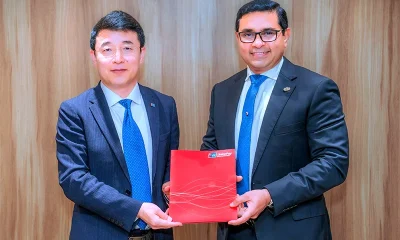
ComBank, UnionPay launch SplendorPlus Card for travelers to China
-
 Business2 days ago
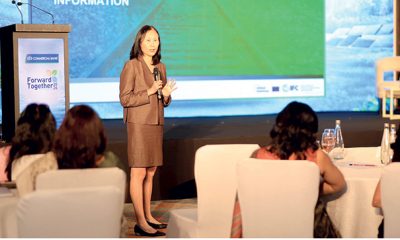
ComBank advances ForwardTogether agenda with event on sustainable business transformation
-

 Opinion7 days ago
American rulers’ hatred for Venezuela and its leaders
-
 Opinion5 days ago
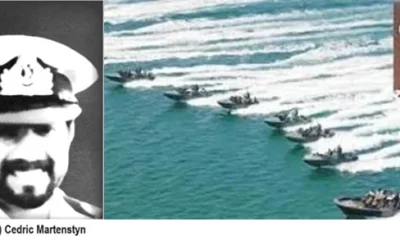
Remembering Cedric, who helped neutralise LTTE terrorism
-
 Business5 days ago
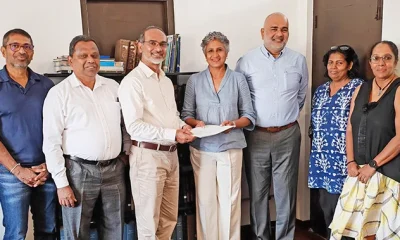
CORALL Conservation Trust Fund – a historic first for SL
-

 Opinion4 days ago
A puppet show?
-
 Opinion2 days ago
Conference “Microfinance and Credit Regulatory Authority Bill: Neither Here, Nor There”
-

 Opinion7 days ago
History of St. Sebastian’s National Shrine Kandana