
Editorial
O, Democracy!

Thursday 9th December, 2021
US President Joe Biden’s much-advertised ‘Summit for Democracy’ commences today with the participation of 110 nations. Sri Lanka is not among them. Some political commentators here have called the exclusion of Sri Lanka an indictment of the Rajapaksa government, which is undermining democracy.
The incumbent Sri Lankan government may be hauled over the coals for attacks on democracy, but one should not make the mistake of recognising the US as the global standard-bearer of democracy.
Among Biden’s invitees are Jair Bolsonaro of Brazil and Rodrigo Duterte of the Philippines. The Human Rights Watch has this to say about Brazil under Bolsonaro: “President Jair Bolsonaro is threatening democratic rule in Brazil … He is pursuing campaigns to intimidate the Supreme Court, signalling that he may attempt to cancel the 2022 election or otherwise deny Brazilians the right to elect their leaders, and violating critics’ freedom of expression.” But Biden has had no qualms about inviting Bolsonaro to the summit and enlisting his help to ‘set forth an affirmative agenda for democratic renewal and tackle the greatest threats faced by democracies’! The less said about Duterte, the better. So much for Washington’s concern for democracy.
Prominent among the invitees to Biden’s Summit for Democracy is Indian Prime Minister Narendra Modi, whom the US refused an entry visa, for years, over the 2002 Gujarat riots, in which more than a thousand Muslims were massacred. The Obama administration reversed the US decision, and now the White House rolls out the red carpet for Modi, who lectures other nations on minority rights and the virtues of ethnic reconciliation, etc.
What about the report card of the host of the Summit for Democracy? The US, which has undertaken to promote global democracy, has failed to lead by example. The Freedom House World Report (2021) reveals that over the past 10 years the United States’ aggregate ‘Freedom in the World Score’ has plummeted by 11 points; the US is among the 25 countries that have suffered the largest declines during this period. Its current score is 83. Shouldn’t the US inspect the beam in its eyes, first?
The Biden administration says the goal of the Summit for Democracy is to rally the nations the world over against the forces of authoritarianism. But it is obvious that the US is trying to shore up its crumbling international image and counter China’s increasing global dominance. Biden’s summit has little to do with democracy; it is aimed at furthering Washington’s geo-strategic interests, as evident from the invitation extended to Pakistan. The US has no way of dealing with the Taliban without Pakistan’s help.
If the US is so averse to authoritarianism, as it claims to be, will it explain why it has backed evil dictators such as Pinochet of Chile, Marcos of the Philippines, Mohammad Reza Pahlavi or Shah of Iran, Batista of Cuba, Somoza of Nicaragua, Seko of Zaire, Suharto of Indonesia, Rhee of South Korea, and Saddam Hussein of Iraq? Pinochet’s Caravan of Death, which hunted down Opposition activists in the remote parts of Chile did not cause any concern to the US.
The US has taken upon itself the task of ridding the world of authoritarianism and terrorism but it strove to save LTTE leader Prabhakaran, during the closing stages of the Eelam War IV, in 2009.
If Sri Lanka had signed the SOFA (Status of Forces Agreement) with the US and allowed the stationing of American forces here, perhaps it would have been invited to the Summit for Democracy in spite of the various allegations the Opposition and civil society groups are levelling against the incumbent government.



Tuesday 7th July, 2026
A major El Niño event is developing rapidly, and it is expected to intensify in the coming weeks. Some climatologists are of the view that the unfolding El Niño may not impact Sri Lanka to the extent of triggering a nationwide catastrophe. This is certainly good news, but the possibility of El Niño causing drought, reduced monsoon rainfall and agricultural losses in this country cannot be ruled out.
Meanwhile, France is reeling from a record-breaking European heatwave, which has claimed more than 2,000 lives and left people scrambling for cooling devices in shops. It has been placed under a red heat alert. This situation cannot be directly attributed to the current El Niño, which has only aggravated it. The current heatwave is mainly due to climate change, which has caused hot air to be trapped over Europe, according to experts.
There are media reports of global temperatures rising across all regions, but at different rates of warming. All major land areas across the globe are getting warmer, the worst affected being the Arctic region (covering parts of northern Canada, Greenland, Russia, Alaska, and northern Europe), with faster increases reported from Europe and Asia. There is no need for panic, but prudence demands the formulation of strategies urgently to meet possible outcomes.
El Niño is unpredictable, and anything is possible, the worst-case scenario being prolonged drought and the resultant drop in agricultural production. In Sri Lanka, reservoirs run dry even during short dry spells, causing severe water stress.
Sri Lanka is no stranger to heatwaves, albeit not of the same severity as the ones in Europe at present. However, recent studies indicate increasing frequency and intensity of heatwaves. There have been several such events during the past seven years or so in this country, with the Department of Meteorology and the government issuing warnings of increased risks of heat stroke, heat exhaustion, and dehydration, especially among outdoor workers, children and elders. It may be recalled that according to media reports based on research findings, between 2001 and 2013, about 23% of Sri Lankans were exposed to dangerous heatwave conditions.
Besides, urban centres, such as Colombo, are experiencing the so-called urban heat island effect due to buildings, pavements, etc., retaining heat. Sri Lanka should seriously consider adopting the Miyawaki method, a Japanese technique of creating dense micro-forests or ‘pocket forests’ in small urban spaces to improve biodiversity, capture carbon, reduce urban heat and improve air quality. London has reportedly adopted this method successfully. The question is why the city of Colombo, accredited as an international Wetland City by the Ramsar Convention of Wetlands, and its suburbs have not adopted the Miyawaki method.
As for Sri Lanka, two main El Niño and climate change mitigating factors are said to be its geographical location and its central mountain range, which helps maintain atmospheric moisture, reducing the likelihood of severe droughts experienced in some other countries affected by El Niño. Hence, the need to conserve the country’s forest cover, which is unfortunately shrinking.
For Sri Lanka as well as other countries, deforestation is no longer an environmental issue; it is a serious existential problem as well. Sri Lanka’s forest cover is believed to be about 29-30% of the total land area. The government has set an ambitious target of increasing it up to 32% of the land area. The ongoing reforestation initiatives deserve fullest public cooperation.
Nothing is said to be so certain as the unexpected in climatic events; forecasts about them could go wrong. Therefore, the need for Sri Lanka to remain alert and have contingency plans to mitigate their impact cannot be overstated.
Monday 6th July, 2026
President Anura Kumara Dissanayake’s recent attempt in Parliament to defuse the ongoing controversy over his government’s plan to extend the retirement ages of the judges of the Supreme Court (SC) and the Court of Appeal (CA) has been in vain. He spoke at length, offering excuses for his failure to initiate action to fill judicial vacancies, but they did not sound convincing. They have only prompted the Bar Association of Sri Lanka (BASL) and other lawyers’ associations to reiterate their opposition to the prospect of a constitutional amendment being moved to raise the retirement ages of the SC and CA judges.
Addressing a public forum, on Saturday, BASL President Rajeev Amarasuriya reiterated his association’s opposition to the proposed move to change the SC and CA judges’ retirement ages arbitrarily. The BASL’s position has been endorsed by several legal associations, including the Colombo Law Society, the Colombo High Court Lawyers’ Association (CHCLA), LAWASIA, and the Commonwealth Lawyers’ Association (CLA).
CLA President Steven Thiru has gone to the extent of warning that Sri Lanka risks repeating Zimbabwe’s judicial crisis if it goes ahead with its controversial plan to extend the retirement ages of sitting superior court judges arbitrarily. Stating that the CLA did not object to the extension of the mandatory retirement age of judges, given changing demographic realities, Thiru pointed out that the danger lay in the politicised context and particularised application of the proposed move by the sitting executive and the legislature to alter the tenure of a few judges. He stated that Sri Lankan leaders had to heed “the sobering lesson of the Zimbabwean crisis; when a ruling government alters the rules of judicial longevity mid-stream, the damage to the legal fabric is severe. “If Sri Lanka proceeds with an ad hoc, non-transparent extension of Superior Court judges’ tenure without a broad consultative process, it risks plunging its legal system into a similar crisis of legitimacy,” he warned, noting that a structural policy matter must not be perceived as a personalised intervention; to do so would fundamentally invite public cynicism, compromise the appearance of judicial neutrality and shatter the very institutional stability that is to be protected.”
It is hoped that the JVP-NPP government will heed the concerns of lawyers’ associations, abandon its plan at issue and ensure that constitutional reforms follow proper consultation, without undermining judicial independence or public confidence in the judiciary. The JVP/NPP came to power promising a new Constitution and not politically motivated piecemeal constitutional amendments. It said in its election manifesto, inter alia, “A new constitution will be drafted and passed through a referendum with necessary changes, if any, after going through a public discourse” (A Thriving Nation: A Beautiful Life, 2024, p. 109).
As the CHCLA, in a letter to President Dissanayake, has rightly pointed out, “the Judicial Service of Sri Lanka is constituted by officers who ascend through a rigorous hierarchy … This progression is not merely a career ambition; it is a legitimate expectation, recognised and protected by the principles of natural justice and the law governing public service. Officers of the Judicial Service plan their professional and personal lives around the reasonable anticipation of such advancement.” The CHCLA’s views deserve serious consideration.
Meanwhile, Chief Justice Preethi Padman Surasena, addressing a group of newly recruited Magistrates, at Sri Lanka Judges’ Institute, recently, stressed the need for judicial officers to do their best to preserve public confidence in the judiciary. A country could be destroyed by a bad judiciary in the same way it could be devastated by natural disasters, the Chief Justice said, stressing the need to safeguard the integrity, independence and dignity of the judiciary. His message was loud and clear.
However, some factors that erode public confidence in the judiciary are beyond the control of judges. The alleged government move to extend the retirement ages of the judges of the SC and the CA is a case in point. It is widely seen as an instance of political interference with the judiciary. One can only hope that the Sr Lankan legal fraternity and international lawyers’ associations will be able to knock some sense into the JVP-NPP government, and prevent this country from facing the same fate as Zimbabwe, where a serious constitutional crisis erupted in 2021, when its Constitution was arbitrarily amended to change the judges’ retirement ages. That issue raised broader concerns about the separation of powers and judicial independence. The constitutional amendment undermined public confidence in courts and amounted to political interference with the judiciary. Another crisis is the last thing Sri Lanka needs at this juncture.


The World Bank’s annual income reclassification, which takes effect every July 1, has placed Sri Lanka, Vietnam, the Philippines, Jordan and the Pacific state of Micronesia in the upper-middle income bracket.
Sri Lanka’s elevation to the upper-middle income status has gladdened many a heart. It is no mean achievement for a country emerging from a crippling economic crisis that led to foreign currency reserves woes, shortages, queues, prolonged power cuts, a steep rise in inflation, and unprecedented political upheavals. However, one should not lose sight of the fact that although the reclassification is a marker of resilience, Sri Lanka only narrowly crossed the threshold, according to economic analysts.
Sri Lanka will now face some challenges. The upper-middle income status generally indicates economic progress and can help improve investor confidence, which Sri Lanka perhaps needs more than anything else to rebuild its forex reserves and be ready to resume foreign debt repayment in earnest. However, a higher income category could reduce Sri Lanka’s access to concessional loans, grants and some forms of international assistance. Commercial borrowing generally carries higher interest rates and shorter repayment periods than concessional development loans.
Trade preference schemes such as the EU’s GSP and GSP+ have stood developing countries, such as Sri Lanka, in good stead. These trade concessions are based on specific eligibility criteria, not income classification alone, but moving into higher income categories can eventually affect eligibility under some preferential trade arrangements, as some economists have pointed out. There’s the rub.
The biggest challenge for Sri Lanka is to ensure that its economy will become more productive, competitive and resilient so that it can lessen its dependence on international assistance, with the help of sustainable growth and investment, as countries like Vietnam have done.
Policymakers should reflect on the state of the economy and ordinary Sri Lankans’ lot, which has not improved despite the country’s income classification upgrade. Such categorisations based on credible data may be technically sound and useful in making economic decisions, but they cannot be considered realistic and reliable yardsticks where the wealth distribution is concerned.
The upper-middle income status usually masks inequality. There are economic tools to gauge income inequality, which affects social stability, poverty levels, and access to education and healthcare, but they too have limitations. It is imperative that the issue of income inequality be addressed as a matter of national priority.
Sri Lanka faced an economic crisis in 2022, despite a previous income classification upgrade, mainly because it did not get its macroeconomic fundamentals right, and acted in a reckless manner. True, the Easter Sunday terror attacks and the Covid-19 epidemic took a heavy toll on the economy, but Sri Lanka would have been able to overcome their impact if its economic imperatives had not been subjugated to the political agenda of the government in power at that time.
If action had been taken to prevent a sharp drop in state revenue by keeping taxes at a realistic level and rationalising pandemic relief while seeking IMF assistance at the first signs of trouble, the economy may have been able to withstand internal and external shocks without going into a tailspin.
Sri Lanka should emulate Vietnam, whose income classification upgrade follows a different track and is a story of growth. Vietnam’s gross national income per capita exceeded the USD 4,636 threshold because of manufacturing export growth. Its GDP expanded at approximately 8 percent in 2025, driven by electronics and consumer goods assembly. Vietnam has reportedly set an ambitious goal of achieving the coveted high-income status by 2045. Sri Lanka, too, should raise the bar for itself and work towards achieving its economic goals.

Balogun reprieve in vain as Belgium beat USA to set up Spain quarterfinal

Trump confirms he asked Fifa to review Balogun ban

Late Spain goal eliminates Portugal, ends Ronaldo’s international career?

Nyamhuri and Ngarava stun Bangladesh by defending 141

Sri Lanka try to make a play after Greaves 180, Hope 112

Dry weather except for a few showers in the Western and Sabaragamuwa provinces and in Galle, Matara, Kandy and Nuwara-Eliya districts

‘Dates have the highest sugar content to fight Coronavirus’

Sunday Island 27 December – Headlines

#SundayIsland 17th December – Headlines

Sunday Island – 28th March

Sunday Island Headlines – 21 March

Sunday Island – 21st February – Headlines
-

 News2 days ago
Singapore-based Buddhist monk marks nearly four decades of humanitarian service
-

 News3 days ago
Freedom 250: US Embassy celebrates America’s 250th Independence Day through magic of American cinema
-
 News4 days ago
CIABOC to question Harak Kata on Rs. 200 mn bribery allegation
-
 News4 days ago
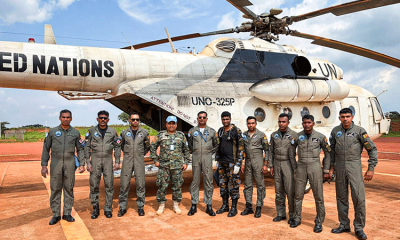
SLAF conducts successful rescue mission under UN command in Central African Republic
-
 Midweek Review6 days ago
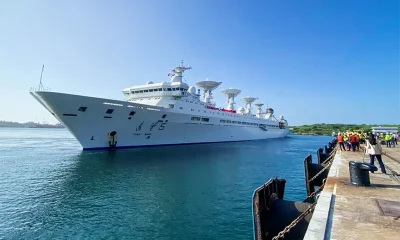
H’tota port’s strategic status remains focal point of geopolitical scrutiny
-

 News1 day ago
AI concerned over proposed SL military deployment in Haiti
-
 News4 days ago
UNEP support pledged to strengthen Sri Lanka’s Environmental Priorities
-

 Features2 days ago
The NPP’s New Challenge: Balancing Easter Lawfare and Economic Welfare