
Opinion
Send in clowns and be damned!


The Director-General of the Sri Lanka Tourism Develop Authority has given the thumbs up sign to the Director General of Health and IGP to allow foreign tourists to travel across districts/provinces in Sri Lanka through ‘bubble tourism’. This is despite the fact that Sri Lanka’s Immunology and Molecular Medicine authorities have now identified six new Covid-19 variants in Sri Lanka. These include variants from Denmark, Europe, Middle East, Nigeria and South Africa, including the deadly Indian B.1.617.
A golden wand of protection seems to attend the path of these foreign visitors across the island, while the public is prohibited from venturing into or through such areas to prevent the spread of the virus. It is an irrefutable fact that when foreign tourists are ferried across the Island and allowed to visit the provinces, there is an entourage of locals to assist them at their accommodation, in transport and at places of tourist interest. One of the first Covid-19 patients in Sri Lanka was a Tour Guide! The policy of ‘back to business as usual’, sporadic restrictions, onus of self-protection and ‘never mind the consequences’ has hitherto yielded horrendous results.
The cost of opening the country’s borders to foreign tourists from January 2021, with some short-term gains to hoteliers, has boomeranged on the nation’s production, manufacture and general socio economic well- being. Each new morning new widows and infants howl and mourn the deaths of loved ones. Death Rate and total Covid cases in Sri Lanka have now reached phenomenal levels. Hospitals cannot cope with the rising numbers of patients, who are being accommodated in makeshift sheds and warehouses, or asked to remain in their homes sans medical attention!
Who is really calling the shots in controlling the pandemic that has now reached crisis proportions in Sri Lanka? Does the Minister of Tourism, Prasanna Ranatunga, have special qualifications and abilities in the medical field, to warrant such decisions and directives to be given across the board by his petty minions and willing sycophants in the government bureaucracy? Is he not aware that the practice of bubble tourism is between countries that have relatively small incidence of Covid, as in the case of Australia and New Zealand, holding strong track records of implementing consistently rigorous anti-covid restrictions and regulations? Is not the Director General of Tourism, Ms. Kirmali Fernando, whose husband owns and runs Tourist Hotels, properly advised on the practices around the world? Or is short term pecuniary gain more important than ordinary human lives? In Sri Lanka ” a land like no other” when Ukraine was in a lockdown situation, their tourists were hosted in Sri Lanka.
According to the WHO, the coronavirus variant was first identified in India last year and was classified as a variant of global concern, with some preliminary studies showing that it spreads more easily and is increasingly classified as a variant of concern at a global level. WHO statistics reveal a sharp linear rise in the new Covid cases in India commencing from March 2021, even while our ‘Health Experts’ in the Tourism Ministry were encouraging and further promoting Bubble Tourism Agreements with India until late April 20, 2021
The recent fiasco in Piliyandala saw the local MOH up in arms over the blatant idiotic interference by the Minister Lokuge, in giving counter orders against the Ministry of Health and opening up Covid-19 areas, possibly due to requests of business cronies among his constituents. The subsequent death rate due to Covid in Piliyandala bears ample testimony to the demented exertions of this politico.
Blustering, blundering politicians apart, what of the high-powered Committees, consisting of retired senior government servants, expert medical personnel, deciding to administer the First Dose of anti-Covid-19 AstraZeneca Vaccine to approx. 9 lakhs of the population, while only retaining 03 lakhs for the Second Dose! Surely it is common sense to spread the vaccine in a manner that ensures that both doses are given during the prescribed period of at least 10 weeks! The logic of entering into a signed contract for supply of AstraZeneca to be given for the second dose, and opening a letter of credit, does not seem to have entered into the calculations of those charged with such responsibilities, who perhaps have reached the age of Dementia or careless indifference!
There was enough time to secure the required stock of AstraZeneca from January 2021, if not for political will considering that the Budget of December 2020 had no provision for anti-covid vaccines! Leaving the approx 600,000 of people particularly in the over 60 age group in dire straits, after their first dose of AstraZeneca, which cannot be mixed with other vaccines now available in the market, is tantamount to criminal negligence, breach of trust and inequitable governance. Even in the midst of such severe bungling, there are some politicos trying to pour down Vaccine Cocktails, hitherto never tried or tasted in other parts of the developed world, down the throats of these unfortunate victims.
The cronyism and nepotism rampant in the numerous and now commonplace accounts of people with ‘influential connections’’ getting the vaccine over others, shows a moral impoverishment of the country. It is a fact that today there are those who work in the front line of infection in their respective workplaces, who have not been given priority in the administration of the vaccine. However, Notables, VIPs and Politicians and their allies are given pride of place in getting the scarce second dose of the AstraZeneca, irrespective of the fact that this is considered more appropriate for senior citizens above the age of 55 or 60.
It is a time that the Public has seen through the lies, sheer hypocritical terminology and slanted data that might have hitherto lulled them towards the so-called resurgence of the virus in the “Avurudu Pokura”. Some amusing but insidious half-truths, and concealments are worth mentioning. The media gave the impression for a long time that the deaths were due to underlying conditions of non-communicable diseases such as diabetes and high blood pressure when the causative agent was Covid 19. The undeniable truth is that had it not been for the Covid-19 virus, those with underlying diseases might have lived to a ripe old age with the medications! It is only now, with the escalating deaths and ensuring chaos in the health sector, that the real causative agent of those afflicted with Covid-19 is being acknowledged as Covid pneumonia! The crass negligence of garment factory owners in the Brandix cluster, and resultant probe into criminal negligence is without any progress and lies hidden and dormant. The reluctance to admit that there was a community wide transmission across the island, and the continued lies that this is confined in the main to the Western Province, and that every case could be traced back to the Brandix or Peliyagoda Fish Market clusters is now a sad laughing matter!
Those of us who watched the TV news in the time leading up to the present crisis are privy to the spectacle of the representatives of the people (Politicians), at the pinnacle of power, neglecting to follow simple guidelines such as wearing a mask, avoiding crowded meetings, etc. The subtle interplay of attributing a particular age group to the Covid-19 casualty, the balancing of numbers of positive cases and deaths with limited PCR, and the relative lack of a Geographical Information System by which selective and targeted lockdowns could be imposed in severely affected areas, have contributed to maintaining a fog index over the actual situation prevailing in the country.
A nation that has seen its own Minister of Health and other politicians expound the virtues of a fake decoction called “Dhammika Peniya” as a possible Covid-19 preventive, cannot be too surprised thereafter to witness any worse inanities and tragic bungles!
In conclusion, a nation that with renewed hope changes its political pillow for a new government be it, SLFP, Yahapalanaya, alias SJB, Podujana Peramuna, appears to be doomed to certain abject disillusionment. The truth is plain to see. Any apolitical citizen can now realise that whether there be bond scams, major bribery and corruption charges, criminal negligence on terrorist massacres, the policy of no real remedial action, talk only and a series of commission reports, parading on remand, will be the final product. Except for some sprats down the line, the kingpin will continue their rampage. It is said that there is a certain camaraderie and wheeler dealing even amongst those who represent the people on either side of the divide in Parliaments. Where there is neither honour, principle nor true love of country and its people, in a system that is replete with sycophant”public” servants and moribund self-serving intelligentsia, the dark prescription still is “Send in the Clowns and be damned”.
SONALI WIJERATNE
Kotte

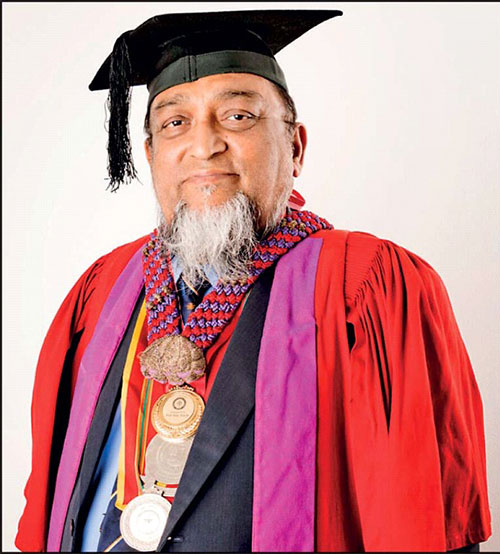
Vidya Jyothi Professor Rezvi Sheriff
We do mourn the passing away of Vidya Jothi Emeritus Professor Rezvi Sheriff on the 30th of March 2026. He was a man who was one of the finest doctors who served the health service of our beloved country and several other nations as well.
I was most fortunate to be selected to formulate and present the citation for Professor Rezvi Sheriff just last year, for the award of the coveted Fellowship of the Sri Lanka Medical Association during the Inauguration Ceremony of the Annual Congress of the Sri Lanka Medical Association on the 23rd of July 2025.
That narrative is reproduced here as the final tribute to a superlative medical scientist, a humane carer, teacher par excellence, an academic of profound scholastic stature and a very close friend.
Our Chief Guest tonight, Guest of Honour, Special Guests, the President, Council, Fellows, and Members of the Sri Lanka Medical Association, and Distinguished Invitees…….
I am delighted to present to you, Vidyajyothi Professor Rezvi Sheriff, MBBS Ceylon), MD(Ceylon), MRCP(UK), FRCP(London), FRCP(Edinburgh), FRACP, FCCP, Fellow of the National Academy of Sciences of Sri Lanka, and Emeritus Professor of Medicine for the superlative award of the Fellowship of the Sri Lanka Medical Association.
In fact, the man is so very well-known, and formulating a citation for him was a veritable Herculean task, similar only to one trying to sell ice to Eskimos. In such a context, I will attempt only to portray some strategic vantage points of a career that clearly defies an adequate description in the time allotted to me. One could write reams about the man and still leave quite a lot unsaid.
Following a spectacular school career, Rezvi entered the Faculty of Medicine, Colombo, in 1966, just one year after me, and we have been close friends ever since. The man went through his undergraduate career, securing many distinctions and gold medals, and qualified in 1971 as the first in class valedictorian, topmost performer of the batch, and the first in the combined order of merit of the two Medical Schools of Colombo and Peradeniya.
From then onwards, there was no looking back. It was a steady, persistent, and exponential climb in the academic ladder to finally reach the pinnacle of the Chair Professorship of the Department of Medicine, Faculty of Medicine, Colombo. He is a great researcher and has a monumental plethora of scientific papers published in peer-reviewed, indexed, high-impact medical journals. He has delivered several orations, many plenary lectures, guest lectures, and taken part in numerous academic symposia as a resource person. He has been internationally recognised through fellowships and memberships from prestigious colleges and academic institutions. He has lectured in many centres worldwide, inclusive of a considerable number of universities in the United States of America, Great Britain, Australia, Norway, Japan and Pakistan.
As an Educator, he has mentored thousands of undergraduate and postgraduate students and allied health professionals. He is acclaimed for his quality clinical teaching, integrity, kindness and compassion. His medical journey, culminating in the Chair Professorship of Medicine, has inspired many a generation. He retired from the University of Colombo in 2014 and then worked at the Kotelawala Defence University for another 10 years. Altogether, he has had 60 years of university service and been a professor for 41 years. He was awarded Emeritus status by the University of Colombo, following his retirement.
He is known as the Pioneer Godfather of Nephrology and Transplant Medicine in Sri Lanka. He initiated the country’s first Dialysis Unit and Kidney Transplant Programme, a vision that forever transformed renal care and paved the way for other organ transplantations in Sri Lanka as well.
He has served for six years as the only Sri Lankan Council Member in the International Society of Nephrology. Incidentally, he and I were in the UK around the same time during our postgraduate training. He was in nephrology in the South of England, and I was doing nephrology in Nottingham in the Midlands. He continued in nephrology while I changed track and went in a different direction.
Professor Sheriff’s influence extended beyond the lecture rooms, wards and clinics. He was a member of the First National Health Policy Formulation Team, the University Reforms Committee, the National Education Commission and the Sri Lanka Medical Council. He was the Director of the Postgraduate Institute of Medicine from 2006 to 2011. All these assignments were conferred directly by the Executive President of Sri Lanka.
Professor Sheriff founded major nationally important bodies such as the Sri Lanka Society of Nephrology, the Health Informatics Society of Sri Lanka and the Hypertension Society of Sri Lanka. He was also instrumental in building critical medical infrastructure, such as the CLINMARC building at NHSL, the National Institute of Nephrology Dialysis and Transplantation Centre in Maligawatta, the Ceylon College of Physicians Building in Rajagiriya, and the first Kidney Transplant Unit at NHSL. He also set up the most advanced Dialysis Unit in Sri Lanka at the General Sir John Kotelawala Defence University Hospital.
In a kind of nostalgic rumination, Rezvi and I used to be on the opposing teams in the Annual Physicians Versus the Paediatricians Cricket Match. If I remember right, and in a lighter vein, that is perhaps the only time anyone has been able to beat this great man.
Ladies and Gentlemen, legends are found not only in the movies. They are there in real life, too. Role models are remembered, not just for what they achieve, but for the lives they inspire, the opportunities they create, and the kindness they perpetually exhibit. Despite his vast achievements, Professor Rezvi Sheriff remains an extremely humble, deeply religious, superlatively kind, service-oriented person. Today, as we honour him, we celebrate not just a brilliant academic and a superb clinician, but a man who has lived a life of purpose and integrity: a life devoted to service to the community. Some years ago, in recognition of his services to our Motherland, the Government of Sri Lanka conferred on him the National Titular Award Vidya Jyothi, the highest national honour that can be bestowed on a scientist.
Mr President, I am ever so pleased to present Professor Rezvi Sheriff, a superlative clinician and a healer, a fine researcher, a brilliant teacher, a visionary, and a true servant of humanity, for the award of the legendary Fellowship of the Sri Lanka Medical Association.
Ladies and Gentlemen, please be kind enough to rise and applaud this great son of Mother Lanka.
***
With the demise of Professor Rezvi Sheriff, we have lost a superlative son of our hallowed Motherland, and I have lost a very dear friend.
Goodbye, our friend…, May the turf of our Motherland rest ever so gently on you.
May he rest in eternal bliss as we acknowledge the words in the Holy Qaran 𝗜 i𝗜𝗹𝗮i𝗵 𝗻!
(Verily to Allāh we belong, and verily to Him, we shall return)
By Dr B. J. C. Perera
Specialist Consultant Paediatrician
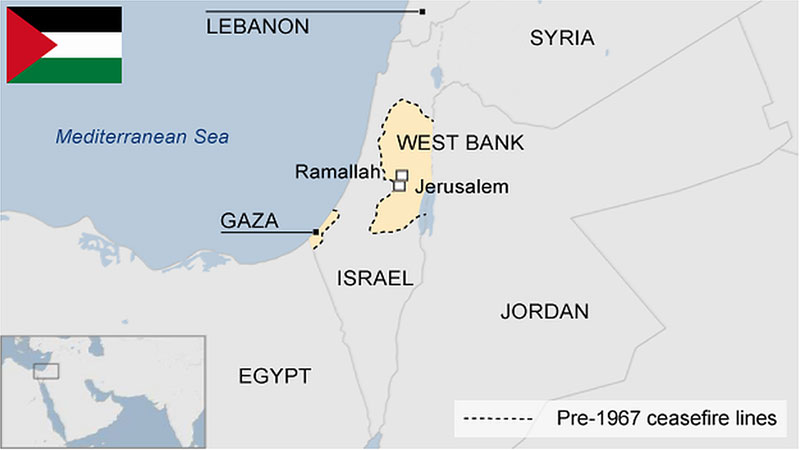
Since the creation of Israel, in 1948, Palestine has lost so much that it is a wonder that it is still a part of the world map. Since 1948, Palestinians have lost approximately 85% of the land that made up historic British Mandate Palestine. This loss occurred in several major stages, beginning with the 1948 Arab-Israeli War and continuing through the 1967 Six-Day War and ongoing settlement expansion.
It is necessary to outline the relevant historical facts about the state of Palestine. Palestine was among former Ottoman territories, placed under UK administration, by the League of Nations, in 1922. All of these territories eventually became fully independent States, except Palestine, where, in addition to “the rendering of administrative assistance and advice,” the British Mandate incorporated the “Balfour Declaration” of 1917, expressing support for “the establishment in Palestine of a national home for the Jewish people”. During the Mandate, from 1922 to 1947, large-scale Jewish immigration, mainly from Eastern Europe, took place, with the numbers swelling in the 1930s with the Nazi persecution. Arab demands for independence and resistance to immigration led to a rebellion in 1937, followed by continuing terrorism and violence from both sides. The UK considered various formulas to bring independence to a land ravaged by violence. In 1947, the UK turned the Palestine problem over to the UN.
After looking at alternatives, the UN proposed terminating the Mandate and partitioning Palestine into two independent States, one Palestinian Arab and the other Jewish, with Jerusalem internationalised (Resolution 181 (II) of 1947). Records indicate that Jewish individuals, or organisations, only owned between 5.8% and 7% of the land in Palestine, prior to the 1947 Partition Plan. The remainder was either privately owned by Palestinians (94.2% according to some fiscal records) or classified as state/public land by the British authorities. The vast majority (90%) of the population was Palestinians. The Partition Plan did not take these demographic facts into consideration and this led to the war in 1948 with Egypt, Jordan, Syria, Lebanon, Iraq and Saudi Arabia joining forces against Israel. The war was a major loss for the Arab countries as Israel was backed by the west and, following the war, Israel established control over 77% to 78% of the land. The remaining 22%—consisting of the West Bank and Gaza Strip—came under Jordanian and Egyptian administration, respectively.
The Arab countries were very much concerned about this situation and were very sympathetic towards the Palestinians. In a desperate attempt, in 1967, Egypt, Jordan and Syria attacked Israel, which by now, with huge western support, was militarily far superior to the collective strength of these countries and could capture Sinai Peninsula, Gaza strip, West Bank, East Jerusalem and Golan Heights. Again, in 1973, Egypt attacked Israel in a surprise move and inflicted much damage, though finally losing the war. This led to a peace treaty between Egypt and Israel and the return of Sinai. The outcome of all these wars was that today the Palestinians have lost administrative and sovereign control over approximately 85% of historic Palestine, since 1948, with current autonomous Palestinian areas (Gaza and parts of the West Bank) making up less than 15% of the total original territory.
Palestine gradually lost its major military allies; Egypt, Jordan, Iraq, Syria, Lebanon and Libya, due mainly to the machinations and direct invasions by western forces and Israel. There were internal disputes and betrayals, as well, with Hamas falling out with Fatah and Palestinian Authority colluding with Israel to undermine Palestinians. All this shows the pathetic tragedy that has befallen the historical inheritors of the land of Palestine. Today, they are subjected to the most inhuman harassment and genocide, with daily killings, and their land is being grabbed by Israel. And there is, apparently, no one to help them; the UN can only pay lip service and if this continues Palestine will soon be obliterated from the world map.
However, there may be a glimmer of hope for this beleaguered country if the war between Iran and Israel ends in the way people like Prof. Jeffrey Sachs, Prof. John Mearsheimer, Col. Douglas Macgregor, Prof. Richard Wolf, Miko Peled, etc., predict. These people have made comments like “Iran has the upper hand”, “The US has already lost the war”, “Iran will be the graveyard of American hegemony”, “This will be the end of Israel”.
It was Miko Peled, a Jew by birth, and a Palestinian activist by conviction, who said “This will be the end of Israel” in a recent podcast interview, and he was hoping that it would eventually solve the Palestine problem. Peled’s grandfather, Avraham Katznelson, was one of the founders of Israel who signed Israel’s Declaration of Independence. Peled’s father, Mattityahu Peled, had fought in the 1948 Arab–Israeli War and served as a general in the Six-Day War of 1967.
In 1997, Peled’s 13-year-old niece Smadar, daughter of his sister Nurit Peled-Elhanan, was murdered in a Palestinian suicide terror attack in Jerusalem. After her funeral Peled had said, “Why not tell the truth… That this, and similar tragedies, are taking place because we are occupying another nation and that, in order to save lives, the right thing to do is to end the occupation and negotiate a just peace with our Palestinian partners?” Today Miko Peled is fighting for the liberation of Palestine. He asserted that the raid by Hamas into Israel, in October, 2023, was not terrorism but a heroic act.
Col. Douglas Macgregor, a retired US Army officer, who had faught in the Iraq war, and who was nominated by President Trump as the Ambassador to Germany, and also appointed to the board of the US Military Academy, has said “Iran holds the upper hand”. He has several reasons to support his claim; Iranian missiles outnumber the interceptors of Israel and Gulf states, and already Israel is running out of weapons, the economic fallout in the US, Gulf countries and Europe would be catastrophic if the war drags on, ground forces option would be disastrous as landing them would be a suicidal process given the advance surveillance methods that Iran possess, courtesy China and Russia. Further, he says, several such US campaigns in the past have failed, pointing out that Iraq, which was ‘conqured,’ is now asking the US to leave. The Syrian leader – another country ‘conqured’ – is visiting Russia. A Minister, in Qatar, has told the US to leave her country alone.
Prof John Mearsheimer is Professor of Political Science at the University of Chicago. In his 2007 book The Israel Lobby and U.S. Foreign Policy, Mearsheimer argues that the Israel lobby wields disproportionate influence over US foreign policy in the Middle East. Mearsheimer asserts that Benjamin Netanyahu is driving the push for conflict, rather than US interests. He describes Israel as an “albatross around our neck” regarding this war. He claims the U.S. and Israel initiated this war against Iran, which he does not believe the US can win.
Mearsheimer has argued that “Iran holds all the cards” in the war of attrition, suggesting that Iran is not losing and that the US is facing a strategic defeat. He argues that Iran does not represent a threat massive enough to justify American involvement in the conflict and that the US is fighting ‘somebody else’s war’.
Prof. Jeffrey Sachs is a professor at Columbia University, where he was formerly Director of The Earth Institute, and is Director of the Centre for Sustainable Development at the University. He had been a tenured professor of Economics at Harvard. From 2002 to 2018, Sachs was special adviser to the UN Secretary-General. Regarding the war, he has said that the US and Israel had underestimated Iran and that Iran would be the Graveyard of American hegemony. Further Sachs has called Israel ” a reckless country” and a joint military campaign with it is not in the US interests. He has made a special appeal to the leaders of China, Russia and India to pressure Donald Trump to stop the war, which he says would be very effective.
Prof Richard Wolf, leading economist, says the US is at present heavily in debt and the defence budget for 2026/27 has been increased from 900 bn to 1.5 tr which could affect health, education and welfare programmes. People in the US are on the streets protesting against the war.
What could be gleaned from all these opinions and views of people, who know what they speak of, is that, whatever the outcome of the war, the world will not be the same for all of us. Beginning from Trump and the people of the US, European leaders, China, Russia and India, Iran and the Middle East, particularly the Gulf States, the Global South and finally Israel, would learn that war cannot solve problems, that hegemony is hated, imperialism has to end and, last but not least, if the world wants peace the Palestine problem must be solved.
(Some of the information in this article was derived from Wikipedia)
By N. A. de S. Amaratunga
Confronting Sri Lanka’s Expanding Drug Threat
Senior security and intelligence professional with extensive experience in counter-terrorism, strategic risk assessment and law enforcement.
A Rising Tide Beneath the Surface
Sri Lanka’s recent success in intercepting large consignments of narcotics at sea is both reassuring and alarming. Reassuring, because it reflects the growing operational capability of the Sri Lanka Navy and the Police Narcotics Bureau. Alarming, because such volumes do not move without a market.
Are we merely intercepting supply, or are we ignoring a rapidly expanding demand within our own society?
· “If seizures are rising, it is not only a sign of enforcement success, it is also a signal of expanding demand.
“Boots on the Ground”: A New Meaning
In today’s Sri Lankan context, “boots on the ground” must be redefined. It is no longer limited to patrols at sea or coastal surveillance. It is about real presence intelligence-led, community-connected, and action-oriented.
Recent interdictions demonstrate a mature intelligence-to-action cycle. For this, the Sri Lanka Navy and Police deserve commendation.
Yet, behind every success lies a silent force
The Silent Shield: Intelligence Networks
Informants, analysts, and field operatives form the backbone of every successful operation.
* They operate under risk
* Their exposure can collapse entire networks
* Their contribution must be recognised discreetly, not publicly
“An exposed informant today is a lost network tomorrow.”
A Market-Driven Menace
Drug trafficking is not accidental, it is profit-driven.
The scale of maritime smuggling suggests that Sri Lanka is no longer just a transit hub. It is increasingly becoming a destination market.
This transforms narcotics from a policing issue into a national social crisis.
Inside the Network: A Structured Ecosystem
The drug trade operates through layered chains:
* International syndicates
* Maritime couriers
* Local facilitators
* Urban distributors
* Street-level peddlers
Each layer is insulated. Each link is replaceable.
“Break one link, and the chain adapts. Break the system, and the threat collapses.”
Demand Is Engineered
A critical reality:
Drug networks do not wait for demand; they create it.
* Free or low-cost initial access
* Targeting youth and vulnerable groups
* Expansion through peer networks
* Stealth distribution networks
Addiction is often designed, not accidental.
Awareness: Prevention or Promotion?
Sri Lanka’s awareness programmes show mixed results.
While well-intentioned:
* Overexposure can trigger curiosity
* Fear-based messaging is ineffective
* Generic campaigns lack relevance
“Poorly designed awareness can introduce what it seeks to prevent.”
The Missing Link: Awareness + Recovery
Awareness alone is insufficient.
A modern approach must include:
* Simple, relatable communication
* Focus on life consequences
* Clear access to rehabilitation
Shift the message:
From: “Say no to drugs”
To: “If trapped, there is a way out”
When Success Creates Strain: The Justice System Under Pressure
An often-overlooked consequence of increased drug detections is the pressure it places on the justice and prison systems.
A large number of drug-related offences are non-bailable, leading to a steady rise in remand populations. This has resulted in:
* Severe prison overcrowding
* Heightened tension among inmates
* Increased confrontation between prisoners and prison authorities
Overcrowded prisons are not only a humanitarian concern they are an escalating security risk.
The Forensic Bottleneck: Delays in Government Analyst Reports
At the centre of this strain lies a critical dependency the Government Analyst Department.
Every detection requires scientific confirmation. However, the system is under significant pressure:
* High volume of samples
* Shortage of trained personnel
* Limited availability of chemicals and laboratory materials
·
* Multiple deadlines imposed by courts
These constraints have led to delays in submitting reports, which in turn:
* Extend remand periods
* Increase court backlogs
* Fuel frustration among inmates
“Justice delayed in narcotics cases becomes both a legal failure and a security threat.”
A Sensitive Concern: Accuracy of Detections
Another emerging concern is that a number of samples sent for analysis reportedly do not contain narcotics.
If substantiated, this raises serious issues:
* Are arrests being made on insufficient preliminary evidence?
* Are field testing methods reliable?
* Is there undue pressure to increase detection statistics?
The implications are profound:
* Wrongful detention
* Loss of public trust
* Weakening of legitimate enforcement efforts
Each inaccurate detection undermines the credibility of the entire system.
A Dangerous Imbalance
Sri Lanka now faces a structural imbalance:
* Strong enforcement
* Increasing arrests·
* Limited forensic capacity·
* Overburdened courts·
* Overcrowded prisons
This imbalance creates a chain reaction of institutional stress.
The Strategic Gap: Where Is the Research?
Despite strong enforcement, Sri Lanka lacks a research-driven response.
The Police Narcotics Bureau and National Dangerous Drugs Control Board must be strengthened with:
* Dedicated research units
* Data on usage trends·
* Behavioural analysis·
* Evaluation of awareness programmes
Supported by international collaboration.
“Without research, strategy becomes a reaction.”
From Sea to Society
“Boots on the ground” must extend beyond enforcement:
* Religious leaders·
* Teachers and schools·
* Parents·
* Community networks·
The real battle is not only at sea but within society.
A National Priority
The consequences are severe:
* Loss of youth potential·
* Rising crime·
* Family breakdown·
* Long-term public health burden
This is a national security issue with generational consequences.
STRATEGIC CONCLUSION
OFFENSIVE FRAMEWORK (SUPPLY DISRUPTION)
INTERNATIONAL PARTNERS
NATIONAL INTELLIGENCE
SRI LANKA NAVY / COAST GUARD
POLICE NARCOTICS BUREAU
STF / POLICE OPERATIONS
ARRESTS & SEIZURES
JUDICIAL SYSTEM
Focus: Intelligence-led interdiction, maritime dominance, legal enforcement
PREVENTIVE FRAMEWORK (DEMAND REDUCTION)
GOVERNMENT POLICY & RESEARCH
NDDCB / PNB COORDINATION
EDUCATIONAL INSTITUTIONS
TEACHERS / COUNSELLORS
RELIGIOUS & COMMUNITY LEADERS
PARENTS
YOUTH
Focus: Awareness, early detection, social resilience, rehabilitation
INTEGRATED NATIONAL STRATEGY
(OFFENSIVE) (PREVENTIVE)
Sri Lanka has proven its ability to intercept drugs.
But interception alone is not victory.
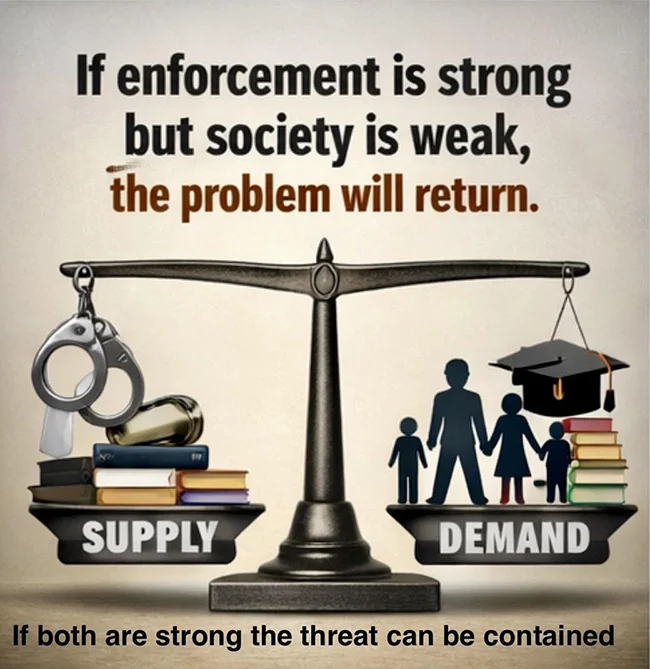
“If enforcement is strong but society is weak, the problem will return.
If both are strong, the threat can be contained.”
Conclusion
Sri Lanka is no longer confronting a distant or isolated narcotics threat it is facing a deeply embedded, evolving ecosystem that stretches from international waters to the minds of its youth.
The recent surge in maritime interceptions is not merely a success story. It is also a warning.
Every shipment seized at sea is a reflection of a demand that exists on land.
We must therefore move beyond the comfort of operational victories and confront the harder truth: this battle cannot be won by enforcement alone.
“Boots on the ground” must now mean more than patrol vessels and tactical units. It must represent a nationwide presence of awareness, vigilance, intelligence, and responsibility from coastal radar stations to classrooms, from intelligence cells to family homes.
At the same time, we must protect what protects us from the intelligence networks that operate in silence. Their strength lies in their invisibility. Their recognition must remain measured, discreet, and strategic.
The drug economy is adaptive. It creates demand where none exists, exploits vulnerability where it finds it, and thrives where systems are disconnected. If left unchecked, it will not only fuel crime it will reshape society, erode institutions, and compromise future generations.
What Sri Lanka needs now is not a fragmented response, but a coordinated national doctrine:
* Strong at sea
* Smart in policy
* Deep in research
* Present in societyBecause the real battleground is no longer just geography it is generational.
What is required now is not just stronger enforcement but smarter systems, balanced capacity, and a unified national response. Because this is no longer just about drugs. It is about the future of the nation.
Mahil Dole is a retired senior police officer and former Head of the Counter-Terrorism Division of Sri Lanka’s State Intelligence Service. With over four decades in policing and intelligence, he has interviewed more than 100 suicide cadres linked to extremist movements. He is a graduate of the Asia-Pacific Center for Security Studies in Hawaii and has received specialist training on terrorist financing in Australia and India.
By Mahil Dole

Navy seize 323kg of heroin from fishing vessel in southwestern seas

Magnitude 7.4 quake hits off Indonesia’s Ternate, tsunami warning lifted

NASA successfully launches historic Artemis II moon mission

Sameer Rizvi arrives in the IPL to guide Delhi Capitals home in low-scoring chase

Trump to give primetime address on Iran war as questions swirl over his next move

PM opens ‘Silver Age Center,’ an Elder Care, Training and Research Centre built with modern facilities in Kataragama

‘Dates have the highest sugar content to fight Coronavirus’

Sunday Island 27 December – Headlines

#SundayIsland 17th December – Headlines

Sunday Island – 28th March

Sunday Island Headlines – 21 March

Sunday Island – 21st February – Headlines
-

 Features5 days ago
A World Order in Crisis: War, Power, and Resistance
-

 News6 days ago
Energy Minister indicted on corruption charges ahead of no-faith motion against him
-

 Sports6 days ago
SLC to hold EGM in April
-
 Opinion6 days ago
When elephants fight, it is the grass that suffers
-

 Latest News7 days ago
A strong Technical and Vocational Education and Training (TVET) system equips individuals with practical, relevant, and future-oriented skills helping to innovate responsibly towards a greener and sustainable future – PM
-
 Features6 days ago
Lest we forget
-

 News2 days ago
Tariff shock from 01 April as power costs climb across the board
-
 Business6 days ago
Pan Asia Bank empowers export sector as Strategic Partner of NCE Export Awards