
News
WB: South Asia needs equitable cooling as heatwaves worsen


*** This spring, temperatures hit nearly 50 degree Celsius across India and Pakistan, while Bangladesh and Sri Lanka sweltered under unusually high heat
Without adequate cooling, these conditions undermine countries’ development. When blistering heat strikes South Asia, the poor and most vulnerable, suffer the worst impacts. When it is too hot to work, wages are lost, pushing families into cycles of poverty. School hours are cut short, depriving children of education and future opportunities, says a World Bank report.
It said: The latest report by the Intergovernmental Panel on Climate Change highlights that climate change is making heatwaves more likely. This spring, temperatures hit nearly 50 degree Celsius across India and Pakistan, while Bangladesh and Sri Lanka sweltered under unusually high heat. A study found that the heatwave across India and Pakistan was 30 times more likely this year than 100 years ago, due to climate change.
At home, where many people in South Asia live in inadequately ventilated buildings without access to cooling, extreme heat harms people’s health. Meanwhile, fragmented cold chain infrastructure leads to the loss of food and vaccines, putting nutrition and public health at risk.
The economic costs are staggering. With a large percentage of the region’s gross domestic product (GDP) reliant on the heat-stressed shoulders of informal workers, extreme heat does not just jeopardise the health and livelihoods of the working poor, but also the economic productivity of the region. By 2030, lost labour due to rising heat and humidity could risk up to 4.5% of India’s GDP – approximately USD 150-250 billion. Pakistan and Bangladesh could suffer losses of up to 5% of their GDP.
As urban populations grow and temperatures rise across South Asia, so too does the demand for cooling. Keeping citizens cool while mitigating the environmental impacts – air conditioners and other cooling equipment release powerful greenhouse gases – is a challenge for governments across South Asia, which must prioritise cooling as a development strategy.
In 2019, India became one of the first countries in the world to launch a comprehensive cooling action plan – the India Cooling Action Plan (ICAP), an ambitious initiative to address the country’s cooling needs while reducing climate impacts. In June 2022, Bangladesh published its own National Cooling Plan, while in October last year Pakistan announced it will adopt one by 2026.
Take South Asia’s cities, for example, many of which are plagued by high levels of poverty and bad housing conditions. More than 200 million new homes need to be built in South Asia before 2050 to meet housing needs. This provides an opportunity to change the course of urban development in the region and adopt strategies that prioritise thermal comfort. India, Pakistan and Bangladesh are responding to this challenge with affordable housing programmes.
In India, where 10 million new homes need to be built annually to keep up with housing demand, the government’s affordable housing scheme has the opportunity to incorporate nature-based solutions and passive cooling techniques – to prevent heat from building up within homes – into construction and urban planning. That means using climate-friendly insulation materials, like straw, combined with materials that have high thermal mass. According to World Bank Group analysis, space cooling in India alone presents a USD 1.5 trillion opportunity by 2040, of which USD 1.25 trillion is earmarked for residential buildings.
Opportunities to scale up affordable space-cooling technologies exist in housing schemes across the region. In Bangladesh, where the urban population grew from 31 million in 2000 to 65 million in 2020, the World Bank estimates that 250,000 new houses need to be built every year to meet existing shortages . In Pakistan, the government launched a housing programme in 2019 to provide five million housing units for poor and middle-income communities by 2030.
Scaling up high-efficiency common household appliances like brushless ceiling, or BLDC, fans can ensure comfort for millions of people. With ceiling fans among the fastest-selling appliances in the Asia-Pacific region, brushless fans require approximately 65% less energy than regular fans and help save around USD 20 per fan each year in household energy bills. This has been done before. India, for instance, has already seen the uptake of transformative energy-efficient technology at scale with nationwide bulk procurement and distribution of LED lightbulbs. Replicating the LED programme to create a viable market for other energy-efficient technologies like brushless fans also creates an opportunity for economic growth in the region.






Former first lady Shiranthi Rajapaksa, wife of former President Mahinda Rajapaksa was produced before the Hulftsdorp court, after being arrested by officers of the Commission to Investigate Allegations of Bribery or Corruption (CIABOC) and produce
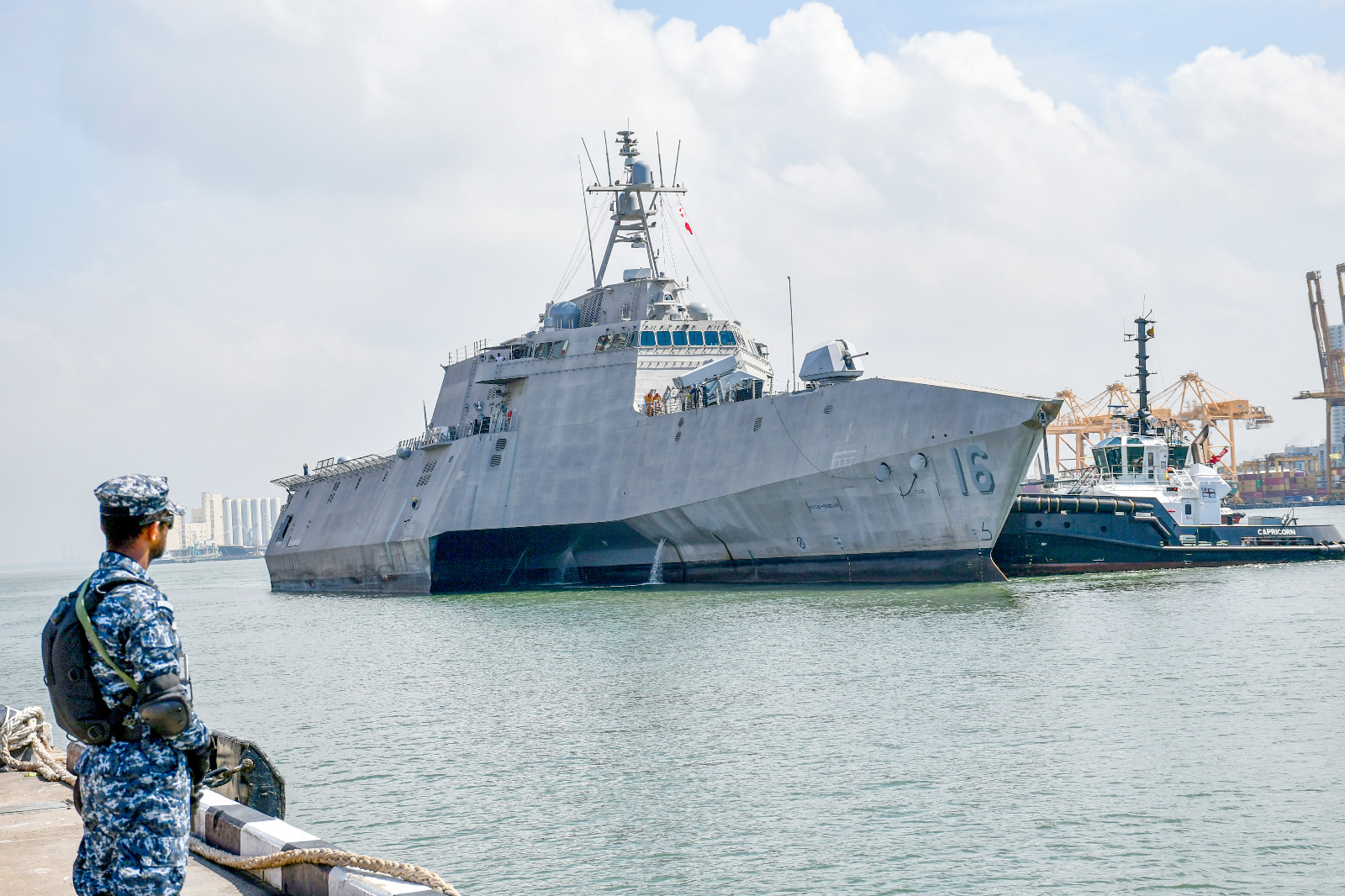
The U.S. Navy ship USS Tulsa (LCS 16) arrived at the Port of Colombo this morning, 7 October 2026 for replenishment purposes.
The visiting ship was welcomed by the Sri Lanka Navy in accordance with naval traditions.
The 127.7-metre-long platform is a Littoral Combat Ship commanded by Commander BM Wanier. Commissioned on 16 February 2019, USS Tulsa has since been in service with the US Navy.
The ship previously made a port call in Sri Lanka on 27 August 2025.
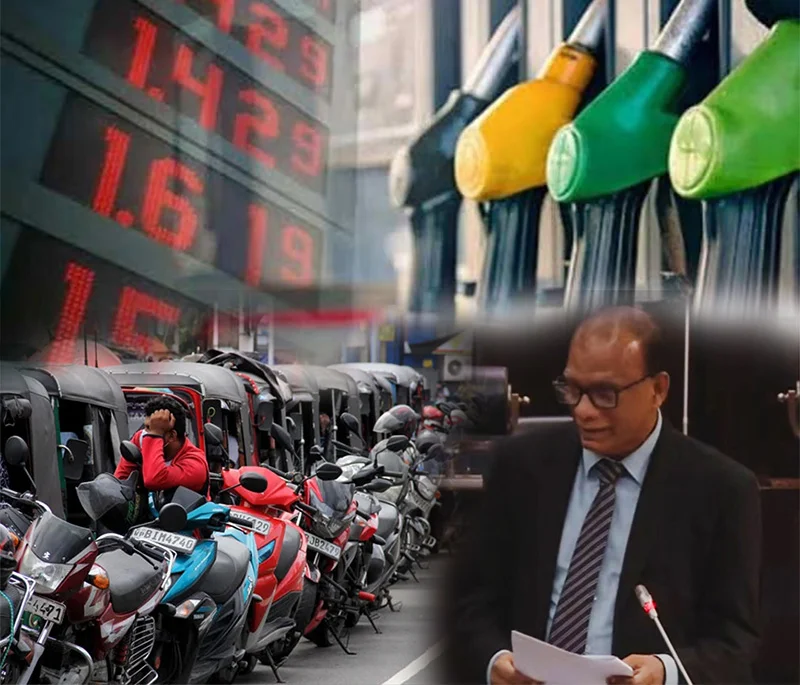
Govt. tells fuel distributors to maintain stocks to ensure uninterrupted supplies
by Saman Indrajith and Norman Palihawadane
The government had instructed private fuel distributors to maintain minimum stocks and ensure uninterrupted supplies to the market, Energy Minister Anura Karunathilaka told Parliament yesterday (06).
Karunathilaka said the Ministry of Energy Secretary had notified the relevant companies of the requirement, following a reduction in supplies by some private distributors, amid higher international fuel prices.
The Minister said private companies had informed the government that they were facing losses because international prices had risen while fuel was being sold, locally, at prevailing prices. As a result, some companies had reduced the volumes released to the market.
The reduced supplies had increased the burden on the Ceylon Petroleum Corporation (CPC), whose share of the diesel market had risen from about 54% to 82%, the Minister said.
“The CPC currently holds an 82% share of the market,” he said, adding that it had increased its supplies, compared with February, to compensate for the reduction by private distributors.
Karunathilaka said the government could not, under the existing agreements with private companies, specify the quantities they should supply to individual filling stations. However, it could require them to maintain minimum stocks in the country.
The Minister said the Energy Ministry had already instructed companies that had failed to maintain the required stocks to take steps to prevent supply disruptions.
The Minister attributed the queues reported at some filling stations to reduced supplies from private distributors, as well as normal variations in fuel distribution. He also said demand for CPC fuel had increased because private companies generally did not provide fuel to dealers on credit, while the CPC offered a three-day credit facility.
“We expect that, as the Ceylon Petroleum Corporation takes on this additional burden, the problem will ease to some extent by Wednesday or Thursday,” Karunathilaka said.
He said instructions had also been issued to increase supplies to CPC filling stations. A special discussion on the issue is scheduled for today (07), with officials of the Energy Ministry and CPC expected to participate,
along with President Anura Kumara Dissanayake.
Meanwhile, Petroleum Dealers’ Association officials have called for an early solution to the supply issue. Association Chairman D.V. Shantha Silva said queues had been reported at many filling stations, mainly those operated by private distributors.
He said the situation was not due to an overall shortage of fuel, but was linked to reduced orders by Lanka IOC, Sinopec and R.M. Parks amid concerns over losses incurred on fuel sales.
The Ceylon Petroleum Private Tanker Owners Association has urged motorists to refrain from panic buying, saying there was no nationwide disruption to fuel supplies.
The government earlier increased fuel prices and introduced a per-litre diesel subsidy following concerns raised by distributors over rising international prices.

Former first lady Shiranthi Rajapaksa arrested by CIABOC

U.S. Navy ship USS Tulsa arrives in Colombo for replenishment visit

Smriti Mandhana appointed India captain across formats

Ronaldo apologizes for Portugal walkout; says Jesus broke promise

Showers in the Western, Sabaragamuwa, Central, Uva, North-western and Southern provinces and in Anuradhapura and Mannar districts

Fuel crunch looms

‘Dates have the highest sugar content to fight Coronavirus’

Sunday Island 27 December – Headlines

#SundayIsland 17th December – Headlines

Sunday Island – 28th March

Sunday Island Headlines – 21 March

Sunday Island – 21st February – Headlines
-

 News7 days ago
US-assisted ‘Ice’ detection: NPC to examine IGP’s move to transfer drug-busting team
-

 Editorial6 days ago
Colombo Port drug bust: The plot thickens
-

 Editorial7 days ago
Drug busting, transfers and trust deficit
-

 Features4 days ago
The first woman in the foreign service or Ceylon Overseas Service it was then called
-

 News7 days ago
Sri Lankan facing death penalty in Saudi Arabia: Mano G appeals to Crown Prince
-

 Editorial5 days ago
Fuelling discontent and protest
-

 News3 days ago
Geneva takes up Sallay’s case and govt. ignores opportunity to answer accusations
-

 Latest News5 days ago
Tharindu Rathnayake, bowlers secure Asian Games Bronze for Sri Lanka