
Sports
Warne was ahead of his time – Arjuna

Rex Clementine in Galle
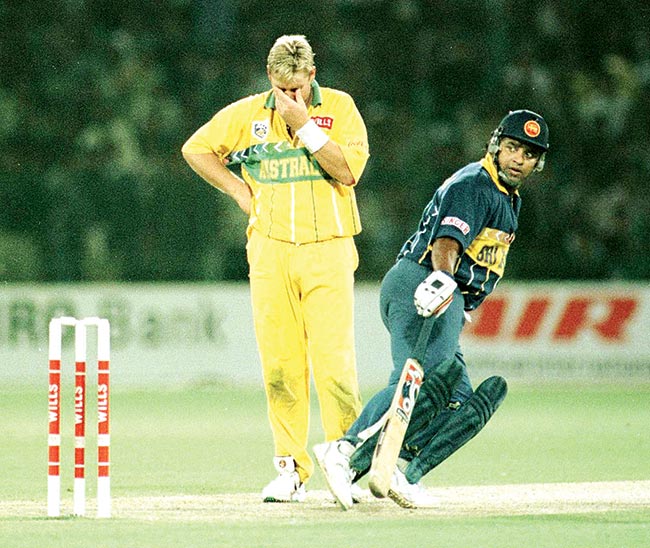
Their on field battles were spicy while their off field outbursts targeting each other were legendary. Both Arjuna Ranatunga and Shane Warne minced no words when it came to the other’s game or conduct. Yet, there was mutual respect between the two that was rarely noticed. When Warne wrote a book discussing the 50 greatest players he had played with or against, he had chosen Arjuna high in the pecking order. The World Cup winning Sri Lankan captain also revealed that Warne had wished him when he had become a Minister in 2015. In the public eye, they were sworn enemies. But off the field, their discussions ranged from field placings, fried chicken to kids.
Ranatunga showed up at the Galle International Stadium on Wednesday as Sri Lanka Cricket paid tribute to the leg-spinner who passed away in Thailand in March. The press were quick to catch up with him.
“Everybody knows about the run ins we had on the field but off the field we moved on well. Sri Lankans weren’t big fans of Warne, but soon after the tsunami when he came over to help, people started appreciating him as he touched their hearts,” Ranatunga told reporters.
“His death was devastating and our fans were sad. It’s a huge loss for the game as he was a brilliant student and ahead of his time. As some say, he was the best captain that Australia never had, elaborated Ranatunga.
“During our time, leg-spin was sort of a dying art. Except for Anil Kumble, Mushtaq Ahmed and Warney there weren’t many leg-spinners around. You have spinners with smooth actions and it’s good to watch. But a spinner has to turn the ball. That’s the main thing. Warney was able to do that and that was an indication that this was someone who is going to be special.”
Even to this day, for those who are engaged with the game, Arjuna emphasizes on dressing up smart as they are ambassadors of the game. One of the players he had captained is a prominent official these days and in Galle he had got an earful from the ex-captain for failing to iron his shirt. However, in Australia, a country where he has few friends, Arjuna is seen as someone who played the game ugly and even bent the rules for the advantage of his team.
“That’s something that we learned from Australia. When you go to Australia they are very tough, play the game hard and always want to win. We borrowed it from them and then used it on them. In order to compete with Australia, you have got to match their aggression and you may not be the most popular guy,” remarked Arjuna.
The legend of Warne was born at the SSC in 1992 when Sri Lanka snatched victory from the jaws of defeat losing the game by 16 runs having dominated the match for the most part. Warne cleaned up the tail picking up three wickets for no runs.
“Warne was picked at the right time. He was lucky that he had a clever captain in Allan Border. In that SSC Test, we knew that if he had bowled well in the second innings we would struggle. Still disappointed to lose that Test by the narrowest of margins as that would have been our first Test win against Australia. But that’s how the game goes. We knew from the start that Warne was special.”
“Our plan with Warney was to attack him. We knew that if we played defensively, it was just a matter of time before he got us out. Overall I would like to think that our strategy against him worked but we had bad days as well. He was too good a bowler not to come up with something to counter us. During the initial stages, I thought he wasn’t very comfortable when we attacked him. But then he developed and towards the tail end of my career he was a different bowler.”
The series between Australia and Sri Lanka has been named ‘Warne – Murali Trophy’. Which of the two spinners is the greatest?
“They were great bowlers who played for teams with different outlooks. For example, Warney played in a side that had guys like McGrath, Lee and Gillespie. Those guys had taken about three or four wickets by the time he had come and bowl. In the case of Murali, apart from Vaasy who takes a wicket or two, he had a tough ask. He had to come to bowl earlier on. Sometimes he had to take from wicket number one to last man. That’s not easy. One had a lot of time and opportunities to take wickets. The other had to share his wickets with other bowlers. Australia is a team that had so many great players. In Sri Lanka, Murali was a loner. Their rivalry was great to watch. Murali is a competitive guy and he wanted to take at least one wicket more than Warney. I thought that Murali gave his best when he played the Aussies.”
“I liked listening to Warne in commentaries. He wasn’t afraid to speak his mind out. He was outspoken and forthright, which is rare among cricket commentators these days. His cricket brain was ahead of his time.”








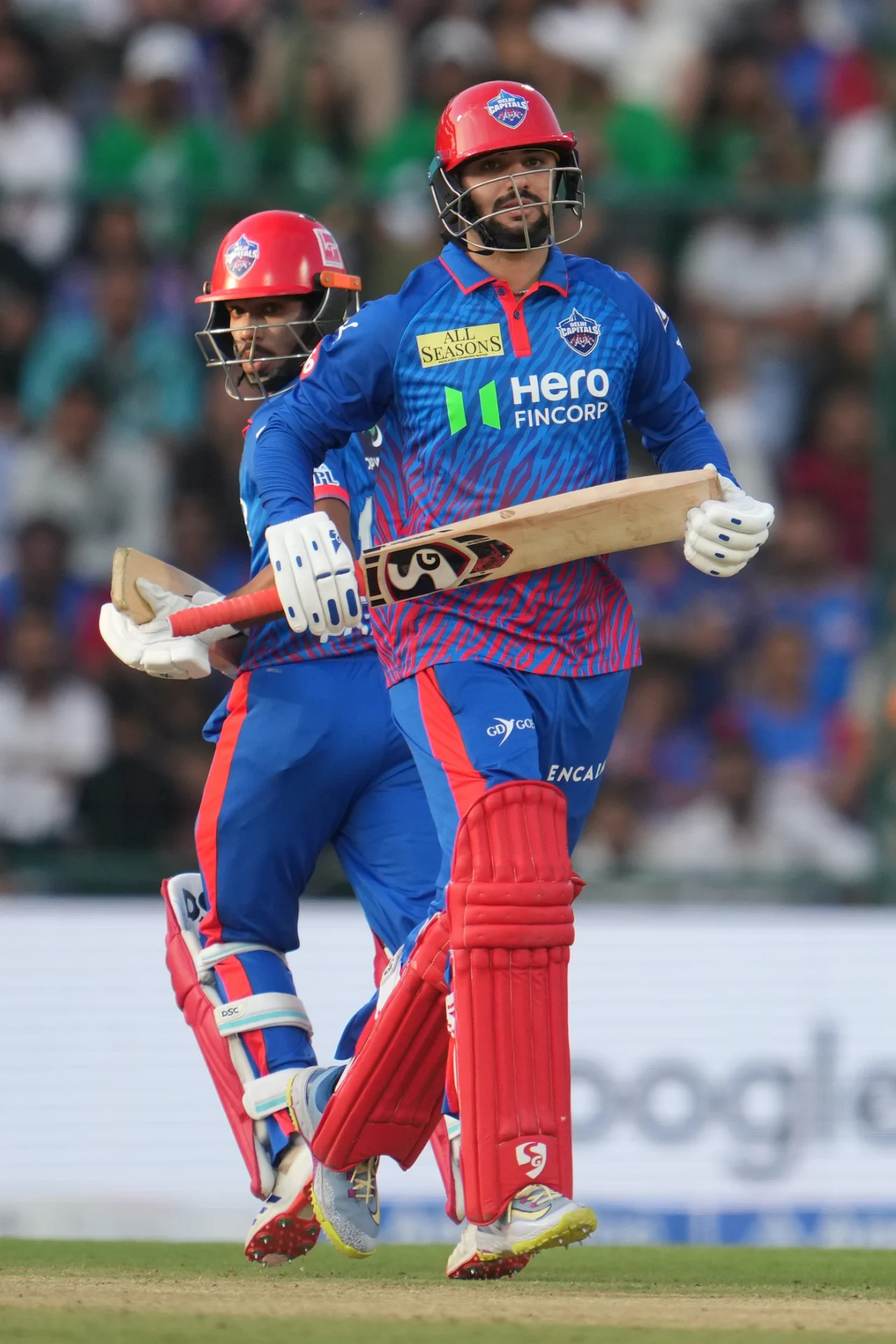
Sameer Rizvi picked up his second Player-of-the-Match award in as many games in IPL 2026, this time scoring 90 off 51 balls to help Delhi Capitals [DC] seal a tricky chase against Mumbai Indians [MI] with six wickets and 11 balls to spare. If you include his Player-of-the-Match award from DC’s last game of the 2025 season, it makes it three in a row. Only seven others have done so, and no one has gone beyond.
Before the Rizvi show, the DC bowlers restricted MI to 162 for 6 on a slow, black-soil pitch at the Arun Jaitley Stadium. With Hardik Pandya unwell, Suryakumar Yadav captained MI and top-scored with 51 off 36 balls. But most other batters struggled to play their shots. In fact, the first six of the MI innings came on the last ball of the seventh over.
DC, too, lost KL Rahul and Nitish Rana early in the chase but Pathum Nissanka’s counterattack kept them going. Nissanka made 44 off 30, after which Rizvi, coming in as DC’s Impact Player once again, ran away with the game.
Mukesh Kumar started waywardly, and Ryan Rickelton made him pay with two leg-side boundaries. From the other end, Rohit Sharma did the same against Lungi Ngidi. But Mukesh bounced back in his second over. He had Rickelton miscuing to mid-off and then caught and bowled Tilak Varma off a knuckleball.
With two right-hand batters, Rohit and Suryakumar, in the middle, Axar immediately brought himself on and sneaked in a three-run over. Rohit did hit two fours off Ngidi’s slower ones in the sixth over, the first a streaky one but the second a caress through covers, to take MI to 41 for 2, but it was a six-less powerplay for them. The last time it happened for MI was in 2023, against Chennai Super Kings in Chepauk.
Axar had a good match-up against Rohit coming into this game and he improved it further by having the batter caught at cover in the tenth over. Rohit made 35 off 26 balls. His match-up against Axar in the IPL now reads 77 balls, 67 runs, four dismissals.
Sherfane Rutherford didn’t last long and holed out to deep square leg against Vipraj Nigam, but Suryakumar kept MI going. He attacked the spinners and hit Kuldeep for two sixes. In the company of Naman Dhir, he brought up his fifty but was lbw to Ngidi off the following delivery. In Hardik’s absence, MI could score only 38 runs in the death overs.
Against Lucknow Super Giants, Rahul was out for a first-ball duck. Here he lasted three balls and made 1 before being caught down the leg side off Deepak Chahar. Rana was run out in the next over when Jasprit Bumrah, after fielding the ball off his own bowling, nailed a direct hit at the non-striker’s end.
At 7 for 2, Nissanka decided to take the attacking route. In the fourth over, he picked up back-to-back fours off Mitchell Santner, the second of which came via a reverse-hit over a leaping Rohit at cover. In the following over, he smashed two fours and a six off Shardul Thakur. Nissanka got a life on 41 when Dhir dropped him off Corbin Bosch but he fell to Santner three runs later.
After ten overs, DC were 73 for 3 – the exact score MI were at the same stage of their innings. The game was in the balance. Rizvi was batting on 25 off 23 but shifted the momentum in just one over. He flayed Bosch over mid-off, ramped him to the deep-third fence, cut him over deep point and launched him down the ground for 20 runs in all.
To ram home the advantage, he used his feet against Mayank Markande in the following over for back-to-back sixes. The first of those took him to his fifty off 31 balls. Such was his dominance that when the fifty stand for the fourth wicket came up, David Miller’s contribution in that was 1 off five balls. He was more of a bystander than a partner.
By the end of the 15th over, the result was a foregone conclusion. The only real interest left was whether Rizvi could reach his hundred. DC needed 25 to win, Rizvi needed 17. On 90, he attempted yet another big hit off Bosch but holed out to long-off.
Brief scores:
Delhi Capitals 164 for 4 in 18.1 overs (Sameer Rizvi 90, Pathum Nissanka 44, David Miller 21*; Deepak Chahar 1-20, Mitchell Santner 1-22, Corbin Bosch 1-39) beat Mumbai Indians 162 for 6 in 20 overs (Rohit Sharma 35, Suryakumar Yadav 51, Naman Dhir 28, Mitchell Santner 18*, Corbin Bosch 11*; Mukesh Kumar 2-26, Lungi Ngidi 1=34, Axar Patel 1-22, Vipraj Nigam 1-24, T Natarajan 1-24) by six wickets
[Cricinfo]


The basketball fraternity came together to witness a closely fought final of the Sri Lanka Basketball League as Colombo Bulls and Colombo Basketball Club locked horns at Royal College indoor basketball courts on Sunday.
Although Colombo BC looked to be the better team on paper, Bulls held their own and looked set to end their dominance. However, during the closing stages of the game, Bulls committed a few costly errors and Colombo were quick to make them pay holding onto a four point win. The final score was 73-69. One highlight during the game was the efficacy of both teams in shooting free throws, but during the final few seconds Bulls were off the target with the pressure getting to them.
Colombo were the deserved winners as they won all seven games in the competition.
Rukshan Atapattu, Dasun Mendis, Nimesh Fernando and Simron Yoganathan performed exceptionally well in the final.
In the women’s final, Track Masters secured a seven point win over Bulls. They were trailing by four points at the end of the first half but turned the tables in the second half winning 53-46.
Devduni Perera, Anjalee Ekanayake and Benika Thalagala came up with superb performances during the final.
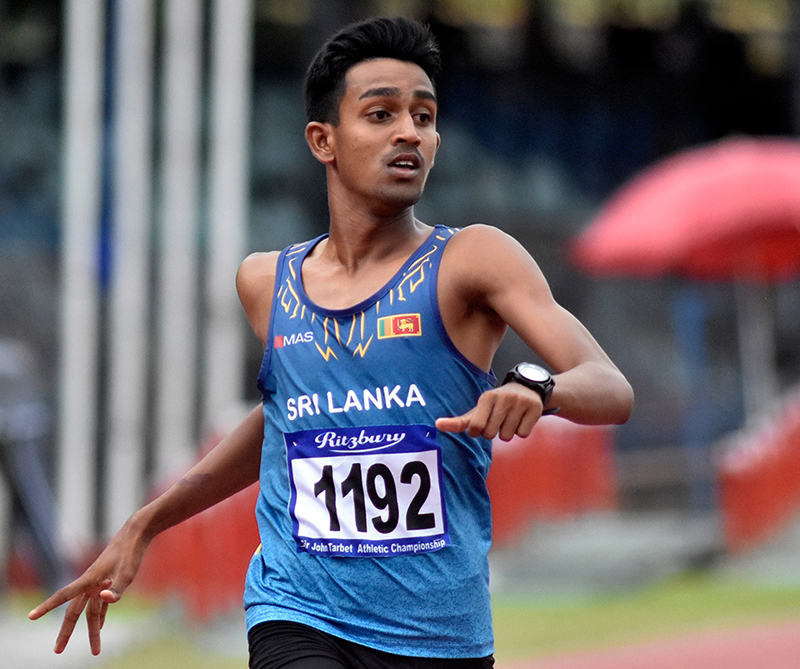
Sri Lanka’s long-standing dominance in the men’s 400 metres received another major boost as talented young sprinters, led by Omel Shashintha, delivered outstanding performances at the Junior Selection Trial held at Diyagama earlier this week.
The trial was conducted to select the national team for the upcoming Asian Junior Athletics Championships scheduled to be held in Hong Kong from May 28 to 31. The performances at the meet underlined that the 400 metres — widely regarded as Sri Lanka’s signature track event — continues to produce athletes capable of maintaining the country’s proud tradition.
Shashintha produced the highlight of the meet with a brilliant sub-46 second run to win the men’s 400 metres. The St. Sebastian’s College, Kandana athlete clocked an impressive 45.79 seconds, a time that would have been competitive even at senior national level. His performance currently stands as the fastest time in Asia in his age category this year and matches the 12th fastest time in the world so far in 2026, recorded by South Africa’s Kryn Romijn.
While Shashintha was the only athlete to dip under the 46-second barrier, two other promising runners also achieved the qualifying standards for the World Junior Athletics Championships which will be held later this year in Oregon, USA. Representing Kurunegala District, Sadew Rajakaruna finished second in 46.39 seconds, while Thisen Ranvidu of St. Peter’s College clocked 46.83 seconds to secure the required qualifying mark of 47.40 seconds.
Another promising athlete, I.M. Bogoda, narrowly missed the qualifying standard but came close with an encouraging performance.
The impressive depth displayed in the one-lap event also raises hopes of Sri Lanka fielding a strong 4×400 metres relay team at both the Asian Junior Championships and the World Junior Championships later this year.
Shashintha and Rajakaruna further strengthened their credentials by achieving qualifying standards in the 200 metres as well. Shashintha clocked 21.22 seconds, while Rajakaruna recorded 21.07 seconds, underlining their versatility across sprint events.
Both athletes already possess valuable international exposure, having competed alongside senior athletes on the global stage. Shashintha and Rajakaruna represented Sri Lanka at the World Athletics Indoor Championships last year, experience that is expected to benefit them greatly when they take on Asia’s best at the junior championship.
With such promising performances, the young sprinters appear ready to carry forward Sri Lanka’s rich 400-metre tradition established by legendary quarter-miler Sugath Thilakaratne and continued by current national stars Kalinga Kumarage and Aruna Dharshana.
Their performances at Diyagama suggest that Sri Lanka’s next generation of quarter-milers is well on track to keep the nation firmly among Asia’s leading sprinting powers.
by Reemus Fernando

Sameer Rizvi aces another tricky chase as Delhi Capitals floor Mumbai Indians

Sun directly overhead Dodanduwa, Rathgama, Yakkalamulla, Akuressa, Mulgirigala, Ranna, Kalamatiya and Ussangoda at about 12:13 noon today (05th April)

Showers expected in the Western, Sabaragamuwa, Central, Southern, Uva, Eastern and Northcentral provinces after 2.00 p.m.

Heat Index at Caution Level in the Western, Sabaragamuwa, Southern, Eastern, North-western, Northern and North-central provinces and in Monaragala district

Global ‘Walk for Peace’ to be held in Lanka

World Bank launches new 5-year partnership framework with Lanka

‘Dates have the highest sugar content to fight Coronavirus’

Sunday Island 27 December – Headlines

#SundayIsland 17th December – Headlines

Sunday Island – 28th March

Sunday Island Headlines – 21 March

Sunday Island – 21st February – Headlines
-

 News3 days ago
2025 GCE AL: 62% qualify for Uni entrance; results of 111 suspended
-

 News5 days ago
Tariff shock from 01 April as power costs climb across the board
-
 News6 days ago
Inquiry into female employee’s complaint: Retired HC Judge’s recommendations ignored
-
 Features6 days ago
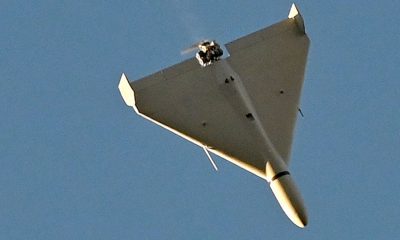
New arithmetic of conflict: How the drone revolution is inverting economics of war
-

 Editorial3 days ago
Search for Easter Sunday terror mastermind
-

 Business4 days ago
Hour of reckoning comes for SL’s power sector
-

 Sports6 days ago
Sri Lanka’s 1996 World Cup heroes to play exhibition match in Kuala Lumpur
-

 Features5 days ago
Seychelles … here we come