
Editorial
Villains as heroes

Monday 8th March, 2021
Pro-democracy protesters in Myanmar have dug their heels in. Demonstrating remarkable resilience in the face of the military junta, they have urged the US to intervene to save their country from the clutches of the power-hungry Generals. Why they are making such desperate appeals is understandable; any port in a storm! But they would find themselves in a far bigger crisis if the US ever decided to make an intervention. The plight of the people of Libya, who enlisted US backing to get rid of their eccentric dictator, Muammar Gaddafi, serves as an example.
Human rights violations are a global phenomenon, which needs to be addressed. But the UN institution created for that purpose is ineffectual thanks to the servility of its officials and some meddlesome global powers. Today, the UNHRC has become a cat’s paw used by the western states to promote neocolonialism. Swayed by the geo-political interests of strategic alliances, it has become a playground for the world powers.
China sought to make light of the recent military coup in Myanmar by initially calling it a Cabinet reshuffle, of all things. Military takeovers in Pakistan did not matter to the US, at all, while Washington could use Islamabad to advance its geo-strategic agenda vis-à-vis India, which was not in the good books of Uncle Sam at the time. The US did not welcome the ouster of Shah’s repressive regime, in Iran, and backed evil military dictatorships to the hilt in several countries it considered its allies, Chile under General Pinochet being a case in point. Now, Washington is weeping buckets for the people of Myanmar! Had the Burmese Generals been pro-American, Washington would have had no qualms about defending them, and the human rights groups dependent on western funding would have chosen to ignore the coup.
The UK has taken upon itself the task of protecting human rights across the globe despite being one of the worst human rights violators in the world. One may recall that Britain expelled more than 10,000 people of the Chagos Islands between 1967 and 1973 for the US to build the Diego Garcia military base; it has refused to comply with a UN ruling that the displaced people’s right to return be respected. Mauritius Prime Minister Pravind Jugnauth has gone on record as saying that the jurisdiction of the ICC will be invoked against Britian’s crimes against humanity. There is irrefutable evidence that Tony Blair, as the British PM, together with US President George W. Bush, carried out an illegal war in Iraq, causing hundreds of thousands of deaths. The Chilcot Report, too, has revealed that military action against Iraq was not justified, but no case has been filed against Blair or anyone else for war crimes in Iraq. The British Parliament has introduced an indemnity law to protect its military personnel against war crimes probes. Senior LTTE leader, Adele Balasingham, who brainwashed thousands of LTTE child combatants, turned them into human bombs, and thereby committed war crimes, is living comfortably in London; the UK pretends that she does not exist while insisting that war crimes must not go unpunished! Some British politicians are dependent LTTE activists for votes and funds to win elections. Thanks to diplomatic cables disclosed by Wikileaks, the world is aware that it was due to domestic political calculations and compulsions that, in 2009, the then British Foreign Secretary David Miliband remained intensely focused on Sri Lanka’s war and even rushed here in a bid to save Prabhakaran.
UNHRC chiefs have also compromised their credibility by being servile to the western bloc. A few years ago, the then UN High Commissioner for Human Rights Navi Pillay succumbed to US pressure and withdrew a statement she had issued condemning human rights abuses in Bahrain, which is a close ally of the UK and the US. Former UN High Commissioner for Human Rights, Mary Robinson, who once described missing UAE Princess Latifa as a ‘troubled young woman’ has now admitted that she was ‘horribly tricked’ by the victim’s family. Isn’t it possible that Robinson was tricked into issuing a strongly-worded statement on Sri Lanka as well? Incumbent UNHRC chief, Michelle Bachelet, has manifestly failed to act independently and impartially; she has prepared what can be described as a political report on Sri Lanka and blotted her copybook further in the process.
Perhaps, the only thing the Trump administration got right was its assessment of the UNHRC, which it called a cesspool of political bias. But, having pulled the US out of the cesspit, Washington continued to make other nations wallow in it, and the Biden government has plunged head first into it.
The UNHRC in the clutches of the worst human rights violators in the world, masquerading as champions of democracy, has faced a fate similar to that of Sri Lanka’s Police Narcotic Bureau, which has been infiltrated by criminals to further their interests. It looks as if human rights had to be protected against the UNHRC.



Monday 20th April, 2026
Several salespersons have been arrested and remanded for forcibly cutting the hair of a woman as punishment for shoplifting. But neither Kumara Jayakody nor Udayanga Hemapala has been arrested over a mega coal procurement scandal that has caused massive losses, amounting to billions of rupees, to the state coffers. The government had them resign as the Minister of Energy and the Secretary to the Ministry of Energy, respectively, as a face-saving exercise.
The fraudulent procurement of low-grade coal causes a generation shortfall of more than 150MW at the Norochcholai power plant, according to power and energy experts, and hundreds of thousands of litres of diesel have to be burnt daily to prevent power cuts. The government has increased fuel prices and electricity tariffs to make up for the losses caused by the coal scam. Some former ministers have been sentenced to prison for misusing fuel allowances and state-owned vehicles, but Jayakody is seen in the exalted company of the JVP/NPP leaders. So much for the change the NPP promised.
When a Grade Six English language module was found to contain a link to an adult website, a few months ago, the CID was swiftly called in to conduct a probe. But no such action was taken against those involved in the coal procurement scam. This alone is proof that the government has qualms about protecting the corrupt.
A wag might say the JVP/NPP government has got blundering down to a fine art. It blundered by defending Minister Jayakody and defeating a no-confidence motion against him over the coal procurement racket. It has made an even bigger blunder by trying to muddy the water in a bid to open an escape route for Jayakody; President Anura Kumara Dissanayake has appointed a special presidential commission of inquiry to investigate coal procurement since 2009. (Thankfully, the probe does not cover the steam-locomotive era, when coal was imported!) Desperate to cover up the coal scam and shield Jayakody, the JVP-NPP government has resorted to a familiar ruse used by pickpockets who, while fleeing, shout ‘Pickpocket, Pickpocket’, to mislead onlookers into believing that they are also good guys pursuing thieves. But it is highly unlikely that the government will be able to fool all the people all the time.
The coal scandal and the despicable efforts of the JVP/NPP leaders to save Jayakody have revealed a political leadership with a faulty moral compass. Ironically, the JVP-led NPP is popularly known as Malimawa (compass), which is its symbol. The self-righteous JVP/NPP leaders have made a mockery of their commitment to upholding accountability and the rule of law. They find themselves in the same predicament as the proverbial cat that fouled a rock and scrambled to cover it up.
Not even President Ranil Wickremesinghe, vilified by the JVP/NPP for shielding the corrupt, stooped so low as to appoint a presidential commission of inquiry to probe all procurement issues since the establishment of the Health Ministry when the then Health Minister Keheliya Rambukwella and some senior officials were exposed for fraudulent procurement of substandard medicines. True, the SLPP-UNP government unashamedly defended Rambukwella and defeated a no-faith motion against him, but he and his bureaucratic lackeys were arrested, remanded and prosecuted. Shame on the JVP/NPP leaders who are making a determined effort to save Jayakody and other cronies involved in the coal scandal.
President Maithripala Sirisena appointed a special presidential commission of inquiry to investigate the Treasury bond scams (2015). He did not order that all bond issues under previous governments be investigated. President Dissanayake has resorted to smoke and mirrors. His government is now without any moral right to be critical of the corrupt.
While the Treasury bond probe was on, former Central Bank Governor Arjuna Mahendran, went overseas. He never returned. The JVP-NPP government has not cared to have him extradited despite its platform rhetoric. There is no guarantee that Jayakody and others involved in the coal scam will not emulate Mahendran. Hence the need for them to be arrested and prevented from leaving the country.

The Grim Reaper apparently rides shotgun in many vehicles on Sri Lankan roads, where chaos is the norm, with drivers and riders moving like bats out of hell and jaywalkers darting across arterial roads and busy streets in a suicidal rush. The situation takes a turn for the worse during festive seasons, when road users behave as if they had a death wish. This may explain why as many as 44 lives were lost in 42 fatal accidents across the country between April 10 to 15 this year.
Road fatalities average seven to eight a day in Sri Lanka, and an increase therein is to be expected during a festive season. We can only hope that there won’t be any more tragedies like the ones we witnessed at Kotmale and on the Ella-Wellawaya road, in 2025.
Last year, as many as 2,562 lives were lost in fatal road accidents, according to media reports. On 7 April 2026, Director of the Police Traffic Control and Road Safety Division, SSP Manoj Ranagala, told the media that 676 fatal road accidents had occurred by the beginning of the current month. When the aforesaid 42 accidents and 44 fatalities are added to the official statistics, the picture becomes even gloomier.
Road fatalities jolt the police, politicians, road safety officials and the public into expressing concern and finding ways and means of reducing them only when they receive intense media attention. They sadly end up as mere statistics afterwards, making one wonder whether Sri Lankans have become desensitised to the lives lost in road accidents or adopted a fatalistic attitude towards them. There is no other way one can explain the absence of a well-coordinated national effort to make roads safe. Not that the authorities tasked with ensuring road safety have not done anything all these years. They have worked hard, and their good work is to be appreciated, but why they have failed to achieve their goal needs to be examined, and remedial action taken to save lives.
Road fatality statistics are shocking, but they shed light on only a part of the grave problem, which is far more complex than it looks. A World Bank report, Delivering Road Safety in Sri Lanka; Leadership Priorities and Initiatives to 2030, which we have discussed in a previous editorial comment, has revealed that ‘the high road crash fatality and injury rates on Sri Lanka’s roads undermine the economic growth and progress made over the past decade on reducing poverty and boosting prosperity’. The report says the annual crash deaths per capita in Sri Lanka are twice the average rate in high-income countries and five times that of the best performing countries in the world! Sri Lanka reportedly has the worst road fatality rate among its immediate neighbours in the South Asia region.
Last year, Director of the Colombo National Hospital Orthopaedic Services Department, Dr. Indika Jagoda, rightly called road fatalities a ‘silent epidemic’, which had not received the same public attention as dengue and other such diseases. Road accidents also exert a severe strain on the state-run hospitals, besides claiming lives, and their economic and social costs are enormous. In some cases, the victims of fatal road accidents happen to be the breadwinners of their families. Most of the road accident victims are young, as President of the Sri Lanka Medical Association Dr. Manilka Sumanatilleke has revealed at a recent media briefing.
SSP Ranagala has identified the primary causes of road accidents as poor road conditions, reckless driving, excessive speeding, and driving under the influence of alcohol. He is spot on. There are other causative factors, such as distractions, fatigue, inclement weather conditions, tailgating, improper lane changes, inexperience of drivers, poor eyesight of drivers, unroadworthy vehicles, lack of proper road markings, and time pressure. Much is being spoken these days about poor-quality coal consignments, and rightly so, but not much attention has been paid to the sham training courses conducted by the so-called driving schools and corruption in the process of issuing driving licences. These corrupt practices are also responsible for road accidents.
It is clear from the sheer number of lives lost in traffic accidents and the increasing vulnerability of all road users that we have been only scratching the surface of the problem of road fatalities all these years. The time has come for us to make an all-out effort to make roads safe for everyone.
Saturday 18th April, 2026
Never a dull day in Sri Lanka. CEO of HSBC Georges Elhedery has caused quite a stir here by claiming that Sri Lanka paid as much as USD 286 per barrel of oil, far above the global benchmark prices. He said so during a recent investment forum in Hong Kong. “What worries me is not the headlines,” he is reported to have said, adding that buyers sourcing oil from the Middle East are currently paying between USD 140 and USD 150 per barrel, and the highest amount for oil he has come across is a staggering USD 286 per barrel paid by Sri Lanka.
Elhedery’s remarks galvanised the Opposition into action here, with its propagandists going into overdrive, blaming the government for paying so much for oil, and hinting at a corrupt deal. Chairman of the Ceylon Petroleum Corporation (CPC) D. J. Rajakaruna has denied buying crude oil at USD 286 per barrel.
Addressing the media yesterday, Rajakaruna produced documentary evidence to support his claim, asserting that the HSBC CEO’s statement had been distorted to mislead the public into believing that the CPC had purchased crude oil at USD 286 per barrel. Asked by a journalist whether any kind of oil had been purchased at that price, Rajakaruna answered in the affirmative. He said refined oil was sold on the basis of five-day price averages, and the CPC had no alternative but to pay the amounts determined accordingly. If a shipment of refined oil had arrived between the end of March and early April, the prices would have risen steeply to the levels at issue, and nobody would have been able to do anything about it, Rajakaruna said.
True, the HSBC CEO did not specify that the oil he was referring to was crude. Therefore, it is not fair to compare the prices of crude with those of refined oil purchased at the height of the Iran war. However, the fact remains that according to the HSBC CEO Sri Lanka paid the highest amount for (say refined) oil, and the question is why it opted to pay that much while other countries were paying less.
Rajakaruna says the CPC was desperate to replenish the country’s oil stocks to prevent an energy crisis and had to buy oil at higher prices. His argument sounds tenable. However, other developing countries faced the same problem, and why didn’t they pay as much as USD 286 per barrel of refined oil? Did the supplier set a higher price for the oil arbitrarily, earned unconscionable profits at the expense of the Sri Lankan public, and shared the ill-gotten gains with someone in authority? Anything is possible in this country. What would be the situation if the JVP/NPP were in the Opposition today?
The CPC has passed its legacy debts on to the public in the form of a loss-recovery levy on fuel, amounting to Rs. 50 a litre, and therefore the public has a right to know why the CPC paid as much as USD 238 for refined oil per barrel while other countries were paying less for oil.
An investigation must be conducted to ascertain whether the CPC paid more for some oil shipments that could have been obtained at lower prices, and whether anyone cut a corrupt deal and lined his pockets. It must also be found out what the global prices of refined oil were when the CPC opted to pay USD 238 per barrel.

US intercepts and seizes Iranian-flagged cargo ship, Trump says

Heat Index at ‘Caution level’ in the Northern, North-central, North-western, Western, Sabaragamuwa, Eastern and Southern provinces and in Monaragala district

Showers or thundershowers will occur at most places of the island after 1.00 pm.

Church calls for Deputy Defence Minister’s removal, establishment of Independent Prosecutor’s Office

Road accidents, drowning, claim 70 lives in 8 days

Lanka sees surge in higher education attainment

‘Dates have the highest sugar content to fight Coronavirus’

Sunday Island 27 December – Headlines

#SundayIsland 17th December – Headlines

Sunday Island – 28th March

Sunday Island Headlines – 21 March

Sunday Island – 21st February – Headlines
-

 News5 days ago
PNS TAIMUR & ASLAT set sail from Colombo
-

 Business2 days ago
Harnessing nature’s wisdom: Experts highlight “Resist–Align” path to resilience
-

 Latest News6 days ago
“I extend my heartfelt wishes to all Sri Lankans for a peaceful and joyous Sinhala and Tamil New Year!” – President
-

 News2 days ago
Gratiaen Trust announces longlist for the 33rd Annual Gratiaen Prize
-
 News2 days ago
Heroin haul transported on 50-million-rupee contract
-
 Latest News7 days ago
Salt and Patidar power RCB past Mumbai Indians
-
 Latest News6 days ago
US blockade of Iran would worsen global energy crisis, analysts say
-
 Latest News4 days ago
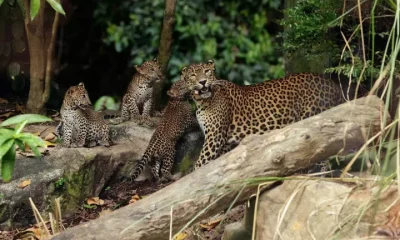
Singapore Zoo’s first Sri Lankan leopard cubs make their public debut