
Life style
Vanishing Voices in the Mist: How Tea Country’s Birds Are Losing Their Sky


High above sea level, where Sri Lanka’s tea country meets the clouds, the Central Highlands once echoed with the calls of endemic birds. These mist-clad slopes were more than a landscape; they were a living sanctuary, revered by ancient communities who believed the forests were sacred protectors of water and life.
Today, the picture is starkly different. The calls of the Sri Lanka Whistling Thrush grow quieter, and sightings of the Kashmir Flycatcher, a jewel-toned migrant, are now rare. “People see green hillsides covered in tea and think they are pristine,” says Rajika Gamage, Conservation Biologist at the Tea Research Institute (TRI) in Talawakelle.
He told The Sunday Island:”But ecologically, these are disturbed environments, and bird diversity is collapsing.”
A Landscape Transformed
The Central Highlands were once blanketed in dense montane forests, alive with species found nowhere else in the world. Colonial expansion in the 19th century changed this forever. Forested slopes were cleared for coffee plantations, and when coffee blight struck, tea took its place. Over time, this mosaic of plantations replaced much of the original forest.
Yet birds, remarkably, adapted. Shade trees, open glades, and remnants of native forests allowed species like the Sri Lanka White-eye, Pied Bushchat, and Yellow-eared Bulbul to survive. Surveys conducted near Shanthakum and Mattakelle tea estates recorded over 80 bird species, a testament to the resilience of nature.

Sri Lanka Dull Blue Flycatcher
-

- Crows at Horton Plains National Park
-

- Pied Bushchat

Kashmir Flycatcher
That fragile coexistence is now unraveling. The Silent Invasion
Introduced trees such as Eucalyptus grandis (Rose Gum), Toona sinensis (Toona), and the Ice-cream Bean (Inga edulis) have become widespread across tea landscapes. They were chosen for shade and fast growth, but their ecological consequences are stark. “They offer no nectar, fruit, or seeds for native birds, and they alter soil chemistry, reducing biodiversity,” Gamage explains.
Ground cover invasions are even more destructive. Crofton Weed (Eupatorium inulifolium), Gini Grass (Panicum maximum), Koster’s Curse (Miconia crenata), and Himalayan Knotweed (Persicaria wallichii) have smothered hillsides. These alien plants may appear lush, but they form dense mats that outcompete native flora.

Horton Plains awareness programme
“These invasive plants create a silent desert for birds,” Gamage says. “They look green, but they are ecological dead zones.
The Disappearance of the Kashmir Flycatcher
Few stories capture this transformation more vividly than that of the Kashmir Flycatcher. This delicate migrant, which winters in Sri Lanka, once thrived in the Central Highlands’ open glades and tea slopes, perching on low branches and darting after insects. Today, sightings are rare.
“The Flycatcher relied on open habitats rich with native vegetation and insects,” Gamage explains. “Dense invasive undergrowth has destroyed its feeding grounds.”

Yellow-eared Bulbul
The Sri Lanka White-eye, a highland icon, is also in decline. Its place has been taken by the Oriental White-eye, a hardy and aggressive cousin that thrives in disturbed environments. “It’s like losing a family heirloom and replacing it with a factory-made replica,” Gamage laments.
Invaders Rule the Skies
As native birds decline, aggressive generalists flourish. The Large-billed Crow, once confined to lower elevations, is now a permanent highland resident. It raids nests, preys on reptiles, and even hunts amphibians.
The common Myna and Yellow-billed Babbler have also surged in numbers, displacing smaller species. “Mynas dominate tree-hole nesting sites, leaving no space for birds like barbets or flycatchers,” Gamage says.
Even frugivorous species such as the Rose-ringed Parakeet and Red-vented Bulbul, once allies in seed dispersal, now serve invasive plants. “They spread seeds of alien weeds like Koster’s Curse,” he adds, “accelerating ecosystem collapse.”
Perhaps the most surprising newcomer is the Indian Peafowl. Once rarely seen in these misty landscapes, it is now a common sight in tea gardens and even Horton Plains National Park. “We’ve observed up to five individuals there,” Gamage reveals. “Peafowl are ground predators, so their rise is a serious threat to amphibians and nesting birds.”
Climate Stressors Intensify the Crisis
The Central Highlands are warming. Cloud belts that once cloaked the forests year-round now shift unpredictably. Rainfall has become erratic. These changes affect every layer of the ecosystem.
But Gamage argues that while climate change plays a role, habitat mismanagement is the greater threat. “We’ve effectively replaced native ecosystems with alien landscapes. Birds already under stress are now being pushed to extinction. Climate change just speeds up what poor land management started.”
Tea’s Unseen Dependence on Biodiversity
Ironically, the very crop at the heart of these landscapes—Ceylon tea—depends on healthy ecosystems. Montane forests regulate rainfall, protect watersheds, and stabilize soil. Without them, tea cultivation itself faces long-term risks.
“People see conservation and agriculture as opposing forces, but biodiversity safeguards tea,” Gamage says. “If you lose the forest, you lose the water. If you lose the water, you lose the tea.”
Tea estates, he believes, could become powerful conservation allies. “Even small patches of native trees can act as biodiversity refuges. Managing invasive plants, restoring native shade species, and training estate workers to value wildlife could make a huge difference.”
A Call to Action
Reversing this decline will require a bold, science-driven effort. Experts recommend:
1. Replanting native tree species such as Ceylon Oak, Rhododendron, and Stemonoporus to restore food sources for birds.
2. Targeted removal of invasive ground covers to bring back native plant diversity.
3. Establishing biodiversity corridors linking isolated forest patches with protected areas like Horton Plains.
4. Training estate managers and workers on eco-friendly plantation management.
5. Countrywide awareness campaigns to show the economic link between biodiversity and agriculture.
“This is not just about saving birds,” Gamage stresses. “It’s about safeguarding water security, livelihoods, and our heritage.”
Walking through the highlands today is like stepping into a muted version of history. The sharp whistles of the Whistling Thrush are faint; the Pied Bushchat’s cheerful song has faded. In their place come the harsh calls of crows and mynas. Even the vibrant Indian Peafowl—a symbol of royalty—feels out of place strutting across tea gardens where delicate flycatchers once ruled.
Still, Gamage remains cautiously hopeful. “We have a window,” he says. “If we act now—restore native vegetation, manage plantations sustainably, and curb invasives—we can bring back these birds. The Central Highlands are a national treasure, and we can’t afford to let them slip away.”
This isn’t just a story about birds. It’s a story about Sri Lanka’s cultural and ecological heritage, a landscape where plantations and wildlife have shared space for over a century. Whether future generations will wake to the whistle of a thrush or the caw of a crow depends on choices made today.
By Ifham Nizam ✍️
(Pictures courtesy Rajika Gamage)


 At Colombo Fashion Week,held recently at Cinnamon Grand,designer Aslam Hussein delivered a collection that spoke the language of quiet confidence and refined glamour, positioning him firmly as a Fashion Edit, favourite this season.
‘His collection unfolded like a carefully composed symphony – each piece moving with a rhythm of elegance and poise. Aslam Hussein’s runaway was more than a presentation – it was a story of refined luxury, individuality and timeless beauty where couture met emotion and each garment became a living expression of artistry.
Colombo Fashion Week was held this November at Cinnamon Grand ,namely Couture + Trousseau . The event was part of the luxury edit focused on high fashion,bridal wear and destination wedding,celebrating CFW’’s 22 rd anniversary Aslam Hussein opened the runway and his collection balanced sharp tailoring with fluid silhouettes, creating looks that felt both modern and enduring. Clean lines, thoughtful construction and an understated palette allowed craftsmanship to take centre stage. The colour palette was muted yet rich, allowing texture and craftsmanship to speak. Luxurious fabrics caught the light with every step, revealing subtle interplay between movement and form. Each silhouette told a story of – timeless, modern and effortless elegance

Aslam Hussein redefines elegance at CFW
Fluid silhouettes, muted palettes and clean tailoring defined his collection.
On the ramp,models moved with understated confidence, their hairstyles were created by. Ramani Fernando salons,the soft luminous makeup complemented the collection’s quiet sophistication. Each silhouette reflected Aslam’s commitment to craftsmanship, versatility and timeless style. Since establishing his label, he has been a staple on Sri Lanka’s fashion calendar, consistently presenting at Colombo Fashion Weeks and earning recognition for his designs.
His collection this year re-affirmed his mastery of understated elegance and contemporary luxury. Neutral tones were punctioned with occasion, deep shades, allowing fabric, cut and texture to take centre stage. Models carried the collection with measured poise. Make up was luminous yet natural, letting the silhouettes and individual model presence shine. Through his designs, Aslam Huseein has cultivated a following among modern cosmopolitan clientele who appreciate understated glamour, versatility and the quiet power of elegance.
His contributions have solidified his reputation as a designer who bridges Sri Lanka’s rich fashion heritage with an international sensibility.
Colombo Fashion Week is Sri Lanka’s premier event, showcasing the country’s top designers alongside emerging talent and is one of the glamorous events in the fashion landscape. The visionary is Ajay Vir Singh, founder of Colombo Fashion Week, whose leadership continues to elevate Sri Lanka’s premier fashion platform to international level.




Ramani Fernando salons is a name that has taken men and women’s grooming to new heights since its inception at Mount Lavinia. The salon has made its mark on the locals and celebrities alike. Over the years, Ramani Fernando Salons has not just set a benchmark for luxury grooming services but has also redefined how men perceive self-care, hair styling, and professional grooming. This salon at Mount Lavinia under its Manager Kappitiya Godage, namely Niroshan known by clients has become a favourite destination for those who sought more than just a haircut. The salon introduces a range of services—from precision styling and beard grooming to men’s makeup for photoshoots. The manager at Mount Lavinia is Niroshan Suresh. His philosophy emphasized that grooming is not just about appearance but also about confidence and self-expression and most importantly – self-care. He says make-up and grooming are not just limited to the opposite gender!
What makes Ramani Fernando Salon at Mount stand out. It is its innovative style and technique to men and women’s grooming. This branch prides itself on using cutting-edge tools and premium products that ensure every client leaves with a polished, customized look. The salon focus is on continuous learning and staying ahead of trends has earned it the loyalty of a discerning clientele.
Working at Ramani salons, Niroshan has spent many years perfecting the craft of styling, cutting and grooming men’s and woman’s hair, blending technical skill with a keen understanding of contemporary fashion trends. With years of experience, he guides clients on hairstyles and on the selection and proper use of styling products. His presence at Ramani Fernando salon at Mount Lavinia reinforce the brand’s reputation for excellence but also highlights the vital role of a skilled male stylist in shaping men and women’s grooming culture in Sri Lanka.
In the evolving world of men’s grooming, where style isn’t just about guiding a haircut but crafting a confident identity Niroshan at Mount Lavinia represent more than just a stylist or a place to cut hair. With Niroshan at the helm, this salon has become a place where style, innovation and meticulous grooming are curated for any client who walks in.
He is part of Ramani Fernando salons creative team, and brings creativity and precision to every look reflecting the high standards of Ramani Fernando’s renowned beauty collection
Niroshan has been with Ramani Fernando for several years and he is popular among his clients for those seeking sharp, modern and personalised hairstyles. With many years of experience, he has combined technical expertise with an eye for current trends ensuring each client leaves the salon looking confident and polished, Niroshan begins with a consultation, he carefully considers face shape, hair texture and personal style before recommending a look: He tailors each style to suit individual preferences, while ensuring easy to maintenance.
Beyond haircuts and grooming, his services include beard shaping, scalp and hair treatments and guidance on styling products. He makes each client of his leave the salon not just with a haircut but walk with confidence. He enjoys seeing his clients happy and self-assured. His experience, professionalism and knowledge make him a standard stylist in Colombo’s competitive grooming scene. He is very grateful to his senior and dynamic hairdresser Kamal for his guidance and expertise and who has been instrumental in shaping his approach to styling and artistry
by Zanita Careem ✍️

The Kingsbury, Colombo, welcomes the festive season with a spirit of warmth, elegance and celebration. This year’s Christmas and New Year offerings have been curated to bring guests together through moments of comfort, connection and shared joy across the hotel.
Harbour Court sets the tone for the season with its Christmas Eve Dinner Buffet, Christmas Day Brunch and Christmas Dinner on 24th and 25th December, followed by the New Year’s Eve Dinner Buffet on 31st December and the New Year’s Day Lunch and Dinner Buffets on 1st January. Kings Steakbar brings festive fine dining to Colombo with its Sunday Gourmet Carvery every Sunday in December, the Christmas Gourmet Carvery on 24th and 25th December, an á la carte Christmas Dinner on Christmas Day and a Seven-course Gourmet Dinner on New Year’s Eve.
Yue Chuan offers authentic Chinese cuisine with its signature Peking Duck Experience throughout December, daily Dim Sum and a special All You Can Eat menu on 24th, 25th and 31st December. At Tenk?, guests can enjoy elegant Japanese cuisine with the daily Teppanyaki Show, festive á la carte menus on 24th and 25th December and a New Year’s Eve Tasting Menu. Ocean highlights the best of coastal cuisine with festive á la carte menus on 24th, 25th and 31st December. Bringing Sri Lankan authenticity to the season, Tavern presents an Arrack Tasting Experience throughout December.
Festive cheer continues outdoors at Honey Beach Club with live music from 19th to 23rd December, poolside Festive party packages, and the signature New Year’s Eve celebration “Dancing Into 2026,” featuring Infinity and DJ E2. At Sky Lounge, guests can enjoy elevated festivities with Corporate Celebration packages, festive set menus, seasonal cocktails and the New Year’s Eve event “Party in the Sky,” featuring The Kingdom. Seas
For those celebrating at home, The Kingsbury offers Seasonal Roasts and festive hampers, available both ready-made and customisable, while Indulgence provides five-star delivery throughout the season. Families can also enjoy special offers, with children below six dining free and children aged six to ten receiving 50% off buffet dining. Seasonal cocktails, wine menus and bottle deals are available across all outlets.
This year, The Kingsbury, Colombo, invites guests to embrace the season with kindness, hope and cherished moments. Whether dining out, gathering with loved ones or gifting thoughtfully, we are honoured to share a season of splendour with you.
-

 Midweek Review5 days ago
How massive Akuregoda defence complex was built with proceeds from sale of Galle Face land to Shangri-La
-

 News4 days ago
Pope fires broadside: ‘The Holy See won’t be a silent bystander to the grave disparities, injustices, and fundamental human rights violations’
-

 News4 days ago
Pakistan hands over 200 tonnes of humanitarian aid to Lanka
-
 News5 days ago
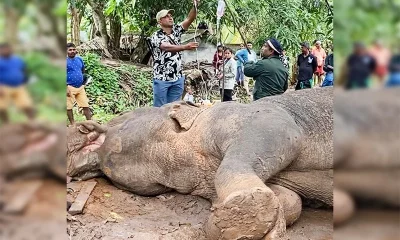
Burnt elephant dies after delayed rescue; activists demand arrests
-

 Business3 days ago
Unlocking Sri Lanka’s hidden wealth: A $2 billion mineral opportunity awaits
-

 Editorial5 days ago
Colombo Port facing strategic neglect
-

 News3 days ago
Army engineers set up new Nayaru emergency bridge
-

 News5 days ago
Sri Lanka, Romania discuss illegal recruitment, etc.