
News
Uyangoda, others promote Parliament of 200 members and Senate of 50

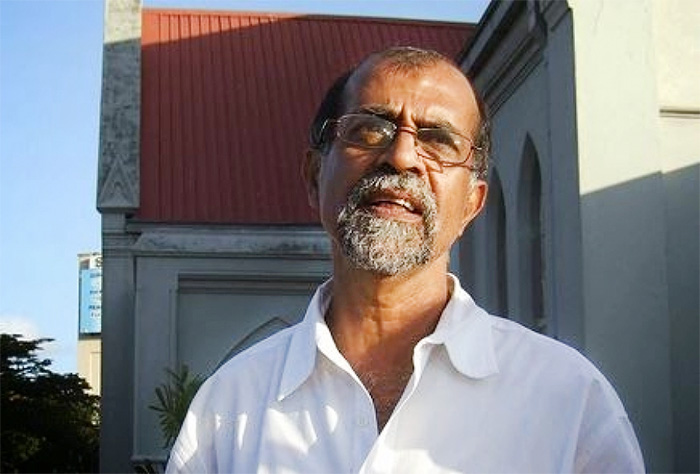
By Rathindra Kuruwita
Sri Lanka should have a parliament of 200 MPs and a 50-member Senate to ensure that the elected MPs cannot pass laws that are antithetical to democracy, Prof. Jayadeva Uyangoda, a senior political scientist, has said, speaking about a document titled ‘Fundamental principles and proposals for democracy through political and constitutional changes’ that he and several others have unveiled recently.
Prof. Uyangoda said that since 1972, the judiciary had not been vested with power to review the laws passed by Parliament, and successive Parliaments had passed laws depriving the people of their rights.
The Senate that has been proposed is not similar to the one established by the Soulbury Constitution. The Senate they propose would act as a check against the misuse of sovereignty by the elected MPs, he said.
In 1972, the Senate was abolished because the prevailing view at the time was that the Senate was an obstacle to elected representatives to carry out the mandate given by the people.
“The demand for the abolition of the Senate in 1972 came from the left and the centre-left parties. They felt that the Senate at that time was akin to the House of Lords in England. They thought this practice was undemocratic in the Sri Lankan context. I agreed with that in 1972,” he said.
However, the context has changed drastically, he added.
Prof. Uyangoda said the Parliament was misused by ruling political parties to implement draconian laws.
“Look at the laws that are rushed through Parliament. It’s obvious that the MPs do not even read the content of the laws, and none of these laws adhere to Republican principles. These MPs only care about staying in power. People believe that the Parliament is a rubber stamp and that there is no point in maintaining the legislature with taxpayer money. The Senate we propose is a way of curtailing these practices.”
Prof. Uyangoda said that the people’s faith in the legislature was at an all-time low, and most MPs could not even visit their own villages. Drastic changes would have to be made to restore faith in Parliament, he said.
Prof. Uyangoda went on to say that mere changes to the Constitution would not help solve the crisis in Sri Lankan polity. The political system, too, had to be changed, he said. The people needed to be given an opportunity to play a bigger role in decision-making, especially at the grassroots level.
“Most MPs take public anger very lightly. However, anyone who can read the pulse of the people knows how volatile the ground reality is. We need to expand and deepen democracy in Sri Lanka. We propose to limit the Cabinet to 20 and, out of that, five should be women.”
Prof. Uyangoda said that there was a female quota for local councils and that political parties have abused and manipulated this quota. Most of the women in local councils were relatives or allies of political leaders, and they are proxies.
“This is a problem many countries face. We must come up with some principles to minimise this. I don’t have the perfect answer to this. This is why we would like to present our proposals to the people and see what suggestions come from them.”
Prof. Uyangoda also said that a future Constitution must guarantee the economic and developmental rights of the people. In recent years, these rights had been taken from the people. However, there is growing public awareness that they deserve economic justice.
“We always talk about civil and political rights. But people want economic, social and cultural rights. There is no mention of these rights in our Constitution. We need to update the chapter on fundamental rights,” he said.



…Urges President not to undermine public confidence in independence of judiciary
The Colombo Law Society has urged President Anura Kumara Dissanayake not to proceed with any constitutional amendment to extend the retirement age of Supreme Court and Court of Appeal judges, warning that such a move could undermine public confidence in the independence of the judiciary.
In a letter dated July 2, 2026, the Society said its Executive Committee had unanimously resolved to convey its concerns following reports of a proposal to increase the retirement age of judges of the superior courts.
The Society said any amendment affecting the tenure of sitting judges should be approached with caution, adding that public confidence in the independence of the judiciary must be safeguarded.
Full text of the letter: The Executive Committee of the Colombo Law Society, at its duly convened meeting held on 25 June 2026, deliberated extensively on the reported proposal to increase the retirement age of Judges of the Court of Appeal and the Supreme Court.
Having carefully considered the matter, the Executive Committee unanimously resolved to convey its concerns to Your Excellency and to express its support for the position taken by the Bar Association of Sri Lanka in its letter addressed to Your Excellency, dated 25 May, 2026.
The Colombo Law Society recognizes and appreciates the invaluable contribution made by members of the higher judiciary to the administration of justice in Sri Lanka. However, we respectfully take the view that any alteration to the constitutionally established retirement age of Superior Court Judges must be approached with the utmost caution and only after broad consultation with all relevant stakeholders.
The existing retirement ages of Judges of the Court of Appeal and the Supreme Court have remained unchanged since the promulgation of the 1978 Constitution. Any departure from this long-standing constitutional framework, particularly where it affects serving judges, may give rise to public concern and perceptions that could undermine confidence in the independence and impartiality of the judiciary.
The independence of the judiciary is one of the cornerstones of the Rule of Law and democratic governance. Equally important is the public perception of such independence. The judiciary must not only be independent in fact but must also be seen to be independent and free from any appearance of influence or accommodation.
The Colombo Law Society further notes that the number of Judges of both the Court of Appeal and the Supreme Court was increased through constitutional reform in 2020. In those circumstances, questions naturally arise as to whether there exists a compelling institutional necessity to alter the retirement age of Superior Court Judges at this juncture.
We respectfully submit that constitutional amendments relating to the judiciary should be undertaken only after careful consideration of their long-term impact on judicial independence, public confidence, and the constitutional framework of the Republic.
Accordingly, the Colombo Law Society respectfully urges Your Excellency to give the fullest consideration to the concerns expressed by the legal profession and to refrain from proceeding with any constitutional amendment seeking to extend the retirement age of Judges of the Court of Appeal and the Supreme Court.
We remain confident that Your Excellency will continue to uphold and safeguard the independence, integrity, dignity, and public confidence in the judiciary, which remain essential to the preservation of the Rule of Law and democratic governance in Sri Lanka.
News
Freedom 250: US Embassy celebrates America’s 250th Independence Day through magic of American cinema


The US Embassy in Sri Lanka commemorated America’s semiquincentennial—250 years of independence—with Chief Guest, Minister of Health and Mass Media Nalinda Jayatissa, and hundreds of Sri Lankan partners, government officials, business leaders, diplomats and friends of the United States, at a Freedom 250 celebration honouring the enduring power of freedom through the lens of American cinema. The July 2 celebration highlighted the ideals that have shaped the United States for two and a half centuries—individual liberty, self-government, freedom of expression, and the belief that free people can dream, create, and shape their own future. The Embassy grounds were transformed into an immersive cinematic experience, celebrating how American films have reflected those freedoms while inspiring audiences across generations and around the world, including in Sri Lanka.
Welcoming guests to the celebration, Chargé d’Affaires Jayne Howell reflected on the profound connection between American freedom and cinematic storytelling. “Tonight, we celebrate 250 years of American independence by honouring one of our nation’s greatest gifts to the world—the art of cinema,” she said.
“For more than a century, American filmmakers have used their creative freedom to craft stories that resonate across every border and culture. From the opening of the world’s first dedicated movie theater in New Orleans, in 1896, to the groundbreaking animation of Snow White, from the sweeping epics like The Godfather to the technological marvels of Avatar, Star Wars and Jurassic Park, and classics like The Bridge on the River Kwai—filmed in Sri Lanka and forever linking the island to Hollywood history—our films reflect the very freedoms we celebrate today—the freedom to dream boldly, to question deeply, and to imagine new possibilities.”
CDA Howell continued, “As we share this cinematic journey with our Sri Lankan friends—fellow champions of democracy and freedom—we’re reminded that the best American stories are universal stories. They speak to the courage we see in The Wizard of Oz, the unity we witness in The Avengers, the wonder we experience through E.T., the spirit of exploration and achievement captured in films like Apollo 11, and the resilience we admire in Forrest Gump. Tonight, we celebrate not just American cinema, but the freedom that makes it possible—the freedom to tell any story, to show America at its best and its most complex, and to believe that movies can change how we see ourselves and each other. That freedom is what we honour on this 250th anniversary and the enduring values that will guide us forward.”
The evening opened with a stunning visual spectacle: rooftop screens displayed on the Embassy building celebrating 250 years of American independence and commemorating the signing of the Declaration of Independence on July 4, 1776. The centerpiece was an open-air screening, under the stars, featuring carefully curated clips that traced American cinema’s evolution—from silent films that established visual storytelling techniques still used today, through Disney’s Snow White and the Seven Dwarfs (the first full-length animated feature), The Matrix’s groundbreaking “bullet time” effects, to Christopher Nolan’s The Dark Knight, which redefined superhero cinema as a vehicle for exploring complex questions about justice and society.
The celebration concluded with fireworks illuminating the Colombo sky as the III Marine Expeditionary Force Band, the US Marine Corps’ forward-deployed band in the Indo-Pacific region, based in Okinawa, Japan, performed a montage of American songs that have inspired generations. Guests enjoyed a menu featuring high-quality US beef and other American food and beverages, showcasing the global reputation of American agricultural exports.
As the United States marks 250 years of independence, Freedom 250 celebrates the enduring idea that has defined America since 1776—that freedom unlocks human potential, fuels creativity and innovation, and empowers individuals to shape a better future. Through education, trade, investment, security cooperation, and the enduring ties between our people, the United States and Sri Lanka continue to strengthen a partnership built on opportunity and shared democratic values.
The US Embassy extends its sincere gratitude to the generous sponsors whose support made this year’s Independence Day celebration possible, including Diamond Sponsors Brandix, Hayleys, Hirdaramani, MAS Holdings, Mastercard, RM Parks, and Visa, along with our other valued partners.
News
CA dismisses application filed by Yoshitha seeking to quash conspiracy charge in money laundering case
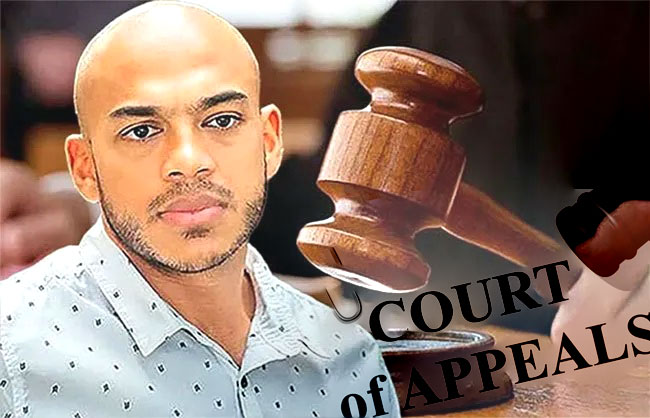
The Court of Appeal yesterday dismissed a revision application filed by Yoshitha Rajapaksa seeking to quash a conspiracy charge in the money laundering case, pending before the Colombo High Court.
Rajapaksa had challenged the conspiracy count in the indictment filed by the Attorney General, under the Prevention of Money Laundering Act, contending that the charge was not legally maintainable.
A Court of Appeal Bench, comprising Justices Amal Ranaraja and Dr. Sumudu Premachandra, rejected the application, ruling that the conspiracy charge could proceed before the Colombo High Court.
The ruling clears the way for the High Court to continue hearing the money laundering case, filed by the Attorney General against Rajapaksa.

Brutal heat cancels Fourth of July events, from DC to Philadelphia

Arias sends Colombia into World Cup last-16 with 1-0 win over Ghana

Messi scores again but Argentina given World Cup upset fright by Cape Verde

Anguished families left to identify Venezuela quake victims at makeshift morgue

Ukrainian suspect hunted by police after Monaco bomb attack was ‘disguised as a man’

Showers in the Western, Sabaragamuwa and North-western provinces and in Galle, Matara, Kandy, Nuwara-Eliya, Anuradhapura and Mannar districts.

‘Dates have the highest sugar content to fight Coronavirus’

Sunday Island 27 December – Headlines

#SundayIsland 17th December – Headlines

Sunday Island – 28th March

Sunday Island Headlines – 21 March

Sunday Island – 21st February – Headlines
-
 News5 days ago
LAWASIA warns against ad hoc initiative to increase judges’ retirement ages
-

 Features4 days ago
Climate action to bring South Asia together
-
 News4 days ago
Chamuditha to seek removal of injunction on Youtube programme
-

 Features6 days ago
People’s Bank expands digital banking network with 125th cheque deposit kiosk
-

 News1 day ago
SLAF conducts successful rescue mission under UN command in Central African Republic
-

 News1 day ago
CIABOC to question Harak Kata on Rs. 200 mn bribery allegation
-
 News4 days ago
CPRP alleges another death in custody, seeks protection for witness
-

 Midweek Review3 days ago
H’tota port’s strategic status remains focal point of geopolitical scrutiny