
News
USD 56.5 bn parked overseas: Govt. must deal with errant exporters firmly – Justice Minister


By Shamindra Ferdinando
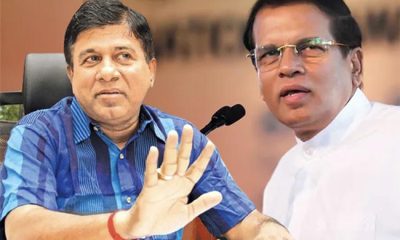
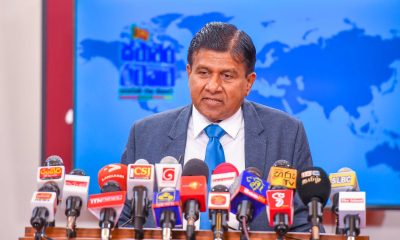
Justice Minister Dr. Wijeyadasa Rajapakshe, PC, has said the Foreign Exchange Act No 12 of 2017, enacted during the Yahapalana administration was meant to facilitate the operations of those who exploited the system for their benefit.
The new Act had repealed the Exchange Control Act of 1953, Dr. Rajapakshe said, adding that the Yahapalana move contributed to the deterioration of the economy. He explained how, as a member of the Yahapalana parliamentary group, he had to abide by the decision to vote for the new Foreign Exchange Act No 12 of 2017.
The Justice Minister said so at a hastily arranged media briefing at his Ministry near Technical Junction on Tuesday, when The Island sought his explanation why the Yahapalana government had repealed the time-tested Exchange Control Act of 1953 and what made him vote for the new law.
Altogether 94 MPs, including Dr. Harsha de Silva and Eran Wickremaratne – two of the strongest critics of the Rajapaksa government – voted for the new law. Eighteen MPs voted against the Bill whereas the rest skipped the vote taken on July 25, 2017.
Referring to official statistics, Dr. Rajapakshe said that export proceeds amounting to a staggering USD 56.5 bn were in offshore accounts and invested overseas. Acknowledging that those funds hadn’t been earned through illegal means, the Justice Minister said that the country suffered due to such valuable foreign exchange not being remitted. According to him, the USD 56.5 bn included approximately USD 3 bn that hadn’t been remitted last year as the country struggled amidst rapid deterioration of the national economy.
The Minister said that the actual figure could be definitely more than this.
Responding to another query raised by The Island, Dr. Rajapakshe said that the situation was so bad the government had to deal with the exporters cautiously as the country was not in a position to upset them under any circumstances. The Minister said that the Central Bank and the Finance Ministry were in the process of addressing this issue and efforts were being made to introduce a new Act.
Former External Affairs Minister Prof. G. L. Peiris on Monday (Oct 30) emphasized the urgent need to take remedial measures in this regard. The rebel SLPP MP said that this could be part of the overall government response to overcome the continuing financial crisis.
President Gotabaya Rajapaksa’s government also caused irrevocable setbacks by doing away with a range of taxes immediately after the last presidential poll on wrong advice. Declaring that the move deprived the Treasury of Rs 600-700 bn, Dr. Rajapakshe said that no one really knew the losses caused by sudden ban on agro chemicals. Perhaps the losses could be much more than the losses suffered due to the abolition of a slew of taxes.
Dr. Rajapakshe recalled punitive measures taken during the Sirimavo Bandaranaike’s administration to deal with foreign exchange frauds.
However, the deterioration of the national economy began in 2006 as the powers that be adopted corrupt and disastrous measures, Dr. Rajapakshe said, pointing out that the situation in the UPFA government compelled him to quit his ministerial portfolio.
Dr. Rajapakshe said that though some tend to question the importance of parliamentary watchdog committees, during his tenure as the Chairman of COPE the country benefited immensely as a result of action taken on COPE reports.
The former President of the Bar Association said that the Supreme Court had reversed the move to sell Lanka Marine Services (LMS) Ltd to John Keells and a controversial deal on Sri Lanka Ports Authority land. The Justice Minister mentioned several other cases, including the saving of the highly profitable Sri Lanka Insurance Corporation (SLIC) from privatization.








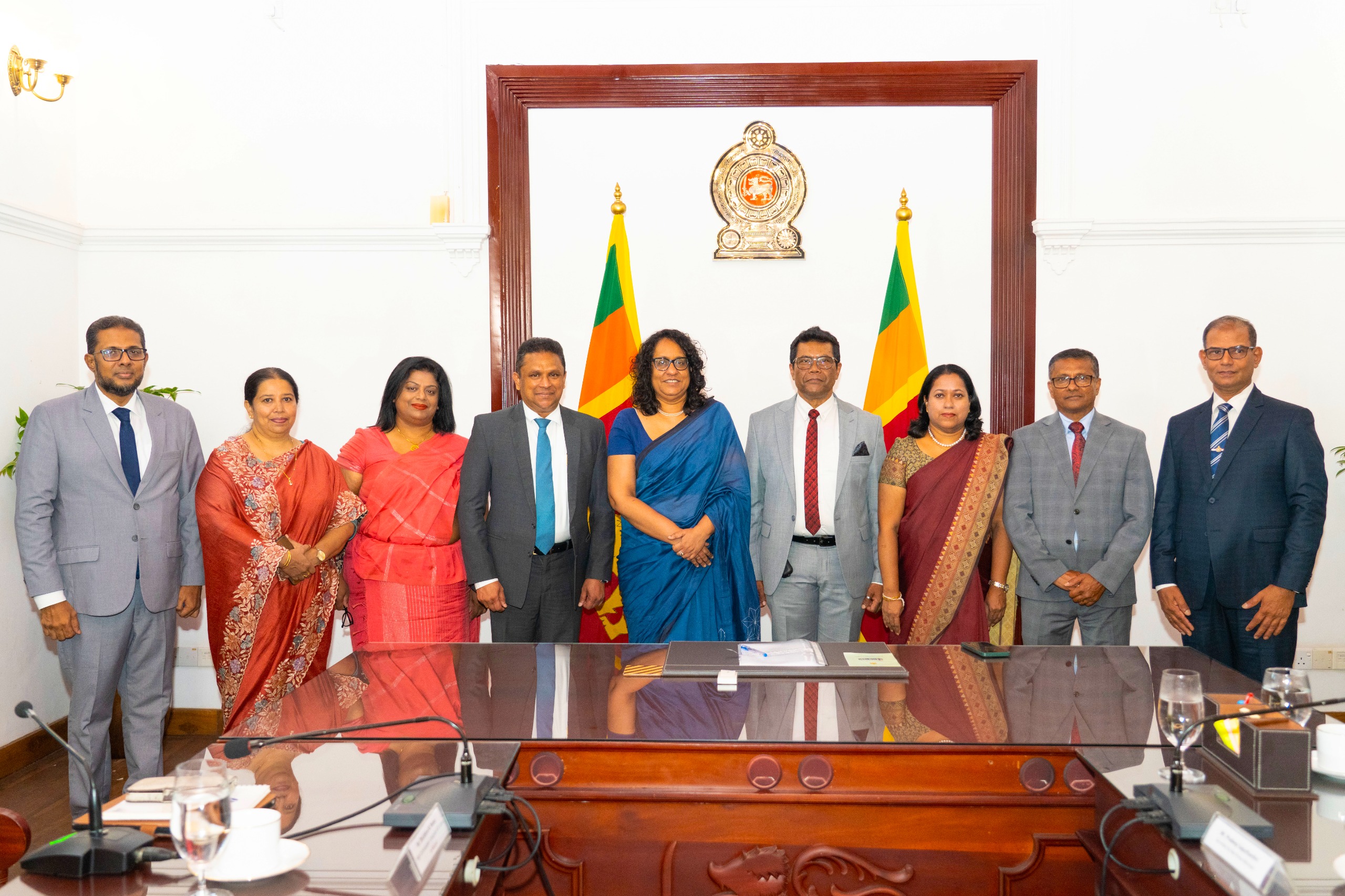
The heads of mission designate to Sri Lanka paid a courtesy call on Prime Minister Dr. Harini Amarasuriya on 26th of March at the Prime Minister’s office.
The delegation comprised Dharshana M. Perera, High Commissioner – designate of Sri Lanka to Malaysia, Ms. Dayani Mendis, Ambassador and PRUN – designate of Sri Lanka to Austria, Ms. N.I.D. Paranavitana, Ambassador – designate of Sri Lanka to Ethiopia & African Union, Prof. (Ms.) M.I. Fazeeha Azmi,Ambassador – designate of Sri Lanka to Iran, Saman Kumara Chandrasiri, Ambassador – designate of Sri Lanka to Israel, and M. Farook M. Fawzer, Representative – designate of Sri Lanka to Palestine.
The Prime Minister, Dr. Harini Amarasuriya, extended her best wishes to the Heads of Mission–designate and underscored the importance of their forthcoming assignments in advancing Sri Lanka’s national interests emphasizing their collective role in contributing towards the socio-economic upliftment of Sri Lanka.
The Prime Minister further highlighted the importance of projecting a positive and credible image of Sri Lanka internationally, through consistent, professional, and strategic engagement in their respective host countries and multilateral platforms.
She encouraged the Heads of Mission to actively identify and facilitate high-quality investment opportunities, particularly in sectors aligned with Sri Lanka’s development priorities, with a focus on sustainability, innovation, and long-term value addition.
Particular emphasis was placed on the promotion and diversification of Sri Lanka’s exports, including the exploration of new markets and strengthening trade linkages.
The meeting was attended by the Secretary to the Prime Minister, Additional Secretary to the Prime Minister Ms. Sagarika Bogahawatta and heads of mission-designate.
[Prime Minister’s Media Division]
News
SC finds Keheliya, others, guilty of violating FRs of public through corrupt drug procurement deal

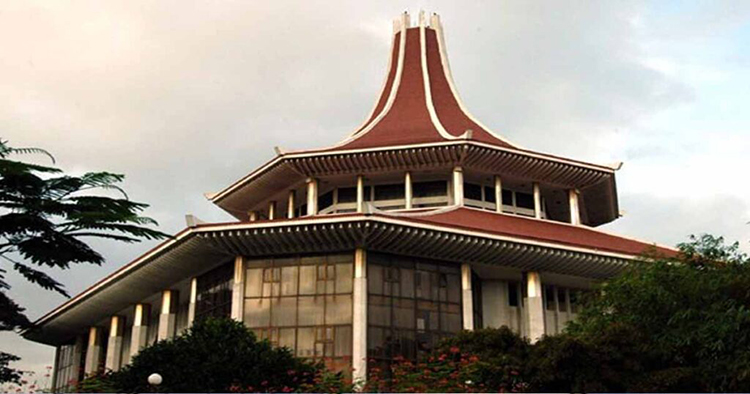
The Supreme Court yesterday held former Health Minister Keheliya Rambukwella and several senior health officials liable for violating the fundamental rights of the public over a controversial drug procurement carried out under the 2022 Indian Credit Line.
Delivering the judgment, a three-judge bench, headed by Chief Justice Preethi Padman Surasena, and comprising Justice Kumudini Wickremasinghe and Justice Janak de Silva, found that the procurement of medical supplies from an unregistered company, in breach of established procedures, had resulted in a serious infringement of public rights.
The Court ruled that the granting of a Waiver of Registration by the authorities was “wrongful, arbitrary and capricious,” and held that the direct procurement carried out on an unsolicited basis was unlawful. The transaction was accordingly declared null and void.
In a significant order, the Court directed Rambukwella to pay Rs. 75 million in compensation to the State from his personal funds.
The then Health Ministry Secretary Janaka Chandragupta and former Chairman of the National Medicines Regulatory Authority (NMRA), Prof. S. D. Jayaratne, were each ordered to pay Rs. 50 million.
The Court further directed NMRA Chief Executive Officer Dr. Wijith Gunasekara and former Director of the Medical Supplies Division Dr. Thusitha Sudarshana to pay Rs. 50 million each as compensation.
The ruling followed the hearing of a fundamental rights petition filed by Transparency International Sri Lanka and two other parties.
The Court also instructed the Commission to Investigate Allegations of Bribery or Corruption to initiate appropriate action under the Anti-Corruption Act against those found responsible.
Senior Counsel Senany Dayaratne, with Nishadi Wickramasinghe, Lasanthika Hettiarachchi, Janani Abeywickrema and Maheshika Bandara, appeared for the petitioners.
News
Sajith nudges govt. to follow India’s example in giving relief to consumers by slashing taxes on fuel
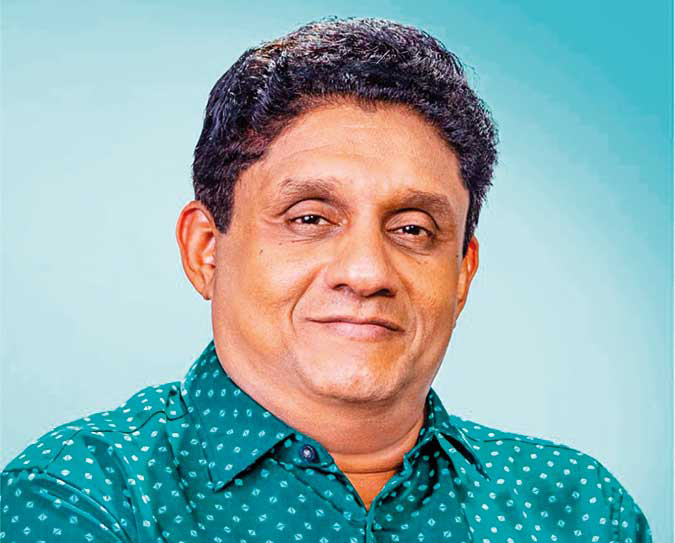
Opposition and SJB Leader Sajith Premadasa yesterday urged President Anura Kumara Dissanayake to reduce taxes on fuel, just as the Indian government has done.
He said in a post on X that “Modi government has decided to reduce the Special Additional Excise Duty on petrol and completely remove it for diesel in order to cushion the hardship on the Indian consumer. High time for Anura Kumara Dissanayake to keep up to his election promise and follow suit.”
Meanwhile foreign media reported that India has slashed excise duties on petrol and diesel to protect consumers and rein in a potential spike in inflation, while imposing windfall taxes on aviation fuel and diesel exports, amid volatile global oil markets, as a result of the Iran war.
Global oil prices have surged past $100 per barrel after the near closure of the Strait of Hormuz, which serves as a conduit for 40% of India’s crude oil imports, since the US and Israel first struck Iran on February 28.
In a government order, released late on Thursday, India’s Finance Ministry reduced the special excise duty on petrol to three Indian rupees ($0.0318) per litre from 13 Indian rupees earlier. It also cut the duty on diesel to zero from INR 10 rupees per litre.
The government did not say how much the duty cuts would cost. The move comes ahead of elections next month in four Indian states and one federal territory, with Indian voters known to be extremely sensitive to higher prices.
“Government has taken a huge hit on its taxation revenues to ensure very high losses of oil companies, approximately 24 rupees a litre for petrol and 30 rupees a litre for diesel, at this time of sky high international prices, are reduced,” Indian Oil Minister Hardeep Singh Puri said in a post on X.

Courtesy call by the Heads of Mission- Designate on Prime Minister

Three dead after helicopter crash in Hawaii

Woods charged with driving under influence after crash

Showers may occur at a few places in the Rathnapura, Kaluthara, Galle, and Matara districts during the evening or night

SC finds Keheliya, others, guilty of violating FRs of public through corrupt drug procurement deal

Sajith nudges govt. to follow India’s example in giving relief to consumers by slashing taxes on fuel

‘Dates have the highest sugar content to fight Coronavirus’

Sunday Island 27 December – Headlines

#SundayIsland 17th December – Headlines

Sunday Island – 28th March

Sunday Island Headlines – 21 March

Sunday Island – 21st February – Headlines
-

 News3 days ago
Senior citizens above 70 years to receive March allowances on Thursday (26)
-

 Features5 days ago
Trincomalee oil tank farm: An engineering marvel
-

 News1 day ago
Energy Minister indicted on corruption charges ahead of no-faith motion against him
-

 News2 days ago
US dodges question on AKD’s claim SL denied permission for military aircraft to land
-

 Features5 days ago
The scientist who was finally heard
-

 Business2 days ago
Dialog Unveils Dialog Play Mini with Netflix and Apple TV
-

 Sports1 day ago
SLC to hold EGM in April
-

 News3 days ago
CEB Engineers warn public to be prepared for power cuts after New Year