
Midweek Review
US paying the price for disregarding military advice

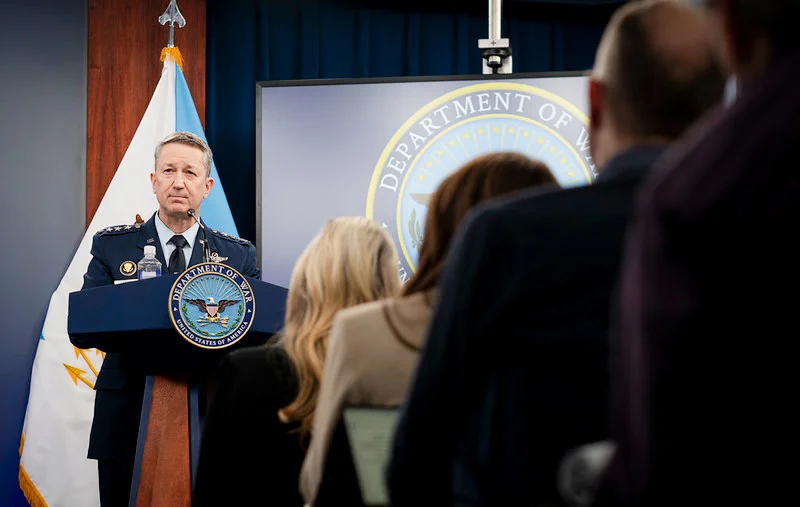
Jayasekera
Sri Lanka recently sought Saudi assistance to introduce advance radar technology, capable of detecting approaching targets and drone capability to meet aerial threats. On behalf of the NPP government, that request was made by Deputy Defence Minister Maj. Gen. (retd) Aruna Jayasekera when he met Mohammed bin Abdulrahman Al-Ghribi, Commander of the Royal Saudi Naval Forces, on the sidelines of the World Defence Show 2026 in Saudi Arabia, in February, this year. They also discussed the possibility of Saudi ships visiting Colombo.

Jayasekera also sought training opportunities for SLAF in Saudi Arabia when he met Lt. Gen. Mazyad bin Sulaiman Al-Amro, Commander of the Royal Saudi Air Defence Forces. Jayasekera discussed with Vice Admiral Fahad Al Ghofaily, Deputy Chief of General Staff, the possibility of securing Saudi assistance to surveillance and deep sea operational capabilities of the Navy.
Saudi Arabia has been repeatedly hit by Iran during its counter offensive. In fact, Iran stepped up attacks in the wake of the US bombing of Kharg Island, a major Iranian oil facility. It would be pertinent to mention that Admiral Steve “Web” Koehler, Commander of the US Pacific Fleet, visited New Delhi and Colombo, less than 10 days before the outbreak of war, and here he met both Minister Jayasekera and Defence Secretary Air Vice Marshal (retd) Sampath Thuyakontha. It was Koehler’s second visit after the change of government in Sept. 2024. Don’t forget that it was Koehler’s command that alerted Sri Lanka, on the morning of 4 March, on the sinking of the unarmed Iranian frigate Dena.
The meticulously planned assassination of Iranian Supreme Leader Ayatollah Ali Khamenei on 28 February was meant to bring about a swift regime change and a victorious end to the war. The joint Israeli-US war machine assumed that such a high profile decapitation strike would pave the way for swift public uprising and capitulation of the Iranian government.
The aggressors, quite wrongly, assumed that those who launched the costly protest campaign in Iran, in late December last year, against the unbearable cost of living, would be able to exploit Khamenei’s assassination.
Unpredictable US President Donald Trump was so confident, on the first day of the offensive, that he urged the Iranian military to lay down their arms and its people to take over their government. International media quoted the Republican Chief as having said: “It will be yours to take”.
Trump disregarded his top military adviser, Chairman of the Joint Chiefs of Staff, Air Force General Dan Caine’s warning against attacking Iran. US media reported that Caine, who succeeded Air Force General C.Q. Brown, sacked by Trump in February 2021, warned that war could be risky, potentially drawing the US into a prolonged conflict.
Over two weeks into the war, the Israeli-US assumption seems utterly wrong with those, who genuinely believed in the sure collapse of the Iranian administration following the decapitating strike, are struggling to cope up with the spirited Iranian counter attacks. While enduring a much larger devastating bombing campaign, compared to the 12-day war in June last year, Iran overwhelmed Israel and Gulf countries where powerful US forces were stationed. Their costly missile defences seemed ineffective against Iranian missile and drone salvos that caused unprecedented chaos in the region.
But, what really astonished the Gulf states was Iran’s blockade of the Strait of Hormuz – the only maritime passage between the Gulf and the Gulf of Oman and the route for about a quarter of the global liquefied natural gas and seaborne trade from Gulf countries. This stunned the aggressors and those who blindly backed their despicable strategy.
Iran has categorically denied missile and drone attacks on Cyprus, Azerbaijan and Turkey. If Iran didn’t target them, who did? Whoever staged those attacks, their intention is clear. They want to involve NATO (North Atlantic Treaty Organisation) in the Israeli-US misadventure by hitting NATO members Cyprus and Turkey. Why would Iran attack Turkey against the backdrop of Ankara’s condemnation of Khamenei’s assassination, and also denied the use of its airspace, territory, and territorial waters to the US armed forces for the ongoing war?
The US announcement on March 12 that curbs on Russian oil would be lifted till April 11 underscored the gravity of the situation. Having failed to achieve a swift ‘regime change,’ their much touted primary objective in Operation ‘Epic Fury,’ the US has no option but to swallow its pride and seek Vladimir Putin’s intervention. The US ended with egg on face. It would be pertinent to mention the US sanctioned Russian oil immediately after the launch of Moscow’s Special Operation against Ukraine in February 2022. That ban had been based on the assumption that oil revenue enabled Russia to prolong the war in Ukraine.
Does the 11 April deadline mean that the Israel-US combine seriously believed that Iran could be defeated by that time? Intense media coverage of the conflict indicated that Israel and US objectives in Iran weren’t the same. Regardless of repeatedly vowing to achieve regime change in Iran, the aggressors ended up examining ways and means of exiting the conflict triggered by them. The way Iran has been responding to Israeli-US attacks, the West cannot fully restore Hormuz by the second week of April. Prolong war may force US to extend waiver on sanctioned Russian oil, thereby further strengtheing Putin.
The US-Israeli strategy has suffered in the absence of an anticipated large scale public uprising, in Iran, immediately after the decapitation strike. When that failed to materialise, as expected, the overall picture of the largest ever combined Israeli-US offensive changed.
Unilateral US decision to lift the ban on Russian oil, even temporarily, divided the western grouping backing Ukraine. In spite of the US being a critical member of that grouping, the Iranian action left Trump with no alternative but to ease pressure on global oil markets at Ukraine’s expense. The Europeans realise that the failure to effect regime change may compel Trump to extend waiver on oil sanctions on Russia.
What really went wrong? President Trump has been so confident of Iranian surrender he mocked British preparations for the deployment of aircraft carriers to the Middle East.
“The United Kingdom, our once Great Ally, maybe the Greatest of them all, is finally giving serious thought to sending two aircraft carriers to the Middle East,” President Trump declared on March 8. The humiliating Truth Social post appeared to be influenced by rash thinking.
“That’s OK, Prime Minister Starmer, we don’t need them any longer — But we will remember. We don’t need people that join Wars after we’ve already won!” President Trump ridiculed the British. Reference to the UK as a ‘once great ally,’ underscored the US-UK rift.
But several days later, Trump sought deployment of other navies, including that of the UK to break the Iranian blockade on Hormuz Strait.
Modi phones Pezeshkian
Had the Israeli-US project achieved its primary objective, namely regime change, Indian Prime Minister Narendra Modi wouldn’t have had to eat humble pie after declaring solidarity with Israel, just a few days before the unprovoked war. Prime Minister Modi, on March 12, nearly two weeks after the killing of Supreme Leader Khamenei, phoned Iranian President Masoud Pezeshkian.
Modi had no option but to get in touch with the post Khamenei Iranian leadership amidst growing turmoil in the country over disruption of vital gas and fuel supplies. India made its move as the US declared that New Delhi could turn to Russia for the time being. India desperately needed oil and required them as quickly as possible.
Having elevated India-Israel partnership to the highest level in the wake of Modi’s late February 2026 visit to Tel Aviv, on the eve of the unprovoked attack to decapitate the Iranian leadership, India found itself in an unenviable situation. The two-day visit led to what the two governments called “Special Strategic Partnership for Peace, Innovation and Prosperity.” In other words, the Israelis must have been working overtime on war preparations while Modi and Indian External Affairs Minister Dr. Jaishankar were visiting the Jewish State.
Modi’s call and a couple of calls from Dr. Jaishankar to his Iranian counterpart Abbas Araghchi facilitated the passage of fuel carriers. The US must have been deeply upset by the Indian move but that ensured the BJP, in power since 2014, brought the situation under control for the time being. The truth is India had been compelled to negotiate with Iran and the latter wouldn’t have given assurance regarding safe passage for vessels carrying fuel for India without being adequately compensated.
After rushing to Israel to show their servile loyalty on the eve of launching the unprovoked attack on Iranians, the Indian-Iran deal, in the aftermath of that folly, for safe passage for New Delhi’s vessels, proved that there were limits to the world’s solitary superpower. In the run-up to Modi’s call to President Pezeshkian, the Indian leader came under heavy Congress fire over India’s failure to promptly condemn the assassination of the Iranian Supreme Leader. Initially, the Indian government acted as if Congress criticism were irrelevant but it had to appeal to Iran in the wake of the closure of the Strait of Hormuz.
Iran appeared to have exploited India’s difficulties. Having overlooked India-Israel/US partnership and the sinking of the unarmed Iranian frigate ‘Dena’ on 4 March, Iran’s Ambassador to India, Mohammad Fathali, on 13 March declared their readiness to grant safe passage through the Strait of Hormuz for vessels on their way to India.
Responding to a question from an RT India correspondent, the envoy highlighted that Tehran considered New Delhi as a friend and that there were converging interests between the two countries.
Asked directly whether India would receive safe passage through the Strait, he replied: “Yes, because India is our friend. You will see it within two or three hours.” (RT India is a New Delhi-based, English-language television news channel officially launched in December 2025 by Russian President Vladimir Putin).
At the time Israel-US unleashed war on Iran, India wouldn’t have anticipated such a scenario-direct negotiation with Iran to secure energy supplies and the US having to waive the ban on Russian oil sales. How would India-Iran deal on safe passage for energy carriers impact on India-Israel/US relations?
Sri Lanka, rattled by the developing situation, swiftly followed suit to explore the possibility of securing Russian oil. Russian Ambassador in Colombo Levan Dzhagaryan, on the invitation of the government, met Foreign Minister Vijitha Herath, at the Foreign Ministry, and assured the Minister Moscow would be informed. However, whether that meeting would produce results, as desired by Sri Lanka, is not yet known. But, Sri Lanka, trapped in the US Indo-Pacific strategy, seems utterly helpless as President Trump’s unprovoked gangster-type actions roiled the world. Ambassador Dzhagaryan, who had served as Russia’s top envoy in Iran, from 2011 to 2022, during a recent interview with the writer explained how the West sought to defeat Russia in Ukraine and the events leading to the Special Military operation in February 2022.
Gulf States in turmoil
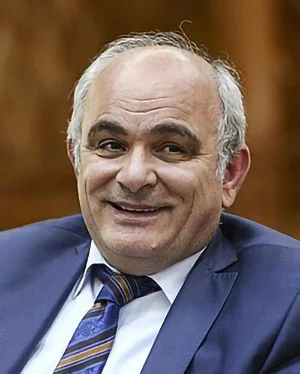
Dzhagaryan
The stepped-up US naval build-up against Iran made it clear that a combined Israel-US offensive was inevitable. Against that background, the significance of an invitation received by the Colombo-based media to meet UAE Ambassador in Colombo, Khaled Nasser Al Ameri, in late February, this year, was realised only after the eruption of the war.
Ambassador Al Ameri, who had been here since February 2022, never called such a meeting before during 25 February dinner meeting at Cinnamon Life at City of Dreams discussed issues amidst rising tensions. The writer was among the invited along with Kesara Abeywardena, Editor, Daily News, and Nisthar Cassim, Editor, Daily FT. Perhaps the Ambassador felt the need to comprehend the pulse of the Colombo media due to the presence of a significant Sri Lankan community employed in his country.
The Gulf countries that accommodated US forces arrayed against Iran never expected Tehran to go the whole hog. Both the US and Gulf countries obviously miscalculated Iranian determination in the face of unprovoked aggression. They had to pay a very heavy price but none more so than the UAE. The Iranians shattered the myth of their invincibility due to the deployment of costly US armaments.
Paula Hancocks reported for CNN on 10 March that more than 1,700 missiles and drones had been fired towards the UAE since the war began. Quoting the UAE Defence Ministry, Hancocks said that more than 90% of them had been downed by interceptors, fighter jets and helicopters.
President Trump admitted in an interview with CNN’s Jake Tapper recently that Iran’s willingness to strike its Arab neighbours had been his biggest surprise of the war. But, faced with relentless Israeli-US offensive, Iran couldn’t have endured the pain without inflicting losses on all those arrayed against the country. The Iranian reaction must be examined taking into consideration the killing of the country’s Supreme Leader, some of his family as well as top military leaders.
The US-led coalition will eventually overwhelm Iran but the rapidity with which that country hit back even after losing the top leadership may embolden those opposed to US strategies. That is the undeniable truth. The latest Israeli and US claims of targets taken out in Iran cannot be discussed without taking into account their claims last June. During the 12-day war against Iran, Israel and US launched massive attacks but the retaliatory campaign launched by Iran after 28 February onslaught proved that debilitating losses couldn’t be inflicted by air campaigns alone.
UAE and others had learnt a bitter lesson by being part of Israeli-US strategy meant to overwhelm Iran. They had proved that Iran couldn’t be subdued the way the US succeeded in Venezuela in January this year. Venezuela appeared to have reached a consensus with the US following the abduction of its President Nicolas Maduro. The speed the new Venezuela leadership switched its allegiance to the US is not surprising though disappointing.
“I thank President Donald Trump for the kind willingness of his government to work together,” Rodríguez posted on X on 5 March, in perhaps her most shameless act of kneeling since Maduro’s abduction. But, in Iran, the attempted regime change operation in spite of it being overwhelming with superior firepower had been thwarted by that country. Their retaliation has exposed the weakness in the overall US-led defence of what can be termed Gulf Arab countries.
The recent relocation of a significant part of the US anti-missile system deployed in South Korea, particularly to meet the nuclear armed North Korean threat underscored the inadequacy of overall defence of the region at the time Israel-US attacked Iran. Foreign media reported South Korea protesting against the US move though it couldn’t interfere in the US action.
Status of Iranian proxies
The Lebanese armed group Hezbollah reached a ceasefire agreement with Israel in November 2024, following year-long clashes. In spite of the ceasefire, according to international media, Israel continued military presence in that country and there were numerous ceasefire violations. However, Hezbollah largely abided by the ceasefire until the assassination of the Iranian Supreme Leader.
Hezbollah resumed large scale attacks on Israel following the 28 February attacks. Combined Iran-Hezbollah attacks on Israel caused significant trouble. Israel launched retaliatory strikes and expanded ground operations in Lebanon where over a million people were displaced amidst massive destruction of infrastructure.
The French offer to arrange direct talks between Israel and Lebanon to find a lasting solution to the developing crisis seems irrelevant as long as Israel-US action continues against Iran. The issue at hand is the Israel’s desire to obliterate Iran with US support. US media, particularly CNN, reported how the American public resented the expanding US role in the conflict, with Trump issuing contradictory statements regarding US objectives.
Hamas, whose October 2023 raid on Israel resulted in the ongoing conflict, appeared to have surprised Iran with its recent plea to Tehran not to attack Gulf Arab countries in retaliation for Israeli-US aggression. Iran simply ignored Hamas appeal.
Iran should be held responsible for pursuing destructive strategy in the region by sponsoring Hamas in Gaza, Hezbollah in Lebanon and Houthis in Yemen. The Israeli military action that followed the unprecedented October 2023 Hamas raid that caused well over 1,000 Israeli deaths weakened all Iran backed groups. Iran, in a way, used these groups as a buffer against the Jewish State. Lebanon, too, is a victim of Iranian strategy that empowered Hezbollah to take on Israel. US backed Israeli actions cannot be discussed under any circumstances turning a blind eye to Iranian funding of Hamas, Hezbollah and Houthis fought back in whatever way possible. People have forgotten President Ranil Wickremesinghe’s ridiculous declaration in late December 2023 that he would deploy an Offshore Patrol Vessel (OPV) in the Red Sea in support of US-led efforts to counter Houthi attacks on the vital shipping lane.
In spite of reports and claims of the Sri Lanka Navy sending an OPV there, actual deployment never took place. Sri Lankan vessels are not equipped to face possible missile and drone threats and in case of deployment would have been vulnerable to Houthi such attacks.
By Shamindra Ferdinando

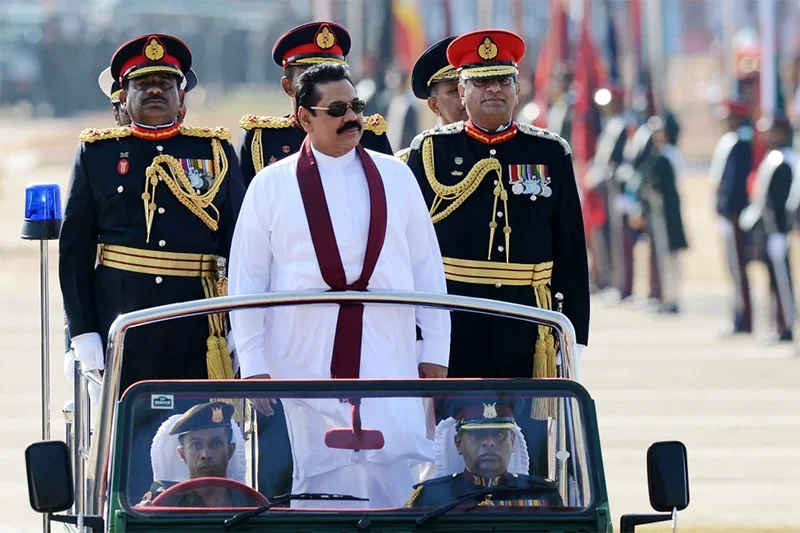
The country is in deepening turmoil over the theft of USD 2.5 mn from the Treasury. The Treasury affair has placed the arrogant NPP in an embarrassing position. The controversial release of 323 red-flagged containers from the Colombo Port, in addition to two carrying narcotics and the coal scam that forced Energy Minister Kumara Jayakody to resign, has eroded public confidence though the NPP pretends otherwise.
Suspicious deaths of a Finance Ministry official, suspended over the Treasury heist of USD 2.5 million, and ex-SriLankan Airlines CEO Kapila Chandrasena shouldn’t distract the government and the Opposition from marking victory over terrorism.
But, the country, under any circumstances, shouldn’t forget to celebrate Sri Lanka’s greatest post-independence achievement. Dinesh Udugamsooriya, a keen follower of conflict and post-Aragalaya issues, insists that those who cherish the peace achieved should raise the national flag in honour of the armed forces.
The armed forces paid a huge price to preserve the country’s unitary status. Those who represent Parliament and outside waiting for an opportunity to return to Parliament must keep in their minds, unitary status is non-negotiable, under any circumstances, and such efforts would be in vain.
By Shamindra Ferdinando
Sri Lanka celebrates, next week, the eradication of the bloodthirsty separatist Liberation Tigers of Tamil Eelam (LTTE) as a conventional threat to the survival of this nation, at least in our hearts, even if the authorities dampen any celebrations. The armed forces brought the war to a successful conclusion on 18 May, 2009. The body of undisputed leader of the LTTE, Velupillai Prabhakaran, was found on the banks of the Nanthikadal lagoon, on the morning of 19 May, less than 24 hours after the ground forces declared the end of operations in the Vanni theatre.
The LTTE’s annihilation is Sri Lanka’s greatest post-independence achievement. Whatever various interested parties, pursuing different agendas say, the vast majority of people accept the eradication of the LTTE’s conventional military capacity as the armed forces’ highest achievement.
Sri Lanka’s triumph cannot be discussed without taking into consideration how the Indian-trained LTTE, who also went on to fight the New Delhi’s Army deployed here, in terms of the Indo-Lanka Peace Accord, signed in July, 1987, giving it an unforgettable hiding. The Indian misadventure here cost them the lives of nearly 1,500 officers and men. Just over a year after the Indian pullout, in March, 1990, the LTTE assassinated Rajiv Gandhi who, in his capacity as the Prime Minister, deployed the Indian Army here. But India launched the Sri Lanka destabilisation project during Indira Gandhi’s premiership.
Western powers, the now decimated United National Party (UNP), Janatha Vimukthi Peramuna (JVP), and an influential section of the media, propagated the lie that the LTTE couldn’t be defeated. But, the United People’s Freedom Party (UPFA), under President Mahinda Rajapaksa’s resolute leadership, sustained a nearly three-year long genuine sustained offensive that brought the entire Northern and Eastern regions back under government control.
The UNP relentlessly hindered the war against the LTTE. UNP leader Ranil Wickremesinghe, hell-bent on undermining the military campaign, had no qualms in questioning the military strategy. The former Prime Minister went to the extent of sarcastically questioning the culmination of the military campaign in the East with the capture of Thoppigala (Baron’s cap) in the second week of July, 2007, calling it just a rock outcrop with no significance. Believing the military lacked the strength to continue with the campaign, Wickremesinghe publicly ridiculed the Thoppigala success. The then Brigadier Chagie Gallage, the pint-sized human dynamo, provided critical leadership to the highly successful Eastern campaign that deprived the LTTE the opportunity to compel the armed forces to commit far larger strength to the region. We clearly recall how he went to announce the prized capture from his forward base, that afternoon, driving his own jeep, dressed as a soldier wearing a cap, with his second in command seated by his side, obviously not to fall victim to any sniper hiding in the surrounding jungles.
The likes of Ravi Karunanayaka, Lakshman Kiriella, Dr. Rajitha Senaratna and the late Mangala Samaraweera demeaned such successes by contributing to a vicious political campaign that dented public confidence in the armed forces. Then Lt. General Sarath Fonseka’s Army needed a massive boost, not only to sustain the relentless advance into the enemy territory, but to hold onto and stabilise areas brought under government control. But the viciousness of these critics were such that Samaraweera had the gall to say that Fonseka was not even fit to lead the Salvation Army.
The Opposition campaign was meant to deter the stepped up recruitment campaign that enabled the Army to increase its strength from 116,000 to over 205,000 at the end of the campaign. In spite of disgraceful Opposition attempts to cause doubts, regarding the military campaign among the public, with backing from Western vultures, who were all for LTTE success, the Rajapaksa government maintained the momentum.
President Rajapaksa had a superb team that ensured the government confidently met the daunting challenge. That team included Defence Secretary Gotabaya Rajapaksa, Vice Admiral Wasantha Karannagoda, Lt. General Sarath Fonseka, Air Marshal Roshan Goonetileke and the then Chief of National Intelligence (CNI) Maj. General Kapila Hendawitharana. There were also the likes of Rear Admiral Sarath Weerasekera, who returned from retirement to transform the once ragtag Home Guards into a worthy back-up to the military, as the Civil Defence Force, at critical places/junctures.
The then Governor of the Central Bank, Ajith Nivard Cabraal, played a significant role in overall government response to the challenge. The then presidential advisor MP Basil Rajapaksa’s role, too, should be appreciated and Prof. Rajiva Wijesinghe as well as Minister Mahinda Samarasinghe contributed to counter the false propaganda campaigns directed at the country. Whatever the shortcomings of the Mahinda Rajapaksa-led UPFA may have had, the armed forces couldn’t have succeeded if the resolute political leadership he provided, with his team of brothers, failed both in and outside Parliament. That is the undeniable truth.
During the 2006-2009 campaign, the UNP twice tried to defeat the UPFA Budget, thereby hoping to bring the war to an abrupt end. Th utterly contemptible move to defeat the UPFA Budget ultimately caused a split in the JVP with a section of the party switching its allegiance to President Rajapaksa to save the day.
Amidst political turmoil and both overt and covert Western interventions, the armed forces pressed ahead with the offensive. It would be pertinent to mention that the Vanni campaign began in March, 2007, a couple of months before the armed forces brought the eastern campaign to an end.
Vanni campaign
The Army launched the Vanni campaign in March, 2007. The 57 Division that had been tasked with taking Madhu, and then proceeding to Kilinochchi, faced fierce resistance. The principal fighting Division suffered significant casualties and progress was slow. An irate Fonseka brought in Maj. Gen. Jagath Dias as General Officer Commanding (GoC) of the 57 Division to advance and consolidate areas brought under control.
The Army expanded the Vanni campaign in September, 2007. The Task Force 1 (later 58 Division) launched operations from the Mannar ‘rice bowl’. Fonseka placed Gallage in command of that fighting formation but was replaced by the then Brigadier Shavendra Silva, as a result of a medical emergency.
The Army gradually took the upper hand in the Vanni west while the LTTE faced a new threat in the Vanni east with the newly created 59 Division, under Brigadier Nandana Udawatta, launching offensive action in January, 2008. Having launched its first major action in the Weli Oya region, that Division fought its way towards Mullaitivu, an LTTE stronghold since 1996.
The 53 (Maj. Gen. Kamal Gunaratne) and 55 (Brig. Prasanna Silva) Divisions, deployed in the Jaffna peninsula, joined the Vanni offensive, in late 2008, as the TF 1 fought its way to Pooneryn, turned right towards Paranthan, captured that area and then hit Elephant Pass and rapidly advanced towards Kilinochchi. The TF 1 and 57 Division met in Kilinochchi and the rest is history.
Once the Army brought Kilinochchi under its control, in January, 2009, the LTTE lost the war. The raising of the Lion flag over Kilinochchi meant that the entire area, west of the Kandy-Jaffna A9 road, had been brought under government control. By then the LTTE had lost the sea supply route, between Tamil Nadu and Mannar region. The LTTE was surrounded by several fighting formations in the Vanni east while the Navy made an unprecedented achievement by cordoning off the Mullaitivu coast that effectively cut them off on all sides.
During the final phase of the naval action, they captured Sea Tiger leader Soosai’s wife, Sathyadevi, and her children Sivanesan Mani Arasu and Sivanesan Sindhu. Spearheaded by the elite Fourth Fast Attack Flotilla, the Navy conducted a sustained campaign, with spectacular success in the high seas, and, by late 2008, the Navy dominated the waters around the country.
The sinking of floating LTTE warehouses, with the intelligence provided by the Directorate of Military Intelligence (DMI) and the US Pacific Command, after the Americans decided to speed up the inevitable, and a campaign, directed at operations across the Palk Strait, weakened the LTTE. By early January, 2009, the LTTE had lost its capacity to carry out mid-sea transfers, and the use of Tamil Nadu fishing trawlers to bring in supplies, and it was only a matter of time before the group surrendered or faced the consequences.
Although Tamil Diaspora still believed in the LTTE launching a massive counter attack on the Vanni east front and the Tamil National Alliance (TNA), under the leadership of the late R. Sampanthan, worked hard to halt the offensive, President Rajapaksa declared that the offensive wouldn’t be called off. President Rajapaksa had the strength to resist the combined pressure brought on him by the West and the UN until the armed forces delivered the final blow.
The despicable efforts made by US Secretary of State Hillary Clinton to block IMF funding for Sri Lanka is in the public domain. Clinton was obviously trying to please the Tamil Diaspora. The US made that attempt as the ground offensive was on the last phase against the backdrop of the international community suspending relief supply ships to Puthumathalan.
The IMF provided the much required funding to Sri Lanka, regardless of Clinton’s intervention.
A targeted assassination
The Air Force conducted a strategic campaign against the LTTE while providing support to both the Army and the Navy. Despite limited resources, the Air Force pulverised the enemy and high profile target assassination of S.P. Thamilselvan, in his Kilinochchi hideout, in early November, 2007, shook the LTTE leadership. The deployment of a pair of jets (Kafir and MiG 27), on the basis of intelligence provided by the DMI and backed by UAV footage, to carry out a meticulous strike on Thamilselvan’s Kilinochchi hideout, caused unprecedented fear among the LTTE.
Current Defence Secretary, Sampath Thuyakontha, in his capacity as the Commanding Officer of No 09 Squadron, played a vital role in action against the LTTE. Thuyakontha earned the respect of all for landing behind enemy lines in support of LRRP (Long Range Reconnaissance Patrol).
As the Army advanced on the Vanni east front, thousands of LTTE cadres gave up their weapons, threw away their trade mark cyanide capsules and surrendered. Their defences crumbled and even hardcore cadres surrendered, regardless of the warning issued by Prabhakaran. By the time the armed forces concluded clearing operations, over 12,000 LTTE cadres were in government custody. Although those who couldn’t stomach Sri Lanka’s victory over the LTTE propagated lies regarding the rehabilitation programme, the ordinary Tamil people appreciated the project.
C.V. Wigneswaran, in his capacity as the Chief Minister of the Northern Province, called for a US investigation into the death of ex-LTTE cadres in government custody. The retired Supreme Court judge sought to consolidate his political power by alleging the Army executed surrendered men by injecting them with poison. The then Yahapalana government failed to take action against Wigneswaran who claimed over 100 deaths among ex-combatants.
Instead of initiating legal action, the war-winning Rajapaksa government rehabilitated them. Even after the change of government, in 2015, the rehabilitation project continued. Almost all of them had been released and, since the end of war, the members of the defeated LTTE never tried to reorganise, though some Diaspora elements made an attempt.
The LTTE’s demise brought an end to the use of child soldiers. Those who demand justice for Tamils, killed during the war, conveniently forget that forcible recruitment of children, by the LTTE, also ended in May, 2009. Struggling to overcome severe manpower shortage, amidst mounting battlefield losses, the LTTE abducted Tamil children, from the early ’90s, to be press-ganged into their cadre.
Although the UN and ICRC sought a consensus with the LTTE, way back during Chandrika Bandaranaike Kumaratunga’s tenure as the President, to cease forced recruitment of children, they couldn’t achieve the desired results. The much publicised UN-ICRC projects failed. The LTTE continued with its despicable abduction of children. The LTTE never stopped child recruitment and, depending on the ground situation, it carried out forced recruitment drives. The signing of the Norwegian arranged Ceasefire Agreement (CFA), too, failed to halt forced child recruitment.
The Darusman report that accused the military of killing over 40,000 civilians during the last phase of the war revealed that the LTTE tried to recruit children as it was about to collapse.
The TNA, or any other like-minded group here or abroad, never urged the LTTE to give up civilian shields and stop recruiting children, though they realised Prabhakaran could no longer change the outcome of the war. Norway, and those who still believed in a negotiated ‘settlement’ in a bid to prevent the annihilation of the group, desperately tried to convince Prabhakaran to give up civilian shields.
A note, dated February 16, 2009, sent to Basil Rajapaksa, by Norwegian Ambassador Tore Hattrem, expressed concern over the fate of those who had been trapped in the Vanni east. Hattrem’s note to Basil Rajapaksa revealed Norway’s serious concern over the LTTE’s refusal to release the civilians.
The following is the Norwegian note, headlined ‘Offer/Proposal to the LTTE’, personally signed by Ambassador Hattrem: “I refer to our telephone conversation today. The proposal to the LTTE on how to release the civilian population, now trapped in the LTTE controlled area, has been transmitted to the LTTE through several channels. So far, there has been, regrettably, no response from the LTTE and it doesn’t seem to be likely that the LTTE will agree with this in the near future.”
In the aftermath of the Anandapuram debacle in the first week of April, 2009, the LTTE lost its fighting capacity to a large extent. The loss of over 600 cadres marked the collapse of the organisation’s conventional fighting capacity.
The LTTE sought an arrangement in which it could retain its remaining weapons and start rebuilding the group again. President Rajapaksa emphasised that only an unconditional surrender could save the group’s remaining cadre. The President refused to recognise an area under the LTTE’s control. The CFA, signed by Wickremesinghe and Prabhakaran, in February, 2002, recognised a vast area under the LTTE control. The CFA gave unparalleled recognition to the terrorist group and that was exploited by them to the hilt.
NPP’s dilemma
During his controversial May Day address this year, President Anura Kumara Dissanayake declared that only the armed forces and police could carry arms. Dissanayake warned that no one else could retain weapons.
President Dissanayake’s declaration is of pivotal importance as the armed forces and police twice crushed JVP-led insurgencies, in 1971 and 1987-1990. Dissanayake is the leader of the JVP and the NPP, two political parties recognised by the Election Commission.
Dissanayake, who is also the Minister of Defence and Commander-in-Chief of the armed forces, caused controversy last year when the government announced that the President wouldn’t attend the 16th annual war heroes’ commemoration ceremony at War Heroes’ Memorial, in Sri Jayawardenepura Kotte.
That announcement triggered massive backlash. The government rescinded its earlier decision. Having received an unprecedented endorsement from the northern and eastern electorates, both at presidential and parliamentary polls in September and November, 2024, respectively, President Dissanayake seemed to have been somewhat reluctant to join the national celebration.
Yahapalana leaders President Maithripala Sirisena and Prime Minister Ranil Wickremesinghe succumbed to Tamil Diaspora and Western pressures to do away with the 2016 annual armed forces Victory Day parade. That treacherous move followed them betraying the war-winning armed forces at the Geneva-based United Nations Human Rights Council (UNHRC) in October, 2015.
They co-sponsored accountability resolution, introduced by the US in terms of an understanding with the LTTE’s sidekick. Sirisena and Wickremesinghe forgot that the TNA recognised the LTTE as the sole representative of the Tamil speaking people, in 2001, thereby setting the stage for Eelam War IV. Sampanthan’s outfit, the Illankai Thamil Arasu Kadchi (ITAK)-led TNA, showed its true colours when it joined the UNP-JVP led initiative to defeat Mahinda Rajapaksa. Having accused the war-winning Army Commander, Sarath Fonseka, of unpardonable war crimes, the TNA, along with the UNP-JVP combine, backed Fonseka at the 2010 presidential election. The South rejected Fonseka and he lost the race by a staggering 1.8 mn votes which late JVP leader Somawansa Amarasinghe foolishly called a computer ‘jilmart’, a newly coined word of our fake Marxists. Fonseka’s indefensible declaration, in the run-up to the 2010 presidential election that the celebrated 58 Division executed surrendered LTTE cadres, didn’t do him any good. President Rajapaksa never explained why the US’ unofficial contradiction of Fonseka’s claim was never used cleverly to counter unsubstantiated war crimes allegations, along with Lord Naseby disclosures made in October, 2017.
Sri Lanka’s failure to properly defend the armed forces is nothing but an insult to them. They saved the country from the JVP twice, and Indian trained over half a dozen terrorist groups, finally bringing the largest and the deadliest of them, the LTTE, down to its knees, on the banks of the Nanthikadal lagoon.
The armed forces shouldn’t hesitate to remember their glorious victory over terrorism. Since the change of government in September, 2024, the armed forces refrained from at least mentioning their battlefield achievements. At the last Independence Day, the armed forces shockingly mentioned their role in the Ditwah cyclone recovery efforts as their main achievement, to please the political masters, who themselves have been lackeys of the West, while outwardly professing to be Marxists, the latter line they have already conveniently dropped for all purposes. The armed forces shouldn’t play NPP politics but explain the situation to the current dispensation. The failure on the part of armed forces to erase their proud achievements against terrorism, out of their press releases/narratives, look rather stupid.
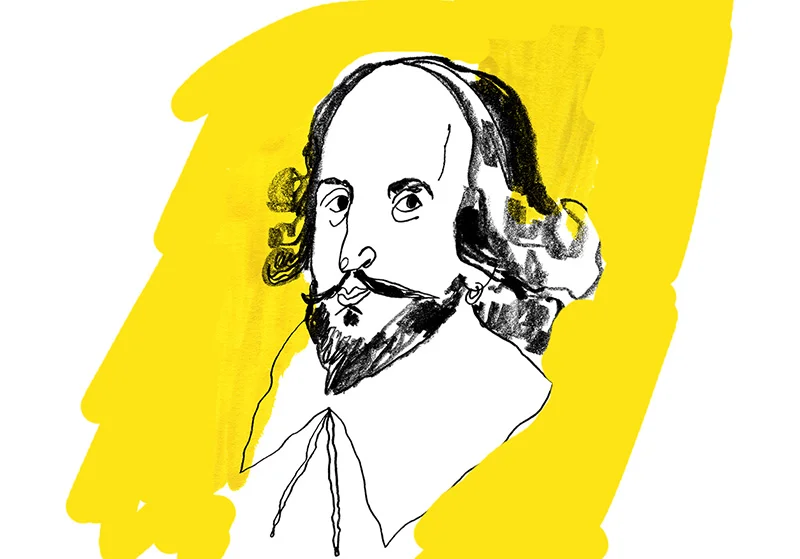
Drawing a Thread through Loss and Creativity in Shakespeare’s Life
William Shakespeare [1556-1616] is generally regarded as the greatest playwright and poet in the English language. Notwithstanding the universal appeal and the timelessness of his work, very little is known about his inner-self. Despite his profound understanding of the human condition, evident in his remarkable works of drama and poetry, the origin of his psychological insights – formed long before formal theories of the mind emerged – remain unknown, often loosely ascribed to an innate gift. The thematic and philosophical dimensions of his work are often said to be influenced by the classics of the ‘ancient world’ such as Ovid’s Metamorphosis.
The bestselling novel, Hamnet, by Maggie O’Farrell is a confluence of fact and fiction. The award-winning movie, by the same name, is an adaptation of the novel, its screenplay co-written by Maggie O’Farrell and Chloe Zhao, the director. The central theme of the novel and the movie is the devastating impact of the death of Shakespeare’s son, Hamnet, in 1596, at an early age of eleven, and the sensitive portrayal of the grieving process of the family, inviting the audience to reflect on the proposition that Shakespeare channelled his personal grief into writing Hamlet, the play, four years later.
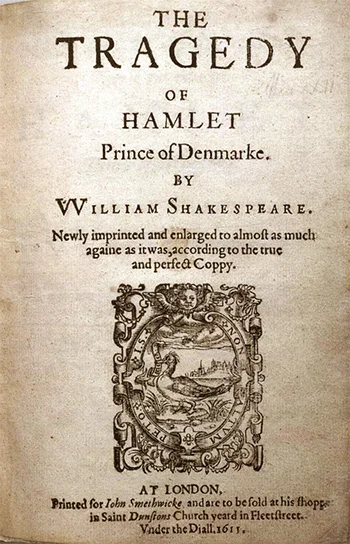
Mourning and melancholy take centre stage in Hamlet prompting a probable link between William Shakespeare’s own emotional world and his artistic imagination. Interestingly, the names Hamnet and Hamlet were used interchangeably during the Elizabethan era, adding weight to the speculation.
The movie matches the imaginative and descriptive brilliance of the novel. The narrative unfolds against the backdrop of Stratford-upon-Avon and its environs and its inhabitants of Elizabethan England, finally shifting to London and the Globe Theatre. The film won eight nominations at the 98th Academy Awards, including best picture, best director for Zhao, and best actress for Jessie Buckley, who immortalises Anne Hathaway, [‘Agnes’] Shakespeare’s wife, through whom the real face of family grief is portrayed. Shakespeare [nameless] remains ‘silent’ and virtually ‘back-stage’ in London preoccupied with the playhouse, the players and the plays.
Many Shakespeare scholars have speculated about a probable link between the death of Hamnet Shakespeare and the writing of Hamlet, his Magnum Opus:
“No one can say for certain how the death of Shakespeare’s son affected him, but it is hard not to notice that in the years following Hamnet’s death Shakespeare wrote a play obsessed with fathers and sons, grief, and the persistence of the dead.” [James Shapiro]
“Hamnet’s death must have been a devastating blow…..and the shadow of that loss may well lie behind the profound meditations on mortality in Hamlet.” [Park Honan]
“The death of Hamnet is the most plausible personal event to have touched Shakespeare deeply in these years, and it is tempting to hear an echo of that loss in the grief that permeates Hamlet.” [Germaine Greer]
That echo is clearly heard in Act 4, scene 5 in Hamlet:
He is dead and gone, lady,
He is dead and gone;
At his head a grass-green turf,
At his heels a stone.
Yet, in the play, a son loses his father, and the circumstance of the loss is different. Hamlet mourns the sudden death of his father, king Hamlet, he idolised. The young prince is faced with a complex emotional challenge as the late king’s brother, Claudius, usurper to the throne, marries the widowed queen, denying the young prince of his lawful right to sovereignty. The process of mourning is weighed down by the profound significance of the personal loss to the prince and being bereft of any trusting relationships to share his grief – mourning turning to melancholy.
Shakespeare’s greatest tragedy, Hamlet, has gained unremitting interest of audiences, universally over four hundred years, and has been open to divergent appraisal. Any commentary on the play without an exploration of the psyche of its protagonist, prince Hamlet, would be as the popular cliché goes, ‘like Hamlet without the prince of Denmark!’ Hamlet is the longest of all Shakespearean plays, with the least amount of action, but with the most amount of spoken word, mainly by prince Hamlet, which includes his soliloquies [solo locution: self-discourse] that opens the door to his inner self, inviting in by Hamlet himself: “pluck out the heart of my mystery”.
In the first of his soliloquies, Hamlet reveals his affliction with melancholy. He describes the world as worthless, wishes he is dead, contemplates suicide but regrets that God does not sanction such self-destruction. “O, that this too too solid flesh would melt/ Thaw and resolve itself into dew/ O, that the Everlasting had not fixed/ His cannon ‘gainst self-slaughter. O, God, God/ Seem to me all the uses of this world!’
Hamlet’s anguish is expressed as: ‘This goodly frame, the earth’ is no more than a ‘Sterile promontory’; ‘this majestical roof fretted with golden fire’; the heavens, ‘a foul and pestilent congregation of vapours’; and man, ‘the paragon of animals’, a quintessence of dust’, his mind ‘an unweeded garden/ That grows to seed.’ – Hamlet’s melancholic thought with depressive and nihilistic content expressed in philosophical terms.
But his anguish is best depicted in his fourth soliloquy [Act 3, Scene1] arguably, the most quoted piece of verse in all Shakespeare: ‘To be, or not to be’ – about life and death. He questions, ‘whether ‘tis nobler in the mind to suffer/ The slings and arrows of outrageous fortune/ Or take arms against a sea of troubles/ and by opposing, end them’. What happens after death? Is it a peaceful sleep or nightmare? Do we end our miseries by putting ourselves to the ‘quietus’ with a dagger, and enter that ‘undiscovered country’ from which ‘no traveller returns’, or put up with our problems? ‘Conscience makes cowards of us all’ and make us procrastinate.
In his soliloquies Hamlet reveals his affliction with melancholy. He wishes that his body would melt away, describes the world as worthless and contemplates suicide – negative cognitions about the self, the environment and the future, characteristic of severe mood disturbance – but regrets that God does not sanction such self-destruction.
********
 Grief is a universal human experience following loss, characterised by sadness, at times mixed with anger and guilt, and frequently transient in nature. Depending on the perceived significance [‘meaningfulness’] of the loss and the absence of a sharing or confiding relationship, grief may become prolonged, with a potential to become pathological.
In a seminal paper published in 1917, Sigmund Freud [1856 – 1939], argued that there are two different responses to loss – ‘Mourning and Melancholia’. His contribution remains the basis for understanding unconscious grief in psychoanalytic thought.
Freud describes mourning as a natural way to respond to losing something or someone significant. It is a transitory process, potentially transforming, albeit painful. In mourning the loss of a loved one, the bereaved gradually withdraws the emotional energy – ‘libido’ – from ‘the lost object’, and the emotional investment is redirected to an ‘alternate object’ or pursuit. Throughout this process the ‘self’ remains intact, allowing the person to heal by integrating the loss into life. In psychology, this process in which a person unconsciously redirects unacceptable or distressing impulses into socially acceptable or constructive activities is called sublimation – a concept introduced by Sigmund Freud and later developed further by his daughter Anna Freud. Instead of expressing the impulse directly, the energy behind it is transformed into something positive or productive – an ‘ego defence’.
On the other hand, Freud described melancholia as a persistent state that stays within the ‘unconscious’ – the repressed aspect of the mind, while the person feels trapped in unresolved emotions which jeopardises their mental and physical well-being.
Shakespeare lost a child, the only son, Hamnet, still in his formative years. The playwright had no option but to leave his family in his birthplace of Stratford-upon-Avon, and return to London after burying his son to continue his work at the playhouse. The significance of the loss to the father would, no doubt, have been profound, as the Greek historian Herodotus fittingly proclaimed, “No one that has lost a child knows what it is to lose a child”.
In the novel, and as depicted in the movie, Agnes [Anne Hathaway] travels to London to meet her husband. Unknown to him she stands with the audience at the Globe Theatre to watch Hamlet, the play, while Shakespeare remains backstage. As O’Farrell poignantly writes in her novel, “Hamlet, here on this stage, is two people, the young man alive, and the father dead. He is both alive and dead. Her husband [Shakespeare] has brought him back to life, in the only way he can”. “She stretches out a hand as if to acknowledge them, as if to feel the air between the three of them, as if to pierce the boundary between audience and players, between real life and play”.
Many literary scholars speculate that Shakespeare in mourning gave voice to his grief through Hamlet, the play’s introspective protagonist, who takes to the stage with melancholic expression. There are others who dispute this view, arguing that Hamlet is a product of his creative genius that transcends any autobiographical explanation. While Hamnet, the novel, and its film adaptation do not assert a direct historical link, they suggest an association between the playwright’s personal loss and his artistic creation. The notion that Shakespeare sublimated his grief into creating the iconic stage work remains suggestive, yet unprovable, but reveals an important ‘therapeutic strategy’ [sublimation] in dealing with loss. Nevertheless, through Hamlet, he gives enduring expression to a universal human condition – grief – that resonates across time.
Moreover, from an aesthetic point of view, a work of art can truly be called Art – whether encountered on the page, the screen, or the stage – when it invites reflection or evokes emotion. The thread that runs through the novel, the movie and the play tend to reinforce that notion.
By Dr. Siri Galhenage, Psychiatrist [Retd]
sirigalhenage@gmail.com
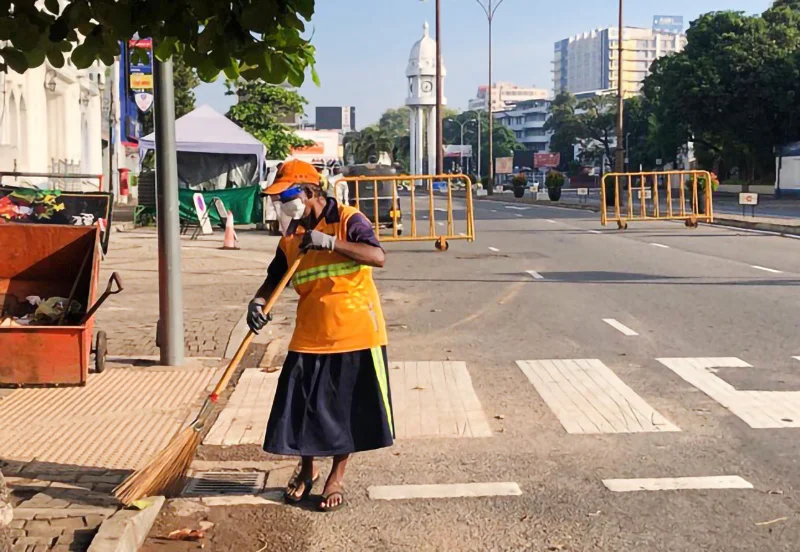
You’ve been at it these long hours,
Sweeping the sidewalks of the big city,
And scrubbing floors of public toilets,
All the while wiping the sweat off your brow,
And waiting eagerly for departure time,
To get to your comfy nest in the teeming slum,
And see the eyes of your waiting kids,
Light up with love at your sight,
Their hands searching you for sweets,
And such moments of family joy,
Are for you and other women of dignity,
What is seriously meant by Liberation,
But this is lost on grandstanding rulers,
Who know not the spirit of shared living,
Nor the difference between a home and a house.
By Lynn Ockersz

Trump warns ‘clock is ticking’ for Iran as peace progress stalls

Axar, Ashutosh, Starc keep Delhi Capitals’ playoffs hopes alive

Venkatesh, Rasikh take Royal Challengers Bengaluru into IPL 2026 playoffs

Showers will occur at times in the Western, Sabaragamuwa, Central, North-western and Northern provinces and in Anuradhapura, Galle and Matara districts

Surcharge on vehicle imports irks SJB, pleases ex-Finance Minister

Bill to repeal Chief of Defence Staff Act gazetted

‘Dates have the highest sugar content to fight Coronavirus’

Sunday Island 27 December – Headlines

#SundayIsland 17th December – Headlines

Sunday Island – 28th March

Sunday Island Headlines – 21 March

Sunday Island – 21st February – Headlines
-
 News5 days ago
Ex-SriLankan CEO’s death: Controversy surrounds execution of bail bond
-
 Features1 day ago
Sri Lankan Airlines Airbus Scandal and the Death of Kapila Chandrasena and my Brother Rajeewa
-
Features6 days ago
High Stakes in Pursuing corruption cases
-
 Features6 days ago
When University systems fail:Supreme Court’s landmark intervention in sexual harassment case
-
 Midweek Review5 days ago
A victory that can never be forgotten
-
 News2 days ago
Lanka’s eligibility to draw next IMF tranche of USD 700 mn hinges on ‘restoration of cost-recovery pricing for electricity and fuel’
-
 Features3 days ago
Mysterious Death of United Nations Secretary General Hammarskjöld
-
 Business4 days ago
Lime trees to crack HEC conundrum