The belief that the US can pressure India into unconditional alignment is short-sighted and self-defeating
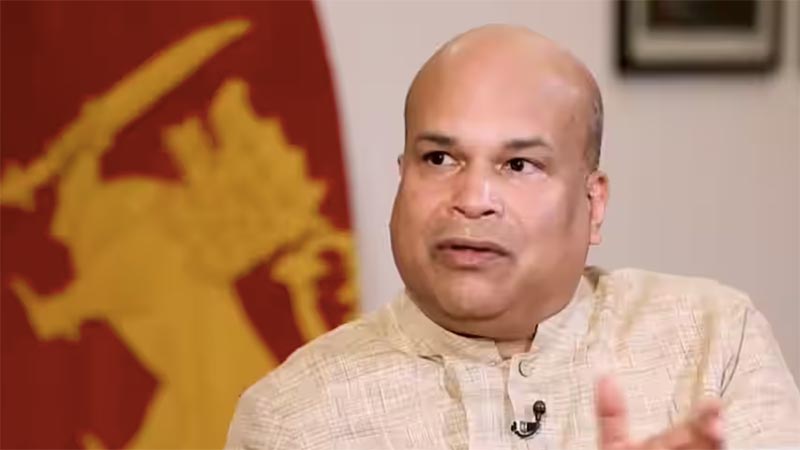
Former cabinet minister, High Commissioner to India, and founder of the Pathfinder Foundation Milinda Moragoda has questioned the US actions vis a vis India, in an article carried in The Indian Express, in its August 19th edition.
With US–India relations entering a more fragile phase, Washington’s pressure-first approach risks alienating a partner whose rise could be one of America’s greatest strategic assets in the 21st century. George Washington, in his farewell address of 1796, urged Americans to “observe good faith and justice toward all nations” and to “cultivate peace and harmony with all.” More than two centuries later, those words resonate in a very different but equally critical context.
For years, the US-India relationship has been described as a “defining partnership of the 21st century” — a rare convergence of two large democracies, diverse in their societies but united in their commitment to pluralism, innovation, and open markets. Yet in recent years, there has been a troubling shift in tone. Trust, once the hallmark of this partnership, is being replaced by suspicion.
At the heart of this erosion is a dangerous miscalculation by some in Washington: The belief that the US can pressure or “manage” India into unconditional alignment. This approach is short-sighted and self-defeating. It risks undermining one of America’s most natural, complementary partnerships at a time when the global order is becoming more multipolar and less predictable.
India is not just any large emerging economy. It is the world’s most populous democracy, a USD 4 trillion economy in the making, a leader in space exploration and digital public infrastructure, and a trusted voice in the Global South. Few countries offer such a unique blend of economic potential, democratic resilience, and geopolitical reach. From defence cooperation and technology partnerships to counterterrorism and climate action, the areas of overlap between India and the US are vast and expanding.
Despite this, US foreign policy has now taken a transactional turn. The escalation of trade disputes, the threat of secondary sanctions over energy purchases, and restrictive technology-transfer regimes all signal a willingness to apply pressure rather than build consensus. While disagreements between partners are natural, the manner in which they are pursued matters. Coercive tactics not only erode goodwill — they invite pushback.
India’s commitment to strategic autonomy is not a bargaining chip; it is a national consensus rooted in history. This is not about rejecting partnerships — it is about ensuring that they are built on equality and mutual respect. Attempts to “bully” India into alignment are destined to fail. Equally troubling is the view — still held in some quarters — that India’s rise must be tempered because it could one day compete with US interests. That mindset belongs to an era of zero-sum geopolitics and ignores the strategic reality of the 21st century.
A rising India is not a threat to the US. It is an asset. In the Indo-Pacific, where both countries share concerns about maritime security, supply-chain resilience, and the rules-based order, India’s role is indispensable. In global governance, India’s voice strengthens calls for reform of multilateral institutions — an agenda the US itself claims to support. In technology and innovation, Indian and American companies are increasingly intertwined, from Silicon Valley to Bengaluru.
If the US continues down its current, pressure-driven path, it risks alienating a partner with the best possible long-term strategic synergy. In a multipolar world, where trust is the most valuable currency, such alienation will have lasting consequences. India has options deepening engagement with Europe, expanding ties with ASEAN strengthening South–South cooperation and will use them if it feels constrained or disrespected.
This is not to say the relationship is beyond repair. Far from it. But Washington must change course before it is too late: Recognising India as an indispensable ally, one with shared democratic values, overlapping strategic objectives, and the capacity to work alongside the US in shaping a stable global order. It means replacing the mindset of managing India with one of empowering the partnership. For America, the choice is stark: Continue with mistrust and coercion, and risk losing one of its most consequential allies in Asia; or embrace India’s rise and, in doing so, strengthen its own strategic position.
George Washington also warned that “the nation which indulges toward another an habitual hatred or an habitual fondness is in some degree a slave.” In today’s world, that means rejecting fear and domination as the foundation of foreign policy and replacing them with balance, respect, and mutual purpose.