
News
Urban poverty triples in Lanka

By Meera Sirinivasan
As Sri Lankans continue braving their worst economic crisis since Independence, urban poverty on the island has tripled in the last year, from 5% to 15 %, according to a recent World Bank report.Sri Lanka is experiencing “its highest poverty rate since 2009 [when the civil war ended], and an erosion of the steady gains in welfare made between 2006 and 2019,” the Bank noted in its recent Sri Lanka Development Update titled ‘Protecting the poor and vulnerable in a time of crisis’, released earlier this month.
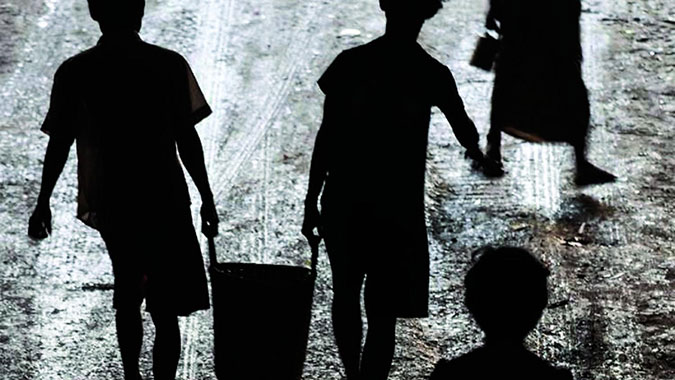
While 80% of Sri Lanka’s poor still live in rural areas, the poverty rate in urban areas has tripled since 2021, and half the population in estate areas is currently living below the poverty line, it said, referring to Sri Lanka’s hill country that is home to the island’s historically-neglected Malaiyaha Tamils. About 1.5 lakh people, mostly women, from the million-strong community work in the tea estates, bringing in crucial foreign exchange to the country. They live in dire conditions, in colonial era line rooms, and labour hard to be paid their hard-won LKR 1000 daily wage.
Across districts, Mullaitivu in the Tamil-majority Northern Province continues to be the poor est — 57 % poverty recorded in 2022 — followed by neighbouring Kilinochchi and Nuwara Eliya in the Central Province [hill country], the report said. The update comes while Sri Lanka struggles to cope with a harrowing economic crash, that forced the government to default on its $50 billion foreign debt in April. The following months witnessed enormous shortages of essentials, including food staples, fuel and medicines, as well as an unprecedented people’s uprising that ousted former President Gotabaya Rajapaksa. Backed by a parliamentary vote, senior politician Ranil Wickremesinghe was elected President in July. While essential supplies have since improved, with the government’s fuel rationing policy and repurposed World Bank funds, the fundamental macroeconomic problems remain.
Headline inflation increased to 69.8% in September 2022, while food inflation spiked to 94.9%. Amid frequent local media reports of hunger and starvation, resulting in a rise in school dropouts in some areas, the World Food Programme and the UN’s Food and Agriculture Organization have assessed that nearly a third of Sri Lanka’s 22 million population are food insecure since the crisis hit.
Emphasising that national security is ensured not only with the military, but also through food and economic security, President Wickremesinghe has called for “urgent measures”, his office said on Tuesday, following a review meeting of the government’s ‘National Food Security and Nutrition Assurance Programme’. His government, while facing growing public criticism over inadequate action and repression, is counting on a $2.9 billion package from the International Monetary Fund (IMF), that will be released only after Sri Lanka’s creditors commit to a debt restructuring programme.
As part of its recommendations, the World Bank has urged the government to increase financing for social assistance; come up with a social protection strategy, that includes an operational Welfare Benefits Board and a Social Registry, to enable effective targeting of social security programmes, given the addition of “newly poor” families. It has also called for an increase in cash transfers, to account for the double-digit inflation.
Meanwhile, rights watchdog Amnesty International, in a report on the current economic situation in Sri Lanka released on October 4, made a case for universal social security that sections in Sri Lanka have also sought.
Highlighting limitations to existing programmes in Sri Lanka, Amnesty, in the report titled ‘We are near total breakdown’ pointed to the “lack of sufficient funding, inadequacy of the level of benefits, poor targeting, and the exclusion of a large proportion of people due to administrative inadequacies.” “The targeting of benefits based on levels of poverty has been criticised by experts for arbitrariness, excluding people who should be covered, stigmatising effects, and higher administrative costs,” the report said. (The Hindu)

Latest News
Heat Index at Caution level’ in the Northern, North-central, North-western, Western and Southern provinces and in Trincomalee district.


Warm Weather Advisory
Issued by the Natural Hazards Early Warning Centre
Issued at 3.30 p.m. on 12 April 2026, valid for 13 April 2026.
Heat index, the temperature felt on human body is likely to increase up to ‘Caution level’ at some places in the Northern, North-central, North-western, Western and Southern provinces and in Trincomalee district.
The Heat Index Forecast is calculated by using relative humidity and maximum temperature and this is the condition that is felt on your body. This is not the forecast of maximum temperature. It is generated by the Department of Meteorology for the next day period and prepared by using global numerical weather prediction model data.

Effect of the heat index on human body is mentioned in the above table and it is prepared on the advice of the Ministry of Health and Indigenous Medical Services.
ACTION REQUIRED
Job sites: Stay hydrated and takes breaks in the shade as often as possible.
Indoors: Check up on the elderly and the sick.
Vehicles: Never leave children unattended.
Outdoors: Limit strenuous outdoor activities, find shade and stay hydrated.
Dress: Wear lightweight and white or light-colored clothing.
Note:
In addition, please refer to advisories issued by the Disaster Preparedness & Response Division, Ministry of Health in this regard as well. For further clarifications please contact 011-7446491.

On the apparent northward relative motion of the sun, it is going to be directly over the latitudes of Sri Lanka from 05th to 15th of April in this year.
The nearest areas of Sri Lanka over which the sun is overhead today (13th) are Pesalai, Mankulam and Nedunkerny about 12:11 noon.
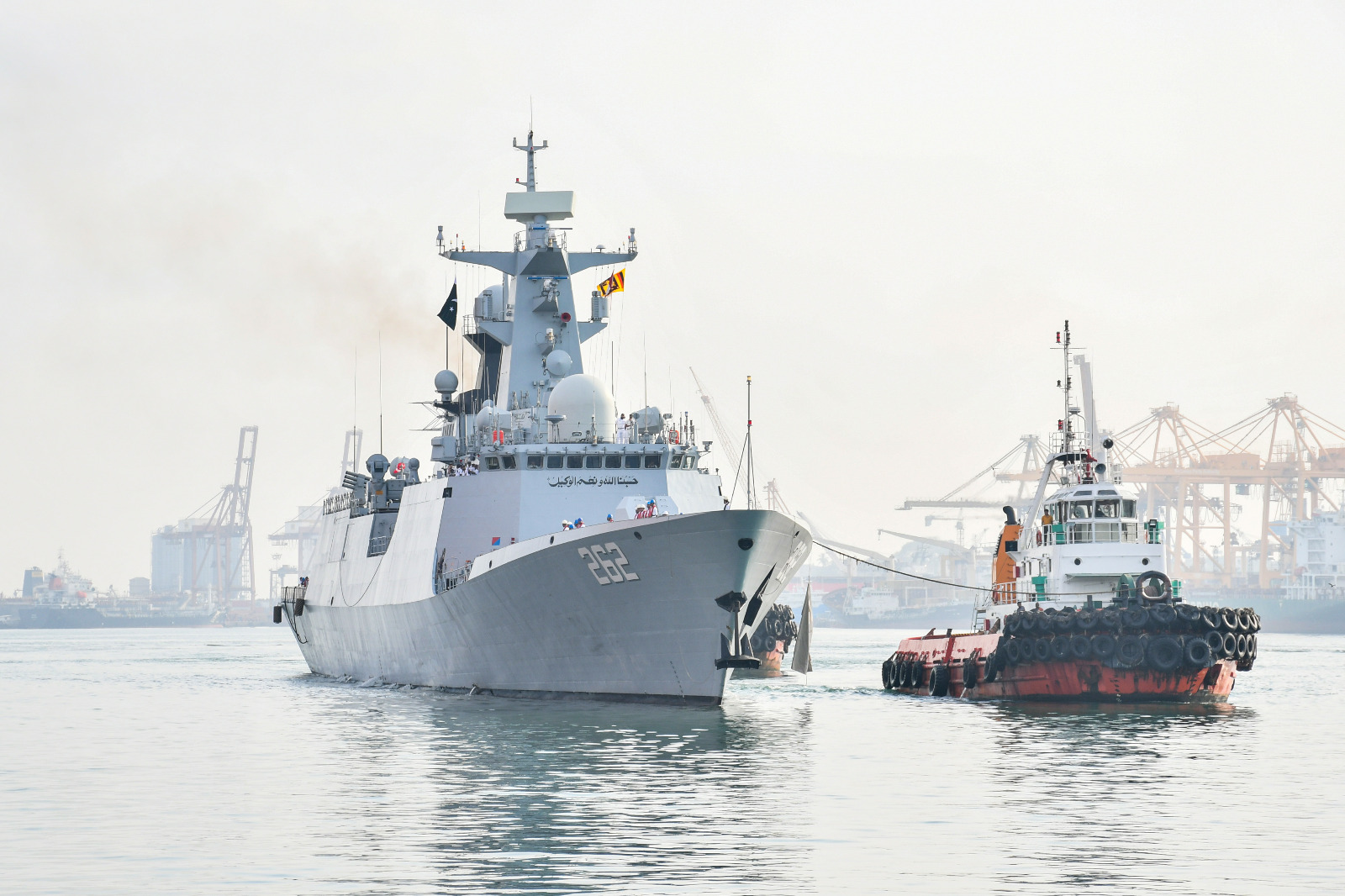
The Pakistan Navy Ship (PNS) TAIMUR and ASLAT arrived at the Port of Colombo on a goodwill visit on 12 Apr 26.
The visiting ships were welcomed by the Sri Lanka Navy in
compliance with naval traditions.
The duo of ships is commanded by Captain NIAMAT SAEED KHAN (PNS TAIMUR) and Captain NADIR MATEEN AFRIDI (PNS ASLAT).
Meanwhile, the ships are expected to conduct a Bilateral Naval Exercise LION STAR V with the Sri Lanka Navy in Colombo seas.

Salt and Patidar power RCB past Mumbai Indians

Prasidh, Buttler set up comfortable win for Gujarat Titans

Heat Index at Caution level’ in the Northern, North-central, North-western, Western and Southern provinces and in Trincomalee district.

Showers above 75 mm are likely at some places in the Western, Sabaragamuwa, Central, Southern and North-western provinces.

Sun directly overhead Pesalai, Mankulam and Nedunkerny about 12:11 noon

PNS TAIMUR & ASLAT arrive in Colombo

‘Dates have the highest sugar content to fight Coronavirus’

Sunday Island 27 December – Headlines

#SundayIsland 17th December – Headlines

Sunday Island – 28th March

Sunday Island Headlines – 21 March

Sunday Island – 21st February – Headlines
-

 News2 days ago
CEB orders temporary shutdown of large rooftop solar systems
-

 News7 days ago
Lankan-origin actress Subashini found dead in India
-

 News5 days ago
AG: Coal procurement full of irregularities
-

 Business4 days ago
Israeli attack on Lebanon triggers local stock market volatility
-

 Business5 days ago
Hayleys Mobility introduces Premium OMODA C9 PHEV
-

 News7 days ago
UN Regional Director launches SL’s first Country Gender Equality Profile during official visit
-

 News7 days ago
Dialog Launches ‘GanuDenu QR’, Making Cashless Transfers Free for All with eZ Cash and Dialog Finance
-

 Business4 days ago
HNB Assurance marks 25 years with strategic transformation to ‘HNB Life’