
News
UNP alleges lack of discipline, transparency in debt management

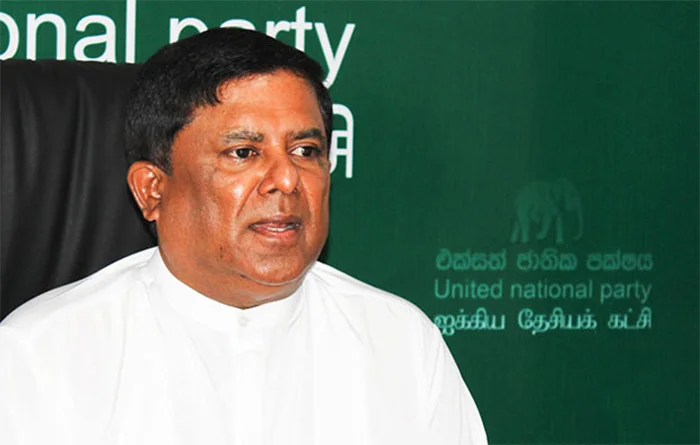
The UNP on Sunday posed eight questions to the government, alleging a lack of discipline and transparency in public debt management, and claiming that the country was being “undermined internationally” due to what it described as policy confusion.
UNP Chairman Vajira Abeywardena made the remarks at a media briefing held at the party office on Flower Road, Colombo.
Abeywardena said mismanagement of state finances, without adequate understanding of fiscal processes had led to Sri Lanka being discredited globally, further deepening distrust and reputational damage.
Referring to the Public Debt Management Act No. 33 of 2024, Abeywardena said the legislation had been introduced to strengthen financial safeguards and ensure structured oversight of government borrowing and repayment.
He noted that the Act provided for the establishment of a Public Debt Coordinating Committee, comprising senior Treasury officials, Central Bank representatives and other key officers to coordinate debt management at policy level.
Abeywardena said the law also envisaged multi-tier scrutiny of state payments, with transactions subject to review by senior officials, the minister, the Cabinet and Parliament. He pointed out that even during the 2022 economic crisis, then-President Ranil Wickremesinghe, while serving as Finance Minister, had continued debt servicing operations and informed both the Cabinet and Parliament, including repayments made to countries such as Bangladesh, to demonstrate Sri Lanka’s repayment credibility.
The UNP Chairman said the government must immediately clarify whether recent foreign debt repayments had been carried out in line with the provisions of the Act, and whether such transactions had been properly disclosed. He also questioned whether details of debt servicing operations had been published on the official websites of the Ministry of Finance and relevant institutions, as required under the law.
Further queries included whether Parliament and the public had been informed of such transactions, and sought details on the banking channels used for Australian funds, including the names of banks, account numbers, destination institutions, and related payment dates and frequency.
The UNP also sought clarification on the Central Bank’s role in the process, particularly in relation to procedures scheduled to take effect from January 1, 2026, and whether any interim actions had been taken under legal authority.
Abeywardena questioned whether the alleged failure to publicly disclose Australian debt repayments constituted a violation of the Public Debt Management Act.
By Chaminda Silva

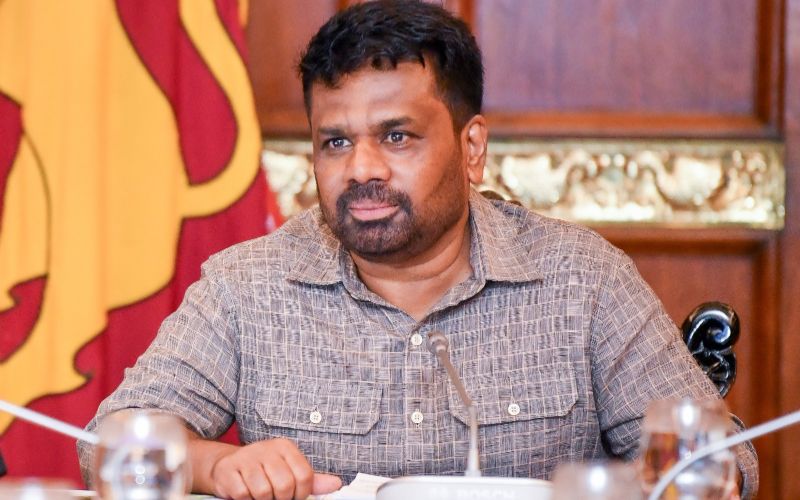
A discussion between President Anura Kumara Dissanayake and senior officials of the Urban Development Authority (UDA) was held this afternoon (18) at the Presidential Secretariat.
The meeting focused extensively on new development projects planned by the Urban Development Authority. The President emphasised the need to ensure that the budgetary allocations made for these projects in the current year are utilised effectively within the same financial year.
Detailed discussions were also held on projects planned to be implemented jointly by multiple institutions, including the importance of holding consultations with all relevant agencies to reach final decisions and the need to clearly define responsibilities for each institution in both implementation and maintenance phases of the projects.
Attention was drawn to key initiatives such as the Kelani River flood control project, water management projects in Colombo city and the Beira Lake restoration project. The need for a dedicated programme for low-income housing in areas such as Ratmalana and Moratuwa was also highlighted. During the discussion, Minister of Transport, Highways and Urban Development Bimal Rathnayake underscored the importance of introducing a structured management framework for the effective coordination of certain projects.
Deputy Minister of Urban Development, Eranga Gunasekara, Secretary to the Ministry of Transport, Highways and Urban Development, Senior Professor Kapila C.K. Perera, Chairman of the Urban Development Authority (UDA), M.G. Hemachandra and the Heads representing the Urban Settlement Development Authority (USDA), Sri Lanka Land Development Corporation (SLLDC), National Physical Planning Department (NPPD) and the Condominium Management Authority (CMA) were also present at the meeting.
(PMD)
News
CEAT Kelani Branch Inter-Company Employees’ Union makes donation to the ‘Rebuilding Sri Lanka’ Fund

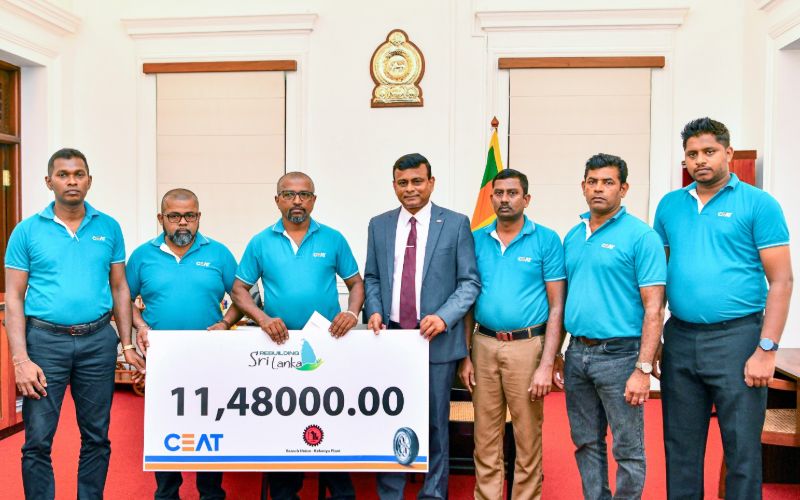
The Inter-Company Employees’ Union of the Kelaniya Branch of CEAT Sri Lanka has made a financial donation of Rs. 1,148,000.00, a day’s salary of its members to the ‘Rebuilding Sri Lanka’ Fund established to support the restoration of livelihoods and the rebuilding of areas affected by cyclone Ditwah.
Secretary of the Inter-Company Employees’ Union of the CEAT Kelani Branch, D.G.S.D. Navaratne, handed over the donation to the Chief of Staff to the President, Prabhath Chandrakeerthi at the Presidential Secretariat this morning (18).
Treasurer of the Inter-Company Employees’ Union of the CEAT Kelani Branch, Y.P.I.C. Karunathilaka, together with members of the Executive Committee, were also present on the occasion.
(PMD)
Latest News
Prime Minister off to the United Kingdom to participate in the 22nd Annual Commonwealth Education Forum
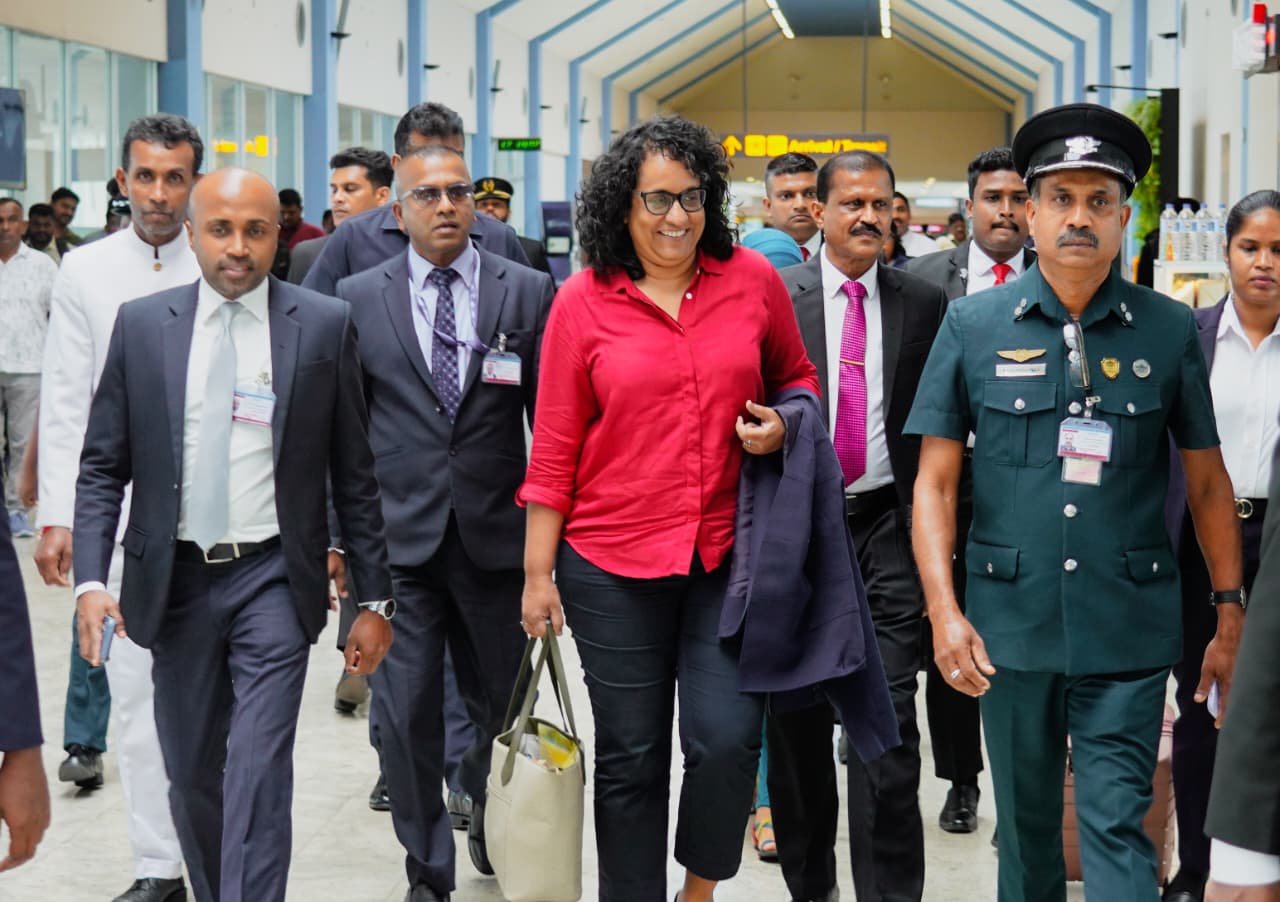
Prime Minister Dr. Harini Amarasuriya departed on an official visit to the United Kingdom to participate in the 22nd Annual Commonwealth Education Forum and the Commonwealth of Learning (COL) 2026 Board of Governors Meeting.
During the visit, the Prime Minister is scheduled to participate in several high-level academic and diplomatic engagements aimed at strengthening cooperation in the fields of education, development studies, research collaboration, and international partnerships.
As part of the visit, the Prime Minister will meet with Ms.Bridget Phillipson, Secretary of State for Education of the United Kingdom, at the UK Department for Education, to discuss areas of cooperation in education and related sectors. She is also expected to meet Ms.Yvette Cooper, Foreign Secretary of the United Kingdom, for discussions on matters of bilateral interest and cooperation between Sri Lanka and the United Kingdom.
In addition, the Prime Minister is expected to meet Ms.Shirley Ayorkor Botchwey, Secretary-General of the Commonwealth, on the sidelines of the 22nd Annual Commonwealth Education Forum and the Commonwealth of Learning (COL) 2026 Board of Governors Meeting.
During the visit, the Prime Minister will attend a public event at the Institute of Development Studies at the University of Sussex and she will also take part in the ceremony marking the 60th Anniversary of the Institute of Development Studies. The Prime Minister is also scheduled to address a session at the Oxford School of Global and Area Studies at the University of Oxford, followed by a question-and-answer session with scholars and students.
The visit is expected to strengthen Sri Lanka’s engagement with academic institutions, international development partners, and Commonwealth member states, particularly in the areas of education, research, policy dialogue, and capacity building.
[Prime Minister’s Media Division]

President meets senior officials of the Urban Development Authority

CEAT Kelani Branch Inter-Company Employees’ Union makes donation to the ‘Rebuilding Sri Lanka’ Fund

Escaped tiger shot by German police after attacking man

Prime Minister off to the United Kingdom to participate in the 22nd Annual Commonwealth Education Forum

Steps initiated to safeguard Sri Lanka’s Maritime Heritage

Fighter jet crews parachute safely after collision at US air show

‘Dates have the highest sugar content to fight Coronavirus’

Sunday Island 27 December – Headlines

#SundayIsland 17th December – Headlines

Sunday Island – 28th March

Sunday Island Headlines – 21 March

Sunday Island – 21st February – Headlines
-
 News6 days ago
Ex-SriLankan CEO’s death: Controversy surrounds execution of bail bond
-

 Features2 days ago
Sri Lankan Airlines Airbus Scandal and the Death of Kapila Chandrasena and my Brother Rajeewa
-
Features7 days ago
High Stakes in Pursuing corruption cases
-
 News3 days ago
Lanka’s eligibility to draw next IMF tranche of USD 700 mn hinges on ‘restoration of cost-recovery pricing for electricity and fuel’
-
 Features7 days ago
When University systems fail:Supreme Court’s landmark intervention in sexual harassment case
-
 Midweek Review6 days ago
A victory that can never be forgotten
-

 News2 days ago
Kapila Chandrasena case: GN phone records under court scrutiny
-

 Features4 days ago
Mysterious Death of United Nations Secretary General Hammarskjöld