
Business
‘Union Bank remains resolute amid challenging environment’


In 2020, Union Bank crossed the significant milestone of completing 25 years of service to the nation. The year tested the grit and foundations of the bank in many ways and the bank emerged strong amidst challenges. While operational performance was impacted amid the slowdown of economic activity, the bank continued to focus on cost optimisations, effective resource and productivity management as well as prudent portfolio management to overcome these tough conditions , a Union Bank press release said.
The release adds, ‘Despite the challenging backdrop, Union Bank increased its liquidity buffers prudently and was able to maintain a strong excess liquidity position. Fitch ratings in its 2020 ratings release affirmed the Bank’s current rating, which was backed by the strong liquidity and capital. Union bank stands confident with an industry leading capital position alongside significant financial flexibility that effectively help mitigate the pandemic induced economic impacts. The Bank maintained a robust Capital Adequacy Ratio throughout the year reporting 16.95% total capital ratio as at year end – which was well above regulatory requirement levels.
‘Union Bank swiftly re-aligned its operations, prioritising its focus on the new market dynamics and customer inclinations that resulted from the pandemic. The bank executed an inclusive business strategy that ensured smooth continuity of its services while safeguarding the health and well-being of its customers and staff as top priorities. Significant investments were made in ensuring the health and safety of staff by providing alternate work solutions, work from home facilities as well as setting up additional infrastructure to facilitate a smooth work environment for critical staff that attended work despite lockdowns.
‘An imperative focus was placed on rolling out a cohesive plan across all customer segments to provide support to re-build their businesses and lifestyles with the implementation of the CBSL recommended relief schemes for COVID-19 impacted customers. In line with the CBSL directives and policy rate cuts administered to enable economic growth, Union bank implemented a downward revision of interest rates on its lending products including credit cards. Moratoriums of capital and interest were extended to affected borrowers in-line with the CBSL’s financial relief package while a significant number of affected customers were granted debt relief outside the CBSL criteria, as per the Bank’s internal credit policy guidelines. Among the schemes that were considered for moratoria were loans, leases, overdrafts, pawning and trade finance facilities. Non-performing borrowers eligible for relief schemes were also provided customised re-schedulements, inclusive of waivers on accrued interest while withholding further recovery action.
‘The bank’s loans and advances stood at Rs 67,518 Mn. The deposits base of the bank stood at Rs. 82,384 Mn as at year-end and recorded a growth of 7.6% despite the low interest environment. The bank’s strategic focus for low-cost deposits continued to bear results, supported by focused initiatives for CASA growth by the business units. The bank’s CASA portfolio reflected an excellent growth of 26.8% as at December 2020, increasing the CASA Mix of the Bank to 30% in 2020 from 25% in 2019.’
As a result of the numerous reliefs extended to affected customers and due to the low interest rate environment, the Bank recorded a Net interest Margin (NIM) of 3.2 % in comparison to 3.6% in 2019. The Bank’s NII was further impacted with the latest CBSL directive issued in November 2020, that mandated 60 days’ loan extension for moratoriums given in March 2020 at subsidised interest rates up to a maximum of 7%; thus, leading to a reduction of interest earned on all such credit facilities repaid on Equal Monthly Instalments (EMI) basis.
The fee income was impacted by adverse market drivers and declined by 18.4% over the comparative year. This was an outcome of the cumulative effect of fee waivers extended as part of COVID-19 reliefs, a slowdown in trade income due to import restrictions and a drop in loan related fees due to slower credit growth that prevailed during the year.
The Treasury performed exceptionally well, recording impressive capital gains that grew significantly by 84.2% YoY. Other Operating Income of the Bank grew notably by Rs.162 Mn led by Foreign Exchange income and backed by a growth in customer transactions, depreciation of the currency and the reduction of swaps in 2020.
The Bank had no trading equities and has not invested in any equity fund as at reporting date.
The total operating income for the year was Rs. 5,890 Mn and recorded only a marginal drop despite the challenging market dynamics.
The gross NPL ratio stood at 6.05% by year-end. The absolute NPL increase however was only Rs. 230 Mn, while an overall reduction in the loan portfolio caused the ratio to reflect an increase. The Bank’s prudent approaches towards managing portfolio quality proved favourable in containing NPLs amidst market volatilities.
The impairment charge recorded an 88.5% increase YoY. While its actual credit losses were low, the Bank recorded significant provisions through management overlays to account for the deteriorating environment. Three sectors were identified as risk elevated industries and accordingly additional provisions were made for these by shifting stages. Further on the Economic Factor Adjustments (EFA), weightages assigned to the worst-case scenario increased with the transferring of weightages from best-case to worst-case on 31 December 2020 to account for the deteriorating environment. This had a significant impact on the increase in impairments, while the Treasury impairment figures also inflated due to investments denominated in foreign currencies – based on the country risk downgrade. The entire modification loss on account of COVID-19 moratorium scheme was recorded under the impairment charge as per the non-substantial modification method which is in line with the Sri Lanka Accounting Standard–9(SLFRS 9).
The Total Operating Expenses were prudently managed through bank-wide cost management initiatives and were reported as Rs. 3,772 Mn, with an YoY decrease of 1.5%.
The operating margin was Rs. 2,118 Mn and recorded a decline of 3.3% YoY as an effect of a 2.2% decrease of revenue against the 1.5% drop in costs. Excluding the 60-day moratorium impact of reducing the interest earnings to 7%, the operating margin would have improved by 3.4%.
Share of loss of equity accounted investees was Rs. 29 Mn for the year ended 31 December 2020. In the previous year, a one-off gain was reported from UB Finance amounting to Rs. 127 Mn due to tax reversals. The subsidiary profits were also impacted due to the macro-economic challenges of the year under review. Total taxes for the year was Rs. 777 Mn and was a drop of Rs. 417 Mn in comparison to the previous year.
The ‘Bank-only’ profit for 2020 was Rs. 605 Mn and was on par with the previous year. Profit of the Bank including its share of ownership in subsidiaries was Rs. 577 Mn in 2020 and was a decline of 18.8% over the previous year- mainly because of the one-off income recorded at UB Finance in 2019. Other comprehensive income for the year was Rs. 183 Mn, while the total comprehensive income of the Bank was Rs. 759 Mn.
The Group consisting of the Bank and its two subsidiaries – UB Finance Company Limited and National Asset Management Limited reported Rs. 623 Mn in profits after taxes, a decline of 22.6% over the previous year. Total assets of the group were reported as Rs. 129.6 Mn. The Bank accounts for 95% of the Total assets of the Group and hence the Group’s performance is mainly propelled by the Bank.
Operations and Business Continuity amidst challenges
Considering the impact of the pandemic on its customer bases, the Bank’s key focus for the year was shifted to extending COVID-19 related financial relief to customers across corporate, SME and retail banking segments since March 2020, so as to not compromise on its premise to serve customers with the best suited financial solutions and tools.
Under the CBSL recommend scheme, self-employed personnel, foreign currency earners, SMEs and Corporates in identified sectors were eligible for loan repayment moratoria from Union Bank. A gamut of relief measures was channeled towards SMEs including fee waivers on cheque returns and stop payments among others. As part of the relief efforts, around 58% of the Bank’s SME portfolio was accommodated under moratorium schemes by year-end. The Bank granted around Rs 1.3 Billion worth of working capital loans under Central Bank’s ‘Saubhagya’ Covid-19 Renaissance’ credit scheme to SMEs aiding their rebuilding efforts. For impacted retail borrowers, the Bank announced immediate extensions of credit card dues along with a two-month extension for all personal borrowings such as loans and leases. Retail banking relief measures included debt moratoria for all loans upon eligibility and credit cards related relief including minimum payment concessions and fee waivers. Following the second outbreak in October 2020, moratoria of affected customers across all segments were further extended to ensure resilience amidst continuous contraction of business activity in identified sectors.
Union Bank’s digital cash management solution BizDirect continued to offer its Corporate and SME customers much-needed liquidity management efficiency while facilitating CASA and fee-based revenue for the Bank during the year. Due to a growing inclination for digital solutions, many new Corporate and SME Banking customers were on-boarded to the product during 2020. In recognition of its success in Transaction Banking excellence, Union Bank BizDirect was awarded the prestigious ‘Best Cash Management Bank in Sri Lanka’ title at the Asian Banker Transaction Finance Awards 2020. Retail banking business was led by CASA acquisition, deposit mobilisation and Credit Cards portfolio growth. The Bank continued to offer value to its card holders through focused lifestyle savings that included discounts on shopping, dining, and e-commerce platforms along with 0% interest instalment plans.
Despite lockdowns, curfews and regional isolation procedures imposed from time to time to curtail the spread of the virus, the Bank provided uninterrupted banking services via its strategic business continuity plan that was executed through its branches, ATMs and other touch points. Union Bank’s Online Banking portal and Mobile Banking app were further enhanced in 2020, to facilitate a wider range of banking conveniences to users enabling contactless banking from the safety of their homes.
Commenting on the 2020 performance, Director/CEO of Union Bank Indrajit Wickramasinghe said, “Our agility and apt business continuity execution have allowed Union Bank to weather the macroeconomic storm in good shape. the Bank has safeguarded the interests of its stakeholders amidst challenges and maintained healthy liquidity levels, and stands strongly capitalised to withstand the adverse environment in which we operate in. We will continue on a path of cost optimisation and enhanced operational efficiency in the year 2021 in which we have re-strategised for stronger growth and will continue to leverage on our key strengths – while ensuring the health and safety of our customers and staff as a priority when navigating in the new normal.”





The Asian Development Bank (ADB) has approved a $100 million results-based loan to help Sri Lanka transform its technical and vocational education and training (TVET) system, equip more young people with industry-relevant skills, and strengthen the country’s competitiveness and inclusive growth.
The Skills Development System Transformation Program will support the Government of Sri Lanka’s efforts in improving the quality and relevance of skills training, strengthening links between training providers and industries, and expanding employment opportunities for youth. The program will increase women’s employment opportunities in nontraditional jobs in fields including automotive technology, engineering, information and communications technology, construction, and renewable energy.
“A skilled workforce is essential to Sri Lanka’s long-term economic transformation and competitiveness,” said ADB Country Director for Sri Lanka Shannon Cowlin. “This program will help create stronger pathways from education to employment by making training more responsive to industry needs, expanding opportunities for young people and women, and ensuring that graduates have the skills required by a modern and evolving economy.”
Though Sri Lanka’s economy is recovering, it faces skills shortages in priority sectors, high youth unemployment, and low female labor force participation. Many employers report difficulty finding workers with the skills needed in a changing economy.
Aligned with the Government of Sri Lanka’s Technical and Vocational Education and Training Sector Strategic Framework 2026–2035, the nationwide program will be implemented from 2027 to 2031 and is expected to directly benefit more than 100,000 young people through improved access to quality, employment-oriented training.
By Ifham Nizam
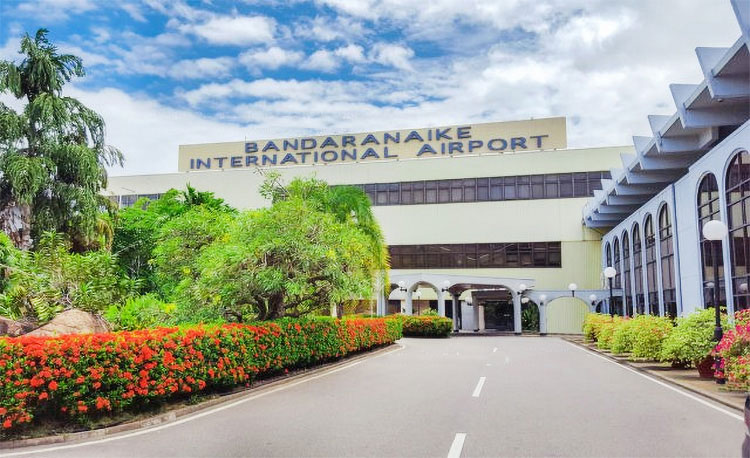
The government has cleared a USD 40.84 million and Rs. 8,548.75 million contract to build a dedicated aviation fuel pipeline from Muthurajawela to Bandaranaike International Airport (BIA), alongside a massive new fuel storage facility with a capacity of 92,000 cubic metres.
Energy Minister Anura Karunatilaka said the project represented a major investment in strengthening the infrastructure underpinning Sri Lanka’s aviation fuel supply and ensuring more reliable fuel availability at the country’s main international airport.
‘This project will provide the infrastructure required to strengthen the reliability and continuity of aviation fuel supplies to Bandaranaike International Airport, Karunatilaka said.
The contract has been awarded to China Petroleum Pipeline Engineering Company Limited, following an international competitive procurement process in which three bids were received.
The project will see a new aviation fuel storage tank complex constructed at Muthurajawela, together with the associated infrastructure required for handling and transferring aviation fuel.

By Hiran H Senewiratne
Trading activity on the Colombo Stock Exchange (CSE) gathered pace yesterday as global fuel prices began to show signs of easing, according to market analysts.In this context, both indices moved upwards. All Share Price Index up by 67.97 points while S and P SL20 up by 8.30 points.
Turnover stood at Rs 1.4 billion with seven crossings. Those crossings were reported in Sampath Bank 1.7 million shares crossed to the tune of Rs 238 million and its share price traded at Rs 140, Access Engineering two million shares crossed to the tune of Rs 159 million and its share price traded at Rs 79.50, LOLC one million shares crossed to the tune of Rs 129 million and its share price traded at Rs 129, HNB 100,000 shares crossed to the tune of Rs 38.4 million and its share price traded at Rs 384, JKH 1.9 million shares crossed to the tune of Rs 35 million and its share price traded at Rs 18.60, Hayleys 100,000 shares crossed to the tune of Rs 22.50 million and its share price traded at Rs 225 and Richard Pieris 847,000 shares crossed to the tune of Rs 22 million and its share price traded at Rs 25.50.
In the retail market top seven companies that have mainly contributed to the turnover were Sampath Bank Rs 114 million (813,000 shares traded), JKH Rs 100 million (5.3 million shares traded) LB Finance Rs 49 million (325,000 shares traded), HNB Finance Rs 30 million (27 million shares traded), HNB Rs 27 million (70000 shares traded), NTB Rs 25 million (82000 shares traded ) and Lanka IOC Rs 21 million (666,000 shares traded). During the day 65 million shares volumes changed hands in 10433 transactions.
The Banking and manufacturing sector counters performed well. In the banking sector Sampath Bank let the market while manufacturing sector especially JKH also significantly performed well. With the fuel revision Land IOC also a significant stock at the floor.
Meanwhile, First Capital Treasuries said that Ramesh Schaffter resigned as a Non-Independent Non-Executive Director with effect from October 1, to facilitate the restructuring of the company’s board.
Yesterday the Central Bank announced the US Dollar rate as against rupee. The rupee was quoted flat at Rs 330.65/80 to the US dollar in the spot market , while bond yields dropped, dealers said.

Ambassador of the UAE to Sri Lanka meets with the Prime Minister

EU rejects Trump’s diesel demand amid Iran war shortages

Sineth Jayawardena, Vijayakanth Viyaskanth in Sri Lanka squad for Pakistan T20Is

Bronze at stake as Bangladesh, Sri Lanka look to bring cheer to Asian Games contingents

Wanderers to host 2027 men’s ODI World Cup final as well as India vs Pakistan

Prime Minister joins Gandhi Jayanti Commemoration

‘Dates have the highest sugar content to fight Coronavirus’

Sunday Island 27 December – Headlines

#SundayIsland 17th December – Headlines

Sunday Island – 28th March

Sunday Island Headlines – 21 March

Sunday Island – 21st February – Headlines
-

 Editorial7 days ago
Birth of a bad law
-

 News5 days ago
Police remove Thileepan statue in Jaffna
-

 News7 days ago
TIN mandatory for key transactions from Nov. 1
-

 Features5 days ago
The 22nd Amendment, constitutional recovery and illiberal slippage
-

 Features5 days ago
Of foreigners as CEOs of Lankan ventures
-

 Latest News3 days ago
Gold winner Tharanga gets brand-new Honda Vezel from SLAAJ
-

 News5 days ago
Sajith rejects Jt. Opp. protest sabotage claim; SJB TU chief demands remedial action
-

 Features4 days ago
Thailand’s biggest new global star …