
Business
Unilever Sri Lanka recognised as one of Asia’s Best Employer Brands in 2022

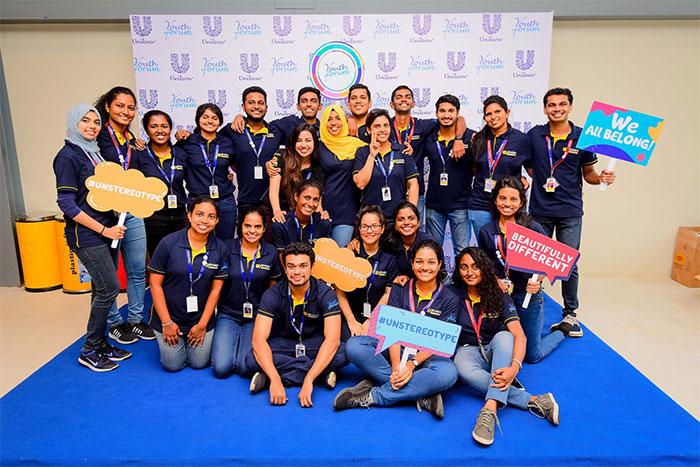
Empowers 30,000+ youth to help build a purposeful Sri Lanka
Unilever Sri Lanka emerged as one of ‘Asia’s Best Employer Brands’ in 2022 at the 17th Employer Brands Awards held at Pan Pacific, Singapore. The FMCG giant was ranked amongst the Top 50 companies in Asia for its outstanding contributions to Human Resources Management in the country. The event was hosted by the World HRD Congress and Stars of the Industry Group and endorsed by the Asian Confederation of Business. The awards were adjudged by the Employer Branding Institute, a virtual organisation which connects senior HR leaders across the world to share best practices in Employer Branding.
Sharing her thoughts, Ananya Sabharwal, Human Resources Director of Unilever Sri Lanka said, “We are truly humbled to receive this coveted recognition which underscores our commitment to building leaders of tomorrow. Many of our employees say that Unilever is like a university. I myself am grateful to have received a rich variety of exposure across the globe since my Unilever career gave me the opportunity to work and learn across India, USA, UK, the Netherlands and now most recently Sri Lanka. We want our youth to also experience development opportunities to become future fit citizens of the world. We not only invest in classroom trainings for students, but also offer flexible development interventions where our youth get to continue their studies whilst getting first-hand corporate exposure that help form a strong foundation for meaningful careers ahead. We truly believe that investing in our youth is one of the most promising ways in which we can invest in the growth and future of Sri Lanka, especially during these challenging times”.
Adding her thoughts, Hajar Alafifi, Chairperson and Managing Director of Unilever Sri Lanka said, “Through the Unilever Compass, we’re committed to helping people stay fit for work – now and in the future. And in this journey, we are equipping people to adapt and thrive in today’s rapidly changing world whilst partnering with others to create jobs and skills for our youth. We will continue to support our people and our youth, thereby developing and enhancing their skills in the hopes of building a better tomorrow.”
Unilever Sri Lanka has touched the lives of 30,000+ Sri Lankan youth to become more employable over the last five years through its ‘Employer Brand’ youth initiatives. The company is also a pioneer in offering flexible and novel industry exposure stints for selected undergraduates who seek part-time/short-term exposure opportunities while studying fulltime.
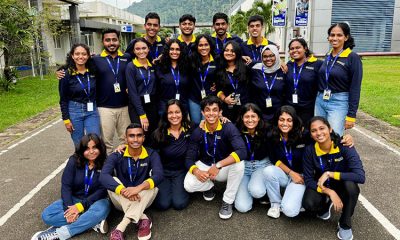
SPARKS – Unilever’s Student Ambassador Programme invites undergraduates from top Sri Lankan universities to become Unilever ambassadors within their universities for one year. Together with the company, 20 young and versatile youngsters drive ~3 campus sessions per week across leading universities in the island and bring to life the Unilever Youth Forum which is one of the largest undergraduate forums held in the country that connects Sri Lankan youth with industry leaders. Over the last 8 years, the company has selected 110+ student ambassadors across 9 main universities and delivered 100+ skill development programmes across campuses.
The company’s Unilever Challenge which is a real time brand centered case study competition, offers undergraduates and fresh graduates the opportunity to represent Sri Lanka at the Global Unilever Future Leaders League, giving them first-hand experience in working with leading brands and building their disruptive thinking. This year, the local team coached by Unilever Sri Lanka emerged as runners-up, beating over 54,000 applicants and 500+ undergraduates worldwide.
ULEARN is another novel intervention of Unilever for undergraduates to volunteer for short-term business projects with Unilever Sri Lanka. These structured programmes enable flexibility and provides first-hand corporate exposure to students at a very early stage in their careers.
In its quest to enable youth employability and unlock future talent to reverse the current brain drain trend in the country, the company has also partnered with John Keels Holdings and London Stock Exchange to launch ‘Fast-Track’, a cross-industry Summer Internship for Sri Lankan students studying locally and abroad; and has partnered with CIMA, the Sri Lanka Institute of Information Technology (SLIIT), General Sir John Kotelawala Defense University (KDU), AIESEC Sri Lanka and Gavel clubs, to help support dynamic capability building in Sri Lankan youth.









The Colombo Stock Exchange (CSE) announces the following change in S&P Sri Lanka 20 index constituents made by S&P Dow Jones Indices at the 2026 Mid-Year rebalance.
The exclusion and inclusion as announced by S&P Dow Jones Indices, effective from 22nd June 2026 (after the market close of 19th June 2026) are presented below.
The S&P SL 20 index includes the 20 largest companies, by total market capitalization, listed on the CSE that meet minimum size, liquidity and financial viability thresholds. The constituents are weighted by float-adjusted market capitalization, subject to a single stock cap of 15%, which is employed to reduce single stock concentration.


The S&P SL 20 index has been designed in accordance with international practices and standards. All stocks are classified according to the Global Industry Classification Standard (GICS®), which was co-developed by S&P Dow Jones Indices and MCSI and is widely used by market participants throughout the world.
To be eligible for inclusion, a stock must have a minimum float-adjusted market capitalization of 500 million Sri Lankan rupees (Rs), a six-month median daily value traded of Rs 0.25 million and have positive net income over the 12 months prior to the rebalancing reference date. For information, including the complete methodology, please visit: www.spindices.com
Effective from 22nd June 2026 the stocks in the S&P Sri Lanka 20 in alphabetical order are as above.

The Teejay Group recorded revenue of LKR 60.04 billion during the period, reflecting a 10% year-on-year decline, primarily due to continued softness in global textile demand. This performance was largely impacted by reciprocal tariffs imposed by the United States, intensified pricing pressures across key markets, and the resulting decline in volumes, all of which collectively weighed on topline growth.
Group Gross Profit declined by 36% year-on-year to LKR 5.02 billion, mainly attributable to lower production volumes, underutilization of plant capacity, sustained pricing pressures, and an unfavorable product mix. Together, these factors adversely affected margin performance amid a challenging operating environment.
The Group reported a Profit After Tax (PAT) of LKR 54.7 million, representing a 98% year-on-year decline. This was primarily driven by higher rupee-denominated costs and non-recurring items, provision for doubtful debts, and restructuring costs associated with right-sizing initiatives.
Ajit Gunewardene, Chairman of the Teejay Group said, “The year was marked by persistent global demand softness and pricing pressures, which impacted results. Despite this, we focused on operational efficiency, cost discipline, and strengthening our financial resilience. These actions position the Group to navigate ongoing uncertainty while remaining committed to long-term value creation for our shareholders.”
Despite these near-term challenges, the Teejay Group continues to maintain a strong financial position, supported by disciplined working capital management and a robust liquidity base. As at 31 March 2026, cash and cash equivalents stood at LKR 8.3 billion, while the Group’s net asset base increased by 3% year-on-year to LKR 32.4 billion, reinforcing the resilience of its balance sheet.

Fairfirst Insurance has once again partnered with the Sri Lanka Police K9 Unit, continuing its support for the seventh consecutive year. This partnership reflects the company’s long-standing commitment to giving back to the community.
Through this initiative, Fairfirst will provide comprehensive insurance coverage for the highly trained canines attached to the Sri Lanka Police K9 Unit. These dogs play a critical role in supporting police operations across the country, assisting with crime detection, narcotics investigations, search and rescue missions, and public safety efforts.
As a company that believes business should create a meaningful impact beyond insurance, Fairfirst remains committed to initiatives that support communities and recognise the vital contributions of those who help keep society safe. This shared commitment to protection and responsibility continues to drive the company’s long-standing partnership with the Sri Lanka Police K9 Unit.
Commenting on the continued partnership, Ravishankar Wickneswaran, CEO of Fairfirst Insurance, said, “It is a privilege for us to continue supporting the Sri Lanka Police K9 Unit for the seventh consecutive year. These dogs serve the country with incredible discipline and loyalty, often in challenging situations. Supporting their wellbeing is one small way for us to give back, and it reflects the FairfirstWay of standing by those who protect and serve our communities every day.”
Fairfirst looks forward to continuing this partnership and contributing to the wellbeing of the Sri Lanka Police K9 Unit in the years ahead.

Should not drop someone just to give Sooryavanshi an opportunity: Sitanshu Kotak

Hetmyer, Stoinis and Jasdeep combine to hand Freedom 88-run defeat

Row over alleged theft of donations from India’s landmark Ram temple

Over 40 persons injured in head on crash at Talalla

Turkiye beat US 3-2 with stoppage-time goal in dead rubber

Japan draw 1-1 with Sweden at World Cup to finish second in Group F

‘Dates have the highest sugar content to fight Coronavirus’

Sunday Island 27 December – Headlines

#SundayIsland 17th December – Headlines

Sunday Island – 28th March

Sunday Island Headlines – 21 March

Sunday Island – 21st February – Headlines
-

 News7 days ago
Creditor not yet paid
-
 News7 days ago
Consumers bearing 22% tax burden despite 18% VAT claim: Dr. Harsha de Silva
-

 Features6 days ago
Nanda Pethiyagoda Wanasundara as three generations of family saw her
-

 Features5 days ago
Sri Lanka developing independent hydrographic capabilities
-

 Editorial6 days ago
Fuel crisis: Beyond price debate
-
 Opinion4 days ago
Ranasinghe Premadasa: The man who would not take ‘No’ for an answer
-

 Latest News5 days ago
Sooryavanshi thumps fastest List A fifty as India A win tri-series
-

 News4 days ago
US Assistant Secretary of State for South and Central Asian Affairs meets President