
Features
Understanding nature and knowing the land

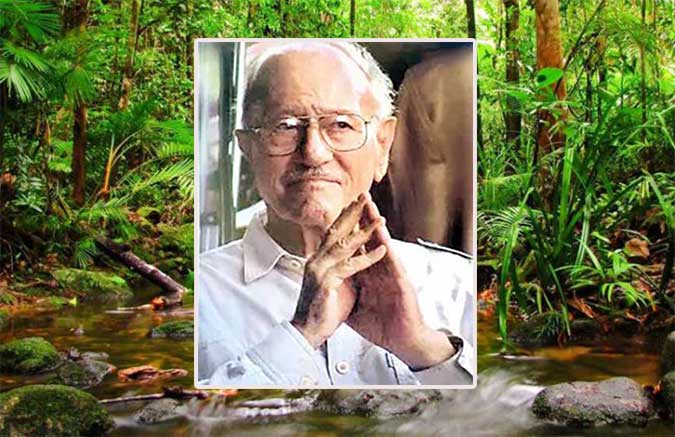
Excerpted from the authorized biography of Thilo W Hoffmann
by Douglas B. Ranasinghe
In his field work for Baurs Thilo had to travel the length and breadth of Sri Lanka. On a map he marked each route he had taken. He then made sure that where possible he did not use the same one twice until all were covered.
His first journeys away from the city rekindled his interest in nature and wildlife, which was in his heart from the time he was a boy in Switzerland. It would impel him to explore the island for more than six decades, whenever he could, traveling everywhere in it, including its least visited and most remote areas.
He often walked long distances in these explorations. Most such expeditions were in the dry lowlands. He climbed mountains, including the six or seven highest peaks in the island, and numerous rocky outcrops in the low country, such as Ritigala, Yapahuwa, Maligatenna, Patanangala, Mayagala, Baron’s Cap, Kuragala, and many smaller and less well known ones. Adam’s Peak he climbed four times, last when he was 78 years old; Mae did so three times. He explored in the hill country the old bridle paths from Haputale to Nuwara Eliya, and from the top of Ramboda Pass to Hewaheta, now overgrown and almost impassable.
He kept up these activities throughout his time in Sri Lanka. Always he has traveled with open eyes and an open mind. This has helped him to get a better understanding of the land, the forests and the flora and fauna of each area and – importantly – to record the changes over the years.
Soon he was able quickly and accurately to visualize many parts of Sri Lanka, and to write about their condition. In a few years Thilo knew the island well, from Jaffna to Dondra and from Colombo right across to Batticaloa. In this manner, and with his inborn curiosity and sense of exploration, he became intimately acquainted with the country. His knowledge of its physical aspects is probably without equal.
Thilo recalls an incident in the 1960s on a flight from Singapore to Katunayaka. The aircraft had crossed the shoreline at Pottuvil and was flying towards Nuwara Eliya. He heard three young Sri Lankans in the seats just in front trying in vain to identify the landscape beneath. After a while he stepped forward, to enlighten them on the names of towns and villages, estates, of mountains and rivers, passing below.
They were greatly surprised that a foreigner was able to explain to them so well the geography of their country. They introduced themselves as UNP MPs returning from Taiwan: Nanda Mathew, Chandra Karunaratne and a third whose name Thilo cannot recall; they were in the news for visiting that country against party orders.
In his treks and travels Thilo had made intensive use of the old one-inch-to-one-mile map sheets. Correct and reliable, he says, in nearly every detail, they have been indispensable in his quest for knowledge. It was a disappointment when they were replaced, towards the end of the last century, by the new 1: 25,000 and 1: 50,000 maps, whose quality, he thinks, leaves much to be desired.
The older maps were based on careful and painstaking ground surveys, while these depend excessively on the technologies of aerial survey and satellite imagery. The former he finds often more reliable and useful even today. An article by Thilo comparing the two sets has appeared in Loris 2, the journal of the Wildlife and Nature Protection Society.
Observing nature
Thilo has always been concerned with all the aspects of wildlife in Sri Lanka, not only the birds and beasts in the jungles, but entire ecosystems.He was and is particularly interested in plants and trees. In his field notebooks he made hundreds of sketches of these. Some of the watercolour paintings he did from his drawings are reproduced in this book.
Memorizing their Sinhala names was a priority for him. At one time he had done so for over 200 species. He knew the names of most of the trees, shrubs and creepers found in Wilpattu, as well as of many flowering plants growing in the villus and pittanis.
His very competent teacher was Game – this was later changed to Wildlife – Guard Hendrick Appuhamy, who was a vedamahattaya by family tradition. He was the Hoffmanns’ preferred tracker at Wilpattu. Another friend from whom he learnt much was Guard, later Range Assistant, H. H. Bandara of Helambawewa. Thilo remarks:
“They were fine men. Both were superb trackers, born and bred in the area, devoted to their work, and of a type no longer found today.”
There was no popular botanical literature at that time. It took Thilo many years before he managed to memorize that many names. Again and again he asked Hendrick Appuhamy, and often also others, for the same name, in identifying a plant or tree. Much patience and perseverance were needed. Of help were MacMillan’s Tropical Planting and Gardening, although tedious, and later Worthington’s Ceylon Trees. Thilo recognised trees mainly by their shape and size, general colour and structure, and size of leaves, which could be observed when passing in a vehicle.
He walked extensively in wild areas, which, of course, provided the most lasting impressions. He remarks:
“In the jungle I found it important to be properly dressed: good shoes, long trousers, long-sleeved shirt and hat to protect the body against scratching, insects and scorching sun. Dull colours such as khaki are preferable. An example not to be followed is often seen in popular nature films where experts move through purportedly wild jungles in sandals, shorts and tee-shirts!”
For many years Thilo corresponded regularlywith the expert on Ceylon trees, T. B. Worthington. He sent him botanical specimens, most of them from Wilpattu, for identification and comment. Later, Father Dr L. G. Cramer of Peradeniya University was occasionally consulted. There was also friendly contact with Dr F. R. Fosberg of the Smithsonian Institution, whose dedication resulted in the Revised Handbook to the Flora of Ceylon (Trimen).
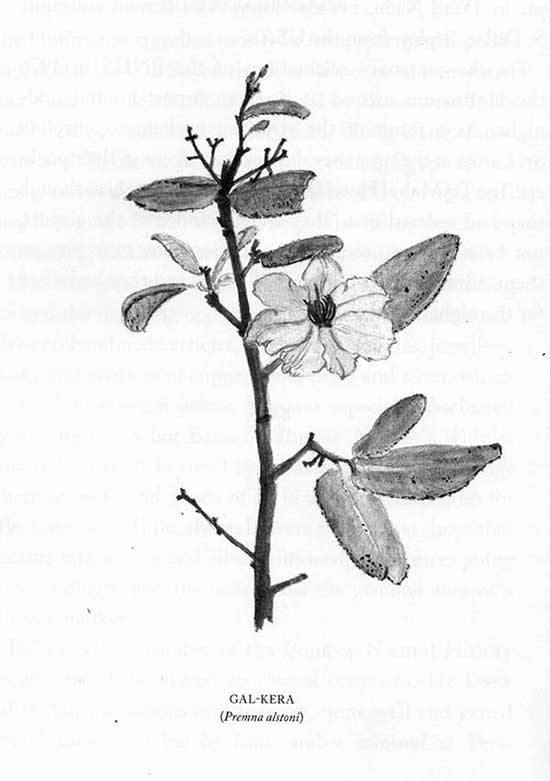
Thilo comments on two related matters:
“In Sri Lanka there is a tendency to pick and consume fruit when it is quite unripe and before it has developed its characteristic taste and flavour. ‘This is chiefly so with mango and guava (pera) which are often eaten green, hard and sour. The reason is that fruit without special protective skin (such as found on orange or mangosteen) are taken by tree rats, squirrels, bats and birds, chiefly parakeets, long before they attain a reasonable standard of ripeness, and humans must beat them to it!
“But to get at the fruits trees are often mutilated by chopping off entire branches; this is done for instance to rambutan, and especially wild fruit trees such as palu and wira. Sri Lankans have a strange attitude to trees. They do appreciate their great value as providers of shade, fruit and timber, but often treat them rather ruthlessly.”
Thilo Hoffmann made prolific notes during his many sojourns in the wilds of Sri Lanka. These fill 50 ruled exercise books, and concern not only the identity of animals and birds seen or heard, but their behaviour, botanical matters, landscapes, the weather, and whatever appeared to be of special interest. There are, for instance, lists of trees and shrubs preferred by elephants as food. Names are noted of plants in the jungle with edible parts such as madu (Cycas circinalis) or kara (Canthium coromandelicum), and of edible wild fruits such as mora, wira and dang (madang).
It is a great pity that this unique literature has not been analysed or otherwise used.
The Hoffmanns made good use of the movie camera presented to them by Thilo’s parents in 1951. In the following decades thousands of feet of eight mm, then ‘Super 8’ and soon also 16 mm films were exposed, mainly by Mae. She later used the famous Swiss Paillard-Bolex camera with the full range of lenses and other equipment. Almost all were recordings of wild animals and scenes in National Parks. Most of these have now been preserved on CDs.
Thilo took still photographs, increasingly more in later years. He has thousands of slides and prints all taken in Sri Lanka. These mainly record landscapes, natural systems and similar subjects, often showing changes over a time –which are usually deterioration and loss of quality – and also wild animals, birds and plants.
The binoculars gifted by Mae to Thilo in 1967 were a Hensoldt (now Zeiss) Dialyt 8×56. No other article has been, and is still, so intensively used by him. Earlier he had a number of army wartime and Japanese binoculars, none of which gave satisfaction, especially in tropical conditions. Thilo’s advice to students of wildlife and nature: “Buy only the best; it will last a lifetime and thus be cheaper in the long run than a number of low-priced alternatives.”
During the height of the drought, mainly in August and September, hides were constructed at dry-zone waterholes. These small water bodies are ecologically important for the survival of many wild animals and must not be disturbed (by human visitors) during droughts. Thilo and Mae would sit quiet and unseen in a hide from early morning to dusk, observing and recording what went on at or near the water in front of them.
Thilo’s unpublished notes also include hundreds of such observations, concerning anything from frog to elephant, flycatcher to adjutant stork.Twice there were close encounters with leopards. The Hoffmanns were in a hide at Kina Uttu in Wilpattu. Nothing much happened. Then around 11 o’clock a giant-squirrel appeared overhead in a timbiri tree. Thilo stealthily moved into the trees behind the hide intending to photograph the squirrel which was now hanging at the end of a branch grappling with one of the large, purple fruits.
It lost its hold, and dropped with the fruit to the ground, a few metres from where Thilo stood. Instantly a full-grown leopard shot out of the shrubbery at the rear of the hide, past Thilo, like a flash, to catch it. The squirrel fled back into and up the trees, with the leopard in hot pursuit. At one time the big cat was hanging on a branch, swinging from its front paws like a gymnast at a horizontal bar. The squirrel escaped.
The leopard slowly retraced the path of the chase by following the scent. Then it stretched out on the near-horizontal trunk of a leaning madang tree, called dang in Wilpattu. It remained there for over an hour. Throughout all this it was aware of Thilo and Mae.
Another one at Wilpattu reacted to them quite differently. At Kattawewa, about 12 km north of Maradanmaduwa, the hide was on the inside of the bund over a small pond. Thilo recounts:
“Wind conditions were not good and we waited patiently for something to happen. When it did, it was not what we had expected. A leopard came to the water over the small bund from behind us and nearly walked into the hide. With a long, hoarse cry of shock it fled, startled as we were.”
To Thilo, with all his varied experience across Sri Lanka, the most typical sound of the island is that of a common bird, the brown-headed barber. Its rattling song, loud but pleasant, is heard in most parts of the country, and in all seasons, from early morning till nightfall.



SERIES: THE GREAT DIGITAL RETHINK — PART IV OF V
 Higher education spent 30 years going paperless. It digitised the lecture, the library, the exam hall and the staffroom. Then a student typed ‘write me an essay on Keynesian economics’ into a chatbot and handed it in. Now universities are doing something they have not done since the typewriter arrived: they are bringing back the pen.
The Most Digitised Place on Earth
If you wanted to find the institution most thoroughly transformed by digital technology, over the past three decades, the university is a strong candidate. The library card catalogue, once a tactile index of civilisation, is a database accessible from a phone in bed. Essays are submitted through portals, graded on screen, returned with tracked-change comments. Research is conducted on platforms, published in digital journals, cited by algorithms. Administrative life, timetabling, enrolment, fees, complaints, is almost entirely online. The university is, in the most literal sense, a paperless institution.
But the pen is coming back. And the reason is artificial intelligence, the very technology that was supposed to represent the final and irresistible triumph of digital over analogue in higher education.
Digital technology entered universities promising to make assessment smarter, faster and more flexible. It has instead produced a crisis of academic integrity so acute that the most sophisticated educational institutions in the world are responding by retreating to the oldest assessment technology available: a human being, a piece of paper, a pen, and a room with a clock on the wall.
Seven Thousand Caught. How Many Not?
In 2025, investigative reporting revealed that UK universities recorded nearly 7,000 confirmed cases of AI-assisted cheating in the 2023-24 academic year alone, roughly five cases per 1,000 students, five times the rate of the previous year. Experts quoted in the reporting were consistent in their view that confirmed cases represent a fraction of actual AI-assisted submissions. Nobody knows what the real number is. That, in itself, is the problem.
A student who prompts a language model to draft an essay on Keynesian economics, then edits the output to match their own voice and argumentation style, may produce something that no detection tool can reliably identify as machine-generated. The model writes fluently, cites credibly and argues coherently. The student submits with a clear conscience, having persuaded themselves that they were ‘using a tool’, in the same way they might use a calculator or a spell-checker.
Universities have responded with a spectrum of policies ranging from total prohibition of AI to the handwritten exam re-enters the story.
5,000 cases of AI cheating confirmed in a single year in UK universities. Experts say that’s the tip of the iceberg. The pen is suddenly looking very attractive again.
The Comeback of the Exam Hall
The move back is being driven not by a sudden rediscovery of pedagogical virtue but by the uncomfortable realisation that the alternatives, take-home essays, online submissions, project-based work submitted asynchronously, are now so vulnerable to AI assistance that they cannot reliably measure what the degree certificate claims to certify.
There is an additional irony, familiar to readers of this series, in the fact that AI-based exam has itself been in retreat since 2024, after mounting evidence of privacy violations, algorithmic bias and the fundamental absurdity of software that flags a student as a potential cheat for looking away from the screen to think. The technology brought in to protect digital assessment from human dishonesty has been replaced, in an increasing number of institutions, by a human invigilator. The wheel has turned.
The Open Laptop and Wandering Mind
The evidence is clear that open laptops in lectures serve, for a significant proportion of students, as gateways to everything except the lecture. Social media, news sites, messaging apps and casual browsing are the default destinations. The problem is not merely the student who disappears into their own digital world, research has documented a ‘second-hand distraction’ effect in which one student’s off-task screen use degrades the concentration of those seated nearby, whose peripheral vision catches the movement and brightness of the screen. A single open laptop in a lecture theatre affects not one student but several. The lecturer at the front of the room is competing, without knowing it, with whatever is trending on social media three rows back.
The note-taking research is more nuanced, as this series has noted previously. The finding that handwritten notes produce better conceptual understanding than typed notes is real but context-dependent, and the effect is attenuated when laptop users are trained to take generative rather than transcriptive notes. The practical takeaway for university teaching is not ‘ban laptops universally’ but something more specific: that the design of teaching environments, the explicit instruction given about how to take notes.
One student’s open laptop in a lecture degrades the concentration of every student seated nearby. The screen in your peripheral vision is not your problem. It’s everyone’s.
Critical Hybridity: What Comes After the Backlash
 Universities are too large, too diverse and too committed to digital infrastructure to undergo the kind of clean reversal visible in Nordic primary schools. They are not going to remove learning management systems, abandon online submission portals or stop using video conferencing for international collaboration. The digital transformation of higher education is, in most respects, real, useful and irreversible. The question is not whether to be digital, but which parts of university life benefit from being analogue.
What is emerging, hesitantly and imperfectly, might be called critical hybridity: the deliberate combination of digital and analogue practices based on what each is genuinely good for, rather than on what is cheapest, most fashionable or most convenient for administrators. Digital tools are excellent for access to information, for collaboration across distance, for rapid feedback on low-stakes work, for accessibility accommodations. Analogue settings, the supervised exam, the handwritten essay, the seminar discussion, the laboratory session, are excellent for demonstrating individual capability under conditions that cannot be delegated, automated or faked.
And What About the Rest of the World?
The universities of Finland, Sweden, Australia, the UK and their peers in the wealthy world have the institutional capacity, the data, the legal frameworks, the staff development resources, the research culture, to navigate this transition with some sophistication.
Universities in lower-income systems face a different set of pressures. Many are still in the phase of building digital capacity, installing platforms, training staff to use them, extending online learning to students in geographically dispersed or underserved communities. For them, the digital transformation of higher education is still a project in progress, still a marker of institutional modernity, still a goal rather than a problem. The AI cheating crisis, visible and acute in well-resourced universities, is less immediately pressing in systems where AI tool access is still uneven and where examination culture has remained more traditional.
But the AI tools are coming, and they are coming fast, and they are not arriving with an instruction manual explaining how to use them honestly. The universities that are grappling with this are acquiring knowledge that should, in principle, be shared. Whether it will be is the question this series will address in its final instalment: who learns from whom in global education, and who is always left holding the bill for everyone else’s experiments.
SERIES ROADMAP Part I: From Ed-Tech Enthusiasm to De-Digitalisation | Part II: Phones, Pens & Early Literacy | Part III: Attention, Algorithms & Adolescents | Part IV: Universities, AI & the Handwritten Exam (this article) | Part V: A Critical Theory of Educational De-Digitalisation
(The writer, a senior Chartered Accountant and professional banker, is Professor at SLIIT, Malabe. The views and opinions expressed in this article are personal.)
In 1944 Juan José Arévalo was democratically elected President of Guatemala. At the time a Boston-based banana company in Guatemala, called the United Fruit Company (UFC), had established and was running the country’s harbour, railways and electricity, to facilitate UFC’s fruit export business. It was a ‘state within a state’. The UFC received many concessions, yet corruption was rampant and local workers got a mere pittance as wages ($90 per year). Some 70% of the citizens, mostly of Mayan Indian origin, worked for 3% of the landowners who owned in excess of 550,000 acres. In fact, more than half of government employees were in the payroll of UFC. Needless to say, life under those tyrannical conditions was tough for ordinary Guatemalans who were illiterate and owed their souls to the UFC.
Those were the days of the ‘Cold War’, when a Communist was supposedly seen behind every bush – or a ‘Red under the bed’ – by US Senator Joseph McCarthy and all anti-Communists. A few years later, teachers in Guatemala, and other workers in general, demanded higher wages and were involved in strikes.
In 1951 there was another democratic election, and Jacobo Árbenz was appointed President with a promise to make the lives of Guatemala’s three million citizens better. He implemented a land reform act (No. 900) which forced UFC to sell back undeveloped land to the government, who in turn distributed it to the poor folk for farming sugar, coffee and bananas. It had been UFC’s practice not to develop all the land they owned, keeping some of it on ‘standby’ in case of hurricanes or plant disease. In fact, UFC had utilised only 15% of the land they owned. The new Guatemalan President himself contributed a sizable amount of his own land to the new scheme, while compensation paid to UFC, based on declared land value in the company’s own tax declarations, amounted to US$1.2 million.
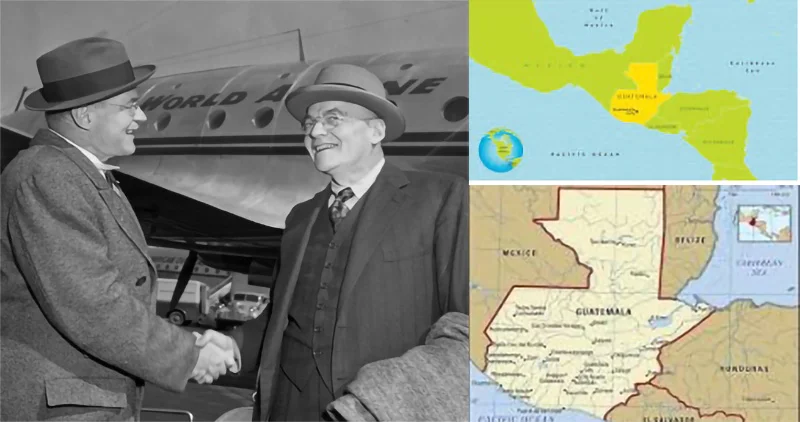
However, it was USA’s Secretary of State, John Foster Dulles (after whom Dulles International Airport in Washington, DC is named), not UFC, who sent a letter to the Guatemalan government demanding the enormous sum of US$16 million in reparations. John Dulles and his brother, Allen W. Dulles, then head of the Central Intelligence Agency (CIA), had worked together as partners of the law firm Sullivan & Cromwell – which, not coincidentally, represented UFC. Allen Dulles was also a shareholder and board member of UFC.
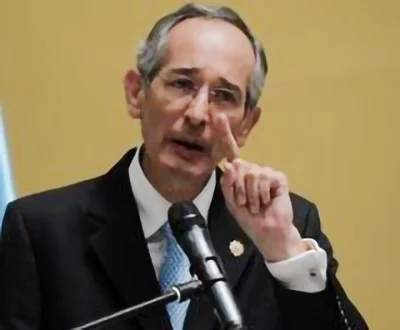
Jacobo Árbenz
The Dulles brothers were staunch Calvinists by religious denomination, and to them everything had to be ‘black or white’. At a secret meeting with the UFC board the two brothers were sold a lie saying that President Árbenz was a Communist, which was in turn conveyed to US President Dwight Eisenhower, who allocated money for covert operations to be conducted in Guatemala. Correspondents of The New York Times and Time magazine, sent to Guatemala and paid for by the UFC, began fabricating stories, known today as ‘fake news’, which were duly published by those respected and widely read publications.
One day in Washington, DC, Allen Dulles met Kermit Roosevelt – son of the late US President Theodore Roosevelt – who was in the process of engineering an Iranian regime change, and Dulles offered Roosevelt the opportunity to do something similar in Guatemala. But Roosevelt refused, claiming that there were too many loose ends to contend with. Subsequently, John E. Peurifoy was appointed as US Ambassador to Guatemala to direct operations from within.
The first attempt to undermine the Guatemalan government, code-named ‘Operation PBFORTUNE’, failed due to information leaks. A second attempt, dubbed ‘PBSUCCESS’, was launched later. Using a CIA-established radio station in Miami, Florida, called ‘The Voice of Liberation’ and pretending to be a rebel radio station inside Guatemala, the incumbent President Árbenz was accused of being a Communist. But in reality he was not a Communist, and did not have a single member of the Communist Party in his government. All he had done was to legalise the Communist Party in Guatemala, saying that they were all citizens of the country and democracy demanded it. Yet disinformation was spread liberally by the CIA, by means of fake radio broadcasts and aerial leaflet drops from unmarked American airplanes flown by foreign pilots. The same aircraft were then used to bomb Guatemala.
These American antics were observed by a young Argentinian doctor who happened to be in Guatemala at the time. His name was Ernesto ‘Che’ Guevara, who despite his anti-imperialist revolutionary fervour, chose not to become involved. Later, however, ‘Che’ went to Mexico where he joined the Cuban Castro brothers, Fidel and Raul, in their ultimately successful revolution which culminated in the dethroning of Cuba’s pro-US President Fulgencio Batista, and establishment of a Communist government in the Caribbean’s largest island.
Meanwhile in Guatemala, demoralised by the flood of fake news, in 1954 President Jacobo Árbenz stepped down from office and sought refuge in the Mexican Embassy. He was replaced as President by a US-backed, exiled military man, Carlos Castillo Armas, who was described as “bold but incompetent”.
Carlos Castillo Armas
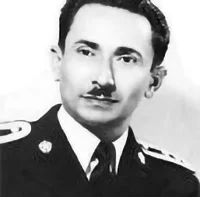
Carlos Castillo Armas
Guatemalan citizens loyal to the old regime were eliminated according to hit lists prepared by the CIA. Unmarked vans kidnapped people who were tortured and burnt to death. Ultimately, land was given back to the UFC.
It was a rule by terror that lasted for nearly 40 years, during which an estimated 200,000 people died. According to The Guardian, thousands of now declassified documents tell how the US initiated and sustained a murderous war conducted by Guatemalan security forces against civilians suspected of aiding left wing guerrilla movements, with the USA responsible for most of the human rights abuses.
This, I believe, became a template for destabilising and inducing regime change by the USA in other countries.
In the words of former US President Bill Clinton in 1999: “It is important that I state clearly that support for military forces or intelligence units which engaged in violent and widespread repression of the kind described in reports was wrong, and the United States must not repeat that mistake. We must and we will instead continue to support the peace and reconciliation process in Guatemala.”
God Bless America and no one else!
BY GUWAN SEEYA

Representatives of almost all the main opposition parties were in attendance at the recent book launch by Pivithuru Hela Urumaya leader Udaya Gammanpila. The book written by the PHU leader was his analysis of the Easter bombing of April 2019 that led to the mass killing of 279 persons, caused injuries to more than 500 others and caused panic and shock in the entire country. The Easter bombing was inexplicable for a number of reasons. First, it was perpetrated by suicide bombers who were Sri Lankan Muslims, a community not known for this practice. They targeted Christian churches in particular, which led to the largest number of casualties. The bombing of Sri Lankan Christian churches by Sri Lankan Muslims was also inexplicable in a country that had no history of any serious violence between the two religions.
There were two further inexplicable features of the bombing. The six suicide bombings took place almost simultaneously in different parts of the country. The logistical complexity of this operation exceeded any previously seen in Sri Lanka. Even during the three decade long civil war that pitted the Sri Lankan military against the LTTE, which had earned international notoriety for suicide attacks, Sri Lanka had rarely witnessed such a synchronised operation. The country’s former Attorney General, Dappula de Livera, who investigated the bombing at the time it took place, later stated, upon retirement, that there was a “grand conspiracy” behind the bombings. That phrase has remained central to public debate because it suggested that the visible perpetrators may not have been the only planners behind the attack.
The other inexplicable factor was that intelligence services based in India repeatedly warned their Sri Lankan counterparts that the bombings would take place and even gave specific targets. Later investigations confirmed that warnings were transmitted days before the attacks and repeated again shortly before the explosions, yet they were not acted upon. It was these several inexplicable factors that gave rise to the surmise of a mastermind behind the students and religious fanatics led by the extremist preacher Zahran Hashim from the east of the country, who also blew himself up in the attacks. Even at the time of the bombing there was doubt that such a complex and synchronised operation could have been planned and executed by the motley band who comprised the suicide bombers.
Determined Attempt
The book by PHU leader Gammanpila is a determined attempt to make explicable the inexplicable by marshalling logic and evidence that this complex and synchronised operation was planned and executed by Zahran himself. This is a possible line of argumentation in a democratic society. Competing interpretations of public tragedies are part of political discourse. However, the timing of the intervention makes it politically more significant. The launch of the PHU leader’s book comes at a critical time when the protracted investigation into the Easter bombing appears to be moving forward under the present government.
The performance of the three previous governments at investigating the bombing was desultory at best. The Supreme Court held former President Maithripala Sirisena and several senior officials responsible for failing to act on prior intelligence and ordered compensation to victims. This judicial finding gave legal recognition to what victims had long maintained, that there was a grave dereliction of duty at the highest levels of the state. In recent weeks the investigation has taken a dramatic turn with the arrest and court production of former State Intelligence Service chief Suresh Sallay on allegations linked directly to the attacks. Whether these allegations are ultimately proven or disproven, they indicate that the present phase of the investigation is moving beyond negligence into possible complicity.
This is why the present moment requires political sobriety. There is a danger that the line of political division regarding the investigation into the Easter bombing can take on an ethnic complexion. The insistence that the suicide bombers alone were the planners and executors of the dastardly crime makes the focus invariably one of Muslim extremism, as the suicide bombers were all Muslims. This may unintentionally narrow public attention away from the unanswered questions regarding intelligence failures, possible political manipulation, and the allegations of a broader conspiracy that remain under active investigation. The minority political parties representing ethnic and religious minorities appear to have realised this danger. Their absence from the book launch was politically significant. It suggests an unwillingness to be drawn into a narrative that could once again stigmatise an entire community for the crimes of a handful of extremists and their possible handlers.
Another Tragedy
It would be another tragedy comparable in political consequence to the havoc wreaked by the Easter bombing if moderate mainstream political parties, such as the SJB to which the Leader of the Opposition belongs, were to subscribe to positions merely to score political points against the present government. They need to guard against the promotion of anti-minority sentiment and the fuelling of majority prejudice against ethnic and religious minorities. Indeed, opposition leader Sajith Premadasa in his Easter message said that justice for the victims of the 2019 Sri Lanka Easter Sunday attacks remains a fundamental responsibility of the state and noted that seven years on, both past and present governments have failed to deliver accountability. He added that building a society grounded in trust and peace, uniting all ethnicities, religions and communities, is vital to ensure such tragedies do not occur again.
Sri Lanka’s post war history offers too many examples of how unresolved security crises become vehicles for majoritarian mobilisation. The Easter tragedy itself was followed by waves of anti-Muslim suspicion and violence in some parts of the country. Responsible political leadership should seek to prevent any return to that atmosphere. There are many other legitimate issues on which the moderate and mainstream opposition parties can take the government to task. These include the lack of decisive action against government members accused of corruption, the passing of the entire burden of rising fuel prices on consumers instead of the government sharing the burden, and the failure to hold provincial council elections within the promised timeframe. These are issues that touch the daily lives of citizens and the health of democratic governance. They offer the opposition ample ground on which to build credibility as a government in waiting.
The search for truth and justice over the Easter bombing needs to continue until all those responsible are identified, whether they were direct perpetrators, negligent officials, or political actors who may have exploited the tragedy. This is what the victim families want and the country needs. But this search must not be turned into a partisan and religiously divisive matter such as by claiming that there are more potential suicide bombers lurking in the country who had been followers of Zaharan. If it is, Sri Lanka risks replacing one national tragedy with another. coming together to discredit the ongoing investigations into the Easter bombing of 2019 is an unacceptable use of ethno-religious nationalism to politically challenge the government. The opposition needs to find legitimate issues on which to challenge the government if they are to gain the respect and support of the general public and not their opprobrium.
by Jehan Perera

Showers will occur at several places in the Western, Sabaragamuwa, Southern and North-western provinces and in Kandy, Nuwara-Eliya and Monaragala districts after 1.00 p.m.

The Sun is directly overhead Warakapola, Aranayaka, Gampola, Bibile, Inginiyagala, and Akkaraipattu at about 12:12 noon today (08)

AKD admits import of substandard coal, blames technicalities and supplier

‘Sri Lanka – China relations: Community with a Shared Future’ launched


ISA operationalises country partnership strategy through high-level Sri Lanka mission

‘Dates have the highest sugar content to fight Coronavirus’

Sunday Island 27 December – Headlines

#SundayIsland 17th December – Headlines

Sunday Island – 28th March

Sunday Island Headlines – 21 March

Sunday Island – 21st February – Headlines
-

 Features3 days ago
Ranjith Siyambalapitiya turns custodian of a rare living collection
-

 News6 days ago
2025 GCE AL: 62% qualify for Uni entrance; results of 111 suspended
-

 News3 days ago
Global ‘Walk for Peace’ to be held in Lanka
-

 Editorial6 days ago
Search for Easter Sunday terror mastermind
-
 Opinion5 days ago
Hidden truth of Sri Lanka’s debt story: The untold narrative behind the report
-

 News1 day ago
Lankan-origin actress Subashini found dead in India
-

 Opinion6 days ago
Is there hope for Palestine?
-

 Features5 days ago
The Ramadan War