
Features
Unbridled eploitation of natural resources that belong to the nation


By Ashley de Vos
(Continued from yesterday)
Sri Lanka has exposed itself to unnecessary problems in the recent past. It permitted a foreign company to pump millions of cubic feet, YES, millions (150 acres or more x 25 feet or more) cubes of sand from within the immediate economic zone of Sri Lanka, to create an artificial island in the sea off the City of Colombo.
How much are the millions of cubes of sand worth? Has the contractor paid the nation and its people for the exploitation of this resource? Countries like the Maldives and Singapore pay for the sand and the metal (granite stones) imported for the concrete works in their buildings from Indonesia. Even sand-rich Dubai imports construction sand all the way from Australia. If this was the case in Sri Lanka, how much would the contractor have to pay for the sand? Shouldn’t there be a charge for the sand? If it has been paid, who benefitted from it? More additional sand will be required for the construction of the buildings envisaged on this artificial island; where is the sand coming from – the sea or land – and who pays for the resource?
These are some of the questions that should have been asked and solutions sought before embarking on such projects. The negotiators should always be experienced people, certainly not inexperienced individuals with no love for the country. This is a lacuna that the decimation of three generations of youth in the past has brought upon this country
Sri Lanka is known to be a generous country and its past survival was based on correct decisions. However, there is a limit to generosity, especially when it affects a sovereign country and its citizens.
One shudders to think of the thousands of granite hillsides and huge boulders that have been and will be systematically destroyed to provide the rubble and metal for the concrete required for the construction of the mega structures in Colombo and on the new island. Granite is not an infinite resource in Sri Lanka. Instead, will the requirement of granite aggregate be imported from Indonesia like what other countries have done and continue to do? Are destroying one country to create another? We saw this effect in a different area when in the 1960s and 70s perfectly good old buildings were cannibalised for building parts to satisfy an unsustainable fashionable indulgence in the construction of more contemporary buildings.
As an artistic people, we have given every rock outcrop a name: Nandhagala, Ethagale, Gommatta gala, Bellumgala and so on. After these boulders and rock outcrops are all destroyed in our copy-cat concept of unsustainable development, disregarding whether it is suitable or not, would it be the time for Sigiriya? After all, in this greed-driven economy, it is money that matters. History and culture have no place.
Development is seen only in terms of short-term benefits; if you have a resource it must be exploited to collect its immediate monetary value. A very western thought concept as opposed to the lateral thinking of the past, regardless of other important cultural, historical, archaeological, environmental values that define the cultural matrix.
When the Yoda Ela was built, the kings responsible had a vision which allowed rain water falling on the Eppawela phosphate deposit to flow into the Ela. This minimal fertiliser addition was systematically transported in the water flowing along the canal to the fields in Anuradhapura. No unnecessary destruction of the resource, no transportation costs, only the celebration of a uniquely sustainable and viable vision. Are there such brains, today?
The fact that there was no holistic long-term vision available in any of the agencies responsible is seen in the very confused development concept for Colombo and the rest of the country. Here each agency works in a dictatorial fashion as though only it mattered. Shouldn’t there be a holistic vision, as each effects the other? This requires humility, not arrogance. If the agencies even at this late stage, refuse to come down from their high horses and work as a team, there will be no future worth talking of.
Tourism should not take precedence over health. The health of a nation could be more beneficial than the short-term benefits from tourism. Large scale agricultural development destroys the water shed urgently required by the surrounding village. The quarrying for granite destroys the water table in the immediate village. Most wells go dry.
The new artificial island off the Colombo City would have had some meaning and sense if it had been developed with all future development concentrated on it. At present there is no opportunity cost. All development that is out of human scale should have been moved to the artificial island and Colombo left in its pristine state. But then where is the clear holistic vision for development?
Today, there is a bifurcated Colombo, requiring emergency surgery in infrastructure requirements with as usual, preference being given to areas with political clout. It is trying to imitate, copy and compete with what other cities with diverse and more efficient and vibrant economies are trying to achieve. What is the real need for this unsustainable development in Colombo: is it our inferiority complex getting the better of us?
If the new artificial island built with our sand is so important, there are many unanswered questions that need to be answered. There are many projects around Sri Lanka and in the Maldives, in isolated locations; they are totally self-contained where power, water, disposal of garbage and other services are concerned.
a. On this new artificial island, what happens to the garbage generated there? It cannot be brought back to land or disposed in the ocean. How will it be disposed of?
b. Where is the fresh water requirement coming from? It should be generated within the artificial island through an RO process.
c. How is power requirement being generated? Generators, solar and storage batteries? It should not come off the Sri Lankan national grid.
d. Where are construction material like sand and rubble coming from?
e. What is the pattern for a sustainable traffic movement in and out of the area? It should not interfere with normal traffic flow.
f. Wouldn’t there be any competition with existing traffic flow?
g. There should not be more flyovers destroying the old inner city and some of the important buildings within it. What is happening near the Kelaniya Bridge? It unbelievably ugly, and how sustainable is it? What is the lifespan of such a construction?
h. The draining of and the free flow of the excess rain water from the Beira has been disturbed. The lack of a proper drainage system to the ocean will increase the level of the existing water table of the surrounding ground leading to forced ingress of water into many of the basements of the present buildings.
i. There is one Beira outlet facing the south west monsoon, how viable is it? Sand accretion builds up and sea currents may obstruct free movement of water. This is a phenomenon observed in many of the river outlets along the west coast during the monsoon.
j. Is there a proposal for the sand bank that may collect to the south of the artificial island? Over time, there is a possibility of sand driven by natural forces collecting south of the island as another artificial piece of land. Is there a proposal? Who will own it?
k. Will there be any restitution of the coral reefs and nurseries for fish spawn destroyed during the pumping of sand that churned up millions of tons of mud and silt from the ocean floor? A destructive process. What are the institutions that documented or were engaged in the original research prior to the commencement of the pumping of sand?
l. Were there historical ships (now belonging to the Department of Archaeology) that were destroyed in the process of pumping sand; what method was adapted to document and or conserve them?
m. Has there been any study by way of a long-term investigation with focus on future development of new sea currents and their effect on the seascape and the beaches of the land mass to the north of the new island?
n. How will this artificial island, protruding a couple of miles or more into the sea, impact Muthurajawela and Negombo? What will support a landscape that is extremely fragile, with marshes and mangroves that could be easily destroyed if the sea decides to come in. We use the word ‘decides’, as no one can safely predict the mind and action of the ocean over time.
o. What is the possible damage to the traditional fisheries and the livelihoods of the fishermen on the North-Western coast?
p. Were the citizens of the country ever consulted on the building of this artificial sand island?
q. Is it possible to prevent smuggling and other unwanted activities taking place there?
There is an interesting aspect of the new island, which has been missed up to now. A small section of it has been designated as being developed by Sri Lanka. Where is this section located? The infrastructure requirements for this section of land would have to be provided by Sri Lanka. Once Sri Lanka is involved in the project, there is no way out. This is a Chinese checkmate move to get Sri Lanka to provide all the requirements listed above for the project. This should be rejected at all costs, even if we have to forego the generous carrot offered by the Chinese in the form of a section of the artificial island as belonging to Sri Lanka. But do our ‘expert’ negotiators see the writing on the wall?
All infrastructure on the artificial island should be self-contained and pollution free and should not affect or be a burden on Sri Lanka and the citizens of Sri Lanka. All regulations and other statutory enactments being proposed and even legislated should be very clear on this.
The old city of Colombo, in spite of being a British creation, has greater significance for Sri Lanka especially on the intimate human scale, than the new island city outside, which is not visually subservient to the old city. But then we don’t have a holistic vision, do we? (Concluded)

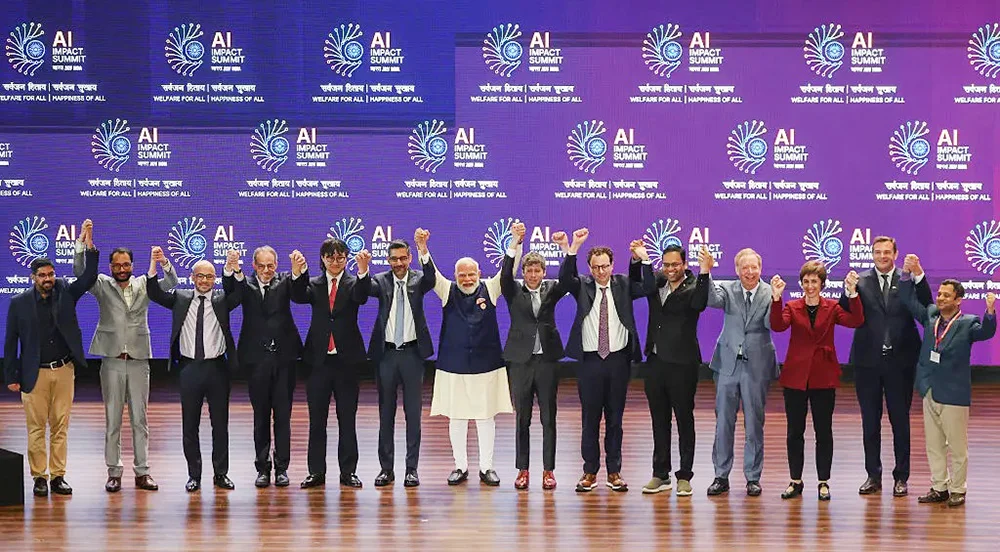
Understanding Sri Lanka through the India AI Impact Summit 2026
Artificial Intelligence (AI) has rapidly moved from being a specialised technological field into a major social force that shapes economies, cultures, governance, and everyday human life. The India AI Impact Summit 2026, held in New Delhi, symbolised a significant moment for the Global South, especially South Asia, because it demonstrated that artificial intelligence is no longer limited to advanced Western economies but can also become a development tool for emerging societies. The summit gathered governments, researchers, technology companies, and international organisations to discuss how AI can support social welfare, public services, and economic growth. Its central message was that artificial intelligence should be human centred and socially useful. Instead of focusing only on powerful computing systems, the summit emphasised affordable technologies, open collaboration, and ethical responsibility so that ordinary citizens can benefit from digital transformation. For South Asia, where large populations live in rural areas and resources are unevenly distributed, this idea is particularly important.
People friendly AI
One of the most important concepts promoted at the summit was the idea of “people friendly AI.” This means that artificial intelligence should be accessible, understandable, and helpful in daily activities. In South Asia, language diversity and economic inequality often prevent people from using advanced technology. Therefore, systems designed for local languages, and smartphones, play a crucial role. When a farmer can speak to a digital assistant in Sinhala, Tamil, or Hindi and receive advice about weather patterns or crop diseases, technology becomes practical rather than distant. Similarly, voice based interfaces allow elderly people and individuals with limited literacy to use digital services. Affordable mobile based AI tools reduce the digital divide between urban and rural populations. As a result, artificial intelligence stops being an elite instrument and becomes a social assistant that supports ordinary life.
Transformation in education sector
The influence of this transformation is visible in education. AI based learning platforms can analyse student performance and provide personalised lessons. Instead of all students following the same pace, weaker learners receive additional practice while advanced learners explore deeper material. Teachers are able to focus on mentoring and explanation rather than repetitive instruction. In many South Asian societies, including Sri Lanka, education has long depended on memorisation and private tuition classes. AI tutoring systems could reduce educational inequality by giving rural students access to learning resources, similar to those available in cities. A student who struggles with mathematics, for example, can practice step by step exercises automatically generated according to individual mistakes. This reduces pressure, improves confidence, and gradually changes the educational culture from rote learning toward understanding and problem solving.
Healthcare is another area where AI is becoming people friendly. Many rural communities face shortages of doctors and medical facilities. AI-assisted diagnostic tools can analyse symptoms, or medical images, and provide early warnings about diseases. Patients can receive preliminary advice through mobile applications, which helps them decide whether hospital visits are necessary. This reduces overcrowding in hospitals and saves travel costs. Public health authorities can also analyse large datasets to monitor disease outbreaks and allocate resources efficiently. In this way, artificial intelligence supports not only individual patients but also the entire health system.
Agriculture, which remains a primary livelihood for millions in South Asia, is also undergoing transformation. Farmers traditionally rely on seasonal experience, but climate change has made weather patterns unpredictable. AI systems that analyse rainfall data, soil conditions, and satellite images can predict crop performance and recommend irrigation schedules. Early detection of plant diseases prevents large-scale crop losses. For a small farmer, accurate information can mean the difference between profit and debt. Thus, AI directly influences economic stability at the household level.
Employment and communication reshaped
Artificial intelligence is also reshaping employment and communication. Routine clerical and repetitive tasks are increasingly automated, while demand grows for digital skills, such as data management, programming, and online services. Many young people in South Asia are beginning to participate in remote work, freelancing, and digital entrepreneurship. AI translation tools allow communication across languages, enabling businesses to reach international customers. Knowledge becomes more accessible because information can be summarised, translated, and explained instantly. This leads to a broader sociological shift: authority moves from tradition and hierarchy toward information and analytical reasoning. Individuals rely more on data when making decisions about education, finance, and career planning.
Impact on Sri Lanka
The impact on Sri Lanka is especially significant because the country shares many social and economic conditions with India and often adopts regional technological innovations. Sri Lanka has already begun integrating artificial intelligence into education, agriculture, and public administration. In schools and universities, AI learning tools may reduce the heavy dependence on private tuition and help students in rural districts receive equal academic support. In agriculture, predictive analytics can help farmers manage climate variability, improving productivity and food security. In public administration, digital systems can speed up document processing, licensing, and public service delivery. Smart transportation systems may reduce congestion in urban areas, saving time and fuel.
Economic opportunities are also expanding. Sri Lanka’s service based economy and IT outsourcing sector can benefit from increased global demand for digital skills. AI-assisted software development, data annotation, and online service platforms can create new employment pathways, especially for educated youth. Small and medium entrepreneurs can use AI tools to design products, manage finances, and market services internationally at low cost. In tourism, personalised digital assistants and recommendation systems can improve visitor experiences and help small businesses connect with travellers directly.
Digital inequality
However, the integration of artificial intelligence also raises serious concerns. Digital inequality may widen if only educated urban populations gain access to technological skills. Some routine jobs may disappear, requiring workers to retrain. There are also risks of misinformation, surveillance, and misuse of personal data. Ethical regulation and transparency are, therefore, essential. Governments must develop policies that protect privacy, ensure accountability, and encourage responsible innovation. Public awareness and digital literacy programmes are necessary so that citizens understand both the benefits and limitations of AI systems.
Beyond economics and services, AI is gradually influencing social relationships and cultural patterns. South Asian societies have traditionally relied on hierarchy and personal authority, but data-driven decision making changes this structure. Agricultural planning may depend on predictive models rather than ancestral practice, and educational evaluation may rely on learning analytics instead of examination rankings alone. This does not eliminate human judgment, but it alters its basis. Societies increasingly value analytical thinking, creativity, and adaptability. Educational systems must, therefore, move beyond memorisation toward critical thinking and interdisciplinary learning.
AI contribution to national development
In Sri Lanka, these changes may contribute to national development if implemented carefully. AI-supported financial monitoring can improve transparency and reduce corruption. Smart infrastructure systems can help manage transportation and urban planning. Communication technologies can support interaction among Sinhala, Tamil, and English speakers, promoting social inclusion in a multilingual society. Assistive technologies can improve accessibility for persons with disabilities, enabling broader participation in education and employment. These developments show that artificial intelligence is not merely a technological innovation but a social instrument capable of strengthening equality when guided by ethical policy.
Symbolic shift
Ultimately, the India AI Impact Summit 2026 represents a symbolic shift in the global technological landscape. It indicates that developing nations are beginning to shape the future of artificial intelligence according to their own social needs rather than passively importing technology. For South Asia and Sri Lanka, the challenge is not whether AI will arrive but how it will be used. If education systems prepare citizens, if governments establish responsible regulations, and if access remains inclusive, AI can become a partner in development rather than a source of inequality. The future will likely involve close collaboration between humans and intelligent systems, where machines assist decision making while human values guide outcomes. In this sense, artificial intelligence does not replace human society, but transforms it, offering Sri Lanka an opportunity to build a more knowledge based, efficient, and equitable social order in the decades ahead.
by Milinda Mayadunna
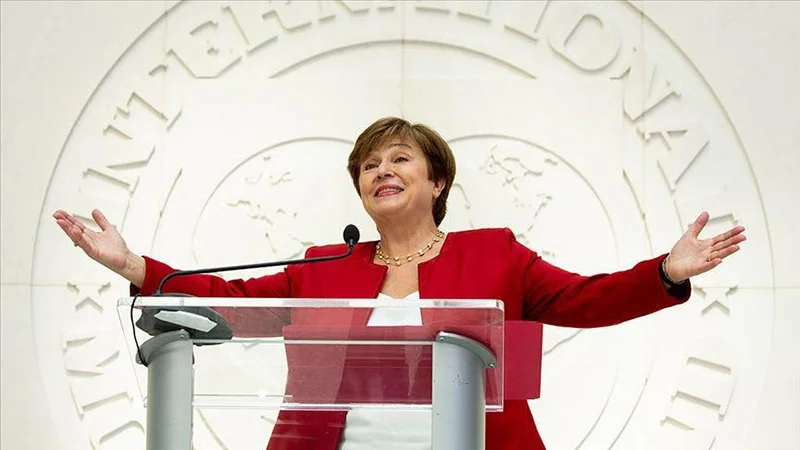
The visit by IMF Managing Director Kristalina Georgieva to Sri Lanka was widely described as a success for the government. She was fulsome in her praise of the country and its developmental potential. The grounds for this success and collaborative spirit go back to the inception of the agreement signed in March 2023 in the aftermath of Sri Lanka’s declaration of international bankruptcy. The IMF came in to fulfil its role as lender of last resort. The government of the day bit the bullet. It imposed unpopular policies on the people, most notably significant tax increases. At a moment when the country had run out of foreign exchange, defaulted on its debt, and faced shortages of fuel, medicine and food, the IMF programme restored a measure of confidence both within the country and internationally.
Since 1965 Sri Lanka has entered into agreements with the IMF on 16 occasions none of which were taken to their full term. The present agreement is the 17th agreement . IMF agreements have traditionally been focused on economic restructuring. Invariably the terms of agreement have been harsh on the people, with priority being given to ensure the debtor country pays its loans back to the IMF. Fiscal consolidation, tax increases, subsidy reductions and structural reforms have been the recurring features. The social and political costs have often been high. Governments have lost popularity and sometimes fallen before programmes were completed. The IMF has learned from experience across the world that macroeconomic reform without social protection can generate backlash, instability and policy reversals.
The experience of countries such as Greece, Ireland and Portugal in dealing with the IMF during the eurozone crisis demonstrated the political and social costs of austerity, even though those economies later stabilised and returned to growth. The evolution of IMF policies has ensured that there are two special features in the present agreement. The first is that the IMF has included a safety net of social welfare spending to mitigate the impact of the austerity measures on the poorest sections of the population. No country can hope to grow at 7 or 8 percent per annum when a third of its people are struggling to survive. Poverty alleviation measures in the Aswesuma programme, developed with the agreement of the IMF, are key to mitigating the worst impacts of the rising cost of living and limited opportunities for employment.
Governance Included
The second important feature of the IMF agreement is the inclusion of governance criteria to be implemented alongside the economic reforms. It goes to the heart of why Sri Lanka has had to return to the IMF repeatedly. Economic mismanagement did not take place in a vacuum. It was enabled by weak institutions, politicised decision making, non-transparent procurement, and the erosion of checks and balances. In its economic reform process, the IMF has included an assessment of governance related issues to accompany the economic restructuring process. At the top of this list is tackling the problem of corruption by means of publicising contracts, ensuring open solicitation of tenders, and strengthening financial accountability mechanisms.
The IMF also encouraged a civil society diagnostic study and engaged with civil society organisations regularly. The civil society analysis of governance issues which was promoted by Verite Research and facilitated by Transparency International was wider in scope than those identified in the IMF’s own diagnostic. It pointed to systemic weaknesses that go beyond narrow fiscal concerns. The civil society diagnostic study included issues of social justice such as the inequitable impact of targeting EPF and ETF funds of workers for restructuring and the need to repeal abuse prone laws such as the Prevention of Terrorism Act and the Online Safety Act. When workers see their retirement savings restructured without adequate consultation, confidence in policy making erodes. When laws are perceived to be instruments of arbitrary power, social cohesion weakens.
During a meeting between the IMF Managing Director Georgeiva and civil society members last week, there was discussion on the implementation of those governance measures in which she spoke in a manner that was not alien to the civil society representatives. Significantly, the civil society diagnostic report also referred to the ethnic conflict and the breakdown of interethnic relations that led to three decades of deadly war, causing severe economic losses to the country. This was also discussed at the meeting. Governance is not only about accounting standards and procurement rules. It is about social justice, equality before the law, and political representation. On this issue the government has more to do. Ethnic and religious minorities find themselves inadequately represented in high level government committees. The provincial council system that ensured ethnic and minority representation at the provincial level continues to be in abeyance.
Beyond IMF
The significance of addressing governance issues is not only relevant to the IMF agreement. It is also important in accessing tariff concessions from the European Union. The GSP Plus tariff concession given by the EU enables Sri Lankan exports to be sold at lower prices and win markets in Europe. For an export dependent economy, this is critical. Loss of such concessions would directly affect employment in key sectors such as apparel. The government needs to address longstanding EU concerns about the protection of human rights and labour rights in the country. The EU has, for several years, linked the continuation of GSP Plus to compliance with international conventions. This includes the condition that the Prevention of Terrorism Act (PTA) be brought into line with international standards. The government’s alternative in the form of the draft Protection of the State from Terrorism Act (PTSA) is less abusive on paper but is wider in scope and retains the core features of the PTA.
Governance and social justice factors cannot be ignored or downplayed in the pursuit of economic development. If Sri Lanka is to break out of its cycle of crisis and bailout, it must internalise the fact that good governance which promotes social justice and more fairly distributes the costs and fruits of development is the foundation on which durable economic growth is built. Without it, stabilisation will remain fragile, poverty will remain high, and the promise of 7 to 8 percent growth will remain elusive. The implementation of governance reforms will also have a positive effect through the creative mechanism of governance linked bonds, an innovation of the present IMF agreement.
The Sri Lankan think tank Verité Research played an important role in the development of governance linked bonds. They reduce the rate of interest payable by the government on outstanding debt on the basis that better governance leads to a reduction in risk for those who have lent their money to Sri Lanka. This is a direct financial reward for governance reform. The present IMF programme offers an opportunity not only to stabilise the economy but to strengthen the institutions that underpin it. That opportunity needs to be taken. Without it, the country cannot attract investment, expand exports and move towards shared prosperity and to a 7-8 percent growth rate that can lift the country out of its debt trap.
by Jehan Perera

 It’s a good sign, indeed, for the local scene, to see artistes, who have not been very much in the limelight, now making their presence felt, in a big way, and I’m glad to give them the publicity they deserve.
On 10th February we had Yellow Beatz in the spotlight and this week it’s MISTER Band.
This outfit is certainly not new to our scene; they have been around since 2012, under the leadership of Sithum Waidyarathne.
The seven energetic members who make up MISTER Band are:
Sithum Waidyarathne (leader/founder/saxophonist/guitarist and vocalist), Rangana Seram (bass guitarist), Vihanga Liyanage (vocalist), Ridmi Dissanayake (female vocalist), Nuwan Cristo (keyboardist/vocalist), Kasun Thennakoon (lead guitarist), and Nuwan Madushanka (drummer).
According to Sithum, their vision is to provide high quality entertainmen to those who engage their services.
“Thanks to our engaging performances and growing popularity, MISTER Band continues to be in high demand … at weddings, corporate events and dinner dances,” said Sithum.
They predominantly cover English and Sinhala music, as well as the most popular genres.
And the reviews that come their way, after a performance, are excellent, they say, and this is one of the bouquets they received:
It was a pleasure to have you at our wedding. Being avid music fans we wanted the best music, not just a big named band, and you guys acceded that expectations. Big thanks to Sithum for being very supportive, attentive and generous.
-

- Sithum Waidyarathne: Band leader and founder
-

- Ridmi Dissanayake: MISTER Band’s female vocalist
The best thing is the post feedback from all the guests. Normally we get mixed reviews but the whole crowd was impressed by you.
MISTER Band was one of our best choices for our wedding.
What is interesting is that for the past four consecutive years, this outfit has performed overseas, during New Year’s Eve, thereby taking their music to the international stage, as well.
The band has also produced a collection of original songs, with around six original tracks composed by the band leader, Sithum Waidyarathne, including ‘Suraganak Dutuwa,’ ‘Landuni,’ ‘Dili Dili Payana,’ ‘Hada Wedana,’ and ‘Nil Kandu Athare.’
Two more songs are set to be released this month: ‘Hitha Norida’ and ‘Premaye Hanguman.’
In addition to their original music, they have also created a strong online presence by performing and uploading over 50 cover songs and medleys to YouTube.
“We’re now planning to connect with an even wider audience by releasing more cover content very soon,” said Sithum, adding that they are also very active on social media, under the name Mister Band Official – on Facebook, Instagram, YouTube, and TikTok.

Navy seize an Indian fishing boat poaching in Mannar seas

Fair weather will prevail except for showers in the Southern province and in Rathnapura, Monaragala and Kaluthara districts after 2.00 p.m

Families of those sentenced to death for killing MP Atukorale seek AKD’s intervention

OPV leaves Baltimore, expected in Colombo in May

Unions sound alarm over coal procurement and power sector restructuring

MAS Group moving to India: CP asks NPP govt. to act

‘Dates have the highest sugar content to fight Coronavirus’

Sunday Island 27 December – Headlines

#SundayIsland 17th December – Headlines

Sunday Island – 28th March

Sunday Island Headlines – 21 March

Sunday Island – 21st February – Headlines
-
 Features3 days ago
Why does the state threaten Its people with yet another anti-terror law?
-

 Features3 days ago
Victor Melder turns 90: Railwayman and bibliophile extraordinary
-
 Features3 days ago
Reconciliation, Mood of the Nation and the NPP Government
-

 Features2 days ago
LOVEABLE BUT LETHAL: When four-legged stars remind us of a silent killer
-
 Features3 days ago
Victor, the Friend of the Foreign Press
-

 Latest News4 days ago
New Zealand meet familiar opponents Pakistan at spin-friendly Premadasa
-

 Latest News4 days ago
Tariffs ruling is major blow to Trump’s second-term agenda
-

 Latest News4 days ago
ECB push back at Pakistan ‘shadow-ban’ reports ahead of Hundred auction