
News
UN warns 345 million people face starvation worldwide


The United Nations food chief has warned the world is facing “a global emergency of unprecedented magnitude” with up to 345 million people marching towards starvation – and 70 million pushed closer to starvation by the war in Ukraine.David Beasley, Executive Director of the UN World Food Programme, told the UN Security Council on Thursday the 345 million people facing acute food insecurity in the 82 countries where the agency operates is more than twice the number of acutely food insecure people before the COVID-19 pandemic hit in 2020.
He said it is incredibly troubling that 50 million of those people in 45 countries are suffering from very acute malnutrition and are “knocking on famine’s door”.
“What was a wave of hunger is now a tsunami of hunger,” he said, pointing to rising conflict, the pandemic’s economic ripple effects, climate change, rising fuel prices and Russia’s invasion of Ukraine.
Since Russia invaded its neighbour on February 24, Beasley said, soaring food, fuel and fertiliser costs have driven 70 million people closer to starvation.Despite an agreement in July, allowing Ukrainian grain to be shipped from three Black Sea ports, blockaded by Russia, and continuing efforts to get Russian fertiliser back to global markets, “there is a real and dangerous risk of multiple famines this year”, he said.
“And in 2023, the current food price crisis could develop into a food availability crisis if we don’t act.”
‘All hands on deck’
The Security Council was focusing on conflict-induced food insecurity and the risk of famine in Ethiopia, northeastern Nigeria, South Sudan and Yemen. But Beasley and UN humanitarian chief Martin Griffiths also warned about the food crisis in Somalia, which they both recently visited, and Griffiths also put Afghanistan high on the list.
“Famine will happen in Somalia. Be sure it won’t be the only place either,” Griffiths said.
He cited recent assessments that identified “hundreds of thousands of people facing catastrophic levels of hunger” – meaning they are at the worst famine level.
Beasley recalled his warning to the council in April 2020 “that we were then facing famine, starvation of biblical proportions”. He said then the world “stepped up with funding and tremendous response, and we averted catastrophe”.
“We are on the edge once again, even worse, and we must do all that we can – all hands on deck with every fibre of our bodies,” he said. “The hungry people of the world are counting on us and … we must not let them down.”
Effects of conflict and violence
Griffiths said the widespread and increasing food insecurity is a result of the direct and indirect effect of conflict and violence that kills and injures civilians, forces families to flee the land they depend on for income and food, and leads to economic decline and rising prices for food they cannot afford.After more than seven years of war In Yemen, he said, “some 19 million people – six out of 10 – are acutely food insecure, an estimated 160,000 people are facing catastrophe, and 538,000 children are severely malnourished”.
Beasley said the Ukraine war is stoking inflation in Yemen, which is 90 percent reliant on food imports. The World Food Programme hopes to provide aid to about 18 million people, but its costs have risen 30 percent this year to $2.6bn.As a result, it has been forced to cut back so Yemenis this month are getting only two-thirds of their previous rations, he said.
Beasley said South Sudan faces “its highest rate of acute hunger since its independence in 2011” from Sudan. He said 7.7 million people, more than 60 percent of the population, are “facing critical or worse levels of food insecurity”.
Without a political solution to escalating violence and substantial spending on aid, “many people in South Sudan will die”, he warned.‘Exhausted families over the edge’ In northern Ethiopia’s Tigray, Afar and Amhara regions, more than 13 million people need life-saving food, Griffiths said. He pointed to a survey in Tigray in June that found 89 percent of people food insecure, “more than half of them severely so”.
Beasley said a truce in March enabled WFP and its partners to reach almost five million people in the Tigray area, but resumed fighting in recent weeks “threatens to push many hungry, exhausted families over the edge”.
In northeast Nigeria, the UN projects that 4.1 million people are facing high levels of food insecurity, including 588,000 who faced emergency levels between June and August, Griffiths said. Almost half of those people could not be reached because of insecurity, and the UN fears “some people may already be at the level of catastrophe and already dying”.
Griffiths urged the Security Council to “leave no stone unturned” in trying to end these conflicts, and to step up financing for humanitarian operations, saying UN appeals in those four countries are all “well below half of the required funding”. – Al Jazeera



The Situation Report issued by the Disaster Management Center at 0600 AM today [11th December 2025] confirms that there has been no addition to the death toll in the past 24 hours and remains at 639. The number of missing persons has reduced by ten [10] and stands at 193.
There is a slight reduction in the number of persons who are at safety centers and, stands at 85,351 down from 86,040 yesterday. Five safety centers have also closed down in the past 24 hours and 873 safety centers are still being maintained.


Investigations have revealed that the government’s controversial easing of environmental regulations appears closely aligned with the interests of a small but powerful coalition of politically connected investors, environmentalists have alleged.
The move weakens key Environmental Impact Assessment (EIA) requirements and accelerates approvals for high-risk projects, has triggered a storm of criticism from environmental scientists, civil society groups and even sections within the administration, they have claimed.
Environmental Scientist Hemantha Withanage, Executive Director of the Centre for Environmental Justice, told The Island that the policy reversal “bears the fingerprints of elite political financiers who view Sri Lanka’s natural assets as commodities to be carved up for profit.”
“This is not accidental. This is deliberate restructuring to favour a specific group of power brokers,” he told The Island. “The list of beneficiaries is clear: large-scale mineral extraction interests, luxury hotel developers targeting protected coastlines, politically backed hydropower operators, industrial agriculture companies seeking forest land, and quarry operators with direct political patronage.”
Information gathered through government insiders points to four clusters of projects that stand to gain substantially:
Several politically shielded operators have been lobbying for years to weaken environmental checks on silica sand mining, gem pit expansions, dolomite extraction and rock quarrying in the central and northwestern regions.
High-end tourism ventures — especially in coastal and wetland buffer zones — have repeatedly clashed with community opposition and EIA conditions. The rollback clears obstacles previously raised by environmental officers.
At least half a dozen mini-hydro proposals in protected catchments have stalled due to community objections and ecological concerns. The new rules are expected to greenlight them.
Plantation and agribusiness companies with political links are seeking access to forest-adjacent lands, especially in the North Central and Uva Provinces.
“These sectors have been pushing aggressively for deregulation,” a senior Ministry source confirmed. “Now they’ve got exactly what they wanted.”
Internal rifts within the Environment Ministry are widening. Several senior officers told The Island they were instructed not to “delay or complicate” approvals for projects endorsed by select political figures.
A senior officer, requesting anonymity, said:
“This is not policymaking — it’s political engineering. Officers who raise scientific concerns are sidelined.”
Another added:”There are files we cannot even question. The directive is clear: expedite.”
Opposition parliamentarians are preparing to demand a special parliamentary probe into what they call “environmental state capture” — the takeover of regulatory functions by those with political and financial leverage.
“This is governance for the few, not the many,” an Opposition MP told The Island. “The rollback benefits the government’s inner circle and their funders. The public gets the consequences: floods, landslides, water scarcity.”
Withanage issued a stark warning:
“When rivers dry up, when villages are buried in landslides, when wetlands vanish, these will not be natural disasters. These will be political crimes — caused by decisions made today under pressure from financiers.”
He said CEJ was already preparing legal and public campaigns to challenge the changes.
“We will expose the networks behind these decisions. We will not allow Sri Lanka’s environment to be traded for political loyalty.”
Civil society organisations, environmental lawyers and grassroots communities are mobilising for a nationwide protest and legal response. Several cases are expected to be filed in the coming weeks.
“This is only the beginning,” Withanage said firmly. “The fight to protect Sri Lanka’s environment is now a fight against political capture itself.”
By Ifham Nizam

The UK has pledged £1 million (around $1.3 million) in aid to support victims of Cyclone Ditwah, following Acting High Commissioner Theresa O’Mahony’s visit to Sri Lanka Red Cross operations in Gampaha.
“This funding will help deliver emergency supplies and life-saving assistance to those who need it most,” the British High Commission said. The aid will be distributed through humanitarian partners.
During her visit, O’Mahony toured the Red Cross warehouse where UK relief supplies are being prepared, met volunteers coordinating relief efforts, and visited flood-affected areas to speak with families impacted by the cyclone.
“Our support is about helping people get back on their feet—safely and with dignity,” she said, adding that the UK stands “shoulder to shoulder with the people of Sri Lanka” and will continue collaborating with the government, the Red Cross, the UN, and local partners in recovery efforts.
She was accompanied by John Entwhistle, IFRC Head of South Asia, and Mahesh Gunasekara, Secretary General of the Sri Lanka Red Cross.

Venezuelan Nobel winner emerges to collect prize in Oslo after months in hiding

Fifties from Conway, Hay extend New Zealand’s advantage

No change in death toll, stands at 639 as at 0600AM today [11th]

Trump administration says it seized oil tanker off Venezuela coast

Olympics decision on gender eligibility to come in early 2026

Tents flood, families seek shelter as Storm Byron bears down on Gaza

‘Dates have the highest sugar content to fight Coronavirus’

Sunday Island 27 December – Headlines

#SundayIsland 17th December – Headlines

Sunday Island – 28th March

Sunday Island Headlines – 21 March

Sunday Island – 21st February – Headlines
-

 News3 days ago
Over 35,000 drug offenders nabbed in 36 days
-

 Features1 day ago
Finally, Mahinda Yapa sets the record straight
-

 Business5 days ago
LOLC Finance Factoring powers business growth
-
 News2 days ago
Cyclone Ditwah leaves Sri Lanka’s biodiversity in ruins: Top scientist warns of unseen ecological disaster
-

 News5 days ago
CPC delegation meets JVP for talks on disaster response
-
 News5 days ago
A 6th Year Accolade: The Eternal Opulence of My Fair Lady
-

 News3 days ago
Rising water level in Malwathu Oya triggers alert in Thanthirimale
-
 Features4 days ago
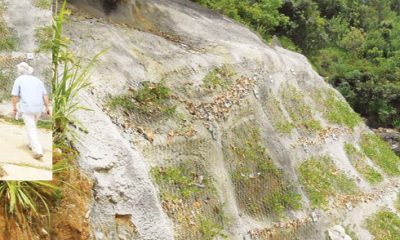
The Catastrophic Impact of Tropical Cyclone Ditwah on Sri Lanka: