
Foreign News
UK to send warship to South America amid Venezuela tensions

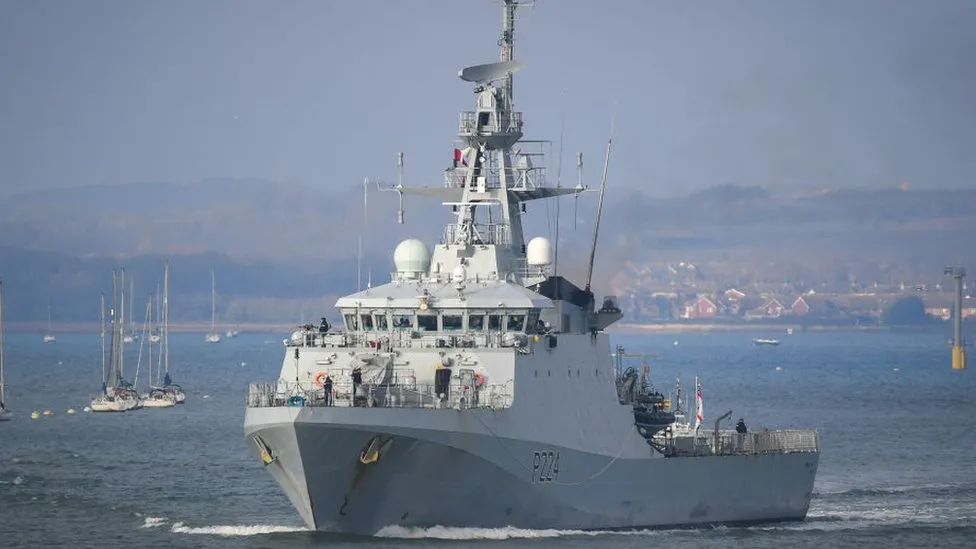
The UK is preparing to send a warship to Guyana in a show of diplomatic and military support for the former British colony, the BBC has learned.
It comes after neighbouring Venezuela renewed its claim for a disputed part of Guyanese territory that is rich in oil and minerals.
The Ministry of Defence confirmed HMS Trent would take part in joint exercises after Christmas.
Guyana, a Commonwealth member, is South America’s only English-speaking nation.
HMS Trent – an offshore patrol vessel – had been deployed to the Caribbean to search for drug smugglers but was re-tasked after Venezuela’s government threatened to annex the Essequibo region of Guyana earlier this month.
This raised fears that Venezuela might invade and spark the first interstate war in South America since the Falklands Conflict in 1982.
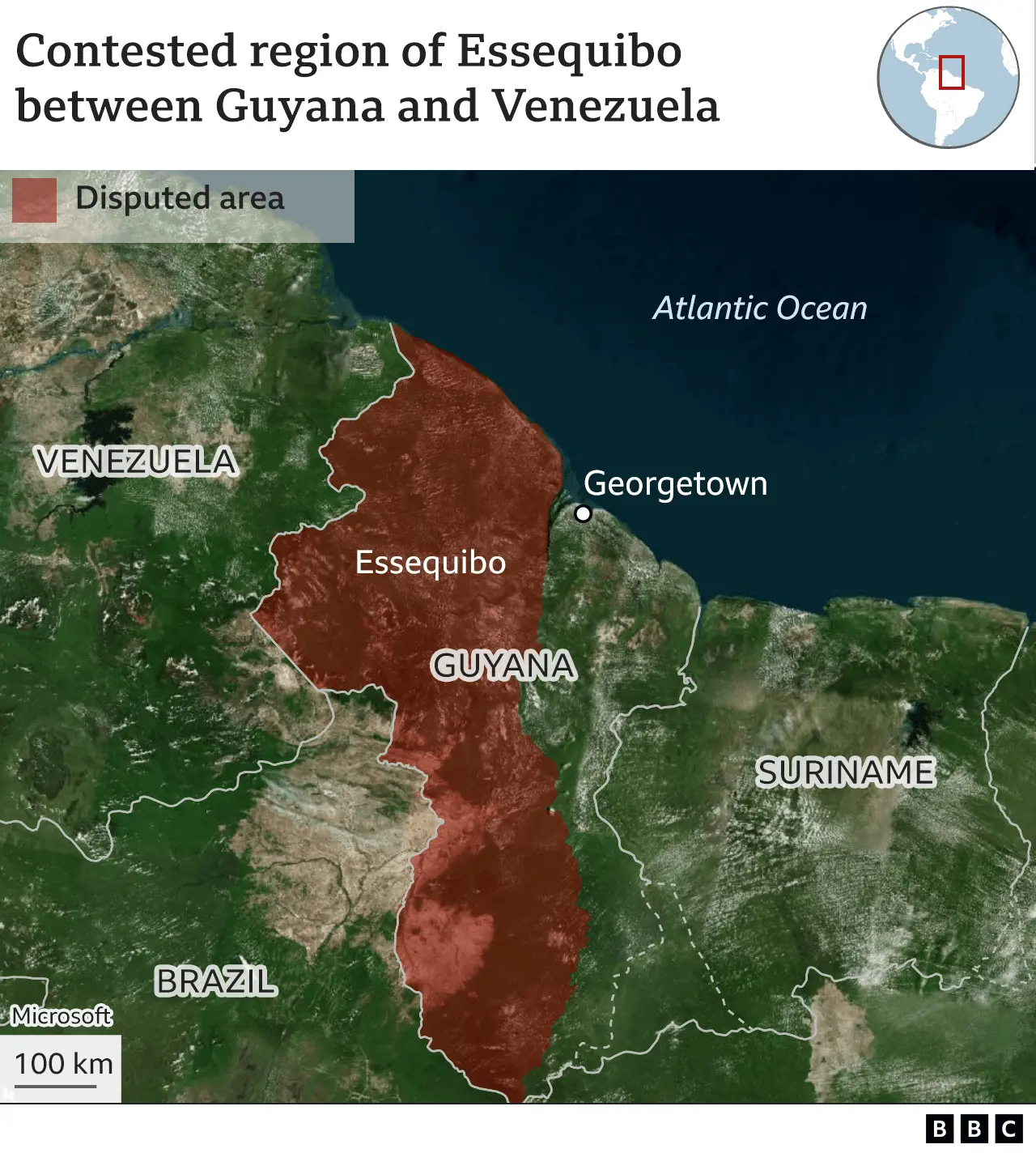
Venezuela has long claimed ownership of Essequibo, a 61,000 square mile region which comprises about two-thirds of Guyana. Its hills and jungles are rich in gold, diamonds and bauxite, while huge oil deposits have been found off its coast.
While Guyana’s economy is growing fast, Venezuela’s is suffering.
Nicolas Maduro, the president of Venezuela, staged a referendum on 3 December to assert popular support for his country’s claim to Essequibo. The result was widely challenged and disputed but he nonetheless published new maps and legislation showing Essequibo as part of Venezuela, named a new governor and offered identity cards to those living in the sparsely populated region.
He has also ordered the state oil company to issue extraction licences.
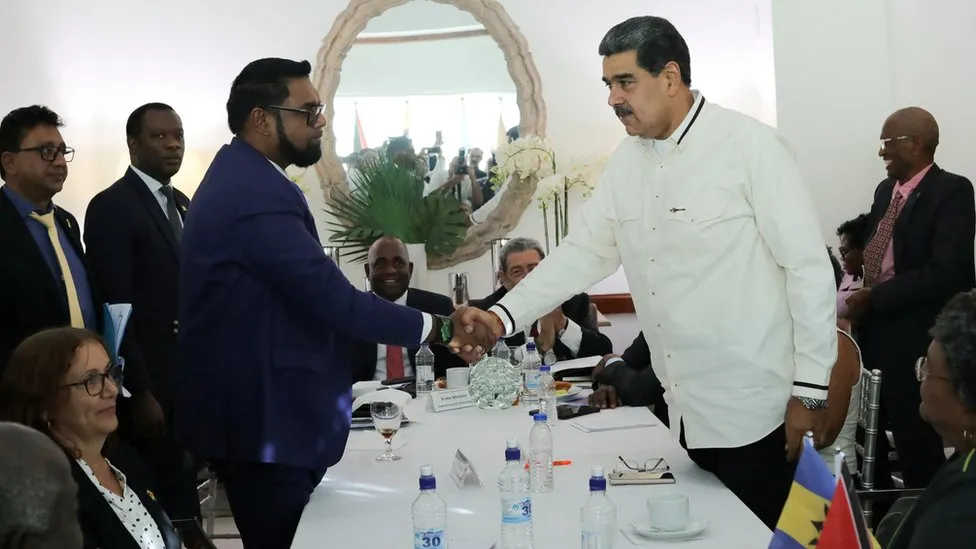
The Venezuelan president has subsequently met Guyana’s President, Irfaan Ali, and agreed not to use force, but he has maintained his territorial claim and both sides are still at odds over how the border dispute could be settled legally.
This week the Lloyd’s insurance market in London added Guyana to its list of riskiest shipping zones.
A Ministry of Defence spokesperson told the BBC: “HMS Trent will visit regional ally and Commonwealth partner Guyana later this month as part of a series of engagements in the region during her Atlantic Patrol Task deployment.”
HMS Trent has a crew of 65, a top speed of 24 knots and a range of 5,000 nautical miles.It is armed with 30mm cannon and a contingent of Royal Marines. It can also deploy Merlin helicopters and unmanned aircraft.
HMS Trent left its home port of Gibraltar in early December and is currently alongside in Bridgetown, Barbados for Christmas.
The warship is expected to anchor off the capital of Guyana, Georgetown, and conduct visits, joint activities and training with the country’s navy and other allies. It cannot go alongside because the port is too shallow.
The vessel is mainly used for tackling piracy and smuggling, protecting fisheries, counter-terrorism, providing humanitarian aid, and search and rescue operations, but the Royal Navy says it is also designed for border patrols and defence diplomacy.
The decision to send HMS Trent to Guyana is part of a growing UK effort to show international diplomatic support for Guyana.
This week the Foreign Secretary Lord Cameron said the UK would “continue to work with partners in the region to ensure the territorial integrity of Guyana is upheld and prevent escalation”.
David Rutley, the Foreign Office Minister for the Americas, visited Georgetown on 18 December, the first G7 representative to do so since Venezuela renewed its claim. He promised Guyana the UK’s “unequivocal backing” and welcomed Venezuela’s promise to avoid using force.
Mr Rutley continued: “The border issue has been settled for over 120 years. Sovereign borders must be respected wherever they are in the world. “The UK will continue to work with partners in the region, as well as through international bodies, to ensure the territorial integrity of Guyana is upheld.”
Venezuela’s Foreign Minister, Yvan Gil, criticised the visit, accusing the UK of destabilising the region. In a post on X – formerly Twitter – he said: “The former invading and enslaving empire, which illegally occupied the territory of Guayana Esequiba and acted in a skillful and sneaky manner against the interests of Venezuela, insists on intervening in a territorial controversy that they themselves generated.”
Venezuela disputes the border which was established under an international agreement in 1899.
Guyana was formerly known as British Guiana before it secured its independence in 1966.
(BBC)







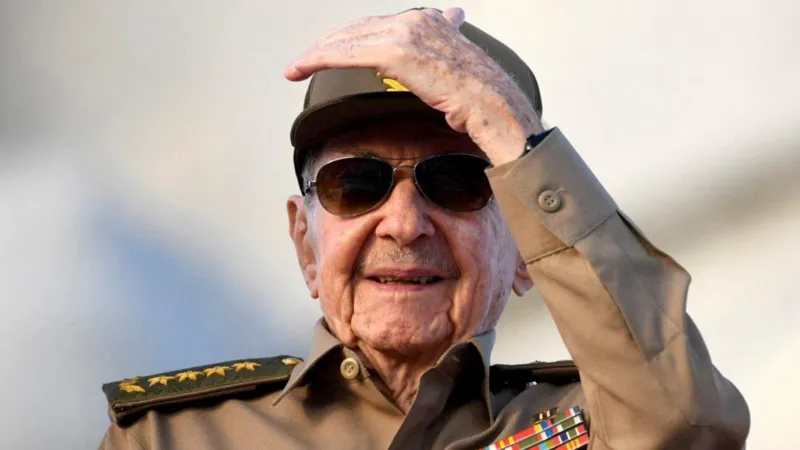
The US has charged former Cuban leader Raúl Castro with conspiracy to kill US nationals and other crimes over the 1996 downing of two planes between Cuba and Florida.
The case unveiled on Wednesday accuses Castro and five others in the shooting down of the aircraft belonging to Cuban-American group Brothers to the Rescue and killing four people, including three Americans.
Castro, now 94, was then head of the country’s armed forces and faced international condemnation over the crash.
As the US seeks to exert increasing pressure on Cuba’s communist rule, President Miguel Díaz-Canel called the charges “a political manoeuvre, devoid of any legal foundation”.
Speaking at Freedom Tower in Miami, Acting Attorney General Todd Blanche announced that the US would also charge Castro with destruction of aircraft, and four individual counts of murder over the deaths of Armando Alejandre Jr, Carlos Alberto Costa, Mario Manuel de la Peña, and Pablo Morales.
“The United States, and President Trump, does not, and will not, forget its citizens,” Blanche said.
The charges must be argued in a US court, with some carrying the possibility life terms. The murder charges each carry a maximum penalty of death or life imprisonment.
The justice department’s new charges take aim at a key figurehead of Cuba’s communist leadership when it is facing intense US pressure to make significant political and economic reforms to its one-party rule there.
“I think the strategy is to increase the pressure gradually to the point where the Cuban government will give in and surrender at the bargaining table,” said Wiliam LeoGrand, a expert on Latin American politics at American University.
The US has issued sanctions on the country and imposed a blockade on oil to Cuba that has resulted in blackouts and food shortages.
Earlier on Wednesday, US Secretary of State Marco Rubio issued a message to the Cuban people timed to the country’s independence day.
“President Trump is offering a new path between the US and a new Cuba,” Rubio said.
Rubio told citizens of the island that a Cuban military run conglomerate known as GAESA is primarily responsible for the blackouts and food shortages that the country continues to endure.
GAESA owns or operates most of the lucrative parts of the Cuban economy from the ports to the petrol pumps to five-star hotels.
In response to Rubio’s message, Díaz-Canel accused the US of lying and imposing a collective punishment on the Cuban people.
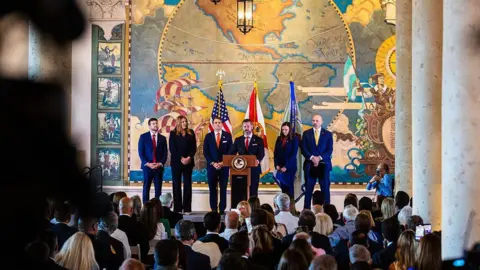 Acting US Attorney General Todd Blanche announced the charges in Miami. (BBC)
Díaz-Canel also said that the indictment of Castro was being used to “justify the folly of a military aggression against Cuba” and accused the US of distorting the facts around the downing of the plane.
Asked by reporters about the prospects of bringing Castro to the US to face charges, Blanche responded that there was a warrant for his arrest.
He did not confirm whether the US would try to capture Castro, but said, “we expect he will show up here, by his own will or another way”.
American University’s LeoGrande said he believes the US is ready to capture the former Cuban leader “if the Cubans don’t surrender at the bargaining table”.
In January, the US staged a military operation to seize former Venezuelan President Nicolás Maduro and bring him to the US, after the justice department indicted him.
It transformed Venezuela’s relationship with Washington, something LeoGrande cautioned would be unlikely to have the same effect in Cuba, noting Castro retired almost a decade ago.
Nearly 95 years old, Castro, the brother of late Cuban leader Fidel Castro, remains an influential figure, acknowledged on the island as the surviving “leader of the Cuban Revolution”.
Blanche said he would “not compare cases” between Castro’s and that of Maduro.
President Donald Trump was asked about the political aspect of Wednesday’s indictment.
“A lot of those people are related to me in the sense that I’ve had such a great relationship with Cuban-Americans,” Trump said. “On a humanitarian basis, we’re here to help.”
While Castro is not expected to be extradited or to appear in the case, all options appear to be on the table, says attorney Lindsey Lazopoulos Friedman, who served as a prosecutor in the US attorney’s office in Miami.
“If he did appear in the case, he would be afforded the same legal rights as any other defendant,” Friedman said, adding that would ultimately include a trial by jury.
“No one expects that the case will follow this typical path… but the indictment is compelling and is supported by significant evidence,” she told the BBC.
Cuba unlikely to bow without a fight
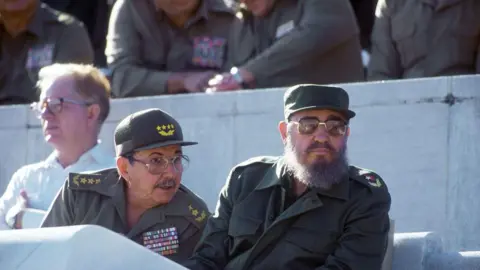
The Miami centre where US officials announced the indictment of Raúl Castro was full of Cuban Americans, mostly representing Cuban exile organisations that have for decades led opposition of the Cuban government from within the United States.
Surrounded by pictures of the four people who died in the 1996 crashes, many at the Miami event described being thrilled by the news.
“It was time, 67 years of that murderous regime,” said Isela Fiterre. “Raúl Castro did not merely kill four individuals. Over the course of many years, he has killed countless people,” Fiterre said.
She said it is never too late for justice and that she is grateful to the Trump administration for taking this step.
Another attendee, Mercedes Puid-Soto, echoed those sentiments.
“I feel very happy. Justice has been served,” she said. “It’s very important that the families can close that chapter, and we Cubans too.”
“It’s unlikely that the Cuban regime will surrender to the United States without a fight,” Vigil noted. “And any move that includes working with the Cuban regime would be very difficult for the Cuban diaspora in the United States to accept.”
US and Cuban representatives, including Raúl Castro’s grandson Raúl Guillermo Rodriguez Castro, have held “conversations” in recent months, but US charges against the former president are unlikely to smooth these contacts.
On the contrary, the Cuban side showed signs of further entrenching into its “no surrender, no concessions” position against US pressure, with Cuban state media outlets blasting what they called the “false accusations”.
(BBC)
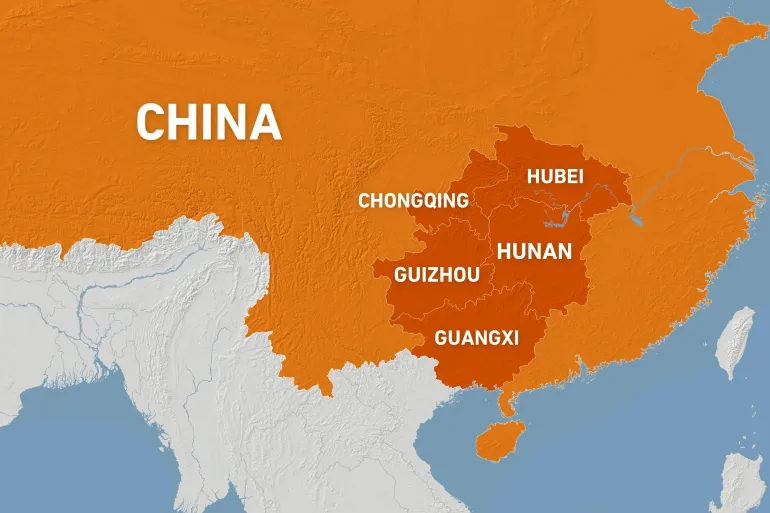
At least 10 people have died after heavy rains caused widespread flooding and landslides across southern and central China.
The China Meteorological Administration (CMA) maintained elevated orange alerts on Tuesday for heavy rain and severe stormy weather, warning that the huge precipitation system has entered its strongest, most destructive stage.
China’s State Flood Control and Drought Relief Headquarters officially activated a Level-IV emergency response, the initial tier to accelerate state-level disaster relief for floods, in Hunan and Guangxi, while maintaining the same emergency tier for Hubei, Chongqing, and Guizhou.
The torrential downpours have shattered multiple local historical records, particularly in the central Hubei province. State broadcaster CCTV reported that 337 townships in Hubei recorded more than 100mm of rain within a 48-hour window.
In Guangxi, six people died after a pick-up truck carrying 15 passengers fell into a swollen river amid heavy rainfall, CCTV said. In Hubei, three people were killed by flash floods in a low-lying village, while another death was recorded in southern Hunan province.
Images on the Chinese social media platform Douyin showed residents in Jingzhou, Hubei, standing knee-deep in floodwater, with some catching fish swimming in submerged streets. Several cars were almost entirely underwater.
Authorities have suspended schools, businesses, and transport services in affected areas. Emergency responses are under way, and residents in parts of Hubei and Hunan are actively being relocated.
Meteorologists attributed the unusually large area of intense rainfall to the convergence of moisture from the Bay of Bengal, the South China Sea, and the Pacific Ocean. They said the slow-moving nature of the weather system had exacerbated cumulative rainfall totals.
The National Meteorological Centre expects severe weather to move east and south over the next two days, with the heaviest rainfall forecast along the middle and lower reaches of the Yangtze River from Wednesday.
[Aljazeera]
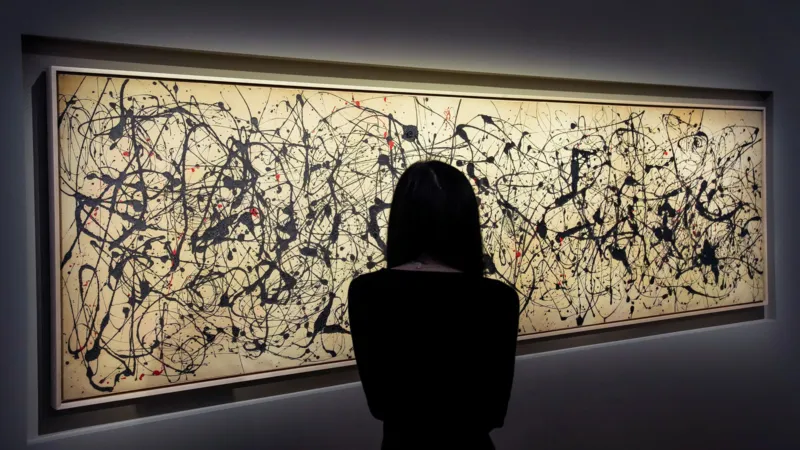
A Jackson Pollock artwork, described as one of history’s “first truly abstract paintings”, has sold at auction for $181m (£135m) in New York.
Number 7A, 1948, which went under the hammer at the renowned Christie’s auction house on Monday, smashed the previous record for the most a work by the late American artist has taken at auction.
The painting, which came from the private collection of media magnate SI Newhouse, is also now the fourth most expensive artwork ever sold at auction, according to ARTnews.
Also in the collection was a bronze sculpture by Romanian artist Constantin Brancusi, which sold for $107.6m – the second highest amount a sculpture has ever gone for at auction.

Pollock, who died in 1956, was a major figure in the abstract expressionist art movement. His drip painting technique is one the art world’s most recognisable and often imitated.
The previous auction record for one of Pollock’s artworks was $61.2m for his Number 17, 1951 painting, which was sold in 2021. Other pieces have sold for higher prices in private sales.
Christie’s called Number 7A, 1948, which depicts black drips of paint with touches of red on a huge canvas spanning more than three metres, a key piece of art history.
“It is with this work that Pollock finally frees himself from the shackles of conventional easel painting and produces one of the first truly abstract paintings in the history of art,” it wrote in its description of the piece online.
Other artworks sold at the Christie’s auction included pieces by Mark Rothko and Joan Miro, which also both broke previous records for works by the artists at auction.
[BBC]

US charges Cuba’s Raúl Castro with murder over 1996 downing of two planes

Prime Minister Dr Harini Amarasuriya meets Foreign Secretary of the United Kingdom

Alice Capsey 74 not out blazes trail in seven-wicket England win

Kolkata Knight Riders keep their IPL campaign alive with low-scoring win

Showers will occur at times in the Western, Sabaragamuwa Northern and North-western provinces and in Anuradhapura, Galle, Matara, Kandy and Nuwara-Eliya districts

Suspects involved in sureties controversy granted bail

‘Dates have the highest sugar content to fight Coronavirus’

Sunday Island 27 December – Headlines

#SundayIsland 17th December – Headlines

Sunday Island – 28th March

Sunday Island Headlines – 21 March

Sunday Island – 21st February – Headlines
-
 Features4 days ago
Sri Lankan Airlines Airbus Scandal and the Death of Kapila Chandrasena and my Brother Rajeewa
-
 News5 days ago
Lanka’s eligibility to draw next IMF tranche of USD 700 mn hinges on ‘restoration of cost-recovery pricing for electricity and fuel’
-
 News4 days ago
Kapila Chandrasena case: GN phone records under court scrutiny
-
 News4 days ago
Rupee slide rekindles 2022 crisis fears as inflation risks mount
-
 Features1 day ago
Octopus, Leech, and Snake: How Sri Lanka’s banks feast while the nation starves
-
 Business4 days ago
Expansion of PayPal services in Sri Lanka officially announced
-
 Features6 days ago
Mysterious Death of United Nations Secretary General Hammarskjöld
-
 News4 days ago
Court orders further arrests in alleged USD 42 Mn NDB fraud case