
Business
Uber appoints Kaushalya Gunaratna as new head of mobility business


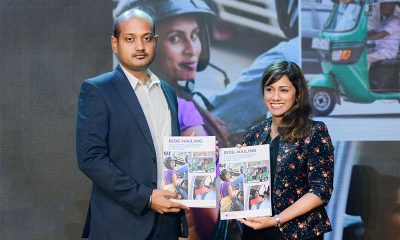
Uber, the leading ridesharing app, today announced the appointment of Kaushalya Gunaratna as the Country Manager of Uber – Sri Lanka. In her role as the head of business, she will oversee the operations of Uber’s mobility business in the island nation.
With this announcement, Kaushalya moves from the Uber Eats business where she was heading Merchant Operations to the Uber rides vertical which offers urban mobility solutions. In her previous role, Kaushalya strengthened Uber Eats’ merchant network, devised revenue growth strategies, and collaborated with global and regional teams to support local operations.
Prior to Uber, she has been part of the apparel industry where she gained an extensive and diverse experience in collaborating with leading global brands. Her responsibilities included business development, strategy and planning, supply chain management and finance.
Commenting on the appointment, Shiva Shailendran, Director – Operations, Uber India & South Asia, said, “We’re pleased to welcome Kaushalya to lead Uber in Sri Lanka and grow it further. During her Uber journey, Kaushalya has proven herself to be an excellent collaborator, astute planner, and someone who is focused on delighting customers and partners, with a keen eye on growth. Her appointment demonstrates Uber’s commitment to providing opportunities for employees to grow their careers within the company. I wish her the very best and am confident that she will enjoy building a brand that has received overwhelming love ever since we entered Sri Lanka in 2015.”
Kaushalya Gunaratna, Country Manager, Uber Sri Lanka, added, “I am delighted to take on this new role and lead the Uber mobility business through the next phase of growth in Sri Lanka. As a nation we look to rebuild after a prolonged period of crisis. We are focused more than ever to make every ride magical for our riders and driver partners. I look forward to working with the mobility team and continue to bring the best that Uber has to offer to our beautiful country.”
Since its launch in 2015, Uber has emerged as a leading ridesharing platform in Sri Lanka. Offering Uber rides in 40 Sri Lankan cities today, the company has unlocked earning opportunities for hundreds of thousands of driver partners, and has made movement convenient and hassle-free for riders. Recently, Uber partnered with the Bandaranaike International Airport (BIA) to launch a dedicated pick-up spot for riders to make travel-related stress and guesswork at the airport a thing of the past.










Sri Lanka’s export sector is bracing for fresh turbulence as the escalating conflict involving Iran and parts of the Middle East begins to send shockwaves through global trade, shipping and energy markets.
Though geographically distant from the conflict zone, Sri Lanka’s exporters are far from insulated. Industry leaders warn that higher freight costs, rising oil prices and increased trade risks could erode margins and disrupt key markets if hostilities intensify.
President of the National Chamber of Exporters of Sri Lanka, Indhra Kaushal Rajapaksa told The Island Financial Review that the situation is being closely monitored, as the export community is already feeling the early tremors of global instability.
“Sri Lanka may not be directly involved in the conflict, but we are deeply integrated into global supply chains. Any disruption in the Middle East immediately translates into higher costs and operational uncertainty for our exporters,” Rajapaksa said.
A major concern is the vulnerability of critical maritime corridors such as the Strait of Hormuz and the Red Sea, through which a significant share of global trade and oil shipments pass. Shipping lines have begun rerouting vessels and imposing emergency risk surcharges amid mounting security threats, while insurers are reassessing risk exposure in the region.
“Freight costs had only recently begun stabilising after the pandemic-era disruptions. Now, with vessels avoiding high-risk zones and insurers raising premiums, exporters are once again facing unpredictable shipping expenses,” he noted.
For time-sensitive exports such as apparel and perishables, delays could undermine Sri Lanka’s hard-earned reputation for reliability in competitive markets.
Exporters fear that prolonged instability could trigger sustained freight rate hikes similar to those witnessed during previous global disruptions.
The conflict has also driven global oil prices upward on fears of supply disruptions and shipping bottlenecks. Given that the Middle East accounts for a substantial share of global crude oil output, even perceived threats to supply have immediate price implications.
For Sri Lankan exporters, higher oil prices translate directly into increased fuel, electricity and transportation costs. Manufacturing sectors such as apparel, rubber products, plastics and food processing are particularly vulnerable, as energy forms a core input cost across operations.
“Energy is a fundamental cost component in nearly all export industries. When global oil prices rise, the impact cascades through logistics, production and even raw material pricing,” Rajapaksa explained, warning that sustained high energy costs could squeeze already thin margins.
Beyond cost pressures, the Middle East remains a crucial destination for Sri Lankan exports, especially tea and food products. Around 25 percent of Sri Lanka’s tea exports are shipped to Middle Eastern markets, making the region strategically important for the plantation sector.
“The Middle East is not just a transit route; it is a major market. If economic activity slows in those countries, or if banking and payment channels become complicated due to the conflict, our exporters will face direct consequences,” he cautioned.
War conditions also elevate trade finance and insurance risks. Cargo insurance premiums are climbing, and banks may adopt a more cautious stance toward trade credit involving affected regions.
Exporters could face payment delays, tighter financing conditions and higher compliance requirements, raising the overall cost and complexity of doing business.
This comes at a sensitive time for Sri Lanka’s economy, which is navigating recovery. Higher global oil prices would widen the import bill, potentially exerting pressure on the rupee and fuelling domestic inflation. While currency depreciation can sometimes enhance export competitiveness, rising input costs may offset any exchange rate advantage.
Despite the challenges, he pointed to potential opportunities if Sri Lanka responds strategically. As global buyers seek to diversify supply chains away from unstable regions, Sri Lanka could position itself as a reliable sourcing hub for apparel, rubber-based products, processed foods and value-added agricultural goods.
“In every global disruption there are risks, but there are also opportunities. If Sri Lanka strengthens trade facilitation, improves logistics efficiency and ensures policy consistency, we can attract buyers looking for stable alternatives,” he said.
He stressed that resilience and preparedness would be critical in the weeks ahead, as exporters closely watch developments in the Middle East and global energy markets, aware that distant conflicts can swiftly reshape local economic realities.
By Ifham Nizam

Ranil Wickremesinghe on Monday criticised the methodology adopted by U.S. President Donald Trump in dealing with Iran, stating that externally driven attempts to dismantle the leadership of another sovereign nation are unacceptable and fraught with dangerous global consequences.
Addressing a group of social media activists at the United National Party (UNP) office on Flower Road, Colombo, Wickremesinghe said that while geopolitical tensions in the Middle East were deepening, the principle of state sovereignty must not be undermined under any circumstances.
Referring to recent escalations between Washington and Tehran and remarks attributed to President Trump concerning Iran’s Supreme Leader Ali Khamenei, Wickremesinghe said:
“President Trump has alleged that Khamenei’s government was responsible for the deaths of hundreds of people in Iran and that action was taken to remove that leadership. However, the methodology used for dismantling the leadership of another administration in such a manner is not acceptable.”
He added that President Trump appeared to be seeking to engage in global affairs “as he likes,” warning that such actions carried far-reaching implications beyond the immediate theatre of conflict.
“What has happened following the Iran strikes is an issue with deep implications,” Wickremesinghe said, noting that the balance of power in sensitive regions must not be disturbed recklessly. Drawing a regional parallel, he observed that control of strategic sea lanes such as the Indian Ocean could not be handed over to a single dominant power.
On the economic fallout, Wickremesinghe sought to allay fears of a severe energy crisis in Sri Lanka. “Amid supply constraints because of Iran, it won’t be a big issue as other oil-producing countries will offer sufficient supplies,” he said. However, he expressed concern over the government’s overall economic management. “I don’t see this ballooning into a significant issue, but my concern is whether the government can manage the economy as it is.”
As he made these comments, the Sri Lankan government has yet to formally articulate its position on the escalating Middle East crisis, and Foreign Minister Vijitha Herath has not publicly clarified the government’s official stance.
Responding to a question on whether he was prepared to assume responsibility for governance again, Wickremesinghe said the present administration must be allowed to discharge its mandate. “Let the government go ahead and address the issues. We shouldn’t let them escape the responsibility they have taken upon themselves,” he said.
Commenting on the 90-day detention of former defence intelligence chief Suresh Saleh in connection with investigations into the 2019 Easter Sunday attacks, Wickremesinghe described the matter as a “closed case.” He pointed out that foreign intelligence agencies, including the Federal Bureau of Investigation (FBI), had already submitted their findings.
“Foreign intelligence bodies such as the FBI have submitted their reports and conclusions. The government’s probe direction is not in line with that. Pursuing the case afresh in this manner is a waste of public money,” he said.
Wickremesinghe’s remarks are particularly noteworthy given the long-standing perception of the UNP as broadly aligned with Western policy positions. During President Trump’s first term, when the U.S. administration threatened to suspend funding to the World Health Organization (WHO) at the height of the COVID-19 pandemic, Wickremesinghe publicly appealed to President Trump to reconsider this move , stating that developing countries such as Sri Lanka would face severe repercussions if global health funding were curtailed.
His latest comments therefore signal a clear defence of diplomatic norms and national sovereignty at a time of rising geopolitical volatility, while underscoring his view that global power rivalries must not override established principles of international conduct.
by Sanath Nanayakkare

– Offers free hearing tests throughout March
Dialog Axiata PLC, Sri Lanka’s #1 connectivity provider, marks World Hearing Day 2026 by offering free hearing tests throughout March at the Ratmalana Audiology Centre (RAC), reaffirming its commitment to expanding access to hearing care services across Sri Lanka.
Aligned with the 2026 global theme, “From communities to classrooms: hearing care for all children,” the initiative supports greater awareness of early detection and timely intervention, while making hearing screening services accessible to individuals of all ages. The programme is conducted in partnership with RAC, a collaborative project with the Ceylon School for the Deaf and Blind.
Free hearing tests will be available from 3rd to 31st March between 8:30 AM and 5:00 PM. Screenings are open to the public, including both children and adults, particularly those who may have limited access to hearing healthcare services. Appointments can be scheduled by contacting 011 730 7308 or 077 394 5945.
Over the years, Dialog has invested more than Rs. 70 million in the establishment and ongoing enhancement of RAC, which was set up in 2007 to support students of the Ceylon School for the Deaf and Blind while extending services to the wider community. RAC provides free hearing assessments for individuals referred by Government ENT specialists, alongside speech and language therapy, hearing aid evaluation and fitting, and follow-up rehabilitation services.

Free 14 day visa extension for visitors unable to depart Sri Lanka

US embassy in Dubai hit; Israel pounds Tehran, Beirut

Perera, Sugandika, Ranaweera take Sri Lanka to T20I series win over West Indies

Maldives Coast Guard Ship Huravee arrives in Colombo

New charges for son of Norway’s crown princess on trial for rape

US sends planes to evacuate nationals from Middle East as Iran conflict spreads

‘Dates have the highest sugar content to fight Coronavirus’

Sunday Island 27 December – Headlines

#SundayIsland 17th December – Headlines

Sunday Island – 28th March

Sunday Island Headlines – 21 March

Sunday Island – 21st February – Headlines
-

 Opinion5 days ago
Jamming and re-setting the world: What is the role of Donald Trump?
-
 Features5 days ago
An innocent bystander or a passive onlooker?
-

 Features2 days ago
Brilliant Navy officer no more
-
 Features6 days ago
Ratmalana Airport: The Truth, The Whole Truth, And Nothing But The Truth
-

 Opinion2 days ago
Sri Lanka – world’s worst facilities for cricket fans
-
 Business6 days ago
IRCSL transforms Sri Lanka’s insurance industry with first-ever Centralized Insurance Data Repository
-

 Business5 days ago
An efficacious strategy to boost exports of Sri Lanka in medium term
-
 Features3 days ago
Overseas visits to drum up foreign assistance for Sri Lanka