
Foreign News
Trump’s assault on USAID leaves China soft power opening in Southeast Asia

As the United States winds back humanitarian assistance in Southeast Asia, its rival China may see an opportunity to expand its influence in a region where it has directed billions of dollars in investment and aid, analysts say.
In a little over three weeks since US President Donald Trump’s inauguration, Washington has frozen nearly all foreign aid and moved to effectively abolish the US Agency for International Development (USAID), a longstanding source of soft power in the region.
USAID, the biggest disburser of US foreign aid, spent $860m in Southeast Asia alone last year, funding projects on everything from treating HIV to preserving biodiversity and strengthening local governance.
Many projects, which run primarily through grants to local NGOs, face an uncertain future as the Trump administration pulls the US back from the world stage as part of his “America first” agenda.
For Beijing, the circumstances provide an ideal opportunity for it to step in, said Yanzhong Huang, a senior fellow for global health at the Council on Foreign Relations.
“The suspension of health, education, and humanitarian programmes – key pillars of US soft power – may create vacuums that China can fill,” Huang told Al Jazeera.
“This strategic retreat could strengthen Beijing’s influence across the region, particularly in current US aid recipients like Indonesia, the Philippines, Myanmar, and Cambodia.”
As the Trump administration generated headlines with its moves to gut USAID last week, Beijing made news by stepping in with $4.4m to fund a de-mining project in Cambodia that had been left in the lurch by Washington.
Heng Ratana, head of the Cambodian Mine Action Centre, told the Khmer Times newspaper the Chinese aid would help his organisation clear more than 3,400 hectares (8,400 acres) of land filled with landmines and unexploded ordnance.
China’s embassies in the US, Cambodia and Thailand did not respond to Al Jazeera’s requests for comment.
Joshua Kurlantzick, a senior fellow for Southeast Asia and South Asia at the Council on Foreign Relations, said USAID’s demise comes as US influence in the region is waning more generally and as China scales up its public diplomacy.
Southeast Asian leaders are concerned about “chaotic policymaking” in the US, Kurlantzick told Al Jazeera, particularly in countries such as Vietnam, Indonesia and Thailand, where the US devotes significant aid and security assistance.
“Beijing is indeed already portraying the US as uncaring and unable to lead regionally or globally and I expect Beijing to increase its aid and investment now in many parts of the developing world,” Kurlantzick told Al Jazeera.
While the future of many USAID programmes in the region is unclear, some analysts believe that China is likely to leave projects with a more political or ideological focus to other partners to the region, such as the European Union, Australia, Japan or the Asian Development Project, a Manila-based regional development bank.
“China’s existing international aid or international development programme is quite sizeable. But it happens to be quite different from what USAID does in that the latter seems to be devoting a lot of resources to ideology-based initiatives, for democracy, for LGBTQ, for diversity, for inclusiveness, for climate change,” John Gong, a professor of economics at the University of International Business and Economics in Beijing, told Al Jazeera.
“Whether China is going to step into the void vacated by the United States, I am very sceptical. We are talking about different things here. And besides, I don’t think the Chinese government is keen on competing with Washington on this front,” Gong said.
China’s foreign assistance has been heavily geared towards infrastructure, as laid out in the Belt and Road Initiative (BRI), Beijing’s flagship infrastructure investment project estimated to be worth more than $1 trillion.
Other projects, such as its hospital ship Peace Ark, have provided medical assistance.
Almost all of China’s foreign aid to Southeast Asia – some 85 percent – has taken the form of non-concessional loans with a focus on energy and transport, according to Grace Stanhope, a research associate at the Lowy Institute’s Indo-Pacific Development Centre.

Beijing’s infrastructure-heavy approach has made it a visible presence in the region, albeit not always a popular one, Stanhope told Al Jazeera, due to delays and “blow-out” budgets for projects such as the East Coast Rail Link in Malaysia and Jakarta-Bandung high-speed rail line in Indonesia.
Some critics have referred to these and other projects as a form of “debt-trap” diplomacy intended to breed dependency on China, a charge Beijing has denied.
In a survey carried out by the Singapore-based Iseas Yusof-Ishak Institute last year, 59.5 percent of respondents across 10 Southeast Asian countries chose China as the most influential economic power in the region.
Just over half, however, expressed distrust of China, with 45.5 percent fearing that China could threaten their country economically or militarily. Japan was seen as the “most trusted” major power, followed by the US and the EU.
Though heavily focused on infrastructure, China has been slowly trying to shift its model of assistance towards more “soft” aid such as public health, agriculture and digitisation, said Joanne Lin, a senior fellow at the Iseas Yusof-Ishak Institute’s ASEAN studies centre in Singapore.
“The extent of China’s aid will of course depend on China’s economic ability as it is facing constraints such as its slowing growth and trade tensions with Washington which may limit its ability to replace US aid in full,” Lin told Al Jazeera.
Lin said Southeast Asian countries prefer a “diversified approach” to foreign aid and development assistance that is not dependent on a single donor – whether the US or China.
Despite its high-profile presence in Southeast Asia, China has been scaling back its development assistance in the region in recent years.
While China was the region’s top donor from 2015 to 2019, it has since slid to fourth place, according to the Lowy Institute.
Funding has similarly dried up, falling from $10bn in 2017 to $3bn in 2022, according to the think tank.
China faces its own problems at home, including slowing economic growth and high youth unemployment, that could limit its focus on affairs overseas, said Steve Balla, an associate professor of political science and international affairs at George Washington University.
“The domestic issues may serve to limit [Chinese President Xi Jinping’s] attention to international affairs. The issues with Belt and Road may limit the regime’s options for how to step into spaces left by the US,” Balla told Al Jazeera.
Bethany Allen, head of programme for China Investigations and Analysis at the Australian Strategic Policy Institute, expressed a similar sentiment.
“China is already capitalising on US disengagement in the first Trump era by deepening its economic, diplomatic and cultural influence in Southeast Asia. Initiatives like the Belt and Road Initiative, Confucius, and the Lancang-Mekong Cooperation Mechanism are tools for expanding soft power,” Allen told Al Jazeera, referring to a global programme to promote the study of Chinese language and culture, and a forum to promote cooperation between China and the Mekong subregion.
“However, China’s lowering economic growth means slowing BRI, resulting in the country’s soft power project might be less aggressive than in the past decade. High-profile debt concerns and pushback against Chinese influence [in Malaysia and Indonesia] also limit its appeal,” she said.
[Aljazeera]


Rescue workers are racing to find dozens of people still missing following a landslide at a landfill site in the central Philippines that occurred earlier this week, an official has said.
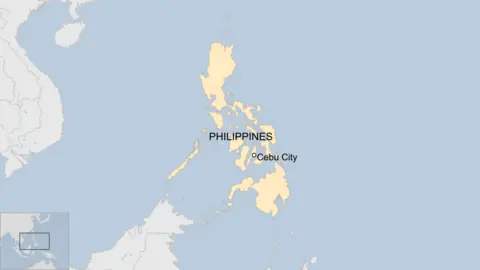
Mayor Nestor Archival said on Saturday that signs of life had been detected at the site in Cebu City, two days after the incident.
Four people have been confirmed dead so far, Archival said, while 12 others have been taken to hospital.
Conditions for emergency services working at the site were challenging, the mayor added, with unstable debris posing a hazard and crew waiting for better equipment to arrive.
The privately-owned Binaliw landfill collapsed on Thursday while 110 workers were on site, officials said.
Archival said in a Facebook post on Saturday morning: “Authorities confirmed the presence of detected signs of life in specific areas, requiring continued careful excavation and the deployment of a more advanced 50-ton crane.”
Relatives of those missing have been waiting anxiously for any news of their whereabouts. More than 30 people, all workers at the landfill, are thought to be missing.
“We are just hoping that we can get someone alive… We are racing against time, that’s why our deployment is 24/7,” Cebu City councillor Dave Tumulak, chairman of the city’s disaster council, told news agency AFP.
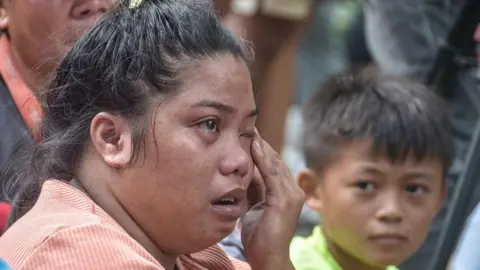
Jerahmey Espinoza, whose husband is missing, told news agency Reuters at the site on Saturday: “They haven’t seen him or located him ever since the disaster happened. We’re still hopeful that he’s alive.”
The cause of the collapse remains unclear, but Cebu City councillor Joel Garganera previously said it was likely the result of poor waste management practices.
Operators had been cutting into the mountain, digging the soil out and then piling garbage to form another mountain of waste, Garganera told local newspaper The Freeman on Friday.
The Binaliw landfill covers an area of about 15 hectares (37 acres).
Landfills are common in major Philippine cities like Cebu, which is the trading centre and transportation gateway of the Visayas, the archipelago nation’s central islands.
[BBC]

US President Donald Trump has asked for at least $100bn (£75bn) in oil industry spending for Venezuela, but received a lukewarm response at the White House as one executive warned the South American country was currently “uninvestable”.
Bosses of the biggest US oil firms who attended the meeting acknowledged that Venezuela, sitting on vast energy reserves, represented an enticing opportunity.
But they said significant changes would be needed to make the region an attractive investment. No major financial commitments were immediately forthcoming.
Trump has said he will unleash the South American nation’s oil after US forces seized its leader Nicolas Maduro in a 3 January raid on its capital.
“One of the things the United States gets out of this will be even lower energy prices,” Trump said in Friday’s meeting at the White House.
But the oil bosses present expressed caution.
Exxon’s chief executive Darren Woods said: “We have had our assets seized there twice and so you can imagine to re-enter a third time would require some pretty significant changes from what we’ve historically seen and what is currently the state.”
“Today it’s uninvestable.”
Venezuela has had a complicated relationship with international oil firms since oil was discovered in its territory more than 100 years ago.
Chevron is the last remaining major American oil firm still operating in the country.
A handful of companies from other countries, including Spain’s Repsol and Italy’s Eni, both of which were represented at the White House meeting, are also active.
Trump said his administration would decide which firms would be allowed to operate.
“You’re dealing with us directly. You’re not dealing with Venezuela at all. We don’t want you to deal with Venezuela,” he said.
The White House has said it is working to “selectively” roll back US sanctions that have restricted sales of Venezuelan oil.
Officials say they have been coordinating with interim authorities in the country, which is currently led by Maduro’s former second-in-command, Vice-President Delcy Rodríguez.
But they have also made clear they intend to exert control over the sales, as a way to maintain leverage over Rodríguez’s government.
The US this week has seized several oil tankers carrying sanctioned crude. American officials have said they are working to set up a sales process, which would deposit money raised into US-controlled accounts.
“We are open for business,” Trump said.
On Friday, Trump signed an executive order that seeks to prohibit US courts from seizing revenue that the US collects from Venezuelan oil and holds in American Treasury accounts.
Any court attempt to access those funds would interfere with US foreign relations and international goodwill, the executive order states.
“President Trump is preventing the seizure of Venezuelan oil revenue that could undermine critical US efforts to ensure economic and political stability in Venezuela,” the White House wrote in a fact sheet about the order.
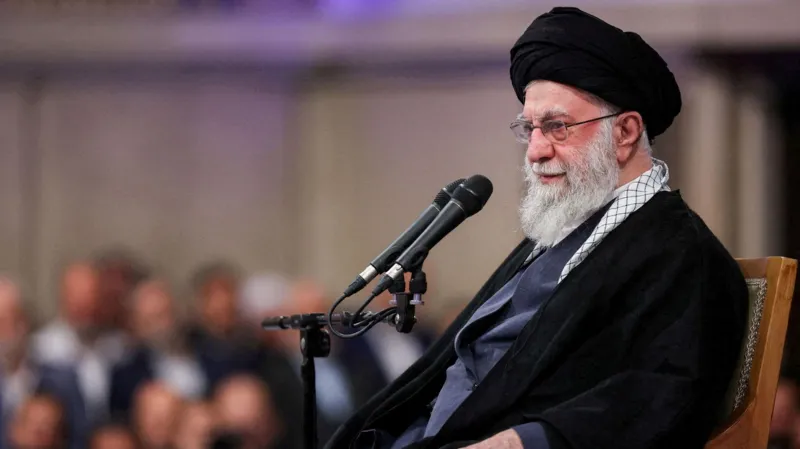
Iran’s Supreme Leader Ayatollah Ali Khamenei has called anti-government protesters “troublemakers” and “a bunch of vandals” just trying “to please the president of the US”.
He accused crowds of destroying buildings because Donald Trump said he “supports you”. Trump has warned Iran that if it kills protesters, the US would “hit” the country “very hard”.
The protests, in their 13th day, erupted over the economy and have grown into the largest in years – leading to calls for an end to the Islamic Republic and some urging the restoration of the monarchy.
At least 48 protesters and 14 security personnel, have been killed, according to human rights groups. An internet blackout is in place.
Khamenei remained defiant in a televised address on Friday.
“Let everyone know that the Islamic Republic came to power through the blood of several hundred thousand honourable people and it will not back down in the face of those who deny this,” the 86-year-old said.
Since protests began on 28 December, in addition to the 48 protesters killed, more than 2,277 individuals have also been arrested, the US-based Human Rights Activist News Agency (HRANA) said.
The Norway-based Iran Human Rights (IHRNGO) said at least 51 protesters, including nine children, had been killed.
BBC Persian has spoken to the families of 22 of them and confirmed their identities. The BBC and most other international news organisations are barred from reporting inside Iran.
The Islamic Revolutionary Guard Corps issued a statement on Friday saying it would not tolerate the continuation of the current situation in the country.
Reza Pahlavi, the son of Iran’s last shah who was overthrown by the 1979 Islamic revolution, called on Trump on Friday to “be prepared to intervene to help the people of Iran”.
Pahlavi, who lives close to Washington DC, had urged protesters to take to the streets on Thursday and Friday.
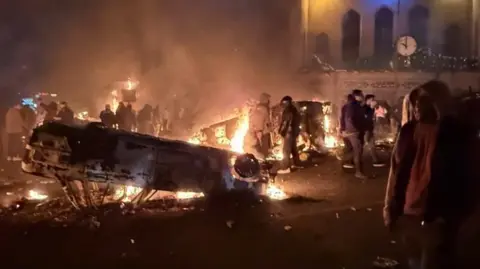
Protests have taken place across the country, with BBC Verify verifying videos from 67 locations.
On Friday, protesters amassed after weekly prayers in the south-eastern city of Zahedan, videos verified by BBC Persian and BBC Verify show. In one of the videos, people can be heard chanting “death to the dictator”, referencing Khamenei.
In another, protesters gather near a local mosque, when several loud bangs can be heard.
Another verified video from Thursday showed a fire at the office of the Young Journalists Club, a subsidiary of state broadcaster Irib, in the city of Isfahan. It is unclear what caused the fire and if anyone was injured.
Photos received by the BBC from Thursday night also show cars overturned and set alight at Tehran’s Kaaj roundabout.
The country has been under a near-total internet blackout since Thursday evening, with minor amounts of traffic returning on Friday, internet monitoring groups Cloudfare and Netblocks said. That means less information is emerging from Iran.
IHRNGO director Mahmood Amiry-Moghaddam said in a statement that “the extent of the government’s use of force against protesters has been increasing, and the risk of intensified violence and the widespread killing of protesters after the internet shutdown is very serious”.
Nobel laureate Shirin Ebadi has warned of a possible “massacre” during the internet shutdown.
One person who was able to send a message to the BBC said he was in Shiraz, in southern Iran. He reported a run on supermarkets by residents trying to stock up on food and other essentials, expecting worse days to come.
(BBC)

National Communication Programme for Child Health Promotion (SBCC) has been launched. – PM

Level I landslide early warnings issued to the Districts of Badulla, Kandy, Matale and Nuwara-Eliya extended

Rescuers race to find dozens missing in deadly Philippines landfill collapse

Trump seeks $100bn for Venezuela oil, but Exxon boss says country ‘uninvestable’

US military strikes Islamic State group targets in Syria, officials say

Gardner and Wareham lead Giants to opening-game victory

‘Dates have the highest sugar content to fight Coronavirus’

Sunday Island 27 December – Headlines

#SundayIsland 17th December – Headlines

Sunday Island – 28th March

Sunday Island Headlines – 21 March

Sunday Island – 21st February – Headlines
-

 News5 days ago
Interception of SL fishing craft by Seychelles: Trawler owners demand international investigation
-
 News5 days ago
Broad support emerges for Faiszer’s sweeping proposals on long- delayed divorce and personal law reforms
-

 Opinion2 days ago
The minstrel monk and Rafiki, the old mandrill in The Lion King – II
-

 Features2 days ago
The Venezuela Model:The new ugly and dangerous world order
-

 Latest News2 days ago
Rain washes out 2nd T20I in Dambulla
-
 Business1 day ago
Sevalanka Foundation and The Coca-Cola Foundation support flood-affected communities in Biyagama, Sri Lanka
-

 News4 days ago
Prez seeks Harsha’s help to address CC’s concerns over appointment of AG
-

 News7 hours ago
Sumathi Dharmawardena appointed Senior Additional Solicitor General