
Editorial
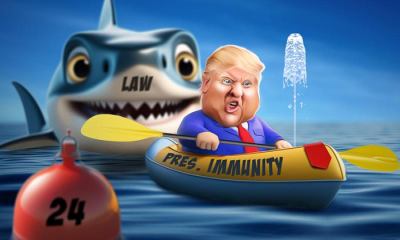
Trump again? God forbid

Thanks to regular columnist Vijaya Chandrasoma’s incisive contributions on political developments in the USA, readers of this newspaper have been able to get a good understanding of what is happening in one of the world’s greatest democracies, in the run-up to its presidential election next year.
Donald Trump is the current front-line candidate for the Republican ticket at the forthcoming election in November 2024, leading his four rivals by more than 40 points in the latest polls. Trump did not even bother to participate in the fourth debate held in Tuscaloosa, Alabama last Wednesday, the final debate before the first of the Republican primaries scheduled in Iowa for January, 2024.
His performance during his first presidential term, his personal vulgarity, his refusal to accept a clear defeat and the havoc he unleashed after the last presidential election results were declared are good enough reasons, most would think, for Trump to be convicted for sedition and obstruction of justice and imprisoned for a considerable period of time. Not so in America, though, for two main reasons.
One, the delays in the US justice system, which takes months, if not years, to conclude the legal processes to be negotiated even to initiate a trial. Even, or rather, especially, trials of an accused criminal like former President Trump, whose main legal objective is to delay those he faces on four indictments and 91 felonies until after the 2024 election. Which he expects to win, and as President, he will then pardon himself for federal crimes and claim executive immunity for state offenses.
Two, white supremacy and privilege are so deeply entrenched in the so-called “greatest democracy in the world”, that there is one law for the white and privileged, another for the indigent and colored. It would be impossible to imagine the fate which would have befallen African-American President Barack Obama, had he behaved just once the way Trump behaved every day in his four years at the White House. Obama was reviled by Fox News, the Republican Party propaganda arm, for wearing a tan suit at a press conference, the only “scandal” during his two-term presidency!
Many political commentators believed that the election to the presidency of Obama in 2008 and his re-election four years later signaled the beginning of the end of racial prejudice in America. At last, the enactments of the Civil Rights Act of 1964 and the Voting Rights Act of 1965, were showing promise of the erosion of the evils of segregation and employment discrimination from the Jim Crow era. Perhaps the day of the dream of the Rev. Martin Luther King, “that my four little children will one day live in a nation where they will not be judged by the color of their skin but by the content of their character” had finally dawned.
In fact, one of the most popular and astute political satirists of the time, Jon Stewart, made the memorable statement the night Obama was elected to the Presidency in November 2008: “At last we have become what we said we were”!
Nothing could have been further from the truth. Obama’s election to the highest position in the land unleashed deep-seated feelings of white supremacy, which had been seething at such depths under the surface that they were almost invisible. Chandrasoma says that during the two decades he lived in the USA at the turn of the century, seven years in the then deep-red state of Arizona, the only racial hatred he felt was after 9/11, when he was mistaken for an Arab. In fact, where education was concerned, he says minorities were at an advantage, during the Clinton years, especially if they were poor. He recalls his daughter thanking him for being the greatest father in the world, if only because his poverty enabled her to secure student loans to attend the best universities in the world with ease!
Trump, who had no previous experience in governing or public service, won the 2016 election, defeating Hillary Clinton, one of the most qualified and experienced presidential candidates in history. There were many subterfuges and Russian trickery involved in his victory, not the least of which was his exploitation of the racism of white Americans, incensed at the election of a black president. Especially one who graced the presidency with two terms of competency and compassion, without a trace of scandal, personal or political.
When Trump lost the presidency in 2020 in what was, according to election and judicial authorities, one of the fairest elections in US history, he called Foul and refused to concede defeat. Much has been written about his subsequent criminal behavior, his Big Lie about a stolen election, his incitement of a violent insurrection in an attempt to prevent the constitutional and peaceful transfer of power, and his persistent claim that he has been the victim of the greatest witch-hunt in history. This is a claim that has been embraced, in the face of the most conclusive evidence, by the Republican base, in their desperation to maintain their fantasy of a Christian white supremacist state.
Trump has already made it abundantly clear that, if he wins a second term, he will terminate the constitution, and place the entire executive branch under his complete control, which will enable him to employ only those loyal to him in the federal government. In a recent interview, when asked if he would abuse the power of the presidency if re-elected, Trump confirmed that he would, only on the first day, when he would close the southern border, fire all federal employees, judges and prosecutors who had been disloyal to him, and “drill, baby, drill” with no thoughts of pollution and climate change.
The most powerful nation, the leader of the free world, may well be reduced to just another Banana Republic, though, frighteningly, one with the greatest nuclear arsenal in the world; and with a madman in control.








Saturday 27th December, 2025
The NPP government has released a cordial diplomatic letter from Indian Prime Minister Narendra Modi to President Anura Kumara Dissanayake, and gained a great deal of publicity for it as part of a propaganda campaign to boost Dissanayake’s image. Such moves are not uncommon in politics, especially in the developing world, where the heads of powerful states are deified and their visits, invitations and letters are flaunted as achievements of the leaders of smaller nations. However, the release of PM Modi’s letter to President Dissanayake is counterproductive, for it makes one wonder why the government has not made public the MoUs it has signed with India?
PM Modi’s Sri Lanka visit in April 2025 saw the signing of seven MoUs (or pacts as claimed in some quarters) between New Delhi and Colombo. Prominent among them are the MoUs/pacts on the implementation of HVDC (High-Voltage Direct Current) Interconnection for import/export of power, cooperation among the governments of India, Sri Lanka, and the United Arab Emirates on developing Trincomalee as an energy hub, and defence cooperation between India and Sri Lanka.
The NPP government has violated one of the fundamental tenets of good governance––transparency; there has been no transparency about the aforesaid MoUs or pacts, especially the one on defence cooperation. They cannot be disclosed without India’s consent, the government has said. This is a very lame excuse. The JVP/NPP seems to have a very low opinion of the intelligence of the public, who made its meteoric rise to power.
When the JVP/NPP was in opposition, it would flay the previous governments for signing vital MoUs and pacts without transparency. But it has kept even Parliament in the dark about the MoUs/pacts in question.
Ironically, the JVP, which resorted to mindless violence in a bid to scuttle the signing of the Indo-Lanka Accord in 1987, has sought to justify the inking of an MoU/pact on defence cooperation between Sri Lanka and India and keeping it under wraps, about three and a half decades later. The signing of that particular defence MoU/pact marked the JVP’s biggest-ever Machiavellian U-turn. How would the JVP have reacted if a previous government had entered into MoUs with India and kept them secret? It opposed the proposed Economic and Technology Cooperation Agreement (ETCA) between Sri Lanka and India tooth and nail, didn’t it?
Whenever one sees the aforesaid letter doing the rounds in the digital space, one remembers the MoUs/pacts shrouded in secrecy, which have exposed the pusillanimity of the NPP government, whose leaders cannot so much as disclose their contents without India’s consent.
Friday 26th December, 2025
There is nothing more predictable than surprise in politics. After securing a two-thirds majority in Parliament last year and emerging victorious in most local councils, this year, the JVP-led NPP may have thought that it was plain sailing. But the government now has many unforeseen, seemingly intractable issues to contend with almost on all fronts. The disaster-stricken economy is expected to slow down, with relief and rebuilding costs escalating, and the deadline for the resumption of debt repayment approaching. Vehicle imports are bound to decrease, causing a sharp drop in the government’s tax revenue. The rupee is depreciating fast. As if these were not enough, the government is experiencing serious problems on the political front.
The defeat of the NPP’s budget in the Colombo Municipal Council (CMC), which the JVP/NPP seized control of through extensive horse trading, could not have come at a worse time for the government. The same fate has befallen many other NPP-controlled local councils. Most of all, the NPP has suffered a string of defeats in the cooperative society elections countrywide during the last several months.
Desperate times are said to call for desperate measures. Cyclone Ditwah and the attendant extreme weather events that badly damaged roads, tank bunds and river banks prompted repair teams to resort to sandbag revetment. But there have been many instances where sandbag facings collapsed, unable to withstand the intensity of floods and slope failures. The government politicians who boasted of having carried out swift restoration work have been left red-faced; they have failed to assess the severity of the problems they are trying to solve.
The NPP government has resorted to a method similar to sandbag revetment in a desperate bid to consolidate its control over some local councils which cannot secure the passage of their budgets for want of majorities. Its members have gone to the extent of setting the clock forward in such institutions, meeting in advance of the regular start time and declaring their budgets passed before the arrival of the Opposition councillors. What the NPP did in the Horana Urban Council the other day is a case in point, the Opposition says.
The NPP is accused of having inflated the number of votes for its Galle MC budget amidst a howl of protests from the Opposition and declared victory. The Opposition councillors prevented the council secretary from leaving the auditorium, put the budget to a fresh vote and defeated it. The Opposition has threatened legal action against the Mayors/Chairpersons and the state officials for violating the law. The government is likely to employ a similar method to have the CMC budget passed when it is put to a vote again next week. The JVP has no sense of shame, just like all other political parties that have been in power.
All self-righteous politicians, given to moral grandstanding, lay bare their true faces when their interests are threatened, and they face the prospect of losing their hold on power. The JVP/NPP is now without any right to be critical of its rivals who did not scruple to undermine democratic principles and traditions to retain power.
Gaining control of hung local councils is one thing, but running them to the satisfaction of their members and the public is quite another. The non-majority councils that the Opposition parties have gained control of could face the same fate as the CMC. This situation has come about because the country is without patriotic leaders. Ideally, the political parties that obtained pluralities in the hung councils should have been allowed to control those institutions, and they should have adopted a conciliatory approach and sought their political rivals’ cooperation to serve the public.
The shameful manner in which the NPP acted during the Galle MC budget vote is not unprecedented. One may recall that in January 2024, the SLPP-UNP government did something similar to secure the passage of its despicable Online Safety Bill. The then Speaker Mahinda Yapa Abeywardena stooped so low as to make use of a brawl in the House and declare the Bill passed. Interestingly, the SLPP and the UNP are among those who are raking the NPP over the coals for undermining democratic principles and traditions. So much for the self-proclaimed messiahs and their critics.


Thursday 25th December, 2025
Christmas has dawned while Sri Lanka is reeling from the cumulative impact of multiple disasters which snuffed out hundreds of lives and destroyed many homes and livelihoods. It is a time of hope. Its ethos, which emphasises hope, compassion and giving, could not be more relevant in these difficult times when the task of looking after a large number of disaster victims and helping rebuild their shattered lives has become a top national priority.
Santa came here the other day, as it were. There was no magical flight of a sleigh pulled by reindeer across the night sky. Instead, a jet landed at the BIA, and out stepped Indian External Affairs Minister S. Jaishankar. He unveiled a generous disaster relief and reconstruction package from India and flew back. This noble act of giving exemplifies the spirit of Christmas as much as good neighbourliness.
The best way the Sri Lankan rulers can show appreciation for generous assistance from India and other nations is to uphold accountability, rationalise disaster relief and ensure that it is distributed in a transparent manner. There are disturbing reports about political interference with the disbursement of funds among disaster victims. A high-level probe must be conducted into these allegations.
Christmas is also the season of giving and forgiving. The irony of Minister Jaishankar meeting President Anura Kumara Dissanayake, who is also the leader of the JVP, may not have been lost on keen political observers. If the JVP had acted wisely, heeding religious tenets, and pursued its political goals without resorting to violence, in the late 1980s, tens of thousands of precious lives and state assets worth billions of rupees could have been spared. India has forgiven the JVP, which it even helped gain international legitimacy and shore up its electoral chances in the run-up to last year’s presidential election. India has also helped Sri Lanka manage its worst-ever economic crisis and the impact of natural disasters. The people of Sri Lanka have also forgiven the JVP, despite its past violence, as evident from its impressive electoral victories last year. Sadly, the JVP is not willing to forgive its political enemies. Its General Secretary Tilvin Silva himself has said so. It ought to soften its stand.
All political leaders in this country usually issue well-written Christmas messages, extolling the core Christian virtues, such as giving, forgiving, compassion and peace-making. If only they lived up to the ideals they claim to cherish, at least while the country is struggling to recover from a series of natural disasters. Unfortunately, their post-disaster political battles are intensifying apace, and one wonders whether their focus is actually on helping disaster victims or furthering their political interests. They are not willing to sink their political differences for the sake of the disaster victims crying out for relief.
Meanwhile, the government leaders ought to go beyond issuing Christmas messages if they are to prove that they actually care about the believers in Jesus Christ. They ought to fulfil their pledge to serve justice for the victims of the Easter Sunday terror attacks (2019), which claimed more than 275 lives.
About seven years have elapsed since that tragedy which could have been prevented if the then government had heeded intelligence warnings, and the country has had four Presidents and three governments. But the promises made by the political leaders to bring the masterminds behind the Easter Sunday carnage to justice have gone unfulfilled. Those who are desperately seeking justice pinned their hopes on the current leaders who vowed to trace and prosecute the terror masterminds expeditiously.
The present-day leaders, too, have chosen to remain silent on their promise at issue; they are impervious to calls for justice, just like their predecessors. Let fulfilling their pledge to serve justice for the Easter Sunday terror victims be one of their Christmas resolutions.

A few showers may occur in the Northern, Eastern and Uva provinces and in Polonnaruwa, Matale and Nuwara-Eliya districts

Sajith warns country is being dragged into authoritarian rule

Wholesale mafia blamed for unusually high vegetable prices

Cyclone-damaged Hakgala Botanical Garden reopened with safety measures

Holiday travellers generate record revenue for expressways

Another casualty from underworld warfare succumbs to his injuries

‘Dates have the highest sugar content to fight Coronavirus’

Sunday Island 27 December – Headlines

#SundayIsland 17th December – Headlines

Sunday Island – 28th March

Sunday Island Headlines – 21 March

Sunday Island – 21st February – Headlines
-

 News5 days ago
Members of Lankan Community in Washington D.C. donates to ‘Rebuilding Sri Lanka’ Flood Relief Fund
-

 News3 days ago
British MP calls on Foreign Secretary to expand sanction package against ‘Sri Lankan war criminals’
-
 Business7 days ago
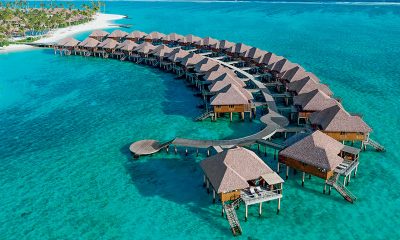
Browns Investments sells luxury Maldivian resort for USD 57.5 mn.
-

 News6 days ago
Air quality deteriorating in Sri Lanka
-

 News6 days ago
Cardinal urges govt. not to weaken key socio-cultural institutions
-
 Features7 days ago
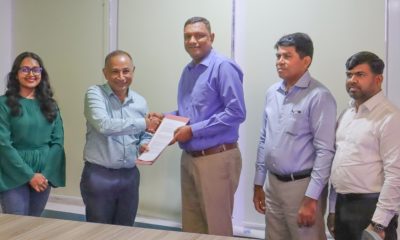
Hatton Plantations and WNPS PLANT Launch 24 km Riparian Forest Corridor
-
 Features7 days ago
Another Christmas, Another Disaster, Another Recovery Mountain to Climb
-

 Features5 days ago
General education reforms: What about language and ethnicity?