
Opinion
Treating COVID-19 patients in private sector


By Dr. Prasanna Cooray
It is reported that some medical specialists have made representation to Lt. Gen. Shavendra Silva, head of the National Operation Centre for Prevention of COVID-19 Outbreak (NOCPCO), seeking his permission for treating COVID-19 patients in private hospitals. (It is surprising that this request comes, not from the representatives of private sector hospitals—employers, but from a group of doctors – employees). We hear this request is being discussed at ministerial level. While awaiting the government’s decision, on this matter, I wish to highlight some issues, related to the matter, that impinge on the public’s interest. I fervently hope that the health authorities will take due cognizance of these facts, before arriving at a decision.
1. Why was COVID-19 treatment, and control, kept under government in the first place? For some reasons, best known to the health authorities, all procedures, related to corona investigation, treatment, and control, were kept under stringent government control. The ultimate objective of this move was to provide the best care possible for the patients, and their contacts, with the least possible financial burden on them. This initiative, by the government, needs to be applauded. However, whether this happened, as expected, is another question. If there are lapses in the process, then that again has to be best addressed by the government through strengthening the government sector facilities. (The private sector will never be able to intervene as a suitable alternative to the state sector).
2. Why was the private sector kept out of this, at the beginning? The reason is known to the government and the public.
Further, COVID-19 infection, which is viral, has no specific treatment. Treating whatever the symptoms and attending to general wellbeing, with periodic PCR testing being carried out, while patients are kept under observation for complications, is what it needed. The complications are rare, but could be life threatening, needing intensive care, (which, in private sector, could be very expensive for a majority of the general public).
The cost of PCR testing is far beyond the reach of the general public of this country (and they are still). However, as the government stepped in timely, that eased the burden. It is also very unlikely that the private sector will have separate hospitals, wards and staff, dedicated to COVID-19 patients, unlike the state sector health institutions. There is also the possibility of the disease spreading to other patients.
3. COVID-19, by now, has become an unprecedented health emergency. Is the private sector equipped to face it? PCR positives average 500 a day. A few days ago, 878 cases were reported, the highest for a single day up until now. An increase in the detection of patients means more general, as well as, more intensive care. With regard to intensive care, issues of availability and affordability, in the private sector, loom large.
4. Another important consideration on this issue is the ‘equity’ in healthcare. The very tenets of public health system, in this country, are bases on the principle of equity. (However, there are many issues that negatively impact on healthcare equity in the country, and that needs to be addressed; the present epidemic provides an ideal opportunity for the authorities to act. Nevertheless, a possible involvement of the private sector, in treating COVID-19 patients, could put equity in jeopardy and lead to “catastrophic heath expenditure” and “impoverishing health costs”.
Overall, the health authorities are duty-bound to handle the current pandemic, cautiously and responsibility, placing public health and wellbeing above the interests of the rich and the powerful.

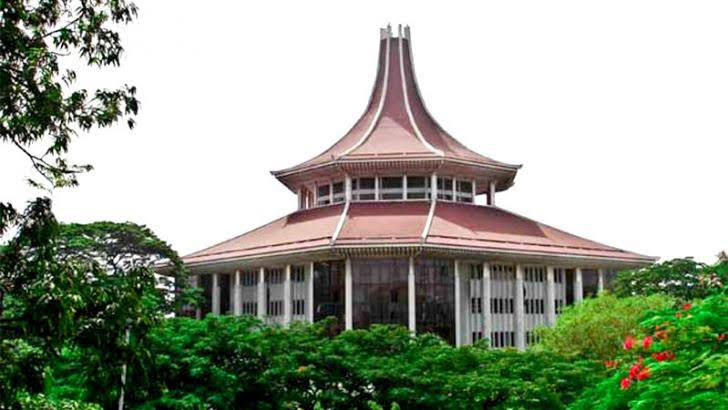
by Prof.G. L. Peiris
D. Phil. (Oxford), Ph. D. (Sri Lanka);
Former Minister of Justice, Constitutional Affairs and National Integration;
Quondam Visiting Fellow of the Universities of Oxford, Cambridge and London;
Former Vice-Chancellor and Emeritus Professor of Law of the University of Colombo.
There is widespread interest in the 22nd Amendment to the Constitution of Sri Lanka in this country as well as abroad. This is especially so, after the widely disseminated comments by Ms. Margaret Satterthwaite, the Special Rapporteur of the United Nations on the independence of the judiciary. The analysis contained in this article is being developed for publication in scholarly legal journals in the Commonwealth. The current version was written to cater to local interest.
I. Full Court
This was taken up as a threshold issue.
Given the importance of the matter, the majority of petitioners strenuously contended for the constitution of a Full Court consisting of all thirteen judges of the Supreme Court.
There is ample precedent for this in our country. In 1983, to adjudicate on an aspect of the Sixth Amendment, Neville Samarakoon CJ constituted a Bench which included the full strength of the Supreme Court, then consisting of nine judges. The same course of action was adopted by Sharvananda CJ in 1987 with regard to a challenge to the constitutionality of the Thirteenth Amendment and the Provincial Council Bills.
There are other situations in which Benches of seven judges have been constituted. Examples are provided by the orders by Nalin Perera CJ in 2018 in the premature dissolution of Parliament case and by Jayantha Jayasuriya CJ in the Easter Sunday bombing fundamental rights application in 2023.
The five judge Bench in the 22A case had no hesitation in rejecting the request for a Full Court.
This conclusion was founded on the premise that the hearing of the petitions “cannot be assigned a procedure outside the Constitution”. The governing provision is that “The Chief Justice may, if the question involved is in the opinion of the Chief Justice one of general or public importance, direct that such appeal, proceeding or matter be heard by a Bench comprising five or more judges of the Supreme Court”.
The substantial ground of rejection of the request for a Full Bench was that the Chief Justice had already exercised his discretion in appointing five judges, and that any variation of this would necessarily involve “an abdication by the Chief Justice of the constitutional role vested in him and usurpation of the discretion of the Chief Justice by the other judges of the Court”.
It was declared that, in the absence of provision conferring a right of appeal, revision or review, the application was misconceived. This, however, overlooks the reality that what was sought was not intervention by other judges to override an order of the Chief Justice, but a subsequent order by the Chief Justice himself to expand the composition of the Bench in light of cogent submissions by counsel representing the petitioners about the objective need for this initiative. This was not a situation in which, as a matter of strict procedure, the Chief Justice, having made an order, was finally and irrevocably functus and devoid of authority to take any further action in the matter at his own discretion. The invocation of a totally rigid constitutional fetter is fanciful and unrealistic, and defeats the ends of justice.
It was observed: “The Court cannot without any reasonable basis or justification give prominence to some selected cases and postpone other cases”. Nevertheless, the reasonable justification could readily be inferred from the circumstances, since the request by the petitioners was by no means self-centered or idiosyncratic but derived from the far-reaching implications of the matter at hand, evident even at a glance.
The Chief Justice nominated five judges to the adjudicating panel. Stephen Tiru, President of the Commonwealth Lawyers Association, who was an observer of the proceedings, as well as LawAsia, commented explicitly on the apparent absence of any explicable criterion governing the selection. Seniority on the Bench was clearly not the yardstick, since the judges selected occupied, from this perspective, slot numbers 6, 8, 11 and 13 out of a total complement of 13 judges of the Supreme Court.
Indisputably, the discretion is solely that of the Chief Justice. But, as my former teacher, Professor Sir William Wade of the University of Cambridge, never tired of pointing out, discretionary powers in the public domain, however amply conferred, must always be exercised so as to inspire public confidence. He insisted that nothing is more inimical to the values of public law than the concept of unfettered discretion. Indeed, the entire body of common law represents as strong a disincentive as possible against arbitrariness and caprice.
II. Consultation
The Court gave short shrift to the petitioners’ argument relating to the failure by the government to conduct a consultative process.
The singular absence of consultation was quite manifest. The Minister of Justice, in reply to explicit questions by the Opposition on the floor of Parliament, stated that no change relating to the retirement age of judges had been decided upon. Even two weeks before the Amendment was gazetted, the Secretary to the Ministry of Justice declared that she was unaware of any proposed change. The Bar Association, despite persevering efforts, was able to obtain an interview with the President only after a final decision by the Cabinet and subsequent to publication of the Bill in the Gazette. The Maha Sangha, the Catholic Bishops’ Conference, the Church of Ceylon, the Bar Association of Sri Lanka, 43 trade unions as well as a large number of academics and civil society organizations protested vehemently, but to no avail.
The Court, as the ground of dismissal, made the surprising statement that “the Parties failed to show any legal provision which has made it incumbent upon the government to ‘conduct a consultative process with the relevant stakeholders’ before it decides to gazette the Bill and place it in the Order Paper of Parliament”.
In 2022, when the United Kingdom embarked upon a comprehensive review of the retirement age of judges, and the government published proposals for public scrutiny and debate, there were no fewer than 1,200 responses from stakeholders during the span of over a year. And yet, there was no coercive statutory provision of any kind which made this consultative process compulsory. On the contrary, it was the cumulative thrust of comity, recognition of the value of consensus and the continuity of democratic tradition which impelled the deciding authority to regard the range and depth of public consultation as indispensable. Not even the most unrepentant Positivist would deny its necessity in the absence of statutory imperatives.
In any event, internationally acknowledged practice is unequivocal. The Venice Commission and Report on Constitutional Amendment has this to say: “Constitutional amendments should only be made after extensive, open and free public discussions involving the various political forces, non-governmental organizations, citizens’ associations, academia and the media, and with an adequate time frame for meaningful debate”.
In the specific context of judicial reforms, the Venice Commission has recently reaffirmed that “It is essential to continue to have proper public consultations before a Parliamentary vote”. Nothing could be more explicit.
III. Bias
One of the principal contentions on behalf of the petitioners was that, since the impugned measure has the effect of conferring on the decision makers an extension of judicial tenure, with accompanying advantages in terms of salary and all other perquisites of office, the public perception of probable lack of objectivity or bias would contravene the tenets of natural justice.
The Court adopted the approach that the disqualifying interest must necessarily take the form of “a direct pecuniary or personal interest in the specific outcome as between the litigants”. This limitation on the scope of bias as “a direct personal and case-specific interest”, excluding an “institutional stake”, is an unwarranted gloss on the law, clearly inconsistent with judicial authority of the highest standing.
In re Pinochet (No. 2), speaking in the House of Lords, Lord Browne-Wilkinson, commenting on the scope of the rule against bias, accepted its applicability in two distinct contexts: “first, where the judge has a financial or proprietary interest; and secondly where, although he has no such interest, his conduct or relationship may give rise to a suspicion that he is not impartial”.
In the 22A proceedings, the Court unhesitatingly opted for a subjective interpretation of the notion of bias, asking the question whether the decision-maker believed that he was receiving a benefit arising from a “legislative bribe”. This is reflected in the emphatic assertion: “We hold that there cannot be any such conflict in the mind of the judge”. It is respectfully submitted that this is the wrong question to ask. The issue is not whether the judge, in his own mind, considered himself the recipient of an advantage, but rather whether “a fair-minded and informed observer would conclude that there was a real possibility that the tribunal was biased” (Porter v Magill).
The operative criterion, then, is apparent or potential bias which extends beyond direct interest to the underlying purpose of sustaining public confidence in judicial impartiality.
An identifiable flaw in the Court’s reasoning derives from placing increase of salaries of judges and retrospective enhancement of the age of retirement of judges on the same level. The Court categorically asserted: “We have to apply one yardstick to both”. However, while salaries must obviously be increased over a period of thirty or so years during which a judge may hold office, the same considerations hardly apply to extension of duration of tenure, departing from constitutional postulates which determined the period of office at the time of commencement of the appointment.
This is vividly illustrated by the attitude of Chief Justice Geoffrey Ma, who held office in Hong Kong when, in 2019, the age of retirement of judges of the Supreme Court was extended from 60 to 65 years. Chief Justice Ma, in expressing the reasons for his decision, which continues to resonate as an inspiring precedent, said that although in terms of the law enacted midstream during his judicial tenure, he was entitled to serve for an additional five years, he would refrain from doing so and relinquish office at the previously designated age of retirement. He was doing so to give effect to his own settled expectation, and that of all others, that he would retire at the age which applied at the time he took office. He considered that this course of action was conducive to the health of the judicial system which he wished to transmit, in its full integrity, to his successors.
Another observation by the Sri Lankan Court gives rise to consternation. This relates to the Court’s attitude to a seminal statute, the Judicature Act,No.2 of 1978, which sets out, inter alia, the procedure to be followed in the event of a judge having an interest in the subject matter of a case before him. Their Lordships commented: “We regret to note a gradual increase in the number of vexatious petitions being filed in Courts. We think the time has come for Courts to give a purposive interpretation to section 49 of the Judicature Act rather than trying to blindly follow the said provision”.
The suggestion that a court may properly, at its own discretion, apply or disregard a binding provision of statute law is likely to occasion more than passing misgivings.
IV. Role of the Constitutional Council
The effect of Article 41C, read with Article 107(1) of the Constitution, is that concurrence by the Constitutional Council is a condition precedent for appointment of Superior Court judges by the President.
One of the objections to 22A was that the Constitutional Council had approved the appointment of these judges only up to the time indicated in Article 107(5) of the Constitution and that any extension of tenure beyond this period would be without the concurrence of the Constitutional Council, and therefore in violation of a mandatory constitutional requirement.
This contention was disposed of by the Court on two grounds. First, the Court declared: “The incumbent judges of the Superior Courts whose age of retirement would be increased if the Bill is passed into law, are judges whose appointments have been approved by the Constitutional Council after due process”. This overlooks the consideration that the approval was time-bound and cannot plausibly be construed as open-ended, covering any period which a subsequent legislature might choose to prescribe.
The second reason was stated as follows: “We have already adverted to the fact that they have been serving in the Judiciary well before the present government came to power”. It is difficult to understand the rationale spelt out in these terms. Whatever government was in power, the issue is whether approval granted by the Constitutional Council in respect of a particular appointment envisages only the period during which the appointment was thought to be operative at the time concurrence was given, or whether approval is infinitely elastic in terms of time frame. There is obviously no particular sanctity attaching to judicial appointments made prior to, or after, a specific point in time.
V. Selectivity and “Court Capture”
By way of refutation of this basic criticism of the constitutional innovation, the Court placed heavy reliance on the generality of application of the proposed reforms. Their Lordships declared: “It is important that we bear in mind two important distinctions that were referred to by the learned Solicitor-General, that being the extension is non-discriminatory in that it applies to all judges, and it is non-discretionary, in that the extension is not at the whim and fancy of the Executive”.
Empirical reality militates against the validity of this contention.
During the first half of this year, 2026, three judges of the Supreme Court retired. If the proposed extension of tenure had been effected at the beginning of the year, these judges would have been entitled to its benefit and would have continued in office for an additional two years.
In May 2026, just three months before the 22nd Amendment was presented to Parliament, the President of the Court of Appeal, after a distinguished career spanning 30 years, retired from service. He did so at a time when no fewer than four vacancies existed on the Bench of the Supreme Court. The President of the Bar Association, in his address at the ceremonial sitting to mark the retirement of the judge, publicly expressed regret that the country had been deprived of his service at the apex court, despite repeated interventions by the Bar to prevent this injustice. On 3 September 2026, just days before the vote in Parliament took place on 22A, another judge of the Court of Appeal retired, not having been promoted to fill one of the vacancies in the Supreme Court.
These circumstances, objectively viewed, detract substantially from the merit of the argument premised on the absence of discretion and discrimination.
VI. An Appeal to Patriotic Sentiment
In the face of attempts to convey to the Court, with a sense of urgency, the ill omens in other jurisdictions, Their Lordships were inclined to push back energetically by denigrating these apprehensions and regarding the circumstances of our country as special. The Court was strident in its assertion: “We can only reiterate that the judiciary of this country consists of men of courage and men of wisdom who have always and who will always maintain the independence of the judiciary under varying circumstances”. It was claimed: “This is clearly established by the fact that nobody, not even the Bar Association of Sri Lanka, has ever complained, nor has there been any allegation or an iota of suspicion that the judges of this country surrendered their much cherished independence”. The bedrock of this approach was an appeal to patriotism: “Disparaging our country to advance an argument at the expense of our national reputation is unfortunate and regrettable”.
Sadly, the state of the world we live in is far less sanguine. History is replete with examples which bear testimony to the truth that descent into autocracy does not generally happen by one fell swoop but takes place incrementally over time, for the most part by steps which are typically modest and even imperceptible. To persuade ourselves that we are insulated against the common experience of humankind and are, alone, invulnerable is fraught with the gravest danger. The dynamics of history do not admit of anomalous exceptions. This is why “the gritty resolve of this Court to uphold constitutional obligations” may not, by itself, provide entirely satisfying reassurance.
VII. Conclusion
The longevity of amendments to the Constitution of Sri Lanka during the last five decades has not been impressive. The future will decide the wisdom and viability of the 22nd Amendment.


By Prof. Amarasiri de Silva
The current period can be characterised by Sri Lanka reaching a historical crossroad which determines whether the island nation will continue following the logic of an inward-oriented mind or adapt to the realities of the globally connected world. Throughout the millennia, Sri Lankan psychology has been conditioned by the island nature of its geography. The ocean around the nation has served as a protective factor and as a boundary at the same time. In the language of Sinhala people, the phenomenon is known as lin medi manasikathwaya and implies narrowing of horizons, restriction of ambitions, and the need to focus on oneself. This mentality is not characteristic of the culture only; it also affects economic thinking, political behaviour, education, and social relations. In the epoch of global trends, the nation must abandon this approach and start thinking in a bigger way.
Inwardness is characteristic of many islands. However, Sri Lanka’s situation is quite unique as the island has had centuries of contacts with other countries. For millennia, travellers, monks, scientists, merchants, and others travelled from Sri Lanka to India, China, Southeast Asia, the Middle East, and Europe. Our ports were centres of economic activity and exchange; our ancient kingdoms absorbed knowledge, technologies, and culture from foreign countries. Therefore, the island was never isolated but functioned as a meeting place of civilisations. However, for some reason, in modern times, Sri Lanka started developing an inward orientation despite having centuries of experience. There are several reasons for the phenomenon: legacies of colonial past, post-independence nationalism, rhetoric of political parties, economic dependencies, and cycles. At some point, the ocean ceased serving as a bridge.
Inward in several areas
This inwardness can be observed in several areas. It takes various forms: a conviction that Sri Lanka is too small to succeed in the global competition, fears of external influences, a tendency to compare ourselves only to nearby countries, and a failure to adopt global approaches. In politics, the island’s inwardness can be revealed in rhetoric which dismisses global trends as unimportant or even threatening. In economics, the mentality can manifest itself in focusing on internal issues instead of considering global opportunities. In education, students study mainly about the history of their own country instead of global trends. In cultural matters, openness can be confused with dilution. To move forward, Sri Lanka needs to realize that global thinking is not a luxury but a necessity.
It is quite easy to notice the effect of inwardness on the economic life of Sri Lanka. For decades, the country was characterised by limited export diversification, dependence on remittances, vulnerability to external shocks, and financial constraints. All these problems do not only affect the economy but are caused by the mentality. In general, Sri Lankan entrepreneurs have a small market mentality: they design products for domestic markets, set standards based on domestic criteria, and never consider globalisation. To change the situation, the country must adopt a global economic imagination which would encourage the development of export-oriented entrepreneurship, integration into global value chains, partnership with global companies, and promotion of globally competitive industries (information technology, tourism, agriculture, renewable energy).
Abandoning island mentality
Small countries all over the world managed to transform their economy by abandoning the logic of island mentality. Singapore, Estonia, and Vietnam are examples of such transformation: they have made investments in education, technology, and global cooperation; they have encouraged their citizens to be a part of the global labour market. Sri Lanka can do the same but only if it starts thinking differently. One of the most underused resources of the transformation can be the country’s diaspora. Millions of Sri Lankans living outside the island can be helpful: they have global knowledge, networks, and capital. Instead of being seen as sources of remittances, the diaspora can be a strategic partner in the process of national development. Global imagination requires Sri Lankans to see themselves not only as inhabitants of the island but also as participants of global processes of innovation and research. To harness the potential, there should be special policies to encourage investment of diaspora into the nation, facilitate knowledge transfer, and develop the trust between the diaspora and the state.
Inwardness is a problem in politics as well. The political imagination has a great impact on the fate of the nation: when politicians think narrowly, the country follows the example; when they think globally, the country starts expanding its horizons. In general, Sri Lankan politics is characterised by a narrow focus on local problems: political leaders speak about village-level concerns and try to satisfy voters’ demands in the shortest time possible. Of course, local problems matter but they cannot be the only focus of national politics. Climate change, geopolitics, technological disruptions, and migrations have a significant influence on Sri Lanka. Therefore, to have a global political imagination, it is necessary to understand global systems, predict risks, position the country within global power dynamics, develop diplomatic skills, and learn from models of global governance which emphasise transparency and accountability.
Diplomacy as a powerful tool
Diplomacy is one of the most powerful tools at the disposal of small countries. Sri Lanka’s geographical position is one of the biggest blessings of the country as the island located at the intersection of major sea routes has huge geopolitical value. Global thinking requires the nation to utilize its potential through proper diplomacy instead of isolation or fear. Through diplomacy, Sri Lanka should attract investments, create alliances, enhance its security, increase exports, and promote cultural contacts. Countries which master diplomacy (like Qatar, Norway, and Singapore) can achieve much more in the world of politics than they actually should. However, this can be achieved only by the politicians who have global awareness, understand different economic models, technology trends, and best practices in the global context. Parliamentary debates should be conducted considering global statistics, not only local stories; policy proposals must be compared to global models. It makes a difference.
Education is the key
Education is the key factor which determines the nation’s imagination. If our education system is inward-looking, society will be the same. The curriculum of Sri Lanka must change: global history, global economics, global citizenship, foreign languages, and digital literacy should be included. Students must be prepared for global career, not only for working in Sri Lanka. Sri Lankan universities must become global centres of research and innovations; this can be achieved through international universities, international faculties, international research projects, global accreditations, and encouragement of studying abroad and returning with new ideas. Furthermore, education must foster critical thinking. Inwardness is often connected with refusal from questioning, debates, and creativity.
Culture is also one of the areas where global thinking is needed. Culture does not stay the same; it develops through contacts, exchange, and adaptation. The rich culture of Sri Lanka (Buddhist heritage, Hindu traditions, Islamic influences, colonial legacy) shows that openness is a feature of our civilization. Global thinking requires cultural self-confidence: it means that Sri Lankans have confidence in traditions, arts, and values which allow the country to stand confidently in front of the world. Global thinking allows Sri Lankans to engage with global cultures without fear of losing something. Creative industries of Sri Lanka (film, music, literature, fashion) have huge global potential; to achieve it, it is necessary to cooperate globally, to promote the arts of Sri Lanka internationally, to support creative entrepreneurs, to use digital media for communicating with global audience. Tourism is also cultural diplomacy: every tourist is an ambassador of Sri Lanka. Global thinking requires improvement of tourism infrastructure, sustainable tourism, and promotion of the island’s cultural diversity.
Importance of technology
Technology is the tool of global transformation. Sri Lanka should embrace digital innovations in order to remain competitive in the global economy. A globally-connected nation requires high-speed internet access, digital payments systems, e-government, cyber security, and regulations friendly to technology. Innovation ecosystem requires startups, research labs, technology incubators, networks of venture capitals, and partnerships between universities and business. Artificial intelligence, automation, and robotics will revolutionize industries, employment, and governance. Therefore, Sri Lanka should invest in education in AI, data science, automation-ready industries, and frameworks of ethical AI.
Society must develop towards a global imagination as well. A globally connected society is inclusive, tolerant, and forward-thinking. Inwardness encourages division on ethnic, religious, regional lines. Global imagination encourages unity as it shows that diversity is strength. Sri Lankans should perceive mobility (travelling, migrating, working in other countries) as opportunities for development. In addition, global imagination requires recognising that learning about the world helps to improve the nation. Media plays an important role in forming imagination. Sri Lankan media should cover global news, provide international perspective, conduct critical analysis, and avoid isolation and sensationalism.
Overcoming inwardness
Overcoming of inwardness will take a lot of time and effort; nevertheless, there are steps to take. Leaders should act according to global imagination. Organisations should adopt global standards and practices. Citizens should acquire global awareness through studying global news, learning foreign languages, traveling whenever possible, interacting with global ideas and embracing diversity. The nation requires a national vision in which Sri Lanka is seen as a globally connected, innovative, and resilient nation. The vision should be conveyed consistently, clearly, and confidently.
The future of Sri Lanka depends on imagination of the nation. If the nation is going to be confined to its island mentality, it will continue struggling with economic stagnation, political fragmentation, and social division. However, in case Sri Lanka decides to open and start thinking in a global way boldly, strategically, and confidently, the country will be able to unlock its tremendous potential. Global thinking does not destroy the identity of Sri Lankans but makes it stronger. It allows the nation to interact with the world on its own terms. It turns the small size of the nation into an advantage. Geographical location is a strategic asset. It makes citizens globally-competitive and gives them ability to contribute to the nation as well. The sea around the country should be used as a bridge, not as a boundary. The world is close to us. The future of the nation depends on imagination; let us think globally, act wisely, and imagine boldly.
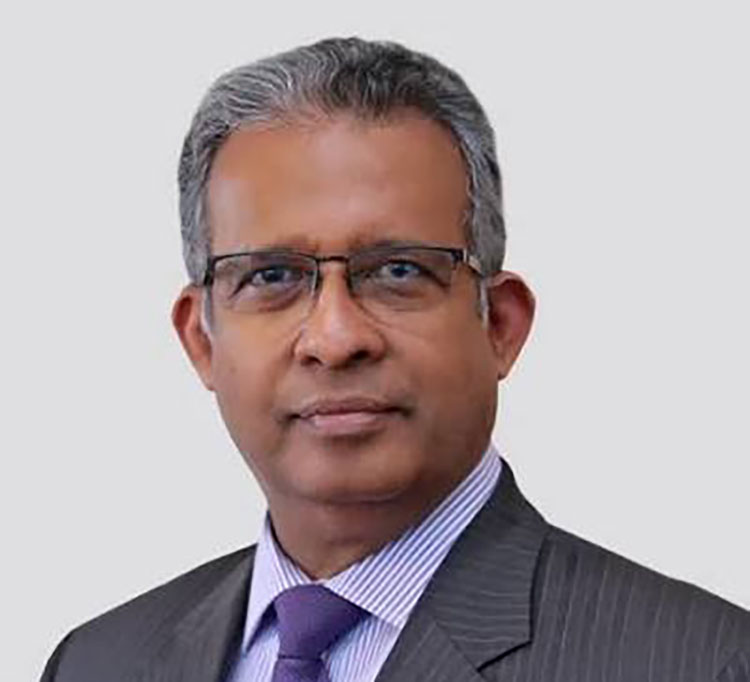
By Chula Goonasekera
For the LEADS Forum (admin@srilankaleads.com)
Sri Lanka’s future prosperity will depend on how effectively it positions itself within an increasingly complex global environment. At a recent LEADS Forum discussion (https://youtu.be/Bbr3e_qU1Fw), veteran diplomat Prasad Kariyawasam, former Secretary to the Ministry of Foreign Affairs, High Commissioner to India, Ambassador to the United States, Ambassador /Permanent Representative to the UN in New York and Geneva —outlined the strategic choices Sri Lanka must make to secure long term stability and economic advancement. Kariyawasam offered a rare blend of historical perspective, diplomatic experience and practical guidance.
His central message was clear: Sri Lanka must exercise strategic agency—engaging all major partners while safeguarding its national interests.
Foreign Policy as an Extension of National Aspirations
Foreign policy, Kariyawasam emphasised, is inseparable from domestic priorities. As your text notes, “foreign relations often reflect the medium- and long-term aspirations of a country’s people and its leadership.” Governments must therefore craft external relations that reflect the public’s economic and social expectations, avoiding short-term political impulses that undermine long-term national interests.
For a small nation, foreign policy cannot be symbolic or personality driven. It must be purposeful, pragmatic and directed towards the security and prosperity of the people.
A History of Global Connectivity
Sri Lanka’s history demonstrates that the island has never been isolated. From ancient ties with India and Southeast Asia to Arab, Persian and Chinese maritime networks, the island prospered when connected to the wider world. We must realise that “geography creates opportunity, but geography alone does not create prosperity.” Institutions, infrastructure and policy determine whether geographic advantage becomes economic success.
Colombo’s emergence as a cosmopolitan trading hub and Galle’s role as a resupply station for Indian Ocean shipping in colonial times , illustrate how deeply Sri Lanka has been embedded in global commerce for centuries.
Lessons from Asia’s High Performers
Kariyawasam highlighted the experiences of Japan, South Korea, Taiwan, Singapore and Vietnam. Their paths differ, but their success rests on common foundations:
• investment in human capital and infrastructure
• merit based institutions
• integration into global markets
• attraction of investment and technology
• export oriented industries
• strategic engagements with both China and Western economies
The lesson for Sri Lanka is not imitation but continuous adaptation and constructive integration with the global economy.
India: Sri Lanka’s Closest Major Partner
India’s transformation into a global economic power presents Sri Lanka with both opportunity and responsibility. India is already Sri Lanka’s largest source of tourists and a major investor. Kariyawasam states, “The larger question is how effectively Sri Lanka can participate in and benefit from India’s growth.”
A partnership should encompass modern, more open pathways for trade, investment, logistics, energy, technology, digital services, education and professional mobility—And asymmetry between the two economies must be handled with maturity and foresight, seeking special and differential treatment .
China and Other Global Partners
China remains a significant economic partner. Sri Lanka must avoid viewing this relationship through a zero sum lens. The goal should be productive and transparent engagement, ensuring better terms of trade and meaningful technology transfer.
Equally Important relations must be nurtured with the United States, European Union, United Kingdom, Japan, Australia, ASEAN and the Gulf.
All these relationships can be vibrant partnerships that does not lead towards , dependency but mutually beneficial pragmatic arrangements .
A Fragmenting International System
Global geopolitics is becoming more volatile. Trade tensions, wars, sanctions, supply chain disruptions, climate change and technological competition increasingly shape national security. We must realise, “foreign policy cannot be separated from economic policy.”
Sri Lanka’s recent economic crisis demonstrated the importance of international confidence, access to finance and resilient supply chains. Energy security, food security, cybersecurity and digital infrastructure are now core elements of national strategy.
Strategic Agency: The Guiding Principle
Sri Lanka must avoid becoming an arena for great power competition. Strategic agency means making decisions based on national interest, expanding Sri Lanka’s choices, not restricting them.
India is essential. China is important. The United States, Europe, Japan, Australia, ASEAN and the Gulf are important. The objective is a web of partnerships that strengthens resilience and autonomy.
Sri Lanka’s Strategic Assets
1. Location: Sri Lanka’s geography is a long standing advantage. Ports such as Colombo, Hambantota, Trincomalee and Galle can become specialised hubs—if connected to logistics, manufacturing, services and exports.
2. Digital Connectivity: Submarine cables, data centres, cloud services and cybersecurity are now as important as physical geography. Sri Lanka can turn its location into both a maritime and digital advantage.
3. Tourism and Natural Heritage: The focus should shift from tourist numbers to value creation—wellness, heritage, ecotourism, cruise tourism, education and MICE tourism.
4. Human Resources and Demographics: High literacy is no longer enough. Skills in technology, engineering, AI, logistics and advanced manufacturing are essential, especially with an ageing population.
5. Migrant Workforce: Migrant workers are a strategic asset, not merely a source of remittances. Bilateral labour agreements, skills recognition and diaspora engagement should be central to foreign policy.
Requirements for Sustained Prosperity
Sri Lanka’s future depends on:
• peace and security
• access to international markets
• productive investment
• a skilled, productive workforce
• modernised agriculture
• higher value tourism
• demographic preparedness
• climate resilience
• strong, predictable institutions
Please note that “foreign policy can open doors. Domestic institutions determine whether we can walk through them.”
The Role of the State
Sri Lanka does not need a larger state—only a more capable one. Policy continuity, professional institutions, predictable regulation and reduced corruption are essential. Geography does not change; long-term national interests do not change. Intentional relationships built over decades should not be reinvented with each election cycle.
Building Trust Internationally
Trust is a strategic asset. Sri Lanka must be known as a country that honours commitments and maintains predictable policies. This is vital not only for diplomacy but also for investment and long term partnerships.
Avoiding Zero Sum Geopolitics
Sri Lanka does not need to choose between India and China, or between Asia and the West. The task is to identify what each relationship can contribute to national development while protecting sovereignty and freedom of decision making.
Sri Lanka’s geography is an inheritance, but prosperity is not guaranteed. The world is changing rapidly—great-power competition, technological disruption, and climate vulnerability demand a foreign policy that is pragmatic, adaptive, and anchored in national interest.
Sri Lanka must build partnerships without dependencies, maintain strategic agency without isolation, and integrate with the global economy while strengthening domestic capacity.
“We cannot change where Sri Lanka is. We can, however, determine what Sri Lanka becomes because of where it is”

Sri Lanka to face India in semi-finals after washout

Bangladesh to take on Pakistan in semis after another washout

OpenAI scraps rollout of new model over safety concerns

Iran’s Araghchi meets Qatari mediators as US calls for nuclear talks

Showers above 50 mm expected in Uva, Eastern and Central provinces and in Polonnaruwa and Mullaittivu districts after 2.00 p.m.

PAFFREL raises concerns over Anti-Corruption (Amendment) Bill

‘Dates have the highest sugar content to fight Coronavirus’

Sunday Island 27 December – Headlines

#SundayIsland 17th December – Headlines

Sunday Island – 28th March

Sunday Island Headlines – 21 March

Sunday Island – 21st February – Headlines
-

 News6 days ago
Mastermind Naufer Moulavi among 15 found guilty
-

 Midweek Review6 days ago
Thileepan’s fast unto death: An authentic narrative that many missed
-
 Latest News5 days ago
Showers above 100 mm are likely at some places in the Western, Sabaragamuwa, Central and North-western provinces and in Galle and Matara Districts
-

 Editorial6 days ago
Big Bad Bills
-
Editorial5 days ago
Crimes punished and unpunished
-

 Features4 days ago
Beyond traditional jobs: Why Sri Lanka needs to facilitate the gig economy
-

 News6 days ago
No referendum needed for passage of 22 A: SC
-
 Latest News6 days ago
Ms. P. M. Jayadeera (Engineer) appointed Director General of Irrigation