
News
‘Treat us like humans’: Fishing wars trap Indians in Sri Lankan waters


When Ashoka* heard boots approaching, he began to shiver in fear. The 23-year-old was in the engine room of his boat, as three Sri Lanka Navy (SLN) men boarded the vessel. When Ashoka, an Indian fisherman from Pamban Island at the southernmost tip of India, came out on the deck, he saw the officers beating and pushing the eight fishermen on his boat, using guns, iron rods and wooden logs.
The ordeal continued for an hour, with one of the uniformed men yelling, “Beat them hard, harder”, recalls Ashoka, who was beaten too.
The fishermen — all Indians — were later handcuffed and chained, the steel edges cutting into their skin and causing itching. Chained together, none of them could move; otherwise, they would all fall. The fishermen were taken to a navy camp in Karainagar, north of Sri Lanka. Fifteen days later, two men — whom the fishermen would later learn were from the Indian embassy in Colombo — visited and gave them towels and soap. The men were finally released a month after they were arrested.
That was 2019, and the fishermen had been arrested off Katchatheevu an uninhabited island that comes under Sri Lanka’s territory, for fishing in that country’s waters. Yet horrors of Ashoka’s experience have only become more and more commonplace since then — peaking in 2024, with a spike in the number of Indian fishermen arrested by Sri Lanka, amid mounting tensions over allegations that military authorities mistreat them in custody.
A record 535 Indian fishermen were arrested by Sri Lanka in 2024 — nearly double the previous year — according to Indian government data. As of November 29, 141 Indian fishermen remained in Sri Lankan jails, with 198 trawlers confiscated.
In September, five fishermen who had crossed into Sri Lankan waters returned to Pamban with tonsured heads after they were arrested, and — according to the fishermen — were treated like convicts. They had to pay fines of 50,000 Sri Lankan rupees ($170) each to secure their release.
Protests erupted within the fishing community in the southern Indian state of Tamil Nadu, where Pamban falls, against their government over frustrations that New Delhi has not been able to ensure their security. Meanwhile, in Sri Lanka, three other Indian fishermen were sentenced to six months of imprisonment along with fines.
The SLN and the country’s Ministry of Foreign Affairs have not responded to Al Jazeera’s emails requesting comments on the allegations that Sri Lankan officers mistreat arrested fishermen.
“I wish they would treat us like humans,” says Ashoka.

The Gulf of Mannar, an inlet of the Indian Ocean connecting India and Sri Lanka, is rich in biodiversity and a source of livelihood for both countries’ fishermen. Kachchatheevu, a tiny island in the Palk Strait, a stretch of ocean that divides the two countries, was historically a common fishing ground for Indians and Sri Lankans. The fishing rights of Indians in the region were scrapped in 1976 after the island was ceded to Sri Lanka by India in 1974. Today, Kachchatheevu is a site of frequent arrests of Indian fishermen.
For Indian fishermen in Pamban, crossing the maritime border into Sri Lankan waters is a matter of survival.
The catch on the Indian side has been declining amid climate change, increasing plastic pollution in the sea and the rampant use of mechanised trawlers over decades. Trawlers, which scrape the seabed in their search for fish, destroy the seafloor habitat, including coral reefs. This in turn disrupts breeding cycles. Marine experts also blame trawlers for sea pollution from abandoned nets and fuel spills.
The seabed on the Indian side is rocky, and the international border near fishing sites like Rameswaram in Pamban starts at a distance of only 12 nautical miles (about 22km) from the shore, reducing the fishing area for Indian fishermen. To these fishers, the waters just across the maritime border are legitimate territory to sail into.
“That’s our fishing ground. Fishermen cross the border knowing well that they might get arrested or even die. If fishermen return without any fish, they cannot survive,” says P Jesuraja, president of an association of fishermen with mechanised boats in Ramanathapuram district in Tamil Nadu.
Often, though, fisherfolk enter Sri Lankan waters without intending to go there, he added.
“Almost half the time fishermen drift into the Sri Lankan side due to water currents or if it is very dark or raining,” Jesuraja says.
![Women making seashell ornaments in Rameswaram, Tamil Nadu, India [Namrata Acharya/Al Jazeera]](https://www.aljazeera.com/wp-content/uploads/2025/01/Pic-1-1-1735715822.jpg?w=770&resize=770%2C576&quality=80)
In many ways, experts and fishers accept that India has contributed to this crisis through policies it first pushed seven decades earlier.
Starting in the 1950s, backed by international funding, India encouraged the use of trawlers. The result was a spike in the incomes of Indian fishermen but at the cost of destroying coral reef formations. On the other hand, the Sri Lankan side has a relatively rich fish population: the waters are shallower, and the country has a wider continental shelf that is more conducive to fishing. Sri Lanka’s marine ecosystem is richer than India’s also because it does not allow trawling.
Sri Lanka fishermen fear that Indian trawlers in their waters will eventually lead to declining marine populations — just as it happened in Indian waters.
“This seems like a fight between the fishermen of both countries,” adds Jesuraja.
While the Indian government engages in diplomatic talks with Sri Lanka to secure the release of fishermen, it is not able to bring back their boats — a lifetime investment gone for good, said Jesuraja.
Adding to their problems, in 2019, the United States imposed a ban on Indian wild-caught shrimp because the country’s vessels often do not deploy what are known as turtle excluder devices. These devices allow turtles caught accidentally during fishing to escape. India has no regulations requiring the use of these devices, so fishermen avoid their use.
India’s Marine Products Export Development Authority (MPEDA) estimates that the country has lost $500m worth of revenue in shrimp exports since the US ban came into place. That ban in turn has meant that other countries are able to bargain for lower prices while seeking to buy Indian shrimp, says Jesuraja.
The rising cost of diesel has also hit Indian fishermen. “Earlier, diesel was 50 rupees [about $0.6 at the current rate] a litre, and a kilogramme of prawn would sell at 700 rupees [$8]. Now the diesel rate is almost Rs 100 a litre and per kilogramme of prawn sells for 400-500 rupees [$4.6-5.8],” says Jesuraja.
Yet Jesuraja argues that climate change and rising sea pollution represent the biggest challenges facing Indian fisherfolk. “The problem in India is plastic waste and not the trawlers,” he says. “Reducing plastic waste will solve half of our problems.”
“About 10 years ago, when we put a fishing net in the sea, we would catch only fish. Nowadays, the amount of fish is less than the plastic waste,” says Marivel, a fisherman from Pamban Island, Tamil Nadu.
Earlier, the rainy season would be good for fishers, including those catching sardines. Now, due to erratic rain patterns, the supply of fresh water has reduced, leading to a sharp decline in sardines, said Marivel. Due to the increasing frequency of cyclones between November and February, fishermen are also unable to go to sea for several days.
As fishermen face falling incomes, women are forced to venture into the deep sea to collect seaweed as an alternative source of income. But that practice too has been affected by climate change.
About a decade ago, women from Pamban Island started collecting seaweed as incomes from fishing began to fall. Marie, a seaweed collector on Pamban, says this year she could collect only about 3kg of seaweed a day, while about 10 years ago, she used to collect 20-25kg a day.
Women are often required to dive up to 3.5 metres (12 feet) under the sea without any protective gear to collect seaweed.
Rising phytoplankton blooms in the sea due to erratic rains and rising sea temperatures are causing seaweed and coral erosion. As a result, small fish are unable to breathe and die on the shore, says Gayatri Usman, station head of Kadal Osai, a community radio station in the region.
The radio station, run by fisherfolk in Rameswaram, helps raise awareness about climate change through local traditions, folk tales, and songs. It recently offered 1,000 rupees ($11.6) for every fisherman who saved a turtle.
“Our intention [is] to make people aware about climate change. We can’t change climate change, but the idea is to make them aware. Our motto is: think globally and act locally. Only if we think of local solutions to climate change, we can fight it globally,” says Usman.
But for many fisher families, it’s already too late. The spate of arrests they and their comrades have faced in recent months means that many want their future generations to stay away from fishing. “We would never want our children to be fishermen or marry a fisherman,” says Marivel.
[Aljazeera]



Parliament yesterday (30) said the use of inferior quality coal at Norochcholai Lak Vijaya coal-fired power plant caused environmental pollution.
The Opposition has accused the Energy Ministry of importing low quality coal and the CEB has directly blamed the developing crisis in coal imported from South Africa.
The Parliament is scheduled to debate a no-confidence motion moved by SJB-led Opposition against Energy Minister Kumara Jayakody on 10 April.
The Sectoral Oversight Committee on Environment, Agriculture and Resource Sustainability has instructed officials to immediately prepare a plan for the environmentally friendly disposal of ash emitted from the Norochcholai Lak Vijaya Power Plant.
These instructions were given at a recent meeting of the Committee held in Parliament, under the Chairmanship of Member of Parliament Hector Appuhamy.
It was revealed during the meeting that due to issues related to the quality of coal imported to Sri Lanka for power generation, the volume of ash emitted during electricity generation had increased significantly. Officials were directed to formulate a plan under the leadership of the District Secretary of the Puttalam District, to take the necessary measures.
It was also proposed that the possibility of reusing the coal ash for production purposes be studied, and that any revenue generated from such products be utilised for welfare projects benefiting the communities affected by the power plant.
In addition, the Committee instructed the Central Environmental Authority to submit a comprehensive report on whether water and air pollution have occurred as a result of the Norochcholai Power Plant. Furthermore, the North Western Provincial Environmental Authority was also instructed to provide responses within two weeks regarding the questionnaire and related matters submitted by the Committee in connection with the Norochcholai Power Plant.
Officials of the North Western Provincial Environmental Authority stated that although the volume of ash emitted from the plant had increased, the filtration system in use at the plant was sufficient to absorb it. Several matters, including the issuance of environmental protection licenses for the power plant, were discussed at the committee meeting.
By Ifham Nizam
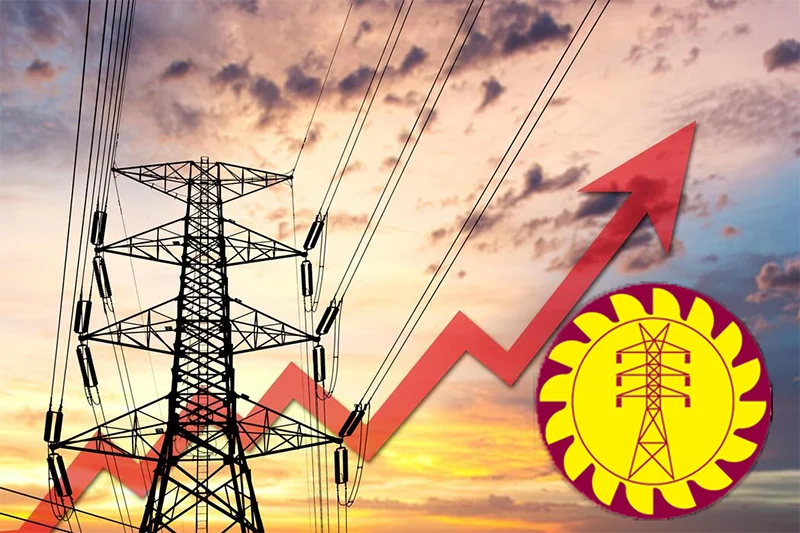
Electricity consumers will face a fresh financial jolt from 01 April, with the Public Utilities Commission of Sri Lanka (PUCSL) approving a countrywide tariff increase that will push up monthly bills across all consumption categories, with the heaviest burden falling on high-end users.
The decision follows a proposal by the Ceylon Electricity Board (CEB), which sought a 13.56 percent upward revision for the second quarter of the year, citing mounting operational costs and financial pressures within the power sector.
Under the new tariff structure, even the lowest-income households will not be spared, though the increases at the bottom tiers remain relatively modest. Consumers using between 0–30 units will see a 4.3 percent rise, adding approximately Rs. 15 to their monthly bill. Those in the 31–60 unit bracket will experience a 6.9 percent increase, translating to an additional Rs. 45.
For middle-tier users, the impact becomes more pronounced. Households consuming 61–90 units will pay around Rs. 120 more per month, following a 6.9 percent hike, while those in the 91–120 unit range will face a sharper increase of 7.1 percent, pushing their monthly costs up by about Rs. 420.
However, the steepest escalation is reserved for heavy electricity users. Consumers exceeding 180 units will be hit with a staggering 25 percent increase — the highest adjustment under the latest revision — raising serious concerns over affordability, particularly for urban households and small businesses already grappling with rising living costs.
Energy sector analysts warn that the latest revision signals deeper structural issues within the power sector, including reliance on costly thermal generation, currency pressures, and inefficiencies in energy procurement.
“The burden is gradually shifting toward consumers as the sector struggles to maintain financial stability,” a senior power sector analyst said, noting that repeated tariff adjustments could further strain public tolerance.
The PUCSL maintained that the revision was necessary to ensure the sustainability of electricity supply and to prevent a recurrence of crises that previously led to widespread outages and load shedding. The regulator has also indicated that cost-reflective pricing remains a key policy direction, particularly as global energy markets remain volatile.
The move comes at a time when many households are still adjusting to broader economic pressures, including high food prices and transport costs, raising fears that the tariff hike could have a cascading effect on the cost of living.
Small and medium enterprises, already operating on thin margins, are also expected to feel the pinch, with higher electricity costs likely to feed into production expenses and retail prices.
Despite the increases, questions remain over whether the tariff revision alone will be sufficient to stabilise the financially strained power sector, or if further adjustments — or reforms — may be inevitable in the months ahead.
With electricity demand steadily rising and generation costs remaining unpredictable, consumers now brace for yet another phase of higher utility bills, underscoring the fragile balance between energy security and economic resilience.
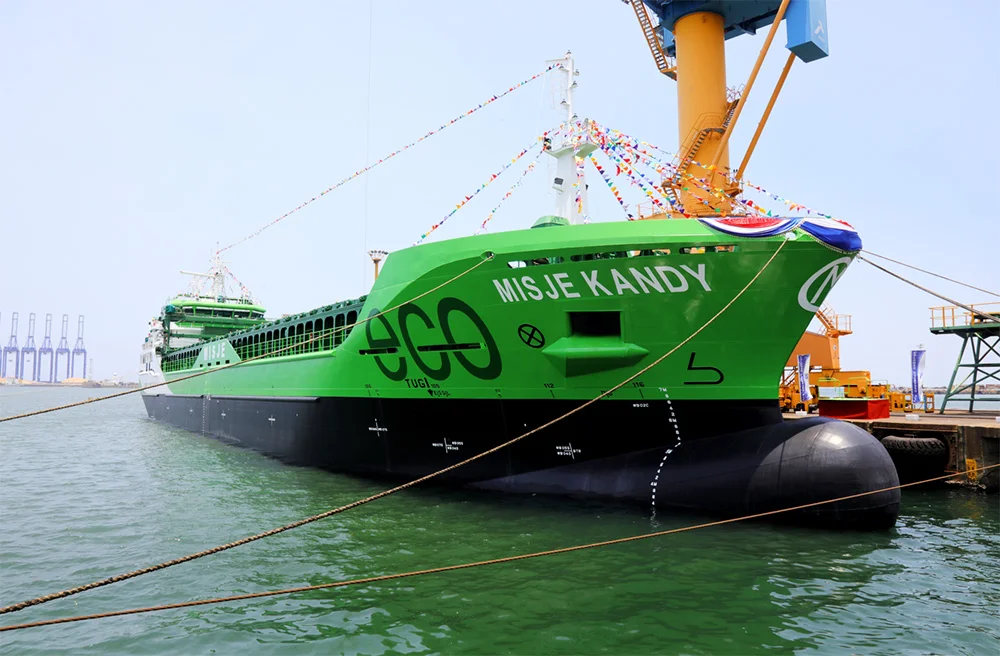
The Colombo Dockyard (CDL) under its new management has completed a major contract undertaken in March 2020 to build ten ships for Norwegian Misje Eco Bulk AS.
The company said that in spite of unprecedented global disruptions, a pandemic, an economic bankruptcy, regional wars, supply chain disruptions, logistical uncertainties, and untold hardships, they had been able somehow to meet contractual obligations.
The tenth ship was delivered to Misje Eco Bulk AS at the Colombo harbour recently.
Indian shipbuilding giant Mazagon Dock Shipbuilders Ltd. (MDL), affiliated to India’s Ministry of Defence (MOD), acquired controlling stake in CDL from Japanese shipbuilder Onomichi in mid last year MDL paid USD 52.96 mn for the stake.
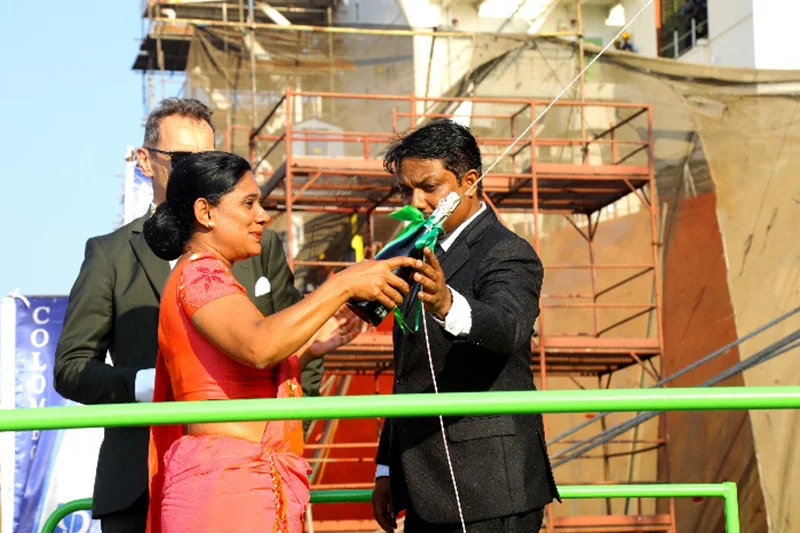
Dileesh Rosemary De Silva breaking a bottle of champagne in celebration. She is flanked by Roald Misje CEO Misje EcoBulk AS and Thusitha Herath Site Team Manager of Misje EcoBulk AS
The owners named the vessel ‘Misje Kandy’ as a tribute to CDL. Ceremonial breaking of the milk pot in accordance with the Sri Lankan traditions was done by the Colombo Dockyard’s Project Manager of the series of 10 vessels S.M.S.B. Serasinghe. In accordance with the western traditions the ceremonial breaking of the Champagne bottle was done by the God Mother of the vessel Mrs. Dileesh Rosemary de Silva.
The 89.95m DNV-classed Eco Bulker was conceptualised by Wartsila Ship Design Norway, with detailed design work carried out by CDPLC’s skilled in-house design team. In line with the latest trends in sustainable shipping. The vessel is equipped with an advanced Energy Storage Battery System (ESS) for Electric Hybrid Propulsion, complementing the conventional diesel propulsion system to enhance operational performance and reduce environmental impact.
Indian High Commissioner in Colombo Santosh Jha attended the ship launch with the government represented by deputy ministers Nishantha Jayaweera and Janitha Kodithuwakku.

Showers may occur at a few places in the Western and Sabaragamuwa provinces and in Galle and Matara districts after 2.00 pm

Burning of low-grade coal at N’cholai plant increases pollution: Parliament

Tariff shock from 01 April as power costs climb across the board

CDL under new management completes major Norwegian ship order

Govt. making arrangements for 3,500 SL Hajj pilgrims

NGO activists warn of ‘democratic dangers’ as PSTA draft bill looms over Parliament

‘Dates have the highest sugar content to fight Coronavirus’

Sunday Island 27 December – Headlines

#SundayIsland 17th December – Headlines

Sunday Island – 28th March

Sunday Island Headlines – 21 March

Sunday Island – 21st February – Headlines
-

 News6 days ago
Senior citizens above 70 years to receive March allowances on Thursday (26)
-

 Features3 days ago
A World Order in Crisis: War, Power, and Resistance
-

 News4 days ago
Energy Minister indicted on corruption charges ahead of no-faith motion against him
-

 News5 days ago
US dodges question on AKD’s claim SL denied permission for military aircraft to land
-

 Business5 days ago
Dialog Unveils Dialog Play Mini with Netflix and Apple TV
-

 News6 days ago
CEB Engineers warn public to be prepared for power cuts after New Year
-

 Sports4 days ago
SLC to hold EGM in April
-

 Latest News5 days ago
A strong Technical and Vocational Education and Training (TVET) system equips individuals with practical, relevant, and future-oriented skills helping to innovate responsibly towards a greener and sustainable future – PM