
News
TPA claims govt. under local and foreign pressure agreed to hold PC polls under PR system

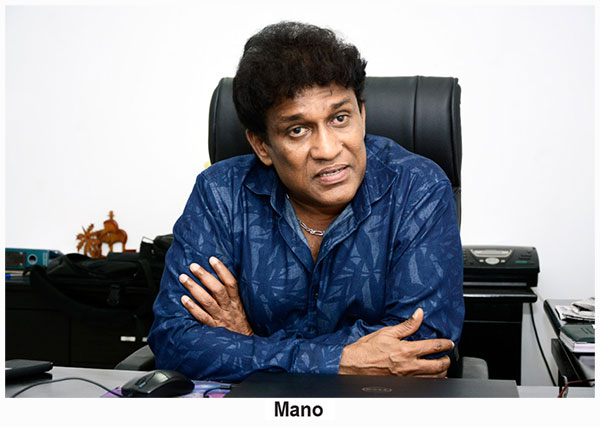
The Tamil Progressive Alliance (TPA) yesterday claimed that the government came under local and foreign pressure to hold Provincial Council elections. Hence, it had agreed to hold the Provincial Council elections under the Proportional Representation (PR) system.
TPA Leader Mano Ganesan said that it was not possible to hold elections under the mixed system. “If the elections are to be held under the mixed system, the demarcation of electoral boundaries have to be redefined. This is a long-term process,” he said.
He noted that to prevent delaying the elections further, the government and the opposition agreed to hold the election on the PR system, but it was a temporary agreement. “Therefore, electoral reforms will continue. The next meeting of the Parliamentary Select Committee (PSC) will be held on the 22nd of this month,” said TPA leader MP Mano Ganesan.
The TPA Leader said “If we try to change the electoral system at this point, it will only lead to greater delays. Therefore, we stood our ground that the elections must be held and as a result, the government and the opposition were able to come to an agreement at the PSC meeting,” he said.
Ganesan noted that at the PSC meeting, earlier the government members had demanded the mixed system and rejected the proportional system.
“But we opposed this position because it was intended to push aside smaller parties which chose the path of democracy with alternative policies, and to jeopardize the parliamentary and provincial representations of the minority parties representing their communities scattered throughout the country,” he said.
Parties including the SJB and JVP supported the position on proportional system. “Tamil Progressive Alliance, Tamil National Alliance, Sri Lanka Muslim Congress and the All Ceylon Makkal Congress are also of the view that the proportional system should not be changed,” Ganesan noted.
He asserted that he had also conducted discussions with the leaders of the smaller parties in the government regarding the matter and they too exerted pressure on the government.
He said that the local government council members who are responsible for the day to day needs of the people, including water, electricity and roads, need to represent local wards.
“Therefore, our stance is that the Parliament and the Provincial Councils do not need the mixed system to pick members to represent local electorates. But as for the LG bodies there is a need for members to represent local wards.”
Also, Ganesan claimed that a wrong notion had been created in the country against the preferential voting system. He maintained that the preferential vote was the pinnacle of democracy. The preferential voting system rescued prospective voters from casting their votes only to the candidate nominated by the party hierarchies.
“At the time of voting for their preferred party, every voter is given the “democratic freedom” to choose the candidate of their choice by preferential vote. We need to understand this clearly.”

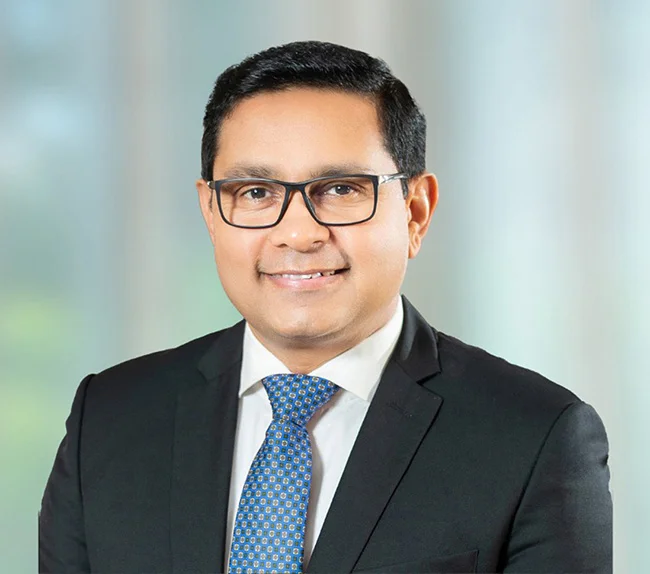
Sri Lanka’s banking sector has provided a collective and categorical assurance that it remains stable, resilient, and secure despite a few recent isolated incidents of financial fraud, emphasising that these developments do not pose a threat to the safety of customer deposits or the overall integrity of the financial system.
While acknowledging that such incidents have understandably generated some concerns, the industry has reiterated that it is addressing these matters comprehensively and that it is well equipped to manage and mitigate these challenges. This assurance was conveyed in a statement issued to the media by the Sri Lanka Banks’ Association (SLBA), which represents all licensed commercial banks in the country.
Addressing recent reports of financial fraud and cyber-related incidents that have drawn heightened public attention, the Association underscored the strength of the sector’s fundamentals and the effectiveness of ongoing regulatory oversight and risk management frameworks.
“Recent reports of financial fraud and cyber-related incidents have understandably received public attention. Industry leaders and regulators emphasise, however, that the banking sector remains fundamentally strong, resilient, and well equipped to withstand such challenges, without compromising its core stability or the security of customer deposits,” the Chairman of the SLBA Sanath Manatunge stated.
He noted that while many social media posts are either misleading or carry inaccurate information, some recent cases, including electronic fund transfer fraud, have raised important questions about digital security. However, these incidents represent only a very small proportion relative to the substantial institutional capital buffers maintained by banks. Importantly, depositors are assured that customer funds remain secure, with any such losses being absorbed through institutional capital buffers rather than public deposits.
Other cybercrime cases reported in recent months, including phishing-related fraud which are not directly connected to the banking industry and hence do not manifest any vulnerabilities in the system, however underscore the evolving and increasingly sophisticated nature of digital threats faced by financial systems worldwide, the Chairman said, but stressed that these are isolated incidents and do not reflect systemic weaknesses across the banking industry.
Reinforcing this position, the Central Bank of Sri Lanka has confirmed that all licensed banks continue to maintain capital adequacy and liquidity ratios well above minimum regulatory requirements, the Association pointed out. The regulator has also reiterated its readiness to provide temporary liquidity support if required, ensuring the uninterrupted stability of the financial system.
“Sri Lanka’s banking sector collectively manages trillions of rupees in assets, supported by diversified portfolios and robust governance frameworks. This scale, combined with prudent risk management practices, provides a strong foundation for absorbing shocks while maintaining public confidence,” Manatunge said.
At the same time, the industry is actively strengthening its defences against emerging threats. Banks are continuously enhancing cybersecurity frameworks through investments in advanced Fraud Risk Management Systems, more rigorous monitoring protocols, and independent forensic audits. These efforts are complemented by ongoing regulatory and parliamentary initiatives aimed at strengthening governance, accountability, and transparency across the sector.
Recognising that customer awareness is a critical line of defence, banks have also intensified public education initiatives focused on safe digital practices. These include guidance on password security, phishing prevention, and the secure use of QR codes and other digital payment tools.
The SLBA noted that cyber fraud is not unique to Sri Lanka, with similar incidents reported in major economies around the world. In these markets, banking systems have remained stable, supported by strong regulatory oversight and continuous adaptation to emerging risks. Sri Lanka’s banking industry is demonstrating comparable resilience, with swift corrective measures and vigilant supervision reinforcing confidence in the system.
While recent incidents have highlighted certain challenges in the environment, the benefits of digital banking far outweigh such concerns, Manatunge added, reiterating that Sri Lanka’s financial sector remains robust, well-capitalised, and subject to close regulatory oversight. These incidents are isolated in nature and do not indicate systemic failure, and the corrective measures already underway are expected to further strengthen the sector’s resilience against future threats.
The SLBA concluded: “Sri Lanka’s banks continue to stand as pillars of stability, safeguarding customer deposits while supporting the country’s economic progress. We urge customers to remain vigilant in their own digital practices, even as the industry continues to enhance the safeguards that protect them.”

Most of the country’s major rivers remained at normal levels despite intermittent overnight rainfall, according to the Irrigation Department’s Hydrology and Disaster Management Division early Tuesday.
However, officials warned that the Kuda Ganga at Kalawellawa (Millakanda) had reached the “Alert” level and was showing a rising trend following heavy rainfall in the catchment areas.
Irrigation Department Director of Hydrology and Disaster Management, Eng. L.S. Sooriyabandara, said the department was closely monitoring the situation, particularly in low-lying areas vulnerable to sudden flooding.
“The majority of river basins are still within normal limits, but the Kuda Ganga has shown a notable increase due to rainfall recorded in upstream regions. Residents living near vulnerable riverbanks should remain vigilant,” he told The Island yesterday.
According to the Irrigation Department’s 3.00 a.m. hydrological update, the Kuda Ganga at Kalawellawa recorded a water level of 5.10 metres, above the alert threshold of 5.00 metres, with rainfall of 24.3 mm recorded during the previous 18 hours.
Hydrology officials noted that although several rivers in the south-western wet zone experienced moderate rainfall, water levels in major rivers including the Kelani, Kalu, Gin and Nilwala remained within safe margins.
The Kelani Ganga at Hanwella recorded 3.87 metres, while the Kalu Ganga at Ratnapura stood at 4.58 metres — both remaining well below flood levels.
Meanwhile, the Maguru Ganga at Magura received one of the highest rainfall readings at 56.8 mm, while the Kalu Ganga basin at Ratnapura received 51.8 mm during the 18-hour observation period.
A senior Disaster Management Centre (DMC) official said there was no immediate flood threat in most districts, but local authorities had been advised to remain alert due to the prevailing unstable weather conditions.
“We are coordinating with the Irrigation Department and district disaster management units. At present there is no major flood situation, but people in low-lying and landslide-prone areas should pay attention to weather advisories,” the official said.
The Department of Meteorology has forecast further showers in several parts of the country, particularly in the Western, Sabaragamuwa and Southern provinces.
Officials urged the public to avoid unnecessary travel through flood-prone roads during heavy rain and to stay updated through official weather and disaster management bulletins.
By Ifham Nizam
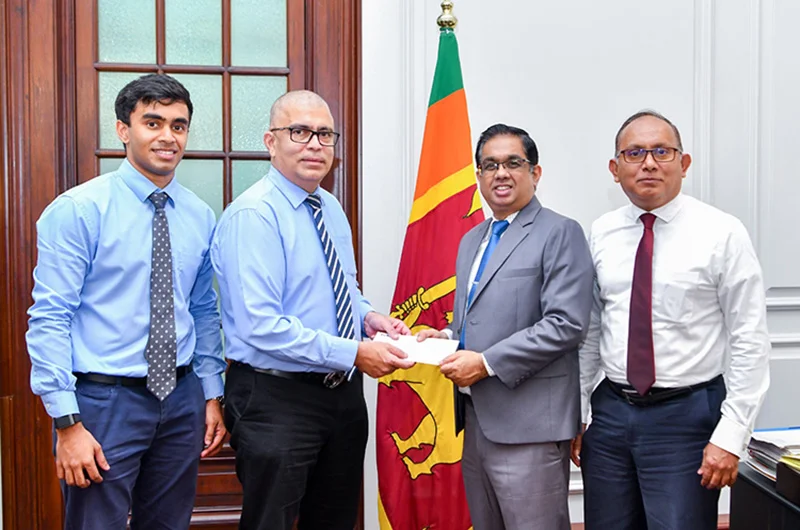
Leading corporate entity MAC HOLDINGS (PVT) LTD donated Rs. 5 million to the government’s ‘Rebuilding Sri Lanka’ Fund, established to provide relief to communities affected by Cyclone Ditwah.
The cheque was handed over recently at a simple ceremony at the Presidential Secretariat. Managing Director/Chairman of MAC HOLDINGS (PVT) LTD, Andre Fernando, handed over the cheque to Secretary to the President, Dr. Nandika Sanath Kumanayake.
Group Director/Chief Financial Officer Tilak Gunawardena and Management Trainee Anick Fernando were also present.

Banking sector claims its integrity intact despite ‘isolated incidents of fraud’

Rivers remain mostly normal despite overnight rains; one basin on alert

MAC Holdings donates Rs. 5 million to ‘Rebuilding Sri Lanka’ Fund

Move to postpone PC polls: Cabinet spokesman contradicts JVP Gen. Sec.

Over 300 busted for possession of narcotics during Sri Pada season

Mendis handed white-ball reins

‘Dates have the highest sugar content to fight Coronavirus’

Sunday Island 27 December – Headlines

#SundayIsland 17th December – Headlines

Sunday Island – 28th March

Sunday Island Headlines – 21 March

Sunday Island – 21st February – Headlines
-

 Opinion6 days ago
Murder of Ehelepola family, Bogambara Wewa and Sightings of Wangediya
-

 Business5 days ago
Historic launch of CCWE Fashion Week & International Summit 2026
-
 News6 days ago
Steps underway to safeguard Sri Lanka’s maritime heritage
-

 News2 days ago
Police probe underway to ascertain links between criminals deported from UAE and local politicians
-

 Features3 days ago
The NPP’s pivot to the past
-

 News3 days ago
All-New GRAVITE launches at LKR 6.99 Mn
-

 Editorial6 days ago
A play without its protagonist
-

 Opinion5 days ago
The need to reform Buddhist ecclesiastical order