
Life style
To the Ends of the Earth

by Rajiva Wijesinha
Before the recent publication of Off the Beaten Track, Godage & Bros in this same year produced To the Ends of the Earth, yet another book by Prof Rajiva Wijesinha about his travels in exotic places.
That earlier book looked at four continents, North and South America, Africa and Asia but, as the title indicates, it was about the lesser known extremities of those areas. Beginning with Brazil, the book explores seven countries in South America, and also Mexico and three other countries in Central America along with three in the Caribbean. The travels there began in 1986 and concluded in 2019 with a journey to Bolivia.
That first visit hooked him as it were with the range of people and places he saw, for Brazil ‘struck me not as a melting pot, where everyone strives to settle within particular confines, but rather as a sort of fondue, where individual fiavours can be retained, while a common thread that provides reassurance adheres to each segment.
Being in effect a continent rather than a country does help. There is room for the Teutonic farmers of Rio Grande do Sul, with their expansive ranches and the fabulous churrascarias where one can pig oneself on all sorts of meats cooked in all sorts of ways, while animated conversations, characteristically Latin one would say, flow from all the tables around one; the blacks can have their energetic carnivals in Salvador, only to be outdone by the range of races in Rio who have made a multi-ethnic version of that art form emphatically their own; the mestizos, initially those of mixed American Indian and white blood, grow increasingly darker as one moves northward, and one finds too groups of oriental Indians and Chinese, adding their own characteristics to the mix; while out in the Mato Grosso and the Amazon areas to the west, pure Indians still live, some with lifestyles just the same as those their ancestors had practised for generations before Columbus sailed. ‘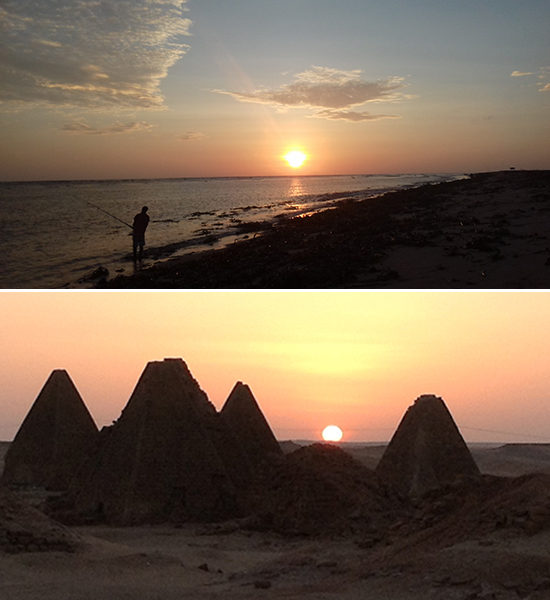
In Peru and Ecuador he found fascinating the blend of Indian art and Christian imagery, the San Ignacio Chapel in Arequipa, decorated by a devoted Indian artist in murals that recreated the delicate plumage of tropical birds, in natural dyes that had survived over two hundred years, later the statues and pillars in many churches in Quito, the exciting capital of Ecuador.
But what entranced above all in this continent was the magnificent civilization of Aztecs and Incas and above all the Mayas. In Mexico he had a glimpse of a continuity of culture when at the great pyramids of Teotihuacan he came across a ritualistic dance, hundreds of young men dressed in evocative traditional costumes, headbands and elaborate cloaks, bare strips of cloth at the waist and intricate leggings, moving or rather stamping energetically in a complex rhythm, up and down, forward and back, persistently, powerfully, to the relentless beating of drums. They continued while he climbed up the pyramids of both the Sun and the Moon, and were still at it when he got back, an absolutely breathtaking sight, close up as well as from the heights that placed the pattern in even more vivid perspective.
And then there were the Mayas, the Temple of the Magician at Uxmal, a pyramid that somehow also had an oval shape, that took his breath away. That motivated another visit, this time to Guatemala, where a helpful consul at the border let him in without a visa to see the great complex at Tikal, deep in the jungle, which he wandered through on his own, to the sounds and sights of exotic birds, toucans and coucals and the colourful Peten turkey.
There were also other sorts of jungle adventures, jumping into the confluence of the two rivers that make up the Amazon at Manaos, fishing for piranhas for supper in the Kumaseva river near Iquitos in Peru, walking in the jungle there while his guide swung on lianas Tarzan fashion in dripping rain.
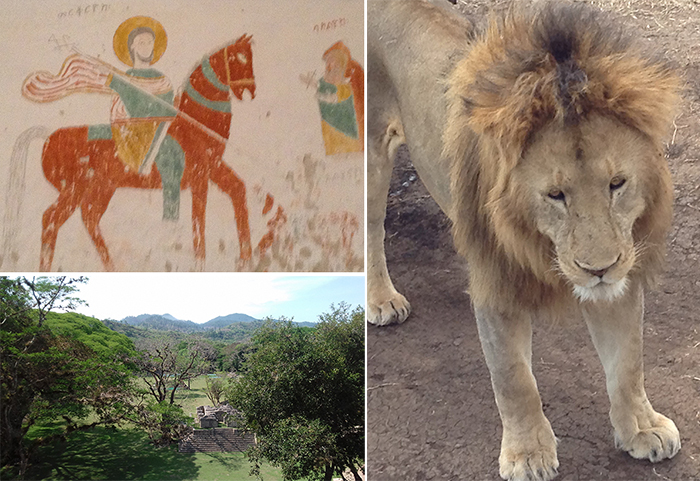
There are jungle trips in Africa too, crowded safaris in Tanzania and Uganda, tailor made trips in Mozambique and Angola, which allowed for lingering over glorious sunsets over river and sea. More unusual were the religious fantasies of Ethiopia, what was supposed to be the palace of the Queen of Sheba at Axum, the Debre Dammo monastery which had to be reached by climbing a rope, which he was dissuaded from trying to do, a long trek up a steep hill to see the Mariam Korka church, an impressive small building with wonderful paintings on its walls, and its neighbour the Daniel Korka church which required slithering along an open cliff.
There were too the fantastic rock hewn churches of Lalibela, and the monasteries nearby, one a long cave under a rocky ledge, with pilgrims clad in white and swaying gently to the relentless gentle rhythm of wonderful chanting. And there were beautifully illustrated bibles, which the priest held open for inspection without allowing them to be touched. These, and exotic crosses, which you were permitted to kiss, were drawn from ramshackle cupboards with total nonchalance.
Then there was rocking across the crocodile infested Nile in a coracle in Sudan, to see the multiple remains on Sai Island, a temple from the days of the pharaohs, a Byzantine Cathedral and the remains of an Ottoman fort. And nothing had prepared him for the pyramids of the Sudan, not one cluster but two, framed against a large rock at Karima, framed against the sunset at Begrawiya. That had followed a sight of whirling dervishes far outside Khartoum, a whole host walking round and round the open area in the middle, whirling and chanting, while the surrounding crowd joined in what seemed a marvelous frenzy.
Lions and hippos in the Serengeti pale in comparison, though that visit to Tanzania also included the beautiful architecture of Zanzibar and its quaint palaces. As exotic was the hilltop capital of King Moshoeshoe in Lesotho, a surprisingly beautiful country, which even boasted dinosaur footprints.
The Asian sections, looking only at the island nations in the east, provide equally unusual experiences, including ferries through the Moluccas islands, ending in New Year on a far away beach in the Kea Islands, abounding in giant tortoises and colourful starfish.
There were several visits to the Philippines, but the most exciting was the first, when he explored on his own, taking a bus up to Baguio and then to the underground caves at Sagada and the terraced rice fields of Banaue. Very different were several meetings with Ninoy Aquino, President of the Philippines from 2010, including a lunch when he had to make conversation in lieu of the Sri Lankan Prime Minister who gazed blandly into the middle distance.
The range of experience is splendidly illustrated, pages of lively colour and black and white pictures which capture the lines of the different arts and crafts of the different continents.

Tourism remains one of the most powerful drivers of economic growth and cultural exchange in Sri Lanka.
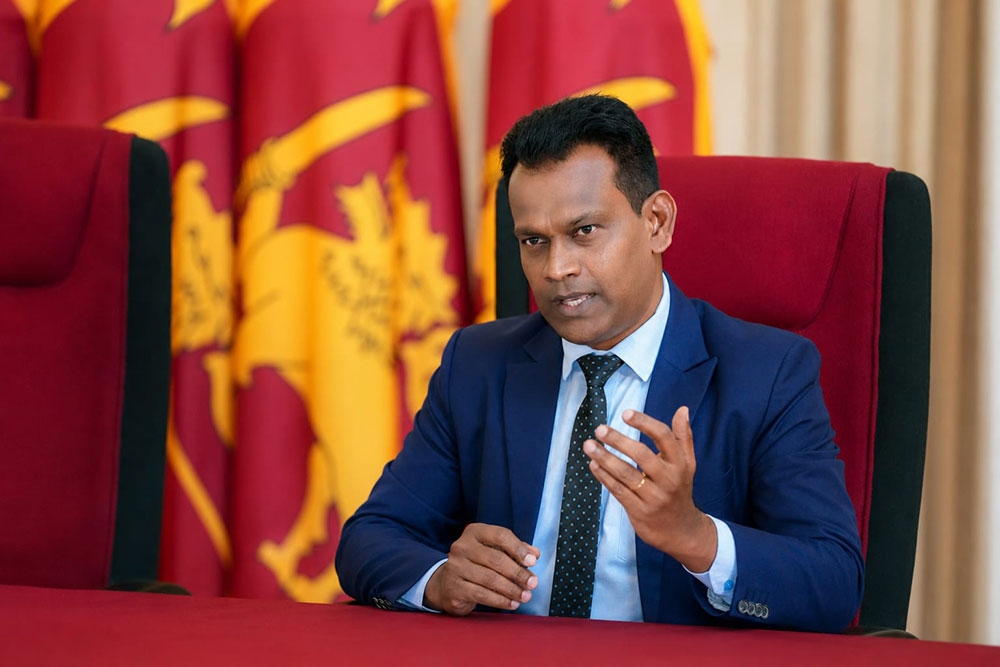
As the tourist industry continues its post pandemic recovery and looks toward a more sustainable and innovative future, the role of strategic planning and policy direction has been more important. In this interview Professor Ruwan Ranasinghe, Deputy Minister of Tourism,, and a respected academic in this field shares his insight on the current state of the Sri Lankan tourism industry, emerging trends, challenges facing the sector and the governments vision for positioning Sri Lanka as a leading global destination.
With a vision focused on sustainability, innovation, and destination competitiveness, he is playing a pivottal role in shaping the future of Sri Lanka’s tourism industry. He shares his insights on the opportunities, challeges,and strategic direction of tourism in the years ahead. A first class graduate of Rajarata University and holds an MBA and a doctorate from Sichuan University, China. He launched Sri Lanka’s first Tourism and Hospitality Management degree at Uva Wellassa , endorsed by the UNWTO.
Excerpts of the interview.
(Q) Are you seeing a decline in visitors in Sri Lanka due to geo-political tensions?What segments of the tourism industry are most affected: luxury, leisure or group travel?
(A) Sri Lanka has not experienced a dramatic decline in arrivals, overall, but global geopolitical tensions do influence travel sentiment. The most affected segments are group travel and leisure tourism, as these travellers are more sensitive to perceptions of safety. Luxury tourism remains comparatively resilient, with high-end visitors continuing to seek curated, exclusive experiences.
(Q) Is Sri Lanka experiencing cancellations or postponements from travellers in conflicted zones? Are hotels and resorts reporting reduced occupancy linked to uncertainty in the region?
(A) Yes, there have been cancellations and postponements from travellers originating in conflict affected regions, particularly the Middle East. Some hotels and resorts have reported reduced occupancy during peak uncertainty periods. However, arrivals from other regions remain strong, balancing the overall impact.
(Q) What measures is the Sri Lankan tourism sector taking to mitigate the impact of local stability?
(A) The Ministry has adopted a proactive approach:
Transparent communication through embassies, airlines, and official tourism portals.
Safety protocols coordinated with law enforcement and emergency services.
Marketing resilience campaigns highlighting Sri Lanka’s stability and diverse attractions.
Stakeholder engagement with hoteliers, tour operators, and airlines to align strategies.
(Q) Do you expect a short-term disruption or long-term impact on Sri Lanka’s tourism growth?
Are you seeing early warning signs such as cancellations, reduced flight bookings or shorter stays?
(A) We anticipate short-term disruptions rather than long term setbacks. Early warning signs such as reduced flight bookings and shorter stays are being monitored. However, Sri Lanka’s fundamentals — diverse attractions, strong hospitality, and cultural authenticity — remain intact, ensuring recovery once tensions ease.
(Q) Boutique luxury tourism is often seen as niche – how central is it to Sri Lanka’s overall tourism strategy right now?
(A) Boutique luxury is central to our tourism strategy. It attracts high value travellers who contribute significantly to foreign exchange earnings while demanding sustainable, authentic experiences. This segment also diversifies our tourism portfolio beyond mass tourism, making the industry more resilient.
(Q) How is the government defining boutique luxury in Sri Lankan context?
(A) Boutique luxury in Sri Lanka is defined by personalised, small scale experiences rooted in cultural and natural heritage. It emphasises exclusivity, authenticity, and sustainability rather than sheer opulence, offering intimate stays in properties that reflect local architecture and traditions.
(Q) What makes Sri Lanka uniquely competitive in boutique luxury compared to destinations like the Maldives, Thailand and Bali?
(A) Sri Lanka’s strength lies in its diversity. Unlike the Maldives, which is primarily a beach destination, or Bali and Thailand, which focus heavily on wellness and nightlife, Sri Lanka offers a multifaceted experience: pristine beaches, UNESCO heritage sites, wildlife safaris, tea plantations, and Ayurveda wellness — all within short travel distances. This variety, combined with boutique hospitality, makes us uniquely competitive.
(Q) How do you balance encouraging foreign investment while preserving Sri Lanka’s cultural authenticity?
(A) We welcome foreign investment but ensure it aligns with our cultural identity. Guidelines require investors to integrate local design, employ Sri Lankan staff, and source materials locally. This ensures development enhances our heritage rather than dilutes it, creating partnerships that benefit both investors and communities.
(Q) Boutique luxury often interacts with sustainability – how is the Ministry ensuring that growth in this segment benefits local communities?
(A) The Ministry ensures boutique luxury growth benefits communities by:
Promoting local sourcing of food, crafts, and services.
Supporting eco friendly construction and operations in boutique resorts.
Encouraging community-based tourism initiatives where locals directly participate in guiding, hosting, and cultural performances.
(Q) How do you retain skilled hospitality professionals within Sri Lanka?
(A) Retention is achieved through:
Competitive compensation aligned with international standards.
Continuous training programmes in partnership with global hospitality schools.
Career pathways that allow professionals to grow within Sri Lanka.
Recognition programmes to celebrate excellence in service.
(Q) Where do you see Sri Lanka’s boutique luxury tourism sector in the next five years?
(A)In the next five years, Sri Lanka aims to be recognised as a regional leader in boutique luxury tourism. We envision a network of boutique properties integrated into cultural and ecological landscapes, offering world class service while maintaining authenticity. This sector will be a key driver of sustainable growth and foreign exchange earnings.
(Q) What markets are you targeting for boutique luxury tours?
(A) We are targeting highspending travellers from Europe, North America, and East Asia. These markets value exclusivity, sustainability, and authenticity — qualities that Sri Lanka’s boutique luxury sector embodies. We are also exploring niche markets such as wellness travellers and cultural enthusiasts.
(Q) How has the ongoing conflict between Iran and Israel affected overall tourism arrivals in Sri Lanka?
(A) The ongoing conflict has created uncertainty in global travel, particularly in the Middle East. While Sri Lanka has not experienced a dramatic decline, arrivals from conflict adjacent regions have slowed. To mitigate this, we are diversifying source markets, strengthening promotions in Europe and Asia, and reassuring travellers through diplomatic channels and tourism partners.
By Zanita Careem ✍️
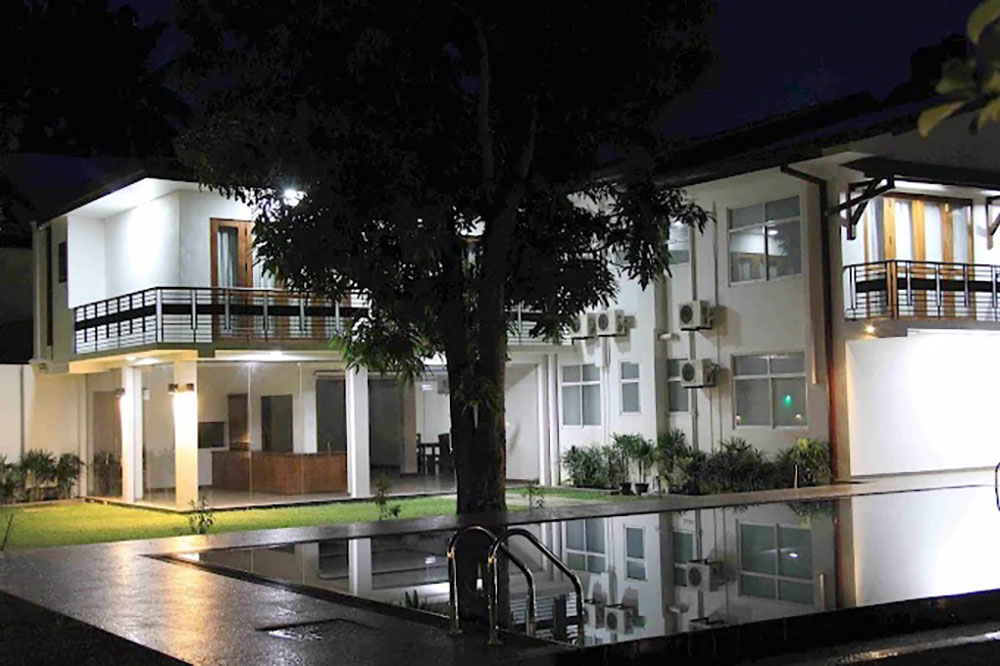
As Sri Lanka’s southern tourism corridor continues to attract travellers from across the globe, Serenity Tissa stands out as a destination where comfort, culture and nature come together in perfect harmony, offering guests an unforgettable journey into the soul of the island, southern heritage.
While many visitors journey through the Cultural Triangle in search of the Island’s ancient treasures, Tissamaharama itself stands as a destination rich in history, culture and natural beauty.
Set amidst this historic landscape of Tissamaharama, Serenity Tissa offers a unique retreat in the cradle of Southern Civilisation .
Nestled in the historic heartland of Tissamaharama Serenity Tissa offers far more than a comfortable stay, it delivers an experience deeply rooted in Sri Lanka’s Southern charm, cultured heritage and natural beauty.
Surrounded by the tranquil atmosphere of Tissa Wewa and located within easy reach of the famed Yala National Park, the boutique-style property has steadily earned a reputation among both local and international travellers seeking serenity, comfort and authentic Southern hospitality. Build on the grounds of an ancestral home, once owned by Patric De Silva, Serenity Tissa gracefully blends the warmth of a family residence with the conversion to a modern boutique-style hotel. Fortress inspired architecture, lush mango tress and peaceful open space create a welcoming retreat for travellers eager to explore the cultural and wildlife treasures of Sri Lanka’s deep South.
The hotel’s strategic location places guest close to some of the regions most treasured landmarks, including Yala and Bundala National Park, Tissamaharama Raja Maha Vihara, Kirinda Temple, Yatala Vihara and Sandagari Stupa, to mention a few.
-
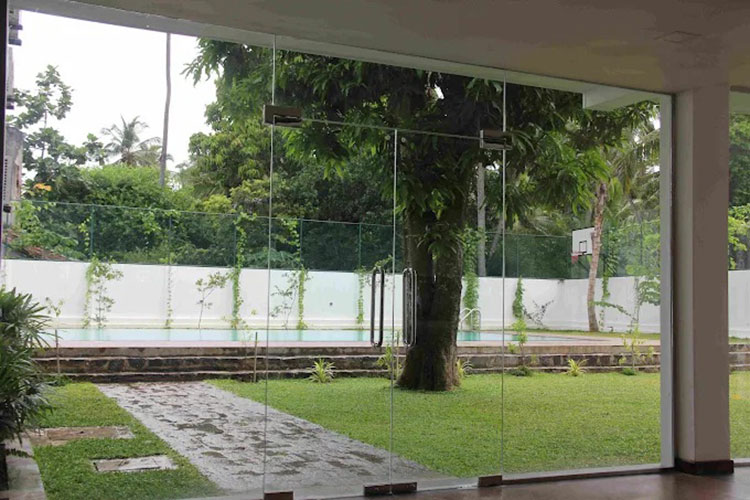
- Beautiful blend of nature, comfort and hospitality
-
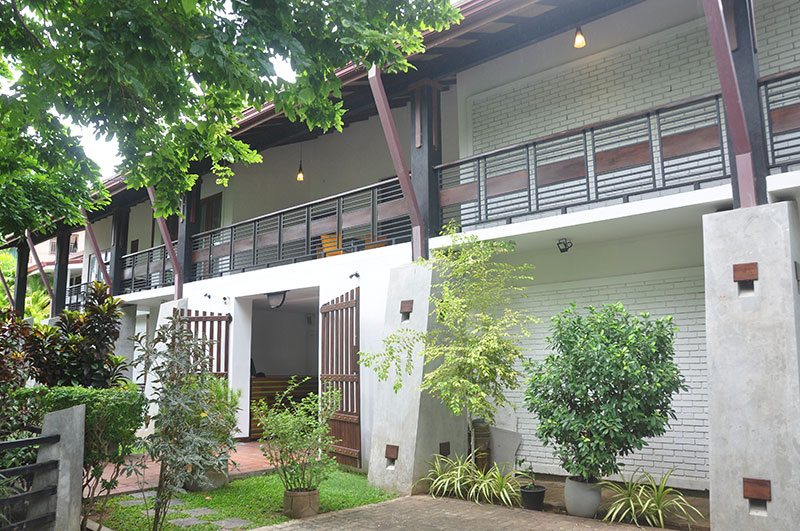
- Sanctuary of calm and rejuvention, offers the perfect escape
-
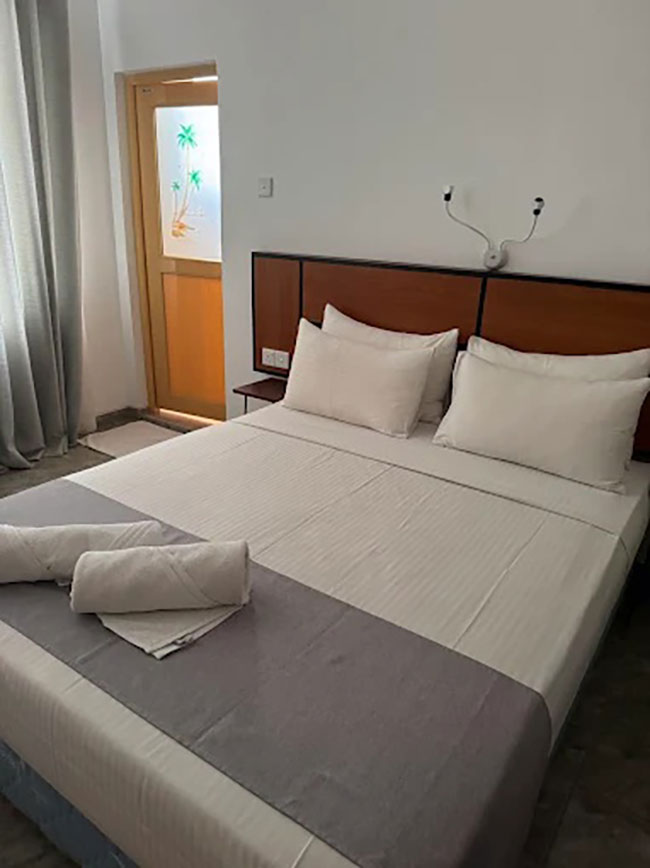
- Elegantly designed for comfort
-
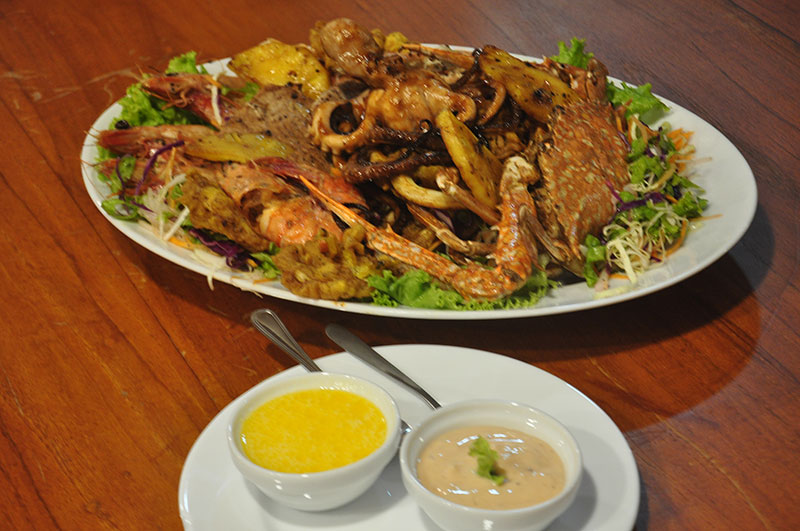
- Authentic Sri Lankan flavours
For adventure seeking, safari excursions this place remains a major attraction, while those seeking relaxation they can simply unwind besides the hotel’s swimming pool or enjoy the calm beauty of the surrounding landscape. Serenity Tissa rooms are designed with simplicity and comfort in mind, offering a range of accommodation options suitable for couples, families and groups.
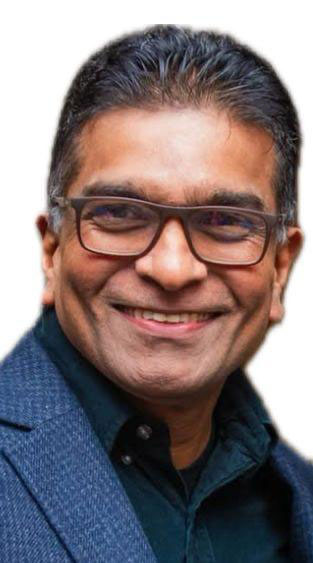
Managing Director Ajith de Silva dedication and commitment
Spacious interiors and warm hospitality have consistently drawn praises from guests from around the world. Dining at the hotel is another memorable highlight. The open air restaurant celebrates the bold and aesthetic flavours of Southern Sri Lankan cuisines with dishes inspired by coastal traditions and local village, kitchens. Fresh sea food delicacies, rich curries and fragrant spices combine to create a culinary experiences that reflects the region’s vibrant food culture. The executive chef Rushira, who has years of experience, said ‘At Serenity Tissa Southern hospitality with refined experience, inspired by Sri Lankan rich cultural and culinary heritage is bought to life in all our dishes. Ambul Thiyal. mouthwatering pol sambol, sea food kottu, all reflecting bold flavours of the south. The use of coconut milk, aromatic spices, creates a memorable culinary journey that introduce visitors to the local tastes.
His passion for authentic Southern Sri Lankan cuisine shines though every dish, offering guests an unforgettable experience. Under the leadership of the Managing Director Ajith de Silva, he has played a pivotal role in tranforning a family inspired hospitality, into one of Tissamaharama’s most welcoming boutique destinations.
Guided by his vision Serenity Tissa has emerged as a distinctive hospitality destination in Sri Lanka’s southern vision, offering the warm and personalised hospitality for which Serenity Tissa is renowned for. Frequently praised by guests, numerous reviews full attention, memorable guests experiences makes it a preferred choice for travellers exploring the historic attractions of the region
What is so special about Serenity Tissa is the personalised hospitality, numerous traveller reviews, dedication of the staff, a blend of warm Sri Lankan hospitality personalised services and authentic local experiences.
Ajith de Silva’s vision has helped position the property as a preferred base for travellers exploring the cultural and natural wonders of Tissamaharama Hotel The Manager Thushara Samarasuriya whose dedication and attention in detail have also contributed significantly to the hotel’s reputation for excellence.
Serenity Tissa offers a gateway to the history, culture and natural wonders of Southern Sri Lanka Under the guidance of its dedicated team, Serenity Tissa continues to create lasting memories for guests from around the world.
By Zanita Careem ✍️
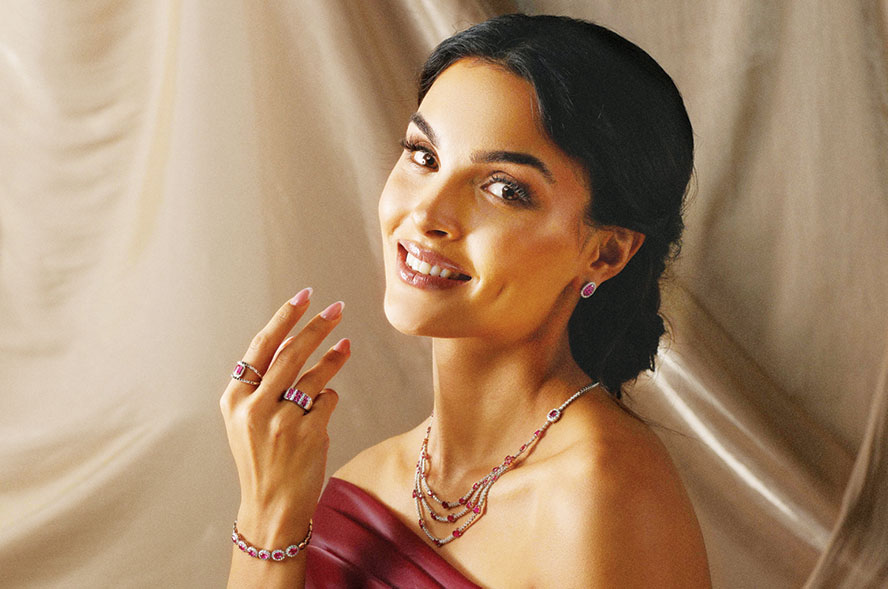
Tiesh Sri Lanka, renowned for its exceptional craftsmanship, timeless elegance, and celebration of Sri Lankan gemstones, has appointed Sabina Yousaf as the newest face of the brand. The partnership marks a significant milestone for both Tiesh and Sabina, uniting two names that embody grace, sophistication, and a deep appreciation for heritage and craftsmanship.
Sabina Yousaf recently brought pride to Sri Lanka on the global stage when she was crowned Second Runner-Up at the 41st Mrs World pageant. As the reigning Mrs World Sri Lanka, she has captivated audiences locally and internationally with her poise, intelligence, and charisma, becoming an inspiring figure admired by many across the country.
A successful businesswoman and passionate advocate for community empowerment, Sabina’s values closely align with the philosophy of Tiesh. Her commitment to giving back to society reflects the principles long championed by Founder and Managing Director of Tiesh, Lasantha De Fonseka, who has consistently emphasised compassion, generosity, and supporting communities, values that have also been instilled in the next generation of the brand, Thiyasha and Ayesh De Fonseka.
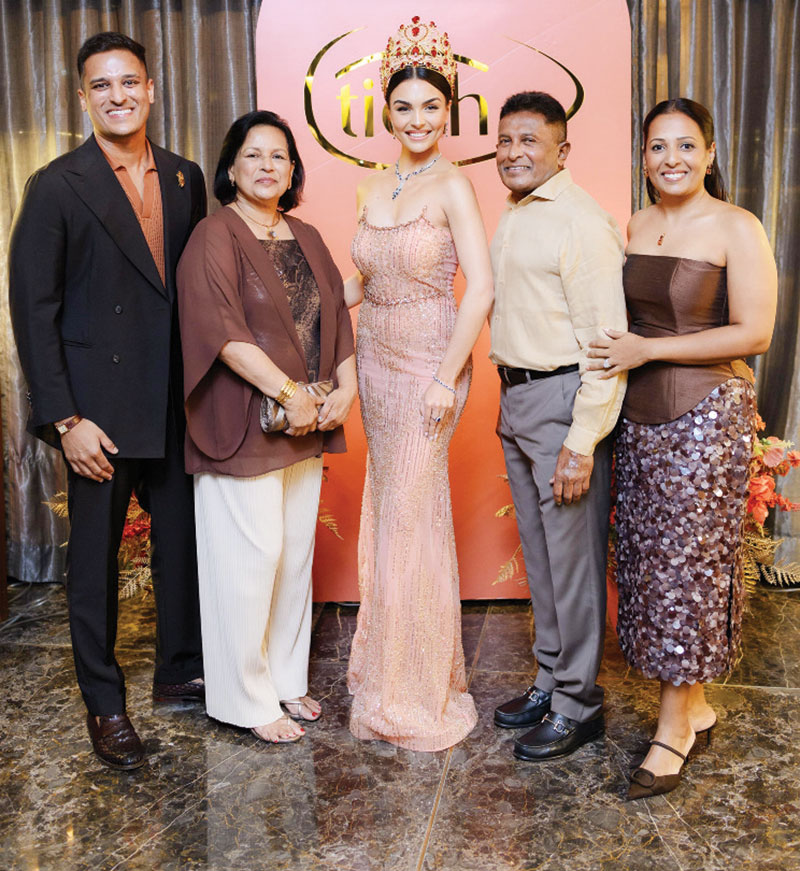
Sabina with the Directors of Tiesh (From Left): Thiyasha, Lasantha, Bryony, and Ayesh De Fonseka
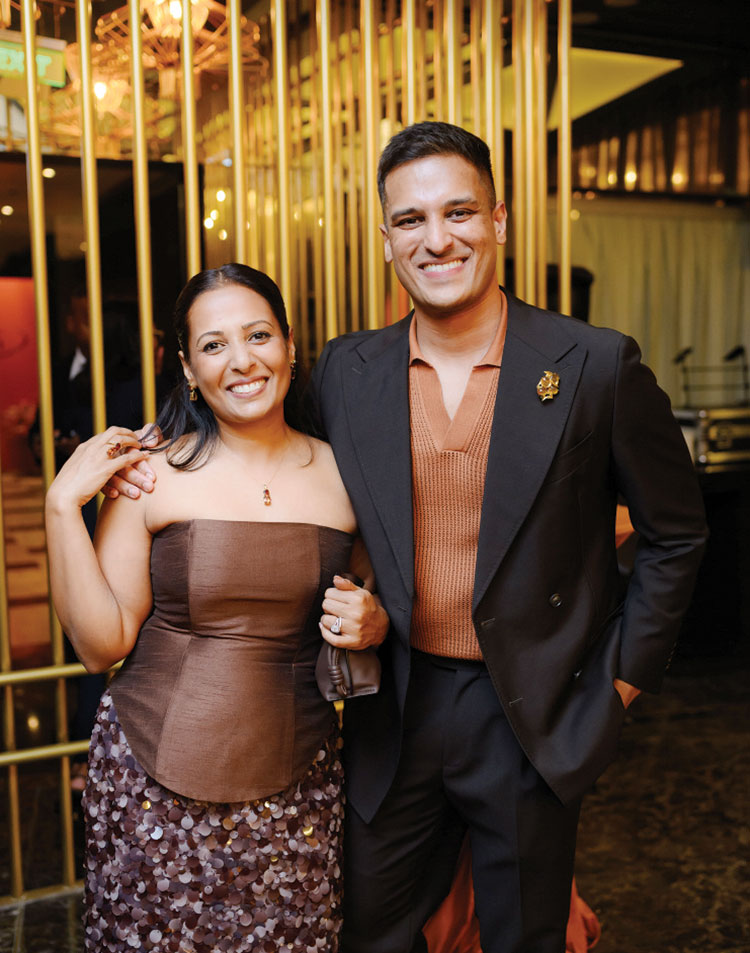
Thiyasha and Ayesh – passionate about thier business
With a legacy spanning over two decades, Tiesh Sri Lanka has established itself as one of the country’s leading jewellery brands, celebrated for blending contemporary elegance with the natural beauty of Sri Lankan gemstones. Beyond jewellery, the brand has become a destination that educates and inspires, offering customers an appreciation of fine craftsmanship, artistry, and heritage.
Renowned for its dedication to excellence, Tiesh continues to uphold its legacy of creating jewellery that epitomises luxury, sophistication, and meticulous attention to detail. Every creation is thoughtfully designed and expertly crafted by skilled local artisans using the finest precious stones, reflecting the brand’s unwavering commitment to quality and authenticity.
Commenting on the collaboration, Founder and Managing Director of Tiesh, Lasantha De Fonseka stated, “Sabina embodies everything that Tiesh stands for: elegance, confidence, authenticity, and grace. Her inspiring journey, both nationally and internationally, resonates strongly with our values as a brand. We are delighted to welcome her into the Tiesh family as she represents the spirit of the modern Sri Lankan woman with remarkable strength and sophistication.”
Tiesh Director, Ayesh De Fonseka added, “We are incredibly excited to have Sabina as the face of Tiesh. She is admired both locally and internationally, and her presence brings a fresh sense of modern femininity and confidence to the brand. This partnership reflects our vision of positioning Tiesh on a greater global platform while remaining deeply rooted in Sri Lankan heritage and craftsmanship.”
Speaking on the partnership, Sabina Yousaf expressed her admiration for the brand and the significance of becoming its newest ambassador.
“For me, Tiesh is far more than a jewellery brand. It represents history, artistry, and an enduring passion for craftsmanship. What makes Tiesh truly exceptional is its deep connection to the heritage of Sri Lankan gemstones and the incredible artistry behind every creation. Each piece reflects elegance, individuality, and timeless beauty,” she said.
“This collaboration feels incredibly meaningful because the brand aligns so naturally with my own personal style, values, and appreciation for authenticity. I am genuinely grateful for the opportunity to work with a brand that I deeply admire and respect.”
She further added, “Jewellery, to me, is a powerful form of self-expression. It reflects individuality, personality, and confidence. The pieces we choose often tell a story about who we are, and I believe jewellery has the ability not only to elevate one’s style, but also to inspire confidence and presence.”
The collaboration between Tiesh and Sabina Yousaf symbolises a shared vision of elegance, empowerment, and timeless beauty. As the brand continues to evolve while honouring its rich legacy, this partnership further strengthens Tiesh’s position as a leading name in contemporary luxury jewellery. (ZC)

Showers in the Western, Sabaragamuwa and North-western provinces and in Galle, Matara, Kandy and Nuwara-Eliya districts

Diesel replacement costs up to Rs. 4.5 bn in April

Sallay on hunger strike: Counsel warns CID

Opp. questions why Rs 10 bn meant for Ditwah victims held in Treasury account

‘Samurdhi Bank operates without dedicated audit framework’

Constitutional inconsistencies relating to franchise

‘Dates have the highest sugar content to fight Coronavirus’

Sunday Island 27 December – Headlines

#SundayIsland 17th December – Headlines

Sunday Island – 28th March

Sunday Island Headlines – 21 March

Sunday Island – 21st February – Headlines
-

 News6 days ago
Lankan duo emerge winners in Latin dance championship held in Blackpool, UK
-
 Latest News4 days ago
Kusal Mendis, Pathum Nissanka, bowlers put Sri Lanka 1-0 up
-

 News4 days ago
New US tariffs proposed on 60 countries, including Sri Lanka
-
 Features3 days ago
Power crept into the Sangha and is now tearing it apart
-
 News6 days ago
Sri Lankan teen killed in Chennai clash; three arrested
-

 Features3 days ago
Kondachchi wind farm and battery storage project to boost energy security, says Power Ministry Secretary
-

 Features3 days ago
Saudi Arabia sets new benchmark in Hajj management as 1.7 million pilgrims complete sacred journey
-

 News2 days ago
Asst. Manager, security officer arrested over Rs 30 mn snatch at Horana PB branch