
Business
To reach US$8 billion, Sri Lanka apparel must grow differently


Sri Lanka’s apparel industry has earned its place in the global market through consistency, trust, and a strong reputation for ethical manufacturing. Over many years, we have shown that Sri Lanka can deliver quality, compliance, and reliability at a level that global brands value. That foundation remains one of our greatest strengths. But the next chapter for this industry cannot be built on reputation alone. It has to be built on growth that is measurable, broader in base, and more resilient in the face of global change. As Chairman of the Joint Apparel Association Forum, I believe the task before us is clear: Sri Lanka must move with greater purpose toward the long-discussed ambition of becoming a US$8 billion apparel export industry.
That ambition is important because it gives the industry a shared direction. But it must now be treated as more than a headline target. It must become a practical national agenda. Sri Lanka Apparel’s published export data show that textile and apparel exports for 2025 amounted to just over US$5.0 billion. That is a meaningful achievement, particularly in a demanding global environment, but it also shows that there is still a substantial gap between current performance and where we say we want to go. Closing that gap will require more than incremental improvement. It will require sharper execution, stronger coordination, and a more deliberate growth model.
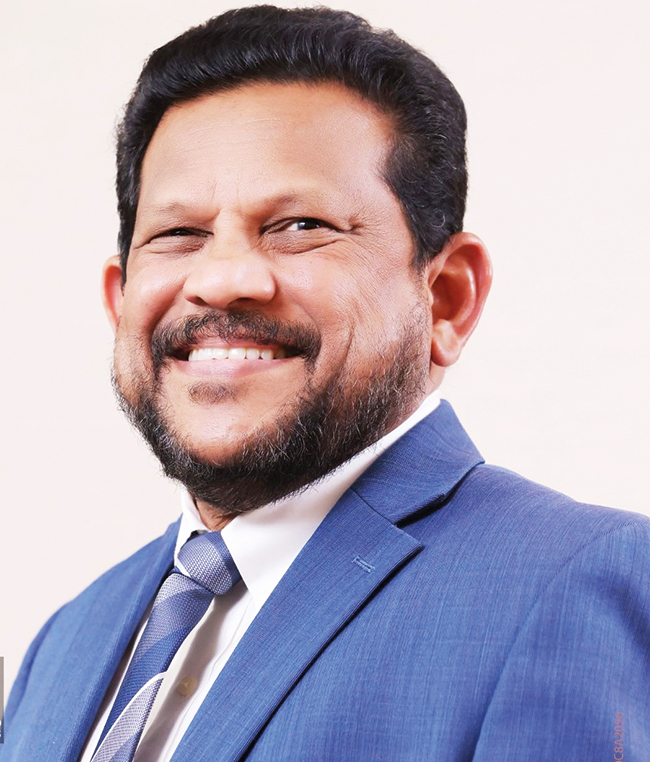
By Felix Fernando, Chairman, Joint apparel assoCiation Forum(JaaF)
One of the most important realities we must confront is market concentration. Our industry has traditionally depended heavily on the US, EU, and UK, and together these destinations account for about 85 percent of Sri Lanka’s apparel exports. That concentration has served us well in some respects, because these are mature and valuable markets where Sri Lanka has built long-standing relationships. But concentration at that level also creates vulnerability. When consumer demand weakens, tariffs shift, compliance expectations tighten, or brands change sourcing patterns in those markets, the effects are felt across our entire industry.
This is why diversification must now move to the centre of our export strategy. If Sri Lanka is serious about reaching US$8 billion, we cannot rely on the same market mix and expect a fundamentally different outcome. We need to build stronger export pathways into newer regions and expand our relevance in markets that have not yet been fully developed. ASEAN, the Middle East, Africa, and parts of Asia must become part of a structured and sustained growth effort. This is not about replacing our traditional markets. It is about reducing risk, widening opportunity, and building a more balanced export portfolio over time.
At the same time, diversification should not be understood only in geographic terms. It is also about moving up the value chain. Sri Lanka cannot compete on volume alone, and it should not try to. Our advantage lies in being a premium sourcing destination, one that brings together product integrity, speed, sustainability, technical capability, and increasingly, stronger design and development input. We must ensure that Sri Lanka is not viewed simply as a production base that executes instructions, but as a partner that contributes value, thinking, and innovation throughout the sourcing relationship.
That means we also need to become more disciplined in how we define progress. Export growth should not be reduced to one annual number. We must measure what kind of growth we are generating, where it is coming from, and whether it is making the industry stronger. Are we increasing our share in higher-value categories? Are we entering new markets in a meaningful way? Are we improving lead times and deepening customer relationships? Are we strengthening design capability and sustainability performance in ways that help us command better value? These are the questions that should shape our next phase.
No industry can achieve an ambitious export target, however, without the right operating environment. Sri Lanka must improve the systems that support trade. Faster customs processes, stronger digital integration across approvals, lower administrative friction, and more predictable policy are not side issues. They are core to competitiveness. In an industry where delivery timelines matter, delays at any point in the system affect confidence, planning, and future order allocation. Trade facilitation must therefore be treated as an export growth issue, not merely an administrative reform issue.
The same applies to the broader investment climate. If Sri Lanka wants to attract fresh capital, deepen value addition, and strengthen its manufacturing base, we have to be seen as commercially responsive as well as ethically strong. Investors look for clarity, speed, stability, and confidence that business can be done efficiently. This matters not only for foreign investment, but also for the expansion decisions of companies already operating in Sri Lanka.
The opportunity is still very much in front of us. Sri Lanka apparel has the capability, the reputation, and the institutional knowledge to grow beyond its current scale. But the route to US$8 billion will not come from doing more of the same. It will come from measurable export growth, deliberate diversification, stronger systems, and a clear commitment to higher-value positioning. If we align around those priorities and act with consistency, the industry can move into its next chapter with greater strength and greater confidence.
By Felix Fernando, Chairman, Joint Apparel Association Forum (JAAF)

Business
BOC Maldives Celebrates 45 Years of Banking Excellence and Unveils New Digital Banking Initiative
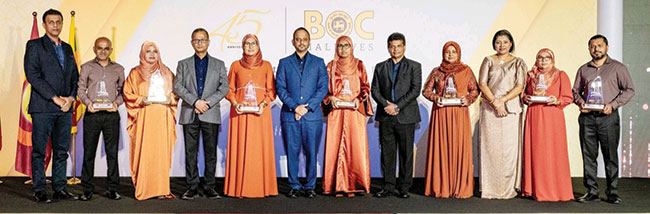
Established in 1981, BOC Maldives has grown steadily over the years, building a reputation as a trusted banking partner. BOC Maldives forms an important part of Bank of Ceylon’s international network, connecting the bank’s operations in London, Chennai, Seychelles, Malé and Hulhumalé. Within this network, BOC Maldives occupies a unique position due to its presence in a tourism-driven economy and its role in facilitating banking relationships associated with trade, investment, foreign currency transactions, and broader regional business activities.
Bank of Ceylon (BOC) Maldives recently celebrated its 45th anniversary, marking a significant milestone in the bank’s longstanding contribution to the Maldivian banking sector and its commitment to fostering economic growth and financial inclusion in the Maldives. A special customer felicitation ceremony was held to recognise long standing relationships with key customers and business partners with the participation of Bank of Ceylon’s Chairman Mr. Kavinda de Zoysa, General Manager/CEO Mr. Y.A. Jayathilaka, Acting Senior Deputy General Manager/Head of Global Markets Mr. G.A. Jayashantha, and Chief Manager of the Overseas Branches Division, Mr. Harischandra Hewage together with Country Manager Ms. Manjula Herath and the staff of BOC, Maldives.
The ceremony reflected the bank’s appreciation for the trust and confidence placed in BOC Maldives over the years and underscored the importance of maintaining strong and mutually beneficial partnerships. Addressing the gathering, senior representatives of the bank highlighted the institution’s journey over the past 45 years and emphasized the branch’s contribution towards strengthening economic ties between Sri Lanka and the Maldives. They also acknowledged the invaluable support extended by customers, stakeholders, regulatory authorities, and employees who have contributed to the branch’s success throughout the years.
One of the key highlights of the event was the announcement of the upcoming launch of Internet Banking services in the Maldives. This initiative represents another significant step in the bank’s digital transformation journey and its ongoing efforts to enhance customer convenience and accessibility. The branch has consistently embraced advancements in banking technology to improve customer service and operational efficiency. Notably, BOC was the first bank in the Maldives to introduce Automated Teller Machines (ATMs), demonstrating its pioneering approach to banking innovation within the country.
The anniversary also offered an opportunity to reflect on the legacy built by BOC Maldives since its establishment. Over the years, the bank has been associated with financing and supporting projects in government, infrastructure, tourism, resort development, construction, real estate, wholesale and retail trade, housing, fisheries, and aviation. Earlier milestones in the bank’s Maldivian operations have also recognized its role in supporting major national and sectoral projects, including airport-related development, government sector financing, and the Hulhumalé Reclamation Project Phase II.
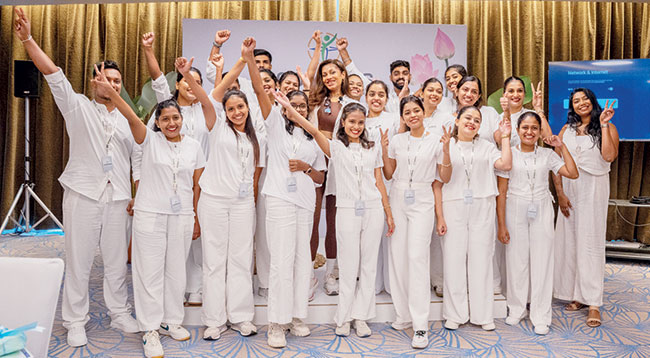
Blue Lanka Tours recently launched a mental health and wellness initiative aimed at promoting employee wellbeing and fostering a healthier workplace culture.
The programme, titled Compass, was held at the ITC Ratnadeepa in Colombo, bringing together employees for a series of sessions focused on mental health awareness, healthy living and personal development.
Addressing the event, Blue Lanka Tours Founder and Managing Director Dinesh N. Perera said the company’s responsibility extended beyond serving international visitors to ensuring the wellbeing of its employees.
“When we say we are a responsible company, it also means we are a responsible employer who recognises workplace pressures, personal responsibilities and the demands of modern life,” he said.
Wellness Facilitator and Mindset Coach Tanuja Perera Raymond conducted a session on building confidence, emotional balance and workplace performance through practical daily habits. Counselling Psychologist and Mind Leap Counselling Services Founder Dulari Ranasinghe discussed strategies for managing stress, overcoming emotional challenges and developing healthier personal relationships.
Fitness and Nutrition Coach Shane Ramenaden led the final session, highlighting the relationship between physical health and workplace productivity through posture improvement, mindful decompression, nutrition and healthy lifestyle practices.
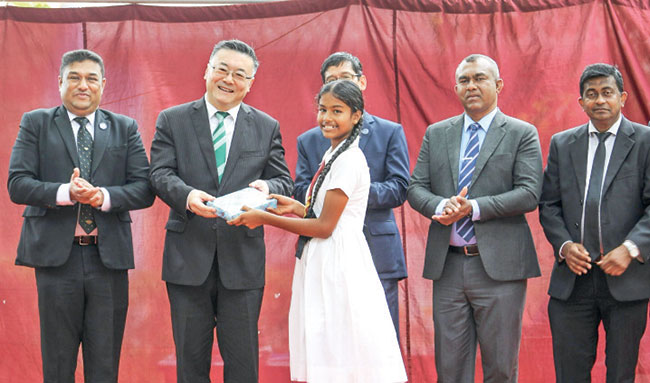
The Civil Aviation Authority of Sri Lanka (CAASL) conducted the Next Generation of Aviation Professionals (NGAP) Sri Lanka Programme at D.S. Senanayake Maha Vidyalaya, Kandalama, recently bringing together around 400 school students to promote awareness of aviation-related careers.
The programme, organised through the CAASL Civil Aviation Promotion Unit under the leadership of Director General of Civil Aviation and Chief Executive Officer Captain Daminda Rambukwella, aimed to inspire students to explore opportunities in the aviation sector.
ICAO Asia and Pacific Regional Director Tao Ma attended the event as chief guest, reaffirming the International Civil Aviation Organization’s support for initiatives that encourage youth participation in aviation and contribute to the sustainable growth of the global industry.
Students from D.S. Senanayake Maha Vidyalaya and several schools in the Galewela Education Zone participated in the programme, which featured interactive sessions, presentations by aviation professionals, and educational activities designed to enhance knowledge of the sector.
The programme commenced with a model aircraft flying display, which drew significant interest from students while demonstrating basic principles of flight and aircraft operations.
An aviation-themed art competition was also held, with ICAO officials and CAASL representatives reviewing student artwork and commending their creativity and enthusiasm.
Speaking at the event, Tao Ma praised Sri Lanka’s efforts to promote aviation awareness among youth, noting the importance of developing the next generation of aviation professionals.
Director General of Civil Aviation and Chief Executive Officer of the Civil Aviation Authority of Sri Lanka, Captain Daminda Rambukwella highlighted the role of the NGAP initiative in building a future-ready aviation workforce and encouraged students to consider careers in the expanding sector.
Can Lord’s memories inspire England to bring down mighty Australia?

Iran promotes message of continuity and revenge at Khamenei commemoration

The Colombo Plan celebrates its 75th Anniversary

Mbappe draws level with Messi as France beat Paraguay to set up Morocco tie

Ticket prices plunge for USA-Belgium World Cup last-16 match

Ounahi fires Morocco into World Cup quarterfinals with 3-0 win over Canada

‘Dates have the highest sugar content to fight Coronavirus’

Sunday Island 27 December – Headlines

#SundayIsland 17th December – Headlines

Sunday Island – 28th March

Sunday Island Headlines – 21 March

Sunday Island – 21st February – Headlines
-

 News6 days ago
LAWASIA warns against ad hoc initiative to increase judges’ retirement ages
-

 Features5 days ago
Climate action to bring South Asia together
-

 News5 days ago
Chamuditha to seek removal of injunction on Youtube programme
-

 News1 day ago
Freedom 250: US Embassy celebrates America’s 250th Independence Day through magic of American cinema
-

 News2 days ago
CIABOC to question Harak Kata on Rs. 200 mn bribery allegation
-
 News2 days ago
SLAF conducts successful rescue mission under UN command in Central African Republic
-
 Midweek Review4 days ago
H’tota port’s strategic status remains focal point of geopolitical scrutiny
-

 News5 days ago
CPRP alleges another death in custody, seeks protection for witness