
Latest News
Titanic tourist submersible goes missing with search under way


A massive search and rescue operation is under way in the mid Atlantic after a tourist submarine went missing during a dive to Titanic’s wreck on Sunday.
Contact with the small sub was lost about an hour and 45 minutes into its dive, the US Coast Guard said.
Tour firm OceanGate said all options were being explored to rescue the five people onboard. Tickets cost $250,000 (£195,000) for an eight-day trip including dives to the wreck at a depth of 3,800m (12,500ft).
Government agencies, the US and Canadian navies and commercial deep-sea firms are helping the rescue operation, officials said.
Titanic’s wreck lies some 435 miles (700km) south of St John’s, Newfoundland, though the rescue mission is being run from Boston, Massachusetts. The missing craft is believed to be OceanGate’s Titan submersible, a truck-sized sub that holds five people and usually dives with a four-day emergency supply of oxygen.
On Monday afternoon, Rear Adm John Mauger of the US Coast Guard told a news conference: “We anticipate there is somewhere between 70 and the full 96 hours available at this point.” He also said that two aircrafts, a submarine and sonar buoys were involved in the search for the vessel but noted the area in which the search is taking place was “remote”, making operations difficult. Rear Adm Mauger said the rescue teams were “taking this personally” and were doing everything they could to bring those on board “home safe”.
Hamish Harding, a 58 year old British billionaire businessman and explorer is among those on the missing submarine, his family said. On social media at the weekend, Harding said he was “proud to finally announce” that he would be aboard the mission to the wreck of the Titanic – but added that because of the “worst winter in Newfoundland in 40 years, this mission is likely to be the first and only manned mission to the Titanic in 2023”.
He later wrote: “A weather window has just opened up and we are going to attempt a dive tomorrow.”
OceanGate said its “entire focus was on the crew members in the submersible and their families”. “We are deeply thankful for the extensive assistance we have received from several government agencies and deep sea companies in our efforts to re-establish contact with the submersible,” it added.
The company bills the eight-day trip on its carbon-fibre submersible as a “chance to step outside of everyday life and discover something truly extraordinary”. According to its website, one expedition is ongoing and two more have been planned for June 2024.
The submersible usually carries a pilot, three paying guests, and what the company calls a “content expert”. The trip sets sail from St John’s in Newfoundland. Each full dive to the wreck, including the descent and ascent, reportedly takes around eight hours.
The OceanGate website lists three submersibles it owns, and only the Titan is capable of diving deep enough to reach the Titanic wreckage. The vessel weighs 23,000 lbs (10,432 kg) and, according to the website, can reach depths of up to 13,100 ft and has 96 hours of life support available for a crew of five.
A vessel called the Polar Prince, which is used to transport submersibles to the wreckage site, was involved in the expedition, its owner told the BBC.
(BBC)





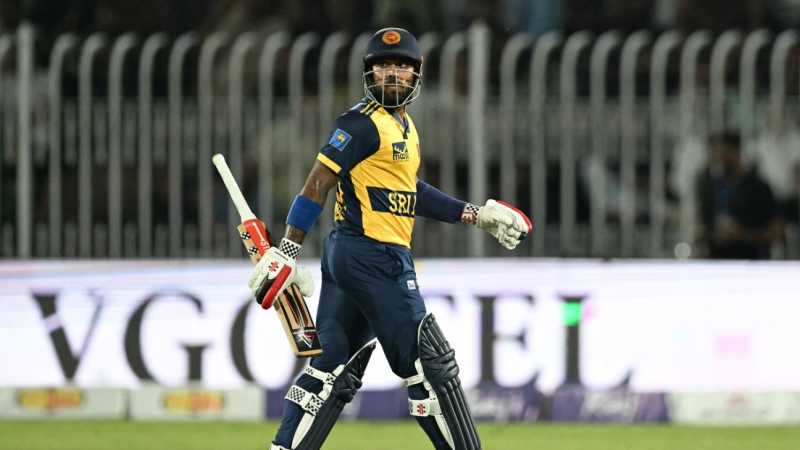
Even counting the win against Bangladesh at the Asian Games Sri Lanka have lost 12 T20Is to the two they have won since their win against Australia in the 2026 T20 World Cup. There have been significant personnel changes in that period. Captains have changed. There is a new head coach. Various batting orders have been trialled. But on Sunday’s evidence, they are deeply outmatched by even this Pakistan side, who themselves are hardly world-beaters at the moment, having not made the World Cup semi-finals this year.
With as highly-rated a coach in Gary Kirsten and a new captain in Kusal Mendis still searching desperately for a stronger combination, expect Sri Lanka to be in flux for this match as well. In game two, spinner Maheesh Theekshana was taken apart, while the seamers struggled to threaten Pakistan’s batters on a flat Rawalpindi deck. The decks don’t look like they are going to be any better for bowling. Sri Lanka’s attack will have to find new gears.
Pakistan are in the rare position of being utterly dominant in a white-ball series against an opponent who even in their previous low ebbs have challenged them. Having sewn up the trophy 2-0, Pakistan are in a position to rest key players. But it is so rare that their batters get to dine out across a whole series, management will be mighty tempted to keep this tuneful band together.
Even if Sri Lanka’s bowlers get through the Pakistan top order this time, the middle order could do with a decent workout.
So far in this series, Maaz Sadaqat has thumped 50 off 29 balls, and 96 off 51, showcasing not only power against spin, but touch against pace when the ball has demanded it. Sri Lanka are going seam-heavy in this series, but Sadaqat has found ways to take down even the little spin he has come up against, particularly in the second T20I. Sri Lanka are likely to switch up their attack a little for the last match, so he may have new problems to solve on Tuesday.
A long-term performer in Sri Lanka’s domestic cricket, Lahiru Udara has finally made a mark in white-ball internationals, hitting 91 off 55 balls in the first match of this series. A good bouncer from Salman Mirza prevented him from making a similar impact in the second match. But at age 32, Udara will know he doesn’t have many chances to convert an excellent domestic record into a long run in the national side. Anotherood score in match three will shore up his place.
Rawalpindi surfaces have tended to be batting friendly, and the track for the third T20I will likely have plenty of runs in it. The weather on Tuesday evening is expected to be fine, with temperatures in the low 20s celsius.
As legspinner Abrar Ahmed has had a couple of modest outings in this series, Pakistan may bring in left-arm wristspinner Sufyan Moqim, whose T20I stats so far in a 21-match career are encouraging.
Pakistan XI (probable): Sahibzada Farhan (capt), Fakhar Zaman, Maaz Sadaqat, Hasan Nawaz, Saim Ayub, Khawaja Nafay (wk), Shadab Khan, Mohammad Imran, Naseem Shah, Salman Mirza, Sufyan Moqim
Sri Lanka’s misfiring top order could do with a tweak or two, but there are not many spare batters on this tour. They could potentially bring back Kamil Mishara in place of an allrounder, however. With Maheesh Theekshana having been taken down on Sunday, Sri Lanka will also be tempted to try out legspinner V Viyaskanth. Dushmantha Chameera could also come back if he is fit.
Sri Lanka XI (probable): Lahiru Udara, Sineth Jayawardena, Kusal Mendis (capt, wk), Kamindu Mendis, Sahan Arachchige, Dasun Shanaka, Chamindu Wickramasinghe, Maheesh Theekshana/V Viyaskanth, Eshan Malinga, Dushmantha Chameera/Binura Fernando, Nuwan Thushara
Latest News
Heavy showers about (100-150) mm are likely at some places in the Central, Sabaragamuwa, Uva and Southern provinces

WEATHER FORECAST FOR 13 October 2026
Issued at 2.00 p.m. on 12 October 2026 by the Department of Meteorology
A low-pressure area may form over the southeastern Bay of Bengal by 13 October.
Under the influence of this system, an increase in rainfall is expected over the island and the deep and shallow sea areas around the island during the next few days from tomorrow (13).
The general public, as well as the naval and fishing communities, are requested to be attentive to the future forecasts and bulletins issued by the Department of Meteorology in this regard.
Heavy showers about (100-150) mm are likely at some places in the Central, Sabaragamuwa, Uva and Southern provinces.
Fairly heavy showers above 75 mm are likely at some places in the other areas of the island. Showers or thundershowers will occur in most parts of the island.
The general public is kindly requested to take adequate precautions to minimize damage caused by temporary localized strong winds and lightning during thundershowers.
Misty conditions can be expected at some places in the Sabaragamuwa, Central and Uva provinces during the early hours of the morning.

Maaz Sadaqat crashed 96 off 51,Sahibzada Farhan clobbered 73 off 44, and Pakistan scorched their way through the last 12 overs of their innings to mount a fearsome total of 215 for 3. Pakistan reaped 156 runs just in the last 12 overs of their innings, as a 73-run stand between Sadaqat and Farhan was followed by a manic 72-run partnership between Sadaqat and Hasan Nawaz.
Sri Lanka’s batting was woeful in response. They slumped to 64 for 5 by the 11th over, with none of their top seven managing to get to 30. They limped to 133 for 7, having had their hopes of leveling the series wrecked by quicks Mohammad Imran and Salman Mirza, who took five wickets between them.
Sadaqat propels Pakistan into the stratosphere
The openers had laid a decent platform with Pakistan having got to 55 for 1 by the end of the seventh over. But it was Sadaqat who injected the energy that truly set Pakistan on course to their mammoth total. Having gone at less than a run a ball in his first eight balls, Sadaqat unleashed a spectacular lofted square drive off Eshan Malinga to collect his first six, before pumping the same bowler down the ground later in the 10th over.
Sadaqat would go on to clobber six further sixes and five further fours. The big hits tended to come down the ground, while his fours were more square of the wicket. Of the 125 runs Pakistan plundered in the second half of their innings, 79 off 40 came from Sadaqat, who pummeled both pace and spin with equal relish. Off the sixteenth over, bowled by Maheesh Theekshana, Sadaqat thumped three sixes in the arc between long on and midwicket.
Sadaqat, whose previous top score in three T20Is had been 50, could have gone to triple figures off the last ball of the innings, but holed out to deep cover instead, unable to quite find the power to lift a Malinga slower ball over the ropes. He had utterly dominated the middle and late overs, however.
Farhan sets the tone
On another flat Rawalpindi deck, Farhan made the first big charge, although he waited until spin came on to really get into high gear. Theekshana was one of his main victims as well. Farhan’s first six came from a slog sweep off Theekshana in the seventh over, before he launched the same bowler over wide long on and cow corner off successive balls in the ninth over. Getting to his 12th T20I fifty off the 31st ball he faced, Farhan began to aim big blows off the seamers as well. He was caught at deep third off the bowling of Dasun Shanaka, in the 15th over.
Sri Lanka stumble in the powerplay
An excellent Salman Mirza bouncer took the glove of Lahiru Udara in the first over, ending the innings of one of Sri Lanka’s few form batters for a mere five runs. And although Sineth Jayawardena – playing his first international in a full-strength Sri Lanka side – hit three consecutive boundaries in the third over, Sri Lanka were unable to build up any momentum in the powerplay. By the end of the sixth over, they had laboured to 35 for 2.
Imran’s spell lights up the middle overs
A full house in Rawalpindi was treated to some excellent fast bowling by Imran, who finished with the game’s best figures of 3 for 11 from his four overs. Having got Jayawardena to top-edge a desperate pull shot at the end of his second over, Imran had Kusal Mendis caught behind off a slower delivery, before two balls later (a wide in between), he took Sahan Arachchige’s edge with a quick delivery angled across the left-hander. Wicketkeeper Khawaja Nafay made two diving grabs to convert these chances in the eighth over.
All through his unbroken spell, Sri Lanka’s batter struggled to so much as hit Imran off the square, despite the good batting conditions on offer. Imran mixed up his pace, frequently going to slower balls, but his line and length control were also excellent through the spell. When he finished his unbroken spell at the end of the 10th over, Sri Lanka’s required rate had climbed past 15.
Chamindu Wickramasinghe and Theekshana struck some late boundaries, but by the time they came to the crease, Sri Lanka did not have a realistic shot at levelling this series. They lost by 82 runs in the end.
Scores:
Pakistan 215 for 3 in 20 overs (Sahibzada Farhan 73, Fakhar Zaman 22, Maaz Sadaqat 96, Hasan Nawaz 19*; Maheesh Theekshana 1-55, Eshan Malinga 1-41,Dasun Shanaka 1-30) beat Sri Lanka 133 for 7 (Sineth Jayawardena 22, Kamnbdu Mendis 23, Chamindu Wickremasinghe 29, Maheesh Theekshana 32*; Salman Mirza 2=28, Mohammad Imran 3-11, Saim Ayub 1-19, Shadab Khan 1-19) by 82 runs
[Cricinfo]

Deflated Sri Lanka look to prevent whitewash against dominant Pakistan

Heavy showers (100-150) mm likely at some places in the Western, Sabaragamuwa, Central, Uva and Southern provinces showerss above 75 mm are likely in the other areas of the island.

Presidential pardons: Govt. studying Justice Thurairaja’s recommendations – Minister

Mahinda and Shiranthi hospitalised

Monks must be allowed to wear robes when produced in court: Mahanayake Theras

Jt. Opp. seeks presidential pardon for Ven. Gnanasara

‘Dates have the highest sugar content to fight Coronavirus’

Sunday Island 27 December – Headlines

#SundayIsland 17th December – Headlines

Sunday Island – 28th March

Sunday Island Headlines – 21 March

Sunday Island – 21st February – Headlines
-

 Features5 days ago
The Sri Lankan who made Scottish history
-

 Sports5 days ago
Nissanka absence opens door for Sri Lanka’s young guns
-

 News6 days ago
Gnansara Thera to be assigned to prison printing section: Officials
-

 News4 days ago
NDB fraud Rs 60mn more than reported
-

 News4 days ago
Removing monk’s robes matter for Sangha to decide: Mahanayake Theras
-

 Features5 days ago
Future of Sri Lanka’s state university system: Should it be shut down and reopened?
-

 News6 days ago
OIC of FCID summoned before Maligakanda Magistrate
-

 News5 days ago
Shiranthi R remanded until 13 Oct.