
News
Three out of every four young Indians choose video dating to find love


BY S VENKAT NARAYAN,
Our Special Correspondent
NEW DELHI, October 1:More and more young Indians, even in small towns, are relying on dating apps to find love and companionship. They are choosing video calls over in-person dating to know each other. The surge in usage is especially strong outside metro cities, which now account for 70% of users of the dating apps such as Tinder, Bumble and TrulyMadly, company executives said.Cities such as Ahmedabad, Surat, Lucknow, Jaipur, Chandigarh and Patna are seeing a significant surge in usage, catching up with the country’s major cities.
With virtual dates becoming a norm, a substantial number of women are now becoming more vocal on dating platforms.Nearly 72% of users believe finding love online without meeting them in person is possible, the executives at dating apps said.
“The distinction between our online and offline world is blurring. As a result, the time spent online is on the rise,” said Shalini Singh, founder of Andwemet, a dating service for 25-plus single Indians that has seen its user-base triple annually in the past two years.
Singh said there is more trust in online platforms in the post-pandemic era, and people are willing to pay for the convenience of online dating.Usage in these cities has also been boosted with many moving to their hometowns from metros after the pandemic, she said. Dating apps are attracting affluent users even in small-town India.
According to Tinder’s Year in Swipe 2021, video dates have become a first-date staple for singletons, with mentions of ‘video call’ in Tinder bios growing by 52% globally.
Many Indians took to video dating on Tinder, where Hyderabad reigned supreme as the chattiest city, followed closely by Chennai and Bengaluru. Yet, young adults were also looking to make a connection with new people close to them for real-life hangouts with ‘nearby’ and ‘close by’, both increasing by 20% in Tinder bios globally, showing that real-world dating isn’t going out of fashion anytime soon.
“As we shift back to IRL (in real life) dating in 2022, the trends of last year are guiding the way India’s young adults navigate the world of dating, friends, connections and relationships,” said Papri Dev, senior director, APAC communications lead, Tinder Inc.
Snehil Khanor, co-founder and chief executive officer of TrulyMadly, said that most first dates are still on video, and if things work out, users plan an offline date.Sybil Shiddel, country manager for Gleeden, a platform designed for extramarital relationships, said during the pandemic, a large part of its user base found virtual exchanges satisfying.
“They were happy with having found companionship and that their online exchanges allowed them to unwind, laugh, flirt and sext without putting them at risk. Time spent on the app has tripled,” Shiddel said.
“In 2022, when the ghost of the pandemic is no longer lingering above our heads with the same strength as previous years, Indian users still spend an average of 3.5 hours chatting,” Shiddel said. Before March 2020, most Gleeden users came from Delhi, Bengaluru, Kolkata, Mumbai, Ahmedabad and Chennai.
During 2020, 2021 and the first part of 2022, the maximum traction was seen from Gurugram (currently the platform’s No. 5 city), Chandigarh, Kochi, Jaipur, Lucknow, Noida, Nagpur, Indore, Navi Mumbai, Burdwan, Howrah and Thane.
Agreeing that video calls are now a part of the screening process before an in-person date, Able Joseph, founder and CEO of dating app Aisle, said casual hook-ups may be on a slow decline. “Loneliness—coupled with a few years of uncertainty—has led to a certain sense of collective fatigue that’s developed in the Indian dating landscape. Singles are found moving away from the endless loop of swiping across dating platforms and are now looking for more substance in a relationship,” Joseph added.
Since the majority of the new users are signing up from smaller towns and cities, with limited matches in their location, they are looking online for suitable partners across the country, said Ravi Mittal, founder and CEO of dating service QuackQuack, which has seen an 11% jump in female users.Samarpita Samaddar, India communications director at Bumble, said the pandemic has made “more than half of us (62%)” realize that it’s okay to be alone for a while.
“People are consciously deciding to be single, with the majority of single people (54%) being more mindful and intentional in how and when they date,” she said.
A nationwide survey conducted in 2021 showed that after the second covid wave in India, emotional connection (60%) and kindness (55%) top the charts as being the most important to single Indians in dating, Samaddar said.
“Social good in terms of volunteering, donating to social causes (48%) especially rank high in preferences for millennials in India,” she added.

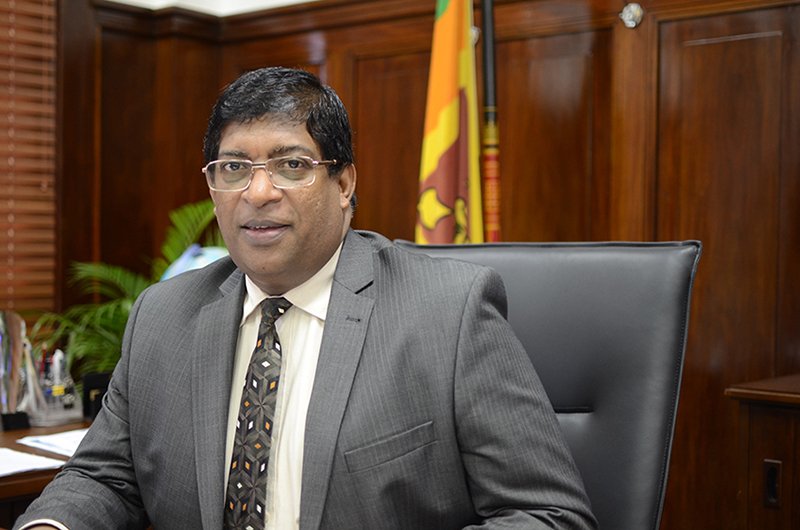
Opposition MP Ravi Karunanayake on Wednesday called for an urgent government statement to Parliament on the integrity and usability of Sri Lanka’s Gross Official Reserves (GOR), raising concerns over foreign exchange leakages and regulatory consistency under the Foreign Exchange Act No. 12 of 2017.
Raising the issue under Standing Order 27 (i), Karunanayake urged the Government to provide a comprehensive disclosure on the composition, encumbrances and deployability of the country’s reserves, as well as on the Central Bank’s oversight of foreign currency transactions.
“Reserve credibility depends not merely on headline numbers, but on transparency, enforceability and consistency in regulation,” the MP told the House.
He sought clarification on the latest reported GOR figure and the net usable reserves after excluding encumbered assets, swaps and pledged balances. He also requested details of annual revenue earned on reserves from 2023 to 2025.
Following are the questions raised by MP Karunanayake:
1. What is the latest reported GOR figure, and what is the net usable reserve after excluding encumbered assets, swaps, and pledged balances? What is the revenue earned on are GOR 23-25 per year?
2. Provide a separate and detailed breakdown of GOR, including: (a) Monetary gold (quantity and valuation basis) is it real gold or gold paper? (b) Foreign currency assets by major currency and instrument; (c) SDR holdings; (d) IMF reserve position; (e) Foreign currency swaps, specifying counterparty type, principal amount, tenure, maturity profile, and all-in cost; (f) Domestic swaps, specifying amount, tenure, rollover terms, collateralisation, and effective cost.
3. Of the total reserves reported, how much is encumbered, swap-backed, or otherwise not immediately deployable for debt servicing or currency stabilisation?
4. What SLR spread, fee, or margin does the Central bank apply when buying or selling USD to the Government for reserve accumulation and external debt servicing and what total profit or gain has the C.bank realised from such transactions during the past three financial years? Advice per year.
5. Is the Central Bank subject to continuous and statutory audit by the Auditor General? If so, will the Government table the most recent audit report, specifying audit scope, sample size, reserve confirmations, swap verification and gold custody validation?
6. What triggered the recent circular warning domestic institutions on foreign currency transactions?
7. Has the C.bank quantified foreign exchange and tax revenue losses resulting from Sri Lanka-based businesses routing credit card and commercial payments through overseas payment gateways?
8. If domestic entities are regulated strictly, why has a binding circular not been issued against noncompliant business entities using foreign payment gateway arrangements that divert foreign exchange outside Sri Lanka’s regulated banking system?
The government asked for two weeks’ time to respond to the queries.
by Saman Indrajith
News
Sajith exposes highly questionable coal imports from South Africa in 25 vessels; calls for independent probe
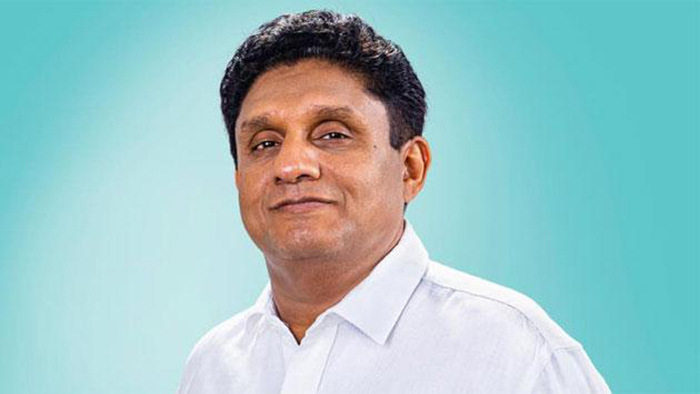
Opposition Leader Sajith Premadasa yesterday alleged in Parliament that eight recently imported coal shipments were substandard and called for an independent probe into the matter.Speaking in the House, Premadasa said Sri Lanka typically requires 36–38 coal shipments annually. While 11 Russian shipments received so far had raised no concerns, he claimed that 25 vessels ordered from South Africa under a new tender were facing quality issues.
He cited combustion reports from the Norochcholai Coal Power Plant showing that the eight shipments already received under the new tender failed to generate the expected 300 megawatts per unit. According to the MP, the outputs were: 285 MW, 290 MW, 260 MW, 295 MW, 285 MW, 270 MW, 275 MW, and 255 MW.
“These are scientific data generated automatically through boiler combustion reports that cannot be altered,” Premadasa said, asserting that the figures indicate the coal supplied was below required standards.
He warned that low-quality coal could increase fuel consumption, raise operational costs, and damage equipment. Any shortfall in power generation, he said, would necessitate additional coal imports or greater reliance on diesel power, ultimately driving up electricity tariffs for consumers.
“The loss will have to be borne by the electricity consumer,” Premadasa said, urging the government to clarify whether the shipments met required specifications.
He also criticized delays and changes in tender requirements, alleging that supplier eligibility criteria had been relaxed to allow non-standard providers.
by Saman Indrajith
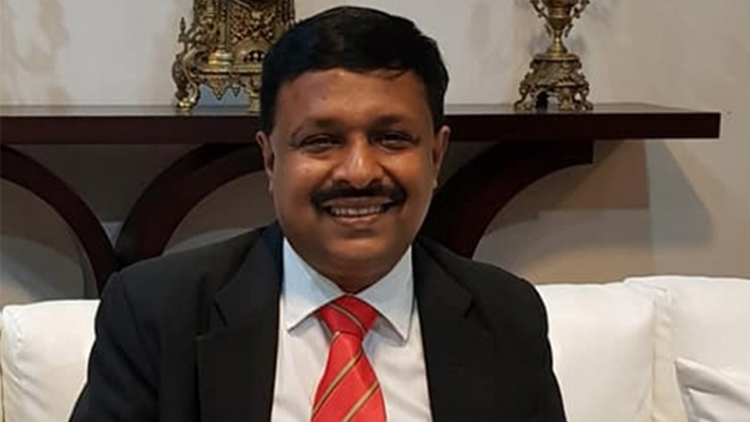
Former Mass Media Ministry Secretary and former Telecommunications Regulatory Commission of Sri Lanka (TRCSL) Chairman Anusha Palpita was yesterday released on bail by the Colombo Chief Magistrate’s Court.Colombo Chief Magistrate Asanga S. Bodaragama granted bail after considering submissions made by officials of the Bribery Commission and counsel for the defence.
The Magistrate ordered the suspect’s release on two personal surety bonds of Rs. 5 million each and imposed a foreign travel ban.
When the case was taken up, Bribery Commission officials informed court that a report had been called regarding alleged investments made by the suspect in the stock market. They sought a further date to present facts pertaining to those reports.
Appearing for the suspect, Attorney-at-Law Kanchana Ratwatte submitted that his client had been in remand custody for nearly a month and was prepared to extend full cooperation to investigators. He moved for bail on that basis.
After hearing both sides, the Magistrate observed that no reasonable grounds had been placed before court to further remand the suspect and ordered his release on bail. The case was fixed for 29 May.
Palpita was arrested on 23 January in connection with an investigation initiated by the Bribery Commission over the alleged failure to disclose the source of assets amounting to Rs. 46 million.
The Commission stated that he had arrived at its office on the day of his arrest to give a statement and was taken into custody thereafter.
He was arrested on allegations of amassing assets and property disproportionate to his declared income during a specified period, following a probe into wealth allegedly accumulated beyond his lawful earnings.

How photography helped the British empire classify India

Atmospheric conditions are favorable for thundershowers over most parts of the island

Trump brings in new 10% tariff as Supreme Court rejects his global import taxes

Ravi demands full disclosure on Lanka’s usable reserves, flags forex leakages

Sajith exposes highly questionable coal imports from South Africa in 25 vessels; calls for independent probe

Ex-TRCSL Chairman Palpita enlarged on bail

‘Dates have the highest sugar content to fight Coronavirus’

Sunday Island 27 December – Headlines

#SundayIsland 17th December – Headlines

Sunday Island – 28th March

Sunday Island Headlines – 21 March

Sunday Island – 21st February – Headlines
-
 Life style6 days ago
Marriot new GM Suranga
-

 Business5 days ago
Ministry of Brands to launch Sri Lanka’s first off-price retail destination
-

 Features6 days ago
Monks’ march, in America and Sri Lanka
-

 Features6 days ago
The Rise of Takaichi
-

 Features6 days ago
Wetlands of Sri Lanka:
-

 News6 days ago
Thailand to recruit 10,000 Lankans under new labour pact
-

 News6 days ago
Massive Sangha confab to address alleged injustices against monks
-
 Sports2 days ago
Old and new at the SSC, just like Pakistan