
Sports
Thomians take command as Akash, Nathan rattle Isipatana


by Reemus Fernando
Pacemen Akash Fernando and Nathan Caldera continued their terrific form to rattle Isipatana for 31 runs as S. Thomas’ took command in the Under 19 traditional cricket encounter which commenced at Mount Lavinia on Tuesday.
After dismissing Isipatana with in 21 overs, the home team posted 201 for four wickets at stumps as Romesh Mendis led from the front with a half century. Senesh Hettiarachchi with an unbeaten half century and Mahith Perera with 30 not out were looking to extend the lead at stumps.
It was the second consecutive time that Akash had spearheaded a devastating bowling attack to rattle heir opposition for a low score.
Earlier this month, Akash bagged 12 wickets to lead Thomians to a massive win over Dharmapala. Dharmapala were dismissed for 29 and 27 runs respectively in the two innings. The Thomians needed just two sessions of play in the rain hampered match to seal the victory.
Yesterday Akash took five wickets for just eight runs to lead the bowling attack.
Meanwhile, in another traditional encounter Lumbini and Gurukula settled for a draw at BRC Ground.
A five-wicket haul by Thathsara Eshan and unbeaten half centuries by Mohamed Murshad and Janith Mihiranga for Gurukula were the highlights.
Scores:
Isipatana
31 all out in 20.3 overs (Akash Fernando 5/08, Nathan Caldera 4/11, Kavindu Dias 1/07)
S. Thomas’
201 for 4 in 39.3 overs (Romesh Mendis 70, Senadhi Bulankulame 29, Senesh Hettiarachchi 51n.o., Mahith Perera 30n,o,)
Lumbini and Gurukula settle for draw at BRC
Scores:
Gurukula
167 all out in 64.4 overs (Poorna Kalhara 42, Wageesha Amantha 32, Denura Demansith 25; Sahan Kaushalya 3/13, Yasiru Yugath 3/48) and 205 for 7 in 87.4 overs (Janith Shehan 25, Mohamed Murshad 50n.o., Janith Mihiranga 51n.o.; Yasiru Yugath 3/39)
Lumbini
176 all out in 52.1 overs (Malith Bimsara 66, Nabeel Rajudeen 46, Dushan Imasha 31; Thathsara Eshan 5/43, Janith Shehan 2/49)










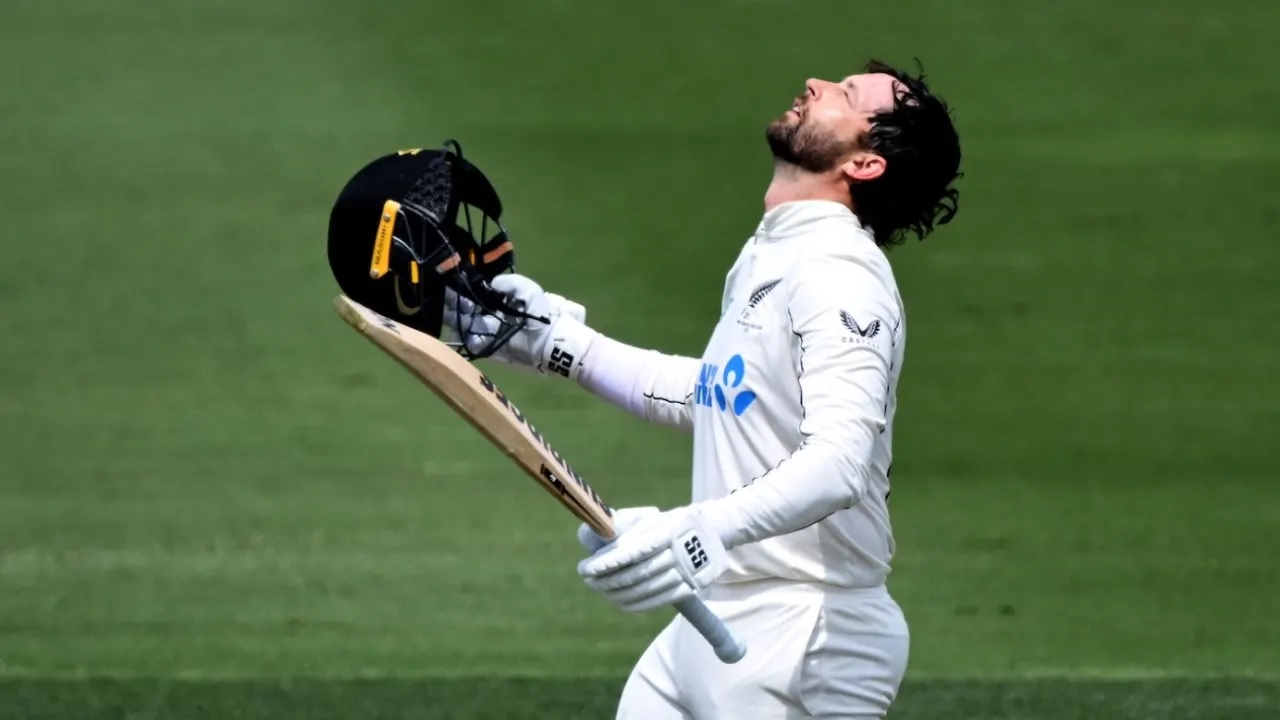
The Bay of Plenty lived up to its name but only for New Zealand. Devon Conway and Tom Latham harvested a century each and by that time they were having so much fun they would barely let anybody else play.
West Indies could argue that was a bit rude. They were in Mount Maunganui looking for rich bounty as well. A first Test win on these shores for 30 years, which if secured would hand them a share of this series’ spoils. All of that cast them in the role of a protagonist at the start of the day. But as time wore on and records – both trivial and tumultuous – came to pass, Roston Chase and his men faded into the background.
Each of the five previous Test matches at this ground have yielded a wicket in its first session. This one didn’t. Kane Williamson, so used to an early start at the office, had to wait the longest he ever has to clock in. So restless had he grown that at the start of the final session, he was seen wearing all his gear barring the helmet practicing a rapid-fire series of leaves and blocks. There will be reels. Split-screens with Latham and Conway facing real cricket balls out in the middle and this guy just pretending to do so with a caption of who did it better. The answer is actually Terry Jarvis and Glenn Turner.
Latham had a big part in the history he helped make. Over 25 home Tests, dating all the way back to March 2012, New Zealand have only ever chosen to bowl after winning the toss. Here, he had a hunch about putting runs on the board. Outside of that one bold move, everything else he did was basic. Playing close to the body. Knowing exactly where his off stump was. Frustrating the bowlers to target his pads. Manufacturing easy put-aways. Latham’s 15th Test century – where he went past 6000 runs as an opener – was proof that fairy tales aren’t the only things that can come to life. Textbooks do too. It took all the way to 6.30pm for Latham to fall on 137. Test cricket was so close to having a fifth opening pair lasting the entire first day.
Conway played himself into form. Twenty-six of his last 39 innings were cut short at or below the 30-run mark, which isn’t ideal considering his role at the top of the order is to set the whole team up. Given he was walking out onto a pitch with an unusual amount of grass – 13mm, normally it’s around 7-10mm – there was cause for concern. He put them all to bed, weathering an initial period where West Indies were willing to give up only 11 runs in eight overs. He instigated the first period of New Zealand dominance, the six overs to morning drinks where they scored a-run-a-ball. He went on to bat for longer than he has ever done since his double-century on debut at Lord’s four years ago.
The only way any of this could have been worse for West Indies was if they had brought it all on themselves, and only the finest line separated that from what actually happened. Because they got what they wanted at the toss. First use of a surface that looked like it had been left in the care of a kindergartener with a green crayon. The bowlers, though, didn’t make the best use of it.
Their third seamer Anderson Phillip, started with a spell of 3-0-25-0, and as hard as he tried to improve – creating a rare wicket-taking opportunity when Latham nicked one behind to the keeper on 104 and was dropped – he still went to stumps with 14-2-71-0. It was symptomatic of a bowling attack that still produced jaffas – and might feel aggrieved none of them yielded any joy – but didn’t have it in them to back it up; to hit the good length spot consistently, test the batter’s discipline and search for vulnerability.
Indeed, at the start of the second session, New Zealand had a harder time not scoring boundaries, five of them coming their way in the space of 12 balls. A small spell of rain offered West Indies the chance to regroup and they appeared willing to take it, Jayden Seales adopting the method of local hero Neil Wagner and going short for a concerted period of time. Conway wore one on the left hand, needed medical attention, and at the start of the 52nd over, he was overheard on the stump mic asking the umpire about the time for tea. He was in need of reprieve. Seconds later, Chase lobbed up a long hop that he pulled away for four. West Indies kept undoing their own good work. Often immediately.
This was no batting paradise. Nor was it ever a fast bowler’s dream. Spinners took two-thirds of the wickets in the mostrecent first class game in Mount Maunganui. It is with that in mind that New Zealand brought Ajaz Patel into the XI and backed themselves to put up a big total.
Conway has led them there – batting through cramp, batting one-handed and eventually hitting that rarefied place where he was just batting on instinct, reacting perfectly even to things like extra and low bounce – but things could have been so different if West Indies had shown a little more discipline. Now their batters have to pick up the slack.
Brief scores: [Day 1 stumps]
New Zealand 334 for 1 in 90 overs (Tom Latham 137, Devon Conway, 178*; Kemar Roach 1-63) vs West Indies
[Cricinfo]

Australia have not yet officially retained the Ashes, but it already seems a matter of “when” not “if” after England’s challenge wilted in the heat on day two in Adelaide. Ben Stokes battled defiantly, facing 151 balls and batting for more than four hours for his unbeaten 45, but the captain found few allies on the burning deck as England were left staring at a hefty first-innings deficit amid ever-diminishing hopes of keeping the series alive until Christmas.
Stokes had asked for his players to ‘show a bit of dog’ in their bid to make an improbable comeback from 2-0 down, but England were all too easily brought to heel by an Australia side with more than enough pedigree, despite the absence of Steven Smith and Josh Hazlewood. Pat Cummins and Nathan Lyon both made an immediate impact on their return to the XI – Cummins taking 3 for 54 in his first competitive outing since July’s tour of the Caribbean – as England were rounded up without much fuss on what looked like the perfect day for batting.
Their one minor victory came in keeping Mitchell Starc wicketless for the first time in the series; though, as he had started off proceedings by thumping a flurry of fours to bring up his second half-century in as many games, with Australia merrily adding 45 runs to their overnight 326 for 8, that could only be claimed as a partial success.
There was more Snicko aggro, too, with both sides making their frustrations with the technology clear. England were aggrieved at Chris Gaffaney, the third umpire, giving Jamie Smith out caught behind off Cummins on the evidence from Real-Time Snickometer, following the controversy around Alex Carey’s non-dismissal on day one. Smith had survived moments before in bizarre circumstances, with Gaffaney determining the ball had come off his helmet, despite TV pictures suggesting contact with the glove, as Australia argued (although whether the ball had carried to Usman Khawaja at slip or not was a different matter).
Joe Root was also reprieved, with Gaffaney unconvinced that an inside edge on to pad had reached Carey’s gloves on the full. None of which detracted from the fact that England had seemingly torpedoed their own hopes once again with another flaccid batting display as temperatures approached 40C in Adelaide.
A sloppy start with the ball, which led to a heated exchange between Stokes and Joffra Archer even as the latter was on his way to securing a first Test five-for since 2019, was compounded by England losing their top three in the space of 15 balls before lunch. Root was then dismissed for the 12th time in Tests by Cummins – nobody has had more success against England’s key batter – and the innings fell away after a 56-run stand for the fifth wicket between Stokes and Harry Brook.
Archer did manage to stick around alongside Stokes to the close, putting on the second-longest partnership of the innings, though Australia’s lead was still above 150 and England faced the prospect of batting last on a surface that’s expected to break up in the heat.
The suspicion at the end of day one was that Australia had left plenty of runs on the table, despite Carey’s maiden Ashes hundred taking them beyond 300. England needed to make good on the promise of runs, that anticipation only sharpened by Starc striking five boundaries in 12 balls as Australia’s tail wagged to good effect. Archer was leaky but removed both Starc and Lyon on the way to a third five-wicket haul against Australia.
England’s openers made a solid enough start, though Ben Duckett rode his luck early on. Already Australia were showing a greater propensity to bowl with the discipline required on a baking morning, and Cummins made the breakthrough with a fine delivery that straightened and bounced to graze the shoulder of Zak Crawley’s bat through to Carey.
Much had been said about Lyon’s absence in Brisbane after he had only bowled two overs in the victory at Perth. He came into this game one wicket behind Glenn McGrath’s tally of 563 for Australia, having sat there since July when he was also omitted for the Jamaica Test against West Indies. But within the space of six balls, he had drawn level with and then overtaken McGrath to go second on the all-time list for Australia.
Ollie Pope’s dismal record against Australia only got worse as he chipped tamely to midwicket, before Duckett was removed by a jaffa that pitched on middle and turned past a defensive prod to hit the top of off.
At 42 for 3, England were already feeling the glare of the southern sun. Australia thought they had got Root early, too, when reviewing for a caught-behind of Scott Boland. But although replays confirmed he had edged the ball through to Carey via his pads, Gaffaney concluded that the ball had bounced on its way into the gloves.
Root did not last long after lunch, however, as Cummins lured him into poking at one defensively in the channel. Brook was more measured, after his “shocking” dismissals in the first two Tests, but showed flashes of aggression – skipping down to lamp Boland all the way for six over cover, and thrashing Starc to deep backward point to bring up the fifty stand with Stokes.
He survived being given out caught behind off Lyon on 44, technology this time backing up his belief that he hadn’t hit the ball – but only added one to his score before being dislodged by Cameron Green’s second legitimate delivery, another pearler that reversed just enough to catch the outside edge.
Stokes had buckled down at the other end, facing 35 balls before scoring his first boundary and adding only two more in an innings of monk-like self-abnegation that at least saw England fight to the close. He scowled furiously from beneath his helmet peak when Smith was told to go, despite more uncertainty surrounding the synching of Real-Time Snickometer, his mood only darkening as Boland removed Will Jacks and Brydon Carse in quick succession. Stokes has produced his fair share of miracles in an England shirt; it may need another to keep this Ashes campaign alive.
Brief scores:
England 213 for 8 in 68 overs (Ben Stokes 45*, Harry Brook 45, Jofra Archer 30*; Pat Cummins 3-54, Scott Boland 2-31, Nathan Lyon 2-51) trail Australia 371 in 91.2 overs (Usman Khawaja 82, Alex Carey 106, Mitchell Starc 54; Jofra Archer 5-53, Brydon Carse 2-89, Will Jacks 2-105 ) by 158 runs
[Cricinfo]

The winner of the FIFA World Cup 2026 will receive a record jackpot of $50m, football’s global governing body says.
That figure is up from $42m in 2022 and $38m in 2018. But it is still less than half of what was on offer at the much less hyped FIFA Club World Cup earlier this year.
FIFA said the total prize fund for next year’s World Cup – to be staged in the United States, Canada and Mexico – is $655m, a 50 percent increase on the previous edition in Qatar.
By comparison, the FIFA Club World Cup, which was controversially expanded from seven teams to 32 and shoehorned into the football calendar, had a total prize fund of $1bn. The prize for the winning team was worth up to $125m for a tournament that faced fierce resistance from players and leagues and drew sparse crowds for some matches.
The Club World Cup, also staged in the US, was won by Chelsea.
FIFA has a different distribution model for the two tournaments. The disparity in prize money reflects factors such as clubs overseeing much higher costs through wages than national teams.
Beyond the prize money, further funds are put towards the development of football globally.
FIFA President Gianni Infantino said the World Cup would be “groundbreaking in terms of its financial contribution to the global football community”.
FIFA approved the prize money for every stage of the World Cup at a meeting of its council in Doha.
The runner-up will receive $33m with $29m and $27m going to the third- and fourth-placed teams, respectively. The lowest prize money will be $9m and all 48 participating nations will get $1.5m to cover what FIFA described as “preparation costs”.
FIFA said, in all, $727m would be distributed to the football federations participating.
It is not known how each nation will distribute the money, but at the last World Cup, French sports daily L’Equipe reported France’s players were in line for a bonus of $586,000 by their federation if they won the trophy. France was ultimately beaten by Argentina in the final.
[Aljazeera]

Flood warning issued to the Mahaweli River Basin

200 km of the 340 km of damaged electric fences in the Polonnaruwa Wildlife Zone Reactivated

Zelensky appeals to EU leaders facing crunch decision on Russia’s frozen cash

Australian PM announces crackdown on hate speech after Bondi shooting

Conway 178* and Latham 137 grind West Indies to dust in Mount Maunganui

Australia have the urn in their sights as England self-destruct again

‘Dates have the highest sugar content to fight Coronavirus’

Sunday Island 27 December – Headlines

#SundayIsland 17th December – Headlines

Sunday Island – 28th March

Sunday Island Headlines – 21 March

Sunday Island – 21st February – Headlines
-

 Features5 days ago
Why Sri Lanka Still Has No Doppler Radar – and Who Should Be Held Accountable
-

 Features7 days ago
Ditwah: A Country Tested, A People United
-

 News18 hours ago
Pakistan hands over 200 tonnes of humanitarian aid to Lanka
-

 News7 days ago
Rs 1. 3 bn yahapalana building deal under investigation
-

 News18 hours ago
Pope fires broadside: ‘The Holy See won’t be a silent bystander to the grave disparities, injustices, and fundamental human rights violations’
-

 Midweek Review2 days ago
How massive Akuregoda defence complex was built with proceeds from sale of Galle Face land to Shangri-La
-

 Business7 days ago
Fluctuating fortunes for bourse in the wake of selling pressure
-

 Opinion7 days ago
Comfort for some, death for others: The reality of climate change