
Opinion
This Pretentious Plenitude

(loketa parakase, gedarata maragate )
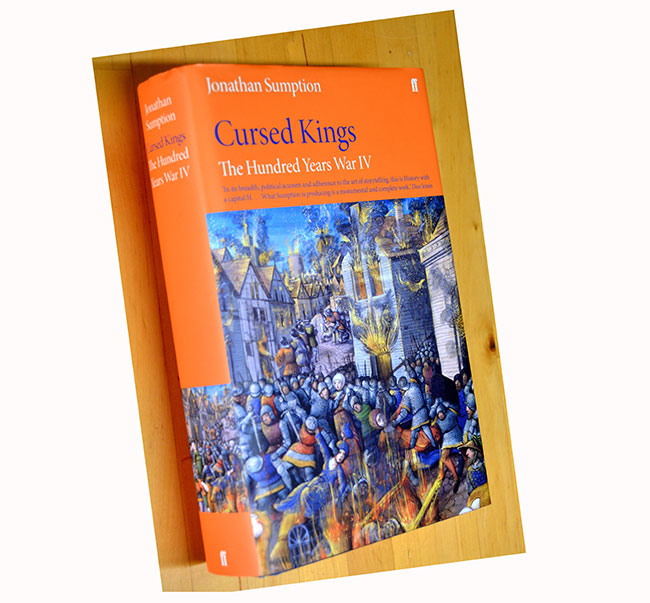
“On 3 June, 1400, the Byzantine Emperor Manuel II Paleologus entered Paris. By the showy standards of contemporary state visits, Manuel cut a sory figure. Accompanied by fewer than sixty of his own attendants, speaking nothing but Greek, mounted on a borrowed white charger and dependent for his travelling expenses on his hosts, he had come to beg for money and troops in the hope of preserving his shrunken domains from the Ottoman Turks.”
– Cursed Kings, The Hundred Years War IV, 2015)
By Usvatte-aratchi
A few days ago, I went to Panadura to see my brother, 95 years old. We parked the car to go to the Arpico Supercentre at the southwestern corner of Galle Road and Nirmala Mawatha. From the park, I did not go into the store; I sat in the car. There were about 20 cars parked and people went into the store and drove away after making their purchases. There were more women shoppers than men. The women were distinctly well-clothed and appeared well-fed. They all wore slacks or skirts and upper garments, all in good taste with no garish hues. None wore a sari. All men wore slacks and shirts and none a kapati suit or sarong. All the cars glistened in the morning sun; none had scratches or worse damage. One car had a number plate BK; all the others had number plates with three letters. There was plenitude; where is the austerity the country is published to undergo? Or is austerity the burden borne by only one category of citizens? A few days later, as I entered through the gates to a hospital compound, I noticed that the man who issued tokens from a little cubicle in the heat and humidity wore a necktie. Public servants assembled before ministers invariably wearing a suit. The rooms are airconditioned to accommodate them. Doesn’t it make more sense to wear simple shirts in rooms cooled to a higher temperature to save fuel? Why this pretence of plenitude in this land of austerity? It is so poor that it bears the odium of having defaulted on its sovereign debt.
What are the rules of etiquette that require us to wear evening dress, no matter who the dignitary that one has to meet? Well, of course, anyone is entitled to wear funny clothes, even silken wigs in this high temperature and high humidity in torrid tropical weather. But in this impoverished hungry land, where children who attend school faint from starvation? There are reports of stunted and underweight children. I expect to read infant and maternal mortality rates for 2021, 2022 and 2023 higher than the excellent levels that our health services had ensured for us. The age cohorts born in 2020-2024 will bear the scars of this scourge throughout their lives.
Sometime in the mid-1980s, a friend of mine was the Indian Ambassador to Vietnam. She was very keen to learn Vietnamese. After a few weeks in the country, she hired someone to teach her Vietnamese. Although now written in Latin script, there is a range of diacritical marks to help one to speak a word with the proper tones -more complex than in Mandarin or Thai. (The Latin script was introduced in the 17th century by Portuguese Jesuit priests.) In the second week of lessons, the tutor took the liberty of raising a question with the Ambassador, one evening after the lesson. ‘Madam, with the flaps of the dress you wear, I can make a pretty blouse’. Isn’t it a pity that so much cloth must is wasted’? (Vietnamese are still small-made, perhaps genetically and the result of centuries of malnutrition.) The ambassador who was very sympathetic to what Vietnam was trying to achieve, was shocked by how right the tutor was. She took her lesson seriously. I was a student in Britain in the 1960s and stayed in my lodgings all summer, except to go to the theatre in London. One summer, I was invited to tea in the garden with the queen. Many students from Commonwealth countries were so invited. I had no suit to wear for the occasion nor did I consider it wise to invest in one, just to attend a tea party. (Mad Hatter might have considered it otherwise.) We are still a poor country and anyone who yearns for the use of expensive clothing must seek a fitting clime. Some of you must have observed the army-style warm collarless cardigan that President Volodymyr Zelensky wore when he addressed the US Congress, a rare honour bestowed on men from outside the US. Does a caparisoned elephant look more dignified than the real thing in the wild? Do murderers, plunderers, women abusers and forgers gain dignity when they wear kapati suits buttoned up to the chin? If clothes make for dignity, mannequins in shop windows must present the most dignified postures in the world.
Take the case of cars. In this small island with a short mileage of expressways and a speed limit of 100km per hour, where do people go in a Mercedes 350 or BMW 740 ? Those gas guzzlers, V8 vehicles which even Bhikkhu covet, are symbols of pretentious plenitude. I recall some MPs explaining in parliament that they needed expensive vehicles because they had to travel in their electorates on uneven roads. When NIssanka Wijewardene was the government agent in Badulla in the early 1960s, he toured the district on horseback and Uva is still not an area roads in good condition in that part of the country. Leonard Woolf, 123 years ago, toured the Hambantota district on horseback. Riding a horse on rough tracks and rural roads is no fun. I cannot see why MPs cannot travel about in cheaper cars which are less expensive to buy and also consume much less gas. All this plenitude is at the expense of rich and poor taxpayers. The frequent use of helicopters by the president and ministers is something we cannot afford. Once a relative of a president flew in a helicopter from Ratmalana to Maharagama, at government expense. A president travelled by helicopter several times to ‘inspect’ construction work on the Moragahakanda dam. I wondered how much engineering the man had in him to waste so many resources for so flimsy a reason. When a dam was built across Gal Oya at Inginiyagala in 1950-52 with two months to spare before the end of the contracted date, there was nobody flying around in helicopters. The Ampara-Siyambalanduwa road was a decade away and one had to drive to Chenkaladi to get to Inginiyagala, a tiring journey for a young man even in 1968-69. When a poor population struggles to climb higher in the income ladder, it does not help to grease it with opulent lifestyles by its leaders. That grease pulls down people back into poverty.
Our religious leaders do not help. The Durutu perahera was held a few weeks back. Navam perahera is on a grand scale. Then comes Avurudu when the whole country takes a holiday and eats and drinks as if there were no tomorrow. May is for vesak. June, and people sojourn in Anuradhapura. July is for many festivals in devale in the south. August puts up the spectacle in Mahanuvara. September opens a period of quietude in pansal only to begin again in November. Who objects to religiosity among believers but please undertake them without denying the rest of this economy resources. It is more important that a child goes to school regularly than that votive candles are lit on an altar.
Some places of religious importance in this country are mighty rich. Their daily income probably is in the millions. What is the educational institution or hospital that they financed to build and run? Even the Vidyodaya pirivena receives, to date a subvention out of taxpayers’ money. Why isn’t it maintained with the collections in the shrine with a Bo-tree in Kalutara? The collections are administered by the Public Trustee but why not give a sense of ownership to those that collect the money? The Venkateshwar kovil in Andhra Pradesh runs a fine university with a part of the huge income it earns. Superstitious politicians from our country contribute to that income. Satya Sai Baba organization in Bengaluru runs schools and provides pipe-borne water to villagers close to their offices. The Rama Krishna Mission in India has a brilliant record of having established and run many schools and colleges in India. Tatas have established research institutes that put out high-quality work. In the 13th and fourteenth centuries when England was probably poorer than Sri Lanka then and certainly poorer than even impoverished Sri Lanka today (2023), colleges that now comprise Oxford and Cambridge universities, were built and run by Roman Catholic churches, monasteries and rich individuals. Many Bishops established colleges in Oxford and Cambridge. Walter de Merton started Merton College in Oxford; Peterhouse in Cambridge had similar beginnings. They had to wait for Edward III and Henry VI to meet Royal benefactors of colleges. In the first settlements in Boston Bay, the immigrants established Harvard College (now Harvard University) in 1635 well before a systematic government came into being there. Someone needs to inquire why well-endowed religious establishments in this country, do not find it fitting that they establish educational facilities for bright students. They would rather gild with 13.5 kg of gold, a fence around a venerated tree.
Why do we so often mistake appearances for substance? More than 120 years ago, Thorstein Veblen coined the term ‘conspicuous consumption’ to identify behaviour patterns of people in opulent societies. What does one call this pretentious plenitude in a land where hunger haunts almost every household day after day?


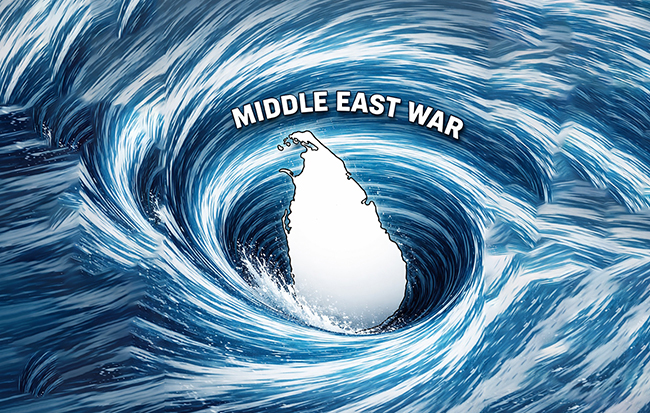
“As a small and open country, Singapore will always be vulnerable to what happens around us. As Lee Kuan Yew used to say: “when elephants fight, the grass suffers, but when elephants make love, the grass also suffers“. Therefore, we must be aware of what is happening around us, and prepare ourselves for changes and surprises.” – Prime Minister Lee Hsien Loong, during the debate on the President’s Address in Singapore Parliament on 16 May, 2018, commenting on the uncertain external environment during the first Trump Administration.
“When elephants fight, it is the grass that suffers”
is a well-known African proverb commonly used in geopolitics to describe smaller nations caught in the crossfire of conflicts between major powers. At the 1981 Commonwealth conference, when Tanzanian President Julius Nyerere quoted this Swahili proverb, the Prime Minister Lee Kuan Yew famously retorted, “When elephants make love, the grass suffers, too”. In other words, not only when big powers (such as the US, Russia, EU, China or India) clash, the surrounding “grass” (smaller nations) get “trampled” or suffer collateral damage but even when big powers collaborate or enter into friendly agreements, small nations can still be disadvantaged through unintended consequences of those deals. Since then, Singaporean leaders have often quoted this proverb to highlight the broader reality for smaller states, during great power rivalry and from their alliances. They did this to underline the need to prepare Singapore for challenges stemming from the uncertain external environment and to maintain high resilience against global crises.
Like Singapore, as a small and open country, Sri Lanka too is always vulnerable to what happens around us. Hence, we must be alert to what is happening around us, and be ready not only to face challenges but to explore opportunities.
When Elephants Fight
To begin with, President Trump’s “Operation Epic Fury”.
Did we prepare adequately for changes and surprises that could arise from the deteriorating situation in the Gulf region? For example, the impact the conflict has on the safety and welfare of Sri Lankans living in West Asia or on our petroleum and LNG imports. The situation in the Gulf remains fluid with potential for further escalation, with the possibility of a long-term conflict.
The region, which is the GCC, Iraq, Iran, Israel, Jordan, Syria and Azerbaijan (I believe exports to Azerbaijan are through Iran), accounts for slightly over $1 billion of our exports. The region is one of the most important markets for tea (US$546 million out of US$1,408 million in 2024. According to some estimates, this could even be higher). As we export mostly low-grown teas to these countries, the impact of the conflict on low-grown tea producers, who are mainly smallholders, would be extremely strong. Then there are other sectors like fruits and vegetables where the impact would be immediate, unless of course exporters manage to divert these perishable products to other markets. If the conflict continues for a few more weeks or months, managing these challenges will be a difficult task for the nation, not simply for the government. It is also necessary to remember the Russia – Ukraine war, now on to its fifth year, and its impact on Sri Lanka’s economy.
Mother of all bad timing
What is more unfortunate is that the Gulf conflict is occurring on top of an already intensifying global trade war. One observer called it the “mother of all bad timing”. The combination is deadly.
Early last year, when President Trump announced his intention to weaponise tariffs and use them as bargaining tools for his geopolitical goals, most observers anticipated that he would mainly use tariffs to limit imports from the countries with which the United States had large trade deficits: China, Mexico, Vietnam, the European Union, Japan and Canada. The main elephants, who export to the United States. But when reciprocal tariffs were declared on 2nd April, some of the highest reciprocal tariffs were on Saint Pierre and Miquelon (50%), a French territory off Canada with a population of 6000 people, and Lesotho (50%), one of the poorest countries in Southern Africa. Sri Lanka was hit with a 44% reciprocal tariff. In dollar terms, Sri Lanka’s goods trade deficit with the United States was very small (US$ 2.9 billion in 2025) when compared to those of China (US$ 295 billion in 2024) or Vietnam (US$ 123 billion in 2024).
Though the adverse impact of US additional ad valorem duty has substantially reduced due to the recent US Supreme Court decision on reciprocal tariffs, the turbulence in the US market would continue for the foreseeable future. The United States of America is the largest market for Sri Lanka and accounts for nearly 25% of our exports. Yet, Sri Lanka’s exports to the United States had remained almost stagnant (around the US $ 3 billion range) during the last ten years, due to the dilution of the competitive advantage of some of our main export products in that market. The continued instability in our largest market, where Sri Lanka is not very competitive, doesn’t bode well for Sri Lanka’s economy.
When Elephants Make Love
In rapidly shifting geopolitical environments, countries use proactive anticipatory diplomacy to minimise the adverse implications from possible disruptions and conflicts. Recently concluded Free Trade Agreement (FTA) negotiations between India and the EU (January 2026) and India and the UK (May 2025) are very good examples for such proactive diplomacy. These negotiations were formally launched in June 2007 and were on the back burner for many years. These were expedited as strategic responses to growing U.S. protectionism. Implementation of these agreements would commence during this year.
When negotiations for a free trade agreement between India and the European Union (which included the United Kingdom) were formally launched, anticipating far-reaching consequences of such an agreement on other developing countries, the Commonwealth Secretariat requested the University of Sussex to undertake a study on a possible implication of such an agreement on other low-income developing countries. The authors of that study had considered the impact of an EU–India Free Trade Agreement on the trade of excluded countries and had underlined, “The SAARC countries are, by a long way, the most vulnerable to negative impacts from the FTA. Their exports are more similar to India’s…. Bangladesh is most exposed in the EU market, followed by Pakistan and Sri Lanka.”
So, now these agreements are finalised; what will be the implications of these FTAs between India and the UK and the EU on Sri Lanka? According to available information, the FTA will be a game-changer for the Indian apparel exporters, as it would provide a nearly ten per cent tariff advantage to them. That would level the playing field for India, vis-à-vis their regional competitors. As a result, apparel exports from India to the UK and the EU are projected to increase significantly by 2030. As the sizes of the EU’s and the UK’s apparel markets are not going to expand proportionately, these growths need to come from the market shares of other main exporters like Sri Lanka.
So, “also, when elephants make love, the grass suffers.”
Impact on Sri Lanka
As a small, export dependent country with limited product and market diversification, Sri Lanka will always be vulnerable to what happens in our main markets. Therefore, we must be aware of what is happening in those markets, and prepare ourselves to face the challenges proactively. Today, amid intense geopolitical conflicts, tensions and tariff shifts, countries adopt high agility and strategic planning. If we look at what our neighbours have been doing in London, Brussels and Tokyo, we can learn some lessons on how to navigate through these turbulences.
(The writer is a retired public servant and can be reached at senadhiragomi@gmail.com)
by Gomi Senadhira
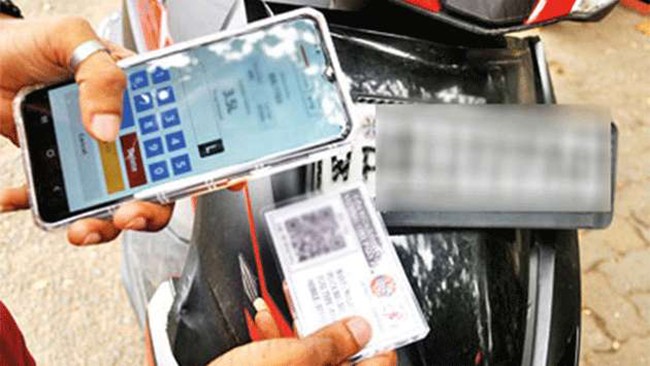
The introduction of the QR code–based fuel quota system can be seen as a timely and necessary measure, implemented as part of broader austerity efforts to manage limited fuel resources. In the face of ongoing global fuel instability and economic challenges, such a system is aimed at ensuring equitable distribution and preventing excessive consumption. While it is undeniable that this policy may disrupt the daily routines of certain segments of the population, it is important for citizens to recognize the larger national interest at stake and cooperate with these temporary measures until stability returns to the global fuel market.
At the same time, this initiative presents an important opportunity for the Government to address long-standing gaps in regulatory enforcement. In particular, the implementation of the QR code system could have been strategically linked to the issuance of valid revenue licenses for vehicles. Restricting QR code access only to vehicles that are properly registered and have paid their revenue dues would have helped strengthen compliance and improve state revenue collection.
Available data from the relevant authorities indicate that a significant number of vehicles—especially three-wheelers and motorcycles—continue to operate without valid revenue licences. This represents a substantial loss of income to the State and highlights a weakness in enforcement mechanisms. By integrating the fuel quota system with revenue license verification, the government could have effectively encouraged vehicle owners to regularise their documentation while simultaneously improving fiscal discipline.
In summary, while the QR code fuel system is a commendable step toward managing scarce resources, aligning it with existing regulatory requirements would have amplified its benefits. Such an approach would not only support fuel conservation but also enhance government revenue and promote greater accountability among vehicle owners.
Sariputhra
Colombo 05
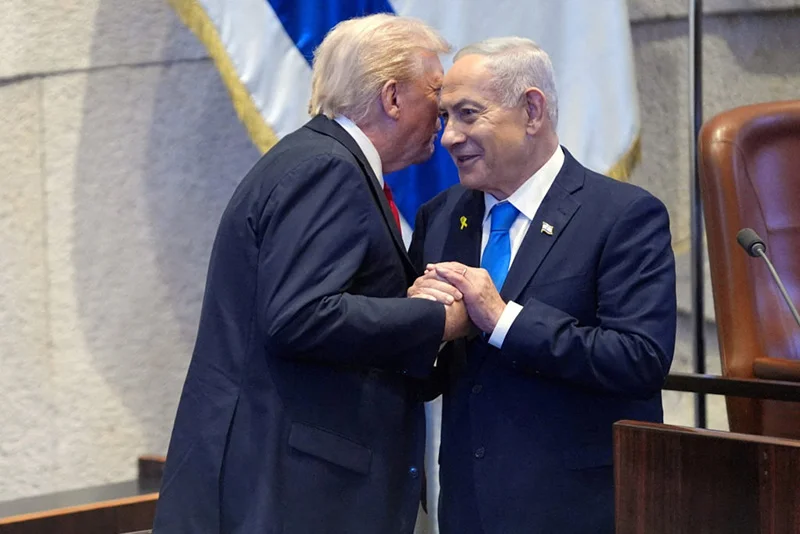
First, let us see why the war started by Israel and the US against Iran may be seen as a stupid undertaking. Israel was aiming for regional hegemony and US world dominance, which could be called an utterly foolish dream in today’s multipolar world order, which the theatre of war now reveals. They may have underestimated Iran’s capacity and also the economic fallout due to its ability to control the Strait of Hormuz.
In February 2026, reports emerged that General Dan Caine, the U.S. Chairman of the Joint Chiefs of Staff, privately warned President Trump about the significant risks of a major war with Iran, including potential U.S. casualties, depleted ammunition stockpiles and entanglement in a prolonged conflict. However, President Trump publicly dismissed these reports as incorrect. General Caine’s appointment by President Trump was considered controversial, as Caine was chosen over many active-duty four-star generals and lacks experience as a combatant commander or service chief. Under these circumstances Caine would have been expected to be subservient to Trump, yet he opted to disagree as he saw the danger. Trump countered his arguments saying it would be a quick job, take out the leadership, destroy the military structure and the people will take over the country. This did not happen and now most of the scenarios that Caine said was possible are gradually coming true.
Israel suffers damage
For Israel, too, damage is much more than expected and could prove to be decisive in its expansionist ambitions in the region if not its very existence. It had previously tried to drag former US presidents, Bush, Obama and Biden into a war with Iran, but they were aware of the underlying danger. The Gulf countries too were hit hard and the US could not protect them, and they may be regretting that they ever let the US set up military bases on their soil. Former US secretary of state Henry Kissinger once famously said, “To be America’s enemy is dangerous, to be its friend is fatal”.
The US may have succeeded in making states, such as Iraq, Syria and Libya, fail, but Iran is a different kettle of fish. Trump was jubilant after capturing the Venezuelan president and may have been planning to lay his hands on Cuba and Turkey and then try to annex Canada and Greenland. A man who promised a “no war” policy in his presidential campaign has converted his department of defence into a department of war in the real sense of the term. Trump must realise that he cannot act like a global policeman and undermine the sovereignty of other nations with impunity. Trump says “we have won” but has nothing to show as gains in the Iran war.
Trump’s concern about BRICS
Another factor in the equation is that Trump may have been concerned about the growing influence and membership of BRICS, which in effect appears to be anti-American if one were to go by its attempt to de-dollarise world trade. Of particular concern may have been the recent admission into BRICS, of several countries supposed to be staunch US allies, such as Saudi Arabia, UAE, and Egypt. Iran is an active member and was mending its fences with Saudi Arabia under the mediation of China. Further, two of the arch rivals of the US, China and Russia, are leading members of BRICS, which has become the meeting ground for the friends as well as foes of the US, under the stewardship of China. The US saw all this as a huge challenge to its dominant position in the world and Trump, who was trying to “make America great again”, saw that his dream may go up in smoke. He threatened countries which tried to adopt an alternative to the dollar with sanctions. He may have thought if Iran could be destabilised and structurally broken up, he would be able to kill two birds with one stone. He may have se an enemy of both the US and also its ally Israel and disrupt the BRICS organisation.
The war is affecting the economy of the BRICS countries quite badly. The fuel shortage due to closure of Strait of Hormuz has hit India hard and also China. The economies of the Gulf countries, whose oil is transported via the Persian Gulf and the Gulf of Oman, have also suffered immensely. South Africa, a founding member of BRICS imports oil mainly from the Middle East. Brazil, another founder member, though an exporter of oil, imports refined fuels from the Middle East. A large portion of food requirements also of the Gulf countries come through these sea routes. Thus, the BRICS organisation must be concerned about the consequences of the war if it drags on. It obviously augers ill for the BRICS, and it must act quickly to bring about a ceasefire and an amicable settlement as soon as possible.
Jeffrey Sachs’ opinion
Prof. Jeffrey Sachs, the eminent American economist, has argued that BRICS nations have a critical responsibility to play a leading role in stopping the war in the Middle East, particularly regarding the escalating conflict between the US/Israel and Iran. He contends that because the US is pursuing “global hegemony” and attempting to control the region, BRICS serves as the only effective “standing bulwark” against American domination.
Sachs has stated that if BRICS countries, particularly India, China, and Russia, stand together and demand an end to the war, “it will actually end”. He has described this collective action as the only way to make the world safe. Arguing that the Middle East conflict is a planned campaign by the US and Israel for regional dominance rather than a defensive action, he has called on BRICS to stop the US from running the world. He warned that a continued conflict, especially one that disrupts energy supplies, will cause enormous economic costs for Asia, Europe, and the US.
Sachs has argued that India should not have joined Quad, as he views Washington as using a “divide and conquer” strategy. He has characterised the BRICS countries as a fast-growing, multipolar bulwark that rejects the notion of a single “emperor” (referring to US influence). Sachs has warned that if the conflict is not stopped, it could lead to World War III and catastrophic regional consequences (India Today).
China and Russia, though rivals of the US, have the economic and military clout to exert pressure on the US. India is a friend of both the US and Israel and could act as a mediator to bring about an end to this meaningless war. Gulf countries, some of whom are BRICS members, could make a strong appeal to their friend and benefactor, the US, to see what its senseless aggression is doing to their countries.
Unity of BRICS essential
As of 2026, the expanded BRICS group (including Brazil, Russia, India, China, South Africa, Egypt, Ethiopia, Iran, Saudi Arabia, UAE, and Indonesia) represents approximately 49% of the world’s population. Moreover, its collective GDP is 35 – 40% of the global GDP when measured in PPP terms, which may be considered as higher compared to G7 countries which record 30%. Thus, BRICS is a force to be reckoned with provided its members stand together. However, they have not been able to do so though it is obvious that it would be beneficial to all of them. Bilateral conflicts within the BRICS, apparently intractable, are preventing any concerted action by these countries. In this regard, as Prof. Sachs says the onus is on China, Russia and India to come together to stop the war, which if allowed to drag on, will irreparably damage the economy and unity of BRICS and worse it would never be possible to attain any of its objectives. It is time the founder members Brazil, Russia, India, China and South Africa got together and review its goals, the need for such an organisation as BRICS, and the present danger it faces and take remedial steps as soon as possible if it is to remain a viable force with the potential to counter the hegemonic imperialist forces.
Further, the BRICS, as it consists of stakeholders of a new world order and also countries directly involved in the Middle East turmoil, may have an important role to play in working out an arrangement that could bring permanent and stable peace to the region. Once the dust settles on the military front, and the futility of war becomes apparent it may be time for the BRICS countries to raise a voice to demand a settlement based on the two-state solution that was adopted by the UN. Though Trump brushed this UN resolution aside and started taking over Gaza, once the war is over and he contemplates the economic cost of it to the US public – it costs US 1 – 2 billion dollars a day – he may realize the need for a solution acceptable to all. There have been several US presidents who were strong proponents of the two-state solution—an independent Palestinian state alongside Israel—as a core policy goal. Key proponents included George W. Bush (who first formally backed it in 2002), Bill Clinton, Barack Obama, and Joe Biden; they have viewed it as the most viable path to peace. Israel too after sustaining enormous damage may be forced to agree to a solution, if the US pressures it. Both Trump and Netanyahu, perhaps for personal reasons, wanted a war but they did not expect it to take the turn it has taken. Netanyahu’s days in power may be numbered and Trump may be forced by Republicans to change course as the majority of the US public does not approve of the war.
Therefore, time may be opportune for BRICS to stand together and call for a permanent solution to the Palestinian problem which is at the core of the Middle East conflict. Peace in the Middle East is vital for the further development of BRICS.
by N. A. de S. Amaratunga

Presidential Suite at Sri Jayewardenepura General Hospital opened to the public

Cabinet Sub-Committee appointed to streamline the Public Service meets for the second time

PSL 2026: Teams allowed to submit two XIs and pick one after toss

Japan Premier League [JPL], building cricket from the ground up

Showers may occur at a few places in the Sabaragamuwa province and in Galle, Matara, Kalutara and Nuwara-Eliya districts in the evening

Energy Minister indicted on corruption charges ahead of no-faith motion against him

‘Dates have the highest sugar content to fight Coronavirus’

Sunday Island 27 December – Headlines

#SundayIsland 17th December – Headlines

Sunday Island – 28th March

Sunday Island Headlines – 21 March

Sunday Island – 21st February – Headlines
-

 News3 days ago
Senior citizens above 70 years to receive March allowances on Thursday (26)
-

 Features5 days ago
Trincomalee oil tank farm: An engineering marvel
-
 News22 hours ago
Energy Minister indicted on corruption charges ahead of no-faith motion against him
-

 News2 days ago
US dodges question on AKD’s claim SL denied permission for military aircraft to land
-

 Features5 days ago
The scientist who was finally heard
-

 Business2 days ago
Dialog Unveils Dialog Play Mini with Netflix and Apple TV
-

 News3 days ago
CEB Engineers warn public to be prepared for power cuts after New Year
-
 News3 days ago
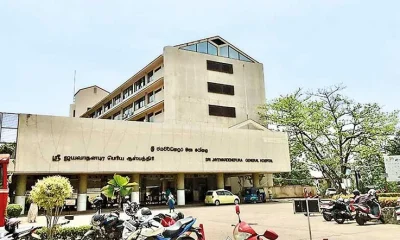
Japanese boost to Sri J’pura Hospital, an outright gift from Tokyo during JRJ rule