
Features
The Wellawaya attack – on April 4 one day before D-day


A personal story as recalled by Capt F.R.A.B. Musafer 4th Regt SLA (Retd)
(Continued from last week)
There were other instances where we found persons with very old unlicensed shotguns and unauthorized women in their company. There was always an excuse to explain their presence.On one occasion we were led to a unused well in the Amaduwa area which borders the Yala sanctuary in which was concealed a large consignment of old tins for the explicit purpose of making bombs. The police took a young man into custody and charged him. A few days later I bumped into him near the Hambantota town where he told me the Magistrate had just discharged him as it was no offence to store old cans. Justice well served in the context of the law as at that time!
On another occasion we were taken to a house inhabited by two youths allegedly involved in the movement. The father of the boys appeared and told us that he did not know the whereabouts of his sons and had no trust in them. He took us into the verandah of his house and showed us a coffin stored across some beams of the roof. This, he said is because “I don’t trust them and don’t expect my sons will even bury me. So please believe me.”
By day we were very conspicuous and made our presence felt as we traveled extensively across the towns and villages in the Hambantota district causing concern to regimental headquarters that our fuel consumption was excessive. During the nights we used to patrol along the main roads and stop by the wayside and monitor the movements of people and vehicles. Whilst there was hardly any night time traffic we were intrigued by groups of cyclists traveling further south at night on a daily basis. They maintained that they were practising for the National cycling championships and carried nothing on themselves. Our suspicions were that they were couriers conveying messages but there was nothing we could do about it.
Ground Realities
On most occasions when we stopped at the police stations and chatted with the reserve constable over cups of plain sugarless tea, we were told of threats received via the post. It was common knowledge among the police that they were to be attacked and most likely at night. These threats were not taken seriously.
Being the son of a police officer who had served in that region renowned for its high crime rate I was aware that the reserve PC on duty was always by himself, in some instances with only a kerosene lamp for light. He would always be an easy target of any attack and the key to acquiring weapons. With due credit to the police it provided a 24-hour service to the community in the remotest of areas. Perhaps the police was safe as they commanded some respect and trust among the locals.
Based on the information provided on an informal basis, I realized that if any attack was to take place it would be at night to exploit the element of surprise. My mind raced back to an article I read in the Readers Digest of the methods used in Latin and South America in the 1960’s where guerrilla groups in addition to robbing banks blew up electricity pylons, cut lines of communications and also stormed police and military outposts to secure their supply of weapons all done under the cover of darkness. The likelihood that insurgents would attack in waves to overrun their objectives with sheer numbers as done by the Vietcong was also well documented.
On one of my daily briefings with the GA I drew this to his attention. The GA being a very thoughtful person showed some serious concern and asked me what I intended to do about it. I suggested that we send a signal (wireless message) to Temple Trees requesting flares and equipment as an aid for night fighting. At that time we did not even have any army issue battery operated torches.
The GA had a direct Army wireless link to Temple Trees the official residence and command centre of the Prime Minister. He agreed and a signal was sent to Temple Trees requesting flares to light up the sky in the dark in the event of likely night attacks on the police stations. There was no response to the signal sent.
Some months later I was told by Capt Samaratunga, one of a few of the trusted and handpicked officers on duty at Temple Trees, that some of the other officers at Temple Trees had virtually laughed and ridiculed me on the signal sent by me and had said that I had got the jitters and was afraid. About a week later there was panic at Temple Trees when news of the Wellawaya attack that had taken place at night was received. He said it was no laughing matter then and all hell broke loose when news of a number of police stations fell into the hands of the insurgents that night and in the subsequent nights.
Meanwhile we continued to work with the police by day but at night patrolled the roads ourselves. During this period we never arrested anyone. Our only suspicions were on the cyclists. Inspector Arthanayake, the OIC at Tissamaharama police station, filled me in with information that parents had reported certain young family members had gone missing. Some had said that their children had gone to Diyatalawa for training.
He had arrested a youth who had been to such a camp and was trained to assemble and dismantle weapons. The matter had been referred to the CID but nothing had eventuated. There were mixed messages that there was something in the air but no intelligence to pin point any real threat on How, When and Where?
The poster campaigns
One of the effective ways the JVP conveyed their propaganda was by way of posters and slogans written on the walls of private and public buildings. They were everywhere and with a bit of boredom creeping up I thought I should exercise some initiative and embarked on a cleanup operation that got me into trouble. I got my men and some bystanders around the Hambantota bus stand to tear down the posters and obliterate the messages written on the walls.
This did not go on for long as I was soon summoned by the GA Mr Sonny Goonewardene who in no uncertain terms asked me as to who gave me permission to carry out the cleanup operation. He was very angry and upset as among the people whom I had asked to participate in the clean up was a senior employee of his staff. He very politely but sternly told me that in future he would provide me with the labour I needed. I realized that I had erred in my judgment and apologized to the GA.
I had a lot of respect for the GA not only as a superior official but for his calmness and insight and wisdom he imparted on me. The message was simple, loud and clear I did not have the license to do as I pleased in a military uniform even under the state of Emergency that prevailed.
The poster campaign was not confined to the JVP. I came across one that was amusing and said ” Do not write or urinate on my wall, socialism doesn’t begin here”.
Whilst we roamed the length and breath of the Hambantota district there was nothing eventful that happened except that my wife turned up on April 2 and announced that she was at the Hambantota rest house. I had not been in communication with her since mid March. Capt Ratnasabapathy had arranged accommodation at a discounted rate (I think it was Rs 50 per day) and assured her that it was safe, which prompted her to hitch a lift in a Browns Group car coming to their hotel at Amaduwa. She based herself at the rest house and was busy visiting friends and relatives at Hambantota which had a fair sized Malay community.
On April 4 evening she point blank refused to stay at the rest house saying that there had been some strange bearded and unshaven characters drinking and lurking around at the rest house during the day. This compelled me to put her up at Weerawila in Army style accommodation, making her sleep on the floor on a mat.
April 5 morning when it all began
On April 5, 1971 I had to go to Matara to drop a few of my men going on leave which included Gunner Brohier who had lost his brother in a snake bite accident. My wife too was in the vehicle (unauthorized) when as usual we encountered a herd of wild elephants near the salt pans, which was a frightful real life experience for her.
At the Matara Railway station I met Capt Naleem, Adjutant of 3V Gemunu Watch Regiment who was going to Colombo to attend a conference at Army Headquarters. He told me the Army was expecting trouble and plans were afoot to deploy more troops to most parts of the island.
Whilst returning from Matara I was stopped opposite the Hambantota Police station and was informed that the Wellawaya police station had been attacked and that I was to return to Wirawila immediately and contact my regiment. At Weerawila I got on to the wireless set and got in touch with the adjutant, Capt Samarakoon, who told me that the police station at Wellawaya had been attacked and there were casualties but details were sketchy as all communications had been cut off.
I was ordered to proceed to Wellawaya immediately and report back on the situation. I quickly gathered some soldiers, a wireless set and headed for Wellawaya post haste in a jeep and a truck. When I approached the police station the area around it was like a battlefield littered with spent shotgun cartridges, empty tins and items of clothing and footwear. The police station had taken a battering, the telephone and power lines were cut.
Eye witnesses had confirmed that a large group of insurgents some dressed in blue uniforms had carried out the attack. To this day I regret that I did not have a camera (they were hard to come by during that period) to capture the scene before my eyes. It was unbelievable that such an outrageous raid had been conducted against the state and was certainly a critical moment in history.
There was the body of the reserve police constable lying at the entrance of the police station. The police were dumbfounded and in a state of shock after their ordeal. Some expressed that they were lucky to be alive. There had been another policeman who had been shot and had died in hospital. We were told that a few policemen had just returned from a patrol and as customary the arms and ammunition were locked up in the strong room by the reserve PC on duty. He had then ventured out to the verandah to have a smoke when a group of Che Guveras who had surrounded the police station opened fire killing him.
With the police station under fire and no access to any firearms there was very little the police could do until a brave policeman to crawled up to the dead constable and retrieved the keys enabling them to retaliate and return fire. After a few hours the attack was repulsed and with the break of dawn the insurgents retreated taking with them their dead and injured leaving behind fired and unspent shotgun cartridges. It was strange that the insurgents with their numbers did not storm the police station during the lull, perhaps they lacked decisive leadership..
Whilst walking around the compound of the police station I was alerted to the fact that there was a dead insurgent. A closer look revealed he had a huge exit wound in the back of his chest as a result of a bullet fired from a rifle and had lost a lot of blood. Someone noticed a slight twitch in his body and shouted that he was alive. No sooner was this said a rifle was raised by a policeman to smash his skull; this was thwarted by one of the soldiers who pushed him off balance.
The policeman had a point in saying that there was no point in letting him live. It may have been improbable that he could have survived anyway. However it was not a question of pity but one of anger and hurt on the part of the policeman who reacted that way. This was quite understandable considering what they had gone through that he reacted in this manner. We despatched the injured man in the army truck to hospital but he was confirmed as dead on arrival.
Although we as “Gunners” were the first Army personnel on the scene there was nothing further we could do but report back on the situation. To do this I was in a dilemma as radio transmission and reception on my set was impossible and there was no way I could contact my Headquarters. I was told that I could go to Moneragala as the GA there was in direct contact with Temple Trees. Wellawaya in fact came under the jurisdiction of the GA Moneragala. I decided to race back to Weerawila leaving the soldiers and the truck behind.
I reported back to regimental headquarters as to what I had seen and heard about the attack. I asked for instructions and if it was necessary for me to pursue the insurgents who had retreated to the jungles. Permission was refused. I was told that two platoons of reinforcements from the 1st battalion Gemunu Watch based at Diyatalawa was being sent and that a helicopter would be arriving at the location with senior Army and Police officials. On arrival of the platoons from Diyatalawa I was to return to Weerawila.
Having raced back to Wellawaya I awaited the arrival of the chopper which landed shortly. There was Maj Gratiaen Silva, DIG Rudra Rajasingham, The GA Moneragala, Mr Fernando, and the Magistrate. Soon after the helicopter had landed the two platoons of the first battalion Gemunu Watch under the command of Captain Lalin Fernando and Lt Gibbrey Muthalib arrived at the scene.
Lt Muthalib was subsequently seriously wounded and suffered serious head injuries and had to be airlifted to Colombo. He survived and retired as a Major General as did Capt Lalin Fernando.
Whilst the inquiries were being conducted in the police station premises I accompanied the two Airforce pilots, Flight Lieutenants Rahim and Manoharan, and was showing them around when I heard some movement in a bush nearby and drew my revolver on instinct. suddenly two youths ran out putting their hands up and pleading not to shoot them as they had come only yesterday. ” Vedi thiyanna epa, eeyay apu gaman”. Capt Lalin had also drawn his revolver and raced towards the youths and managed to get hold of one of them by his collar, the other made no attempt to escape.
They were both subjected to a good beating by some of the policemen who took them into custody. They were very young and clad in shirt and sarong and what they had in their possession was a bag with two home made bombs (Molotov cocktails ) but no matches to light the bombs. I felt sorry for them as they may have hidden in the bushes in fear during the attack with all the gunfire and bombs exploding and had left it till too late to escape. If perhaps they had waited for another hour or so they may have made their escape under the cover of darkness. Being there without food and water throughout the day in the intense heat may have been too much to bear. To this date I wonder what their fate was?
A few years ago I met Flt Lt Rahim in Canada. He retired as a Group Captain and when reminiscing on this incident recalled that the helicopter could not get back to Katunayake but forced to land at Ratmalana as they were running out of fuel. He mentioned that they had to undertake a perilous journey to make their way back to Katunayake passing through a multitude of road blocks manned by very jittery armed police and servicemen.
The insurgents had planned to carry out their attacks under the cover of darkness and stage simultaneous attacks on as many police stations islandwide on the night of April 5. Whilst the army was deployed as a proactive strategy to deter an uprising there were no plans set in place to counter simultaneous night attacks on all police stations. In fact there was a total lack of intelligence of any planned night attacks at all. It was ironical that the insurgents had themselves conveyed their intentions by way of postcards to some of the police stations. The premature and bungled date of the attack on Wellawaya took that element of surprise away.
In my opinion it was a godsend that saved the government from humiliation. Had simultaneous attacks taken place on a single night and the police stations overrun, the weapons and ground lost to the insurgents would have contributed to a more protracted and bloody conflict.
As it was late in the day and with the platoons from GW in place I headed back to Weerawila. On my drive back I was contemplating what course of action I should take? Back at camp there was no specific orders or instructions for me. There were radio broadcasts that a 24-hour curfew had been imposed as a result of the attack on the Wellawaya police station, there were no reports of any other police stations being attacked at this point of time. The news report would have certainly caused great concern to the family members about the platoon’s safety in the absence of any means of communication.
The April 5 night Weerawila was partially abandoned. On the strength of what was witnessed I made the decision to partially abandon Weerawila. It was of no strategic importance to the insurgents who would be reluctant to take on the Army. It was thought best that we visit as many police stations as possible rather than be holed up at Weerawila protecting no one. I left behind two soldiers with the wireless equipment and hit the road with all the transport at my disposal. It was a risk we had to take as we could not abandon the camp totally.
The large number of vehicles created an impression of a sizeable force although in effect there were less than 20 men. That night we stuck to the coastal belt Hambantota, Hungama Ambalantota and spent some time at these stations and left much to the disappointment of the police
With a curfew in place the roads were deserted and the night was pitch dark as we finally made our way to the Tissamaharama Police station around midnight. They were glad to see us as they were expecting an attack, in fact every police station was fearing one.. We took up positions around the police station premises which was flanked by the road in front and a small paddy field on the side.
A Light Machine gun was positioned to cover this open area as there were houses to the rear and the other side which restricted the use of this weapon, the rest of the area was covered by armed soldiers. It was a long night and a tiring one. The soldiers were struggling to stay awake when all of a sudden there was a huge crackling sound and the streetlights went off. Simultaneously the LMG also opened fire and moment later a rifle or two.
Being dark there was nothing we could see but from time to time shots were fired by a soldier or two at imaginary movements that kept the rest of the troops awake. There were no shots fired towards the police station. Daybreak was indeed a relief. It was later revealed that chains had been thrown over the power lines to short circuit the electricity network.

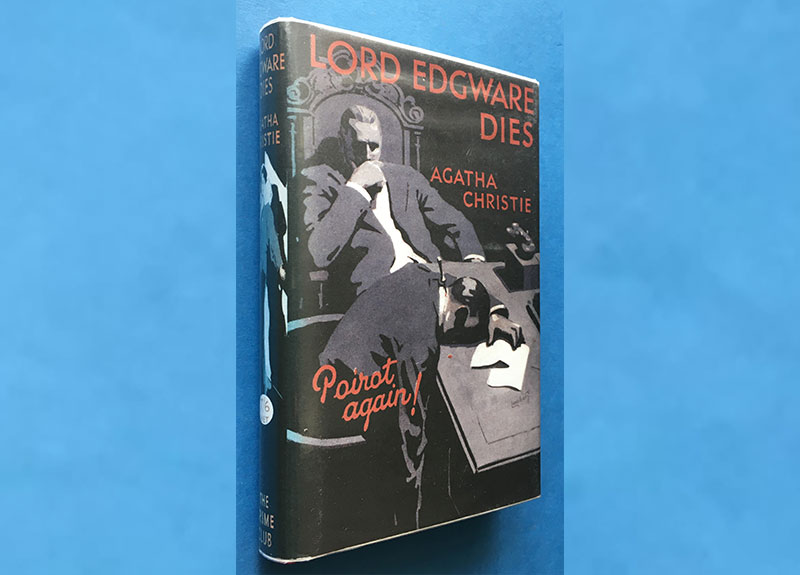
It has been some time since I read an Agatha Christie, the plot of which I cannot remember. So, I was delighted to find on the shelves of a friend Lord Edgware Dies, which I had a vague memory of, but no certainty about who had done it.
When I read it, I found that my memory of who was probably the killer was correct, but I could not be certain and the red herrings Christie threw in were so diverting that until almost the very end I wondered if I had been wrong.
The plot is very simple. Jane Wilkinson, who is married to Lord Edgware, tells him that she is desperate for a divorce since she is in love with a very proper Anglo-Catholic peer, Lord Melton, but Edgware refuses to divorce her. She asks Poirot to talk to him, which he does, and is surprised to find that Edgware has told Jane he is prepared to give her a divorce. This was, after he had categorically refused, through a letter, which Jane said she had not received.
That night Edgware is murdered, after Jane had been to see him, or so the butler said, and also Edgware’s secretary. But Jane had been that evening at a grand dinner many miles away, where a dozen fellow guests could swear to her presence.
There was a solution however to the mystery of two Jane Wilkinsons, namely a skilful impersonator called Carlotta Adams who, in the opening chapter had impersonated Jane Wilkinson, who had also been at the performance. But when Poirot goes to see her, he finds that she had been found dead on the morning after Edgware had been killed, of an overdose. And in her bag was a gold case, with a strange inscription, that contained the drug, along with a pair of pince-nez.
Her maid said she had written a letter to her sister in America and posted it the previous night. Poirot asks Inspector Japp to get the letter, and a transcript is received from America, and in it the name of Edgware’s nephew Ronald Marsh is mentioned; he had taken Carlotta to dinner after her performance, with which the book opens, and had then set her a challenge. Japp arrests Marsh, but Poirot is not happy and asks for the original of the letter, which the sister sends him. That shows that a page is missing, and the tear is obvious, though that raises the question as to why it had not simply been cut.
Matters are further complicated by the fact that Marsh had gone in a taxi to the Edgware house, along with Edgware’s daughter Geraldine, in the interval of an opera which had previously seemed to provide them with cast iron alibis. Geraldine had gone in to fetch her pearls so that Marsh could raise money he needed, and thus had an opportunity to kill Edgware, as did Marsh, for the driver said he had got out of the taxi while waiting and gone into the house.
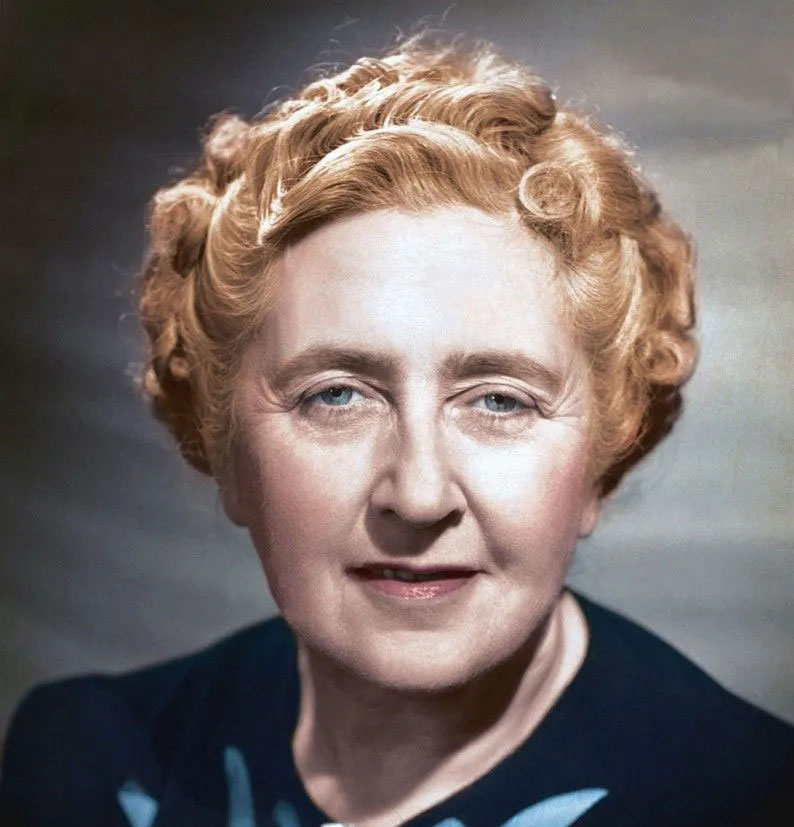
Agatha Christie
Marsh explained why he had gone to the house on the night of the murder as having followed Bryan Martin, an American actor, who had been in love with Jane, whom he saw go into the house with a key. But there was no one visible when he entered, and Geraldine almost immediately came down and they left together. And Martin too has become an object of suspicion to Poirot, for he had been to see him before the murders were discovered with a story of being followed by a man with a gold tooth – a story Poirot immediately realized was false when he was asked how old the man was, and was told he was young, for young people did not have gold teeth.
A heap of French money Edgware had got for a trip to Paris was missing, but since Marsh had no need for it after his cousin’s offer of help, Poirot deduces that it must have been taken by the butler, who has disappeared. Christie has stressed that he is astonishingly handsome, unusual in a butler, and Poirot notes a resemblance to Martin, so he thinks the mysterious man going into the house must have been him.
Incidentally, later Poirot assumes that Edgware’s change of mind was because he was involved in some scandal, and I believe Christie intends us to see the cause of this in his handsome butler, though this is not specified.
Meanwhile, Poirot has asked Japp to find out the provenance of the case found in Carlotta’s handbag, and it turns out to have been made in Paris, specially commissioned, and collected by a woman with pince-nez.
But then another murder occurs—that of another guest at the grand dinner, which provided Jane with her alibi. The victim is an actor who had been bemused when Jane, at a lunch, thought the Judgment of Paris referred to the city. He told Hastings he wanted to see Poirot, but was killed before he could get to the appointment. Poirot had rushed there when told about his request, but it was too late.
Meanwhile, Poirot has tried out the pince-nez on Edgware’s secretary, but she could not see through these. It was only a chance remark heard outside the theatre that led him to try them out on Wilkinson’s maid Ellis, a spare pair that had been appropriated for the night of the murders.
Poirot then lays things out, having summoned Martin and told him that he probably suppressed Edgware’s letter, as he had been dropped by then and he did not want Jane to marry another. But after teasing Martin, Poirot says that Jane was in fact the murderer, and she got Carlotta to impersonate her at the dinner while she went to the house and killed her husband. After meeting Carlotta later and checking with her through a call that she had not been rumbled, Jane had gone ahead with the murder – she put veronal into her drink and the case with veronal into the handbag. She forgot to take out the pince-nez she had used earlier to imitate an American. Carlotta had registered as the American in a hotel and Jane had gone to see her, and there they exchanged identities. After seen the letter, she made use of it by tearing off the page that referred to her, and the S of She, so that the person who had challenged Carlotta to impersonate her seemed to be a man.
There is a coda in which Jane, condemned to death, writes to Hastings, still full of pride at her ingenuity hoping she will be remembered.
by Prof. O. A. Ileperuma
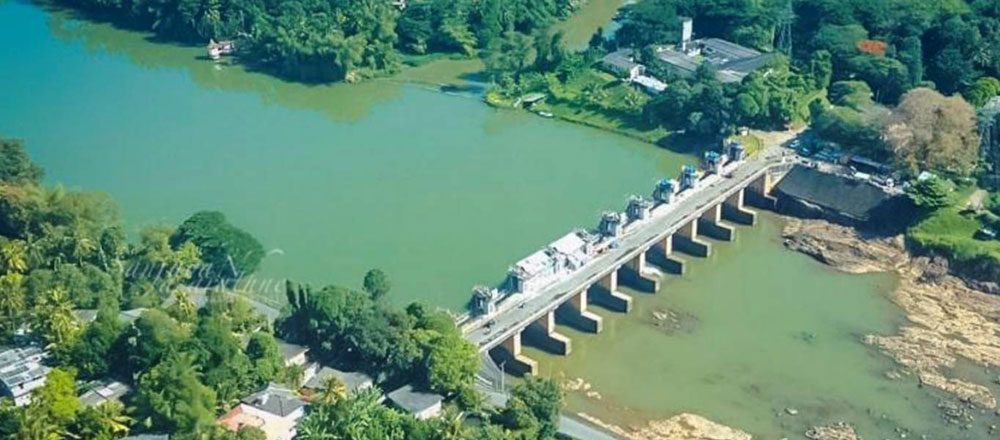
Silting of reservoirs is a major problem today affecting our hydropower production and irrigation systems. The main Mahaweli reservoirs are silted to a considerable extent reducing the water holding capacity of them. Due to poor soil management practices, floodwaters deposit large amounts of silt in these reservoirs. When the Polgolla reservoir was fully drained about two years back, one could see mountains of silt in the lower reaches of the reservoir. A rough estimate is that 50% of the total capacity of these reservoirs has been lost to siltation. This is a serious issue which affects not only power and agriculture but also flood control.
Our ancient irrigation systems ensured that desilting of reservoirs took place under royal decree where all users of the reservoirs were ordered to carry out desilting of reservoirs during the dry season. The clay thus collected was used in making bricks for the construction of great stupas which dot the landscape of our ancient kingdoms. This ensured that the reservoirs had their full capacity filled with water for the next cultivating season. Our ancient kings were clever enough not to construct reservoirs by blocking main rivers such as the Mahaweli. A classic example is the Minipe left canal where they tapped only the surface water of Mahaweli. Even the bigger tanks such as Nuwara Wewa and Parakrama Samudraya were fed with minor rivulets. There were also other ingenious features in the cascade irrigation systems built by the ancient kings, such as mud sluice canals and forest reservations between the reservoirs in the cascade system. These reservations helped trap silt and remove excess nutrients, which could otherwise contribute to increasing salinity as water flowed from one reservoir to another.
-

- Parakrama Samudraya
-
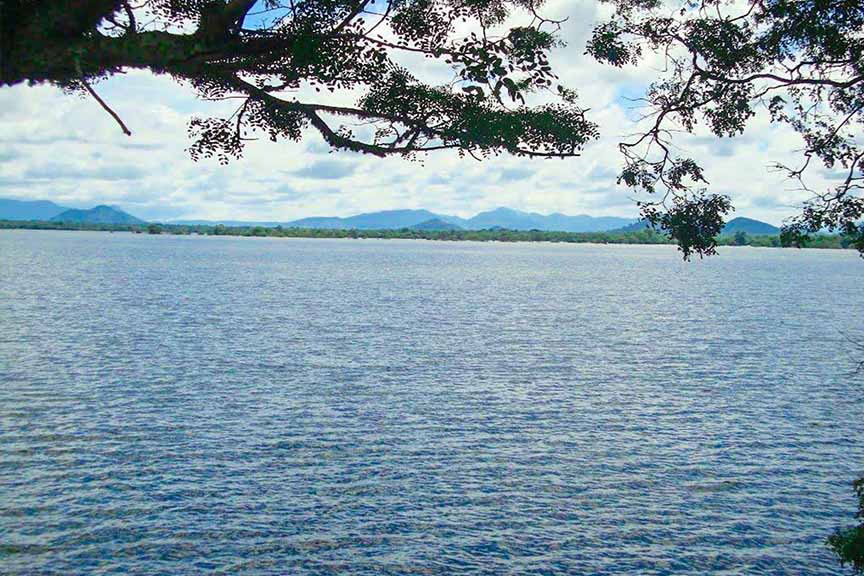
- Kalawewa
-
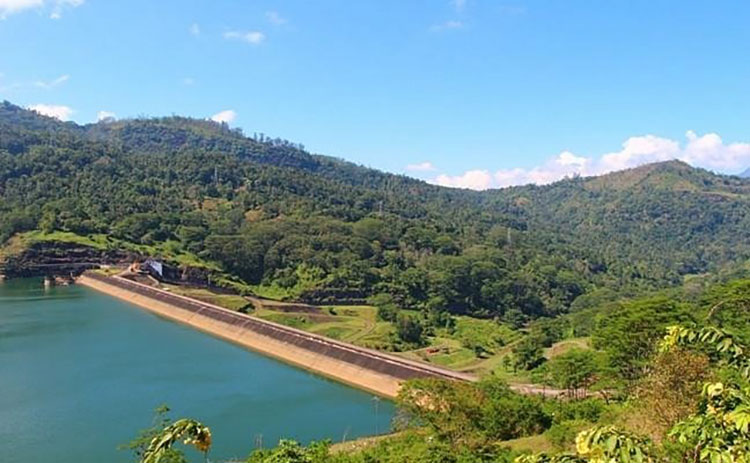
- Kotmale

Victoria
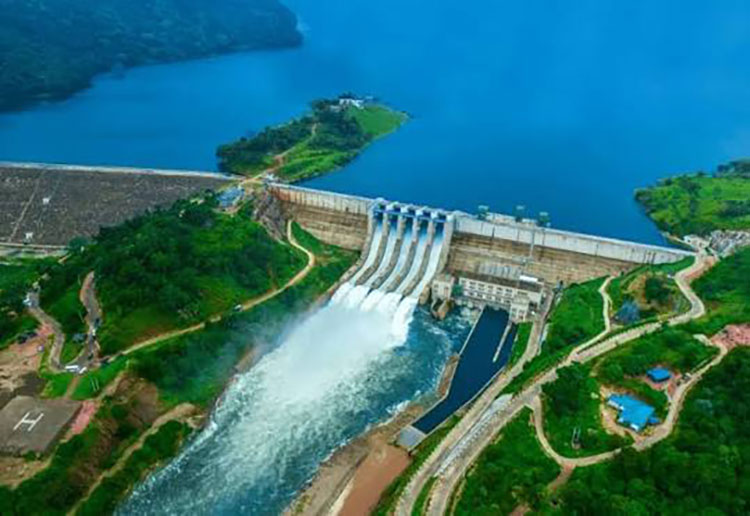
Moragahakanda
A classic engineering marvel is the former Yoda Ela, which carries water from Kalawewa to Nuwara Wewa and Tissa Wewa. It is 87 km long although the straight distance between these points is only about 40 km. The gradient of this canal is about 10 cm per km or 6 inches per mile. Yodha Ela functions as a moving reservoir and feeds about 4,600 hectares of paddy lands. It is a winding canal with about 120 smaller reservoirs on its way. It was constructed during the reign of King Dhatusena around 459 AD and later expanded by King Parakramabahu by connecting more reservoirs to the network. Unfortunately, during the Mahaweli project our modern-day engineers constructed a concrete canal replacing the winding path of this Yoda Ela also called Jaya Ganga. This effectively removed the ability of the old Yoda Ela to remove silt and nutrients. The bank of this Ela has wet zone trees such as jak and areca nut growing well. They take up the nutrients from the flowing stream making the water suitable for irrigation later.
Ancient Mesopotamian civilisations depended on dams constructed along the two main rivers, Euphrates and Tigris. After continuous irrigation of their fields over several thousand years, salinity of the irrigated lands increased making them unsuitable for agriculture. People died due to famine and this clearly illustrates the danger of blocking main rivers for agriculture. There is scientific evidence that the salinity of paddy soils in the Mahaweli C area is increasing.
We saw the devastation caused by Cyclone Ditwah. The sluice gates of the Kotmale Reservoir were opened, and Kandy and Peradeniya were flooded. If the reservoir had had greater storage capacity, couldn’t the opening of the gates have been delayed? This may not be an argument that modern-day engineers would readily accept, and I am not an irrigation expert. These ideas may well be naïve. But most of us tend to think of reservoirs mainly in terms of hydropower generation and irrigation, while their role in flood control receives much less attention. The question therefore deserves serious consideration. Could restoring lost reservoir capacity through desilting help improve our ability to manage extreme rainfall and reduce flood risks?
Desilting our reservoirs should be considered a national priority.
Export diversification – Missing the wood for the trees – Part III
by Gomi Senadhira
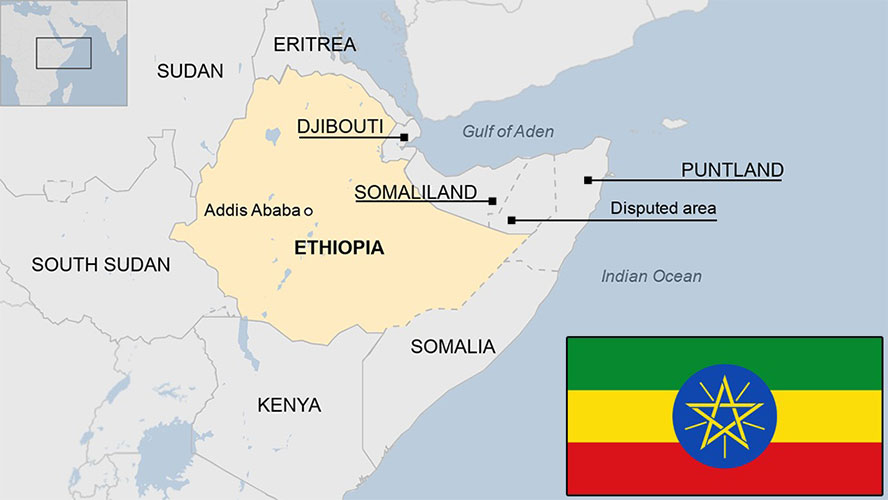
In Sri Lanka, the word “Ethiopia” is often used as disparaging slang to describe individuals or areas experiencing extreme poverty, starvation, or severe economic hardship. This linguistic habit originated in the 1980s with the Western media coverage of the devastating Ethiopian famine of 1983-85. That media coverage shocked the world but also left an outdated and offensive global stereotype that the country is permanently starving. Much has changed since then. By now, with an annual growth rate of around 9%, it is the fastest-growing economy in sub-Saharan Africa. Ethiopia has also emerged as a highly competitive exporter and is challenging not only its competitors in the region but also countries like Sri Lanka. This article is on how Sri Lanka has lost ground to Ethiopia (and a few other countries) in the GCC markets for agricultural and floricultural products.
Sri Lanka – A Pioneer in the Agriculture and Floricultural Market in the GCC
As discussed in Part II of this article, by the mid-1980s Sri Lanka had established a strong foothold in the GCC’s fruit, vegetable, and floricultural market. Geographical proximity and well-established shipping and air links gave Sri Lanka a strong comparative advantage over Southeast Asian and African nations. Thailand, Vietnam, and Kenya were not even in the market. At that time, Ethiopia was experiencing (as BBC news reports described) “a biblical famine”.
The market was not very large, but it was lucrative and growing. Trade Minister Lalith Athulathmudali as well as the Chairman of the Export Development Board, Victor Santiapillai, who visited Kuwait (and the GCC countries), recognised the market potential for these products and encouraged us to continue with our work. The minister was particularly keen to further develop links between the market for these products, exporters, and his Export Production Villages (EPVs). So, it was becoming a successful case not only for export diversification but also for transferring gains from exports directly to rural households.
From Trailblazer to Tailender
As a result, even by the beginning of this century Sri Lanka had a larger market share than most of its competitors from Asia or Africa. But since then, our competitiveness has weakened significantly. The tables below provide a comparative snapshot of Sri Lanka’s performance vis-à-vis Thailand, Vietnam, Kenya and Ethiopia in the GCC market for vegetables, fruits and floricultural products. As illustrated therein, in 2001 Sri Lanka was ahead of Thailand, Kenya and Ethiopia in this small but rapidly growing market. Since then, we have fallen behind Thailand, Kenya and many other countries in that lucrative market. If this trend continues, Sri Lanka will fall behind Ethiopia within the next few years. (See Table 1)
In the GCC market for vegetables (covered in HS chapter 07), Sri Lanka was ahead of most other competitors in 2001. As illustrated in Table 1 , Sri Lanka had failed to develop this market, while Thailand, Kenya, and even Ethiopia had very efficiently increased their market shares. The GCC is a market to which Sri Lanka can supply some vegetables, like cabbages, by sea. It appears Sri Lanka had also failed to exploit this mode of supply.
We can see a similar trend in the market for fruits. Vietnam, Kenya, and Thailand have emerged as major players, while exports from Sri Lanka have staggered on slowly. In this segment, Vietnam has emerged as a leading player during the last twenty years and the GCC imports from Viet Nam have shot up from US$44 thousand in 2001 to US$346 million by 2024. In part one of these articles, I discussed the remarkable increase of jackfruit exports from Vietnam “…just $3 million in 2015 to an impressive $236.8 million in 2023” while most of our jackfruit production rots under the trees. This explains how countries develop their markets, geographically and product-wise. (See Table 2)
Sri Lanka’s performance has been weakest in the market for floricultural products (HS Chapter 06), which groups live trees, cut flowers, and ornamental foliage. When we first entered the market in the 1980s, the market was dominated by the Netherlands, and Kenya and Ethiopia were not even in the market. At that time, we identified the Gulf states as a market where Sri Lanka could have a dominant presence due to geographical proximity. Even in 2001, Sri Lanka was ahead of Kenya, Ethiopia, and Thailand. But by now, Kenya has emerged as the dominant supplier. Ethiopia is also expanding its market share and is the third-largest exporter. (See Table 3)
Missing the Wood for the Trees
In the mid-1980s, Sri Lanka first established its foothold in the GCC market. Since then, Thailand, Vietnam, Kenya, and even Ethiopia have moved well ahead of us and have become leading players. Why did we lag behind in our export diversification efforts in general and, more particularly, in the GCC market?
The reasons are very clear. After the initial attempts in the 1980s and early 1990s, Sri Lanka has not been proactively involved in identifying, developing, and promoting new products and markets, or protecting and further developing new markets already established. The focus has simply been on traditional exports: tea, coconut, cinnamon, and garments, while other products were almost ignored. In essence, we have been and continue to focus intensely on a narrow group of products and markets, and we have lost sight of the bigger picture.
(The writer can be reached at senadhiragomi@gmail.com)

President meets representatives from Sri Lanka Scout Association

Putin lands in India for BRICs summit, shadowed by Iran and Ukraine wars

Meeting between Catholic religious leaders and President

Shafali, Deepti power India into sixth T20 Asia Cup final

Showers will occur in the Western and Sabaragamuwa provinces and in Kandy, Nuwara-Eliya, Galle and Matara districts.

Sri Lanka faces new grid challenge as rooftop solar surges: former CEB GM

‘Dates have the highest sugar content to fight Coronavirus’

Sunday Island 27 December – Headlines

#SundayIsland 17th December – Headlines

Sunday Island – 28th March

Sunday Island Headlines – 21 March

Sunday Island – 21st February – Headlines
-

 News6 days ago
Namal remanded until Sept. 18 over Airbus deal investigation
-

 Latest News5 days ago
Tharanga creates history with Diamond League crown in Brussels
-

 News5 days ago
Dispute which triggered listed company director being detained at BIA resolved
-

 Features4 days ago
After the parade: What a traffic OIC’s walk-out tells us
-

 Editorial6 days ago
Power vs Equality
-
Editorial4 days ago
Arrests as theatre
-

 Latest News4 days ago
Harshitha’s composed knock seals Sri Lanka’s semi-final berth
-
 Latest News7 days ago
SLPP MP Namal Rajapaksa arrested by CIABOC