
Features
The unaffordability of politics-as-usual

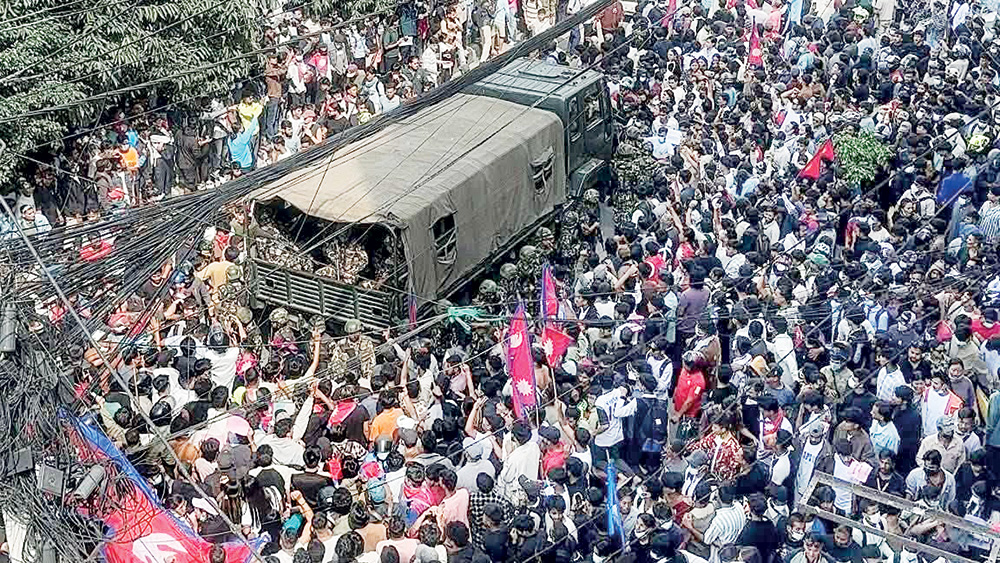
“We pay; You flex.” A placard displayed during Nepal’s 8 September protests
On the face of it, there aren’t many similarities between the leaders of Indonesia and Nepal. Prbawo Subianto was a son-in-law of former President Suharto. As a general and special forces commander, he oversaw the crackdown on 1988 students’ protests which eventually overthrew President Suharto. Accused of serious human rights violations including against journalists and political dissenters, he was elected president for the first time in 2024.
Nepal’s prime minister until early this week, KP Sharmal Oli, is a member of the Communist Party (Unified Marxist-Leninist). A lifelong activist, he spent 14 years behind bars as a political prisoner, four of them in solitary confinement. He has served as Nepal’s prime minister thrice.
Divided by history and ideology, the two leaders had one factor in common – an inability to gauge the pulse of the people, especially the youth.
In Indonesia, the breaking point came when reports emerged that all parliamentarians enjoy a monthly housing allowance 10 times the size of minimum wage in capital Jakarta. This was while the government was implementing harsh austerity measures with deep cuts in education, health and public works.
In Nepal, the breaking point came with a ban on 25 social media platforms (until they register with the government). The ban was ordered by the Supreme Court and came at a sensitive time, when social media was rife with posts about the lavish lifestyle of ‘nepo-kids’ (a play on the word nepotism and on the Hollywood creation, Nepo-babies), children of politicians and other power-wielders who are privileged due to their parentage/family connections. “For weeks before the ban, videos were circulating on social media purporting to show the expensive cars, handbags, and vacations enjoyed by politicians’ offspring,” wrote London’s Financial Times. And the images “proved incendiary in a country that ranks 107th out of 180 countries in Transparency International’s annual corruption index and where many say political graft is rife.” Not just politicians. “Earlier this week, a video on TikTok showed images of Sayuj Parajuli, the son of former Nepali Supreme Court Chief Justice Gopal Parajuli, posing next to cars and in fancy restaurants,” according to Al Jazeera.
In both countries, the protests were more or less peaceful, initially.
In both countries, the use of lethal force was initiated by rulers.
Then all hell broke loose.
Both countries have exceptionally high youth unemployment rates. “In a survey published by the ISEAS-Yusof Ishak Institute in Singapore in January, young Indonesians express far more pessimistic attitudes about the economy and the government than their peers in Thailand, Malaysia, Singapore, the Philippines, and Vietnam,” wrote Al Jazeera. There are few employment opportunities and even fewer jobs with decent wages for Indonesian youth.
Nepal’s young people too are prospect-less and increasingly hopeless, “sick of a corrupt political system and a political class, sick of seeing the same discredited old men taking turns to lead and loot the country, sick of seeing no future path but to leave for work abroad which thousands do every day” (https://www.himalmag.com/politics/nepal-gen-z-uprising-oli-resignation).
Both countries once experienced new dawns. In Indonesia, it was in May 1988, with the fall of Suharto’s 32-year dictatorial rule, caused by economic collapse and public protests. The Reform Area with civilian rule and democratic elections began with hope. But slow pace of reforms, continuing economic woes, and unending corruption eroded the mood of optimism.
In Nepal, the break with the past was starker – transition from monarchy to a republic, and the electoral victory of a party which had engaged in an armed struggle against that monarchy. “But they failed to make any real impact and soon became another establishment party. Their failure is best symbolised by how their leader – Chairman Prachanda himself – soon became known more for his personal wealth than his revolutionary credentials. A new draft constitution, shockingly progressive in Nepal’s historical context, was stalled and stalled until it was forced through after much watering down” (ibid).
It is a dangerous business, first nourishing, then betraying popular hope.
On Constitutional Dictatorships and would-be-kings
The NPP/JVP government took nearly 10 months to fulfil one of its main election promises – removing perks and privileges enjoyed by former presidents.
It could have fulfilled that promise much earlier since it has a two-thirds majority in parliament and more. The delay caused criticism and ridicule. The proposal to repeal the 1986 President’s Entitlements Act was presented to the cabinet only in July 2025, obviously in response to the government’s far from stellar performance at the May local government elections.
Now the deed is finally done, for which the government deserves praise. Especially since it seems as if no other political party would have done it, going by the conduct of the Opposition during the debate and the vote.
The President’s Entitlements (Repeal) Act has scrapped official residences, secretarial and other staff, transportation facilities, and pensions granted to former presidents and their relicts. Security for former presidents never came under the President’s Entitlement Act of 1986. Therefore, the Act’s repeal has no bearing on the matter. The level of security provided to former presidents will continue to be determined by a special committee, subject to periodic reviews.
A list read out by Minister Ananda Wijepala during the parliamentary debate demonstrates the degree to which various former presidents have abused the President’s Entitlements Act. The extra staff allocated to former president Mahinda Rajapaksa included 16 cooks, 26 electricians, three personnel trainers, one carpenter, and one dog minder (why a carpenter for Heaven’s sake, or 26 electricians, not to mention so many chefs?). Gotabaya Rajapaksa’s staff included eight chefs, one personal trainer and one dog minder.
Clearly, excess was the norm, entitlement the rule.
Entitlement.
During a recent a pocket meeting, Namal Rajapaksa is captured on camera saying, “Our family did politics for 100 years, father, grandfather. Whether our children do politics or not is in their hands. But if they want to, things must be set, so they can do so. It will be a mess if they are told, Your father and grandfather did badly…” (https://www.newswire.lk/2025/08/11/our-children-should-be-able-to-do-politics-if-they-want-to-namal/). His children are still toddlers, yet he is already planning their path to power, if they decide to tread it.
The Rajapaksas, like the Bourbons, are incapable of either learning or forgetting. If they return to power, the abuse of state resources will return, together with the practice of treating the state as a private fief, rampant corruption, and unbridled nepotism.
Not to mention a constitutional dictatorship.
Namal Rajapaksas reportedly birthed the term during the arrest of Ranil Wickremesinghe. The NPP/JVP government is not a constitutional dictatorship, yet. But that label is a perfect fit for the governments of Namal Rajapaksa’s father and his uncle.
Like the 18th Amendment to the constitution which emasculated the independent commissions, enhanced presidential powers and removed presidential term limits.
Or the illegal impeachment of Chief Justice Shirani Bandaranayake.
In a classified cable written on February 24, 2010, the US Ambassador identified the then Supreme Court Justice Shirani Bandaranayke as a ‘Rajapaksa-loyalist’. She was that indeed. She headed the benches which rejected Gen. Fonseka’s petition for bail, approved the 18th Amendment in just 24 hours, gave a free passage to the Expropriations Bill, and rejected petitions against compulsory Leadership Training and the blocking of anti-government websites.
She might have worked through and around the constitution, even bent it now and then. But she wasn’t willing to violate it blatantly. So she didn’t give free passes to two pet Rajapaksas projects – Basil Rajapaksa’s Divineguma Bill and Gotabaya Rajapaksa’s Town and Country Planning (Amendment) Bill, popularly known as the Sacred Areas Act. Both dealt with devolved/concurrent subjects and needed the go ahead from all provincial councils.
Consider how much more of a constitutional dictatorship Sri Lanka would have become if the Sacred Areas Act had become law.
The Act consisted of four pages and eight clauses. It empowered the Minister of Buddha Sasana and Religious Affairs to acquire any land or building by the simple expedient of labelling it a Protection area, Conservation area, Architectural or Historic Area or simply a Sacred Area. Had it gone through, it would have been Open Sesame for land grabbing, either for profit or as punishment/revenge.
In November 2011, in response to a petition by the CPA, a Supreme Court bench headed by CJ Shirani Bandaranayke ruled that the Bill needed the concurrence of provincial councils to pass. Another bench headed by her made the same ruling via the Divineguma Bill in 2012.
So, CJ Bandaranayke was hounded out of office via an illegal impeachment and Mohan Peiris appointed as CJ. During the run up to the impeachment, High Court Judge Manjula Tilakeratne, who functioned as the Secretary of the Judicial Services Commission (JSC), was pistol whipped as he waited in his car outside his son’s school on a Sunday morning. He had earned the Rajapaksa ire by issuing a public statement on behalf of the JSC warning about attempts to undermine judicial independence. His assailants were never caught.
Now that was a constitutional dictatorship.
The NPP/JVP might head there – its conduct vis-à-vis a disputed property in Yakkala indicates a dangerous latency, an unacceptable willingness to take law into its hand, while a supine police looked on. But the Gampaha High Court has ordered the police to evict those JVP members who occupying the property currently. Whether the police are allowed to carry out that judicial order – or not – will be a litmus test both for the IGP and for the government.
There is much the government does which must be resisted and opposed. The President’s Entitlement (Repeal) Bill is a rare exception. The democratic Opposition’s inability to support that Bill demonstrates how far it is from becoming a real alternative to the government.
Beware of the people
The SLPP’s decision not to support the President’s Entitlements (Repeal) Bill is understandable. Not so the decision by the SJB and the minority parties to follow suit.
The President’s Entitlements Act was the work of JR Jayewardene. But he didn’t avail himself of an official residence, post-retirement. As president, Sajith Premadasa’s father lived in his lifelong residence of Sucharitha, in Colombo Central. He would have continued to do so, post-retirement. And he was already preparing the Visura Building, also in Colombo Central, to function as his office, post-retirement. Sajith Premadasa could have honoured his father’s (and the UNP’s) tradition and supported the Bill. Unfortunately, though he mentions his father often, he rarely follows in Ranasinghe Premadasa’s footsteps.
Sajith Premadasa displayed fidelity to principles and courage in his unstinting criticism of Israel’s genocidal war in Gaza (unlike the NPP/JVP government which seems to be living in terror of Israel; its statement on Israel’s unprovoked state-terroristic attack on Qatar does not mention the word Israel even once!). It is a pity Sajith Premadasa lost that courage and fidelity to principles when it came to the President’s Entitlements (Repeal) Act. He and his party took the coward’s way out and stayed away from the chamber during voting time – probably because they know that a No vote or even an abstention could return to haunt them in the future.
The democratic opposition cannot become a credible alternative to the government if it either aligns with the Rajapaksas or emulates their stances and policies. What will it do if the NPP/JVP is compelled by public pressure to honour another – and very popular – election promise and brings a bill to remove the perks and privileges enjoyed by current and former parliamentarians? Oppose that bill too? What if the government is forced to abolish the executive presidency? Will the opposition oppose that as well?
Sri Lanka still has an unacceptably high youth unemployment rate – around 22% in 2024. Our poverty rate increased drastically thanks to the economic collapse, to about a quarter of the populace. In 2024, poverty rate remained a very high 24%. These are danger signs. If the government fails to deal with these problems adequately, if the populace veer from hopefulness to despair, there might be another outburst of public anger. And the bloody lessons from Bangladesh to Nepal make one thing clear – such outbursts are against not just the governing party but the entire political class, including the opposition.
Despair doesn’t make people rational or reasonable; it makes people lash out against anything and anyone they believe to be responsible for their plight. Keeping Sri Lanka out of that place is the responsibility of both the government and the opposition. Because the price of failure will have to be paid not by one party or individual, but every party and every citizen – and in blood.
by Tisaranee Gunasekara ✍️


 At a time when Sri Lanka’s foreign policy is coming under intense scrutiny by some local sections it is only right that impartial and independent commentators shed some clarity on what fundamental foreign policy directions Sri Lanka ought to take. The extremely fluid and complex nature of current international politics renders such an understanding crucially important.
Given its vulnerabilities in a number of spheres Sri Lanka has no choice but to persist in broadly following the path of Non-alignment. That is, it should be ‘a friend of all and an enemy of none’, to the extent possible. However, it does not follow that in the process it could compromise what is seen as its national interest.
The latter point needs stressing against the backdrop of the criticisms the Sri Lankan government has been attracting from some quarters over what is made out to be some opaqueness in security and defence cooperation agreements it has entered into with India. It remains advisable for the Sri Lankan government to enter into pacts of this nature with India, but the government is obliged to disclose the contents of these agreements to the Sri Lankan people without undue delay in consideration of the uncompromisable sovereign rights of a people in a democracy.
However, there is no denying that the government should make it a central foreign policy premise to always work in cooperation with India. A consideration of what it cost Sri Lanka in the past to be in a disharmonious relationship with India and how such policy missteps worked against Sri Lanka’s best interests ought to dictate to Sri Lanka the advisability of maintaining uninterrupted cordial ties with India. Moreover, common sense ought to drive home to a country the costs of being at loggerheads with one’s closest neighbour who has also proved a ‘ready friend in deed.’
That said, it is the bounden duty of Sri Lanka’s diplomatic community or establishment to ensure that such cooperation does not degenerate into a policy of subservience towards India. That is, finesse and farsightedness in local diplomacy become prime requirements.
While India’s geographical location and physical size, besides her other strengths, contribute towards her centrality in regional and world affairs, her neighbours would be thinking and acting far-sightedly if they not only focus on India and her legitimate interests but also ensure continuous friction-free intra-South Asian relations. That is, for them collective South Asian well being should be of fundamental importance.
Much more than for India perhaps, such harmonious ties are of inestimable importance to India’s neigbours who are up against multiple vulnerabilities which are to a great extent regionally rooted. The latter could never, that is, afford to take their minds off the region’s collective development prospects.
The above are some of the reasons why it could prove highly counter-productive and self-defeating for the ‘South Asian Eight’ to render dormant and ineffective the historic SAARC organization. Rather than ‘dead’ SAARC has been allowed to drift into the ‘Limbo of Forgotten Things.’
The growing inter-dependence of the ‘SAARC Eight’ ought to impress on the collectivity the need to step-up regional cooperation in multiple areas which impinge on its members’ legitimate interests. For instance, the youth-led ‘Cockroach’ revolts, first in India and subsequently outside, should convince South Asia that it is continuing to be plagued in a major way by poverty and equity-linked issues. That is, West-inspired, largely market economics-dictated ways to see an end to poverty are simply not working completely.
Likewise climate-related questions are ravaging South Asia in unimaginable ways; Nepal being just one case in point. The rationale for regional cooperation remains valid and undefeated. It is time for revived and stepped-up SAARC cooperation. That is, the solutions to the region’s development dilemmas need to be found in mainly the region.
This amounts to making a case for a continued sense of ‘Southasianness’ among the SAARC countries. That is the conviction should be firm that they know their developmental challenges best and that answers to these issues must be primarily evolved by the grouping itself in cooperation with concerned sections.
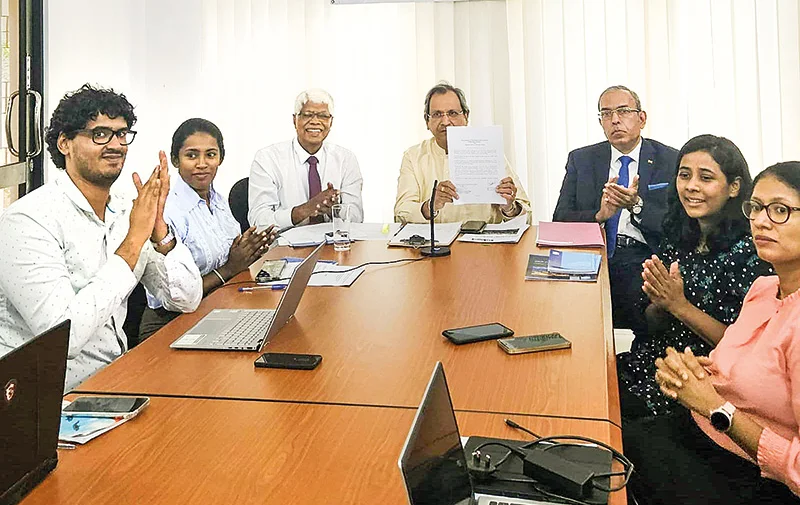
From the above viewpoints the Regional Centre for Strategic Studies (RCSS), Colombo did very well to tie-up with the South Asian University (SAU), India, to increase public awareness on the developmental problems affecting South Asia and for initiating a number collaborative measures that aim at ameliorating them. The relevant agreement was formalized in early September at the RCSS. The sealing of the pact took place under the aegis of SAU President Prof. K.K. Aggarwal and RCSS Executive Director Ambassador Ravinatha Aryasinha.
A press release issued by the organizations said the collaboration aims ‘to foster research networks, partnerships and collaborations for transformative change across South Asia.’ It also mentioned that the partnership marked the first agreement to be signed by SAU with an independent think tank in Sri Lanka.
Among other things, pacts such as the above are bold moves in the direction of fostering a spirit of intellectual independence in those areas of the South facing some of the stiffest developmental challenges. Rather than ‘import’ solutions to these challenges from outside the region, the SAU-RCSS initiative aims at fostering fresh approaches to evolving solutions to problems that are uniquely South Asian.
It is hoped that the SAU and RCSS initiative while leading a to a greater degree of Southern intellectual independence in the area of development thinking would also help in kick-starting the SAARC process all over again in a major way.
What ought to lend fresh urgency to the latter undertakings are fast-breaking current developments in international politics. It ought to be perceived by the most underdeveloped regions of the South that going forward their well being would matter least or not at all to the major powers of both East and West.
For example at the time of writing the foremost among US and Chinese political leaders are meeting in the US in what is made out to be a historic coming together of sorts to address issues of common concern. It is highly unlikely that the parties would be addressing the economic preoccupations of the least developed countries. The same goes for other states that matter from the East and West.
Essentially, the US and China would be looking at ways of strengthening business ties that matter majorly for them. The South and its issues would prove to be of peripheral interest, if at all they happen to matter to the protagonists. Such developments ought to be fresh reminders to the South and their collaborative organizations that there is no escaping self-help and joint solidarity.

by Prof. M.W. Amarasiri de Silva
Adult literacy has for a long time been one of Sri Lanka’s greatest sources of pride, serving as a social indicator that has set the country apart from several of its neighbours in the region. For many years Sri Lanka has been recognised for keeping its literacy rates at a level like those of middle-income countries and even some high-income ones, even though it has faced economic difficulties and political instability. However, since new global research has now shown an unexpected and concerning decline in adult literacy in several high-income countries, it is important to consider what this means for Sri Lanka.
The phenomenon described by Jishnu Das, Yash Dhuldhoya and Ethan Sager, the unexplained fall in functional literacy among adults in wealthy nations. calls for a more thorough examination of the nature of literacy, the pressures exerted by the modern information environment, and the vulnerabilities that Sri Lanka might encounter as it moves towards a more digital, ageing and complex society. Even though Sri Lanka’s basic literacy rates remain high and steady, the global trend acts as a warning that literacy is not a fixed accomplishment but a dynamic capability which must be continually fostered, safeguarded and adapted to changing circumstances.
Decline in functional literacy
The drop in literacy rate in high-income countries is not due to people losing the ability to read or write in the ordinary way. On the contrary, it reflects a decline in functional literacy, which is the capacity to deal with, understand, and apply information in real-life situations. This kind of literacy involves following instructions, comprehending official documents, using digital interfaces, interpreting medical information, and making sense of complicated texts that demand continuous attention.
Researchers stress that the decline cannot be attributed merely to disruptions caused by COVID-19 or the increasing use of smartphones; instead, there is going on something more fundamental: a weakening of the cognitive and informational bases that adults need to function properly in modern society. In countries such as the United States, the percentage of adults regarded as functionally illiterate has increased significantly, indicating that even highly educated societies are having difficulty in keeping up the skills required to handle ever more complex streams of information.
Sri Lanka immune?
At first sight, Sri Lanka seems to be immune from this trend. The country’s adult literacy rate is still above 92 per cent and youth literacy is even higher. According to the 2024 Census, literacy rates exceed 97 per cent among people aged ten and over, with nearly equal levels between the sexes. These figures show the continued strength of Sri Lanka’s system of free education, a system which in the past has guaranteed widespread access to school and has produced generation after generation of citizens who could read and write at a basic level.
There has also been a steady improvement in educational attainment, with an increasing number of adults finishing secondary education and a larger proportion going on to tertiary institutions. Unlike the mysterious drops observed in rich countries, Sri Lanka’s literacy figures demonstrate stability and even a slight improvement.
However, although the surface appearance is reassuring, an even more complicated reality exists. The literacy figures for Sri Lanka only record basic literacy, that is, the ability to read and write simple sentences, and they do not include measures of functional literacy. It is impossible to tell from these statistics whether adults can interpret a bank statement, understand a medical prescription, use an online government portal, or critically assess information that is spreading on social media. As is shown by the global trend, having a high level of basic literacy does not ensure a strong degree of functional literacy. On the contrary, functional literacy can fall even if basic literacy stays the same. This difference is important for Sri Lanka, particularly since the country is currently experiencing rapid digitalization, demographic ageing, and social change.
Major risk factor
A major risk factor is the move towards digital information environments. In high-income countries, researchers believe that the prevalence of smartphones and short-form digital content may be diminishing people’s ability to engage in deep reading. Nowadays, individuals take in information in short, rapid segments by scrolling through social media feeds, quickly reading headlines, and viewing short videos. Such behaviour decreases the opportunity for sustained reading, which is necessary for keeping comprehension, critical thinking, and the capacity to deal with complex information intact.
Sri Lanka is going through a comparable change. There has been a sharp increase in the number of people using smartphones, and social media sites have become the main sources of news, leisure, and communication. Although there are many advantages to having digital access, it also results in a situation where superficial reading becomes the standard approach and could therefore lead to a decline in functional literacy over time.
Demographic ageing as challenge
A further challenge that is coming up is demographic ageing. Sri Lanka is rapidly moving towards becoming an ageing society, with an increasing number of older people who might experience cognitive decline, have less exposure to new information, and enjoy few opportunities for further learning. In high-income countries, ageing populations have led to a fall in functional literacy since older individuals have had difficulty adapting to digital systems and complicated bureaucratic procedures.
The older generation in Sri Lanka, many whom were educated many decades ago under different curriculum standards, could end up becoming increasingly vulnerable in a world in which essential services, such as banking and healthcare, are being moved online. If appropriate support is not provided, the country may witness a growing gap between basic literacy and functional literacy among older adults.
In Sri Lanka, the way in which administration and the workplace are organised has in the past placed greater trust in personal communication and on basic forms of documentation. What in high-income countries would require complex reading is instead carried out through face-to-face contact in Sri Lanka. Nevertheless, this situation is now changing. Government services are becoming available online, banks are introducing digital systems, and in workplaces there is an increasing need for employees to use electronic systems. Since these changes are happening at a faster rate, the demand for functional literacy will increase. Should adults not be able to meet these new demands, Sri Lanka might start to see the kind of decline in literacy that has been seen in other places.
Misinformation and disinformation
Another worry is the spread of misinformation and disinformation. In Sri Lanka, there has already been the quick dissemination of false information via social media, with this having an impact on public health, politics, and social cohesion. Since functional literacy is essential for allowing people to assess sources, doubt the claims made, and tell the difference between reliable information and falsehoods, a lack of functional literacy causes societies to be more open to manipulation, polarisation, and confusion.
The fact that there has been a global drop in functional literacy at the same time as misinformation has increased points to a dangerous feedback cycle: when literacy is low people become more prone to misinformation, and the misinformation in turn damages their ability to think critically about information. Given that the country has a high level of social media use and a lack of digital literacy training, Sri Lanka should take this risk seriously.
Even though there are these risks, Sri Lanka has several advantages which can assist in avoiding a drop in functional literacy. The country’s system of basic education is still strong, showing high enrolment figures and good results in basic literacy.
Families in Sri Lanka still place a great deal of importance on education and reading is still a respected cultural activity. Furthermore, because of its relatively small size and the fact that it has a centralized form of government, it is more efficient than in bigger countries to carry out nationwide literacy campaigns. These strengths offer a firm basis for developing new strategies for protecting and improving functional literacy.
Literacy a process
It should be realised by Sri Lanka that attaining literacy is not a single accomplishment achieved in childhood. In the modern world, literacy must be a skill that is constantly put into practice, kept up to date and adapted to changing circumstances. The fact that adult literacy is declining worldwide shows that even in wealthy countries with well-developed education systems deterioration can occur if adults are not supported in keeping their cognitive and informational abilities. Sri Lanka cannot afford to be careless.
It is necessary for the country to invest in adult education, in programmes concerning digital literacy and in the development of cognitive skills for all age groups. It also needs to establish ways of measuring functional literacy rather than just basic literacy so that policymakers can detect emerging weaknesses and act in advance.
A vital measure is to increase the opportunities for adult learning. Although Sri Lanka has effective literacy programmes based in schools, the country’s infrastructure for adult education is limited. Community centres, libraries, universities, and vocational institutes should take on a more significant role by providing courses, workshops, and reading programmes which are tailored for adults. The programmes should place an emphasis not just on reading and writing but also on digital navigation, critical thinking, and information processing. Adults should be given the chance to practise the skills that are necessary for them to function effectively in a rapidly changing world.
Importance of digital literacy programmes
It is just as important to have digital literacy programmes. Since an increasing number of services are being offered online, adults need to learn how to use digital tools with confidence and in a safe manner. This involves knowing how to fill out online forms, moving around on government websites, using banking apps, and being able to spot misinformation. The digital literacy courses available should be accessible, affordable, and adapted to different age groups, especially older adults who might feel put off by technology. Schools can also contribute by incorporating digital literacy into their curriculum so that future generations acquire good functional literacy skills from an early age.
Sri Lanka should also investigate introducing policies which promote cognitive health among older people. Since cognitive decline can lead to a deterioration of functional literacy, it becomes more difficult for older individuals to deal with information. It is possible to help keep cognitive function by setting up programmes that promote reading, social interaction, physical activity, and continued learning. During regular medical visits, healthcare professionals should include cognitive assessments so that any problems affecting literacy-related skills can be picked up early.
Sri Lanka needs to create tools for measuring functional literacy, since the figures available on basic literacy give an incomplete account of the country’s capabilities. By using assessments of functional literacy like those employed in high-income countries, Sri Lanka would be able to monitor how well its adults can apply their literacy skills in real-life situations.
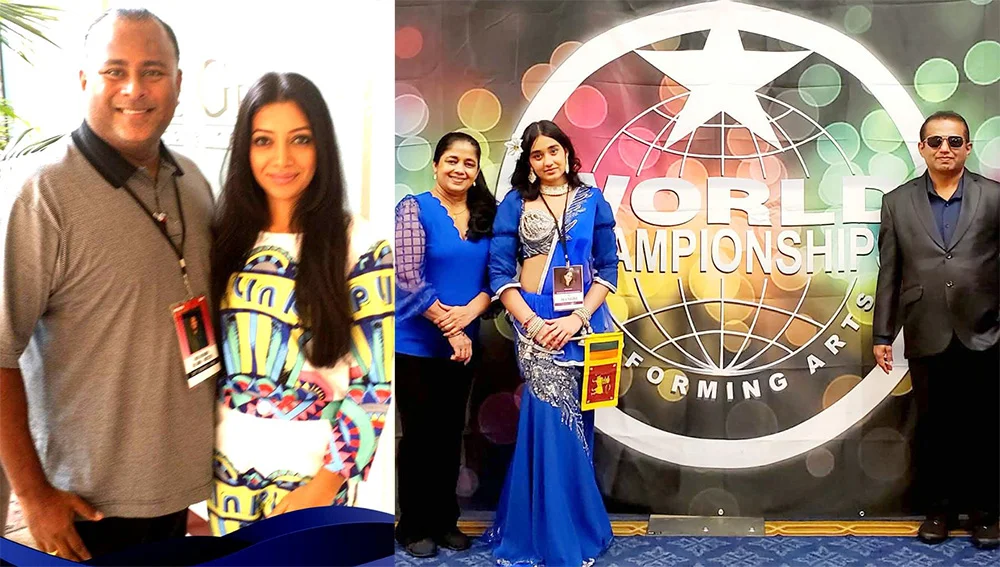
 The World Championships of Performing Arts (WCOPA) is known globally as the Olympics of performing arts, but Sri Lankans came to know of it more closely when Natharie Wickramasinghe, representing Team Sri Lanka at WCOPA 2026, in Las Vegas, earned a Bronze Medal in the Ethnic/Folklore Dance category.
Behind Sri Lanka’s WCOPA journey is Sri Lanka-born Chris Rajendra, who migrated to the United States in 2007, and deserves special congratulations.
Passionate about discovering and promoting talent, Chris has been actively involved in the pageant and performing arts, industry since 2002.
A major milestone came in 2015, when he introduced WCOPA, to Sri Lanka, for the first time, creating an international platform for Sri Lankan performers.
Sachini Ayendra became the very first candidate to represent Sri Lanka at WCOPA, in 2015, marking the beginning of Team Sri Lanka’s journey.
Chris served as National Director for Team Sri Lanka from 2015 to 2018, and has returned to the role for the 2026–2027 term, continuing his commitment to identifying, developing and promoting Sri Lankan talent internationally.
His involvement in pageantry and performing arts includes:
Recruiter, Miss Nevada United States – 2014

Chris Rajendra: National Director – WCOPA Team Sri Lanka
Manager, Miss Colombia Las Vegas – 2013 to 2017
Director for the West Coast and International Divisions of Ms. Latina International and Ms. International World – 2017
National Director for Team Sri Lanka – WCOPA, 2015–2018 and 2026–2027
Co-National Director for Team USA – WCOPA 2026
In the USA, Chris began his career in retail before transitioning into insurance and financial services, where he built extensive experience in sales, marketing, leadership and business development.
He owned and operated a brokerage, affiliated with multiple insurance companies, and later served as Marketing Director with Transamerica and World Financial Group.
As his business expanded across Las Vegas and California, he continued to hone his expertise in sales, marketing and client relations. He now works as a Sales Executive at Hilton Grand Vacations.
Looking ahead, Chris will shortly launch the application process for Team Sri Lanka 2027, giving talented Sri Lankan performers another opportunity to represent the country on the world stage.
The 2027 World Championships of Performing Arts will take place in Las Vegas, USA, in July or August 2027.
Through his work in both the corporate and performing arts worlds, Chris Rajendra continues to combine leadership, networking and talent development — creating opportunities for Sri Lankan performers to showcase their abilities on a global platform.

Showerss above 100 mm are likely at some places in the Western, Sabaragamuwa, Central and North-western provinces and in Galle and Matara Districts

Mirabai Chanu wins Asian Games silver as Ri breaks weightlifting record

Trump greets China’s Xi Jinping on arrival for three-day US

BASL calls for conscience vote on 22nd Amendment

IMF: Sri Lanka on course for 2027 market return

President appoints three new judges to High Court

‘Dates have the highest sugar content to fight Coronavirus’

Sunday Island 27 December – Headlines

#SundayIsland 17th December – Headlines

Sunday Island – 28th March

Sunday Island Headlines – 21 March

Sunday Island – 21st February – Headlines
-

 News5 days ago
Shanakiyan urges urgent action over reported death sentence for Lankan in Saudi Arabia
-

 News6 days ago
Bid for Basil’s extradition nears final stage: Police
-

 News4 days ago
Namal Rajapaksa Buddhist gambit fails, bail denied
-

 Features4 days ago
Why the spelling Sri Lankan names in English vary
-

 Features4 days ago
Three bands, a new identity: Sri Lankan wolf snake recognised as distinct species
-
 Business4 days ago
SLIIT holds largest-ever convocation
-

 News4 days ago
Govt monitors reported Saudi death sentence – Foreign Ministry
-

 Business4 days ago
All-new Bolero MaXX Pik-Up unveiled in Lanka