
Life style
The tragedy of Afghanistan. Is there a way forward?

by Anoja Wijesekera
The desperate scenes at Kabul airport of Afghans trying to flee and the image of the US Airforce flight taxi-ing down the runway while people were trying to board it, and hundreds running alongside, is an image that will be etched in our minds forever.
The tragedy of Afghanistan is that the same saga of desperation and suffering has been repeatedly endured by ordinary Afghans who have been at the receiving end of war, throughout their lives. They have suffered death, loss of limbs, loss of breadwinners, loss of livelihoods, the destruction of their homes, the trauma of displacement, the horrors of seeing their loved ones killed before their very eyes, squalor, pain, hunger and cold, for over four decades.
At a human level, the Afghans feel betrayed by the Western Alliance and the US. This is not the first time but the second. When the Russians invaded Afghanistan in 1979, there was no overt resistance from the West. However, the Afghan warlords and their supporters who provided some resistance were armed and funded by the CIA, via the ISI of Pakistan, in order to defeat the Russians. The Afghans paid a heavy price; an estimated two million died another two million lost their limbs and approximately 800,000 women became widows. The entire infrastructure of the country was destroyed.
Once the Russians left, the US turned its back on Afghanistan and paid no heed to help in the reconstruction and development of that battered land. This was the first experience of betrayal and it was also at that time, that Osama Bin Laden who was an ally of the US and a part of the Mujahideen, became its sworn enemy.
The second episode took place after 9/11. In order to get at Osama Bin Laden, the mastermind of the 9/11 attacks, the US invaded Afghanistan. Although Osama Bin Laden had already left Afghanistan, many bombs were dropped, followed by drone attacks. Large numbers of civilians including women and children were killed as a result, throughout this 20-year period. Now in August 2021, with no proper system in place to ensure peace and stability, the US forces simply left. Even General David Petraeus, former Commander of the US forces in Afghanistan and former Director of the CIA, expressed his shock when interviewed on TV. For the Afghans, in their hour of need, the sudden and inexplicable departure of their President, Ashraf Ghani, is an even greater disappointment that they find hard to bear.
It is difficult to think that President Ghani left because he wanted to save his own skin. It is possible that this was part of a hasty deal worked out with the Taliban that went hand in hand with the sudden withdrawal of American troops. By paving the way for the Taliban to enter Kabul unhindered, and with no resistance offered by the Afghan army, a blood bath was averted. The destruction of the infrastructure and livelihoods in Kabul was also prevented. In turn, it is possible that the Taliban agreed to all the concessions that they announced during their press conference in Kabul, on 17.8.21.
The Taliban spokesman declared that an amnesty has been granted to all those who opposed them and that all citizens should remain in Afghanistan and help in re-building the country. They announced that all would be safe and that they forgive those who fought against them, and in turn that they should be forgiven. The Taliban stated that women would be allowed education and the right to work, as per the dictates of Sharia Law. It was also announced that no one will be allowed to use Afghanistan to attack other countries and that opium cultivation and its trading would be stopped. There was an indication that an inclusive government would be formed, but under their command.
The inevitable takeover of the country by the Taliban should come as no surprise to anyone, as it was evident right from the start. There is a popular Taliban saying “You have the watches, we have the time. We were born here and will die here. We are not going anywhere”.
A look at the map of Afghanistan, showing the areas under Taliban control indicates clearly how the Taliban gradually and surely increased the areas under their control over these 20 years. The take over of Kabul on August 16, 2021, was just the last lap of the race and was a parting gift offered on a platter by the US, when it hurriedly withdrew its troops out of Bagram airport, with no apparent handover and no declared plan for governance.
The Western misadventure is but a repetition of the history of Afghanistan. No foreign invader has ever been able to hold Afghanistan for long or maintain governments of their liking for any length of time. In the 13th Century the mighty army of Genghis Khan was massacred by the Afghans. In the 19th century, in the heyday of the Empire, the British sent a garrison to Kabul and each and every soldier except one, was slaughtered. In the 20th Century, the USSR invaded Afghanistan and were defeated in no uncertain terms, despite their weaponry and might.
There is a saying that those who don’t learn the lessons of history are doomed to repeat them. The US did not learn from what happened to the Russians or from their own experience in Vietnam. At a time when the TV footage is showing the desperation of the Afghans, the efforts made by the US government to justify their hasty departure and declare to the world that their mission in Afghanistan was a success rings hollow and indicates a cynical disregard for the horrific ground situation. Subsequently the US announced that it would help Afghans who worked for them, to seek refuge in the US.
Now, as things evolve, whatever working arrangements are agreed with the previous administration and other stakeholders, the reality is that the Taliban is back in power and seem to be determined to recreate their “Emirate”, characterised by the strict imposition of Sharia Law. The Taliban has declared repeatedly that they would allow female education this time round, indicating a softening of their stance. However, the news from the areas under their control, indicate that their rhetoric is at variance with the ground realities in some places. When questioned on this, the Taliban spokesman said that all such incidents would be investigated.
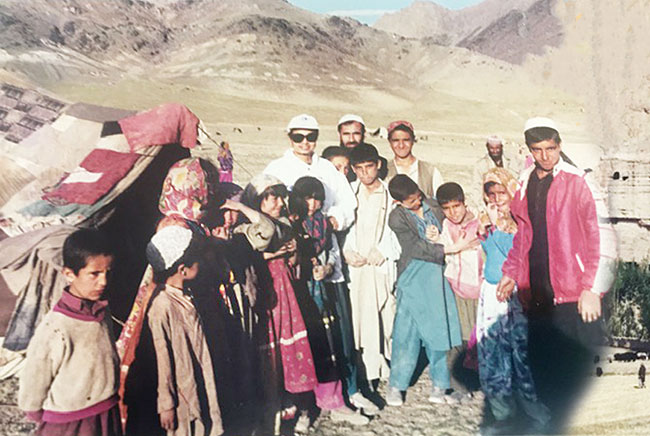
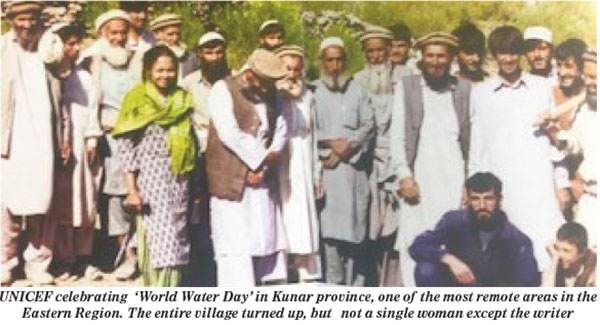
I served with UNICEF in Afghanistan, in the years 1997 to 2001, both in Jalalabad and Kabul and am therefore very familiar with the draconian regulations of the Taliban.
The Taliban brand of Sharia Law imposed during their time in office, which was from 1996 to 2001, was particularly geared towards the ruthless limitation of women’s freedom and rights. Women were debarred from working and girls’ education was banned. Women were restricted to domestic work in their own compounds. When going out, they were forced to wear a “burka” that covered them from head to foot. At the time I was there, they passed the Maharam Edict, which dictated that women could not walk alone on the streets. A woman had to be accompanied by a “Maharam” meaning husband, brother or son or a very close male relative.
Failure to do so resulted in getting beaten on the roadside. The Beard Law, meant that all men had to grow beards. Men were prohibited from even trimming their beards. Both men and women were beaten in public if they flouted these regulations. Even some of our own staff members were flogged in public for trimming their beards. The Taliban brand of justice was meted out on the streets, by their vice squads, who beat you first and asked questions later.
Music was prohibited. All musical instruments were destroyed. Music playing in vehicles was banned. TV, films, entertainment, gatherings of men and women together were prohibited.
Under the Taliban regime, at the time, people had to pray five times a day regardless of any consideration. At prayer time people had to stop whatever they were doing and turn towards Mecca and go down on their knees or be beaten even on the road-side. The penalty for theft was the amputation of limbs and the punishment for adultery was stoning to death. The football stadium in Kabul was an arena where these horrific acts were performed in front of an audience. There was no judicial system and no due process. An accusation was regarded as sufficient evidence of having committed a crime.
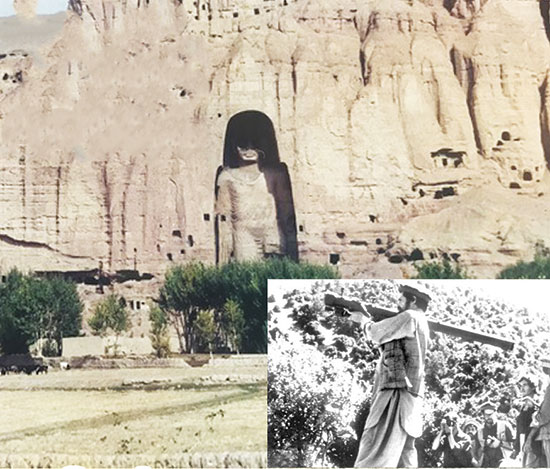
Games including card games and board games were prohibited. Iconography, art, photographs and images were destroyed. Priceless artefacts in the Kabul Museum were smashed to smithereens and we are all too aware of what happened to the Bamiyan Buddha statues, which were priceless treasures and a wonder of the ancient world.
When I first went to Afghanistan in 1997, as the UNICEF Resident Project Officer in Jalalabad, the Taliban refused to look at me, as I happened to belong to the female gender. At meetings, which were all male events, they would look away from me with an expression of total disgust and would keep their heads turned away from me, when speaking to me. They clearly indicated that meeting with a woman was abhorrent to them. One Mullah even went to the extent of covering his own face when he had to pass by me. I found this utterly amusing and did not let it bother me.
After a couple of months of this icy reception, which I considered to be a farcical comedy, they gradually thawed and even shook my hand and became friendly. The Mayor of Jalalabad, who earlier covered his face, became particularly friendly and had many conversations with me, in English, declaring that he did not oppose girls’ education. I learned that he was educated to degree level. I said to my staff that I thought that perhaps the Taliban thought that I had turned into a man! As time passed, many Taliban officials and heads of departments, said that they regarded me as a sister.
After the closure of girls’ schools when female teachers lost their jobs, Home Schools were started by them in their own compounds, which UNICEF supported. As the Home Schools progressed, and grew by the day, I began to think that perhaps even the Taliban sent their daughters to those schools.
It was evident that some of the educated Taliban knew the value of education. Most of their foot soldiers however have only been to a Madrassa [Islamic school], where the curriculum consists of memorising the Quran, studying Arabic and learning the art of guerrilla warfare. However, the educated Taliban realise that it is important to address economic, social, health and educational issues, in addition to implementing their draconian version of Sharia Law.
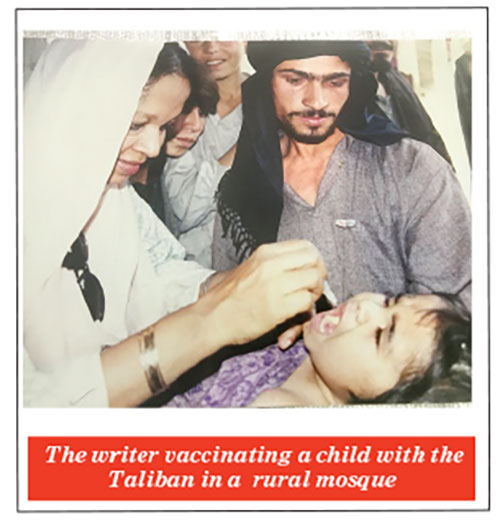
Since I had to work with the Taliban government on a daily basis, I thought to myself that the Taliban are after all human beings and I decided even before I took up my assignment, that I will simply deal with them as one human being to another. Therefore, I accorded them the due respect they were entitled to on account of the office they held and regarded them as fellow citizens of the world. I followed the dictum that one has to give respect to get respect. This formula was effective and very soon they cooperated with me and my colleagues on all the programmes UNICEF had to implement, including our efforts to promote maternal and child health, and the inclusion of women in some of the activities.
However, each activity which involved the participation of women, was implemented with due consideration and in a very low-key manner. I was guided by my Afghan colleagues who knew exactly how to approach this problem. The Taliban departmental heads also gave tacit approval for the participation of women in our programmes, as the women had to be paid through a government department, as per UN regulations.
Towards the end of my tenure, when the Bamiyan Buddha statues were blown up, and I was devastated, one senior Taliban minister apologised to me, as he knew that I was a Buddhist. He said to me that many people in the Taliban government opposed this action, implying that the Bamiyan Buddhas were a part of their own heritage, which they respected. The Afghans reported that the Buddha statues were not destroyed by the Taliban, but by the Al Qaeda, who were Arabs. They cried and said to me, “the Taliban has destroyed our future and now they have destroyed our past, we have nothing left”.
In the present context, following the fall of Kabul, the only hope for the future is that the Taliban will take a more enlightened approach and modify their agenda. This will be important for them, in gaining international recognition and much-needed aid.
In my opinion it would be a mistake on the part of the international community to impose sanctions as that would only hurt the poor and vulnerable. To regard the Taliban regime as a pariah state would also not be fruitful as that will only make them even more adamant in pursing inhuman practices. It is only through engagement and genuine dialogue that the international community will be able to help Afghanistan and influence the Taliban to be more responsible and mature in their approach.
At the time of writing this article, following the press conference and interview given by their spokesman in Kabul, all indications are that the Taliban have indeed changed and matured and wish to form an inclusive government and have softened their stance on the rights of women. The spokesman repeated that everything will be done within the bounds of Sharia Law. I hope that since they were last in power, which was 20 years ago, that they have gained greater wisdom in their interpretation of Sharia Law.
It is imperative upon the international community to now step up on their humanitarian assistance and ensure that starvation, destitution and a colossal human tragedy is averted and that the displaced are assisted to return to their homes. Already more than 50% of Afghans are in need of food aid, on account of the severe drought that has hit the country. Childhood malnutrition has increased and Covid is on the rise. UNCEF, WFP and the other UN humanitarian agencies are in place and are working round the clock.
The UN Secretary General has already made an appeal to donor countries to increase their assistance. The US and its allies who spent billions in weaponry and military hardware, need to now genuinely engage with the Taliban and help in developing and funding a workable plan for the development of Afghanistan, with the participation of the UN agencies, so that a sincere attempt is made at long last, to improve the lives of all Afghans. This is the best safeguard against the country descending once again into civil war and becoming a breeding ground for terrorism.
On reflection, the famous saying that “In wars there are no winners, there are only losers” is indeed true. The Taliban has lost thousands of fighters: no statistics are available. There would be hundreds with severe wounds and injuries. In fact, some of the Taliban leaders during the time I was there had serious war injuries and suffered from the resulting disabilities. On the side of the Western Alliance, large numbers of soldiers have died and some are left with lifelong injuries and disabilities and are suffering every day.
Many American and British soldiers who served in Afghanistan experienced severe forms of Post-Traumatic Stress Disorders [PTSD], that led to a number of suicides, after their return home. The BBC quoted in a Panorama programme that in 2012, more British soldiers took their own lives after their return from combat duty in Afghanistan, than the number killed on the battle field. These suicides were caused by PTSD and depression. Taliban soldiers who are the poorest of the poor, too have suffered enormously. What support is there for them? Do we even know how many of them were killed or injured?
It is up to the world to now help Afghanistan, and not turn its back on it. The Afghans need maximum help and support to recover from this unspeakable tragedy. The Islamic countries in particular, that helped the Taliban to wage war, now need to come to their aid, to build peace. ‘Islam’ in Arabic means peace. Therefore, the Islamic world needs to exert influence on the Taliban and support them to evolve from ruthless fighters into a group of leaders, who can govern with compassion and wisdom and bring about long-lasting peace and stability to that beautiful country – Afghanistan.
Anoja Wijeyesekera
[former UNICEF Resident Project Officer, Kabul from 1999 – 2001
and former UNICEF Resident Project Officer, Jalalabad from 1997 – 1999]


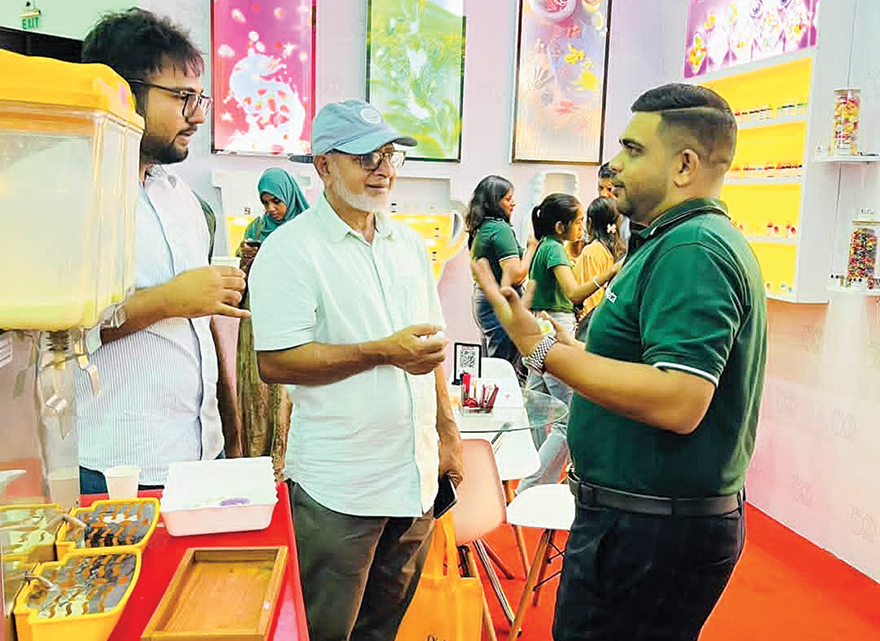
Salman Faiz has turned his family legacy into a modern sensory empire. Educated in London, he returned to Sri Lanka with a global perspective and a refined vision, transforming the family legacy into a modern sensory powerhouse blending flavours,colours and fragrances to craft immersive sensory experiences from elegant fine fragrances to natural essential oils and offering brand offerings in Sri Lanka. Growing up in a world perfumed with possibility, Aromatic Laboratories (Pvt) Limited founded by his father he has immersed himself from an early age in the delicate alchemy of fragrances, flavours and essential oils.
 Salman Faiz did not step into Aromatic Laboratories Pvt Limited, he stepped into a world already alive with fragrance, precision and quiet ambition. Long before he became the Chairman of this large enterprise, founded by his father M. A. Faiz and uncle M.R. Mansoor his inheritance was being shaped in laboratories perfumed with possibility and in conversations that stretched from Colombo to outside the shores of Sri Lanka, where his father forged early international ties, with the world of fine fragrance.
Growing up amidst raw materials sourced from the world’s most respected fragrance houses, Salman Faiz absorbed the discipline of formulation and the poetry of aroma almost by instinct. When Salman stepped into the role of Chairman, he expanded the company’s scope from a trusted supplier into a fully integrated sensory solution provider. The scope of operations included manufacturing of flavours, fragrances, food colours and ingredients, essential oils and bespoke formulations including cosmetic ingredients. They are also leading supplier of premium fragrances for the cosmetic,personal care and wellness sectors Soon the business boomed, and the company strengthened its international sourcing, introduced contemporary product lines and extended its footprint beyond Sri Lanka’s borders.
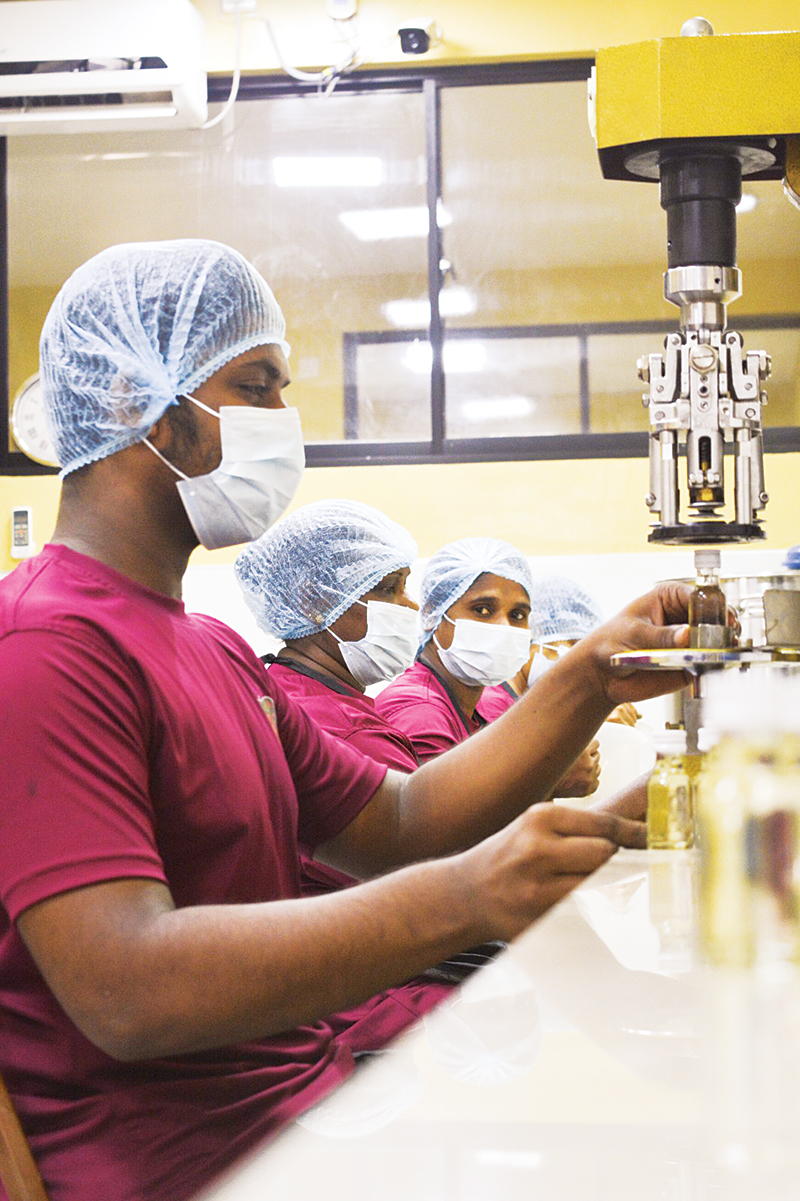
Where raw materials transform into refined fragrance
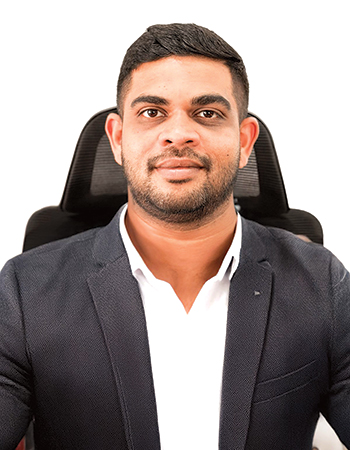
Salman Faiz -carrying forward a legacy
Today, Aromatic Laboratories stands as a rare example of a second generation. Sri Lankan enterprise that has retained its soul while embracing scale and sophistication. Under Salman Faiz’s leadership, the company continues to honour his father’s founding philosophy that every scent and flavour carries a memory, or story,and a human touch. He imbibed his father’s policy that success was measured not by profit alone but the care taken in creation, the relationships matured with suppliers and the trust earned by clients.
“We are one of the leading companies manufacturing fragrances, dealing with imports,exports in Sri Lanka. We customise fragrances to suit specific applications. We also source our raw materials from leading French company Roberte’t in Grasse
Following his father, for Salman even in moments of challenge, he insisted on grace over haste, quality over conveniences and long term vision over immediate reward under Salman Faiz’s stewardship the business has evolved from a trusted family enterprise into a modern sensory powerhouse.
Now the company exports globally to France, Germany, the UK, the UAE, the Maldives and collaborates with several international perfumes and introduces contemporary products that reflect both sophistication and tradition.
We are one of the leading companies. We are one of the leading companies manufacturing fine and industrial fragrance in Sri Lanka. We customise fragrances to suit specific applications said Faiz
‘We also source our raw materials from renowned companies, in Germany, France, Dubai,Germany and many others.Our connection with Robertet, a leading French parfume House in Grasse, France runs deep, my father has been working closely with the iconic French company for years, laying the foundation for the partnership, We continue even today says Faiz”
Today this business stands as a rare example of second generation Sri Lankan entrepreneurship that retains its souls while embracing scale and modernity. Every aroma, every colour and every flavour is imbued with the care, discipline, and vision passed down from father to son – a living legacy perfected under Salmon Faiz’s guidance.
By Zanita Careem
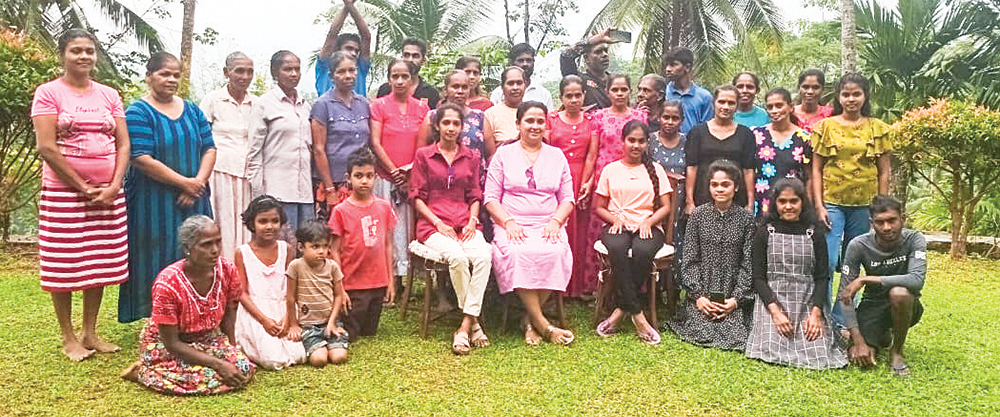
Harini and Chanaka cultivating change
When Harini and Chanaka Mallikarachchi returned to Sri Lanka after more than ten years in the United States, it wasn’t nostalgia alone that they brought home . It was purpose.Beneath the polished resumes and strong computer science backgrounds lay something far more personal- longing to reconnect with the land, and to give back to the country that shaped their memories. From that quiet but powerful decision was born Agri Vision not just an agricultural venture but a community driven movement grounded in sustainability ,empowerment and heritage. They transform agriculture through a software product developed by Avya Technologies (Pvt Limited) Combining global expertise with a deep love for their homeland, they created a pioneering platform that empowers local farmers and introduce innovative, sustainable solutions to the country’s agri sector.
After living for many years building lives and careers in theUnited States, Harini and Chanaka felt a powerful pull back to their roots. With impressive careers in the computer and IT sector, gaining global experience and expertise yet, despite their success abroad, their hearts remained tied to Sri Lanka – connection that inspired their return where they now channel their technological know-how to advance local agriculture.
For Harini and Chanaka, the visionaries behind Agri Vision are redefining sustainable agriculture in Sri Lanka. With a passion for innovation and community impact, they have built Agri Vision into a hub for advanced agri solutions, blending global expertise with local insight.
In Sri Lanka’s evolving agricultural landscape, where sustainability and authenticity are no longer optional but essential. Harini and Chanaka are shaping a vision that is both rooted and forward looking. In the heart of Lanka’s countryside, Uruwela estate Harini and Chanaka alongside the ever inspiring sister Malathi, the trio drives Agri Vision an initiative that fuses cutting edge technology with age old agricultural wisdom. At the core of their agri philosophy lies two carefully nurtured brands artisan tea and pure cinnamon, each reflecting a commitment to quality, heritage and people.
Armed with global exposure and professional backgrounds in the technology sector,they chose to channel thier experiences into agriculture, believing that true progress begins at home.
-
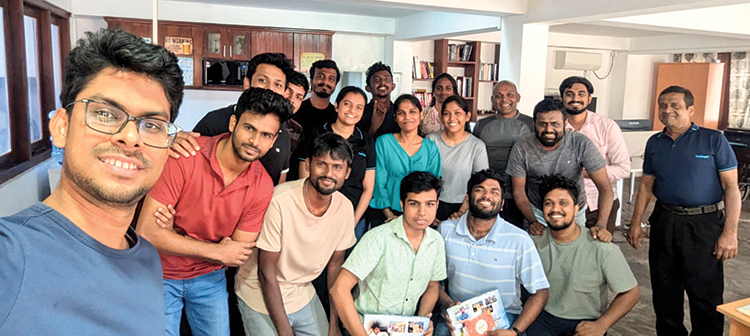
- Avya Technologies (Pvt) ltd software company that developed Agri Vision
-
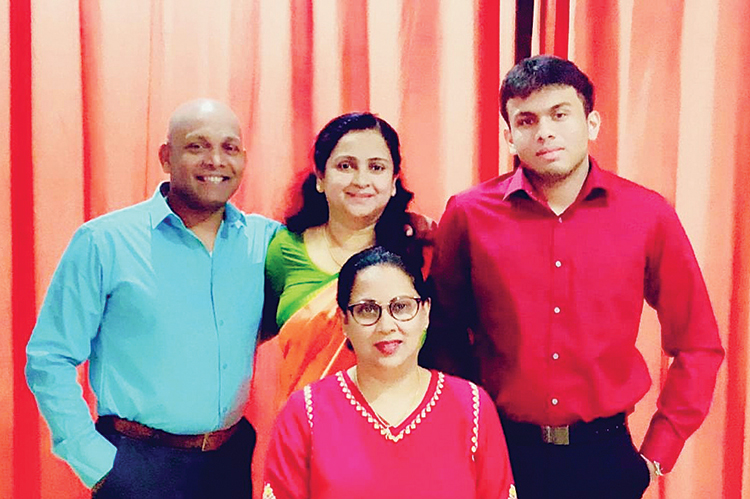
- Chanaka,Harini and Shakya Mallikarachchi and Malathi Malathi dias (middle)
But the story of Agri Vision is as much about relationships as it is about technology. Harini with her sharp analytical mind, ensures the operations runs seamlessly Chanaka, the strategist looks outward, connecting Agri Vision to globally best practices and Malathi is their wind behind the wings, ensures every project maintains a personal community focussed ethos. They cultivate hope, opportunity and a blueprint for a future where agriculture serves both the land and the people who depend on it .
For the trio, agriculture is not merely about cultivation, it is about connection. It is about understanding the rhythm of the land, respecting generations of farming knowledge, and that growth is shared by the communities that sustain it. This belief forms the backbone of Agro’s vision, one that places communities not only on the periphery, but at the very heart of every endeavour.
Artisan tea is a celebration of craft and origin sourced from selected growing regions and produced with meticulous attention to detail, the tea embodier purity, traceability and refinement, each leaf is carefully handled to preserve character and flavour, reflecting Sri Lanka’s enduring legacy as a world class tea origin while appealing to a new generation of conscious consumers complementing this is pure Cinnamon, a tribute to authentic Ceylon, Cinnamon. In a market saturated with substitutes, Agri vision’s commitment to genuine sourcing and ethical processing stands firm.
By working closely with cinnamon growers and adhering to traditional harvesting methods, the brands safeguards both quality and cultural heritage.
What truly distinguishes Harini and Chanake’s Agri Vision is their community approach. By building long term partnerships with smallholders. Farmers, the company ensures fair practises, skill development and sustainable livelihoods, These relationships foster trust and resilience, creating an ecosystem where farmers are valued stakeholders in the journey, not just suppliers.
Agri vision integrates sustainable practices and global quality standards without compromising authenticity. This harmony allows Artisan Tea and Pure Cinnamon to resonate beyond borders, carrying with them stories of land, people and purpose.
As the brands continue to grow Harini and Chanaka remain anchored in their founding belief that success of agriculture is by the strength of the communities nurtured along the way. In every leaf of tea and every quill of cinnamon lies a simple yet powerful vision – Agriculture with communities at heart.
By Zanita Careem
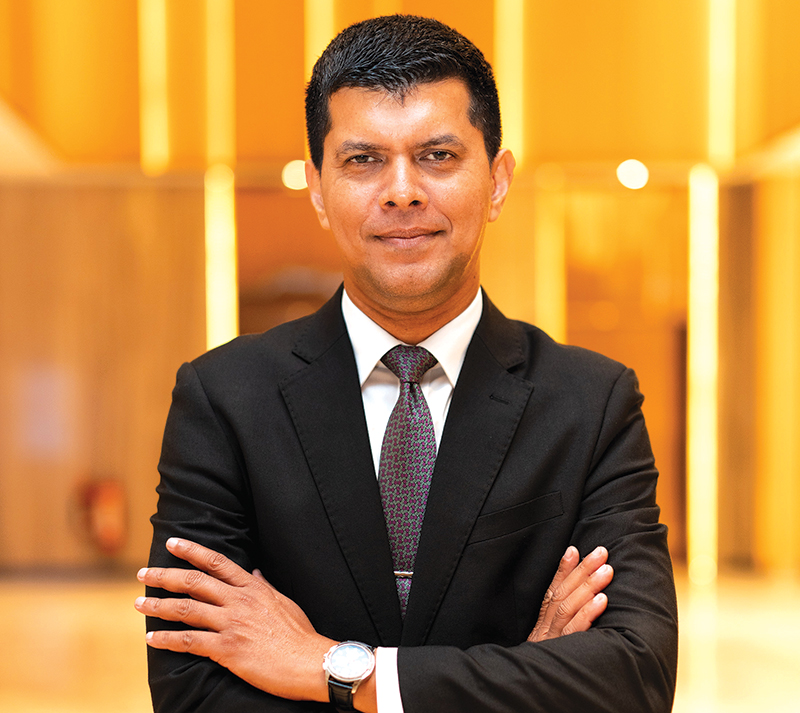
Courtyard by Marriott Colombo has welcomed Suranga Peelikumbura as its new General Manager, ushering in a chapter defined by vision, warmth, and global sophistication.
Suranga’s story is one of both breadth and depth. Over two decades, he has carried the Marriott spirit across continents, from the shimmering luxury of The Ritz-Carlton in Doha to the refined hospitality of Ireland, and most recently to the helm of Resplendent Ceylon as Vice President of Operations. His journey reflects not only international mastery but also a devotion to Sri Lanka’s own hospitality narrative.
What distinguishes Suranga is not simply his credentials but the philosophy that guides him. “Relationships come first, whether with our associates, guests, partners, or vendors. Business may follow, but it is the strength of these connections that defines us.” It is this belief, rooted in both global perspective and local heart, that now shapes his leadership at Courtyard Colombo.
At a recent gathering of corporate leaders, travel partners, and media friends, Suranga paid tribute to outgoing General Manager Elton Hurtis, hon oring his vision and the opportunities he created for associates to flourish across the Marriott world. With deep respect for that legacy, Suranga now steps forward to elevate guest experiences, strengthen community ties, and continue the tradition of excellence that defines Courtyard Colombo.
From his beginnings at The Lanka Oberoi and Cinnamon Grand Colombo to his leadership roles at Weligama Bay Marriott and Resplendent Ceylon, Suranga’s career is a testament to both resilience and refinement. His return to Marriott is not merely a professional milestone, it is a homecoming.

“Sri Lanka Set to Become the First South Asian Country to Enter the Global Charter on Children’s Care Reform”

Incoming Bangladesh PM Tarique Rahman, lawmakers sworn into parliament

Samra’s record 110 in vain as Phillips and Ravindra put New Zealand in Super Eights

Canada reacts as cheating row rocks curling superpower

Long queues and confusion mar first day of India’s landmark AI summit

Ancient bone may prove legendary war elephant crossing of Alps

‘Dates have the highest sugar content to fight Coronavirus’

Sunday Island 27 December – Headlines

#SundayIsland 17th December – Headlines

Sunday Island – 28th March

Sunday Island Headlines – 21 March

Sunday Island – 21st February – Headlines
-
 Life style3 days ago
Marriot new GM Suranga
-

 Business2 days ago
Ministry of Brands to launch Sri Lanka’s first off-price retail destination
-
 Features3 days ago
Monks’ march, in America and Sri Lanka
-
 Midweek Review7 days ago
A question of national pride
-
 Business7 days ago
Autodoc 360 relocates to reinforce commitment to premium auto care
-
 Opinion6 days ago
Will computers ever be intelligent?
-

 Features3 days ago
The Rise of Takaichi
-
 Features3 days ago
Wetlands of Sri Lanka: