
Business
The road to economic recovery ahead is long, hard, and unavoidable

Talk to anyone waiting for days in a long queue to get a few litres of fuel for daily living, unable to cook food due to the lack of LP gas or forced to stay in the darkness due to the power cuts or unable to find critical medicine the same set of emotions are apparent: lamenting about lost livelihoods, confusion about the mess we are in, fear and trepidation about an uncertain present and future, and anger at those responsible for the mismanagement of the economy.
Along with those feelings come three questions. How did we get into this mess in the first place? What is debt restructuring and when will all this be over? And finally, how do we get out of this crisis and who must do what? The sense of uncertainty is almost physical. The answers will remain foggy for some time but let me attempt to briefly answer for all to understand.
Start with Sri Lanka’s debt, especially its external debt. In 2000, exports of goods and services were 39 per cent of GDP; in 2020, they had declined to 20 per cent. Sri Lanka has faced a ‘twin deficit’ problem for decades: imports have consistently been higher than exports, and public expenditure has consistently been higher than revenues.
The last 20 years is the story of a series of policy blunders reducing taxes and inefficiencies in tax collection, a bloated public sector, and unaffordable subsidies. Together, they drained the exchequer.
Our trade balance has been under pressure for a long time, due to high imports vs exports. Exports have not grown for a variety of reasons related to lack of competitiveness and low FDIs which have been discouraged by instability and governance issues in the country. Sri Lanka’s exports grew by only 1.2 times whereas Vietnam’s exports grew over 3 times and Bangladesh 2 times during the period 2011 to 2021. Trade balance issues worsened after Easter Sunday and Covid which led to large declines in tourism inflows.
On the external front, investing in ‘vanity’ and unproductive infrastructure projects, funded through market-based loans at high interest rates i.e., ISBs was the beginning of the external debt crisis, which only exacerbated thereafter due to infrastructure projects becoming a breeding ground for corruption.
In 2016, the three-year IMF programme for a $1.5 billion Extended Finance Facility (EFF) proposed a series of structural reforms to rebuild tax revenues, make Sri Lanka less reliant on foreign borrowing, promote an export-oriented economy and reduce the budget deficit. These included, tightening monetary policy, allowing the currency to float, and slashing subsidies was suspended in November 2019 for a home-grown solution. As a result, those reforms were not implemented, plunging Sri Lanka into its latest crisis.
Four more policy mistakes accelerated Sri Lanka’s descent into bankruptcy. What does bankruptcy mean? No financial institution is willing to extend any credit to Sri Lanka to import even the most essential medicine and fuel, leading to Sri Lanka degrading itself to a hand-to-mouth existence, having exhausted all foreign exchange reserves of the country.
First, reducing taxes in November 2019 cost the Sri Lankan economy profoundly as concerns were raised about Sri Lanka’s debt sustainability, leading to the Credit Rating downgrades. This resulted in thwarting the ability to tap global sovereign debt market for further foreign borrowings, available only based on investor confidence in the country’s ability to repay foreign commercial borrowings.
Second, attempting to maintain a fixed exchange rate leading to a 52% reduction of worker remittances from a year ago (the only country to face a reduction of remittances) and a widening trade deficit, as the overvalued rupee favoured imports over exports. Approximately, USD 5 billion of the reserves was wasted to defend the Rupee, and another USD 500 million to repay foreign debt in January 2022 leading to a further depletion of the meagre foreign reserves of the country.
Third, the decision not to pre-emptively renegotiate debt restructuring with the IMF when the Covid-19 pandemic hit in 2020 while Sri Lanka’s debt was still sustainable. Lenders would have been willing for a more generous restructuring of debt, just as multilateral and bilateral lenders did in the wake of the tsunami in December 2004.
Fourth, in 2021, a misguided and inappropriate policy to implement an outright ban on import of chemical fertilisers was imposed in the name of ‘import substitution’ to conserve foreign exchange reserves. This hit the tea industry and paddy crops, impacting Sri Lanka’s export crops, thereby forcing Sri Lanka to import food to fight hunger.
…Debt restructuring process will be tough and long drawn out…
So, what happens now? Sri Lanka had no choice but to approach the IMF again, for the 17th time. Since Sri Lanka has now defaulted on its debt, it does not meet debt sustainability criteria, and therefore, obtaining a facility from IMF this time will be difficult, more long drawn out. Additionally, accessing the IMF’s Rapid Financing Instrument is also ruled out.
Negotiating a macro-economic programme supported with IMF financing will be contingent on Sri Lanka undertaking accelerated structural reforms to achieve economic growth and debt sustainability. The process will require arriving at a debt restructuring agreement with bondholders, and then with Multilateral Financial Institutions (MFIs) and other bilateral borrowers. Given the past failures of Sri Lanka to keep its word, they will be tougher this time.
The first stage is to reach a Staff Level Agreement (SLA) with IMF and thereafter, seek the IMF executive board approval for an Extended Fund Facility (EFF). EFF will be further supported by World Bank and ADB and friendly countries such as Japan, USA and the European Union. The earliest we could expect some funding is in 2023 and country to get back to some normalcy by 2026.
The actions of Central bank have made debt sustainability even more elusive. By allowing the interest rates on treasury bills to overshoot, the Central Bank has crippled the SMEs, corporates, banking sector and the public finance. The ostensible reason for increasing interest rates to tame inflation, is unlikely to hold, as inflation is driven primarily by external factors, collapse of the value of the Sri Lankan rupee and other supply side issues.
The people of Sri Lanka have completely lost confidence and trust in the Government’s ability to resolve the crisis. The People’s struggle “Aragalaya” will only intensify. Their demands are well justified. A “System Change” is required. Those responsible for the crisis must leave and it is the need of the hour for an all-party interim Government to be established. Further, it is imperative to call for a General Election as soon as possible for a more competent and honest set of professionals to be elected to the Legislature in ensuring proper governance of the country. The costs associated with having a General Election pale into insignificance compared to the massive costs of running an incompetent government. Perhaps, Donor countries may agree to provide a grant of USD 20 million to hold a General Election.
What do we have to do? Sri Lanka needs a credible national policy and a plan agreed by all those who have the best interest of the Country at heart to get the country out of the crisis. The plan or reform agenda should comprise of eight core focus areas. To pursue the plan with the IMF, credibility and integrity of the public officials and the Government must be reinstated to portray that Sri Lanka is on the path to economic recovery and obtain the EFF facility. This is the only hope, there is no other alternative.
First, Sri Lanka must stem the widespread bribery and corruption with harsh penalties, similar to penalties in countries such as Singapore. No donor or Sri Lankan expat wants to see their help to the people being scammed by the unscrupulous politicians and Government officials.
Second, government expenditure must be curtailed, the burden imposed on the people because of loss-making State-Owned-Enterprises (SOE) must be removed. One option would be to restructure and list all SOEs in the Colombo Stock Exchange for better governance and accountability of SOEs. It is time, the public change their misguided mindset and realise the futility of SOEs that are sustained for the ultimate benefit of politicians such as Sri Lankan Airlines where the public had to bear Rs. 372 billion of accumulated losses since 2008. The operating losses of Ceylon Petroleum Corporation (CPC), first four months of 2022 despite price increases is Rs. 64.9 billion.
Third, Sri Lanka will have to live within its means; The Government cannot simply print money, to provide relentless relief “Sahana” to the people and continue to be a welfare state. People should pay at least the cost for Government services and utilities. All spending must be carefully thought through and planned. Public spending on infrastructure should only be on projects that would generate income to pay back debt. Financial discipline of the State is imperative manage the fiscal deficit. Sri Lanka will have to focus on developing an active local capital market with 30–50-year debt instruments to support the asset and liability match to fund infrastructure projects. For example, Malaysia have raised local currency debt for most of their infrastructure projects.
Fourth, the Government revenue at 8% of GDP remains one of the lowest in the world. The tax system will have to be overhauled to widen the tax net to increase Government revenue. The BOI has become a failure and is responsible for large leakages of tax revenue. BOI need to be overhauled and incentive structure need to be critically reviewed to attract more FDI.
Fifth, Sri Lanka should refocus on a major tourism drive to attract more tourists. In 2018, Sri Lanka Tourism generated receipts worth USD 4.5 billion, which can be swiftly achieved and surpassed. Further, a massive export drive to make Sri Lanka an export-oriented economy like Vietnam is essential. We have an untapped opportunity in value-creating exports such as Graphite, Crystal and Mineral Sand that can easily reach over USD 500 million per month. Adding even greater value should be encouraged with the appropriate policies to prioritize foreign-exchange-earning manufacturing industries, agriculture, and service exports.
Sixth, a well-designed, and properly targeted social safety net will be crucial to protect the most vulnerable and provide for them adequately, but only for as long as necessary.
Seventh, despite the hardships and pain that comes from austerity, Sri Lanka, its people, and its Government – the Executive and all parties in Parliament must stay committed to the agreed upon reform agenda for the next ten years. Repeating the mistakes of the past is unaffordable and will inflict pain upon the generations to come.
Eight, the public is expecting restitution and those who brought economic ruin and robbed the country to be held accountable for their actions and prosecuted in a court of law. The public are also demanding for funds misappropriated to be brought back.
President John F. Kennedy’s in his inaugural address said, “Ask not what your country can do for you, ask what you can do for your country” and challenged every citizen to contribute in some way to the public good. A democracy is a government, by the People, for the People. It is the people who hold the power of a democracy, and therefore, it is imperative that the people of Sri Lanka act diligently at the next General Election in electing competent and honest professionals to the Parliament irrespective of their party affiliations to govern the country and not repeat the mistakes of the past 74 years.
(The writer is a Member of the Disciplinary Review Council of the CFA Institute, USA and Advocacy Chair and Board Director of CFA Society Sri Lanka and functioned as a member of the Code of Conduct Review Committee (CoCRC) of the Central Bank of Sri Lanka 2020-2021 and can be reached at abeysuriya@hotmail.com)

Business
“RDB Drives Unprecedented Growth with Record Profits Fueling Expansion and Development Impact”
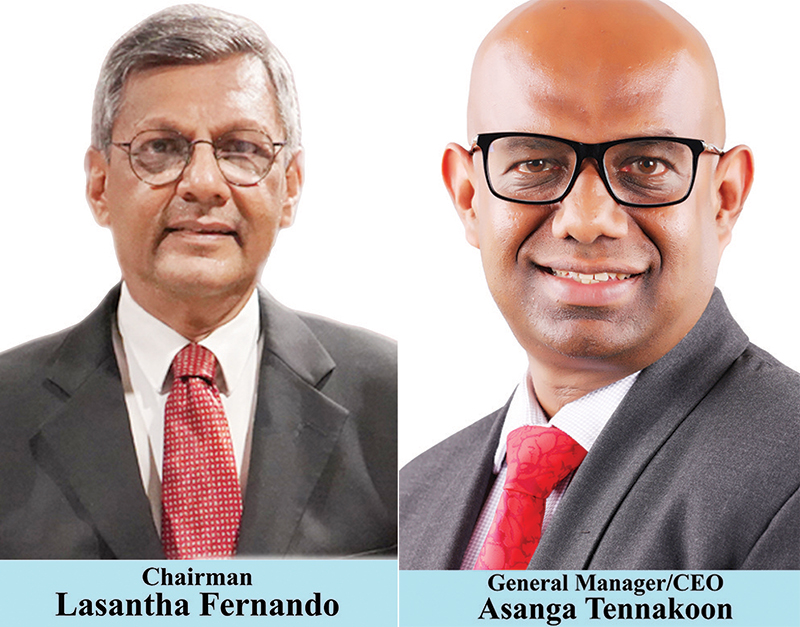
The Regional Development Bank (RDB) delivered an exceptional financial performance for the year ended 31 December 2025, recording an 86% year-on-year increase in Profit After Tax to LKR 2.37 billion. The Bank’s total income reached LKR 42.81 billion, driven by a 23.89% growth in Net Interest Income to LKR 24.23 billion, complemented by steady contributions from both interest and fee-based income streams. This performance highlights the Bank’s ability to optimise its asset base while sustaining a well-diversified and resilient revenue profile.
Marking its 40th anniversary in 2025, the Bank’s exemplary performance underscores the strength of its resilient operating model, disciplined execution, and its growing role as a catalyst for inclusive economic progress in Sri Lanka. Profitability metrics strengthened notably, with Return on Assets (ROA) improving to 1.70% and Return on Equity (ROE) increasing to 11.77%, demonstrating enhanced efficiency in capital deployment and earnings generation.
Commenting on the Bank’s performance, Chairman Lasantha Fernando stated,
“Our performance in 2025 reflects the strength of a purpose-driven banking model that successfully balances financial sustainability with national development priorities. As Sri Lanka progresses on its path to recovery, our commitment to enabling inclusive growth remains unwavering.”
The Bank continued to expand its development-focused lending portfolio, with loans and receivables growing by 23.59% to LKR 302.54 billion. This growth supported priority sectors including agriculture, SMEs, manufacturing, housing, and rural enterprises representing segments critical to national economic revitalisation. Importantly, this expansion was achieved alongside improved asset quality, with the Stage 3 impaired loans ratio declining to 4.06% from 6.25%, demonstrating robust credit risk management and effective recovery strategies.
Customer confidence remained strong, with deposits increasing by 11.85% to LKR 283.72 billion, driven by growth in both savings and fixed deposits. The Bank also maintained liquidity ratios well above regulatory thresholds, reinforcing its financial stability and resilience
Asanga Tennakoon General Manager/Chief Executive Officer, highlighted” last year’s results underscore the impact of disciplined execution, prudent risk management, and a strong customer-centric approach. Looking ahead, we will continue to expand our reach, strengthen digital capabilities, and deepen financial inclusion to create sustainable value for all stakeholders.”
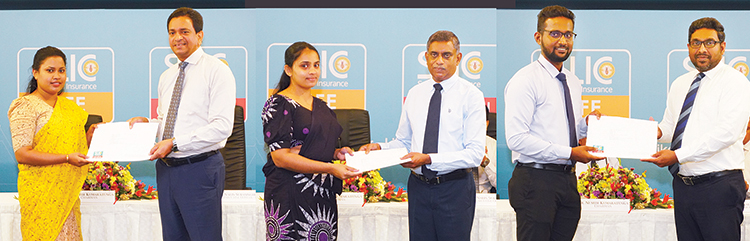
Sri Lanka Insurance Life Ltd (SLICLL) and Sri Lanka Insurance General Ltd (SLICGL) together appointed 112 Trainee Insurance Assistants, marking one of the largest recruitments across both companies in recent years.
Of the total intake, 87 candidates joined SLICGL while 25 candidates were appointed to SLICLL. This recruitment reflects the continued efforts of both companies to strengthen their workforce while contributing to employment opportunities.
The recruitment process was conducted through a structured and independent evaluation framework to ensure transparency and merit-based selection. Applications were invited from eligible candidates island-wide, followed by a written examination. Candidates who met the required benchmarks were shortlisted for interviews conducted by an independent panel, reinforcing fairness and credibility throughout the process.
The newly appointed Trainee Insurance Assistants represent a diverse and capable talent pool. Approximately 30% of the recruits are graduates, while all candidates possess the required academic qualifications, including G.C.E. Ordinary Level and Advanced Level certifications, or equivalent diplomas and higher qualifications.
This intake is aligned with the long-term focus of SLICLL and SLICGL on developing human capital and nurturing future-ready professionals within the insurance industry. The new recruits will have access to structured career growth opportunities, enabling them to build sustainable careers within the organisations. Efforts have also been made to assign employees to locations closest to their places of residence, subject to operational requirements, ensuring both efficiency and employee convenience.
Commenting on the appointments, Nusith Kumaratunga, Chairman of Sri Lanka Insurance stated, “The onboarding of this new group of Trainee Insurance Assistants reflected our continued focus on building strong and capable teams across both SLICLL and SLICGL. By maintaining a transparent and merit-based selection process, we remained committed to creating opportunities for talented individuals while strengthening the foundations for long-term organisational growth. This initiative also aligned with our broader role in supporting employment generation and contributing to the country’s economic progress.”
The official appointment ceremony was held on 7th April 2026 at the SLIC Head Office, in the presence of the Chairman and the Corporate Management of SLICLL and SLICGL, marking an important milestone in the organisations’ ongoing people development journey.
Business
99x Wins Five Awards at Best Management Practices Awards ‘26, Showcasing AI-led Transformation
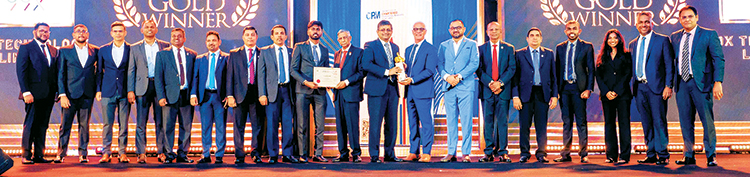
99x, a leading global product engineering company, has secured five major accolades at the CPM Best Management Practices Awards 2026, including an Overall Gold Award, positioning the company among Sri Lanka’s top-performing organisations in management excellence. The company was also recognised as the Sector Winner for IT, Software & BPO Services, named among the Forty Outstanding Companies, and received the Best Management Practices Excellence Award. In addition, Hasith Yaggahavita, CEO of 99x, was honoured with the Leadership Excellence Award, acknowledging his role in driving the organisation’s AI-led transformation.
The recognition was awarded for 99x’s submission titled ‘Embracing AI: Rethinking Talent, Products & Services,’ which addressed one of the most pressing shifts facing the global technology services industry today. As AI continues to redefine how software is built and delivered, traditional outsourcing models are being challenged from reduced reliance on large engineering teams to a growing shift toward outcome-based delivery and faster go-to-market expectations.
Chatura De Silva, Chief AI Officer at 99x, stated, “Winning five awards at one stage is a proud moment for us as a team. While AI is driving change across the industry, what made this possible is how we chose to adapt to it. We recognised that AI is not just a layer on top of what we do, but that it changes the foundation of how value is created. This transformation was about connecting both our talent and delivery, while embedding AI across everything we do”.
Selected from over 150 award submissions, 99x was also among the top 10 organisations invited to present its journey at the CPM Management Insights Summit 2026, placing its transformation on a national stage among the country’s most forward-thinking enterprises. Chatura De Silva, Kalana Wijesekara, Chief Developer Experience Officer and Chrishan de Mel, Chief Marketing and Corporate Affairs Officer, presented 99x’s story.
Commenting on the significance of this year’s awards, Dilshan Arsakularathna, CEO of The Institute of Chartered Professional Managers of Sri Lanka, stated, “99x securing the Overall Gold Award among organisations across multiple industries reflects the level at which Sri Lanka’s IT sector is progressing today. It demonstrates how companies are building real capability and driving innovation that can confidently stand on a global stage. Notably, 99x has now become the first organisation to secure the Overall Gold Award twice across the five editions of the BMPC Awards. This remarkable achievement reflects their strong commitment to sustaining excellence and continuously embedding best management practices within their operations. What stood out with 99x was how they have adapted to change in a practical and forward-thinking manner, reshaping how they operate and deliver value, while setting a compelling benchmark for modern management practices.”

“I extend my heartfelt wishes to all Sri Lankans for a peaceful and joyous Sinhala and Tamil New Year!” – President

US blockade of Iran would worsen global energy crisis, analysts say

Praful Hinge’s stunning debut ends Rajasthan Royal’s four-match winning streak

“Let us resolve, with renewed determination to overcome obstacles and build a better and more prosperous nation” -PM

Sun directly overhead Nawaladi, Paranthan, Murasumodai, Vellikkandal, Udapattukkandal, Puliyampokkanei about 12:10 noon today [14]

Heat Index at Caution Level in the Northern, North-central, North-western, Western and Southern provinces and in Trincomalee district.

‘Dates have the highest sugar content to fight Coronavirus’

Sunday Island 27 December – Headlines

#SundayIsland 17th December – Headlines

Sunday Island – 28th March

Sunday Island Headlines – 21 March

Sunday Island – 21st February – Headlines
-

 News2 days ago
CEB orders temporary shutdown of large rooftop solar systems
-

 News5 days ago
AG: Coal procurement full of irregularities
-

 Business4 days ago
Israeli attack on Lebanon triggers local stock market volatility
-

 Business5 days ago
Hayleys Mobility introduces Premium OMODA C9 PHEV
-
 Features2 days ago
From Royal College Platoon to National Cadet Corps: 145 years of discipline, leadership, and modern challenges
-

 Business4 days ago
HNB Assurance marks 25 years with strategic transformation to ‘HNB Life’
-

 Sports5 days ago
DS to face St. Anthony’s in ‘Bridges of Brotherhood’ cricket encounter
-
 News6 days ago
AKD admits import of substandard coal, blames technicalities and supplier