
Features
THE POST-WAR PERIOD AND INDEPENDENCE

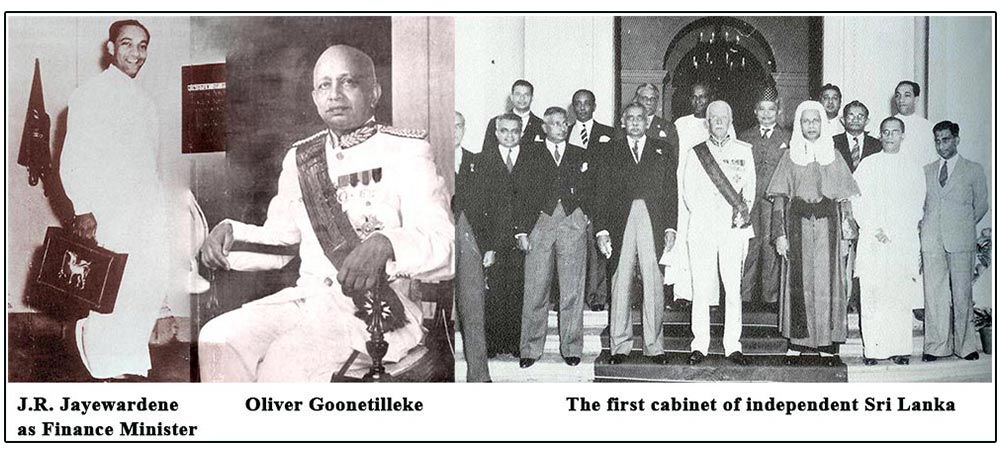
Continued from last week
NU’s Career Advances
In May of 1942, a month after the Japanese attack, NU was promoted to a higher post within the Department of Commerce and Industries. He was also seconded to serve as Deputy Commissioner in the Department of Commodity Purchase, where he was placed in charge of arranging the supply of commodities such as desiccated coconut and copra to the Food Ministry in Britain. (Interestingly, NU had selected “The Oil Seed Trade with Specific Reference to Copra” as his special subject when he applied for his M.Sc. (Econ.) degree. Correspondence from his Personal Files show that, while NU was studying at the LSE, Professor Paish, who was one of his professors, recommended NU to a London merchant dealing in edible oils, to carry out a survey of “The Trade in Edible Oils… from Production, through Importation, Distribution and Marketing to Consumers’ Demand” (N.U. Jayawardena Personal Files).
In NU’s words:
As Deputy Commissioner of Commodity Purchase, it fell to my lot to plan out the organization of the department in the early stages, particularly in regard to the purchase schemes for copra, oil and plumbago. Later I was engaged in reorganizing the operative methods of the Department and, in this connection, compiled a comprehensive code of departmental instructions.
He listed the activities of the Department of Commodity Purchase, “which was run on business lines,” and described the strength of the staff:
[There were] 11 Staff Officers including a full-time Commissioner and myself as Deputy, a store personnel of 112, and a clerical establishment of 117, while the annual turnover of the transactions of the Department exceeds Rs. 50 million. (N.U. Jayawardena Personal Files)
The Department of Commodity Purchase was based in the Bristol Hotel, which was located opposite the Cargill’s store, in the Colombo Fort. The Director of the Department was L.J.B. Turner, for whom NU had earlier worked at the Registrar General’s Office. In his rapid career ascent, NU would begin to catch up with and overtake persons for whom he had worked earlier. In 1946, he was appointed Acting Commissioner of War Risks Insurance to fill in for F. Leach, who had left the country. One may recall that it was F. Leach who had tried to appoint a Mudaliyar’s son over NU when he had applied for his first government job as a junior clerk of the District Road Committee in Hambantota (see Chapter 5).
Another Career Landmark
In June of 1946, NU was seconded to serve in the newly created post of Additional Controller of Finance and Supplies (Economics), in addition to the other posts he held. This was the first posting in the Treasury Department and it would have brought him much satisfaction, as the Treasury Department was considered to be the pinnacle of the civil service. Such a swift ascent was bound to create problems. The ‘mandarins’ of the Civil Service did not take kindly to the promotions which NU, the outsider, was given by the time he was 38, and to the multiple posts he held. Their resentment was all the more because the salary he received from these combined posts was ‘somewhat in excess of two Officers of State, one of whom was [his] superior authority’ (N.U. Jayawardena, 11 May 1987, p.3).
NU had risen on proven merit, rather than by passing the Civil Service examination, and as head of four separate departments, he received an income equal to a Class 1, Grade II official of the Ceylon Civil Service – even though he was not a member. This led the
Ceylon Civil Service Association to lodge a strong protest against NU. ( There is a letter addressed to NU in his Personal Files, dated 18 November 1946, in which the Chief Secretary wrote to inform him of his provisional appointment, to act “in addition to your own duties… as Additional Commissioner, Commodity Purchase, and Commissioner, War Risks Insurance, pending receipt of the advice of the Public Services Commission” (emphasis added). In this connection, NU described in detail a revealing episode involving the Acting Financial Secretary, C.E. Jones, which clearly exemplifies the phenomenon of the dethroning of the old guard elite – the “cultivated gentlemen” – by specialist technocrats who succeeded on merit (mentioned in the previous chapter):
There was, before [the Acting Financial Secretary] a rather bulky file containing dispatches from the Secretary of State on a highly complex subject of Economic Relations, which it fell to my lot to study, analyse and present in the form of a comprehensive report to… the Governor… to be signed by the Financial Secretary, together with a lengthy dispatch to the Secretary of State. [This was] a subject he did not know, [and] on which he could rely without reservation on my analysis and presentation. He then handed them the file with the request that if they or their colleagues felt they could do a better job than I had done, they were free to identify such a person to take over my position and other positions I held, and also receive the aggregate emoluments I was paid. (Apart from being dependent on NU to get through his work, it is interesting to speculate whether C.E. Jones’ sympathies with NU may have been strengthened due to the fact that Jones, too, had graduated from the London University (BSc.), unlike many of the senior members of the Ceylon Civil Service who were mostly products of Cambridge and Oxfor (ibid)
Following this interview with Jones, the representatives of the Civil Service Association left NU – as he triumphantly termed it – “severely alone.” Whether he was disturbed or not by the episode, NU was not slow to see its moral. Though he noted that it spoke volumes for the Association’s sense of ‘fair play’ and ‘merit,’ it no doubt made NU aware of the pitfalls and hazards of holding important positions in public life. Chapter 10 can read online on https://island.lk/nu-at-the-london-school-of-economics/
In regard to finance, my government intends to seek expert advice with regard to changes in our financial structure which may be necessitated by the transition from a colonial to a free, national economy.
(Throne Speech, Sir Henry Monck-Mason Moore, Governor, 25 Nov. 1947)
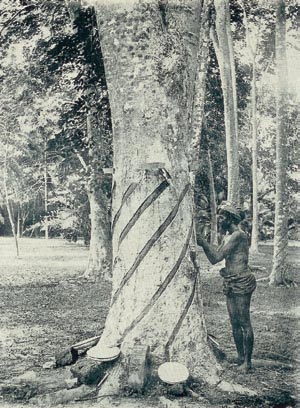
Slaughter tapping a rubber tree
The post-war period presented the country with a series of further economic hardships and challenges. The burdens of inflation, shortages of food and other imported items, as well as rationing and a series of controls, increased in the war’s aftermath. The State continued to play an interventionist role in the market, stepping up its regulatory controls, due to the continuing shortages of essential goods and the scarcity of exchange with which to buy these goods. Stanley Wickramaratne has aptly described, the “plethora of controls” regulating the supply of goods and services, and in general the free mobility of its citizens during and after the Second World War, which
… were departmentalized by the State and named Food Control, Textile Control, Rubber Control, Tea Control, Milk Food Control, Petrol Control, Poonac Control, Price Control and Import-Export and Exchange Control…
[After] Independence these control mechanisms gradually ceased to function except the last two mentioned. (Wickramaratne, 2002)
Sri Lanka was adversely impacted by factors associated with the worldwide economic and physical destruction caused by the war and had to hold its own in a world reeling from economic breakdown. Competing for access to markets and limited resources from a weak position, Sri Lanka had few options and was held hostage to the vagaries of the international market. As a small nation with an undiversified economy, it relied heavily on the export of a few agricultural commodities – primarily tea and rubber – for a large part of its revenue. (According to Das Gupta (1949, p.9), Sri Lanka produced “only a few things, but produces them almost entirely for export,” and derived about 60% of
its income from agricultural exports, producing only a quarter to a third of its total rice requirements.) Furthermore, it was not self-sufficient in the production of essential goods and was disadvantaged by an undeveloped banking system and capital market, as well as the lack of an industrial base. Thus, Sri Lanka had next to no recourse to internal financing that could help provide a financial cushion to tide over this period, nor the means to provide the investment capital to step up local production of essential goods to replace costly imports.
There was much that needed to be worked out and negotiated, and new institutions had to be set up to help meet the needs of the soon-to-be independent Sri Lanka and the challenges of the evolving post-war economic order. In addition, financial and trade arrangements had to be planned to bridge the immediate needs of the nation. After independence, Sri Lanka would be faced with the additional challenge of asserting itself as an independent sovereign nation.
NU described his work during this period of transition as a time when he “performed the functions of the principal financial and economic adviser to the Ceylon Government” (N.U. Jayawardena Personal Files). Over the four-year period, which stretched from 1946 to 1950, NU attended and assisted in several international conferences and negotiations. On the eve of national independence, NU would rise from his position as Controller of Finance and Supplies (Economics) to become both Controller of Exchange and Controller of Imports and Exports, and would set up the machinery for the operations of exchange control.
Declining Terms of Trade
By the war’s end, Sri Lanka had managed to accumulate substantial foreign-exchange surpluses, which were largely due to increased earnings from stepped-up rubber production, a reduction in imports during wartime as well as payments for basing the British South East Asia Command in Sri Lanka. However, as pointed out by Das Gupta (1949, p.31), these surpluses were “a measure not so much of prosperity but of privation,” since during the war, these could not be utilized as desired to purchase essential imports, and consumption had to be curtailed at great hardship to the population. Furthermore, following the war, these hard-earned savings actually lost value in real terms as the prices of imports rose sharply and the rise in the export price of rubber – Sri Lanka’s major export – did not keep pace. The restoration of Malaysian and Indonesian rubber stocks to the world market, and consequent increase in supply, had a somewhat dampening effect on the world price of rubber.
Sri Lanka’s foreign-exchange surpluses were quickly depleted, even though consumption continued to be restricted by the government to meet this dilemma. Ironically, by the year 1947, although imports were reduced to about the same level they had been in 1938, the economy experienced a balance-of-payments crisis, owing to a decline in the terms of trade. The case of rice imports starkly illustrates the economic dilemma Sri Lanka faced. According to Das Gupta, in 1947, Sri Lanka imported half the quantity of rice it had in 1938, but the bill for this was about two and a half times what it had been in 1938 (ibid, pp.90-91).
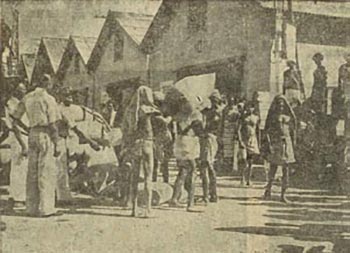
Workers loading dry goods in a Colombo warehouse
NU’s Link with Oliver Goonetilleke
In 1945, Oliver Goonetilleke (OEG) was appointed to the prestigious post of Financial Secretary – one of the three Officers of State – as the first (and last) Sri Lankan to hold this position. NU would now work more closely with him. In 1946, on one of his first high-level visits abroad, NU accompanied OEG to the UK to assist him in the negotiations with the British government on “post-war financial issues affecting Sri Lanka” (Ceylon Civil List, 1950, p.86). According to Jeffries, during this period one of the chief areas of negotiation involved “the continual struggle to secure an economic price for Ceylon rubber” (1969, p.106). When Indonesia and Malaysia fell under Japanese control during the war, both Britain and its allies relied heavily on Sri Lanka to step up production to meet the shortfall in this critical war material. At the war’s end, Sri Lanka’s rubber yields were adversely affected due to the wartime “slaughtertapping” (over-tapping) of its rubber trees. ( Das Gupta stated that at least one-quarter of all the rubber trees in Sri Lanka had been slaughter-tapped during the war.) According to Jeffries:
The [Sri Lankan rubber] industry had already sacrificed its interest in order that the war might be won, but now Ceylon was being expected to compete on equal terms in the market with Malaya and Indonesia whose plantations were in full production after the enforced wartime rest. (Jeffries, 1969, p.106) ( Sri Lanka’s strong reliance on rubber for its revenue continued into the early 1950s. In 1952 R.G. Senanayake, who was Minister of Trade and Commerce, negotiated a Rubber-Rice Pact with the People’s Republic of China, in which the former agreed to purchase Sri Lanka’s entire annual output of rubber for five years at a premium, in exchange for rice supplied at a price well below the world market price (see de Silva & Wriggins, 1988, pp.269-71).)
OEG, who had a reputation as an astute negotiator, would have reminded the British government of Sri Lanka’s loyal support and sacrifices made during the war and of Britain’s moral obligation towards Sri Lanka. His skills of persuasion were legendary both in Sri Lanka and in Britain. A British government official was said to have woefully remarked that, “after shaking hands with him, it was advisable to check that all one’s fingers were there” (ibid, p.82). OEG once described himself as “no chicken in either strategy or in tactics” (ibid, p.74); and NU characterized him as someone who was “uncommonly intelligent,” and “highly imaginative… astute to the point of being uncanny, and an able negotiator” (quoted in de Zoysa manuscript, p.15).
Negotiations in London took place over a period of three and a half months from the end of July to mid-November 1946. An interesting side note to this episode is that during this time, NU visited his professors at the London School of Economics to inquire into the possibilities of resuming studies for his interrupted M.Sc. degree. He apparently had not abandoned hopes of completing his studies for a postgraduate degree. Although records show that his professors were amenable to this proposition, NU’s career again overtook him and he never completed this degree (LSE Student Records on N.U. Jayawardena).
Independence
Earlier in 1942, when the British government entered into discussions with India on the question of its independence, the Sri Lankan leadership also began to place pressure on the British regarding the same issue. According to Charles Jeffries, the Civil Defence Department
became the regular meeting place for “the triumvirate” of D.S. Senanayake, Oliver Goonetilleke and Ivor Jennings, who planned and worked out the negotiating points and strategies that would be undertaken towards this goal (Jeffries, pp.68-69). By 1943, this group had managed to wrest preliminary terms of agreement from the colonial government. In December 1944, a Commission composed of Lord Soulbury, Sir Frederick Rees and Frederick Burrows visited the island, and the resulting Soulbury Constitution (1947) introduced to the country a parliamentary government with a cabinet system for the first time. Elections were held under this constitution in August and September 1947, and the newly founded United National Party (UNP) formed the government. Its leader, D.S. Senanayake became the first Prime Minister of Sri Lanka and J.R. Jayewardene (JR) was appointed Finance Minister.
Working with J.R. Jayewardene
NU worked with JR in various official capacities over a period of nearly six years. He first came to know JR in 1946, when NU was appointed, along with his colleague K. Williams, to the Treasury in the newly created positions of Controller of Finance and Supply (Economics) – a year before JR assumed office as Finance Minister. NU was to work for him successively in his capacities as Controller of Exchange, Deputy Governor and Governor of the Central Bank.
NU found JR to be an unassuming and courteous Minister, who was never “intellectually stubborn or arrogant,” and who possessed a “fine sense of humour.” He found him “more ready to learn than to talk” and felt he “brought to bear a trained… [and] legal mind”
(N.U. Jayawardena, c.1985, p.59). According to NU:
JR wanted facts and their analysis, but would not accept any rendering of analysis unless he was convinced of its validity… He was thus more concerned with the substance and less with the detail… JR was quick to perceive and was not slow to decide, which he did with deliberation but once he had decided he remained unshakeable unless new facts or new situations emerged to justify the review of decisions taken. (ibid)
For NU, working for JR was “both a demanding duty and an intellectual pleasure” (ibid). He found in JR an eagerness to learn – a quality which NU himself valued and shared. JR, a lawyer by profession, felt he needed a grounding in economics. NU worked closely
with him, explaining the economic realities to the Minister – as did Professor B.B. Das Gupta of the Economics Department of the University, whom JR consulted on economic issues. The new Finance Minister had to absorb his lessons quickly, as he had to contend with several technically complex issues and crises during this period, including the international negotiations that led to two Sterling Assets Agreements with the UK, setting up the exchange control machinery required to ensure the success of these agreements, as well as laying the groundwork for the creation of a Central Bank. NU would be centrally involved in all of these areas.
Controller of Exchange
NU was appointed Controller of Exchange in April 1947. This was a prestigious post in which he was the implementer of some “purely central banking functions,” including “the determination of foreign exchange rates, control of foreign exchange holdings of commercial banks, and arrangements for forward cover” (N.U. Jayawardena, 1950, p.11). Exchange control originally came into operation in Sri Lanka upon the outbreak of war in Europe in September 1939, and was initially restricted to financial transactions in the non-sterling area. NU started out with a “skeleton staff” of nine members, working from an office on the first floor of the De Mel Building on Chatham Street (N.U. Jayawardena, 1949, p.29).
Near the end of 1947, Sri Lanka suffered a severe drain on its “overseas balances,” which was also causing “serious financial difficulties” to Britain. This crisis resulted in the government’s tentative decision to extend exchange control to include the sterling area – in other words, it would now cover “all financial transactions between Ceylon and the outside world” (ibid, p.10; and N.U. Jayawardena, 1950, p.3). Before undertaking this step, NU was sent to spend a “short but useful period” at the Reserve Bank of India in Mumbai to study the exchange control operations of that institution.( . A couple of months earlier, in September 1947, India had already extended her controls to cover the sterling area, due to similar circumstances (N.U. Jayawardena, 1949, p.10). He later spent additional time studying the exchange control operations at the Bank of England to obtain further technical training. When exchange control was extended to cover the sterling areas in June 1948, NU was appointed full-time Controller of Exchange and relieved of his other duties to enable him to devote his full energies and attention to exchange control (ibid, p.12).
This extension of controls “multiplied the volume of work manifold,” demanding “a new orientation of policy on principles which bore little relationship to the practices pertaining to non-sterling area transactions” (The increased scale of operations can be put into perspective if one bears in mind that at that time, 60% of all imports and 70% of all exports were transacted with sterling-area countries (see de Silva & Wriggins, p.220).
Also, earlier, exchange control was limited to a few but not all countries in the non-sterling area, and these “transactions were mainly derived from instructions received from the Secretary of State for the Colonies” (N.U. Jayawardena, 1949, p.11). (ibid, p.11). With the introduction of extended controls, every transaction involving foreign trade or foreign remittances had to pass through the Exchange Control Department and therefore required close coordination with other government departments such as Customs, the Post Office, Import and Export Control, and Food Control. In addition, an advisory committee, which included the heads of the main banks such as the Bank of Ceylon and the Imperial Bank, was formed to give advice to the Controller.
A comprehensive manual was drawn up and distributed to banks and authorized exchange dealers as well. A large number of staff members had to be recruited to carry out the expanded operations, requiring the Department to locate to more spacious quarters on York Street. ( The extent and rate of increase in staff numbers gives some indication of the onerous nature of exchange control operations. After relocating to York Street, by the end of 1948, a mere one and a half years after NU took over as Exchange Controller, the staff would increase to 191 members. “Congested conditions” later necessitated a further move to more spacious quarters in Echelon Barracks, some time in 1950 (N.U. Jayawardena, 1949, p.32).
In spite of the recruitment of additional staff, NU noted that: “it was still necessary to work long hours at a stretch to keep the machinery of control working and to avoid delays and inconvenience to the… public.”
Another challenge during the first year of operations was to train the staff, who initially did not have the technical knowledge required to carry out these controls. According to NU, it was “to their credit that they overcame this handicap in a short time” (N.U. Jayawardena,
1949, p.11). In his Administrative Report for the year 1949, NU described the year as a “trying and strenuous year” for his staff. He proudly noted that it gave him “no little pleasure to record that the Department of Exchange Control has, on the whole, maintained a high
reputation… an achievement of which every member of the staff should justly be proud” (N.U. Jayawardena, 1950, p.22). NU described exchange control as “an irksome restriction,” however, noting that it was a necessity at that time to promote a “more equitable distribution of goods in short supply.” Nonetheless, NU’s firm belief in the superiority of the market mechanism clearly comes out in this report, when he speculates about alternatives to exchange control, asking whether its ends could not be better served by:
methods based on the alternative principle of regulating the demand for foreign currencies at a stable exchange rate through the price mechanism. This is undoubtedly a question with many implications, administrative, economic and financial… It… deserves close study… by everyone who naturally resents the irksome restrictions of control. (ibid, p. 23, emphasis added)
A Passion for Work
There was no cutting back on his working hours when NU reached the position of Controller of Exchange. As before, a twelve-hour workday was the rule – with eighteen hours not being unusual. His daughter Neiliya recalls how NU would often ask her mother to
bring her for a drive and to pick him up in office:
I remember my mother and myself going to the Exchange Controller’s office, and sitting in the car for an hour or more waiting for my father to finish work. But he always kept us waiting. His assistant would bring bundles and bundles of files when he finally came down and put them in the luggage boot. This was always after 7:30 or 8 p.m.
Neiliya recalls how at other times:
I would have my dinner and go with my mother and pick him up. I would be given an ice-cream cone on the way home. He would go home and have a shower, have dinner and sit with his files from about 10 p.m. and work until around 2 a.m. He would then get up at 5 a.m., work until 7.30 a.m. and we would see him at his desk on our way out to school.
To be continued
(Excerpted from N.U. JAYAWARDENA The first five decades)
By Kumari Jayawardena and Jennifer Moragoda ✍️



THE GREAT DIGITAL RETHINK : PART III OF V
The Teenage Battleground
Secondary school has always been a battlefield of sorts, competing loyalties, volatile friendships, the daily theatre of adolescent identity. But in the past decade it acquired a new and uniquely modern dimension: the smartphone in the pocket, the social media feed refreshing every few minutes, the group chat that never sleeps.
The numbers, when they arrived, were not subtle. PISA 2022 data, drawn from students in over 80 countries, found that around 65 percent of students reported being distracted by their own digital devices in mathematics lessons, and 59 percent said a classmate’s device had pulled their attention away. Students who reported being distracted by peers’ phones scored, on average, 15 points lower in mathematics than those who said it never happened. Fifteen points is not a rounding error. It is a meaningful, measurable, recurring gap that appears consistently across countries with very different education systems.
Governments took notice of the situation. In a pattern that will be familiar to readers of this series, a number of them reached for the most visible, most politically satisfying tool available – the ban in Finland, Sweden, Australia, and France. The UK, in a characteristically chaotic way, involving years of guidance, and pilots, eventually legalised. One by one, secondary schools across the wealthy world have begun confiscating phones at the gate, storing them in pouches, locking them up in boxes, and discovering, somewhat to their own surprise, that this works.
When the Ban Actually Works
A 2025 survey of nearly a thousand principals in New South Wales found that 87 percent reported students were less distracted after the ban was introduced, and 81 percent said learning had improved. South Australia recorded a 63 percent decline in critical incidents involving social media and a 54 percent reduction in behavioural issues. These are striking figures, and they align with what common sense would predict: if you remove the distraction, concentration improves.
What is also emerging from Australian, Finnish and Swedish schools is something less expected and more interesting: the character of break times has changed. Teachers and principals report that when phones disappear from pockets, something older reappears in their place. Students talk to each other. They play. They argue, resolve disputes, make and lose friendships in the ancient, messy, face-to-face way that adolescence has always demanded but that the smartphone had been quietly crowding out. The playground, it turns out, was not broken. It was just occupied.
Sweden’s nationwide policy, coming into effect in autumn 2026, will require schools to collect phones for the full day, not just during lessons. This is the more ambitious intervention, and the one that addresses what the Australian experience has already demonstrated: that the damage done by constant connectivity is not confined to the classroom. It happens at lunch. It happens between periods. It happens in the 10 minutes before the bell when a group of 14-year-olds are supposedly in the building but are actually, in every meaningful sense, somewhere else entirely.
87% of Australian principals said students were less distracted after the ban. The other 13% presumably hadn’t tried it yet.
But Here Is What Nobody Wants to Talk About
Here is the part that the ministers’ press releases do not mention. While the smartphone, the device the student owns, controls and carries, has been banned from the secondary classroom, the institution’s own digital apparatus has been expanding at an impressive pace throughout the same period. Learning management systems now mediate most of secondary school life in high-income countries. Assignments are distributed digitally. Work is submitted digitally. Attendance is recorded digitally. Grades are published on portals that students, parents and administrators can access in real time. The school that bans your personal phone may simultaneously be recording precisely how long you spent on each page of the online reading assignment last Tuesday.
Learning analytics, the practice of harvesting data from student interactions with digital platforms to inform teaching and school management, has moved from a niche research curiosity to a mainstream tool. PISA 2022 data show that virtually all 15-year-olds in OECD countries attend schools with some form of digital infrastructure. Behind that infrastructure sits a layer of data collection that most students and many parents are only dimly aware of: log-in times, click patterns, quiz scores, time-on-task measures, platform engagement metrics. These are assembled into dashboards, fed into algorithms, and used, with genuinely good intentions, in most cases, to identify struggling students early.
The genuinely good intentions do not resolve the underlying problem. Research on learning analytics raises serious concerns about privacy, about the opacity of algorithmic decision-making, and about what happens when a teenager is quietly flagged as ‘at risk’ by a system they never knew was watching. The irony of secondary de-digitalisation is not lost on those paying attention: we have removed the device the student controls, while expanding the systems that observe and score them.
The AI Proctor in the Room
 During the pandemic, when exams moved online, a number of education authorities adopted software that monitored students through their webcams, flagging unusual eye movements, background sounds, or the presence of other people in the room as potential signs of cheating. The systems were sold as efficient, scalable and objective. They were, in practice, frequently absurd.
The software flagged students who looked away from the screen to think. It penalised students whose rooms were small, shared or noisy, disproportionately those from less privileged backgrounds. It struggled with students of colour, whose features were less well-represented in the training data. It was contested, appealed, gamed, and eventually abandoned by a significant number of institutions that had initially adopted it with enthusiasm. By 2024 and 2025, the rollback was visible. Universities and some school systems were returning, with minimal fanfare, to supervised in-person examinations, handwritten, on paper, in a room with a human invigilator, partly to solve the AI cheating problem, partly to solve the AI proctoring problem. The wheel had, somewhat dizzingly, turned full circle.
We banned the student’s phone. We kept the webcam that monitors their eye movements during exams. Progress.
The Equity Problem That Bans Cannot Solve
Beneath the headline politics of phone bans lies a more uncomfortable question about who, exactly, benefits from secondary school de-digitalisation, and who pays a cost that is rarely acknowledged. The argument for phone bans on equity grounds is real: unrestricted phone use in schools amplifies social hierarchies. The student with the latest device, the most followers, the most compelling social media presence occupies a different social universe from the student without. Removing phones during the school day levels that particular playing field.
But the equity argument runs the other way, too, once you look beyond school hours. Secondary schools in high-income systems have steadily increased their dependence on digital platforms for homework, assessment preparation and communication. If a school bans phones during the day and then sends students home to complete digitally-mediated assignments, the burden of that homework falls unequally.
There is also the growing phenomenon of what researchers are beginning to call ‘shadow digital education’: the private online tutoring platforms, AI-powered study tools and exam preparation services that affluent families use to supplement and extend what school provides. While secondary schools debate whether students should be allowed to use AI for essay drafts, some of those students’ wealthier peers are already using it, skillfully, privately and with considerable academic advantage. The phone ban, whatever its merits in the classroom, does not touch this market. It may even quietly accelerate it.
Two Worlds, Still Diverging
In Finland, Sweden and Australia, the policy conversation is about how to manage the excesses of a generation that grew up digitally saturated, how to restore concentration, how to protect wellbeing, how to ensure that institutional platforms serve learning rather than merely monitor it.
Elsewhere, across much of Southeast Asia, Sub-Saharan Africa, Latin America and parts of the Middle East, the secondary school conversation remains anchored to a different set of concerns: how to get enough devices into enough classrooms, how to train enough teachers to use them, how to ensure that the smartboard contract does not expire before the teachers learn to turn it on. Vendors are present, helpful and commercially motivated. Development banks are funding rollouts. Government ministers are visiting showrooms. The playbook being followed is the one that Finland and Sweden wrote in 2010 and are now revising.
SERIES ROADMAP:
Part I: From Ed-Tech Enthusiasm to De-Digitalisation | Part II: Phones, Pens & Early Literacy | Part III: Attention, Algorithms & Adolescents (this article) | Part IV: Universities, AI & the Handwritten Exam | Part V: A Critical Theory of Educational De-Digitalisation

Buddhism is renowned for its profound insights into ageing and decay, known as jara in Pali. Through its teachings and practices, Buddhism cultivates the wisdom and mental clarity necessary to accept and prepare for the inevitability of ageing. The formula jati paccayaā jaraāmaranaṃ translates to “dependent on birth arise ageing and death,” clearly illustrating that birth inevitably leads to ageing and death, accompanied by sorrow, lamentation, pain, grief, and despair. Without birth, there would be no ageing and death. Therefore, ageing is a fundamental aspect of suffering as outlined in the Four Noble Truths.
Buddhism encourages us to confront the realities of ageing, illness, and mortality head-on. Old age is recognised as an unavoidable aspect of dukkha (suffering). Old age is fundamentally and inextricably entwined with the concept of impermanence(annicca), serving as the most visible, undeniable evidence that all conditioned things are in a state of flux and decay. Ageing, illness and death create in us an awareness not only of dukkha but also impermanence. The Buddha taught, “I teach suffering and the way out of suffering.” Here, “suffering” encompasses not only physical pain but also the profound discomfort that arises when our attempts to escape or remedy pain stemming from old age are thwarted. Instead of fearing old age, Buddhists are encouraged to embrace it, release attachments to youth, and cultivate wisdom, gratitude, and inner peace.
Ageing is a complex process shaped by both genetic and environmental factors. From a Buddhist viewpoint, we should perceive the body realistically. Fundamentally, the human body can be seen as a vessel of impurities, subject to old age, disease, decay, and death. The natural process of ageing is gradual, irreversible, and inevitable. Every individual must ultimately come to terms with the reality of growing old, as change is an essential fact of life.
In Buddhism, impermanence (anicca) holds a central position. Everything that exists is unstable and transient; nothing endures forever—including our bodies and all conditioned phenomena. Thus, anicca, dukkha, and anattaā (non-self or selflessness) are the three characteristics common to all conditioned existence. The reality of impermanence can often evoke pain, yet a wise Buddhist fully understands and appreciates this simple yet profound truth.
The Greek philosopher Heraclitus encapsulated this notion when he stated, “No man ever steps in the same river twice, for it is not the same river, and he is not the same man.” Old age was one of the four sights that prompted Prince Siddhartha Gautama to seek enlightenment, alongside sickness, death, and the wandering ascetic. Coming to terms with these aspects of existence was pivotal in his transformation into the Buddha.
At Sāvatthi, King Pasenadi of Kosala once asked the Buddha, “Venerable sir, is there anyone who is born who is free from old age and death?” The Buddha replied, “Great King, no one who is born is free from ageing and death. Even those affluent khattiyas—rich in wealth and property, with abundant gold and silver—are not exempt from ageing and death simply because they have been born.” This interaction underscores the universal challenge of ageing, transcending societal divisions of wealth or status.
Ageing presents one of the greatest challenges in human experience. Physically, the body begins to deteriorate; socially, we may find ourselves marginalised or discounted, sometimes subtly and sometimes explicitly. Some may encounter dismissal or condescension. Ageism remains one of the most persistent forms of discrimination. The physical and social difficulties associated with ageism can undermine our self-image and sense of self-worth. Common perceptions often portray old age as a stage where the best years are behind us, reducing the remaining years to a form of “bonus years” frequently presented in sentimental or patronising ways.
The suffering associated with ageing can serve as a powerful motivation to engage in practices that directly address this suffering, allowing us to gradually transform it or, at the very least, make it more bearable and manageable. We must recognise that this principle applies equally to our own bodies. The human body undergoes countless subtle changes every moment from the time you are born, never remaining the same even for two consecutive moments, as it is subject to the universal law of impermanence.
Whatever your age. However young-looking you try to remain through external means, the truth is that you are getting older every minute. Every minute, every second, our lives are getting shorter and closer to death. Since you were conceived in your mother’s womb, your life is getting shorter. We see external things going by rapidly, but never reflect on our own lives. No matter what we do, we cannot fully control what happens in our lives or to our bodies. With time, we all develop lines and wrinkles. We become frail, and our skin becomes thinner and drier. We lose teeth. Our physical strength and sometimes our mental faculties decline. In old age, we are subject to multiple diseases.
Many people live under the illusion that the body remains constant and is inherently attractive and desirable. Modern society, in particular, has become increasingly obsessed with the quest for eternal youth and the reversal of the ageing process. Many women feel inadequate about their physical appearance and constantly think about how to look younger and more attractive. Enormous sums of money are spent on cosmetic procedures, skincare, and grooming products to remain presentable and desirable. The global beauty and cosmetics industries thrive on this ideal, often promoting unrealistic standards of beauty and youthfulness. But no amount of products available in the world can truly restore lost youth, as time inevitably leaves its mark.
Therefore, in Buddhism, mindful reflection on ageing and the human body is considered essential for overall well-being. This contemplation provides insight into impermanence as we navigate life. Reflecting on the nature of the body—its true condition and its delicate, changing state—is a fundamental aspect of the Buddha’s teachings. By understanding the body accurately, we support both wisdom and peace of mind.
Buddhism recognises forty subjects of meditation which can differ according to the temperaments of persons. Contemplation of the human body is one of them. Of all the subjects of meditation, reflection on the human body as a subject is not popular among certain people particularly in the western world as they think such contemplation would lead to a melancholic morbid and pessimistic outlook on life. They regard it as a subject that may be somewhat unpleasant and not conducive to human wellbeing. Normally, people who are infatuated and intoxicated with sensual pleasures develop an aversion towards this subject of meditation. In Buddhism this mode of contemplation is called asuba bhavana or mindfulness of the impurities of the body. It is all about our physiology and individual body parts and organs internal as well as external. This subject of meditation is unique to the Buddhist teachings.
To appreciate the body as it truly is, we must set aside preconceived notions and engage in a calm and honest inquiry: Is this body genuinely attractive or not? What is it composed of? Is it lasting or subject to decay?
In embracing the teachings of Buddhism, we find the wisdom to navigate the journey of ageing with grace, transforming our understanding of this natural process into an opportunity for growth and acceptance.
When our fears centre on ageing, decay, and disease, we cannot overcome them by pretending they do not exist. True relief comes only from facing these realities directly.
Reflecting on the body’s unattractive and impermanent nature can help us gain a realistic perspective. In an age when the mass media constantly bombards people with sensual images, stimulating lust, greed, and attachment, contemplation of the body’s true nature can bring calm and clarity.
All beings that are born must eventually die. Every creature on earth, regardless of status, shares this common fate. After death, the body undergoes a series of biological changes and decomposes, returning to the earth as organic matter. It is part of the earth and ultimately dissolves back into it.

Understanding this, we can meet ageing, decay, and death with greater wisdom, less fear, and a deeper sense of peace.
by Dr. Justice Chandradasa Nanayakkara
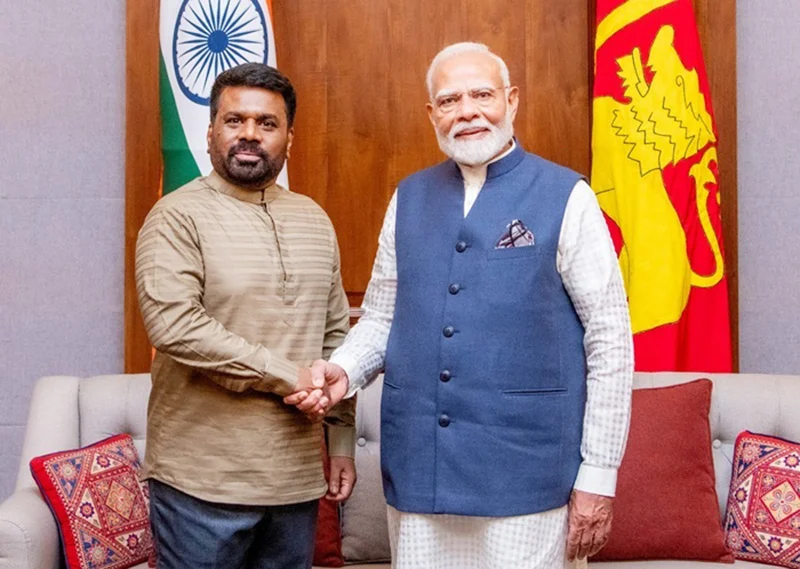
Indian Prime Minister Narendra Modi once again signaled the priority India places on Sri Lanka by swiftly dispatching a shipload of petrol following a telephone conversation with President Anura Kumara Dissanayake. The Indian Prime Minister’s gesture came at a cost to India, where there have been periodic supply constraints and regional imbalances in fuel distribution, even if not a countrywide shortage. Under Prime Minister Modi, India has demonstrated to Sri Lanka an abundance of goodwill, whether it be the USD 4 billion it extended in assistance to Sri Lanka when it faced international bankruptcy in 2022 or its support in the aftermath of the Ditwah cyclone disaster that affected large parts of the country four months ago. India’s assistance in 2022 was widely acknowledged as critical in stabilising Sri Lanka at a moment of acute crisis.
This record of assistance suggests that India sees Sri Lanka not merely as a neighbour but as a partner whose stability is in its own interest. In contrast to Sri Lanka’s roughly USD 90 billion economy, India’s USD 4,500 billion economy, growing at over 6 percent, underlines the vast asymmetry in economic scale and the importance of Sri Lanka engaging India. A study by the Germany-based Kiel Institute for the World Economy identifies Sri Lanka as the second most vulnerable country in the world to severe food price surges due to its heavy reliance on imported energy and fertilisers. Income per capita remains around the 2018 level after the economic collapse of 2022. The poverty level has risen sharply and includes a quarter of the population. These indicators underline the urgency of sustained economic recovery and the importance of external partnerships, including with India.
It is, however, important for Sri Lanka not to abdicate its own responsibilities for improving the lives of its people or become dependent and take this Indian assistance for granted. A long unresolved issue that Sri Lanka has been content to leave the burden to India concerns the approximately 90,000 Sri Lankan refugees who continue to live in India, many of them for over three decades. Only recently has a government leader, Minister Bimal Rathnayake, publicly acknowledged their existence and called on them to return. This is a reminder that even as Sri Lanka receives support, it must also take ownership of its own unfinished responsibilities.
Missing Investment
A missing factor in Sri Lanka’s economic development has long been the paucity of foreign investment. In the past this was due to political instability caused by internal conflict, weaknesses in the rule of law, and high levels of corruption. There are now significant improvements in this regard. There is now a window to attract investment from development partners, including India. In his discussions with President Dissanayake, Prime Minister Modi is reported to have referred to the British era oil storage tanks in Trincomalee. These were originally constructed to service the British naval fleet in the Indian Ocean. In 1987, under the Indo Lanka Peace Accord, Sri Lanka agreed to develop these tanks in partnership with India. A further agreement was signed in 2022 involving the Ceylon Petroleum Corporation and the Lanka Indian Oil Corporation to jointly develop the facility.
However, progress has been slow and the project remains only partially implemented. The value of these oil storage tanks has become clearer in the context of global energy uncertainty and tensions in the Middle East. Energy analysts have pointed out that strategic storage facilities can provide countries with greater resilience in times of supply disruption. The Trincomalee tanks could become a significant strategic asset not only for Sri Lanka but also for regional energy security. However, historical baggage continues to stand in the way of Sri Lanka’s deeper economic linkage with India. Both ancient and modern history shape perceptions on both sides.
The asymmetry in size and power between the two countries is a persistent concern within Sri Lanka. India is a regional power, while Sri Lanka is a small country. This imbalance creates both opportunities for partnership and anxieties about overdependence. The present government too has entered into economic and infrastructure agreements with India, but many of these have yet to move beyond initial stages. This has caused frustration to the Indian government, which sees its efforts to support Sri Lanka’s development as not being sufficiently appreciated or effectively utilised. From India’s perspective, delays and hesitation can appear as a lack of commitment. From Sri Lanka’s perspective, caution is often driven by domestic political sensitivities and concerns about sovereignty.
Power Imbalance
At the same time, global developments offer a cautionary lesson. The behaviour of major powers in the contemporary international system shows that states often act in their own interests, sometimes at the expense of smaller partners. What is being seen in the world today is that past friendships and commitments can be abandoned if a bigger and more powerful country can see an opportunity for itself. The plight of Denmark (Greenland) and Canada (51st state) give disturbing messages. Analysts in the field of International Relations frequently point out that power asymmetries shape outcomes in bilateral relations. As one widely cited observation by Lord Parlmeston, a 19th century prime minister of Great Britain is that “nations have no permanent friends or allies, they only have permanent interests.” While this may be an overly stark formulation, it captures an underlying reality that small states must navigate carefully.
For Sri Lanka, this means maintaining a balance. It needs to clearly acknowledge the partnership that India is offering in the area of economic development, as well as in education, connectivity, and technological advancement. India has extended scholarships, supported digital infrastructure, and promoted cross border links that can contribute to Sri Lanka’s long term growth. These are tangible benefits that should not be undervalued. At the same time, Sri Lanka needs to ensure that it does not become overly dependent on Indian largesse or drift into a position where it functions as an appendage of its much larger neighbour. Economic dependence can translate into political vulnerability if not carefully managed. The appropriate response is not to distance itself from India, but to broaden its partnerships. Engaging with a diverse range of countries and institutions can provide Sri Lanka with greater autonomy and resilience.
A hard headed assessment would recognise that India’s support is both genuine and interest driven. India has a clear stake in ensuring that Sri Lanka remains stable, prosperous, and aligned with its broader regional outlook. Sri Lanka needs to move forward with agreed projects such as the Trincomalee oil tanks, improve implementation capacity, and demonstrate reliability as a partner. This does not preclude it from actively seeking investment and cooperation from other partners in Asia and beyond. The path ahead is therefore one of balanced engagement. Sri Lanka can and should welcome India’s partnership while strengthening its own institutions, fulfilling its domestic responsibilities, and diversifying its external relations. This approach can transform a relationship shaped by asymmetry into one defined by mutual benefit and confidence.
by Jehan Perera

Amelia Kerr hits 139-ball 179* as New Zealand pull off record chase to level series

Punjab Kings fined for slow over-rate

Ice-cool Connolly leads nervy Punjab Kings home on IPL debut

Showers expected in the Western, Sabaragamuwa and Southern provinces in the evening or night

Heat Index at Caution Level in the Western, Sabaragamuwa, Southern, Eastern, North-western, Northern and North-central provinces and in Monaragala district

Urea shortage threatens Yala harvest: Experts

‘Dates have the highest sugar content to fight Coronavirus’

Sunday Island 27 December – Headlines

#SundayIsland 17th December – Headlines

Sunday Island – 28th March

Sunday Island Headlines – 21 March

Sunday Island – 21st February – Headlines
-

 Features5 days ago
A World Order in Crisis: War, Power, and Resistance
-

 News6 days ago
Energy Minister indicted on corruption charges ahead of no-faith motion against him
-

 News7 days ago
US dodges question on AKD’s claim SL denied permission for military aircraft to land
-

 Business7 days ago
Dialog Unveils Dialog Play Mini with Netflix and Apple TV
-

 Sports6 days ago
SLC to hold EGM in April
-

 Opinion6 days ago
When elephants fight, it is the grass that suffers
-

 Latest News6 days ago
A strong Technical and Vocational Education and Training (TVET) system equips individuals with practical, relevant, and future-oriented skills helping to innovate responsibly towards a greener and sustainable future – PM
-
 Features6 days ago
Lest we forget