
Features
The ‘Political Weapon’ that Joe Biden Didn’t Deploy!

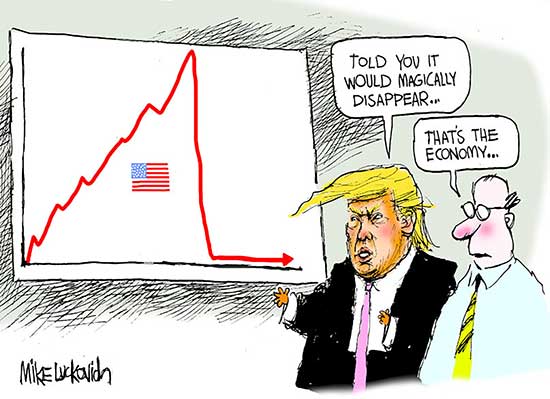
THE RELIEF PACKAGE HE BARELY MENTIONED . . .
by Selvam Canagaratna
“Perhaps the most surprising element of President Joe Biden’s first presidential speech on Thursday night was what it did not include” was how Jeff Greenfield, a five-time Emmy-winning network television analyst and author, described it in Politico magazine.
A day after the passage of the most far-reaching piece of domestic legislation in decades, Biden spent only the last few minutes in touting his $1.9 trillion American Rescue Plan. The lion’s share of his talk was a detailed account of the effort to contain and control the coronavirus pandemic. Apart from a passing reference to the “denial” and “silence” of his unnamed predecessor, politics was not on the agenda.
There may well have been good reason for that decision. His first prime-time speech as President called for a message of unity — the same message he had sounded during his campaign and in his Inaugural. No mention of the unanimous opposition of Republicans to his plan; no attempt to draw partisan lines. The selling of his Rescue Plan is expected to begin any time, but Biden clearly decided it could wait a day or two.
Yet there is no doubt that the political implications of his plan have the potential to be nothing less than radical.
It was 11 years ago, almost to the day, House Speaker Nancy Pelosi said of Obamacare: “we have to pass the bill so that you can know what’s in it.” That notion, which seemed borrowed from the Queen of Hearts’ absurdist “Sentence first! Verdict afterwards!” approach in Alice in Wonderland, turns out to have been even more applicable to this week’s American Rescue Act.
It was after the bill’s approval by the Senate that we learned the full dimensions of the most audaciously ambitious social welfare legislation since the New Deal. Most tellingly, the congressional Republicans, who had voted unanimously against it out of force of habit, never bothered to train the full fury of their fire at a series of provisions that took the nation several steps down the road to social democracy.
There’s the tax credit for children that in effect provides thousands of dollars a year for each child — an idea that’s been debated since Daniel Moynihan proposed it as a member of the Nixon administration. There’s the significant expansion of subsidies to buy into health care, along with months’ worth of free access to health insurance for those who’ve lost their jobs and health insurance — not “socialized medicine,” but a significant step toward more public underwriting of health care. And there’s an $86 billion commitment to protect the pensions of a million retirees whose multi-employer plans were in danger of insolvency — without even a pretense that this is linked to the Covid pandemic.
It’s the kind of bailout you might expect in a nation where organized labour is a significant share of the workforce. Now, in a United States where unions represent barely 6 percent of the private sector labour force, that protection is law.
From a policy perspective, the key question is whether these and other provisions lead to a robust economy or one eroded by a spike in inflation. From a political perspective, the potential impact of the rescue plan is hard to overstate; what it represents is the possibility that the Democratic Party has found a tool to reconnect it to a working and middle class whose loyalty has been threatened for well over half a century.
There are a host of centrifugal forces pulling at the Democratic Party coalition: In the early 1960s, clashes over housing, jobs, schools, crime and welfare divided black and white working-class voters. Cities like Berkeley and Seattle repealed fair housing laws, and in 1964 — the high-water mark of postwar Democratic Party strength — voters in California overwhelmingly banned such laws.
By 1968, George Wallace’s campaign for president was striking chords beyond the South. The fraying of the New Deal coalition was very much on the mind of Robert F. Kennedy, whose presidential campaign was based on holding it together. In his last weeks, he began talking about an issue he believed had broad appeal: specifically, how many of the wealthiest Americans avoided paying a fair share of taxes. By the end of 1968, divisions over the war in Vietnam, deadly riots in the cities and upheaval on college campuses reduced the Democratic share of the presidential vote from 60 percent in 1964 to 43 percent; Richard Nixon and George Wallace divided the rest.
Little more than a decade later, the twin demons of recession across the industrial heartland and double-digit inflation helped turn millions of voters into “Reagan Democrats,” leading to two landslide victories for the Gipper and 12 consecutive years of GOP presidencies. All through the 1980s, Democrats and their intellectual allies tried to grapple with the fact that voters seemed to prefer Democratic policies (on health care, education, taxes), but voted, at least at the presidential level for Republicans. (I have a vivid memory of House Majority Leader Dick Gephardt assuring a group of journalists that once the American people saw his party’s proposals for lower drug prices and access to college, they would return to the fold.)
It took “a different kind of Democrat” (as Bill Clinton defined himself) to win back, at least temporarily, those defecting Democrats by breaking with his party’s orthodoxies on crime and welfare, and by pledging that “the era of Big Government is over.” And it took an emerging demographic sea change that yielded an increasingly non-white electorate, and a more liberal cohort of college-educated whites, to outweigh (at least in popular vote terms), the increasingly Republican tilt of less-educated whites and to put Barack Obama in the White House.
But both Clinton and Obama suffered severe political damage in their first midterms from the fact that their principal battles — for deficit-cutting tax hikes on the part of Clinton, and from a stimulus and a health care plan from Obama — had failed to deliver tangible success. While both were re-elected, those midterm failures had severe consequences that endure; in particular, 2010 produced a GOP takeover at the state level that now threatens severe voting limits across the country.
With the American Rescue Plan, Democrats are offering something very different: a package that is in a key sense a throwback to its roots first planted in the days of Andrew Jackson. It is an unapologetic assertion of the power of government to redress a set of grievances without any assertion of identity politics; while the stark facts of the pandemic mean that it has hit with special force in black and brown communities, the remedial power of government is directed to the victims defined by circumstance, not colour.
The political potential here is impressive. Consider a 2022 mid-term where the future of the now-temporary child tax credits is on the line, and where every Republican House and Senate incumbent will have to explain to the electorate why they voted against them. Consider the votes of tens of thousands of small-business owners — the entrepreneurial heart of what Republicans rhetorically celebrate — whose enterprises survived because of the law enacted with a clear partisan split. Imagine a Republican arguing that only a small fraction of the law addressed the costs of the pandemic, when there are countless parents of school-age children, restaurant workers, retail shop owners, hotel clerks, freelance consultants, who know exactly what happened to their lives when Covid struck.
This is a possibility that Republicans simply may not have imagined, given their midterm successes in running against the initiatives of the past two Democratic Presidents, and inflicting on Clinton and Obama successive political catastrophes.
This time, the benefits of the new law are easy to grasp, and will be — literally — in the hands of Americans within weeks. The scope is broad enough to encompass both the poor and large elements of the middle class, which is why it now enjoys a level of support almost unimaginable for a law passed along such partisan lines. There is a hint that an outbreak of public happiness may be about to begin; when American Airlines tells its workers to “tear up those furlough notices!”, it portends the chance of celebration with every re-opened restaurant, with every eviction notice burned. More broadly, it appears to contain provisions that leapfrog a dilemma that has plagued Democratic social programs in the past: When they are perceived as helping one class of voters, they meet with a powerful backlash, (often one infused by racial resentment). When a program reaches broadly — Social Security, Medicare and, increasingly, the Affordable Care Act — it also becomes politically potent.
Potential is not prediction. There are plenty of ways that 2022 could be another Democratic disaster; perhaps inflation will accelerate, or the looming issues of an overwhelmed border and rising crime may override good economic news, or the Republican efforts to limit the vote in state after state will prove too formidable.
But what does seem clear is that, unlike past measures that required huge congressional majorities, a radical change in the social fabric of the United States has become a reality — and with it, an opportunity for the Democratic Party no one could have imagined 50 days ago, concluded Greenfield.

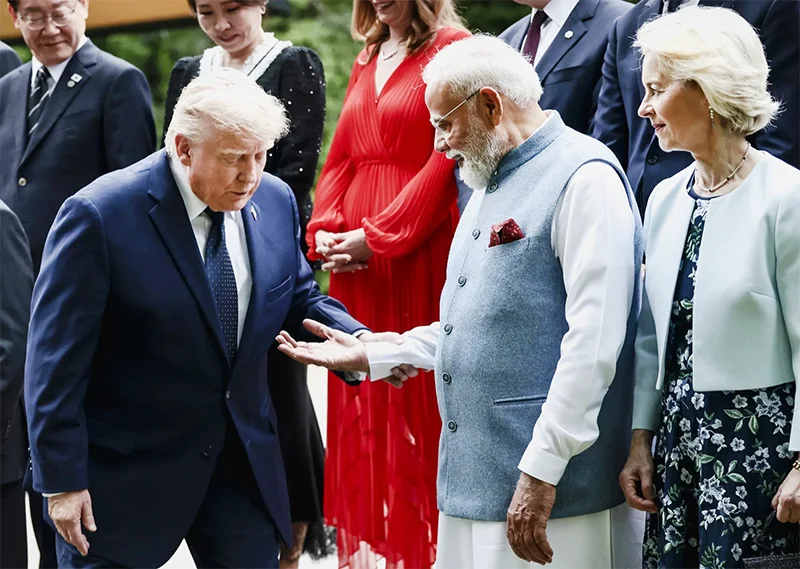
 It is obviously too early for an outpouring of joy over the seeming cessation of hostilities between the main antagonists in West Asia. While the prospect of there being a measure of calm in the region is being welcomed by considerable sections of the international community, what is ‘on the table’ currently is only a Memorandum of Understanding between the US and Iran to give peace a chance. The hard part in the peace effort remains to be achieved.
In the Middle East of today we have one of the most complex conflicts to break out in modern international politics and the observer would be naive in the extreme to expect a facile and early closure to the tangle. Yet, for the sake of the world’s publics who have been hurting badly in the prolonged hostilities one could only hope that the US-Iran MoU that is expected to be signed by the sides on Friday would lead eventually to a substantive peace. The world’s thanks are due to Pakistan in this connection for its sustained support in the peace drive.
While the sides have agreed to a ceasing of hostilities in the most general terms and have reached accord on the facilitation of uninterrupted oil and gas supplies to the rest of the world, for instance, the ‘devil will prove to be in the details’ in an envisaged comprehensive peace settlement. It is these details that would make or break peace if the negotiations go on in earnest.
Nevertheless, the details would need to be worked out consensually in a spirit of compromise with an eye to the greater good of the world community. Realpolitik or a narrow focus on solely the national interest among the protagonists, for example, would need to give way to a measure of humanity that would encompass within it a consideration of the overall well being of the world. In other words, it is statesmanship that would crucially matter.
The next few weeks would establish whether humanists are ‘asking for far too much’ when they broach the questions at issue in these terms. Yet it is essentially self interest and national security considerations of the first importance that drove the conflict from even prior to February this year and these questions would need to be taken up and resolved to the satisfaction of the US and Iran in the main if some headway is to be made towards a durable settlement.
The nuclear issue would prove to be the proverbial Gordian Knot. From a realistic viewpoint, Iran could not be expected to be without a potential nuclear deterrent in the face of perceived nuclear threats emanating for it from the West and Israel. In the short term, Iran would need to possess this deterrent to a measure, within a mutually agreed international legal framework maybe, until wide agreement is reached on the nuclear tangle. Specifically, Iran’s immediate threat perceptions with regard to her nuclear-powered rivals would need to be defused during initial negotiations.
Ideally it is a world free of nuclear weapons that must be aimed at but since this goal cannot be achieved in the near or medium terms, unfolding negotiations would need to ensure Iran’s absolute security in a world of powers that continue to swear by the nuclear deterrent, if it is to give up the suspected latter capability.
However, it is to the degree to which the present nuclear powers divest themselves of this capability that Iran could be put at ease on this score. Accordingly, it is nothing short of a complete elimination of nuclear weapons from the world that could dissuade keenly security conscious states from developing nuclear weapons of their own with a mass destruction capability.
This is the number one dilemma the international community needs to grapple with going forward and it is to the extent to which it resolves it that a nuclear weapons free world could be envisaged. No doubt, an uphill challenge.
Compelling Israel to support the present negotiatory process constitutes another grueling challenge for the US. Currently the Iranian position essentially is that a Middle East peace is inseparable from a normalization of the security situation in Lebanon. That is, the present Israeli attacks on the Hezbollah presence in Lebanon must cease if a comprehensive peace is to be realized in West Asia.
However, Israel is showing no signs of drawing back from its attacks on Hezbollah strongholds in Lebanon since the security of the Israeli state is being seen as threatened by the militant group. Co-opting Israel into the negotiatory effort therefore would turn out to be a matter of paramount concern for the US.
Moreover, elements in the rightist administration in Israel are seeing the current peace efforts as a ‘sell out’ to the enemies of Israel. They would have none of it. It is left to be seen how the US would be managing these virtual storm centres in the diplomatic process that could very well bring down the overall purported peace drive.
A recent pronouncement by US Vice President J.D. Vance points to yet another problem area in the US’ current peace overtures. He said that, ‘Regional peace and stability includes stopping the funding of terrorist organizations.’ He was obviously referring to the support extended by Iran to Hezbollah when he mentioned ‘terrorist organizations’ but he has given fresh life to the age-old conundrum of ‘Who is a terrorist?’ by these words.
To the Netanyahu government the Hezbollah and other militant organizations fighting Israel are ‘terrorists’ but from the viewpoint of the Iranian regime they are ‘freedom fighters’. This seemingly insurmountable definitional issue would not only stubbornly bedevil the peace effort but could even figure in bringing about its collapse, unless judiciously handled.
Thus, it’s the thorny details that need to be watched to keep the West Asian peace process afloat, once it gets going in earnest. There is no doubt that US President Trump would be receiving a considerable amount of support from the G7 in this historic peace undertaking and his personal appeals to the grouping currently meeting in France for continuous support are likely to elicit a positive response from it.
Likewise, Trump would need to appeal to also the BRICS countries if almost total global support is to be garnered for the peace drive in West Asia. BRICS’ solidarity with the US and the West is likely to carry considerable weight with Iran and other Eastern actors who are key to a sustained peace drive in the Middle East.
Features
Sri Lanka’s elephant paradox: Govt. counts tourism dollars while playing a dangerous numbers game: Expert
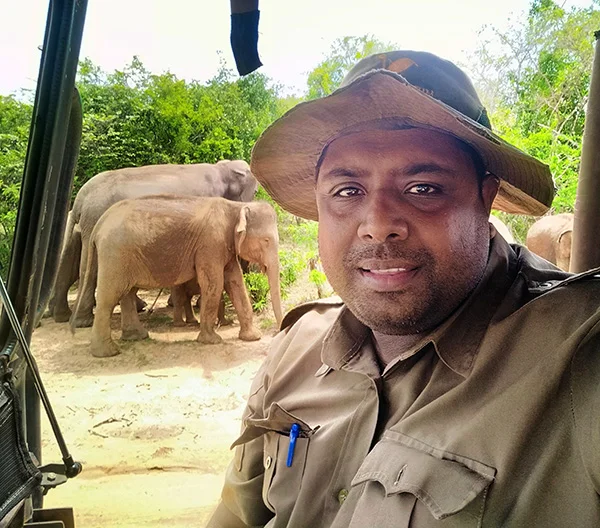
At a time when Sri Lanka is enjoying a resurgence in wildlife tourism, with elephants remaining the undisputed stars of the country’s national parks and one of its most marketable natural assets, elephant conservationist Supun Lahiru Prakash has sounded a stark warning: the nation is in danger of losing the very species that helps attract millions of tourism dollars while sustaining some of the island’s most important ecosystems.
Supun says repeated claims by authorities that Sri Lanka’s elephant population is increasing, despite the absence of a final survey report and amid continuing elephant deaths, risk creating a misleading narrative that could undermine conservation efforts and encourage retaliation against elephants.
According to Supun, the issue is not merely about numbers. It is about political priorities, scientific credibility and the future of one of Sri Lanka’s most iconic species.
“Repeatedly claiming that the elephant population is increasing appears to be an attempt to hide the Government’s inability to manage the rising annual elephant death rate and the complications of human-elephant conflict,” Supun said.
For decades, the Sri Lankan elephant has been a symbol of the country’s rich natural heritage. It is the centrepiece of wildlife tourism, drawing visitors from across the globe to national parks such as Yala, Udawalawe, Minneriya, Kaudulla and Wilpattu. International wildlife documentaries, tourism campaigns and social media promotions frequently place elephants at the heart of Sri Lanka’s nature tourism brand.
Yet, according to Supun, the country’s conservation policies do not reflect the value of the species.
“On one hand, the Government is enjoying increasing tourism revenue, and elephants remain one of Sri Lanka’s most important wildlife attractions. On the other hand, narratives are being promoted that could encourage retaliation against the very species that contributes significantly to the country’s tourism industry,” Supun said.
According to the First Countrywide National Survey of Elephants conducted in 2011, Sri Lanka had 5,879 elephants. However, official statistics show that 4,167 elephants died between 2012 and 2024.
Supun stressed that these figures represent only the deaths officially recorded by the Department of Wildlife Conservation.
“In a context where more than 70 percent of the country’s elephant population reported in 2011 has died within 13 years, it is difficult to accept claims that the population has increased,” Supun said.
The conservationist pointed out that elephants have the longest gestation period among land mammals and that scientific studies have reported increasing interbirth intervals among female elephants together with high calf mortality.
“When such biological realities are taken into consideration, claims of a dramatic increase in elephant numbers become difficult to understand,” Supun said.
Supun believes that repeated references to increasing elephant populations risk fuelling public hostility towards elephants, particularly among farming communities already affected by crop raids and property damage.
“Such claims can create the impression that elephant populations are exploding and thereby promote retaliation against elephants as well,” Supun said.
According to Supun, Sri Lanka’s elephant crisis cannot be understood solely through population estimates. The real issue lies in the country’s failure to address human-elephant conflict through long-term, science-based solutions.
Sri Lanka continues to record among the highest levels of human-elephant conflict in the world. Every year, hundreds of elephants and dozens of people lose their lives as competition for land and resources intensifies.
Despite the scale of the crisis, Supun says authorities continue to rely on strategies that have repeatedly failed.
Lahiru Prakash
These include driving elephants into protected areas, strengthening electric fences to confine them there and allocating additional manpower to maintain fencing systems.
Supun was also critical of several proposals that emerged from district-level discussions on conflict mitigation, including the sowing of paddy and corn using Air Force drones and the planting of fruit orchards within protected areas.
“Such proposals fail to address the real ecological and social dimensions of the conflict,” Supun said.
While welcoming reports that the Government intends appointing a national-level mechanism to tackle human-elephant conflict, Supun said the challenge required intervention at the highest level of government.
“Given the gravity, complexity and geographical spread of human-elephant conflict, appointing any committee other than a Presidential Task Force is not useful,” Supun said.
He argued that a Presidential Task Force chaired by either the President or the Secretary to the President would be better positioned to overcome the bureaucratic delays and institutional fragmentation that have hindered previous efforts.
Supun also stressed the urgent need to restore and protect elephant corridors and home ranges that allow elephants to move safely across landscapes.
He cited the Koholankala elephant corridor in Hambantota as one example where removing obstacles could help reduce conflict while improving habitat connectivity.
At the same time, Supun questioned policies that permit the allocation of forest lands in areas identified by environmental assessments as crucial elephant ranges and movement corridors.
“The opening of elephant corridors and the protection of elephant home ranges must be carried out scientifically and consistently if they are to succeed,” Supun said.
Beyond tourism, Supun emphasised the ecological importance of elephants.
“Elephants are ecosystem engineers. Through their feeding habits and movements, they help maintain habitats that support numerous other species. In many ways, they create safer and healthier environments for wildlife,” Supun said.
According to Supun, protecting elephants means protecting entire ecosystems and the biodiversity upon which Sri Lanka’s wildlife tourism industry depends.
“By protecting elephants, we are also protecting the biodiversity that makes Sri Lanka one of the world’s premier wildlife tourism destinations,” Supun said.
As Sri Lanka seeks to expand tourism earnings and strengthen its reputation as a wildlife destination, Supun believes the country faces a defining choice: continue with policies that have failed to stem elephant deaths and human-elephant conflict, or embrace a science-based conservation strategy that safeguards both people and wildlife.
Without a fundamental shift in policy and political will, Supun warned, Sri Lanka risks losing not only one of its most iconic species but also the ecological and economic benefits that elephants continue to provide.
“The suffering of both farmers and elephants will only intensify unless meaningful action replaces rhetoric,” Supun said.
By Ifham Nizam

Back-to-back victory for Colombia
 Katherine Castaño of Colombia claimed the Top Model of the World 2026 crown, securing a historic back-to-back victory for her country. Angelica Sanchez of Puerto Rico was named first runner-up, and Eunice Deza of the Philippines finished as second runner-up.
Katherine was crowned by outgoing titleholder Natalia Garizabal Vera of Colombia.
Several special category awards, and subsidiary titles, were also presented during the Top Model of the World 2026 pageant.
These awards recognised excellence in modelling, peer support, and regional representation.
Primary Subsidiary Titles

Sri Lanka’s Netalie Withanage: Top 16 at
the grand finale
Miss Globe 2026: Valentina Tabares (Ecuador) — Awarded to the contestant who perfectly balances fashion modelling with traditional beauty queen qualities.
Queen of Europe 2026: Mia Danielle Williams (United Kingdom) — Given to the highest-ranking candidate from a European nation.
Special Awards Recognition
Audience Iconic Award: Charly (Dominican Republic) — Won via the official public online vote, granting her a fast-track direct entry into the Top 6.
Exotic Model of the World: Angel Emeka (Nigeria) — Awarded for exceptional editorial presence and strong runway performance.
Best Body Award: Thailand — Voted directly by fellow contestants at the Flow Spectrum Hotel. The highest-ranking runners-up for this category included Zambia, South Africa, Colombia, and Ghana.

Angelica Sanchez (Puerto Rico): 1st Runner-up
Final Placement
Winner: Katherine Castaño (Colombia)
1st Runner-Up: Angelica Sanchez (Puerto Rico)
2nd Runner-Up: Eunice Deza (Philippines)
Top 6 Finalists: Included contestants from the Dominican Republic, Romania, and Germany.
The pageant, known for focusing on professional modelling careers over just beauty, brought together 36 models from around the globe for two weeks of runway, photoshoots, and cultural events.
Sri Lanka’s Netalie Withanage walked among 36 of the world’s best and powered her way into the Top 16 at the grand finale.

What the Trump-Iran agreement says about Lebanon, Hormuz and Uranium

Scotland face West Indies with a chance to reopen World Cup wounds

Moscow hit by largest Ukrainian attack since start of Russia’s full-scale war

Sooryavanshi to have parents with him on tour of Ireland and England

Luis Diaz, Colombia defeat World Cup 2026 debutants Uzbekistan

Oil prices fall, stocks rally as US, Iran sign framework to end war

‘Dates have the highest sugar content to fight Coronavirus’

Sunday Island 27 December – Headlines

#SundayIsland 17th December – Headlines

Sunday Island – 28th March

Sunday Island Headlines – 21 March

Sunday Island – 21st February – Headlines
-

 News4 days ago
Release of 2025 O/L results likely to be delayed
-
 News7 days ago
CIABOC summons Yoshitha over his participation in British Navy training programme
-

 News7 days ago
Justice Minister responds to social media claims he represented Easter Sunday ringleader
-

 Sports4 days ago
Tharanga set for high-profile javelin clash in Ostrava
-

 Features5 days ago
Politics of protected species
-

 News3 days ago
Beijing Capital Airlines to resume flights to Colombo signalling boost to tourism
-

 News4 days ago
Theft of USD 2.5 mn from Treasury: CoPF accused of complicity in NPP cover-up
-

 News6 days ago
Commonwealth lawyers urge Lanka to uphold rule of law