
Business
The Plight of the Poor

Sri Lanka’s Deepening Economic Crisis:
By Lakshila Wanigasinghe
 Empty supermarket shelves, endless queues to buy essentials and overnight camping around fuel stations are now regular sights in Sri Lanka. As the economy continues to plummet with no viable short-term solutions in sight, levels of frustration among the citizens continue to rise.
The country’s worst economic crisis since independence has battered Sri Lankans from all walks of life but the fallouts are impacting the poor with greater intensity. If urgent measures are not taken to support the most vulnerable at this time, more Sri Lankans will slip into poverty thus increasing intergenerational poverty in the long term. This blog identifies some of the most pressing challenges faced by the poor and vulnerable amidst the prevailing crisis and outlines policy options to safeguard their well-being.
Background
Sri Lanka’s current economic crisis is a result of several years of mismanagement, corruption, shortsighted policymaking, and an overall lack of good governance. Insufficient foreign reserves at Sri Lanka’s Central Bank and loss of access to international capital markets resulted in the country defaulting on debt for the first time in history. Unchecked external borrowings, tax cuts that widened the existing budget deficit, the chemical fertiliser imports ban and the sudden floating of the Sri Lankan rupee are among several factors that contributed to the economic collapse. Tourism, together with apparel and tea exports – some of Sri Lanka’s main income sources – were affected in recent years due to various internal and external factors such as the 2019 Easter Sunday attacks followed by COVID-19 in 2020. Now, the economic crisis presents multiple challenges including severe threats to nutrition, food security, healthcare, and education.
Impacts on the Vulnerable
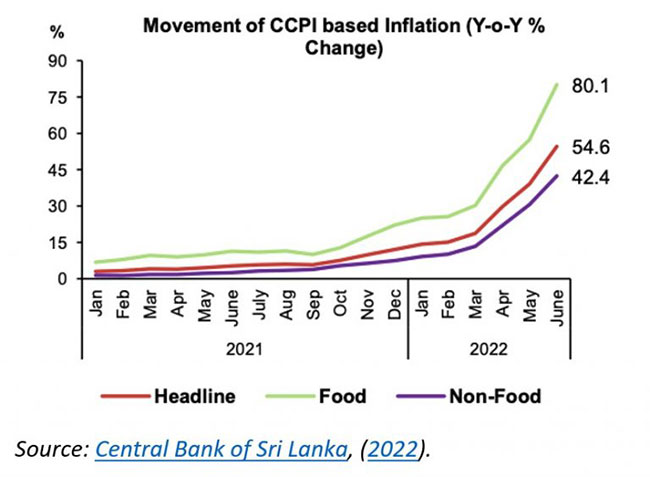
The rapid depreciation of the Sri Lankan Rupee and the inability of wages to keep up with inflation have drastically lowered the standard of living. Inflation, as measured by the Colombo Consumer Price Index (CCPI) for June 2022, was 54.6% in comparison to 39.1% in the previous month. Further, food inflation rose to an alarming 80.1% in June 2022.
The ability to earn a living wage is hampered by insufficient fuel supplies. This along with the rise in transport costs and overcrowded public transport have left workers struggling to commute to work. Daily wage earners such as three-wheel drivers are in fuel queues for days losing out on productive work hours. Regular interruptions to the power supply are affecting small-business owners’ ability to conduct business and with many completely shutting down operations. Shortages in gas and kerosene oil for cooking, rise in commodity prices and supply shortages are changing people’s consumption patterns forcing many families to reduce their consumption and non-consumption expenditure. The inability to receive adequate nutrition due to increases in the cost of living is affecting children’s health and may lead to increased rates of malnutrition in the future. Apart from this, continuous school closures are impeding children’s education, especially at the village level where most families lack the technology for digital learning.
Short-term Relief
Sri Lanka was facing a reversal in poverty levels since the COVID-19 pandemic and faces the risk of many new groups following suit along with those who are already poor falling deeper into poverty. Hence immediate measures must be taken to support the poor and ensure their livelihood sustenance to some extent. As the current fiscal restrictions pose a challenge in supporting all groups in need, emergency relief efforts need to be targeted toward the most vulnerable so as to not further cripple the economy. Providing cash transfers is one such relief option. They were widely popular as a global emergency response during COVID-19. While Sri Lanka also adopted this as a response to the pandemic, the key in this context would be to provide an adequate sum of money to the most deserving households. Although this may include a considerably large number of at-risk families due to rising inflationary pressure, unfortunately only those in dire need of support must be beneficiaries at this time. As such authorities will have to make tough choices to correctly identify deserving households. Financing these cash transfers will require an allocation of a portion of funds from foreign aid, loans and other humanitarian assistance received by Sri Lanka.
Following the declaration of a three-day weekend for public sector employees, primarily to utilise their time to cultivate consumable crops at the household level, the provision of in-kind support such as seeds and fertiliser for cultivation is another option. As with monetary support, these initiatives must be targeted toward the poorest who are unable to meet their required nutrition levels. However, there is an issue with such families not having suitable plots of land for cultivation. Thus, initiatives need to be thought of on how to overcome space limitations. One option is through community gardens which can be introduced in village-level Grama Seva offices, school grounds etc. Proper organisation, allocation, and monitoring are imperative to successfully execute these initiatives.
Although an unpopular solution, temporary rationing measures will need to be put in place, especially for high-demand commodities such as fuel, gas, milk powder and medicine etc. This will help curb excess purchasing of items and ensure all individuals have access to purchase necessities. Excessive purchasing often leaves the poor on the losing end since they do not have sufficient funds to purchase beyond their immediate requirements. Hence rationing will help with maintaining sufficient supplies for low-income groups such as daily-wage earners. While it is important to support the poor and vulnerable at this time, it is imperative to ensure the limited fiscal and other resources are used effectively. Further, these measures need to be taken alongside working towards ensuring political stability and debt sustainability to restore international confidence in Sri Lanka. This will encourage support from the global community to help Sri Lanka work towards overcoming this crisis.
Link to the full blog – https://www.ips.lk/talkingeconomics/2022/07/18/sri-lankas-deepening-economic-crisis-the-plight-of-the-poor/
Lakshila Wanigasinghe is a Research Officer at IPS with research interests in poverty, social welfare, development, education, and health. She holds an MSc in Economics with a concentration in Development Economics and a BA in Economics with concentrations in International, Financial and Law and Economics from Southern Illinois University Carbondale (SIUC), US. (Talk with Lakshila – lakshila@ips.lk)


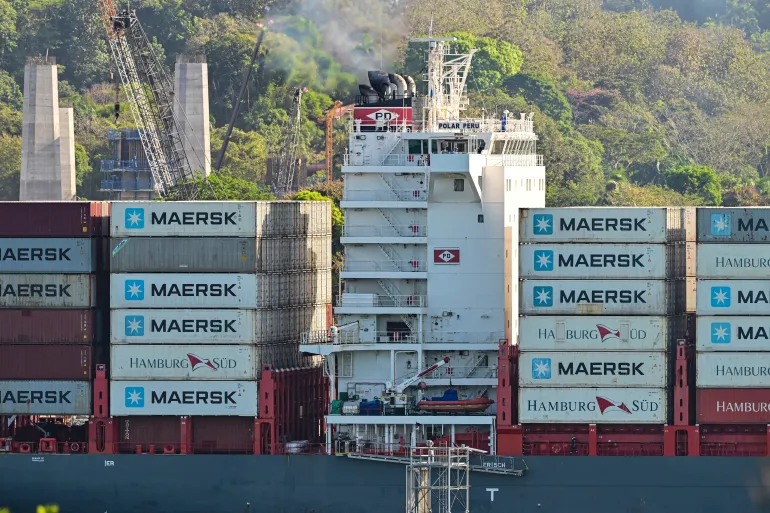
Danish firm Maersk will temporarily operate two ports on the Panama Canal after a court ruled that contracts given to a Hong Kong firm were unconstitutional.
The Panama Maritime Authority (AMP) announced the changes on Friday, a day after the Central American country’s Supreme Court invalidated port contracts held by Hong Kong-based firm CK Hutchison.
The court ruling followed repeated threats from the United States President Donald Trump that his country would seek to take over the waterway he claimed was effectively being controlled by China.
According to the court ruling that annulled the deal, CK Hutchison’s contract to operate the ports had “disproportionate bias” towards the Hong Kong-based company.
On Friday, the AMP said port operator APM Terminals, part of the Maersk Group, would take over as the “temporary administrator” of the Balboa and Cristobal ports on either end of the canal.
Maersk takes over from the Panama Ports Company (PPC) – a subsidiary of CK Hutchison Holdings – which has managed the ports since 1997 under a concession renewed in 2021 for 25 years.
The canal, an artificial waterway, handles about 40 percent of US container shipping traffic and 5 percent of world trade. It has been controlled by Panama since 1999, when the US, which funded the building of the canal between 1904 and 1914, ceded control.
Washington on Friday welcomed the decision, but China’s Foreign Ministry spokesman Guo Jiakun said Beijing “will take all measures necessary to firmly protect the legitimate and lawful rights and interests of Chinese companies”.
For its part, PPC said the ruling “lacks legal basis and endangers … the welfare and stability of thousands of Panamanian families” who depend on its operations.
Tens of thousands of workers dug the 82km- (51-mile-) passageway that became the Panama Canal, allowing ships to pass from the Pacific Ocean to the Atlantic without having to travel around the northernmost or southernmost ends of the Americas.
Panama has always denied Chinese control of the canal, which is used mainly by the US and China.
[Aljazeera]

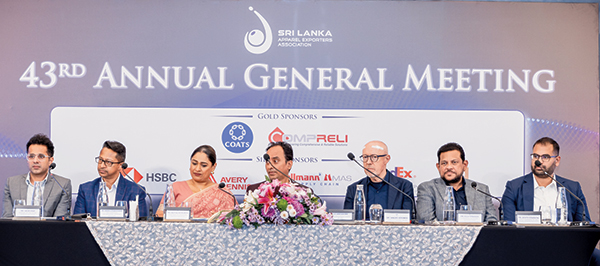
India’s rapid rise as a global manufacturing hub and consumer market is reshaping South Asia’s apparel landscape, creating both urgency and opportunity for Sri Lanka to reposition itself through deeper regional integration, Acting Indian High Commissioner to Sri Lanka Dr. Satyanjal Pandey said recently at the Sri Lanka Apparel Exporters Association (SLAEA) Annual General Meeting in Colombo.
Addressing industry leaders at Cinnamon Life, Dr. Pandey said the next phase of growth in South Asian apparel will be driven not by competition within the region, but by collaboration across it, particularly between India and Sri Lanka.
“India and Sri Lanka bring very different but highly complementary strengths, he said. “India offers scale, raw materials, a vast labour pool and a rapidly expanding domestic market. Sri Lanka brings world-class manufacturing standards, compliance, speed, flexibility and trusted relationships with premium global brands. Together, these strengths can create globally competitive regional value chains.”
Dr. Pandey revealed that India had concluded a major trade agreement with the European Union earlier in the day, granting tariff-free access across more than 9,000 product lines, including apparel, with tariffs reduced from 12 percent to zero.
The agreement, he noted, reinforces India’s growing centrality in global trade and underscores the need for Sri Lanka to move swiftly in aligning its trade and investment strategies with regional developments.
He stressed that India’s objective is not to displace Sri Lankan apparel producers, but to grow together in an increasingly complex global market where buyers are demanding resilience, sustainability and regional diversification.
India today is one of the world’s fastest-growing major economies, with a large and youthful population, expanding middle class and rising apparel consumption. For Sri Lankan manufacturers, this presents opportunities not only as a sourcing partner, but also as an export destination for value-added apparel, technical textiles and sustainable fashion.
Against this evolving landscape, Sri Lankan industry leaders highlighted the urgency of aligning domestic policy and regulatory frameworks with India’s accelerating trade momentum.
Sri Lanka Exporters Association chairperson Ms. Rajitha Jayasuriya said global regulatory compliance has become a prerequisite for market access, particularly in Europe.
She pointed to the EU’s Corporate Sustainability Due Diligence Directive (CSDDD), enhanced traceability requirements and Digital Product Passports (DPPs) as measures that will increasingly shape trade flows.
“These are no longer optional standards. They are a licence to operate, she said, adding that Sri Lanka must urgently build national support systems to help SMEs and supply chain compliance through transparency, sustainable materials and robust data systems.
Jayasuriya warned that failure to secure the renewal of Sri Lanka’s GSP Plus facility would further weaken competitiveness, especially as India strengthens its trade position with the EU.
“With India moving ahead rapidly, Sri Lanka must mobilise faster to protect preferential access and avoid erosion of market share, she said.
India also featured prominently in the industry’s forward-looking trade agenda.
Jayasuriya said priorities for 2026 include securing quota-free access to the Indian market, ensuring predictable trade flows and deepening Sri Lanka’s integration into India-centric regional value chains.
“A stronger India–Sri Lanka apparel corridor is not just an economic opportunity; it is a strategic imperative, she said.
Policy reform at home was identified as a critical enabler of regional integration.
Jayasuriya called for accelerated digital reforms, including the introduction of a fully fiscalised e-invoicing system for exporters, to improve liquidity, compliance and transparency.
She noted that countries such as India have already moved ahead in this area, strengthening their competitiveness.
The apparel industry’s performance in 2025, she said, demonstrated what is possible when factory-level resilience is matched by responsive policymaking. However, she cautioned that regional competitors such as Cambodia, Vietnam and Bangladesh continue to move aggressively on scale, automation and trade agreements.
By Ifham Nizam
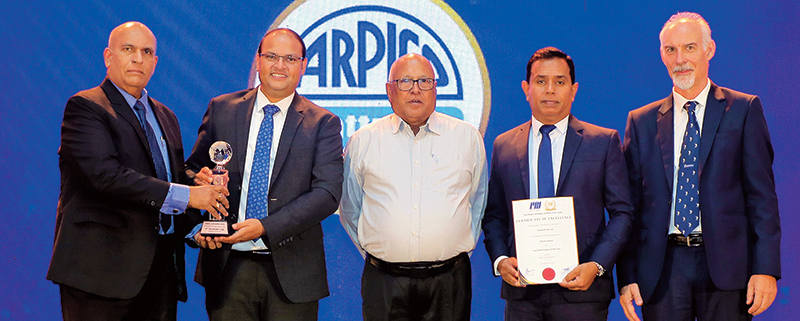
Arpico, the longstanding frontrunner in Sri Lanka’s mattress industry, recently received the award for 2nd Runner-Up in the category of Innovative Product of the Year at the 2025 PRISL Industry Awards. Hosted by the Plastic and Rubber Institute of Sri Lanka (PRISL), the awards honour outstanding industry contributions to the plastics, rubber, latex, and recycling sectors.
Awarded for Arpico’s NextGen mattress, the recognition reaffirmed the company’s commitment to crafting state-of-the-art sleep solutions and providing its customers with seamless retail experiences.
The Arpico NextGen mattress stands as a distinctive example of Arpico’s vision. With its inclusion of profile-cut air-cooling pocket technology, the NextGen mattress is the product of intensive research and development, designed to align with Arpico’s mission to innovate products that enrich everyday living. Built using cutting-edge German Computer Numerical Control (CNC) foam-cutting technology, the NextGen’s design aims to amplify cooling, essentially enhancing sleep quality through its superior comfort, adaptive support, and long-lasting performance, allowing sleepers to wake rejuvenated.
Discussing the award, Lalith Wijeyesinghe, Managing Director of Arpitech (Pvt) Ltd, Richard Pieris & Company PLC, said, “The award is a testament to the efforts and ingenuity of our team, led under the visionary guidance of our Group Chairman, CEO, and Managing Director of Richard Pieris & Company PLC, Dr Sena Yaddehige. It reaffirms our endeavours to design products that integrate emerging technologies for the benefit of our customers. Furthermore, we recognise the award as an incentive to continue pushing the boundaries of our achievements and pursue ever greater heights of success.”
Arpitech (Pvt) Ltd is a leading trailblazer in polyurethane foam and spring mattresses, sheets, cushions, and siliconised fibre pillows, backed by a corporate legacy spanning over four decades of manufacturing excellence. The company upholds the highest quality standards, having secured the prestigious ISO 9001:2015 certification. Furthermore, Arpico adheres to the SLS standard for its acclaimed Arpifoam. Renowned as a trusted brand, Arpitech (Pvt) Ltd draws from the 90-year legacy of its parent company, the Richard Pieris & Company PLC. From a modest beginning as a filling station in 1932, Richard Pieris & Company has grown into one of Sri Lanka’s most diversified business conglomerates with interests in retail, plantations, rubber, furniture, tyres, plastics, insurance, stockbroking, financial services, and logistics. It is one of the largest listed entities on the Colombo Stock Exchange, with a remarkable annual turnover.

Shipping giant Maersk to take over Panama Canal ports after court ruling

India face Pakistan for a place in the semi-finals of the Under-19 World Cup

More than 200 killed in mine collapse in DR Congo

US government partially shuts down despite last minute funding deal

Harmanpreet 82* in vain as Gujarat Giants break Mumbai Indians hoodoo and seal Eliminator spot

Myanmar election delivers walkover win for military-backed political party

‘Dates have the highest sugar content to fight Coronavirus’

Sunday Island 27 December – Headlines

#SundayIsland 17th December – Headlines

Sunday Island – 28th March

Sunday Island Headlines – 21 March

Sunday Island – 21st February – Headlines
-
 Business6 days ago
ComBank, UnionPay launch SplendorPlus Card for travelers to China
-
 Business7 days ago
ComBank advances ForwardTogether agenda with event on sustainable business transformation
-
 Business3 days ago
Climate risks, poverty, and recovery financing in focus at CEPA policy panel
-
 Opinion7 days ago
Conference “Microfinance and Credit Regulatory Authority Bill: Neither Here, Nor There”
-
 Opinion2 days ago
Sri Lanka, the Stars,and statesmen
-

 Business19 hours ago
Hayleys Mobility ushering in a new era of premium sustainable mobility
-

 Opinion6 days ago
Luck knocks at your door every day
-

 Business19 hours ago
Advice Lab unveils new 13,000+ sqft office, marking major expansion in financial services BPO to Australia