
Life style
The Place of the Physician in Sri Lanka’s Society

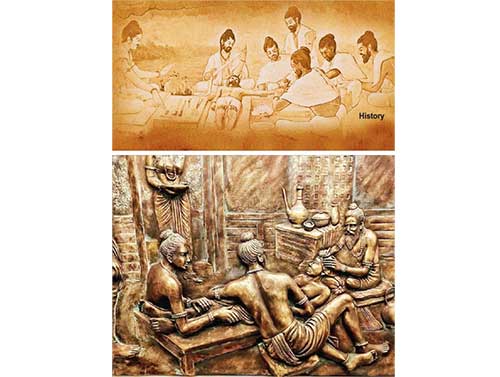
“The Best Physician is also a Philosopher”
Galen of Pergamon (c.129 – 216 AD )
An institution, a learned society and a body of practitioners, the Ceylon College of Physicians stands at the apex of medical learning and practice in Sri Lanka. For over half a century, the College has fulfilled an integral role in medical education and the maintenance of professional standards. As an institution, it has played a valuable part in the building of our nation. As a scholar, a historian and a Sri Lankan, it is a privilege and an honour to address its 52nd assembly.
In a thought provoking conclusion to the 50th Anniversary Commemorative Volume, Dr Panduka Karunanayake, President Elect for 2017, explores new horizons. In an increasingly technological age, he underlines the great need to master the human and social aspects of healing. A profession that truly cares for its patients in every sense of the word, must seek to understand and shape the future. This demands that the physician not only advise patients but that he guide society. If as Dr. Karunanayake suggests, the physician is to shape the future, he must endeavor to understand the human being, his society and his environment.
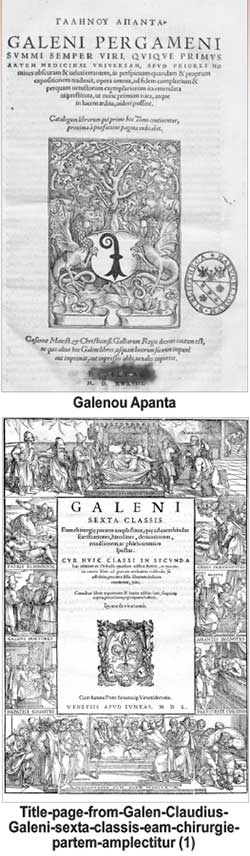 This was a philosophy which was articulated by one of the fathers of western medicine Aelius Galenus better known as Galen of Pergamon. The most celebrated medical authority of the Roman empire, Galen was one of the greatest physicians and surgeons of the ancient world. He has authored more books still in existence than any other ancient Greek. With the exception of Aristotle and Plato, he ranks as one most influential intellectuals in the classical west.
Born into the intellectual and social elite, Galen was son of a wealthy architect with scholarly interests and he received an excellent education. He travelled and studied widely, spending several years at Alexandria in Egypt, the greatest medical centre of the age. Returning home he spent four years tending a troupe of gladiators, eventually become the personal physician to a succession of Roman emperors.
Described by the Emperor Marcus Aurelius as “First among doctors and unique among philosophers,” Galen strongly believed that science and medicine must be practised in the context of human desires and needs. For him, medicine was an interdisciplinary field where science, ethics and the arts were all interwoven He saw himself as both a physician and a philosopher and believed that the study of philosophy would make for a better scientist, hence his short treatise The Best Physician is also a Philosopher.
In an eerie evocation of a contemporary dilemma Galen attacks the medical culture of his day which
“…encourages people to value wealth over virtue. For, “it is impossible to pursue financial gain at the same time as training oneself in so great an art as medicine; someone who is really enthusiastic about one of these aims, money or medicine, will inevitably despise the other.”
Galen advocated the study of arts and letters as an essential component of scientific study. In another work An Exhortation to Study the Arts, he warns against specialized isolation and lists several arts which he categorizes as divine gifts because they are useful to life. Alongside natural science and medicine, he also lists poetry, music, and philosophy. This underlines his belief that physicians must be specialists who were not only technically competent but also humane and morally responsible. According to Galen, proper, precise scientific inquiry was indeed ‘useful for life’. However, it could not be accomplished by scientists who were not properly trained in the other arts, because they would not then possess the humanity, the sensitivity, to do that science properly.
There does not appear to be a great distance between Galen’s creed and the requirements of contemporary medicine. A modern day physician like a philosopher is trained to think, to inquire and to ask questions. It is perhaps one of the foundations of his long and rigorous education. A good physician, like a good philosopher is always asking questions. It is by asking the best possible questions that he can make conclusions and diagnose.
A real philosopher is always open to question. This is even more the case with medicine. The danger is that answers shut down questions. Therefore the physician must always be open to question. As it is a question of wellbeing, of life and death, these questions are always shifting, changing with the time and the moment. If as a physician one must come to a conclusion, one can only do that by becoming a philosopher. To do that the physician must be able to listen, to observe, to think and to question. He must have time and make time. Time to listen, time to ponder, time to think, to analyze and evaluate.
It is a dilemma which still lies at the core of modern medicine. In an age where the internet and artificial intelligence have made vast inroads into the credibility of the physician, what makes him special is that although modern technology can make diagnoses, it cannot take a judgement call. That judgement call still rests on the human element, the physician’s understanding of the social context- on factors such as belief, culture, environment, sustainability and cost. This will determine the success of the cure. As Dr. Karunanayake foresees, if the physician is to play a role in the future, he must endeavor to understand the human being, his society and his setting.
The history of medicine reveals that physicians have occupied a special role in many parts of the world. Classical scholars have always regarded the ancient Greeks as the fathers of western medicine. However recent research suggests that the ancient Egyptians practised medicine long before the Greeks. The Edwin Smith Papyrus, an Egyptian surgical treatise dating from 1600 BC suggests that medical practice was well established in Egypt 1,000 years before Hippocrates. This documents 48 injuries which were described, diagnosed and treated rationally through observation and examination. It is thought to be a copy of a much earlier work dating from the 3rd millenium BC by the Egyptian polymath Imhotep. Chief Minister to the pharaoh, a priest, a sage and an architect, over the ages Imhotep was gradually glorified and became a god of healing.
 His counterpart in the Greek world was Asklepios, the son of Apollo. The legend goes that Asclepius become so skilled that Zeus, the king of the gods, feared that he might render men immortal. To prevent this Zeus slew him with a thunderbolt and over time like Imhotep, he too became a God. His shrine at the sanctuary of Epidaurus became known as the Asklepieion and it grew into the most important centre of healing in the Greek world. The legacy of Asklepios looms large in the Greek tradition of healing. Hippocrates formal name was Hippocrates Asclepiades, “the “descendant of Asclepios.” Galen too, we are told was not destined to become a physician and only took up medicine after the God Asklepios appeared to his father in a dream.
In Ayurveda, the system of medicine and lifestyle developed in Ancient India, the pre- eminent figures are Sushruta and Charuka. Sushruta is thought to have lived near Varanisi during the 6th-7th century BC. Regarded as the father of Indian medicine, he was the main author of the Sushruta Samhita, one of the most important surviving ancient treatises on medicine. The other medical text to have survived from ancient India, the Charaka Samhita, was authored by Charaka, who is thought to have practised throughout the Punjab between the 2nd -3rd century BC.
One of the oldest medical systems in the world is traditional Chinese medicine. This tradition has produced many leading figures. In the 5th century BC Bian Que (Pien Ch’iao) was the first to rely primarily on pulse and physical examination for the diagnosis of disease. He was followed by Hua Tuo (Yuanhua) the greatest surgeon in Chinese history. In 2nd century AD he became the first person in China to use anesthesia during surgery.
Throughout the ancient world the practice of medicine was associated with learning and skill, over time it become a divine gift. The physician was the incarnation of Imhotep, Asklepios, Hippocrates, Galen; he was a god, a seer, a sage, a skilled and deeply learned practitioner, a guide and a philosopher. Only in Sri Lanka however, was the physician a king.
The place of the physician in Sri Lanka’s society is documented in the island’s great historical chronicle, the Mahavamsa. Compiled in Pali by Buddhist monks, the Mahāvaṃsa and its successor, the Cūlavaṃsa, charts the history of Lanka from the 5th century BC to the 18th century AD. It is a remarkably accurate record, of seminal value for the history of India and Sri Lanka.
King Buddhadasa reigned between 341 – 370 AD. The Culavamsa recounts how he diagnosed, treated and cured patients from all walks of life. The chronicle devotes several whole sections to the practice and establishment of medicine and documents at least seven detailed case studies. This suggests that the physician had a very special place in this society and that his story was as important as the great warriors, builders, saints and the monks who shaped the history of Lanka. Each of these case studies tells us different things. Each concerns a different situation and elicits a deeply and carefully thought out remedy, based on reasoned analysis and evaluation.
In one case, it tells of how a man drinking water swallowed the eggs of a watersnake. The egg gradually grew into a snake. As it grew sucked at the man’s intestines, torturing the victim with pain. The man sought out the king, who questioned him. When he described the pain and related what had happened the king realized that a reptile must have formed inside the man. However as the reptile was lodged deep inside the intestines, the king refrained from cutting it out.
Instead he made the man fast for a week, starving the reptile within him. He then had the patient, bathed and rubbed with oil. This calmed and soothed him and he eventually fell asleep. The king knew that when he was asleep that his mouth would open. He tied a piece of meat to a string and dangled it over his mouth. Lured by the smell and driven by hunger, the watersnake reached for the meat. The king however, held the string fast and drew on it, gradually pulling the reptile out.
Another case concerned a Bhikku or Buddhist priest, the most venerated member of society. The bhikku had gone begging for alms and was given milk which had worms in it. The worms grew and fed on his bowels, causing agonizing pain. The king then asked leading questions. At what meal did the pain arise? What kind of meal was it and what was the nature of the pain? When the bhikku told him that it was a meal that he took with milk, the king recognized the symptoms.
Taking the blood from a horse, he gave it to the monk to drink. He then waited until he had drunk it all. Then he told him that was horse’s blood. The reaction was what he had anticipated. On hearing that he had drunk the blood of a horse, the monk vomited, spitting out the blood. The worms which had caused him such pain, came up with the blood.
Compassion and feeling made up an essential part of the King’s healing skills. There is a deep feeling for life in all its forms. This applied even to the most dangerous animals. Galen had concluded that even dumb animals are not entirely devoid of reason. In Buddhadasa’s most wellknown case, the king cobra, one of Sri Lanka’s most venomous reptiles, becomes a willing patient. As the king passed by, the cobra turned over onto his back to expose his underbelly so that the king could see the tumour growing on it. After observing the growth, the king reasoned with the reptile. Although he understood its pain, he dared not touch it. Understanding the king’s dilemma, the snake stuck his whole neck into anthill so that he could not hurt the king. Whilst the cobra was immobilized, the king slit open his belly, removed the diseased growth and applied a healing remedy.
This episode suggest a high level of surgical skill. It is underlined by another. A young man had drunk water which was full of frog’s eggs. Through his nostrils an egg had penetrated into his skull and evolved into a frog. As the monsoon approached the frog became more and more agitated, causing unbearable headaches. In this case the king appears to have resorted to immediate surgery. Performing a complicated and dangerous operation, he split the skull and removed the frog and then put the parts of the skull back together.
Ancient Indic society was dominated by caste and social taboos. Despite this and ignoring own his royal status, Buddhadasa cut across every social barrier and boundary to serve the suffering. In Indian society the lowest and most menial of tasks were performed by the Caṇḍālas, outcastes who worked as sweepers and scavengers. A Candala woman who had already had seven children, became pregnant for the eighth time. This time however, her unborn child was facing the wrong way in the womb. When Buddhadasa learned that this, he intervened to save the woman’s life. In the ancient world, birth and reproduction were the preserve of women and midwives. Socially this is a unique case. It is also a complex gynecological procedure.
The understanding of the human mind is an integral part of the physician’s craft. More often than not it holds the key to the patient’s condition and his recovery. In ancient times leprosy was a common condition. Lepers were shunned and regarded with horror and leprosy deemed a curse of the Gods.
The king noticed a leper, who upon seeing him, became enraged, striking the ground with his staff. In a previous birth the king had been the leper’s slave, it maddened him to see him riding his elephant and all he wanted to do was to kill him. Learning of this, Buddhadasa set his mind to winning him over. He sent one of his men to befriend the leper and share his anger. Pretending that he too was against the king, he invited the leper to stay at his house and help him destroy his enemy. The leper was bathed, fed and given beautiful clothes and a comfortable bed to sleep. One day, when he had become happy, contented and calm, Buddhadasa’s man served him food and drink, saying, “This is the gift from the king.” At first the leper refused and then refused again. Finally he accepted. Reaching out to the most diseased and most deeply troubled member of his community, the king was able to heal his mind. It is a clear demonstration of the power of empathy, feeling for and feeling with. It is from empathy that re assurance comes. So much of healing is in the mind. If the physician can take the time and make the effort, he has the power to do great good.
All these cases make one point. The physician truly cares and feels for all his patients, no matter who they are or where they are from. In his posthumous work Galen and Galenism (2002) the Spanish historian and Physician, Luis García Ballester (1936-2000) quotes Galen as saying: “In order to diagnose, one must observe and reason.” This is the dictum which King Buddhadasa embodies. He observes closely, listens carefully and questions keenly, making every attempt to form a picture of the condition. It is then he makes his diagnosis and decides on course of action. A demonstration of the power of the mind, sustained thought and inquiry, it is characterized by understanding and feeling.
The Cūlavaṃsa praises King Buddhadasa as a “Mine of Virtue and a Sea of jewels.” This perception is based on the king’s understanding of the human and social aspects of healing, his ability to care and feel. It is probably this tradition which lies at the roots of the well known Sri Lankan saying “If you cannot be a king, become a healer.”
This is the challenge which western science and learning faces in one of the world’s oldest living cultures. This context demands that the physician be conscious of the rhythms of a society, whose needs, values and way of life are often quite distinct from western norms and practices, often very much older. If as an invited guest, I can make one suggestion, it is that Sri Lanka’s physicians begin to study their past. For it is through comparative traditions that we learn deeply about ourselves.
If he is to truly guide as well as “Cure, Relieve And Comfort,” the Physician must also strive be a Philosopher.
He must not only ask the best possible questions, most of all like King Buddhadasa, he must care, be concerned and compassionate. For that he must have time.
TITLE; SINHARAJA/ APRIL 4


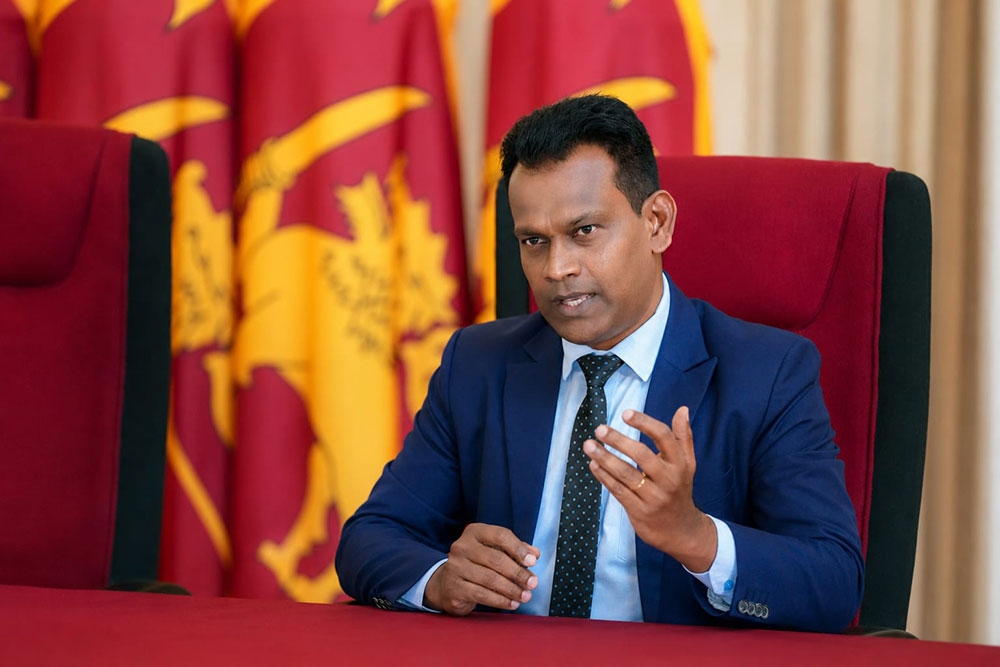
Tourism remains one of the most powerful drivers of economic growth and cultural exchange in Sri Lanka.
As the tourist industry continues its post pandemic recovery and looks toward a more sustainable and innovative future, the role of strategic planning and policy direction has been more important. In this interview Professor Ruwan Ranasinghe, Deputy Minister of Tourism,, and a respected academic in this field shares his insight on the current state of the Sri Lankan tourism industry, emerging trends, challenges facing the sector and the governments vision for positioning Sri Lanka as a leading global destination.
With a vision focused on sustainability, innovation, and destination competitiveness, he is playing a pivottal role in shaping the future of Sri Lanka’s tourism industry. He shares his insights on the opportunities, challeges,and strategic direction of tourism in the years ahead. A first class graduate of Rajarata University and holds an MBA and a doctorate from Sichuan University, China. He launched Sri Lanka’s first Tourism and Hospitality Management degree at Uva Wellassa , endorsed by the UNWTO.
Excerpts of the interview.
(Q) Are you seeing a decline in visitors in Sri Lanka due to geo-political tensions?What segments of the tourism industry are most affected: luxury, leisure or group travel?
(A) Sri Lanka has not experienced a dramatic decline in arrivals, overall, but global geopolitical tensions do influence travel sentiment. The most affected segments are group travel and leisure tourism, as these travellers are more sensitive to perceptions of safety. Luxury tourism remains comparatively resilient, with high-end visitors continuing to seek curated, exclusive experiences.
(Q) Is Sri Lanka experiencing cancellations or postponements from travellers in conflicted zones? Are hotels and resorts reporting reduced occupancy linked to uncertainty in the region?
(A) Yes, there have been cancellations and postponements from travellers originating in conflict affected regions, particularly the Middle East. Some hotels and resorts have reported reduced occupancy during peak uncertainty periods. However, arrivals from other regions remain strong, balancing the overall impact.
(Q) What measures is the Sri Lankan tourism sector taking to mitigate the impact of local stability?
(A) The Ministry has adopted a proactive approach:
Transparent communication through embassies, airlines, and official tourism portals.
Safety protocols coordinated with law enforcement and emergency services.
Marketing resilience campaigns highlighting Sri Lanka’s stability and diverse attractions.
Stakeholder engagement with hoteliers, tour operators, and airlines to align strategies.
(Q) Do you expect a short-term disruption or long-term impact on Sri Lanka’s tourism growth?
Are you seeing early warning signs such as cancellations, reduced flight bookings or shorter stays?
(A) We anticipate short-term disruptions rather than long term setbacks. Early warning signs such as reduced flight bookings and shorter stays are being monitored. However, Sri Lanka’s fundamentals — diverse attractions, strong hospitality, and cultural authenticity — remain intact, ensuring recovery once tensions ease.
(Q) Boutique luxury tourism is often seen as niche – how central is it to Sri Lanka’s overall tourism strategy right now?
(A) Boutique luxury is central to our tourism strategy. It attracts high value travellers who contribute significantly to foreign exchange earnings while demanding sustainable, authentic experiences. This segment also diversifies our tourism portfolio beyond mass tourism, making the industry more resilient.
(Q) How is the government defining boutique luxury in Sri Lankan context?
(A) Boutique luxury in Sri Lanka is defined by personalised, small scale experiences rooted in cultural and natural heritage. It emphasises exclusivity, authenticity, and sustainability rather than sheer opulence, offering intimate stays in properties that reflect local architecture and traditions.
(Q) What makes Sri Lanka uniquely competitive in boutique luxury compared to destinations like the Maldives, Thailand and Bali?
(A) Sri Lanka’s strength lies in its diversity. Unlike the Maldives, which is primarily a beach destination, or Bali and Thailand, which focus heavily on wellness and nightlife, Sri Lanka offers a multifaceted experience: pristine beaches, UNESCO heritage sites, wildlife safaris, tea plantations, and Ayurveda wellness — all within short travel distances. This variety, combined with boutique hospitality, makes us uniquely competitive.
(Q) How do you balance encouraging foreign investment while preserving Sri Lanka’s cultural authenticity?
(A) We welcome foreign investment but ensure it aligns with our cultural identity. Guidelines require investors to integrate local design, employ Sri Lankan staff, and source materials locally. This ensures development enhances our heritage rather than dilutes it, creating partnerships that benefit both investors and communities.
(Q) Boutique luxury often interacts with sustainability – how is the Ministry ensuring that growth in this segment benefits local communities?
(A) The Ministry ensures boutique luxury growth benefits communities by:
Promoting local sourcing of food, crafts, and services.
Supporting eco friendly construction and operations in boutique resorts.
Encouraging community-based tourism initiatives where locals directly participate in guiding, hosting, and cultural performances.
(Q) How do you retain skilled hospitality professionals within Sri Lanka?
(A) Retention is achieved through:
Competitive compensation aligned with international standards.
Continuous training programmes in partnership with global hospitality schools.
Career pathways that allow professionals to grow within Sri Lanka.
Recognition programmes to celebrate excellence in service.
(Q) Where do you see Sri Lanka’s boutique luxury tourism sector in the next five years?
(A)In the next five years, Sri Lanka aims to be recognised as a regional leader in boutique luxury tourism. We envision a network of boutique properties integrated into cultural and ecological landscapes, offering world class service while maintaining authenticity. This sector will be a key driver of sustainable growth and foreign exchange earnings.
(Q) What markets are you targeting for boutique luxury tours?
(A) We are targeting highspending travellers from Europe, North America, and East Asia. These markets value exclusivity, sustainability, and authenticity — qualities that Sri Lanka’s boutique luxury sector embodies. We are also exploring niche markets such as wellness travellers and cultural enthusiasts.
(Q) How has the ongoing conflict between Iran and Israel affected overall tourism arrivals in Sri Lanka?
(A) The ongoing conflict has created uncertainty in global travel, particularly in the Middle East. While Sri Lanka has not experienced a dramatic decline, arrivals from conflict adjacent regions have slowed. To mitigate this, we are diversifying source markets, strengthening promotions in Europe and Asia, and reassuring travellers through diplomatic channels and tourism partners.
By Zanita Careem ✍️
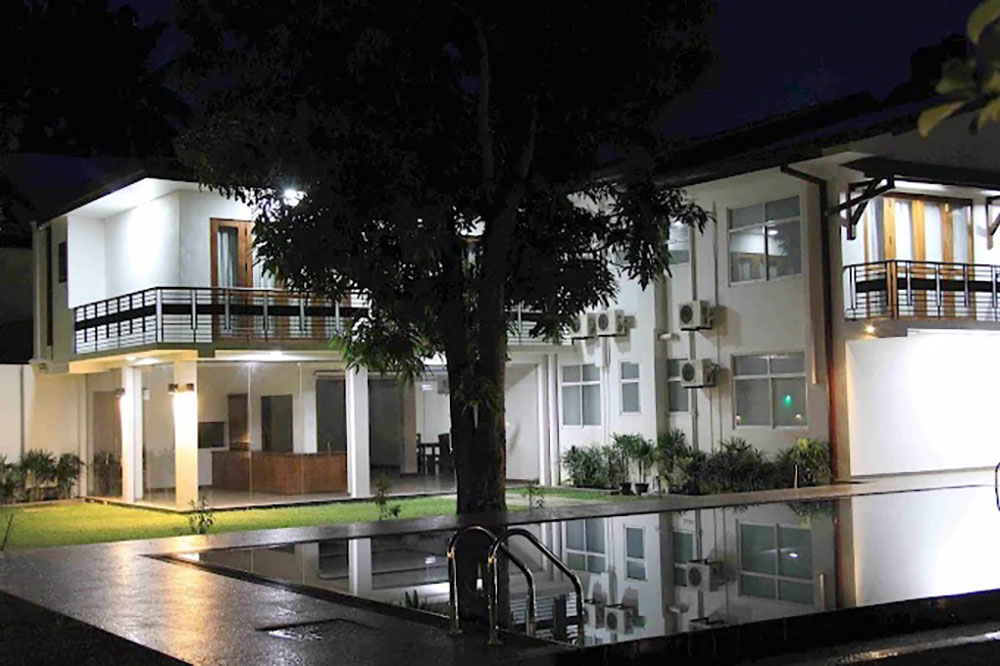
As Sri Lanka’s southern tourism corridor continues to attract travellers from across the globe, Serenity Tissa stands out as a destination where comfort, culture and nature come together in perfect harmony, offering guests an unforgettable journey into the soul of the island, southern heritage.
While many visitors journey through the Cultural Triangle in search of the Island’s ancient treasures, Tissamaharama itself stands as a destination rich in history, culture and natural beauty.
Set amidst this historic landscape of Tissamaharama, Serenity Tissa offers a unique retreat in the cradle of Southern Civilisation .
Nestled in the historic heartland of Tissamaharama Serenity Tissa offers far more than a comfortable stay, it delivers an experience deeply rooted in Sri Lanka’s Southern charm, cultured heritage and natural beauty.
Surrounded by the tranquil atmosphere of Tissa Wewa and located within easy reach of the famed Yala National Park, the boutique-style property has steadily earned a reputation among both local and international travellers seeking serenity, comfort and authentic Southern hospitality. Build on the grounds of an ancestral home, once owned by Patric De Silva, Serenity Tissa gracefully blends the warmth of a family residence with the conversion to a modern boutique-style hotel. Fortress inspired architecture, lush mango tress and peaceful open space create a welcoming retreat for travellers eager to explore the cultural and wildlife treasures of Sri Lanka’s deep South.
The hotel’s strategic location places guest close to some of the regions most treasured landmarks, including Yala and Bundala National Park, Tissamaharama Raja Maha Vihara, Kirinda Temple, Yatala Vihara and Sandagari Stupa, to mention a few.
-
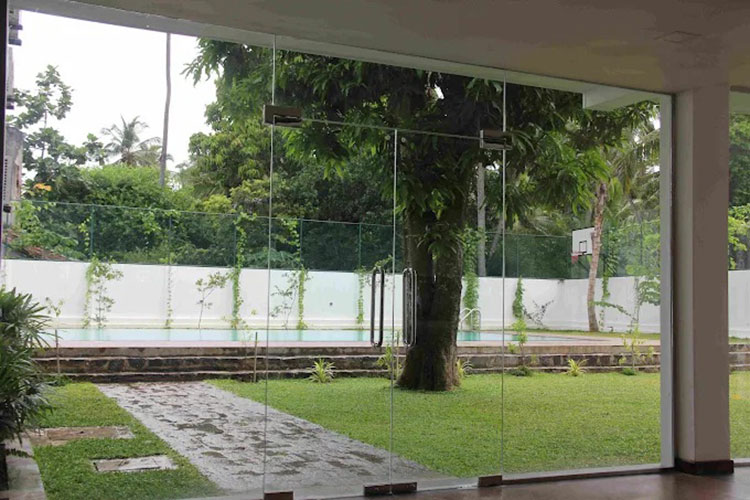
- Beautiful blend of nature, comfort and hospitality
-
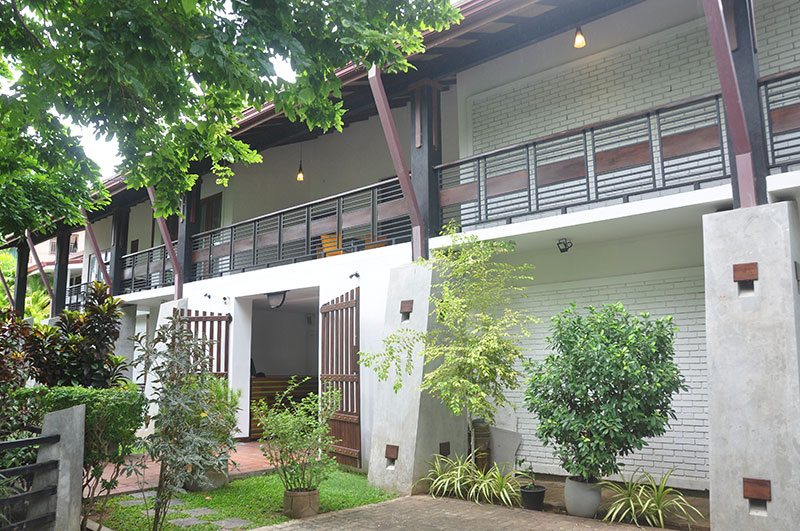
- Sanctuary of calm and rejuvention, offers the perfect escape
-
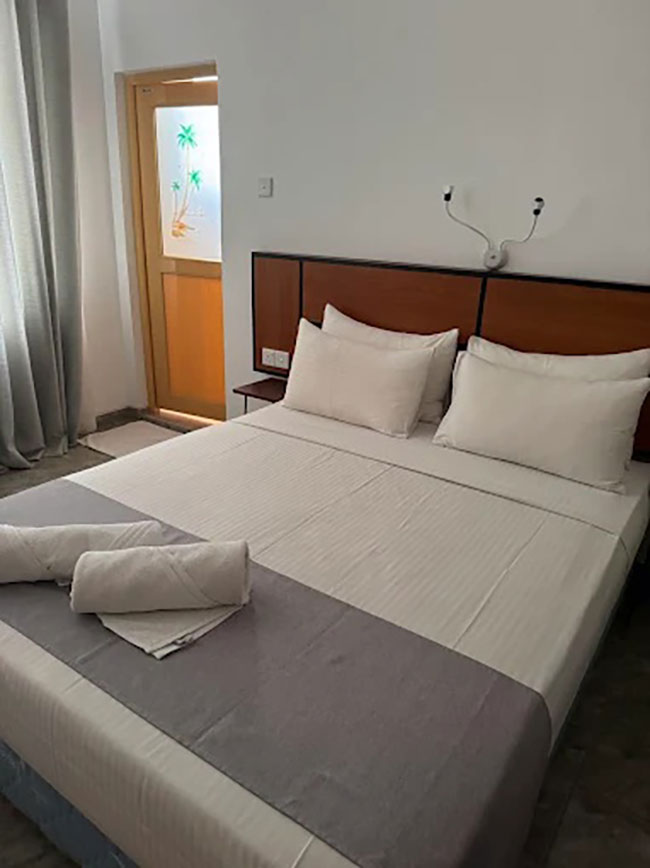
- Elegantly designed for comfort
-
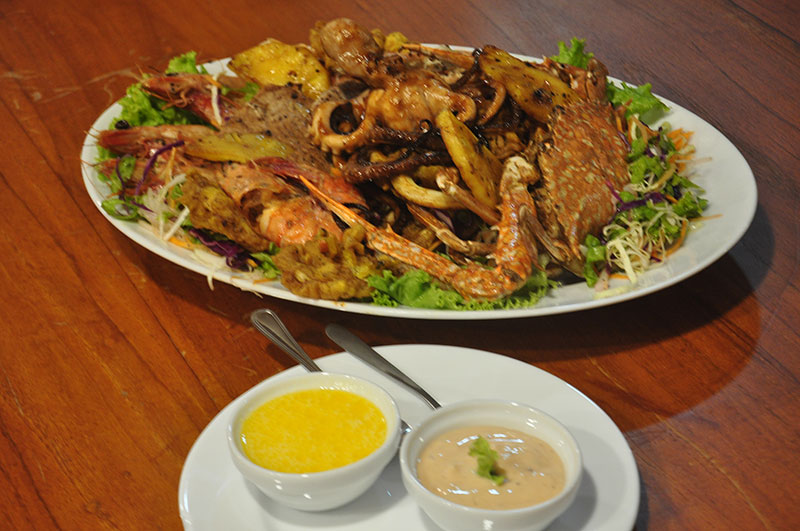
- Authentic Sri Lankan flavours
For adventure seeking, safari excursions this place remains a major attraction, while those seeking relaxation they can simply unwind besides the hotel’s swimming pool or enjoy the calm beauty of the surrounding landscape. Serenity Tissa rooms are designed with simplicity and comfort in mind, offering a range of accommodation options suitable for couples, families and groups.
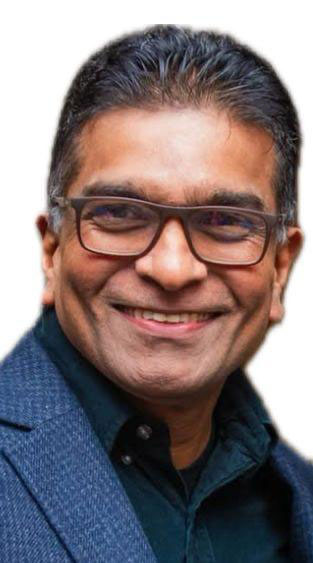
Managing Director Ajith de Silva dedication and commitment
Spacious interiors and warm hospitality have consistently drawn praises from guests from around the world. Dining at the hotel is another memorable highlight. The open air restaurant celebrates the bold and aesthetic flavours of Southern Sri Lankan cuisines with dishes inspired by coastal traditions and local village, kitchens. Fresh sea food delicacies, rich curries and fragrant spices combine to create a culinary experiences that reflects the region’s vibrant food culture. The executive chef Rushira, who has years of experience, said ‘At Serenity Tissa Southern hospitality with refined experience, inspired by Sri Lankan rich cultural and culinary heritage is bought to life in all our dishes. Ambul Thiyal. mouthwatering pol sambol, sea food kottu, all reflecting bold flavours of the south. The use of coconut milk, aromatic spices, creates a memorable culinary journey that introduce visitors to the local tastes.
His passion for authentic Southern Sri Lankan cuisine shines though every dish, offering guests an unforgettable experience. Under the leadership of the Managing Director Ajith de Silva, he has played a pivotal role in tranforning a family inspired hospitality, into one of Tissamaharama’s most welcoming boutique destinations.
Guided by his vision Serenity Tissa has emerged as a distinctive hospitality destination in Sri Lanka’s southern vision, offering the warm and personalised hospitality for which Serenity Tissa is renowned for. Frequently praised by guests, numerous reviews full attention, memorable guests experiences makes it a preferred choice for travellers exploring the historic attractions of the region
What is so special about Serenity Tissa is the personalised hospitality, numerous traveller reviews, dedication of the staff, a blend of warm Sri Lankan hospitality personalised services and authentic local experiences.
Ajith de Silva’s vision has helped position the property as a preferred base for travellers exploring the cultural and natural wonders of Tissamaharama Hotel The Manager Thushara Samarasuriya whose dedication and attention in detail have also contributed significantly to the hotel’s reputation for excellence.
Serenity Tissa offers a gateway to the history, culture and natural wonders of Southern Sri Lanka Under the guidance of its dedicated team, Serenity Tissa continues to create lasting memories for guests from around the world.
By Zanita Careem ✍️
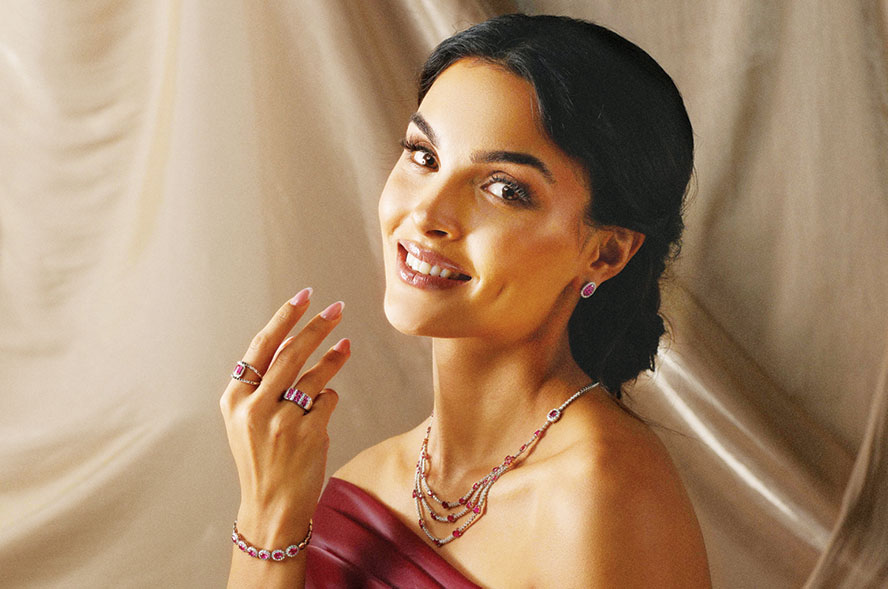
Tiesh Sri Lanka, renowned for its exceptional craftsmanship, timeless elegance, and celebration of Sri Lankan gemstones, has appointed Sabina Yousaf as the newest face of the brand. The partnership marks a significant milestone for both Tiesh and Sabina, uniting two names that embody grace, sophistication, and a deep appreciation for heritage and craftsmanship.
Sabina Yousaf recently brought pride to Sri Lanka on the global stage when she was crowned Second Runner-Up at the 41st Mrs World pageant. As the reigning Mrs World Sri Lanka, she has captivated audiences locally and internationally with her poise, intelligence, and charisma, becoming an inspiring figure admired by many across the country.
A successful businesswoman and passionate advocate for community empowerment, Sabina’s values closely align with the philosophy of Tiesh. Her commitment to giving back to society reflects the principles long championed by Founder and Managing Director of Tiesh, Lasantha De Fonseka, who has consistently emphasised compassion, generosity, and supporting communities, values that have also been instilled in the next generation of the brand, Thiyasha and Ayesh De Fonseka.
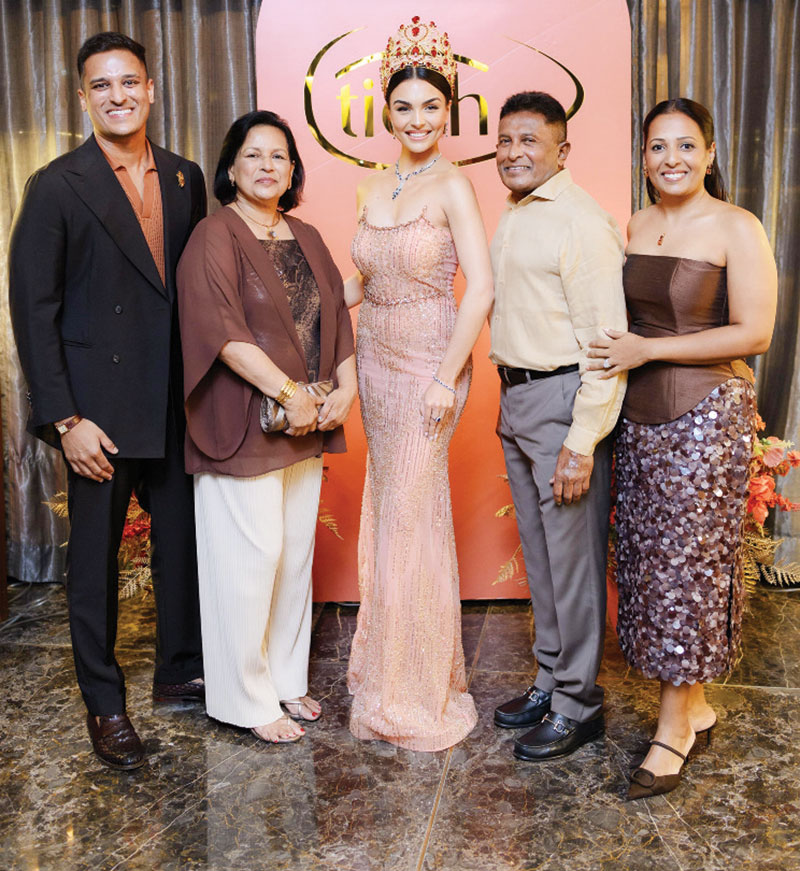
Sabina with the Directors of Tiesh (From Left): Thiyasha, Lasantha, Bryony, and Ayesh De Fonseka
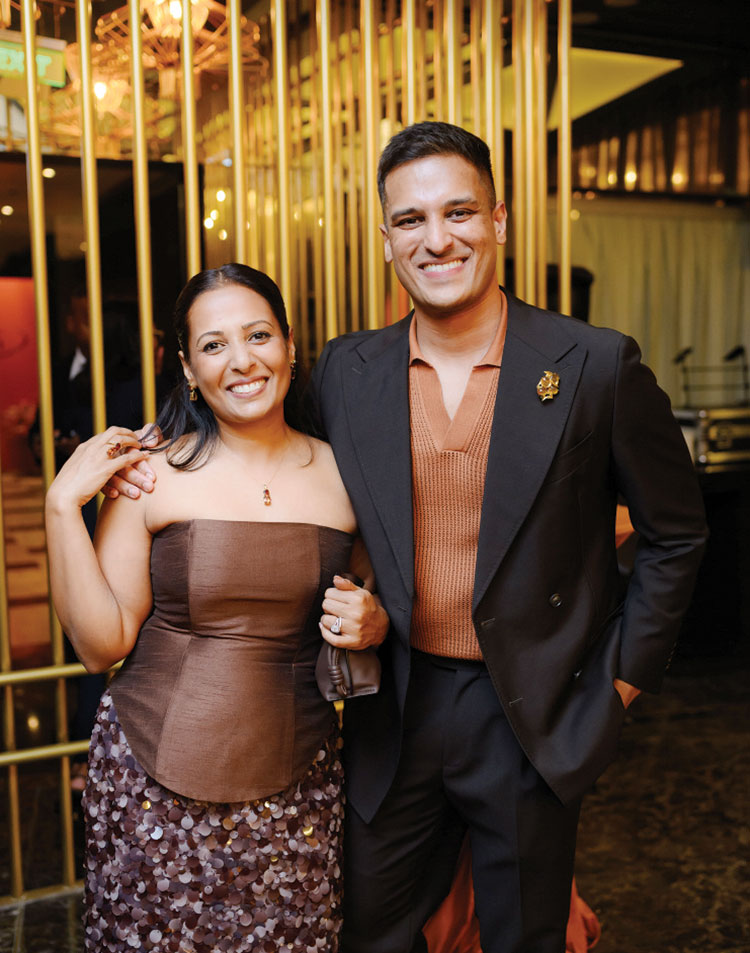
Thiyasha and Ayesh – passionate about thier business
With a legacy spanning over two decades, Tiesh Sri Lanka has established itself as one of the country’s leading jewellery brands, celebrated for blending contemporary elegance with the natural beauty of Sri Lankan gemstones. Beyond jewellery, the brand has become a destination that educates and inspires, offering customers an appreciation of fine craftsmanship, artistry, and heritage.
Renowned for its dedication to excellence, Tiesh continues to uphold its legacy of creating jewellery that epitomises luxury, sophistication, and meticulous attention to detail. Every creation is thoughtfully designed and expertly crafted by skilled local artisans using the finest precious stones, reflecting the brand’s unwavering commitment to quality and authenticity.
Commenting on the collaboration, Founder and Managing Director of Tiesh, Lasantha De Fonseka stated, “Sabina embodies everything that Tiesh stands for: elegance, confidence, authenticity, and grace. Her inspiring journey, both nationally and internationally, resonates strongly with our values as a brand. We are delighted to welcome her into the Tiesh family as she represents the spirit of the modern Sri Lankan woman with remarkable strength and sophistication.”
Tiesh Director, Ayesh De Fonseka added, “We are incredibly excited to have Sabina as the face of Tiesh. She is admired both locally and internationally, and her presence brings a fresh sense of modern femininity and confidence to the brand. This partnership reflects our vision of positioning Tiesh on a greater global platform while remaining deeply rooted in Sri Lankan heritage and craftsmanship.”
Speaking on the partnership, Sabina Yousaf expressed her admiration for the brand and the significance of becoming its newest ambassador.
“For me, Tiesh is far more than a jewellery brand. It represents history, artistry, and an enduring passion for craftsmanship. What makes Tiesh truly exceptional is its deep connection to the heritage of Sri Lankan gemstones and the incredible artistry behind every creation. Each piece reflects elegance, individuality, and timeless beauty,” she said.
“This collaboration feels incredibly meaningful because the brand aligns so naturally with my own personal style, values, and appreciation for authenticity. I am genuinely grateful for the opportunity to work with a brand that I deeply admire and respect.”
She further added, “Jewellery, to me, is a powerful form of self-expression. It reflects individuality, personality, and confidence. The pieces we choose often tell a story about who we are, and I believe jewellery has the ability not only to elevate one’s style, but also to inspire confidence and presence.”
The collaboration between Tiesh and Sabina Yousaf symbolises a shared vision of elegance, empowerment, and timeless beauty. As the brand continues to evolve while honouring its rich legacy, this partnership further strengthens Tiesh’s position as a leading name in contemporary luxury jewellery. (ZC)

Confident Bangladesh pose Australia a fresh challenge after 15-year wait for an ODI series

Tehran calls off attacks on Israel; warns not to hit Lebanon

Philippines earthquake kills 15, prompts tsunami fears:

T20 World Cup: Heavyweights, hopefuls and a debutant headline Group 1

Showers in the Western, Sabaragamuwa and North-western provinces and in Galle, Matara, Kandy and Nuwara-Eliya districts

Diesel replacement costs up to Rs. 4.5 bn in April

‘Dates have the highest sugar content to fight Coronavirus’

Sunday Island 27 December – Headlines

#SundayIsland 17th December – Headlines

Sunday Island – 28th March

Sunday Island Headlines – 21 March

Sunday Island – 21st February – Headlines
-

 News7 days ago
Lankan duo emerge winners in Latin dance championship held in Blackpool, UK
-
 Latest News5 days ago
Kusal Mendis, Pathum Nissanka, bowlers put Sri Lanka 1-0 up
-

 News5 days ago
New US tariffs proposed on 60 countries, including Sri Lanka
-
 Features4 days ago
Power crept into the Sangha and is now tearing it apart
-
 News7 days ago
Sri Lankan teen killed in Chennai clash; three arrested
-

 Features4 days ago
Kondachchi wind farm and battery storage project to boost energy security, says Power Ministry Secretary
-
 Features4 days ago
Saudi Arabia sets new benchmark in Hajj management as 1.7 million pilgrims complete sacred journey
-

 News3 days ago
Asst. Manager, security officer arrested over Rs 30 mn snatch at Horana PB branch