
Business
The National Action Plan on UNSCR1325 and the impact of armed conflicts on children


The Universities Network for Children in Armed Conflict and the Institute of Political Studies “S. Pio V”, supported by the Italian Ministry of Foreign Affairs and International Cooperation have organised a conference within the framework of the project ‘The National Action Plans (NAP) on UNSCR1325 and the impact of armed conflicts on children: a study and analysis of the International Universities Network”. The project aims to carry out qualitative and quantitative research and produce an insightful report, by geographical area, of the serious violations against children by armed conflict situations. The research also makes a valuable analysis of post-conflict reform, rehabilitation and reintegration of children affected by armed conflict and this is the critical path where UNSCR1325 can and should play a pivotal role.
Speaking about the objectives of this conference Laura Guercio, Professor of Sociology of Human Rights & International Cooperation to Development at the University of Perugia and a Professor of International Relations at the University Cusano Rome. A member of the Council of the European Law Institute in Vienna said, ” The NAP is to create a narrative and collate ideas on how Resolution 1325 can impact and support the global movement to reduce the direct and indirect impacts of armed conflict on children. To achieve this, we must expand the understanding and impact of Resolution 1325 from its gender perspective to reach children affected by armed conflict as well as create a wider umbrella of sustainable peacebuilding via the four pillars of Resolution 1325 – Participation, Protection, Prevention, and Relief and Recovery. The impact of armed conflict on children needs to deep dive into the areas.”
Participation – how can we create a dialogue from a gender perspective to mutually include the protection of children under Resolution 1325 and how should the National Action Plans reflect this?
Protection – how does the jurisdiction of the national and international communities work together to create a system of sustainable protection of children from armed conflict under the umbrella of Resolution 1325? (Considering that internal civil wars create a jurisdictional question for international community intervention)
Prevention – what specific areas of direct and indirect impacts of armed conflict on children can Resolution 1325 address?
Relief and Recovery – can Resolution 1325 play a larger role in the relief and recovery of children affected by armed conflict (as this is a critical impact point that tends to see a lot of children fall through the cracks)?
Accountability – how do we improve accountability measures to support children and women affected by armed conflict?
Armed conflict causes severe direct and indirect consequences for children and most often the indirect consequences are not addressed due to the grave nature of the direct consequences, which are broadly defined as death, injury, recruited as child soldiers and violence against children. The dire consequences of the indirect harm caused to children during the armed conflict have a lasting impact on these children due to the double-barrelled trauma such as gross violations of being abducted, forced removal from their families, illegal detention and recruitment as child soldiers. In addition, these children are also deprived of their fundamental rights to education, shelter, and the right to build a fruitful and holistic life.

Laura Guercio
The project will also include videos and a photo exhibition by two Italian photo reporters, Marzia Ferrone and Vittorio Alonzo, on the condition of children living in armed conflict and post-conflict.
This conference provides the opportunity to build a comparative analysis of NAP’s of selected Asian countries vis a vis the IV Italian Action Plan in accordance with Resolution 1325.
Background to Conference and Research Topic
The charter of the United Nations Security Council (UNSC) is the maintenance of international peace and security. Security must be present, and its presence must be realised – this is a critical indicator of peace. As the popular saying goes, “The absence of war doesn’t necessarily mean the presence of peace”.
In 2000, The UNSC Resolution 1325 recalled 1261 (1999), 1265 (1999), 1296 (2000) and 1314 (2000) and;
expressed concern about the fact that the majority of people affected by armed conflict are women and children,
reaffirmed the role of women as “agents of lasting peace”: their equal participation in peacebuilding, maintaining and promoting peace and security and the increase in decision-making for conflict prevention are crucial for peace and security,
reaffirmed the need for humanitarian and human rights laws that protect the rights of women and children during and after conflicts.
The Beijing Declaration (1995) states the hard reality of women and children being most vulnerable during conflict and further states that women and girl-children are even more at risk due to their social status and sex.
In the presence of conflict, it is observed time and time again that women assume the key role of ensuring family livelihood amid armed conflict and destruction. Women are also seen as being active in cultivating peace and collaboration in their communities at a grass root level. A strong example of this is; during the armed conflict and post-conflict in Sri Lanka, we saw the transformation of battle-hardened women into successful entrepreneurs. What started as a desperate shift for survival has now mainstreamed and evolved into a community of businesswomen that challenged the patriarchal gender norms and changed the socio-cultural landscape. Therefore, the narrative must begin to reflect the strong agency women are competent, capable and willing to carry forward with the global community looking beyond the umbrella of protection of women per se. This is the narrative that will make UNSCR 1325 stronger and able to reach further to the protection of children.


By Hiran H. Senewiratne
Sri Lanka’s financial literacy rate is approximately 58 percent. Such literacy is absolutely necessary for the inclusion of people in the country’s financial system which in turn is central to overall economic development, Central Bank Governor Dr. Nandalal Weerasinghe said.
‘One needs to have knowledge and skills of a financial nature to figure in financial inclusiveness. While 86 percent of Sri Lanka’s population has access to the country’s financial system, 82 percent of the public has at least a savings account in the country’s banking system, Dr Weerasinghe said.
The Governor made these comments recently at the inauguration of Financial Literacy Month 2026 at the Central Bank’s Centre for Banking Studies, Rajagiriya.
Dr. Weerasinghe added: ‘Suitable, affordable and quality financial instruments are needed to enhance financial literacy in the country.
‘Financial information has to be accurate, risk-free and accountable, thus creating confidentiality in the financial system, which would enable the sector to reach greater heights’.
Meanwhile CBSL sources said: ‘The Literacy Month opened with the two-day ‘FinLit Expo Colombo’. The expo gives the public the opportunity to engage with institutions, better understand financial services, gain practical insights into managing their finances and learn how to protect themselves from financial fraud and scams.
‘The CBSL is leading the program in collaboration with stakeholder institutions. It forms part of the Financial Literacy Roadmap for Sri Lanka, which is implemented under the National Financial Inclusion Strategy (NFIS), the national framework for widening access to and use of formal financial services.
‘The Colombo event will be followed by six regional ‘FinLit Expos’ aimed at direct engagement with local communities. Partner institutions will also run awareness activities. Together, the events are intended to provide financial education to communities and encourage people to apply financial knowledge in everyday life.
‘A public awareness campaign on television, radio, newspapers and social media will extend the program’s reach. The program also includes digital financial literacy activities and the promotion of QR codes and other online payment methods.
‘The public and stakeholder institutions are encouraged to take part in the month’s activities under the theme, “Towards a Financially Literate Sri Lanka”.
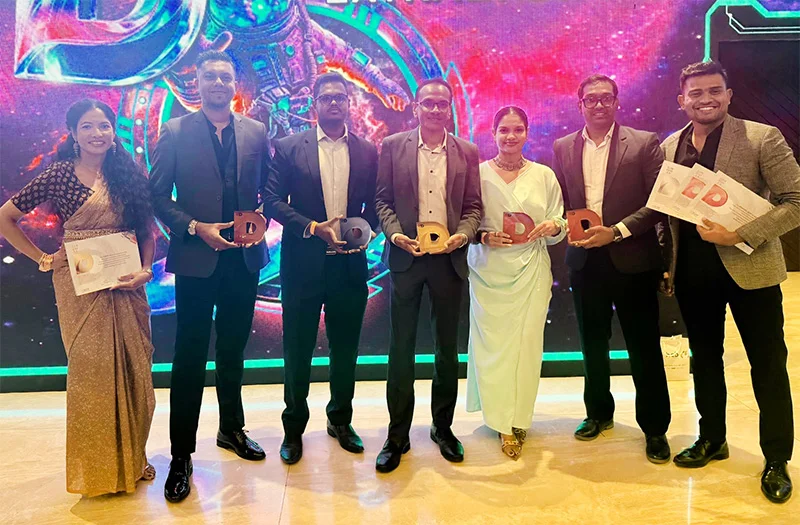
HUTCH Sri Lanka strengthened its position as a leader in digital engagement by securing five accolades at SLIM Digis 2.6, emerging as one of the most recognized brands at this year’s digital excellence awards. The achievement was further highlighted by HUTCH being the only telecom operator to be recognized at the event.
Organized by the Sri Lanka Institute of Marketing (SLIM), SLIM Digis is Sri Lanka’s premier platform celebrating excellence, innovation, and outstanding achievements in the digital marketing industry. The recognition highlights HUTCH’s growing strength in digital-first, agile, and creative marketing, and its ability to respond to everyday moments, engage audiences, and deliver impactful digital campaigns.
The Gold Award for Best Use of Agile and Moment Marketing, a Silver for Best Use of Digital in a Marketing Campaign, and a Bronze for Best Performance Marketing were all awarded for “Keeping Sri Lanka Connected Through Ditwah,” HUTCH’s response to the cyclone that struck Sri Lanka in November 2025, recognised for the speed and relevance with which HUTCH kept customers better connected and informed.
HUTCH Roaming also earned two further Bronze awards for Best Use of Digital in a Marketing Campaign and Best Use of Creative Content. Bringing together AI-led storytelling, the campaign was designed around distinct customer clusters, each characterized by unique travel behaviours, needs, and perceptions, delivering relevant content for different audiences within a single overarching campaign.
“These wins are a strong reflection of how HUTCH approaches marketing today, staying close to the moments that matter to our customers and responding with speed, relevance, and creativity. Being the only telco recognised at SLIM DIGIS 2.6, and across five categories, is proof that agility and thoughtful storytelling can go hand in hand. This recognition reflects the collective efforts with our strategic partners, whose collaboration, expertise, and shared commitment brought great campaigns to life,” said Hamdhy Hassen, Chief Marketing Officer, HUTCH Sri Lanka.
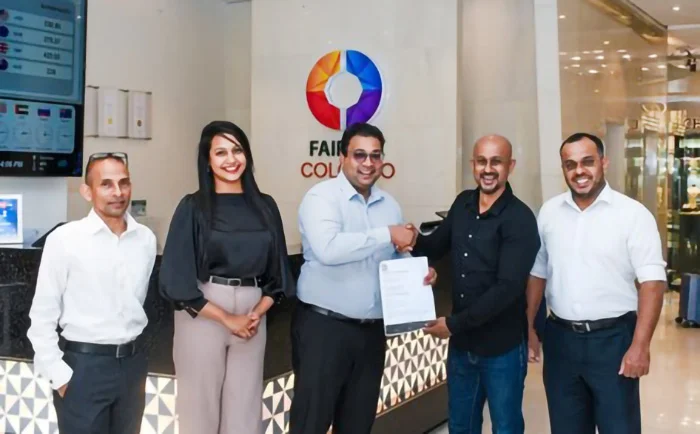
Sri Lanka’s Smart Luxury Business Hotel to Host Delegates and Contestants from Over 40 Countries as the Island Nation Hosts Its First-Ever Global Pageant of This Scale
Fairway Colombo, a subsidiary of Fairway Holdings (Pvt) Ltd, has been appointed as the Official Accommodation Partner for Manhunt International 2026, one of the world’s most prestigious male pageants, scheduled to take place in Sri Lanka.
The event marks a historic milestone for Sri Lanka, as the country prepares to host a global pageant of this scale for the very first time. More than 40 contestants representing countries from across the world will arrive in Colombo, bringing together diverse cultures, international media attention, and a global audience — further strengthening Sri Lanka’s position as a premier destination for tourism, culture, and hospitality.
As the official accommodation partner, Fairway Colombo will welcome and host international delegates and contestants throughout their stay in Colombo, delivering the exceptional hospitality experience and personalized service that the hotel is recognized for.
A Landmark Partnership for Sri Lankan Tourism
“We are truly honored to be selected as the Official Accommodation Partner for Manhunt International 2026. This partnership is a proud moment not only for Fairway Colombo but also for Sri Lanka as a whole. Hosting an event of this global stature provides us with an opportunity to showcase our commitment to smart luxury, innovation, and authentic Sri Lankan hospitality to an international audience. We look forward to creating a memorable and seamless experience for all delegates and guests,” said Avinga Wanigasekara, General Manager of Fairway Colombo.
Strategically located in the heart of Colombo’s historic Fort district, Fairway Colombo is recognized as a Smart Luxury Business Hotel, combining modern comfort, advanced technology, and exceptional service. As part of Fairway Holdings (Pvt) Ltd, the property represents the group’s vision of delivering innovative, world-class experiences across the hospitality and leisure sectors.

Delegation from Korean Volunteer Association meet Secretary to the President

Imran Khan’s PTI braces to fight federal takeover of Khyber Pakhtunkhwa

Nissanka’s return headlines Sri Lanka’s Test squad against Pakistan

HRCSL issues recommendation on seizure of four books by B. Piratheepan by Sri Lanka Customs

Former Zimbabwe player and umpire Sarah Dambanevana dies aged 36

Deflated Sri Lanka look to prevent whitewash against dominant Pakistan

‘Dates have the highest sugar content to fight Coronavirus’

Sunday Island 27 December – Headlines

#SundayIsland 17th December – Headlines

Sunday Island – 28th March

Sunday Island Headlines – 21 March

Sunday Island – 21st February – Headlines
-

 Features5 days ago
The Sri Lankan who made Scottish history
-

 Sports5 days ago
Nissanka absence opens door for Sri Lanka’s young guns
-

 News4 days ago
NDB fraud Rs 60mn more than reported
-

 News6 days ago
Gnansara Thera to be assigned to prison printing section: Officials
-

 News4 days ago
Removing monk’s robes matter for Sangha to decide: Mahanayake Theras
-
 News6 days ago
OIC of FCID summoned before Maligakanda Magistrate
-

 Features5 days ago
Future of Sri Lanka’s state university system: Should it be shut down and reopened?
-
 News5 days ago
Shiranthi R remanded until 13 Oct.