
News
The Jungle and the Sea: Lankan civil war drama lifts joy above trauma

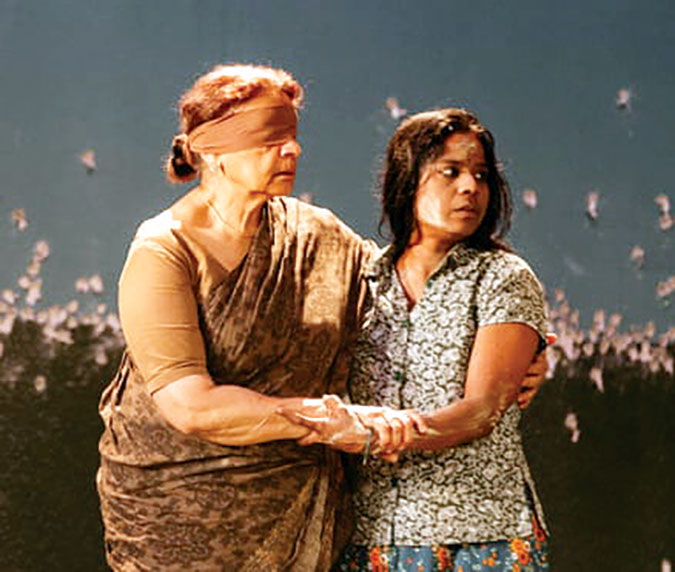
A new play that combines two great pillars of literature – the Mah?bh?ratha and Antigone – with the untold histories of the Sri Lankan civil war to forge a new story about surviving loss, discovering love and building a path to justice, by Lankan origin Australian writer and director S. Shakthidharan and Eamon Flack is a soaring achievement, says The Guardian.
The play staged at Belvoir St theatre, Sydney shows people living and loving despite danger, says a report by TG.It says: Ablindfolded woman, wearing a sari, places a conch shell on the ground. It might serve as a ritualistic trumpet or a reminder of a Sri Lankan beach towards the end of the country’s 26-year civil war – when tens of thousands of bodies lay scattered on its sand as though they had fallen from the sky.
She then dances slowly, sorrowfully, with precise mime and hand gestures to signal her pain. We soon learn this matriarch, Gowrie, had taken a vow many years earlier to wear the blindfold until her four children could be reunited, after her only son was swept away with the Tamil Tigers – a group the Sinhalese-controlled government branded terrorists.
In this silent, impactful opening scene of The Jungle and the Sea, Anandavalli – in her first acting role – brings to Gowrie her own experience: first, as artistic director of the Lingalayam Dance Company, notably in the classical Indian dance form bharata natyam; and also as a survivor of trauma herself.
Co-written and co-directed by Anandavalli’s playwright son S Shakthidharan with Belvoir’s artistic director Eamon Flack, the play is a companion piece to 2019 epic Counting and Cracking, which aimed to fill the silences between first- and second-generation Sri Lankan-Australian refugees about their shared history. It went on to win seven Helpmann awards, and recently toured to Edinburgh and Birmingham.
During the long development process for Counting and Cracking, Anandavalli gradually opened up to her son about fleeing Sri Lanka for Australia, and agreed to act in this latest work. It features seven other actors plus two musicians playing carnatic instruments including the lute-like saraswati veena, and percussion such as a mridangam and a ghatam clay pot.
Like its predecessor, The Jungle and the Sea is another achievement of sustained feeling and empathy, of insight into chaos, power and the human instinct for joy and survival. This is all the more remarkable given the simplicity of the production, with a revolving stage used at different speeds to indicate travel between eras and locations, and little reliance on props. There is no scenery apart from bullet holes running the width of the theatre walls.
While Shakthidharan and Flack’s earlier play charted the origins of the conflict and was set mainly in the capital of Colombo on the west coast, The Jungle and the Sea shifts the focus to northern Sri Lanka, where the violence was concentrated. It is focused on 1995, the war’s final year of 2009, and the present day in 2022.
Shakthidharan shows people living and loving despite danger and death – but this new material carries risk. While Counting and Cracking aimed to help Sri Lankans heal and feel a part of the Australian story, and endeavoured to provide a space for many truths across religious and ethnic lines, there is potential for retraumatisation from the violent events recounted in The Jungle and the Sea.
Perhaps this is why that violence is portrayed stylistically, with characters smearing their faces with blood to denote death and then walking away – a too-subtle strategy which dramatically undersells a couple of moments. A wedding across religious lines during bombing and shelling also risks minimising the horrors of war, although Shakthidharan succeeds in his clear intent to “drive an arrow” through media images of “helpless brown people”, and instead show Sri Lankans “surviving and loving and living”. There are also a couple of repetitive spots in the second act that could do with a trim, particularly around the family’s journey to find the brother, Ahilan (Biman Wimalaratne).
But performances are finely honed. Bollywood actor Prakash Belawadi, who played the patriarch in Counting and Cracking, returns to play the father, Siva, who is poignantly convincing when blinded in the war, and amusing in his reaction when his youngest daughter Lakshmi (Emma Harvie) comes out as a “lesbian atheist” during a well-calibrated comic scene at an expensive Sydney restaurant.
Nadie Kammallaweera, who was also in Counting and Cracking, segues neatly between the widely varying ages of her two characters, daughter Madlu and eccentric but wise Devla. And Kalieaswari Srinivasan plays firebrand daughter Abi with gusto, marrying across sides a Sinhalese groom, Himal (Rajan Velu), then trying to light a funeral pyre for her sibling, risking the wrath of the state in a denouement reminiscent of Antigone’s defiance.
The play will prompt important conversations about the Sri Lankan government killing its own citizens during the war, turning heavy machinery upon them or encouraging them to take shelter at church or hospital before bombing such gathering places.
Wise words translated to English from devotional Tamil poetry ultimately take centre stage with appeals to our better selves, even as war sloganeering twists language and we are reminded love itself can be “abused, betrayed, sensationalised”. The final dance is saved for the matriarch Gowrie, whom poetic licence gifts the sight of her children once again, as fretted strings and double-barreled drums play out.The Jungle and the Sea is at Belvoir Street theatre until 18 December.

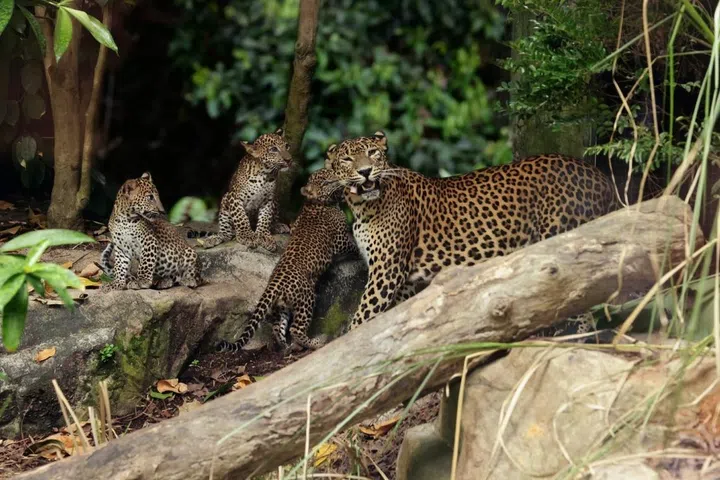
Three Sri Lankan leopard cubs that were born at the Singapore Zoo on Jan 1 have now made their public debut at the facility.
The two males and one female, born to mother Yala and father Asanka, are the first of their species yo be born at the Singapore Zoo. The last successful birth in Singapore was recorded at the Night Safari three decades ago.
The triplets, which are the pair’s first litter, are among around 80 Sri Lankan leopards in zoos worldwide.
The species is listed as vulnerable on the International Union for Conservation of Nature (IUCN) Red List, with fewer than 800 individuals estimated to remain in the wild.
Visitors can now see the triplets at the Wild Africa exhibit, said the Mandai Wildlife Group in a statement on April 16.
The cubs can be found in the exhibit with their mother daily until mid-May and, subsequently, every Wednesday, Saturday and Sunday.
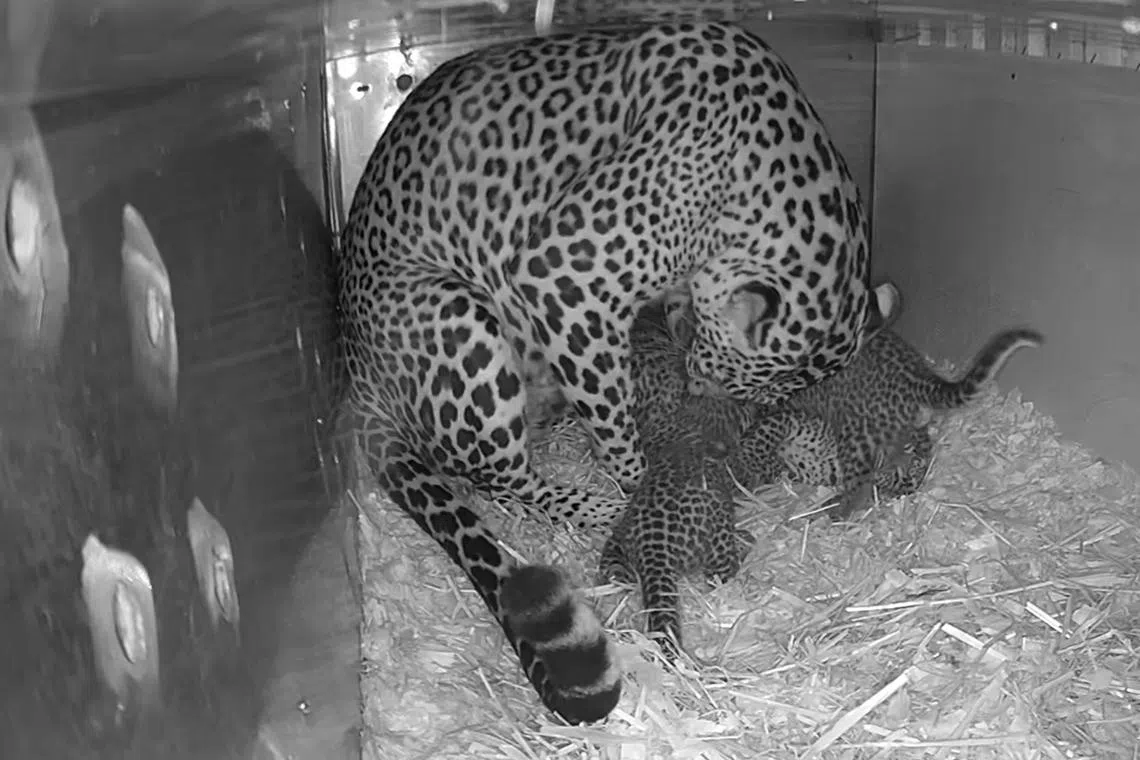
Yala with her cubs in their nest box, a month after their birth on Jan 1. (Straits Times)

A leopard cub investigating a piece of meat suspended from a tree – one of the several enrichment items in the Wild Africa exhibit designed to keep the cats mentally and physically stimulated. (Straits Times)
Mandai Wildlife Group curator Anand Kumar said it took nearly three years and close collaboration across continents to bring together a compatible pair of Sri Lankan leopards.
(Straits Times)
https://www.straitstimes.com/singapore/singapore-zoos-first-sri-lankan-leopard-cubs-make-their-public-debut?ref=top-stories

The Sri Lanka Navy has seized a local multi- day fishing trawler, it’s four man crew together with a consignment suspected to be narcotics off the Southern Coast of the island.
The vessel is presently being escorted to the Dikowita fisheries harbour for further investigations and legal proceedings.
Latest News
Heat Index at Caution Level in the Northern, North-central, North-western, Western, Sabaragamuwa, Eastern and Southern provinces and in Monaragala district


Warm Weather Advisory
Issued by the Natural Hazards Early Warning Centre
Issued at 3.30 p.m. on 15 April 2026, valid for 16 April 2026.
The Heat index, the temperature felt on human body is likely to increase up to ‘Caution level’ at some places in the Northern, North-central, North-western, Western, Sabaragamuwa, Eastern
and Southern provinces and in Monaragala district.
The Heat Index Forecast is calculated by using relative humidity and maximum temperature and this is the condition that is felt on your body. This is not the forecast of maximum temperature. It is generated by the Department of Meteorology for the next day period and prepared by using global numerical weather prediction model data.
Effect of the heat index on human body is mentioned in the above table and it is prepared on the advice of the Ministry of Health and Indigenous Medical Services.
ACTION REQUIRED
Job sites: Stay hydrated and takes breaks in the shade as often as possible.
Indoors: Check up on the elderly and the sick.
Vehicles: Never leave children unattended.
Outdoors: Limit strenuous outdoor activities, find shade and stay hydrated.
Dress: Wear lightweight and white or light-colored clothing.
Note:
In addition, please refer to advisories issued by the Disaster Preparedness & Response Division, Ministry of Health in this regard as well. For further clarifications please contact 011-7446491

Singapore Zoo’s first Sri Lankan leopard cubs make their public debut

Sri Lanka Navy seize multi day fishing craft suspected of smuggling narcotics

‘Sent to be killed’: How Russia forces migrants to fight in Ukraine

Babar Azam 71* helps Peshawar Zalmi extend lead at top

Trump threatens to fire Fed chair Jerome Powell if he doesn’t leave in May

Royal Challengers Bengaluru top the table after bowlers help thump Lucknow Super Giants

‘Dates have the highest sugar content to fight Coronavirus’

Sunday Island 27 December – Headlines

#SundayIsland 17th December – Headlines

Sunday Island – 28th March

Sunday Island Headlines – 21 March

Sunday Island – 21st February – Headlines
-

 News5 days ago
CEB orders temporary shutdown of large rooftop solar systems
-
 Features5 days ago
From Royal College Platoon to National Cadet Corps: 145 years of discipline, leadership, and modern challenges
-

 Business7 days ago
Israeli attack on Lebanon triggers local stock market volatility
-

 Business7 days ago
HNB Assurance marks 25 years with strategic transformation to ‘HNB Life’
-
 Latest News4 days ago
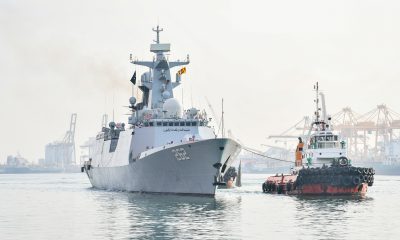
PNS TAIMUR & ASLAT arrive in Colombo
-

 News6 days ago
Anura Solomons passes away
-

 Features5 days ago
CIA’s hidden weapon in Iran
-
 Latest News4 days ago
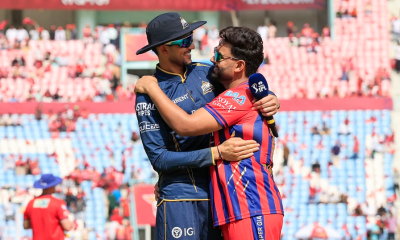
Prasidh, Buttler set up comfortable win for Gujarat Titans