
Editorial
The India – Canada spat

Opinion will surely be divided on whether Foreign Minister Ali Sabry should have waded into the ongoing spat between India and Canada on the assassination of a Sikh Canadian citizen allegedly by Indian agents according to Canadian Prime Minister Justin Trudeau. Sabry got a lot of media play in India characterizing Trudeau’s statement to Parliament as “outrageous.” Colombo, of course, continues to smart under the Canadian PM’s recent remarks about “genocide” in this country which Sabry says “everybody knows” did not happen. No wonder then our minister thought it fit to tell an Indian television station that “sometimes Prime Minister Trudeau comes out with outrageous and unsubstantiated allegations.”
Given India’s generosity to Sri Lanka during the ongoing economic crisis ,Colombo would surely like to score brownie points in New Delhi. This despite clear knowledge that free lunches are not part of global international relations and the need to steer clear of rivalries between India and China in big power contests. Sri Lanka professes non-alignment and is even now grappling with issues arising from an upcoming port call by a second Chinese research ship about which Indian and U.S. concerns have been expressed.
In such situations it makes sense in not resorting to the tit for tat reactions of the kind displayed by both Ottawa and New Delhi over the Hardeep Singh Nijjar assassination. Many would regard Minister Ali Sabry’s remarks on the India – China row as partly reflective of Colombo’s resentment of genocide and pro-LTTE references emanating from Canada.
Lankans, of course, are well aware that pro-LTTE rhetoric is part of domestic politics in Canada. Some 200,000 Sri Lankan Tamils, comprising about 0.7 percent of the total Canadian population live in that country. These numbers are sufficient to make a difference between the two major parties at elections and much of the Canadian political discourse reflects that factor.
Similarly, Sikhs are also a significant segment of the Canadian population with the highest population of Sikhs outside their home state of Punjab living in that country. According to the 2021 census, 770,000 Sikhs live in Canada and they would therefore be a more influential factor than Sri Lanka Tamils in Canadian domestic politics. Hence the various statements tilted towards these communities emanating from Canada.
Good relations with India must always be a cornerstone of Sri Lanka’s foreign policy. Such relations sank to abysmal depths during the civil war when India allowed the separatist LTTE to train and stage from Indian territory much to Sri Lanka’s detriment. The war would have probably ended long before it actually did in 2009 if Operation Vadamarachi was not aborted by India’s incursion into Sri Lanka’s air space and the infamous parippu airdrop.
The Indo – Lanka Accord and the arrival of the Indian Peace Keeping Force (IPKF) followed. Today it can be said that relations between us and our giant neighbour have never been better. True there are reservations that Big Brother is taking economic advantage of Sri Lanka’s current predicament but these are issues that must be sensibly navigated.
It must be noted that Prime Minister Trudeau did not claim ironclad evidence on the assassination of the Sikh activist in British Columbia. He merely said there were “credible allegations” (emphasis ours) on that score. Whether hard evidence could ever be unearthed on this matter is an open question. There have been media reports of early signs that both Canada and India, after the initial sound and fury, are resorting to quiet diplomacy to resolve their differences. That would be in the interest of both countries as well as the wider world.
There have also been reports that intercepts of diplomatic communications from the Indian High Commission in Ottawa possibly by the ‘Five Eyes’ intelligence grouping between Australia, Canada, New Zealand, United Kingdom and the U.S., had a role in Trudeau’s allegations. However that be, the Canadian premier would not have got out on a limb with his allegation, rightly or wrongly, if he was not convinced that he was on terra firma.
End of IMF review mission
Despite the polite noises made at its closing press conference, there appears to have been no agreement yet between the Government of Sri Lanka and the IMF review mission which concluded its two weeks-long visit on Wednesday. There was no word on when the disbursement of the second tranche of the deal would begin. There is no way that the IMF board will disburse the next tranche until the staff level agreement is concluded.
The closing statement reported “remarkable resilience” of the Sri Lankan people in the face of enormous challenges and “commendable progress” in implementing much needed reforms. While reporting a string of achievements it said that “discussions are ongoing” and the authorities are making progress on their revenue mobilization targets and anti-corruption efforts. But there was no word that a desired staff level agreement has been reached or when the funds will be released.
Two weeks ago when the review began, then acting Finance Minister Ranjit Siyambalapitiya said he was “very hopeful of getting the second tranche of $330 million” from the IMF. But obviously there is more ground to cover and the funds are not likely to be available in the short term. The Financial Times in Britain reported on Thursday that Sri Lanka has failed “to reach agreement to unlock the IMF bailout tranche” and “the delay threatens to slow the country’s recovery from the worst economic crisis in its history.”









President Anura Kumara Dissanayake is often seen in Parliament, making special statements and long speeches in defence of his government. It is being argued in some quarters that no other President attended Parliament so frequently. This, however, is a moot point. We once commented on President Mahinda Rajapaksa’s regular presence in Parliament, asking whether he was trying to remind the Legislature that he was the boss. Why should the Presidents attend and address Parliament regularly?
President Dissanayake is apparently labouring under the misconception that he can shore up the government’s image single-handedly by attending Parliament and displaying his oratorical skills. Whenever he is sighted in Parliament, everybody knows that the government has blotted its copybook again and is badly in need of his help to distract the public from its blunders and misdeeds. President Dissanayake spoke in Parliament yesterday as well, stressing his government’s ‘neutral foreign policy’, among other things, for the umpteenth time.
Sri Lanka’s Constitution works the way it should only when the Executive is in a position to control the Legislature. When the President and the Prime Minister happen to represent two different political parties, the latter undermines the former, as was the case between 2001 and 2004, with President Chandrika Kumaratunga and Prime Minister Ranil Wickremesinghe leading the SLFP-led People’s Alliance and the UNP-led UNF, respectively. They were at loggerheads, and President Kumaratunga finally went so far as to sack the UNF government and hold a snap general election, which her party won, helping her consolidate her power by regaining control of Parliament. President Maithripala Sirisena faced a similar situation after breaking ranks with the UNP-led UNF in 2018. Thus, the Presidents do everything in their power to keep the Legislature under their thumb lest alternative power centres should form around the Prime Ministers in Parliament even when their own parties are in power.
The President is constitutionally required to attend Parliament once every three months. Article 32 (3) of the Constitution says: “The President shall, by virtue of his office, attend Parliament once in every three months ….” Article 32 (4) says: “The President shall by virtue of his office also have the right to address and send messages to Parliament. The President also has the power to make the Statement of Government Policy in Parliament at the commencement of each session of Parliament and preside over ceremonial sittings of Parliament, according to Article 33.
These constitutional provisions are widely thought to be aimed at ensuring periodic engagement between the Executive and the Legislature, thereby promoting accountability, communication, and constitutional balance in a presidential system. The Executive President’s regular presence in Parliament theoretically signals his or her respect for the legislature and helps reinforce the notions of accountability and constitutionalism, but it can also be interpreted as a form of ‘soft power projection’ when it is intended to shape political narratives in favour of the ruling party.
The Executive should be mindful of the time constraints faced by the Legislature. An oft-heard complaint in Parliament is that the members of both the government and the Opposition are denied sufficient time to speak. Their anger is directed at the Speaker. Not all of them come out with anything sensible in their speeches and during debates, which more often than not descend into slanging matches and even fisticuffs; they are known to say very little in so many words and often go off on a tangent. However, their right to express their views in Parliament as elected people’s representatives cannot be questioned. It is their time that the Executive uses to make speeches and statements in the House to further the interests of his or her party. The Executive ought to render unto the legislators what is theirs and refrain from trying to overshadow the Legislature.

Saturday 21st March, 2026
Trouble is said to come in threes. For Sri Lankans, it seems to come in multiples of three. Close on the heels of crippling fuel price hikes, speculation is rife that electricity tariff increases are on the cards. The government is said to be contemplating another round of fuel price hikes as well.
The JVP/NPP talked the talk in the run-up to the 2024 elections, but it is now unable to walk the walk. In fact, the sobering economic reality has compelled it to do the very antithesis of what it promised during its Opposition days. It made a solemn pledge to bring down the cost of living immediately after forming a government and even tackle the country’s debt crisis expeditiously, without aggravating the people’s lot. There seems to be no end in sight to its about-turns, which are legion.
There is reason to believe that many people voted for the JVP/NPP, expecting it to fulfil its promise to lower taxes and tariffs among other things. Now that the government has reneged on that pledge and increased taxes and electricity and fuel prices substantially, they must be feeling that they were taken for a ride. Winning elections by making all the promises in the world is one thing, but fulfilling them to live up to the people’s expectations is quite another. There was no way the NPP government could slash taxes and tariffs, given the perilous state of the economy and the IMF bailout conditions, which are aimed at increasing state revenue severalfold and bring about debt sustainability. President Gotabaya Rajapaksa’s government blundered by slashing taxes and fuel prices. Interim President Ranil Wickremesinghe had to rectify those colossal policy blunders that ruined the economy. However, the public naturally becomes livid when governments do not make good on their promises and they are left without the promised relief and benefits.
The Opposition has said President Anura Kumara Dissanayake yesterday made a case for another round of fuel price hikes while addressing Parliament. A spokesman for fuel distributors has gone on record as saying that more fuel prices are in the pipeline. Such statements only cause panic among consumers and drive filling stations operators to hide their stocks with a view to profiteering. Yesterday, many of them claimed they had run out of fuel. There is no one the public can turn to. Unsurprisingly, when many filling stations claim to have no fuel, queues of vehicles near the others where stocks are available grow longer. It behoves the President, other government politicians and fuel distributors to refrain from predicting fuel prices hikes. It is also a mistake for them to predict price reductions, for the filling station owners do not place orders until the fuel prices are lowered. What the politicians and others should do is to guard their tongues and allow fuel prices to be lowered or increased.
Further fuel price increases will make the cost of living even more unbearable for the ordinary people. The government, which came to power, promising to do away with the taxes on fuel and halve the petroleum prices, ought to consider lowering the loss-recovery levy on fuel, amounting to Rs. 50 a litre, until the global oil market stabilises with prices returning to the pre-Middle East conflict levels. Thereafter, that levy may be re-imposed but in the form of a special commodity tax so that the Indian Oil Company, Sinopec, etc., which are said to control 43% of the local fuel market, will have to pay it, and the Treasury will gain. At present, the loss-recovery levy helps increase the profits of the private companies, ironic as it may sound.
It is hoped that government politicians and their officials will talk less and work more to increase the country’s oil storage capacity. The need to increase oil buffer stocks as a national priority cannot be overstated. Allowing the government’s private sector cronies to import oil cannot be considered a solution to the current energy crisis.

Friday 20th March, 2026
US President Donald Trump, driven by his MAGA dream, may have expected the bombing of Iran to scare the rival world powers, but the explosions in the Gulf have apparently shaken Washington instead. The Pentagon has asked for more than USD 200 billion from the White House for its war on Iran. Trump is now left with no alternative but to keep on pouring tax money into an endless war, much to the consternation of the public at home, with the midterm elections due in November 2026. What the Pentagon has asked for amounts to approximately 10 percent of funds the US government annually spends on healthcare, according to some media reports.
The US is reported to have already spent about USD 18 billion on the Iran war. This shows how costly the conflict will be for the US citizens economically. The predicament of Iran is far worse; it has had to bear huge human and social costs of the war besides the staggering economic losses. Israel has also suffered considerable damage despite its leaders’ claims to the contrary. It is reported to have allocated about USD 10 billion for the war so far.
The Pentagon’s request for more funds is expected to trigger a bipartisan battle on Capitol Hill when it is presented to the Congress. Some analysts have said Trump will have his work cut out to secure the allocation of funds as many Congress members are against his war.
Meanwhile, a hidden cost of the Iran war has come to light. The World Food and Agriculture Organization of the United Nations (FAO) has issued a dire warning. The FAO report on the Gulf conflict, released yesterday, has pointed out that the ongoing war is likely to lead to a major global food scarcity due to a crippling fertiliser shortage caused by the Iran war, especially the closure of the Hormuz Strait. The Persian Gulf is usually known for its energy exports, but it is also a major hub for global fertiliser production and exports.
Iran, Qatar, Saudi Arabia, and Oman are among the world’s leading exporters of nitrogen fertilisers, including urea and ammonia, accounting for roughly 30–35 percent of global urea exports and around 20–30 percent of ammonia exports, according to FAO. Overall, up to 30 percent of global fertiliser exports is channelled through the Strait of Hormuz, the closure of which has severely affected international fertiliser supply chains. Production cuts and shipping constraints have stalled an estimated 3–4 million tonnes of fertiliser trade per month, and global fertiliser prices could average 15–20 percent higher during the first half of 2026 if the crisis continues, FAO says. This is a frightening proposition.
Developing countries will be the worst affected by the Gulf conflict as their governments have no way of absorbing the fertiliser price shocks, which will lead to higher production costs and an increase in food inflation. The paddy harvesting season is currently on in this country, and farmers are complaining that they have no fuel for crop-gathering machines. Fuel is likely to be the least of their problems. They will need fertiliser when the next cultivation season commences. The cultivators of other crops also need fertiliser to help maintain the domestic food supply and exports. One can only hope that the government will formulate a strategy to face such an eventuality.
FAO has also warned that “lower fertiliser applications can reduce crop yields and increase food security risks directly and indirectly in vulnerable regions through local supply changes and future reduction of outputs in global breadbaskets, with higher fuel prices also increasing transport and logistics costs, raising the cost of food imports and further pressuring domestic food prices”.
Trump’s allies in the Gulf region will also face structural food security vulnerabilities, according to FAO. They are reportedly dependent on imports for between 70 and 90 percent of their food supply. Their food reserves will run out if the conflict drags on for a long time. Thus, they will face attacks by Iran on their oil fields and critical infrastructure, a drop in their revenue, and a possible food scarcity. Washington will have to factor in this situation when it decides whether to continue attacks on Iran.

Showers may occur at several places in the Western, Sabaragamuwa and Southern provinces and in Nuwara-Eliya district after 1.00 pm.

PM Harini leads panel to protect public services

Sajith slams President over war conduct and economic missteps

Johnston Fernando, sons held in Lanka Sathosa lorry misuse case

Gura: The unsung hero

The Iran War, Global Oil Crisis, and Local Options

‘Dates have the highest sugar content to fight Coronavirus’

Sunday Island 27 December – Headlines

#SundayIsland 17th December – Headlines

Sunday Island – 28th March

Sunday Island Headlines – 21 March

Sunday Island – 21st February – Headlines
-

 Business6 days ago
Browns EV launches fast-charging BAW E7 Pro at Rs. 5.8 million
-

 News4 days ago
CIABOC questions Ex-President GR on house for CJ’s maid
-

 News5 days ago
Sri Lankan marine scientist Asha de Vos honoured at UNGA opening
-

 Features6 days ago
Achievements of the Hunduwa!
-

 News5 days ago
Australian HC debunks misleading travel risk claims for Sri Lanka
-

 Latest News5 days ago
Wednesdays declared a government holiday with effect from 18th March
-

 News3 days ago
Pay hike demand: CEB workers climb down from 40 % to 15–20%
-
 News3 days ago
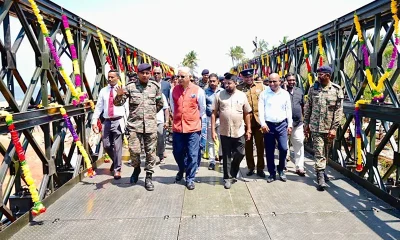
Bailey Bridge inaugurated at Chilaw