
Features
THE HISTORY OF COLOMBO


By AN OCTOGENERIAN
A few years ago there was a series of articles in which the residents of Colombo were referred to as ‘Colombians.’ This inspired this writer to trace the history of Colombo and the derivation of its name.
It is reasonable to assume that the history of this city commenced from as early as the eighth century when traders from such diverse and distant countries as Arabia, China and Rome sailed into the harbor to barter their products in exchange for spices, specially cinnamon, for which our island –known to them as ‘Serendib’ had gained a world wide reputation.
Much later in 1344 the renowned Moroccan traveler Ibin Batuta had visited the island and referred to Colombo as Kalanbu. However from that year onward there have been conflicting interpretations of the manner by which ‘Colombo’ had got its name.
Firstly in 1505 when the Portuguese fleet had been blown by adverse winds and had drifted into the harbor they named the adjoining city as Colombo. This name had been derived from the ancient Sinhala term ‘Kolon Thota,’ which meant the port on the river Kelani. The second interpretation is that the name of the city had been derived from the Sinhala term ‘Kola Amba Thota’ which meant the harbor near which grew mango- (‘Amba’) trees which had plenty of leaves – (‘Kola’). A similar observation had been made by Robert Knox in his book titled ‘ A Historical Relation of Ceylon’ which was published in 1681.
Most readers would be aware that Robert Knox was no stranger to this island, having been held as a captive for 20 years by the king of the Kandyan Kingdom – Rajasinghe II who ruled from 1629 – 1687. Yet another interpretation is associated with the renowned explorer and navigator, Christopher Colombus whose name in Italian was Christoforo Colombo. Since he was married to a Portuguese and had lived in Lisbon for several years, his Portuguese connection was the most likely reason for this city to be named in his honor.
The Portuguese after having arrived in Colombo sent a delegation to meet King Vira Parakramabahu VIII (1484 to 1518 ) who reigned over the Kingdom of Kotte which during that period included the city of Colombo were cordially received in audience with the King. The Portuguese who were determined to consolidate their position in Colombo took the opportunity to obtain the permission of King Vira Parakramabahu to build a fort in Colombo.
Their first fort was constructed in 1518 and named ‘Santa Barbara.’ This was abandoned in 1524 and a new fort built on the same site in 1554. Archaeologists have identified this site as having been located between the present Colombo harbor and the Beira lake.
The history of Colombo continues by referring to the churches they built. The first of the many Roman Catholic churches built by the Portuguese was named ‘Nossa Senhora Milagres’ which meant Our Lady of Miracles. It is where the present Anglican church of St Paul’s is located in Milagiriya. The name Milagiriya having been derived from the Sinhalised form of the Portuguese word ‘milagre’ which meant miracle.
Along Ginthupitiya street there is another building of historical significance. This is the 19th century built Sri Siva Subramania Swamy Kovil dedicated to Lord Muruga also referred to as the God of Kataragama, which can be seen even today. It is also recorded that many years ago Ginthupitiya, was named as ‘ San Thome Pitiya,’ because many Christians believed that St Thomas the Apostle had visited this site and preached to the people. However it must be emphasized that there is no authenticated evidence that St Thomas had ever visited Ginthupitiya/San Thome Pitiya.
The Dutch who arrived in the island in 1640 made Colombo their stronghold, referring to it as their Operational Centre. Not being Roman Catholics but Protestants they did not want to be outdone by the Portuguese who had, as mentioned earlier, built many churches. For this reason they decided to build their own churches in accordance with their faith.
The best known Dutch church is the Wolvendaal Church, which they referred to as Wolvendaalse Kirk, which even today is a place of worship for the Non- Roman Catholics. Another edifice built by them was the Dutch Hospital which is considered to be one of the oldest buildings in Colombo Fort. It has now been converted to be an imposing and impressionable shopping arcade and a popular dining rendezvous.
The British who defeated the Dutch made Colombo their main city but went further by establishing it as the island’s capital. At the risk of striking a sad and somber note, it needs to be stated that in 1866 the British donated to Colombo the 48- acre burial grounds referred to as Kanatte. Here among the many thousands who rest in peaceful slumber is the prominent science- fiction writer Sir Arthur C. Clarke.
There is also what may be referred to as the second grave of Sri Lanka’s valiant martyr Henry Pedris who was executed for treason by the British on July 7, 1915. In keeping with British military tradition his body was buried in an unmarked location in a secret plot far from Colombo. But in 1987 his relatives unearthed his body and buried it in Kanatte.
Colombo has another cemetery which is located along Jawatte road in what is referred today as Colombo 05. Unknown to many it is the largest Commonwealth War cemetery in the island. On July 8, 2005 it was declared as an archaeological site. Furthermore it is interesting to note that ‘Ja’ which are the first two letters of ‘Jawatte’ refers to the Malay community, who had purchased the block of land for use as a cemetery in 1941
Readers will be surprised to know that in Colombo the British had built many well known edifices which today are considered to be landmarks such as the Galle Face Hotel, Cargills Building. Also built in British times were the University of Colombo Building which was originally built for Royal College, the Joseph Frazer Nursing Home, the old House of Parliament, Temple Trees, the President’s House, the former General Post Office, Lloyds Building, the National Museum and the Old Town Hall located in Pettah which is presently a Museum and contains a fascinating collection of memorabilia such as street signs, steam rollers and printing presses.
Mention must also be made of another British contribution to the city of Colombo. This was the tramcar network, which operated on two main routes, Fort – Grandpass and Fort – Borella . This network was discontinued 1953.
To continue the history of Colombo it is now relevant to refer to World War II ( September 1, 1939 – September 2, 1945 ) and in particular to the involvement of Japan. It was during this period that under Emperor Hirohito the Japanese carried out a campaign of ruthless expansionism and militarization in the countries of South East Asia. It commenced with the unprovoked destruction of the American fleet berthed in Pearl harbor in Hawaii on December 7, 1941.
From then onwards they systematically ravaged every country in South Asia. Finally when on February 15, 1942 Singapore was captured, it was inevitable that their next conquest would be Ceylon. During this period Ceylon – as our island was referred to, was a British colony and the Allied forces comprising British, Canadian and troops from the independent dominions of the British Commonwealth were stationed in many parts of the island but were concentrated in Colombo and Trincomalee. But since this article is about the history of Colombo, a description of the Japanese attack on Trincomalee will regrettably have to be left for another day.
It was the intention of the Japanese forces to have complete control of the Indian ocean thereby disrupting the British sea lanes with India and the Middle East and also to be within striking distance of the oil fields in the Persian Gulf over which Britain had a virtual monopoly. It was in anticipation of a Japanese attack which if successful would have been irreparably detrimental to the British that the Allied forces stationed in Colombo were compelled to take numerous precautionary measures which to the citizens of Colombo were more often than not a source of irritation and impatience.
Every evening by sunset all street lights were switched off. The time was advanced by one hour to enable office workers to return to their homes before darkness covered the city. The movement of vehicles was prohibited, unless the owner/driver had a special pass in which case the head lamps had to be covered leaving just enough space for a glimmer of light to appear to prevent the driver from taking the wrong turn.
There were also what has been referred to as ‘Black Out’ nights. Residents living within the city were compelled to drape black curtains or fix sheets of cardboard over every window in their houses to prevent any light from appearing from outside. Colombo was in complete darkness, thereby making it impossible for Japanese bombers to identify any important landmarks. Sirens were installed to warn the people whenever there was a possibility of an air raid and on hearing the eerie screech of the siren they had to take refuge in the specially built underground air-raid shelters which were located at key points within the city .
A Mobile Air-Raid Precaution (ARP) team was formed mainly comprising of Rover Scouts which was headed by the Scout Commissioner. Their duty was to ensure that the public adhered to the regulations which had been enforced to safeguard them in case of a Japanese attack. Co-operative Stores were established throughout the city and a coupon system introduced for the purchase of essential groceries. Nevertheless there was a scarcity of rice for which a substitute referred to as ‘bajiri’ was issued. Even though many quite justifiably complained that it tasted like straw, there was no alternative.
Early in the morning on Sunday April 5, 1942, the worst fears of the Allied forces materialized. The Japanese armada led by Vice Admiral Mitsuo Fuchida who was responsible for the attack on the American fleet in Pearl harbor bombed Colombo devastating strategic installations in the city and harbor. The Japanese attack was so relentless that one pilot carefully avoiding the balloon barrages connected to the ground by steel wires which swayed high in the air over the harbor, demonstrated his devotion to his country and his Emperor by committing the ultimate sacrifice of ‘Harakiri’ by diving bombing into the funnel of a British destroyer berthed in the harbor bursting its fuel tanks and sinking the ship.
It is now relevant to quote the statement issued by the war-time Prime Minister of Britain, Sir Winston Churchill: “The most dangerous moment of the war and the one which caused me the greatest alarm was when the Japanese fleet was heading for Ceylon and the naval base there,” this being a reference to the Colombo harbor.
The war-time history of Colombo needs to be continued with the mention of Flight Lieutenant Leonard Birchall who was acclaimed as the ‘Savior of Ceylon.’ because while piloting his Catalina sea plane he was alarmed to see the Japanese fleet just 360 miles off the coast of the island and heading for the Colombo harbor. He was barely able to send a message of warning to the Allied forces stationed in Colombo when his plane was shot down and he was captured by the Japanese crew and taken to a Prisoner of War camp in Japan, to be questioned under torture as to whether he did send a message to the Allied forces stationed in Colombo.
It was his fortuitous warning which enabled the Allied forces in Colombo to be prepared for the impending Japanese attack. During the raid many residents of Colombo were in such a state of frenzied panic that they fled seeking refuge in homes far away from Colombo. Those who remained behind were able to watch the unforgettable sight in the sky above of what had been referred to as ‘dog fights’ between the RAF (Royal Air Force) Hawker Hurricanes and the Japanese Mitsubishi Zero fighter planes. When the raid was over burning wrecks of Japanese aircraft were found in places outside Colombo. However according to an unconfirmed report one wreck was found on Galle Face Green and another in Maradana.
Finally the writer is pleased to mention that one of the most unforgettable contributions made by the British to Ceylon was the game of cricket. Even though it is not rated as the national sport it is certainly the most popular, making us a cricket crazy country, perhaps second only to India.

 Every January, we make grand resolutions about our finances. We promise ourselves we’ll save more, spend less, and finally get serious about investments. By March, most of these promises were abandoned, alongside our unused gym memberships.
The problem isn’t our intentions, it’s our approach. We treat financial management as a personality flaw that needs fixing, rather than a skill that needs the right strategy. This year let’s try something different. Let’s put actual behavioural science behind how we handle our rupees.
Based on the article ‘Seven proven, realistic ways to improve your finances in 2026’ published on 1news.co.nz, I aim to adapt these recommended financial strategies to the Sri Lankan context.” Here are seven money habits that work because they’re grounded in how humans actually behave, not how we wish we would.
While these strategies offer useful direction for strengthening personal financial management, it is important to acknowledge that they may not be suitable for everyone. Many households face severe financial pressure and cannot realistically follow traditional income allocation frameworks, such as the well-known but outdated Singalovada Sutta guidelines, when even meeting daily food expenses has become a struggle. For individuals and families who are burdened by escalating costs of essentials, including electricity, water, mobile connectivity, transport, and other non-negotiable commitments, strict adherence to prescriptive models is neither practical nor fair to expect. Therefore, readers should remain mindful of their own financial realities and adapt these strategies in ways that align with their income levels, essential obligations, and broader personal circumstances.
1. Your Money Problems Aren’t Moral Failures, They’re Data Points
When every rupee misspent becomes evidence of personal failure, we stop looking for solutions. Shame is a terrible problem-solver. It makes us hide from our bank statements, avoid difficult conversations, and repeat the same mistakes because we’re too embarrassed to examine them.
Instead, try replacing judgment with curiosity. Transform “I’m terrible with money” into “That’s interesting, why did I make that choice?” Suddenly, mistakes become information rather than indictments. You might notice you overspend at Odel or high-end restaurant when stressed about work. Or that you commit to expensive plans when feeling socially pressured. Perhaps your online shopping peaks during power cuts when you’re bored and frustrated.
2. Forget the Year-Long Marathon, Focus on 90-Day Sprints
A Sri Lankan year is densely packed with financial obligations: Sinhala/Tamil Avurudu, Christmas, Vesak, and Poson celebrations; recurring school fees; seasonal festival shopping; wedding and almsgiving periods; yearend festivities; and an evergrowing list of marketing-driven occasions such as Valentine’s Day, Father’s Day, Mother’s Day, and many others. Each of these events carries its own financial weight, often placing additional pressure on already-stretched household budgets.
Research consistently shows that shorter time frames work better. Ninety days is long enough to create a meaningful change, but short enough to maintain focus and momentum. So instead of one overwhelming annual goal, give yourself four quarterly upgrades.
In the first quarter, the focus may be on organising your contributions toward key duties and responsibilities, while also ensuring that you are maximising the available benefits for your designated beneficiaries. Quarter two could be about building a small emergency fund, even Rs. 10,000 provides breathing room. Quarter three might involve auditing your bills and subscriptions to eliminate unnecessary expenses. Quarter four could be when you finally start that investment you’ve been postponing. You don’t need superhuman discipline or complicated spreadsheets, just focused attention, one quarter at a time.
3. Make One Decision That Eliminates Weekly Worry
The best money decisions are the ones you make once but benefit from repeatedly. These are decisions that permanently reduce what behavioural economists call “decision fatigue”, the mental exhaustion that comes from constantly managing money in your head. What’s one choice you could make today that would remove a recurring financial worry?
It might be setting up an automatic standing order to transfer Rs. 10,000 to savings the day your salary arrives, before you can spend it. Maybe it’s consolidating your scattered savings accounts into one that actually pays decent return.
These aren’t dramatic moves that require personality transplants. They’re structural decisions that work with your human tendency toward inertia rather than against it. Most banks now offer seamless digital automation. You can set it up once and benefit from that decision every single month without additional effort or willpower. You make the decision once. You benefit all year. That’s leveraging your energy intelligently.
4. Stop Spending on Who You Think You Should Be
Sri Lankan society comes with heavy expectations. The car you drive, the school your children attend, the hotels you patronise, the brands you wear, all communicate your worth, or so we’re told. Much of our spending isn’t about actual enjoyment. It’s about meeting unspoken expectations, keeping up appearances, or aspiring to a version of us that doesn’t actually exist.
We buy expensive saris we’ll wear once because everyone does. We maintain memberships to clubs we rarely visit because it looks good. We say yes to weekend plans at overpriced restaurants because declining feels like admitting we can’t afford it. We upgrade phones not because ours stopped working, but because others have.
Before your next purchase, ask yourself: do I actually want this, or do I want to want it? If it’s the second one, walk away. You won’t miss it. This isn’t about deprivation, it’s about precision. When you stop spending to perform and start spending to support the life you genuinely enjoy, money pressure eases dramatically. Your resources align with your actual values rather than imagined expectations.
Maybe you don’t care about fancy restaurants, but you love long drives along the southern coast. Maybe branded clothing leaves you cold, but you’d spend any amount on art supplies or books. That’s fine. Spend accordingly.
5. Break One Habit, See If You Actually Miss It
We’re creatures of routine, which serves us well until those routines outlive their usefulness. Sometimes we spend money on habits that started for good reasons but no longer serve us. Alpechchathava, in Buddha’s teaching, means living contentedly with few desires. It guides a person to manage money wisely by avoiding excess spending, unnecessary debt, and craving, and by focusing on essential needs and wholesome priorities. In this way, wealth supports mental cultivation, generosity, and spiritual progress.
The daily kottu roti that once felt like a convenient solution after working late may now have turned into an unnecessary routine. Similarly, frequent P&S or Caravan snack runs, and the habit of picking up sugary treats like cakes and sweets, are not only costly but also wellknown to be unhealthy, as nutritionists consistently point out. Beyond food, other expenses such as magazine subscriptions, the monthly coffee meetup, or weekend mall browsing often continue on autopilot without us realising how much they add up. These seemingly small, habitual expenses can quietly drain your budget while offering very little longterm value.
Try this experiment: keep a money diary for one week. Note every expense, no matter how small. Then identify one regular spend and eliminate it for the following week. If you don’t miss it? Excellent, keep it gone. If you genuinely miss it? Add it back without guilt. This isn’t about permanent sacrifice.
It’s about snapping yourself out of autopilot and checking whether your spending still reflects your current reality, priorities and purchasing power. You might discover you’re spending Rs. 15,000 monthly on things you barely notice.
6. Create Your Crisis Playbook on a Good Day
Many financial disasters don’t happen because we’re careless, they happen because we’re panicked. When crisis strikes, job loss, medical emergency, unexpected business downturn, fear hijacks our decision-making. Our rational brain exists while panic makes expensive choices: high-interest personal loans, selling investments at losses, making commitments we can’t sustain.
The solution? Make your crisis plan before the crisis arrives. On a calm day, sit down and document: If I lost my income tomorrow, what would I do first? Which expenses are truly essential? What’s the absolute minimum I need to function? Who could I call for advice? Which savings are untouchable, which could be accessed if necessary? What government support or loan restructuring options exist (Not in Sri Lanka)? This is a sort of preparation for sudden shocks.
7. Question the Money Stories You Inherited
Sometimes our biggest financial obstacles aren’t failed attempts, they’re the attempts we never make because we’ve internalised limiting stories. “Our family was never good with money.” “Investing is for rich people.” “I’m just not the type who earns more.” “Women don’t understand finance.” These narratives, absorbed from family, culture, or past experiences, become invisible fences.
Question them. Where did this belief originate? Is it actually true, or is it a story you’ve been telling yourself for so long, it feels like fact? What would happen if you tested it? Often, these stories protect us from the discomfort of trying and potentially failing. But they also protect us from the possibility of succeeding. And that’s a far costlier protection than most of us realise.
The Bottom Line
Improving your finances in 2026 doesn’t require becoming a different person. It requires understanding the person you already are, your patterns, triggers, and tendencies, and working with them rather than against them.
These aren’t magic solutions. They’re evidence-based approaches that acknowledge a simple truth: you’re not broken, and your money management doesn’t need fixing through willpower alone. It needs better systems, clearer thinking, and a lot less shame.

A significant portion of the history of paediatrics is a triumph of prevention. From the simple act of washing hands to the miracle of vaccines, preventive strategies have been the unsung heroes, drastically lowering child mortality rates and setting the stage for healthier, longer lives across the globe. Simple measures like promoting personal hygiene, ensuring the proper use of toilets, and providing Vitamin K immediately after birth to prevent dangerous bleeding, have profound impacts. Advanced interventions like inhalers for asthma, robust trauma care systems, and even cutting-edge genetic manipulations are testament to the relentless and wonderful progress of paediatric science.
A shining beacon that has signified increased survival and marked reductions in mortality across the board in all paediatric age groups has been the development of various preventive strategies in the science of children’s health, from newborns to adolescents. The institution of such proven measures across the globe, has resulted in gains that are almost too good to be true. From a Sri Lankan perspective, these measures have contributed towards the unbelievable reduction of the under-5-year mortality rate from over 100 per 1000 live births in the 1960s to the seminal single-digit figure of 07 per 1000 live births in the 2020s.
Yet for all this, despite the overwhelming evidence of success, a most worrying trend is emerging. That is public scepticism and pessimism regarding these vital interventions. This doubt is not a benign phenomenon; it poses a real danger to the health of our children. At the heart of this challenge lies the potent, often insidious, spread of misinformation and disinformation.
The success of any preventive health strategy in paediatrics rests not just on its scientific efficacy, but on parental cooperation and commitment. When parents hesitate or refuse to follow recommended guidelines, the shield of prevention is compromised. Today, the most potent threat to this partnership is the flood of false information.
Misinformation is false information spread unintentionally. A well-meaning friend sharing a rumour about a vaccine side-effect they heard online is spreading misinformation.
Disinformation is false information deliberately created and disseminated to cause harm or sow doubt. This often comes from organised groups or individuals with vested interests; sometimes financial, sometimes ideological, who seek to undermine public trust in medical institutions and scientific consensus.
The digital age, particularly social media, has become the prime breeding ground for these falsehoods. Complex scientific data is reduced to emotionally charged, simplistic, and often sensationalist soundbites that travel faster and farther than the truth.
The most visible battleground is childhood vaccination. Decades of robust, high-quality research have confirmed vaccines as one of the most cost-effective and successful public health interventions ever conceived. Global vaccination efforts have saved an estimated 150 million lives in the past 50 years, eradicating or drastically controlling diseases like polio, measles, diphtheria, and tetanus.
However, a single, long-retracted, and scientifically debunked paper claiming a link between the Measles-Mumps-Rubella (MMR) vaccine and autism continues to be weaponised by disinformation campaigns. This persistent myth, despite being soundly disproven, taps into deep-seated fears about children’s development. Other common vaccine myths target ingredients such as trace amounts of aluminium or mercury, which are harmless in the quantities used and often less than what is naturally found in food or the idea that “natural immunity” from infection is superior, totally ignoring the fact that natural infection carries the devastating risk of severe complications, long-term disability, and even death. The tangible consequence of this doubt is the dropping of childhood vaccination rates in various communities, leading to the wholly unnecessary re-emergence of vaccine-preventable diseases like measles.
Scepticism is not limited to vaccines. It can touch any area of paediatric preventive care where an intervention might seem unnecessary, invasive, or have perceived risks. Routine screenings for speech disorders, motor skills, or mental health issues can sometimes be perceived as medicalising normal childhood variations or putting a “label” on a child. Parents may resist or delay screening, missing the critical window for early intervention of proven measures that are likely to help. Advice on managing childhood obesity, reducing screen time, or adopting a balanced diet can be viewed by some parents as intrusive or judgmental, leading to poor adherence to essential health-promoting behaviours.
The regular use of inhalers for asthma or other chronic conditions might be looked down upon due to the fear of “dependency”, “addiction”, or long-term side effects, despite medical consensus that these preventive measures keep conditions controlled and prevent life-threatening exacerbations.
The common thread is a lack of understanding of the risk-benefit ratio. Parents, bombarded by fear-mongering narratives, often overestimate the rare, mild risks of an intervention while catastrophically underestimating the severe and permanent risks of the disease or condition itself.
The power of paediatric preventive medicine is not in a single shot or pill, but in the consistent, committed partnership between healthcare providers and parents. Paediatric science, driven by rigorous evidence-based medicine, do continue to refine guidelines, conduct transparent research, and communicate its findings clearly. When guidelines are confusing or lack robust evidence, it naturally creates openings for doubt. The scientific community’s commitment to continuous quality improvement and accessibility is paramount.
Ultimately, the success of prevention rests with the parents. Parenting, as a vital form of preventive care, includes all activities that raise happy, healthy, and capable children. The simple, non-medical steps mentioned in the introduction, proper handwashing, good sanitation, and encouraging exercise, are all forms of parental preventive intervention.
For more complex interventions, parental commitment requires several actions. They need to seek and trust the guidance provided by qualified healthcare professionals over anonymous, unsubstantiated online claims. They need to engage in an open dialogue by asking relevant questions and expressing concerns to doctors in an open, non-confrontational manner. A good healthcare provider will use this as an opportunity to educate and build trust, and not a portal to simply dismiss concerns. Then, of course, there is the spectre of adherence to various protocols and actions by the parents. These include consistently following recommended schedules, whether for well-child checkups, vaccinations, or daily medication protocols.
Addressing public scepticism requires a multi-pronged, collaborative strategy. It is not just about correcting false facts (debunking), but about building resilience against future falsehoods (prebunking). The single most influential voice in a parent’s decision-making process is their paediatrician or primary care provider. Clinicians must move beyond simply reciting facts. They need to use empathetic communication techniques, like Motivational Interviewing (MI), which focuses on active listening, validating parental concerns, and then collaboratively guiding them toward evidence-based decisions. For example, responding with, “I hear you’re worried about the side-effects you read about. Can I share what we know from decades of safety monitoring?” Being open about common, minor side effects such as a short-lasting fever after a vaccine pre-empts the shock and distrust that occurs when an expected, yet unmentioned, reaction happens.
Public health campaigns must go on the offensive, not just a defensive fact-checking spree. Teaching the general public how disinformation works, the use of “fake experts”, selective cherry-picked data, and conspiracy theories all add up to a most powerful form of inoculation (prebunking) against future exposure. Health institutions must simplify their communications and make verified, high-quality information easily accessible on platforms where parents are already looking.
Parents often trust their peers as much as their doctors. Engaging local community leaders, faith leaders, and even trusted social media influencers to share accurate, positive messages about paediatric health can shift the public narrative at a grassroots level. While protecting privacy, sharing aggregate data and stories about the dramatic decline in childhood diseases thanks to prevention can re-emphasise the collective good.
The battle against child mortality and morbidity has been one of the great human achievements, a testament to scientific ingenuity and collective effort. Today, the greatest threat to maintaining these gains is not a new virus, but a breakdown of trust fuelled by unchecked falsehoods.
Paediatric preventive interventions, from a cake of soap and a proper toilet to the most sophisticated genetic therapies, are the foundation of a healthy future for every child. To secure this future, the scientific community must remain transparent, the healthcare system must lead with empathy, and the public must commit to informed, critical thinking. By rejecting the noise of disinformation and embracing the clear, evidence-based consensus of science, we can ensure that every child continues to benefit from the life-saving progress that defines modern paediatrics. The well-being of the next generation demands nothing less than this renewed commitment.
Little children are not in a position to make abiding decisions regarding their health, especially regarding preventive strategies in health. It is ultimately the crucial decisions made by responsible parents regarding the health of their children that really matter. As doctors, our commitment is never to leave any child behind.
by Dr B. J. C. Perera ✍️
MBBS(Cey), DCH(Cey), DCH(Eng), MD(Paediatrics), MRCP(UK), FRCP(Edin), FRCP(Lond), FRCPCH(UK), FSLCPaed, FCCP, Hony. FRCPCH(UK), Hony. FCGP(SL)
Specialist Consultant Paediatrician and Honorary Senior Fellow, Postgraduate Institute of Medicine, University of Colombo, Sri Lanka.
Joint Editor, Sri Lanka Journal of Child Health
Section Editor, Ceylon Medical Journal
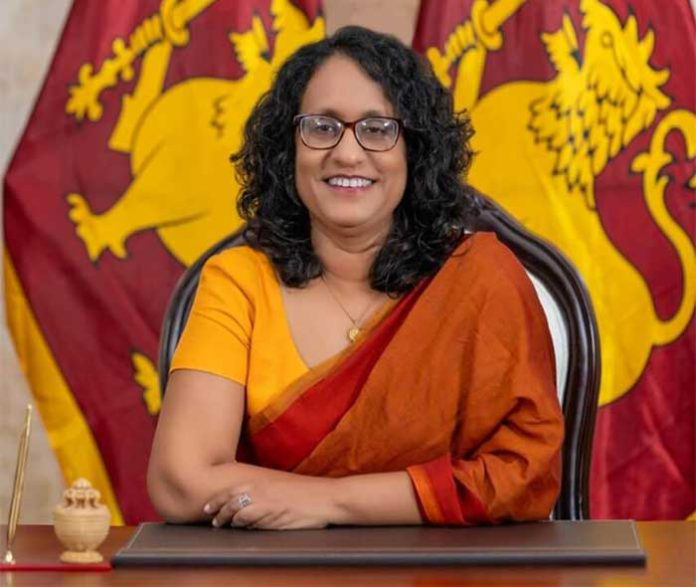
We express our profound concern and deep outrage at the vulgar, misogynistic, and defamatory attacks being directed at the Prime Minister and Minister of Education, Dr. Harini Amarasuriya.
Dr. Harini Amarasuriya is not merely a political leader; she is a scholar, public intellectual, and lifelong advocate of social justice, equality, and education. Attempts to discredit her through personal abuse rather than reasoned policy debate are not only an insult to her, but an assault on democratic values, women’s leadership, and intellectual integrity in public life.
Such attacks are unjust and unethical, and they corrode democratic discourse. We are deeply disappointed that certain political actors and their supporters continue to rely on misinformation, prejudice, and emotional manipulation, instead of engaging in rational, evidence-based, and constructive debate.
Sri Lanka has already paid a heavy price for decades of politics rooted in fear, communal division, and sentiment-driven populism. The country’s economic collapse and social breakdown are the direct consequences of these failed approaches. The people decisively rejected this style of politics through the Aragalaya, signaling a clear demand for change. Sri Lanka now stands at a historic turning point. After decades of corruption, ethnic manipulation, and policy paralysis, the people have given a clear mandate for systemic reform.
At this critical moment, Sri Lanka urgently needs structural reforms, particularly in education, which is the foundation of long-term national development, social mobility, and global competitiveness. Yet we observe that the very forces responsible for the country’s decline are once again attempting to block or derail reforms by exploiting religious, cultural, and emotional narratives.
We strongly affirm that no nation can be rebuilt through hatred, fear, or division. Education reform is not a political threat; it is a national necessity. Efforts to undermine reform through personal attacks and manufactured controversies serve only those who seek to return to power by keeping the country weak, divided, and intellectually impoverished.
Those who now attack Dr. Harini Amarasuriya are not defending culture or morality. They are defending privilege and political survival. Having failed the country for over seventy-five years through communalism, patronage, and anti-intellectualism, they now fear that an educated, critical, and empowered generation will render their outdated politics irrelevant.
This is why they target:
=a woman,
=an academic,
=and a reformer.
We therefore state clearly that we:
1. Condemn all forms of character assassination, gender-based attacks, and hate propaganda against the Prime Minister and Minister of Education.
2. Affirm our full support for Dr. Harini Amarasuriya’s leadership in advancing Sri Lanka’s education reforms.
3. Urge the government to proceed firmly and without retreat in implementing the proposed education reforms, in line with national policy and the public mandate.
4. Call upon academics, professionals, teachers, parents, and citizens to stand together against reactionary forces that seek to sabotage reform through fear mongering and disinformation.
A country cannot be rebuilt by those who destroyed it. A future cannot be created by those who fear education reforms.
Sri Lanka’s future must not be sacrificed for the ambitions of a few.Sri Lanka must move forward — with knowledge, dignity, and courage.
Signatories:
1. Markandu Thiruvathavooran, Attorney at law
2. S. Arivalzahan, University of Jaffna
3. Dr S.Ramesh, University of Jaffna
4. Dr. Mariadas Alfred, Former Dean, University of Peradeniya
5. Prof B.Nimalathasan, Senior Professor, University of Jaffna
6. S. Srivakeesan, Station Master, SriLankan Railways
7. A. T. Aravinthan, Branch Manager, Commercial Bank
8. Dr. S. Niththiyaruban, Paediatrician, Teaching Hospital, Jaffna
9. Dr. S. Selvaganesh, Plastic and Reconstructive Surgeon, Teaching Hospital, Jaffna
10. Dr. S. Mathievaanan, Consultant Surgeon, Teaching Hospital, Jaffna
11. Prof. P. Iyngaran, University of Jaffna
12. Eng. M. Sooriasegaram, President, Education Development Consortium
13. Dr. S. Raviraj, Senior Consultant Surgeon, Former Dean, Faculty of Medicine, University, Jaffna.
14. Mr. Saminadan Wimal, University of Jaffna
15. Dr. A. Antonyrajan, University of Jaffna
16. P. Regno, Attorney at Law
17. Prof. J. Prince Jeyadevan, University of Jaffna
18. Prof. S. Muhunthan, University of Jaffna
19. Prof. R. Kapilan, University of Jaffna
20. Dr. S. Jeevasuthan, University of Jaffna
21. J.S. Thevaruban, University of Jaffna
22. S. Balaputhiran, University of Jaffna
23. Dr. N. Sivapalan, Retired Senior lecturer, University of Jaffna
24. I. P. Dhanushiyan, University of Jaffna
25. Dr. K. Thabotharan, University of Jaffna
26. Dr. Bahirathy J. Rasanen, University of Jaffna
27. Perinpanayagam Ronibus, Vice Secretary, Change Charitable Trust, Jaffna
28. Dr. S. Maheswaran, University of Peradeniya
29. Mr. S. Laleesan, Principal, Kopay Teachers’ College
30. Victor Antany, Teacher, Kilinochchi
31. K. Shanthakumar, Principal, Technical College, Vavuniya
32. S. Thirikaran, Principal, J/ Puttur Srisomaskanda College
33. Dr. T. Vannarajan, Advanced Technical Institute, Jaffna.
34. X. Don Bosco, Resource person, Piliyandala Educational Zone
35. K. Ravikumar, Regional Manager, Powerhands Pvt Ltd
36. Sathiyapriya Jeyaseelan, DO, Economist
37. A. Kalaichelvan, Chief Accountant, Animal Productive & Health
38. C. Vathanakumar, Retired Project Director
39. P. Kirupakaran, Department of Buildings (NP)
40. A. Antony Pilinton, David Peris Company, Jaffna
41. A. Muralietharan, Social Activist
42. Sinthuja Sritharan, Independent Researcher
43. T. Sritharan, Social Activist
44. Ms. Gnasakthi Sritharan, Social Activist
45. P. Thevatharsan, Management Service Officer
46. . S. Mohan, Social Activist
47. K. Jeyakumaran, Social Activist
48. Dr. N. Nithianandan, Chairman, Ratnam Foundation
49. George Antony Cristy, Social Activist
50. S. Thangarasa, Social Activist
51. N. Bhavan, Retd. Deputy Principal, Mahajana College
52. P. Muthulingam, Executive Director, Institute of Social Development, Kandy
53. M.K. Sivarajah, Social Activist
54. Mr. V. Sivalingam, Human Rights Activist
55. S. Jeyaganeshan, Samuthi Development Officer

U – 19 world Cup: Rain disrupts New Zealand vs Bangladesh game in Bulawayo

U – 19 World Cup: Will Malajczuk’s 51-ball century helps Australia blow Japan away

Rodrigues holds nerve as Delhi Capitals hand Mumbai Indians third straight loss

Second lady Usha Vance announces she is pregnant with fourth child

Plans for 2026 on the journey towards a digital economy Under President’s review

Dry weather will prevail in most parts of the island.

‘Dates have the highest sugar content to fight Coronavirus’

Sunday Island 27 December – Headlines

#SundayIsland 17th December – Headlines

Sunday Island – 28th March

Sunday Island Headlines – 21 March

Sunday Island – 21st February – Headlines
-

 Editorial3 days ago
Illusory rule of law
-
 News4 days ago
UNDP’s assessment confirms widespread economic fallout from Cyclone Ditwah
-

 Business6 days ago
Koaloo.Fi and Stredge forge strategic partnership to offer businesses sustainable supply chain solutions
-

 Editorial4 days ago
Crime and cops
-

 Features3 days ago
Daydreams on a winter’s day
-

 Editorial5 days ago
The Chakka Clash
-
 Features3 days ago
Surprise move of both the Minister and myself from Agriculture to Education
-

 Features2 days ago
Extended mind thesis:A Buddhist perspective