
Features
The grandeur of Rome: Sacred and Profane


(Excerpted from Selected Journalism by HAJ Hulugalle)
One of the first questions my friend Leone Cattani, lawyer and journalist, asked me as he drove me in his car along the Via del Corso in Rome was, “If you had time to see only one important building in Rome, what should it be?” I thought of St. Peter’s, the Vatican Museum, the Colosseum, the Forum and the Capitol. I had already seen some of these places with admiration and even awe. Cattani knew better. The most famous, as well as the most perfect classical monument in Rome is the Pantheon. The original building was erected 27 years before the birth of Christ but a reconstruction was effected in the first century A.D.
The main feature of the Pantheon is the great dome, the model of the cupola of St. Peter’s. The perfect harmony of the proportions of the Pantheon never ceases to compel the admiration of architects who echo the tribute of Nathaniel Hawthorne that the world has nothing to equal it. Light and air are admitted through a large aperture at the summit of the cupola showing the sky – “as if heaven were looking down into the interior of this place of worship.”
This Roman temple became a Church, the national Church of all Italians where their kings were buried. But a greater man than any Italian king lies buried in the Pantheon. Over the tomb of Raphael, probably the greatest artist of all time, is the inscription: “Here lies Raphael: Living, great Nature feared he might outlive his works; and, dying, fears herself to die.”
I shall, of course, not attempt to describe St. Peter’s or the Vatican Museum. Many books have been written about them and it would be foolish to try to convey their grandeur or beauty in a brief article. The first impression one gets from the interior of St. Peter’s is likely to be disappointing. But in the course of several visits the huge building reveals itself as a suite of majestic halls that look almost like vast cathedrals. The basilica has a unique setting. The vast square is dominated by the great dome which rises against the background of the sky and the imposing colonnade forms a solemn entry to St. Peter’s and the Vatican.

Archbishop of Colombo His Grace Thomas Cooray who subsequently became a Cardinal. Also In the picture Mr Vernon Samarawickrema
Two famous statues leave an ineffaceable impression in the mind. One is the “Pieta,” a beautiful work of the young Michelangelo. On the knees of the Virgin lies the body of Christ who seems to be asleep. The other statue is a more severe piece of sculpture. It is the celebrated bronze statue of St. Peter. The pious pilgrim as he passes kisses the foot already worn away by the lips of many generations of visitors.
It takes many hours to make even a quick journey of the Vatican Museum: the sculpture, the picture galleries, the Sistine Chapel, and so on. The Louvre in Paris does not possess a more representative collection of art treasures than the Vatican Museum. A profane mind notices that the nakedness of the classical male statues is covered with an obvious fig leaf although no such concession to middle class propriety is seen in the ceiling of the Sistine Chapel by Michelangelo.
Room XV of the Vatican Picture Gallery has a collection of portraits. It is in the last room that one sees among the Popes and Cardinals an enormous picture of George IV of England by Sir Thomas Lawrence, described thus in the Official Guide: “George IV of England, by Thomas Lawrence (1769-1830), the most famous English portrait painter of the last two centuries: a magnificent court portrait.” The King is in strange company.
I did not try to obtain an audience with His Holiness the Pope nor join the pilgrims who catch a glimpse of that saintly and handsome Prince of the Church. I live in hope that I shall be able to spend a longer time than 10 days in Rome and see all that I failed to see on my first visit and to do so in a mood untroubled by the anxieties of a stranded passenger living in comfort. If I did not see the Pope, I saw places he frequents, including the Vatican gardens and Castel Gandolfo, his summer residence. I also saw some striking portraits of the Pope, especially one at the Collegio Propaganda Fide when I was talking to that charming man Father Muttukumaru who has already spent four or five years in Rome and is held in great esteem by all those who know him.
No Ceylonese spending even a day in Rome should omit to meet Father Muttukumaru. On my way to the Collegio I went up to the Janiculum, a hill parallel to the Tiber which, according to Roman legend, was the abode of the god Janus. From here, as from the Pincio Gardens one gets a fine view of the City.
There is some doubt whether St. Peter was crucified on the site of San Pietro Montorio, near by the Janiculum, or in Nero’s circus, a site now partially occupied by St, Peter’s. St. Peter and St. Paul were in prison for nine months and were led out to death in 67 A D. St. Paul’s -without-the-Wall and St. Peter’s are the two grand basilicas in Rome.
Leone Cattani took me to the Capitoline hill, or the Piazza del Campodoglio as it is now called, and from a small terrace whence we had a good view of the Forum, he recreated for me what it would have looked like in the days of Virgil, Horace and Augustus. At the end of a broad highway running alongside the Forum is the Colosseum which was built five years after St. Paul’s death. The Colosseum is, of course, the most impressive ruin in Rome. They say that 12,000 Jewish prisoners were employed in building it.
H V Morton writes: “It is said that the first Christian to die there was the venerable St. Ignatius, Bishop of Antioch, who has always been claimed by Eastern tradition as the little child whom Jesus placed in the midst of his disciples as a model of innocence. It is related of him that so great was the purity of his life that he was granted the privilege of hearing the song of angels, and that is the reason why he introduced responses into his church service.”
Although Cattani is on the board which regulates new buildings in the City he was always regretting some of the modern additions. “You should have seen that square 20 years ago when I first came to live in Rome to go to the University,” he would tell me. “All those Ugly additions blocking what was once a charming view. What a pity!” Watching the building of a new Church somewhere towards the Via Flaminia, he said, “Don’t you think we have enough churches in Rome?”
The noisy and crowded metropolis, it is true, has lost some of the beauty of Rome as Henry James saw it on a day in 1869 when he went “reeling and moaning thro’ the streets in a fever of enjoyment.” “At last,” he wrote to his brother, “for the first time I live. It beats everything; it leaves the Rome of your fancy – your education – nowhere. It makes Venice -Florence-Oxford-London- seem like cities of pasteboard.”
It would take a genius to spoil Rome although Count Guiseppe Sacconi who designed the neo-classic Monument to Victor Emmanuel II, that gigantic wedding cake in the heart of the city, almost did it. Meanwhile there are still, and there will always be, such gracious places like the Pincio Gardens; and for song and refreshment – a glass of good Italian wine and a “pizza” – the pizza at Tarverno in Via Margutta.
(First published in 1951. The writer later spent some years in Rome as Ceylon’s Ambassador to Italy)








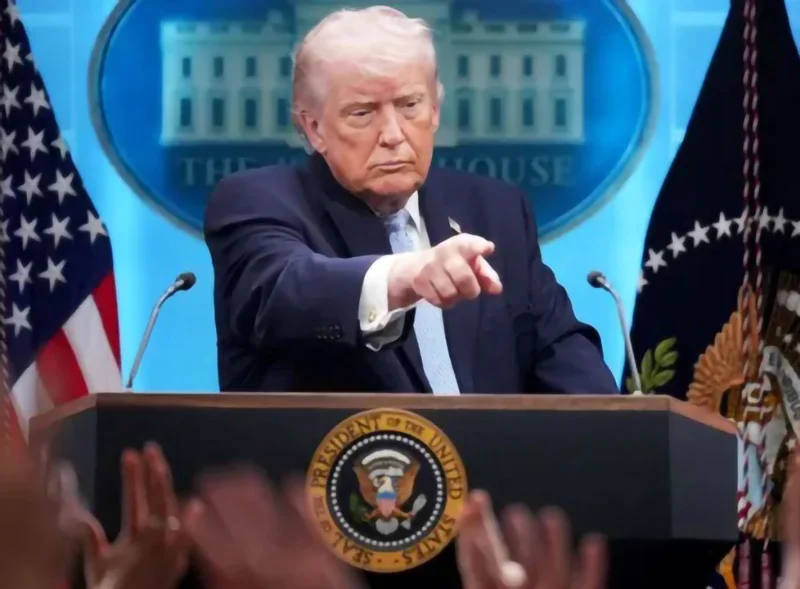
 Some fundamental freedoms seen to be at the heart of democracy in the US – religion, speech, the press, assembly and the right to petition the government – are at risk of being undermined at present by the country’s Executive President. However, the latter is being legally challenged on this score by some sections of the US media and the citizenry of the country could take heart from this notable defense of media freedom.
In fact this is good news for the world of democracy. The push back is coming from organizations such as CNN, ABC, CBS, Fox, NBC who constitute the nucleus as it were of the US media and their solidarity no less than their resourcefulness calls for commendation.
Following a recent White House decision to suspend CNN from what was referred to as ‘participation in presidential pool coverages’, the other media organizations mentioned refused to replace it in the pool. Their position was that the public had a right to receive ‘accurate and independent information about the government.’
Earlier, the White House decided to bar MS NOW and Politico from entering its premises following the restrictions imposed on CNN. The organizations were accused of publishing “FAKE NEWS’ , ‘Fiction’ and ‘lies’ in respect of the administration. These organizations lost no time in initiating a federal lawsuit accusing the central administration of violating their rights guaranteed by the First Amendment.
However, the latter litigating organizations could now consider themselves as having been vindicated because the federal court hearing their case has ordered the Trump administration to temporarily restore White House press access to journalists from the mentioned media institutions. Notably, the court has declared that the ban is ‘likely unconstitutional’. The case is proceeding.
The mass media of the most vibrant democracies of the West ought to be no strangers to such inspirational acts of solidarity and exemplifications of independence but there are lessons here for the democracies of the South that could stand them in good stead. Minus the right of a people to be informed, the rest of fundamental rights featuring in Southern Bills of Rights and legislation of the kind are bereft of substance and meaning.
It is informed decision-making on the part of a citizenry that makes for democratic vibrancy and on this score many a Southern democracy fails. While Southern publics generally demand of their governments continuous economic well being and substantive material benefits they are not equally desirous of being informed and knowledgeable.
This lacuna in the consciousness of many Southern publics enables their governments ‘to get off the hook’, so to speak and govern, or more often misgovern, their countries with impunity. Among other factors, this species of mass ignorance makes it possible for governments to dismantle democracy and rule in perpetuity.
Accordingly, an educated and constantly informed public is an essential precondition for the flourishing of democracy and independent media are integral to this process. Minus an independent mass media sector that meets the knowledge needs of the people responsibly, democracy is as good as dead.
Needless to say, those sections of the US media that are currently taking the Trump administration to task over its media curbs are acutely aware of the cruciality of these fundamental knowledge requirements.
The hope of democratic opinion worldwide and locally is likely to be that media independence would thrive in the manner in which it is flourishing in the most vibrant and accountable democracies of the West.
Southern countries such as Sri Lanka that lay claim to democratic credentials, but are democracy-deficient in many ways, need to be particularly cognizant of these requirements. The publics of these countries need to go the extra mile to ensure the thriving of an independent but responsible mass media sector.
In fact it is veritably a matter of life and death. It is only an independent media sector that could, while ensuring the existence of an informed public, impress on the latter the need to protect and perpetuate its fundamental rights. In the absence of these campaigns, such publics could be eventually having on their hands governments that boast of ruling in perpetuity.
Taking a leaf from the sections of the US media referred to independent media organizations in Southern states need to act in solidarity as well. They would need to act on the basis of the principle that acts of victimization suffered by members in their fold at the hands of governments, for instance, are in fact inimical acts directed at their collectivity and which call for united remedial action. In short, no independent mass media institution could see itself as ‘an island’.
Besides some general guidance on the importance of media independence and solidarity, the message coming from the US with regard to media praxis is that power must be stood-up to unblinkingly. The mentioned sections of the US media are primarily in a struggle to ward off encroachments on their independence in the areas of policy and practice by the political executive, that is the President.
The latter would ride rough-shod over the media in the absence of robust opposition by the media itself to inimical executive action of this kind.
While media independence needs to be seen as crucial to democratic development, an obligation is cast on the media to ensure that it uses such independence responsibly and constructively.
The worst that could afflict a media sector is for it to fall prey to the clichetic ‘freedom of the wild ass’. In fact recurring irresponsibility on the part of the media could lend credence to the perception that a tightly regulated media is best for a country. It is a short step from this misguided view to the position that political authoritarianism is best for a state. That turn of events would be of course catastrophic for a democracy.
The issues discussed thus far point to the need for a broad discourse among Southern democracies in particular on what is best for them in this connection. Given the risks underscored earlier for Southern countries in particular a broad discussion on the matters at hand, which includes the public, emerges as a must for Sri Lanka. Besides, media solidarity within democratic countries and internationally is a must.

by Prof. M. W. Amarasiri de Silva
Following public controversy over an inappropriate web link found in an English study module, the Sri Lankan government formally deferred the full rollout of the Grade 6 curriculum reforms to January 2027. In the interim, state schools will maintain the existing syllabus, reverting to standard eight-period daily timetables and previous textbooks to ensure uninterrupted instruction. Prime Minister and Minister of Education Dr. Harini Amarasuriya emphasized that this temporary pause allows the Education Ministry to thoroughly review all instructional materials, fix editorial flaws, and conduct scientific impact assessments across pilot schools prior to nation-wide implementation.
To address the oversight, an expert committee evaluated the flawed materials, completed necessary amendments, and finalised discussions to resubmit corrected modules for printing. Beyond revising written texts, the Ministry established a broader preparation roadmap—allocating funds for extensive teacher training programs set to begin mid-year, alongside scheduled informational briefings for parents, teachers, and students. Prime Minister Amarasuriya reaffirmed that none of the valid first-term modules were completely discarded or scrapped, preserving state resources while systematically rebuilding public trust and strengthening quality assurance protocols.
In this respect, this article reviews the current grade 6 syllabus comparing it with similar syllabi of India and the USA, with a view to make recommendations for the upcoming grade 6 syllabus revision.
Architecture of nation’s future
Education is the quiet architecture of a nation’s future. It is the unseen scaffolding upon which generations build their character, their intellect, and their capacity to contribute meaningfully to society. In Sri Lanka, the Grade 6 syllabus occupies a particularly important place in this architecture. It is the bridge between primary learning and the more demanding intellectual terrain of secondary education. It is the moment when children begin to move from learning basic facts to understanding concepts, from memorising information to applying knowledge, and from passive reception to active engagement. Yet, despite its importance, the Grade 6 curriculum in Sri Lanka has long struggled with issues of breadth, depth, relevance, and pedagogy. As global education systems evolve, Sri Lanka must examine what lessons can be learned from international models—particularly India and the United States—to strengthen its own curriculum and prepare students for a rapidly changing world.
The first lesson Sri Lanka can learn is the value of conceptual clarity. India’s NCERT curriculum, especially in Mathematics and Science, is globally respected for its logical progression and conceptual depth. Indian students are introduced early to the idea that mathematics is not merely a set of procedures but a language of reasoning. They learn why a ratio works, not just how to compute one. They understand the structure of an equation, not merely the steps to solve it. In Science, they explore the properties of materials, the structure of plants, and the principles of motion with a clarity that encourages curiosity rather than rote memorisation.
Sri Lanka’s Grade 6 syllabus, while competency-based, often leans heavily toward content coverage. Students are expected to learn many topics, but the time allocated for each is limited, and the teaching culture often emphasizes memorisation over understanding. If Sri Lanka wishes to improve the quality of its syllabus, it must embrace the idea that fewer topics taught well are better than many topics taught superficially. Conceptual mastery builds confidence, and confidence builds lifelong learners.
Lesson from the US
A second lesson comes from the United States, where the curriculum is built around skills rather than content. American students in Grade 6 are expected to read complex texts, analyse arguments, write essays supported by evidence, conduct experiments, and engage in collaborative projects. The emphasis is not on how much they know but on what they can do with what they know. This skills-based approach encourages critical thinking, creativity, and independence—qualities essential for success in the modern world.
Sri Lanka’s syllabus, by contrast, often rewards students for reproducing information rather than interpreting it. The exam culture reinforces this tendency, as students are assessed primarily through written tests that measure recall. To improve the syllabus, Sri Lanka must integrate more opportunities for students to think, question, debate, and create. The classroom should become a space where students learn to solve problems, not just memorize solutions.
Another important lesson comes from the breadth of Sri Lanka’s own curriculum. One of the strengths of the Sri Lankan system is its inclusion of cultural and religious education. Subjects such as Buddhism, Hinduism, Islam, and Christianity provide moral grounding and cultural identity. Art, Music, Drama, and Health contribute to holistic development. These subjects remind students that education is not merely about academic achievement but about becoming a balanced human being. However, breadth without depth can become burdensome. Grade 6 students in Sri Lanka often juggle more than ten subjects, each with its own textbook, competencies, and assessments. This creates pressure not only for students but also for teachers, who must rush through content to meet syllabus requirements. The lesson here is not to reduce cultural subjects but to integrate them more meaningfully. Religious education can be taught through ethical discussions, community projects, and reflective writing. Art and Music can be connected to history, literature, and social studies. Health can be linked to science and physical education. Integration reduces overload while enriching learning.
Another lesson from India
India offers another valuable lesson in the form of standardised textbooks. NCERT books are used across the country, ensuring consistency in quality and content. They are written by subject experts, reviewed rigorously, and updated periodically. Sri Lanka’s textbooks, while generally well-structured, vary in quality and often lag behind modern pedagogical standards. Some are dense, text-heavy, and lacking in visual aids or real-world examples. To improve the syllabus, Sri Lanka must invest in high-quality textbooks that are engaging, accessible, and aligned with contemporary educational research. Textbooks should not merely transmit information; they should inspire curiosity. They should include stories, diagrams, experiments, and activities that make learning enjoyable and meaningful.
The United States provides a lesson in inquiry-based science education. American students conduct experiments, build models, observe natural phenomena, and engage in engineering design challenges. They learn science not as a set of facts but as a process of discovery. Sri Lanka’s science curriculum includes experiments, but many schools lack the resources, laboratory facilities, or teacher training to implement them effectively. Improving the syllabus requires improving the ecosystem around it. Schools need laboratories, equipment, and teacher development programs that empower educators to teach science through inquiry. A syllabus is only as strong as the environment in which it is taught. ***
International models
Another area where Sri Lanka can learn from international models is language education. In India, students often learn three languages—English, Hindi, and Sanskrit or Urdu. This heavy language load has its challenges, but it also produces students with strong linguistic skills. In the United States, English Language Arts emphasises reading complex texts, writing arguments, and analysing literature. Sri Lanka’s English curriculum, while improving, still struggles with uneven implementation across schools. Many students reach secondary school without adequate proficiency in English, limiting their access to global knowledge. To improve the syllabus, Sri Lanka must strengthen English instruction through better teacher training, more reading opportunities, and a shift from grammar-heavy teaching to communication-focused learning. At the same time, Sinhala and Tamil instruction should be modernised to include creative writing, literature appreciation, and critical reading.
Social Studies is another area ripe for improvement. Sri Lanka’s curriculum includes History, Geography, and Civics, but the teaching often emphasises memorization of dates, definitions, and facts. India’s Social Science curriculum, while also content-heavy, provides clearer conceptual frameworks. The United States, however, excels in teaching civics and citizenship. American students learn how governments function, how laws are made, how communities solve problems, and how citizens participate in democracy. Sri Lanka can strengthen its Civics curriculum by incorporating more discussions on governance, rights, responsibilities, and community engagement. Students should learn not only the structure of government but also the values that sustain it—justice, equality, and participation.
One of the most important lessons Sri Lanka can learn is the value of reducing exam pressure. In both India and Sri Lanka, exams dominate the educational landscape. Students are judged primarily by their ability to perform on written tests. The United States, while not free from assessment challenges, uses a wider range of evaluation methods—projects, presentations, portfolios, and continuous assessment. These methods allow students to demonstrate learning in diverse ways. Sri Lanka should consider adopting a more balanced assessment system that values creativity, collaboration, and practical skills alongside academic knowledge.
Technology integration is another area where Sri Lanka can improve. The United States incorporates digital literacy, coding, online research, and digital citizenship into the curriculum. Sri Lanka’s ICT syllabus is well-structured, but implementation varies widely. Many schools lack computers, internet access, or trained ICT teachers. Improving the syllabus requires improving infrastructure. Students must learn to navigate the digital world safely and effectively. They must learn coding not as a luxury but as a basic skill. They must learn to evaluate online information critically, a skill essential in an era of misinformation.
Teacher training
Teacher training is perhaps the most critical lesson of all. A syllabus is only as effective as the teachers who deliver it. India invests heavily in teacher training through national programs, workshops, and online platforms. The United States emphasises professional development, peer collaboration, and instructional coaching. Sri Lanka must strengthen its teacher training programmes, ensuring that educators understand not only what to teach but how to teach it. Teachers should be trained in inquiry-based learning, differentiated instruction, formative assessment, and classroom management. They should be empowered to adapt the syllabus to the needs of their students rather than follow it mechanically.
Sri Lanka must learn the lesson of relevance. A syllabus must prepare students not only for exams but for life. It must teach them how to think, how to communicate, how to solve problems, and how to work with others. It must prepare them for a world where knowledge is abundant, but wisdom is scarce. It must help them navigate a future shaped by technology, globalisation, environmental challenges, and social change. To improve the syllabus, Sri Lanka must ask: What kind of citizens do we want to produce? What kind of thinkers? What kind of leaders? The answers to these questions should shape the curriculum.
Lastly, improving the quality of Sri Lanka’s Grade 6 syllabus requires learning from both international models and local strengths. From India, Sri Lanka can learn the value of conceptual clarity and standardised textbooks. From the United States, it can learn the importance of skills, inquiry, and creativity. From its own traditions, it can preserve cultural education, moral development, and holistic learning. The goal is not to copy another country’s system but to build a uniquely Sri Lankan curriculum that is modern, relevant, and empowering. A curriculum that honours the past while preparing students for the future. A curriculum that nurtures thinkers, creators, and compassionate citizens. A curriculum worthy of a nation with immense potential and a proud educational heritage. If Sri Lanka embraces these lessons, the Grade 6 syllabus can become not just a bridge to secondary education but a foundation for national progress.

 Melloney Dassanayaka is certainly a familiar name here, and abroad, as well, having represented Sri Lanka at the Miss Universe 2024 pageant, held in Mexico.
A former National Basketball player, she is also involved in several projects, beneficial to the community, including financial literacy for single women-headed families in the country.
A banker by profession, Melloney hold a Bachelor’s Degree in Business Administration.

Melloney with Asanka de Mel of Lovi Sri Lanka
This extremely talented old girl of Holy Family Convent, Bambalapitiya, was in the limelight, once more, when she was seen on the ramp at Colombo Fashion Week.
It was her very first experience, at this prestigious event, and she loved every minute of it, she said, and, what’s more, she was featured on three consecutive days.
 According to the itinerary, on day 01 she walked for Lovi Sri Lanka; day 02 Rizwan Beyg (Pakistan designer), Arsath Furkhan (Indian designer), Haoyi Yan (Chinese designer) and Samant Chauhan (Indian designer); and on day 03 Vaishali Shandangule (Indian designer).
In today’s edition of The Island SceneAround, we spotlight Melloney, on the ramp, at Colombo Fashion Week.
Melloney will also participate at Miss Grand All Stars to be held later in the year, in Thailand, as Miss Universe Sri Lanka 2024.

England call up Crane and rest Archer for Pakistan series

ICC introduces pink-ball daytime Test trial, new time-wasting penalties

Discussion on Anuradhapura Sacred City Development Plan

India enter Asian Games final after Kishan and Bumrah ride roughshod over Sri Lanka

I extend my heartfelt wishes to all the sons and daughters of our country for a Happy World Children’s Day – President

Sri Lanka bowl first in semi final clash against India

‘Dates have the highest sugar content to fight Coronavirus’

Sunday Island 27 December – Headlines

#SundayIsland 17th December – Headlines

Sunday Island – 28th March

Sunday Island Headlines – 21 March

Sunday Island – 21st February – Headlines
-

 News4 days ago
Police remove Thileepan statue in Jaffna
-

 Editorial6 days ago
Birth of a bad law
-

 Features7 days ago
Beyond traditional jobs: Why Sri Lanka needs to facilitate the gig economy
-

 News6 days ago
TIN mandatory for key transactions from Nov. 1
-
 Latest News7 days ago
Kusal, Wellalage star as Sri Lanka defend 322 in Headingley thriller
-

 Features4 days ago
The 22nd Amendment, constitutional recovery and illiberal slippage
-

 Features4 days ago
Of foreigners as CEOs of Lankan ventures
-

 News4 days ago
Sajith rejects Jt. Opp. protest sabotage claim; SJB TU chief demands remedial action