
Features
The (geo)politics of a bailout

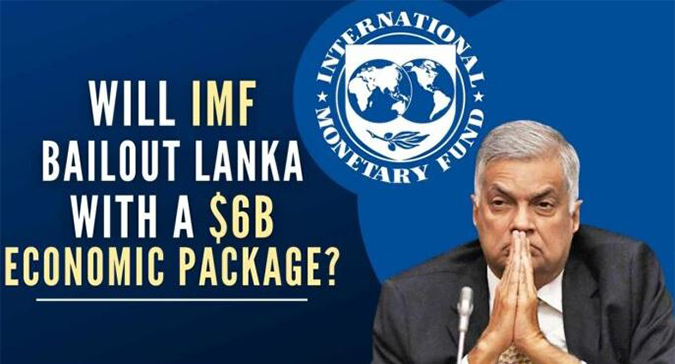
By Uditha Devapriya

China has backed Sri Lanka’s debt plan. To be more specific, as Bloomberg reported on Tuesday, it has “given assurances that it will support Sri Lanka’s debt restructuring.” This is a significant breakthrough, and it means that, in the coming weeks, the country will receive that much hyped and much sought after IMF Extended Fund Facility (EFF) bailout of USD 2.9 billion. The bailout will be disbursed in a series of tranches over four years: not enough to salvage a debt-ridden economy, even on Sri Lanka’s scale, but, according to certain analysts at least, enough to assure investors to return to the country.
Restoring investor confidence in a country like Sri Lanka, with the kind of government it has and the foreign policy shifts it has gone through over the last year, is of course not a big problem. Unlike most other countries which are reeling from debt crises and the possibility of sovereign default, Sri Lanka has had it good. China’s assurances did take time, but the fact of the matter is that multilateral institutions, the IMF in particular, were amenable to the government’s reform package: the IMF’s recent declaration on the much reviled tax hikes, for instance – it called them painful but necessary, in line with international best practices – shows very clearly that the world’s most powerful financial institution is not in fundamental disagreement with the UNP-SLPP regime’s economic policies.
That said, getting China’s assurances was not easy. Were it not for Indian assistance last year, Sri Lanka would have gone Lebanon’s way: a point that is not lost on both countries’ political elites and diplomatic officials, as they ramp up efforts to integrate their power and energy sectors. A recent Sunday Times political column reported that in 2022, then Finance Minister Basil Rajapaksa was on the verge of negotiating a significant loan from China. This might have been on the scale of the USD 2 billion loan rollover that Pakistan is expecting from Beijing. In Sri Lanka’s case, though, that loan never materialised, because the country was mired in a crisis so big that the government had no choice but to resign.
Against this backdrop, India blinked before China could, and it made good use of Sri Lanka’s vulnerabilities, sending it the oil and gas it needed to keep its power grid and transportation system running. When it exhausted these credit lines in July, Sri Lanka had no alternative to look for: it desperately sent one delegation after another to Qatar and to Russia, but none of them bore fruit. The lesson there was clear: without Indian assistance, Sri Lanka would be nowhere. Thus, as the country got soaked in one uprising after another, after one President left and the man he had appointed as Prime Minister took his place, the government could only veer sharply to the right, becoming probably the most neoliberal any government in Sri Lanka has become since the 1980s. Whatever populist trappings the Rajapaksas had infused into this neoliberal-authoritarian setup vanished overnight.
It would be ridiculous to think that the big powers in the Indo-Pacific – India, China, and the US, and the wider West through the QUAD Alliance – ignored these developments. The government’s reluctance to look for alternative energy sources, even as it was clear that Sri Lanka could make use of Russian oil and gas, pointed at one thing: the country would not go beyond the IMF line, which by extension was Washington’s line.
The West seems to have taken this bait, which explains how, despite the cosmetic criticisms of the government’s handling of protesters, there is much more engagement by these countries with this regime. To be as blunt as possible, in Ranil Wickremesinghe the West found someone who could, as he indeed did, push forward the economic reforms they were advocating. For his part Wickremesinghe pursued a policy that was in line with IMF diktat, but that was also somewhat in line with previous policy, as his government’s stance on the China-Taiwan Question and the Russia-Ukraine War clearly illustrated.
There is a simple explanation why the government, though touting a pro-West line in its economic policies, has not gone completely pro-Western in its foreign policies. To be sure, this regime has no official foreign policy. But at a book launch three months ago, Foreign Minister Ali Sabry admitted that “for Sri Lanka, everyone is important.” More recently, in parliament, he conceded that the country is no longer non-aligned, but “multi-aligned.” Whatever they mean, the rationale for these statements is clear. Sri Lanka is a small state, and it cannot sidestep one bloc over another. Indeed, not even when its economy was in better shape did it indulge in ideological posturing vis-à-vis its foreign relations – and in the rare circumstances that it did, as in the early years of its independence, it had to backtrack quickly, leading to landmark developments like the Rubber-Rice Pact.
The Aeroflot controversy and the Yuang Wang 5 episode showed that while the country was aligned with the West over its economic policies and reforms, it could, did, and had to engage in a balancing act where other powers were concerned. It could not shirk India and the US – which anyway had, in the eyes of the public, given it the money the country had so desperately wanted – and yet it could not avoid China and Russia either.
This does not mean the West, or for that matter India, has given up on Sri Lanka. Quite the contrary. Last month, for instance, a high-level German delegation met the President and informed him that the country’s human rights record put its GSP Plus status in jeopardy. It then asked for Sri Lanka’s support at the recent UN resolution against Russia – a resolution which revealed a split between the Global North and the Global South. These developments should tell us that the West is subtly pressurising Sri Lanka, and that it is not above using the country’s dependence on its markets to push forward its foreign policies.
For now, it seems as though the West is satisfied with Sri Lanka’s foreign policy trajectory, though that trajectory is by no means as pro-Western as it was in the 1980s. This is not to say that the West will go all the way up or down with this regime. But the government is besieged by an array of Opposition parties, and the more popular among them are veering to the Left. The most popular among them is the JVP-NPP, which, despite its criticism of Chinese projects, has been sympathetic to China. The JVP-NPP has also come out against the 13th Amendment: a point that will definitely not be to India’s liking.
Since of late, these parties have been critical of IMF negotiations as well: speaking at a rally, for instance, Sunil Handunetti accused the government of becoming ecstatic “whenever they get money from the World Bank.” More recently, Vijitha Herath lambasted its reckless pursuit of IMF reforms, stating that they were not the solution to the crisis and they would ultimately put the country back in debt. By contrast, the main Opposition, the Samagi Jana Balavegaya (SJB) has been critical of parties opposing IMF reforms, arguing that there is no alternative. Indeed, far from criticising neoliberal austerity, the SJB has been eager to depict itself as more business-friendly and pro-Western than its competitors.
The only counteracting force within the SJB, ironically, has been Sajith Premadasa, its leader. While the neoliberal right-wing in the party has been promoting IMF visions of neoliberal austerity, Premadasa, the son of a populist president, has been making statements that are the obverse of his colleagues’ more liberal, centre-right position. Thus, barely a day after he publicly announced his support for the death penalty against terrorists and drug-dealers, Eran Wickramaratne, an MP known for his advocacy of neoliberal reforms and liberal values, admitted that the party had no definitive stance on the issue.
Not unlike the government, the Samagi Jana Balavegaya does not have a proper, cohesive foreign policy. Its focus has been on economic reform, as its recent press conferences and seminars make clear. Recent statements, however, indicate that it is clarifying its foreign policy stances also: at the recent parliamentary debate where Minister Ali Sabry made his remark about multi-alignment, it was Eran Wickramaratne who made the case against non-alignment, observing that in the present setup, it no longer made sense to pursue such a policy. Given geopolitical realities, though, the SJB has been as pragmatic as the JVP-NPP on issues like Russia-Ukraine and China: hence MP Wickramaratne’s outburst against foreign interests trying to set up military bases in the country. Nevertheless, the JVP-NPP has been more vocal about such topics, and it has taken the Left’s position on them.
Given all this, the government, which is led by a president who is hawkish on economic reform and ostensibly dove-ish on ethnic relations, has cultivated better relations with the West than has the Opposition. This may not sit in well with liberals who idealise and look up to the West as some sort of saviour. But it does sit in well with the harsh world of realpolitik: a world that the current President is only too familiar with.
The writer is an international relations analyst, researcher, and columnist who can be reached at udakdev1@gmail.com.



 The abduction of Venezuelan President Nicolas Maduro by US special forces on January 3rd and his coercive conveying to the US to stand trial over a number of allegations leveled against him by the Trump administration marks a dangerous degeneration of prevailing ‘world disorder’. While some cardinal principles in International Law have been blatantly violated by the US in the course of the operation the fallout for the world from the exceptionally sensational VVIP abduction could be grave.
Although controversial US military interventions the world over are not ‘news’ any longer, the abduction and hustling away of a head of government, seen as an enemy of the US, to stand trial on the latter soil amounts to a heavy-handed and arrogant rejection of the foundational principles of international law and order. It would seem, for instance, that the concept of national sovereignty is no longer applicable to the way in which the world’s foremost powers relate to the rest of the international community. Might is indeed right for the likes of the US and the Trump administration in particular is adamant in driving this point home to the world.
Chief spokesmen for the Trump administration have been at pains to point out that the abduction is not at variance with national security related provisions of the US Constitution. These provisions apparently bestow on the US President wide powers to protect US security and stability through courses of action that are seen as essential to further these ends but the fact is that International Law has been brazenly violated in the process in the Venezuelan case.
To be sure, this is not the first occasion on which a head of government has been abducted by US special forces in post-World War Two times and made to stand trial in the US, since such a development occurred in Panama in 1989, but the consequences for the world could be doubly grave as a result of such actions, considering the mounting ‘disorder’ confronting the world community.
Those sections opposed to the Maduro abduction in the US would do well to from now on seek ways of reconciling national security-related provisions in the US Constitution with the country’s wider international commitment to uphold international peace and law and order. No ambiguities could be permitted on this score.
While the arbitrary military action undertaken by the US to further its narrow interests at whatever cost calls for criticism, it would be only fair to point out that the US is not the only big power which has thus dangerously eroded the authority of International Law in recent times. Russia, for example, did just that when it violated the sovereignty of Ukraine by invading it two or more years ago on some nebulous, unconvincing grounds. Consequently, the Ukraine crisis too poses a grave threat to international peace.
It is relevant to mention in this connection that authoritarian rulers who hope to rule their countries in perpetuity as it were, usually end up, sooner rather than later, being a blight on their people. This is on account of the fact that they prove a major obstacle to the implementation of the democratic process which alone holds out the promise of the progressive empowerment of the people, whereas authoritarian rulers prefer to rule with an iron fist with a fixation about self-empowerment.
Nevertheless, regime-change, wherever it may occur, is a matter for the public concerned. In a functional democracy, it is the people, and the people only, who ‘make or break’ governments. From this viewpoint, Russia and Venezuela are most lacking. But externally induced, militarily mediated change is a gross abnormality in the world of democracy, which deserves decrying.
By way of damage control, the US could take the initiative to ensure that the democratic process, read as the full empowerment of ordinary people, takes hold in Venezuela. In this manner the US could help in stemming some of the destructive fallout from its abduction operation. Any attempts by the US to take possession of the national wealth of Venezuela at this juncture are bound to earn for it the condemnation of democratic opinion the world over.
Likewise, the US needs to exert all its influence to ensure that the rights of ordinary Ukrainians are protected. It will need to ensure this while exploring ways of stopping further incursions into Ukrainian territory by Russia’s invading forces. It will need to do this in collaboration with the EU which is putting its best foot forward to end the Ukraine blood-letting.
Meanwhile, the repercussions that the Maduro abduction could have on the global South would need to be watched with some concern by the international community. Here too the EU could prove a positive influence since it is doubtful whether the UN would be enabled by the big powers to carry out the responsibilities that devolve on it with the required effectiveness.
What needs to be specifically watched is the ‘copycat effect’ that could manifest among those less democratically inclined Southern rulers who would be inspired by the Trump administration to take the law into their hands, so to speak, and act with callous disregard for the sovereign rights of their smaller and more vulnerable neighbours.
Democratic opinion the world over would need to think of systems of checks and balances that could contain such power abuse by Southern autocratic rulers in particular. The UN and democracy-supportive organizations, such as the EU, could prove suitable partners in these efforts.
All in all it is international lawlessness that needs managing effectively from now on. If President Trump carries out his threat to over-run other countries as well in the manner in which he ran rough-shod over Venezuela, there is unlikely to remain even a semblance of international order, considering that anarchy would be receiving a strong fillip from the US, ‘The World’s Mightiest Democracy’.
What is also of note is that identity politics in particularly the South would be unprecedentedly energized. The narrative that ‘the Great Satan’ is running amok would win considerable validity among the theocracies of the Middle East and set the stage for a resurgence of religious fanaticism and invigorated armed resistance to the US. The Trump administration needs to stop in its tracks and weigh the pros and cons of its current foreign policy initiatives.

 The British School in Colombo (BSC) hosted its Annual Christmas Carnival 2025, ‘Gingerbread Wonderland’, which was a huge success, with the students themseles in the spotlight, managing stalls and volunteering.
The event, organised by the Parent-Teacher Association (PTA), featured a variety of activities, including: Games and rides for all ages, Food stalls offering delicious treats, Drinks and refreshments, Trade booths showcasing local products, and Live music and entertainment.

The carnival was held at the school premises, providing a fun and festive atmosphere for students, parents, and the community to enjoy.
The halls of the BSC were filled with pure Christmas magic and joy with the students and the staff putting on a tremendous display.
Among the highlights was the dazzling fashion show with the students doing the needful, and they were very impressive.

The students themselves were eagerly looking forward to displaying their modelling technique and, I’m told, they enjoyed the moment they had to step on the ramp.
The event supported communities affected by the recent floods, with surplus proceeds going to flood-relief efforts.

 Hi! This week I’m giving you some beauty tips so that you could look forward to enjoying 2026 with a glowing younger looking skin.
Face wash for natural beauty
* Avocado:
Take the pulp, make a paste of it and apply on your face. Leave it on for five minutes and then wash it with normal water.
* Cucumber:
Just rub some cucumber slices on your face for 02-03 minutes to cleanse the oil naturally. Wash off with plain water.
* Buttermilk:
Apply all over your face and leave it to dry, then wash it with normal water (works for mixed to oily skin).
Face scrub for natural beauty
Take 01-02 strawberries, 02 pieces of kiwis or 02 cubes of watermelons. Mash any single fruit and apply on your face. Then massage or scrub it slowly for at least 3-5 minutes in circular motions. Then wash it thoroughly with normal or cold water. You can make use of different fruits during different seasons, and see what suits you best! Follow with a natural face mask.
Face Masks
* Papaya and Honey:
Take two pieces of papaya (peeled) and mash them to make a paste. Apply evenly on your face and leave it for 30 minutes and then wash it with cold water.
Papaya is just not a fruit but one of the best natural remedies for good health and glowing younger looking skin. It also helps in reducing pimples and scars. You can also add honey (optional) to the mixture which helps massage and makes your skin glow.
* Banana:
Put a few slices of banana, 01 teaspoon of honey (optional), in a bowl, and mash them nicely. Apply on your face, and massage it gently all over the face for at least 05 minutes. Then wash it off with normal water. For an instant glow on your face, this facemask is a great idea to try!
* Carrot:
Make a paste using 01 carrot (steamed) by mixing it with milk or honey and apply on your face and neck evenly. Let it dry for 15-20 minutes and then wash it with cold water. Carrots work really well for your skin as they have many vitamins and minerals, which give instant shine and younger-looking skin.

‘Dates have the highest sugar content to fight Coronavirus’

Sunday Island 27 December – Headlines

#SundayIsland 17th December – Headlines

Sunday Island – 28th March

Sunday Island Headlines – 21 March

Sunday Island – 21st February – Headlines
-

 News3 days ago
Interception of SL fishing craft by Seychelles: Trawler owners demand international investigation
-
 News3 days ago
Broad support emerges for Faiszer’s sweeping proposals on long- delayed divorce and personal law reforms
-
 News4 days ago
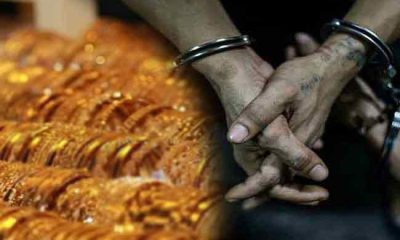
Private airline crew member nabbed with contraband gold
-

 News2 days ago
Prez seeks Harsha’s help to address CC’s concerns over appointment of AG
-

 News2 days ago
Govt. exploring possibility of converting EPF benefits into private sector pensions
-

 Features3 days ago
Educational reforms under the NPP government
-

 News6 days ago
Health Minister sends letter of demand for one billion rupees in damages
-

 Features4 days ago
Pharmaceuticals, deaths, and work ethics