
Sports
The English expedition: puzzles to unravel

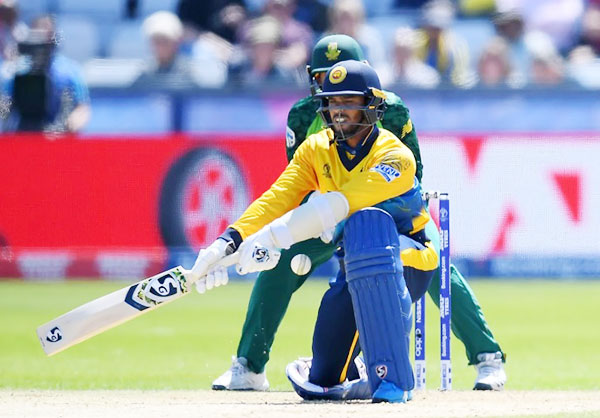
The number five slot will be occupied by Dananjaya de Silva who is fast evolving in to Tilekeratne Dilshan lite version.
by Aravinthan Arunthavanathan
Nuwan Pradeep nails an accurate yorker. The ball trickles down to fine leg. It must be just two, but inexplicably turns into a three. The game that was almost sealed is yet alive. Next ball, the final ball of the innings, Pradeep cannot repeat the same. Liam Plunkett, England’s number ten smacks it over long off to tie the game. Early in the day England were six down for 92 and eight down for 235 requiring more than 50 from 28 balls. Still, they managed to tie. This is how the first game of the last bilateral ODI series Sri Lanka and England played in the UK began. This in a way symbolizes the journey both teams have taken ever since. England have found ways to win from hopeless situations whereas Sri Lanka have managed the opposite. This is mainly because England have always managed to find answers to all the questions they were faced with. In fact, they have provided distinction answers thinking out of the box, resulting in them being crowned as the World Champions in 2019. Sri Lanka on the other hand have not even figured out which subject the questions are being asked from. As both teams square off this week their priorities are opposite. England possess squads which outweigh Sri Lanka in every aspect. Most of them are hot picks in T20 leagues. Sri Lanka on the other hand is composed of a bunch of players who do not even find a mention during most auctions. Nothing to be disheartened. Sri Lanka have often punched above their weight when unnoticed. Post 2015, that is the only hope that has kept fans attached to a team which has forever being on life support. But there is hope, in fact plenty of it. The law of averages should correct the trend sooner rather than later. That statement too is more out of hope than conviction. The selectors have walked the talk for once. Almost the same team apart from Ashen Bandara have found a place in the flight to UK. Pathum Nissanka looked set to be another casualty, but thankfully the selectors have chosen otherwise. He need not play, but merely existing in the set up will benefit him. Consistency in policies will be the key to build trust in a broken system where mistrust is the norm. Sri Lanka have plenty of questions. The consistency at the top, combinations to overcome the middle overs muddle with bat and ball and players to step up under pressure at the death are problems of highest priority. With plenty of options at the top of the innings Danushka Gunetileke will be looked upon with keen interest. It’s time to put aside his inconsistencies and deliver. With a top-heavy unit Danushka isn’t indispensable. Avishka Fernando on the other hand ever since hooking Joffra Archer out of the ground in 2019 has grown not on only in stature but apparently in circumference too. Now that the latter is addressed, fans would hope Avishka would be in the news for his batting and not fitness. The two Kusals have been entrusted with massive responsibility of leadership and forming the backbone of the batting. Kusal Perera’s ambidexterity with the bat and Kusal Mendis’s fleet footedness have the potential to help Sri Lanka break the shackles in the middle overs as batsmen they can’t ask for more than the true surfaces of UK. It is worth noting Mahela Jayawardena too heralded a golden run for Sri Lanka in 2006 with some high-class batting on the England tour. It was a turn around for a struggling unit at that point. Both the Kusal’s can do well to orchestrate a revival following those footsteps. The number five slot will be occupied by Dananjaya de Silva who is fast evolving in to Tilekeratne Dilshan lite version. An ultra-lite version even would do a world of good for the team balance. Danajaya’s bowling adds much needed balance to the side. If Niroshan Dickwella is to play in the middle order it will be a race between Dickwella and Dasun Shanaka for the number six slot. Dickwella’s busy approach at the crease would make him an ideal option in the middle overs as well. A phase Sri Lanka have struggled for an eternity. He may well help overcome the spin strangle that often throttles Sri Lanka. Dasun and Dickwella whoever plays would play a huge role if Sri Lanka are to turn the tide. In a team which lacks muscle Dasun and Wanindu Hasranga have a major role in propelling the tail end of the innings. Being able to do so consistently under pressure will be the key for Sri Lanka’s turn around in fortunes. Sri Lanka would have to try different combinations to crack the code to succeed in this pivotal phase. All teams that are performing well are relying on a superstar allrounder. If there is one person who can be Sri Lanka’s savior in this regard it has to be Wanindu Hasaranga. Proper batting capabilities with a hard to pick googly makes Wanindu a hot stock in international cricket. How successful would he be on the biggest stage against the masters of white ball format makes a case for compelling viewing. The fast-bowling all-rounder’s role would be taken by Isuru Udana, who has promised a lot in recent past. So much so that even Virat Kohli and Mike Hesson entrusted him with closing the death overs for Royal Challengers Banglore not so long ago. Ever since his performance has been attracting denigration. But in the interest of Sri Lankan cricket, we shall hope Isuru finds his charm back leaving no room for the above. Isuru and Wanindu will provide the additional dimension Sri Lanka is looking for, to be a force to reckon with. Dananjaya Lakshan is a name sure to keep Udana on his heels. Especially following the praise heaped by Lasith Malinga who without a doubt has one of the best cricketing brains. Laskhan will surely get a look in at some point. How easily he graduates to international cricket is to be seen with interest.
In the spin department mystery is mysteriously missing in a nation that churned out masters of spin. Ramesh Mendis looked impressive in the final game in Bangladesh. With confidence behind him, Mendis deserves at least a run in the first few games. Akila Dananjaya and Lakshan Sandakan have promised for long but not yet become reliable. Will they ever graduate is an eternal question plaguing many fans. If England provides a hint regarding the answer either way, it would be a welcome relief. Pravin Jayawickrama can wait. It would be in the best interest of the youngster not to expose him to a monster line up. The same can be applied to the other youngsters who have got a well-deserved look in as well.
In the fast-bowling department, Dushmantha Chameera will be expected to lead as he did in Bangladesh. The rest of the slots will be up for grab on rotation. Death bowling and breakthroughs in the middle remain a concern. Whether the selectors will fall back on Nuwan Pradeep’s experience going forward will be interesting to see. Sri Lanka have enough ammunition. Who decides to take the opportunity is what is left to be seen. England haven’t been a happy hunting ground for bowlers. Hence the hopes can be subdued. Attitude and the heart for the fight would be what fans would love to see. Hasaranga will be the key in the middle with Chameera and Udana expected to look after the death overs. Overall Sri Lanka’s present state is not a reflection of scarcity of resources. It is instead an outcome of a messed up eco system. It’s not a problem arising out of scarcity but a problem arising out of no clear-cut role descriptions and lack of trust. Talent is plenty but that’s the least that matters on the international stage. The bigger nations have thrived upon proper systems being put in place, supplemented by carefully crafted strategies built upon big data. While we have no insight about the later, Sri Lanka clear lacks a framework. For long we have been the troubled child who promises but fails to deliver. The child has the genes to succeed but the chaos at home is not providing the ideal launching pad. We have spoken a lot about getting the home in order, nothing seems to have changed. Chances are it may not any time soon. But at least there is a group of decision makers in selectors who are showing signs of consistency. Would that be adequate to make the English tour any better? Only time will reveal. But for the diehard fan there are enough puzzles to be unraveled to make a compelling case to view the proceedings in UK sacrificing precious sleep
(The Author’s blog can be found at Cricketing perspectives on facebook)


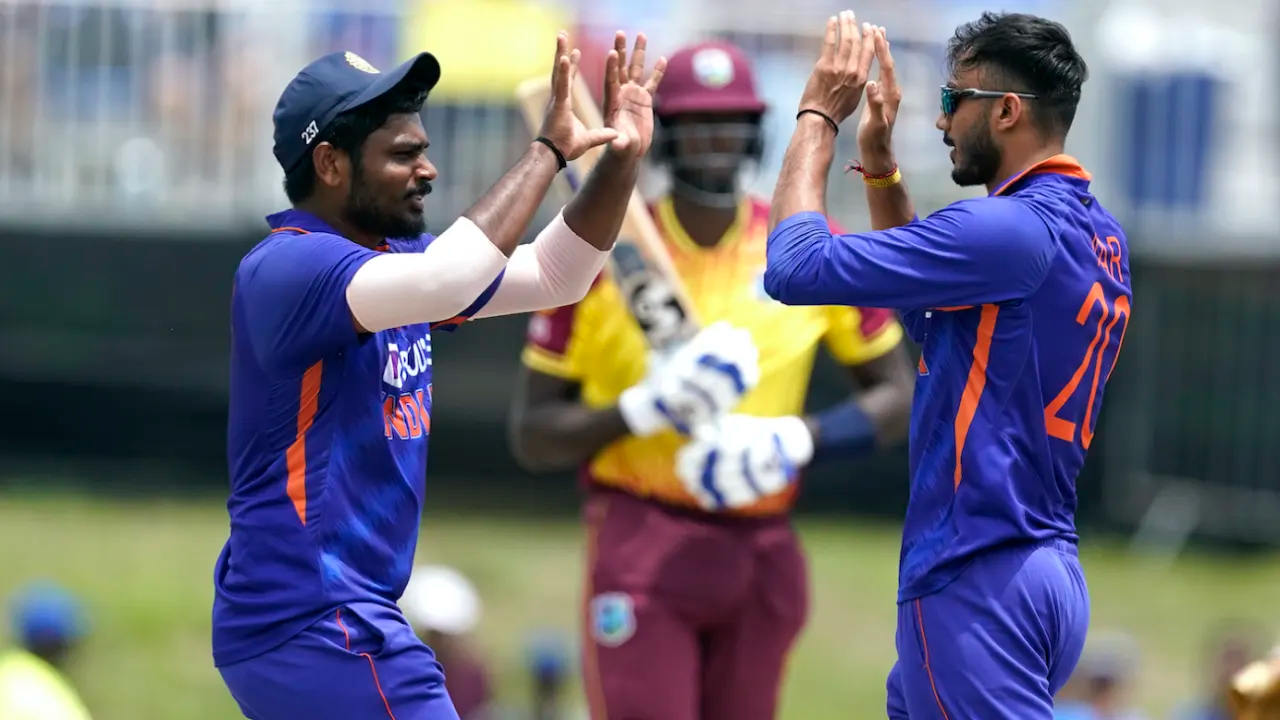
Zimbabwe won the toss and asked India to bat first in what was practically a must-win match for both sides. Thanks to South Africa’s win over Weszt Indies minutes before the toss, India now need to just win. Zimbabwe, though, need to win big.
Sikandar Raza, the Zimbabwe captain, said there was grass and moisture on the surface, and that he wanted his seamers to use it early. Raza didn’t even go for an X-ray on his injured hand lest it show a fracture and force him out of the big match.
Thanks to Raza’s call to field, we were to soon find out the batting position of SanjunSamson, whose inclusion brought about a huge cheer from the stands in Chennai, which will now be his home during the IPL. A Chennai boy, though, went out. Washington Sundar made way for the vice-captain Axar Patel, who had been left out for tactical reasons against South Africa.
Samson replaced a lower middle-order hitter Rinku Singh, who might or might not have his mind on other things. He made a quick visit to Delhi with his ailing father before rejoining the squad on the eve of this match. How Samson would fit in the batting was intriguing, but one thing was made clear: he was going to take the big gloves behind the wicket later in the night.
Zimbabwe made one change to go with their reading of the conditions. Legspinner Graeme Cremer went out for fast bowler Tinotenda Maposa.
India: Abhishek Sharma, Sanju Samson (wk), Ishan Kishan, Suryakumar Yadav (capt.), Tilak Varma, Hardik Pandya, Shivam Dube, Axar Patel, Arshdeep Singh, Varun Chakravarthy, Jasprit Bumrah
Zimbabwe: Tadiwanashe Marumani (wk), Brian Bennett, Dion Myers, Ryan Burl, Sikandar Raza (capt.), Tony Munyonga, Tashinga Musekiwa, Brad Evans, Tinotenda Maposa, Blessing Muzarabani, Richard Ngarava
[Cricinfo]
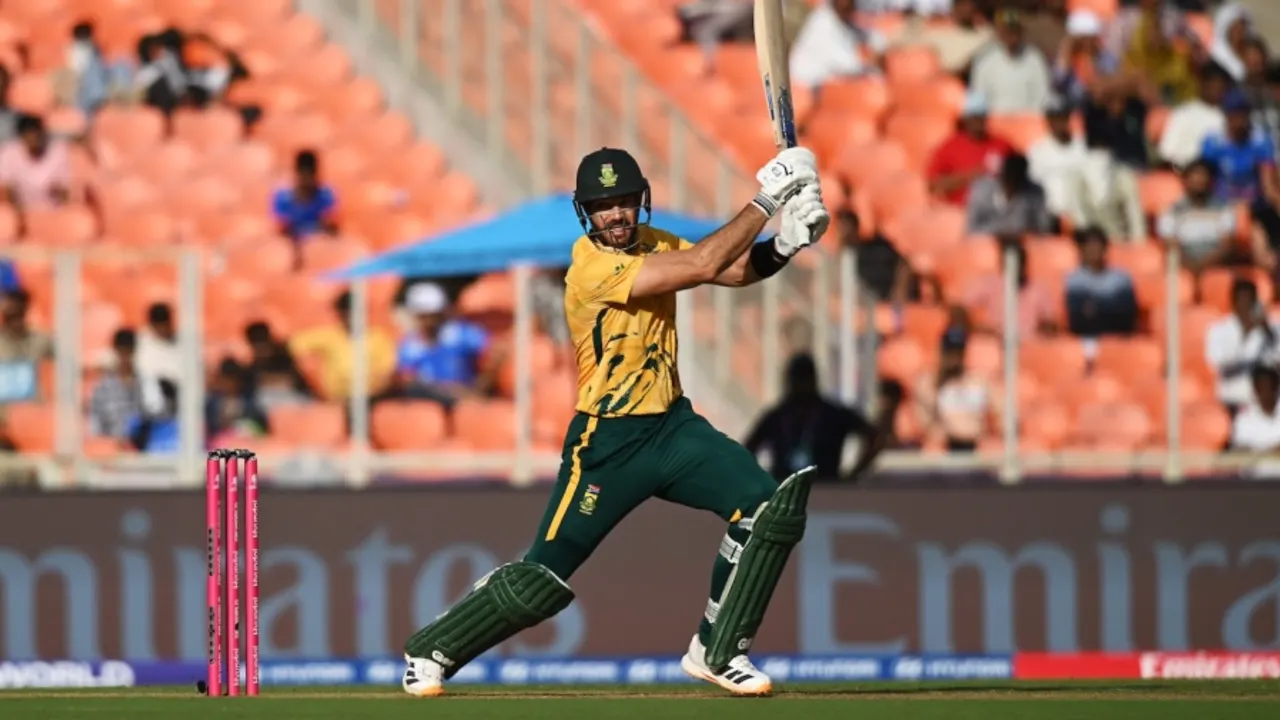
Aiden Markram’s 82 not out led South Africa to a nine wicket victory over West Indies that, while not confirming his side’s semi-final place just yet, underlined why many believe the Proteas could finally lift the T20 World Cup. In this meeting of the last two unbeaten sides at this tournament, South Africa were ruthless, maintaining their 100 per cent record with 23 balls to spare.
Markram’s third half-century of the tournament – his 22nd fifty-plus score in T20Is – made light work of a 177 chase. He and Quinton de Kock put on 95, their highest opening stand of the tournament, skewering whatever belief West Indies had picked up at the back end of a first innings that started disastrously.
Inserted on a tacky-looking Ahmedabad surface, West Indies were 83 for 7 in the 11th over, before a record T20I stand of 89 for the eighth wicket between Jason Holder and Romario Shepherd.
Lungi Ngidi (3 for 30) and Kagiso Rabada’s (2 for 22) were the chief architects of the early stages of that collapse, with Corbin Bosch (2 for 31) also chiming in, profiting from batters’ unrelenting pursuit of boundaries.
Shepherd’s unbeaten 52 – a maiden T20I half-century, sealed with an inside edge for four off the final ball of the innings – and a well-managed 49 from Holder was a part change of tact. But even they focused on finding the fence throughout their 57 deliveries together rather than ticking over to bat time, even if West Indies were able to use all 20 overs.
South Africa were far from perfect, dropping four catches and being a little passive in the field. But they took it to West Indies’s bowlers. All six used by Shai Hope ended up wearing economy rates in double figures, as de Kock’s 47 off 24) and then Ryan Rickleton’s unbeaten 45 off 28 dovetailed neatly as left-handed foils to Markram’s belligerent march to the finish line.
Brief scores:
South Africa 177 for 1 in 16.1 overs (Aiden Markram 82*, Quinton de Kock 47, Ryan Rickelton 45*; Roston Chase 1-46) beat West Indies 176 for 8 in 20 overs (Brandon King 21, Shai Hope 16, Sherfane Rutherford 12, Romario Shepherd 52, Jason Holder 49, Mathew Forde 11; Lungi Ngidi 3-20, Kagiso Rabada 2-22, Corbin Bosch 2-31) by nine wickets
[Cricinfo]
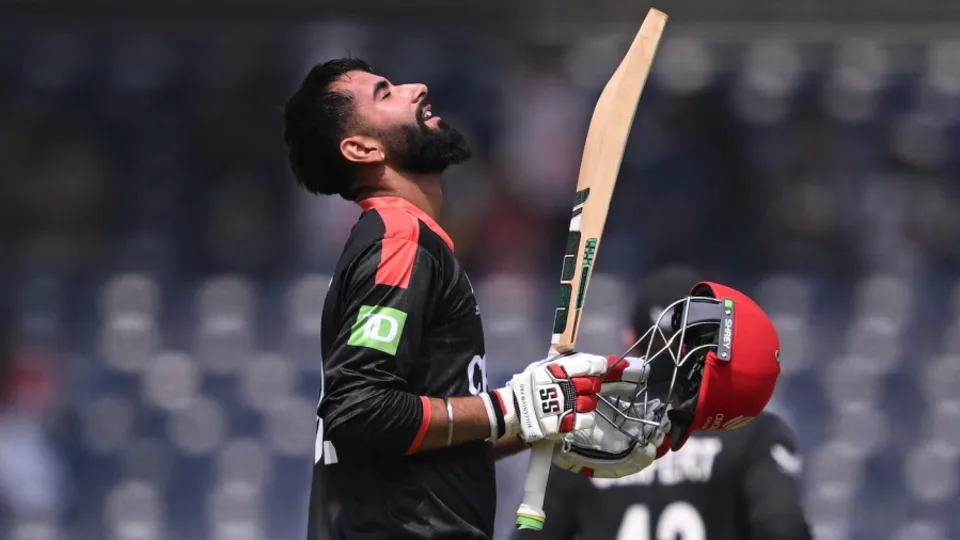
The 2026 T20 World Cup was one where the Associate teams shone the brightest, often pushing the Full Members to their limits. Who are the players that stood out at the World Cup? Here’s the Associate’s team of the tournament.
Yuraj Samra
Canada (144 runs at 36.00; strike rate 156.52)
The 19-year-old opener became the first Associate batter to score a T20 World Cup century against New Zealand. In his tournament-defining innings, he stepped down to Matt Henry, took apart James Neesham and dispatched Cole McConchie. But beyond the 110, he couldn’t cross 17 in the other three outings.
Shayan Jahangir
USA, wk (91 runs at 30.33; strike rate 137.87)
This wasn’t a great tournament for the Associate glovemen, so wicketkeeper Jahangir takes the other opener’s spot. Against Pakistan, with six team-mates falling for single-digit scores, Jahangir gave USA hope of a win with his 34-ball innings that fell one run short of a half-century. On the spin-friendly SSC surface, he dominated Saim Ayub, Mohammad Nawaz and Abrar Ahmed, but failed to replicate the same form in the other games.
Bas de Leede
Gerhard Erasmus
Namibia, capt (seven wickets at 11.85; economy 7.54)
The Namibia captain and allrounder did not have a productive time with the bat but he stood up with the ball, taking seven wickets. His best performance was 4 for 20, where the variations in his delivery stride helped maintain an economy of 5.00, even as India posted a strong 209. He dismissed Ishan Kishan, Tilak Varma, Hardik Pandya and Axar Patel. He also took 2 for 27 against USA and 1 for 25 against Pakistan.
Shubham Ranjane
USA (141 runs at 70.50; strike rate 180.76)
Ranjane produced multiple impact knocks against big teams. Facing mobility issues against India, Ranjane launched a 22-ball 37 by counterattacking against Pandya, Varun Chakravarthy and Mohammed Siraj. Then, against Pakistan, his 30-ball 51 didn’t let Pakistan rest easy. His 24-ball 48 against Netherlands gave USA an imposing 196. His medium-pace bowling also gave USA a crucial sixth-bowling option.
Ben Manenti
Italy (138 runs at 46.00; five wickets at 20.60)
The elder Manenti brother was an X-factor in Italy’s maiden campaign. His 2 for 9 in four overs deflated Nepal’s hopes and earned Italy their maiden World Cup win. His 25 – ball 60 against England kept his opponents on their toes. His 31-ball 52 against Scotland was another standout. Add in the two-for against West Indies and Ben Manenti has the highest impact-per-match numbers according to ESPNcricinfo’s metrics.
Michael Leask
Scotland (nine wickets at 13.55; economy 7.62)
Against Italy, Leask produced an explosive five-ball unbeaten 22 in the 20th over to take Namibia past 200 in Kolkata and then returned figures of 4 for 17 with his offspin. He wasn’t a big turner of the ball, but came from around the wicket to strangle right-hand batters, dismissing Harry Brook against England, too. Leask also took all three Nepal wickets, against right-handers, in Scotland’s final World Cup game.
The right-arm seamer from USA started the World Cup with a bang. A three-wicket over in the powerplay against India sent the Wankhede stadium into silence as he eventually finished with 4 for 25. That spell left India feeling very uncomfortable at halftime. Then against Pakistan, he went 4 for 25 again, relying on his hard-length deliveries that forced attacking shots into mis-hits. A further five scalps against fellow Associates left him with 13 wickets in four games, which, at the time of writing, remains the most in this tournament.
Aryan Dutt

US and Iran hold talks seen as crucial to prevent conflict

Zimbabwe opt to bowl, include Maposa; Samson, Axar back for India

Markram, bowlers lead South Africa’s rout of West Indies

Samra, Airee headline Associates’ team of the tournament

Maharoof expects ‘some hard decisions’ after Sri Lanka’s T20 World Cup exit

Matthews’ century leads West Indies to six-wicket victory

‘Dates have the highest sugar content to fight Coronavirus’

Sunday Island 27 December – Headlines

#SundayIsland 17th December – Headlines

Sunday Island – 28th March

Sunday Island Headlines – 21 March

Sunday Island – 21st February – Headlines
-

 Features5 days ago
Why does the state threaten Its people with yet another anti-terror law?
-

 Features5 days ago
Reconciliation, Mood of the Nation and the NPP Government
-

 Features5 days ago
Victor Melder turns 90: Railwayman and bibliophile extraordinary
-

 Features4 days ago
LOVEABLE BUT LETHAL: When four-legged stars remind us of a silent killer
-
 Features5 days ago
Victor, the Friend of the Foreign Press
-
 Latest News6 days ago
New Zealand meet familiar opponents Pakistan at spin-friendly Premadasa
-

 Latest News6 days ago
Tariffs ruling is major blow to Trump’s second-term agenda
-

 Latest News6 days ago
ECB push back at Pakistan ‘shadow-ban’ reports ahead of Hundred auction