
Opinion
The day I first met Prime Minister Sirimavo Bandaranaike

by Prof. Gamini Keerawella
(From the publication The BCIS At Fifty –A Journey of Learning and Dialogue)
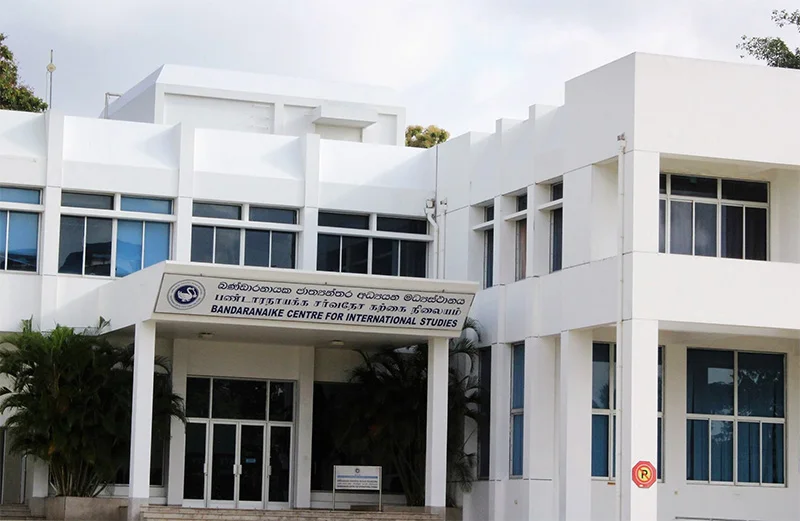
I can still vividly recall the striking image of the Bandaranaike Memorial International Conference Hall (BMICH), deeply engraved in my memory from the very first day I laid eyes on it. It was in 1976, a few months after the historic Non-Aligned Movement (NAM) Summit had been held there. As I was walking along Bauddhaloka Mawatha from the Kanatte Junction towards Thummulla, it suddenly appeared on my left. Though I had glimpsed its image in newspapers covering the NAM Summit, nothing could have prepared me for the breathtaking reality. There it stood—a pristine white colossus, gleaming in the sun—an architectural marvel that commanded both reverence and awe.
In that moment, a surge of emotion swept over me; reminiscent of how I felt when I first set foot on the University of Peradeniya as a novice undergraduate in 1968. The memory remains just as vivid—the way I stood, mesmerised by the grandeur of the university’s sprawling complexes, each a testament to human ingenuity and vision, seamlessly intertwined with the natural splendour of the Hantane mountain range and the winding beauty of the Mahaweli River valley. Both moments—Peradeniya and the BMICH—have left an indelible imprint on my life. When I was recruited to the academic staff of the University of Peradeniya in 1975, the environment of the university became an inseparable part of my life, shaping my experiences and outlook. I found myself deeply immersed in the beauty of the campus—where nature and architecture engage in a timeless, harmonious dialogue. In a similar vein, the octagonal BMICH stands as a true architectural marvel, unique in its form and scale within the country. The design is a masterpiece of modern Chinese architecture, its imposing pillars embracing the octagonal structure in a style reminiscent of a Roman Acropolis—where the ancient and the modern converge in breathtaking fusion.
In 1976, as I stood before the BCIS, it never crossed my mind that one day I would become the Executive Director of the Bandaranaike Centre for International Studies (BCIS), the educational arm of the Bandaranaike National Memorial Foundation (BMNF). Nor could I have imagined becoming a member of its Council of Management and Academic Affairs Board of BMICH.
In 1980, I took study leave and left Peradeniya for Canada to pursue my postgraduate studies. After earning my MA at the University of Windsor in 1982, I moved to the University of British Columbia (UBC) to pursue my doctorate. Having completed all the required coursework and on the verge of submitting my doctoral dissertation, I was called back to Peradeniya in May 1985 as my study leave had come to an end. Since I deeply loved my work at Peradeniya, I returned with the firm confidence that I would soon be able to return to UBC during one of the long vacations to defend my Ph.D. dissertation.
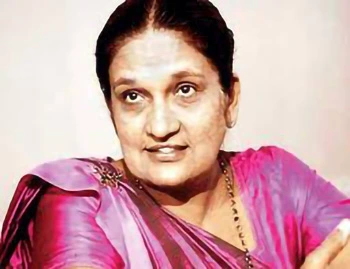
Sirimavo Bandaranaike
In 1986, while I was putting the final touches on my doctoral dissertation, I received an unexpected invitation to a regional conference at the BMICH, organised by BCIS. By then, several of my senior colleagues from the University of Peradeniya, such as Profs. S.U. Kodikara, Birty Gajameragedara, Vishwa Warnapala, K.H. Jayasinghe, P.V.J. Jayasekera, and Mahinda Werake, were already involved in BCIS’s academic programmes. I was both surprised and deeply honoured by the invitation. As a junior academic, it was an extraordinary privilege for me to engage with distinguished scholars from South Asia, including K. Subrahmanyam, K.P. Misra, K.R. Singh, and S.D. Muni from India, as well as Pervaiz Iqbal Cheema and Rasul Rais from Pakistan. I also noticed the presence of prominent journalists like Mervyn Silva and Gamini Weerakoon among the panelists, further underscoring the significance of the event. Participating in this seminar with such renowned scholars was a defining moment in my academic journey, and I believed that my senior colleagues played a role in arranging an invitation to me.
By that time, a new wing had been annexed to the main BMICH hall, and the conference was held in the adjoining building. To my surprise, Madam Sirimavo Bandaranaike, Chairperson of the BMNF and a keen supporter of BCIS, was present and actively engaged in the proceedings, adding even more significance to the event. It was the first time I found myself in close proximity to the remarkable figure of Madam Sirimavo Bandaranaike, the world’s first female Prime Minister. I was instantly struck by her commanding presence—an undeniable aura of magnanimity and charisma that left a lasting impression. Her dignified posture and quiet strength embodied the true essence of leadership and grace.
During the tea break after the inaugural session, refreshments were served in the adjoining vestibule. In one corner, a settee had been arranged, where Madam Sirimavo Bandaranaike sat, choosing to remain with the conference participants rather than retreat to a private space. Senior academics and foreign delegates naturally gravitated toward her, drawn by her presence. It was then that Mr. Ray Forbes, then the Director of BCIS, approached me, his usual stern tone breaking through the crowd as he informed me that Madam Bandaranaike wished to speak with me. When Mr. Forbes introduced me, she indicated that she wished to speak with me privately. As I stood before her, I experienced both awe and anxiety. She gestured for me to sit across from her, and in her deep, resonant voice, inquired about my studies. There was motherly warmth in her tone, yet it was coupled with an unmistakable air of authority that commanded respect. As we conversed, my fears slowly subsided. To my surprise, she knew much about my background, and it was clear this was the reason she had sought me out.
In April 1971, while still in my third year of university, I was arrested by the security forces for my involvement in the Janatha Vimukthi Peramuna (JVP) and the 1971 uprising. After nearly three years of incarceration, I was released at the end of 1973 and returned to university at the beginning of 1974. Despite the interruption to my studies, I excelled in my final examinations in 1975, which led to my recruitment to the academic staff of the Department of History—initially on a temporary basis, and later as a probationary lecturer. On the verge of completing my doctorate at one of the world’s leading universities, I shared this journey with Madam Sirimavo Bandaranaike during our conversation. She was genuinely pleased to hear about my academic progress and showed great interest in my doctoral dissertation, titled Superpower Naval Rivalry in the Indian Ocean Since 1945 and Sri Lanka’s Response. She encouraged me to actively engage in the academic programmes at BCIS. Her words of both support and expectation inspired me to contribute to the institution’s intellectual landscape.
In our brief conversation, she spoke with clarity and purpose, exhibiting the vision and decisiveness of a true leader and accomplished stateswoman. She sought to engage individuals like us in BCIS initiatives, determined to break the exclusivity surrounding the study of international affairs, which had long been confined to a small, elitist segment of society. As a public educational institution, the BCIS aspired to democratise the systematic study of International Relations, making it accessible to a broader audience. Sri Lanka, she noted, was in dire need of scholarly contributions to inform its policy-making process, particularly given the chaotic state of the country’s foreign policy at the time, with decisions being made in a haphazard manner. Recognizing the scarcity of academic research in International Relations, the BCIS aimed to become a hub for policy research, especially in areas relevant to Sri Lanka’s foreign policy. She concluded by emphasiaing the critical role the BCIS could play in fostering dialogue among scholars from across South Asia, addressing regional issues through collaboration and mutual understanding. I was deeply impressed by her vision for the BCIS, which was rooted in a spirit of social democracy, seeking to bridge divides and serve the public good.
My meeting with Madam Sirimavo Bandaranaike that day remains one of the most memorable experiences of my life. The clarity with which she articulated the vision and mission of BCIS left a lasting impression on me. She spoke with conviction about the Centre’s purpose—not just as an academic institution but also as a beacon of public education, aimed at shaping informed citizens and influencing policy. Her emphasis on the core values of the BCIS struck a chord with me. She envisioned the BCIS as a platform where scholars, policymakers, and the public could engage in meaningful discourse on international relations and diplomacy, with a focus on Sri Lanka’s unique position in the global arena. These values were not abstract ideals but guiding principles that shaped the institution’s commitment to inclusivity, accessibility, and public service.
Madam Bandaranaike’s words still resonate in my mind, reminding me of the responsibility we have to promote these social democratic principles. Her vision for the BCIS was clear: it was to be a place where the study of international relations would be democratised, where knowledge would not be the privilege of the few but a resource for the many. She understood the power of education as a tool for both social and political transformation, and her leadership reflected a deep commitment to creating a more equitable and just society. Inspired by this vision, I was determined to support and uphold the values on which the BCIS was founded.


Recently, we all held our breath when a conflict began to develop very close to Sri Lanka. The sinking of the Iranian frigate IRIS Dena in the Indian Ocean took place in international waters about 30 miles from Sri Lanka’s southern coast. As the whole world watched, the President and the Government of Sri Lanka were faced with a humanitarian crisis. A second Iranian ship was also in distress and needed assistance. Although Sri Lanka’s maritime history dates back to 5th
Century BCE, this type of geopolitical crisis has been very rare.
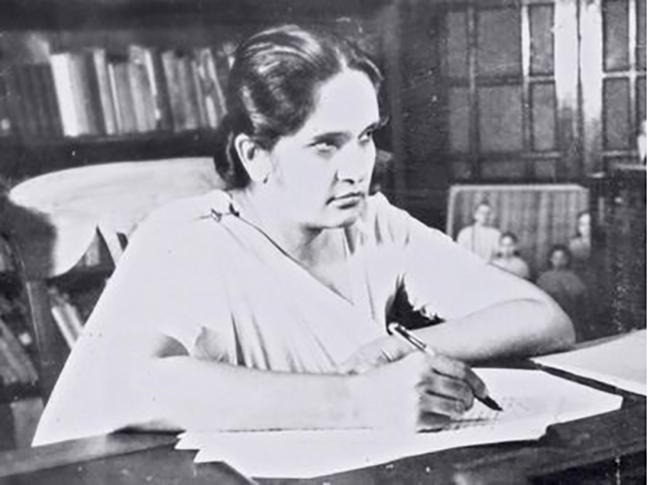
Sri Lanka considered it the moral responsibility of the country to help out those affected during this geopolitical crisis. It chose to activate its role as a custodian of the Indian Ocean. Perhaps, not many individuals are aware of Sri Lanka’s historical role in calling on the United Nations to declare the Indian Ocean a Zone of Peace. In 1971, under the leadership of the first woman prime minister of the world, Sirimavo Bandaranaike, Sri Lanka, together with Tanzania brought forth a resolution to the 26th Session of the General Assembly of the United Nations to declare the Indian Ocean a “Zone of Peace.” This was done to avoid it being used by superpower rivalries to gain military control of the region. Sri Lanka’s Ambassador Shirley Amarasinghe, the President of the 31st general Assembly of the UN was responsible for working on this resolution as with others dealing with the “Law of the Sea”.
Chandra Fernando, Educational Consultant, USA)
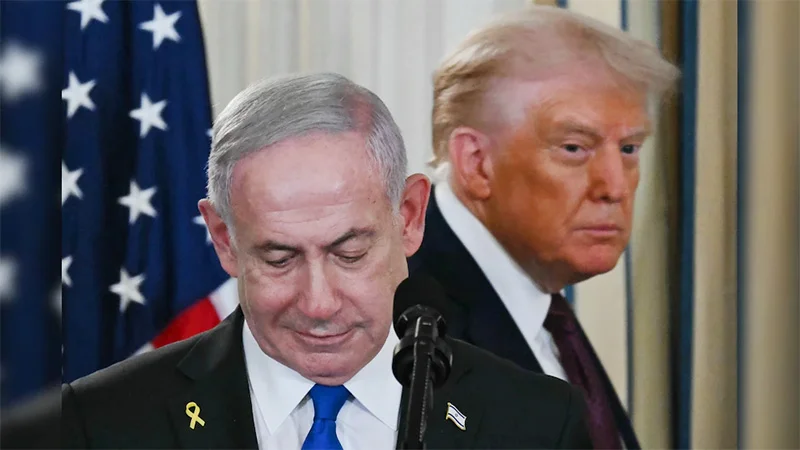
Wars often produce moments when leaders feel compelled to seek a decisive stroke that will end the conflict once and for all. History shows that such moments can generate choices that would have seemed unthinkable only months earlier. When Harry S. Truman authorised the atomic bombings of Hiroshima and Nagasaki in 1945, the decision emerged from precisely such wartime pressures. As the conflict involving the United States, Israel and Iran intensifies today, the world must ensure that a similar moment of desperate calculation does not arise again.
The lesson of that moment in history is not that such weapons can end wars, but that once the logic of escalation begins to dominate wartime decision-making, even the most unthinkable options can enter the realm of strategic calculation. The mere possibility that such debates could arise is reason enough for policymakers everywhere to approach the present conflict with extreme caution.
As the war drags on, both Donald Trump and Benjamin Netanyahu will face mounting pressure to produce decisive results. Wars rarely remain confined to their original scope once expectations of rapid victory begin to fade. Political leaders must demonstrate progress, military planners search for breakthroughs, and public narratives increasingly revolve around the need for a conclusive outcome. In this environment, media speculation about “exit strategies” or “off-ramps” for Washington can unintentionally increase pressure on decision-makers. Even well-intentioned commentary can shape the climate in which leaders make decisions, potentially nudging them toward harder, more dramatic actions.
Neither the United States nor Israel lacks the technological capability associated with advanced nuclear arsenals. The nuclear arsenals of advanced powers today are far more sophisticated than the devices used in 1945. While their existence is intended primarily as deterrence, prolonged wars have historically forced strategic communities to examine every available option. Even the discussion of such possibilities is deeply unsettling, yet ignoring the pressures that produce such debates can be dangerous.
For that reason, policymakers and societies on all sides must recognise the full range of choices that prolonged wars can place before leaders. For Iran’s leadership and its wider strategic community, absorbing this reality may be essential if catastrophic escalation is to be avoided. From Tehran’s perspective, the conflict may well be seen as existential. Yet history also shows that wars framed as existential struggles can generate the most dangerous strategic decisions.
The intellectual climate in Washington has also evolved. A number of influential voices in Washington now argue that the United States has become excessively risk-averse and that restoring global credibility requires a more assertive posture. Such arguments reflect a broader shift toward the language of renewed deterrence and strategic competition. Yet this very logic can make it politically harder for leaders to conclude conflicts without visible demonstrations of strength.
The outcome of this conflict will also be watched closely by other major powers. In 1945, the atomic decision was shaped not only by the desire to end a brutal war but also by the strategic message it sent to rival states observing the emergence of a new geopolitical era. Today, other significant powers will similarly draw lessons from how the United States manages both the conduct and the conclusion of this conflict.
This is why cool judgment is essential at this stage of the war. Whether the original decision to go to war was wise or ill-advised is now largely beside the point. Once a conflict has begun, the overriding priority must be to prevent escalation into something far more dangerous.
In such moments, the international system can benefit from the quiet diplomacy of actors that retain a degree of strategic autonomy. Among emerging nations, India stands out as a major emerging power in this regard. Despite its energy dependence on the Gulf and deep economic engagement with the United States, India has consistently demonstrated a capacity to maintain independent channels of communication across geopolitical divides.
This unique positioning may allow New Delhi to explore, discreetly and without public fanfare, avenues for de-escalation with Washington, Tel Aviv and Tehran alike. At moments of heightened tension in international politics, the world sometimes requires what might be called an “adult in the room”: a state capable of engaging all sides while remaining aligned exclusively with none.
If the present conflict continues to intensify, the value of such diplomacy may soon become evident. The most important lesson from 1945 is not only the destructive power of nuclear weapons but the pressures that can drive leaders toward choices that later generations struggle to comprehend. History shows that when wars reach their most desperate phases, restraint remains the only safeguard against catastrophe.
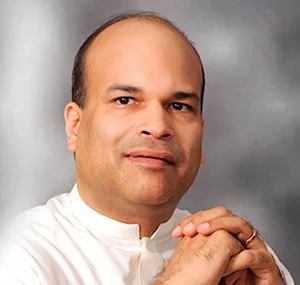
(Milinda Moragoda is a former Cabinet Minister and diplomat from Sri Lanka and founder of the Pathfinder Foundation, a strategic affairs think tank, can be contacted via email@milinda. This was published ndtv.com on 2026.03.1
by Milinda Moragoda

Dr. B.J.C. Perera (Dr. BJCP) in his article ‘Language: The symbolic expression of thought’ (The island 10.03.2026) delves deeper into an area that he has been exploring recently – childhood learning. In this article he writes of ‘a trilingual Sri Lanka’, reminding me of an incident I witnessed some years ago.
Two teenagers, in their mid to late teens, of Muslim ethnicity were admitted to the hospital late at night, following a road traffic accident. They had sustained multiple injuries, a few needing surgical intervention. One boy had sustained an injury (among others) that needed relatively urgent attention, but in itself was not too serious. The other had also sustained a few injuries among which one particular injury was serious and needed sorting out, but not urgently.
After the preliminary stabilisation of their injuries, I had a detailed discussion with them as to what needed to be done. Neither of them spoke Sinhala to any extent, but their English was excellent. They were attending a well-known international school in Colombo since early childhood and had no difficulty in understanding my explanation – in English. The boys were living in Colombo, while their father would travel regularly to the East (of Sri Lanka) on business. The following morning, I met the father to explain the prevailing situation; what needs to be done, urgency vs. importance, a timeline, prioritisation of treatment, possible costs, etc.
Doctor’s dilemma
The father did not speak any English and in conversation informed me that he had put both his boys into an International School (from kindergarten onwards) in order to give them an English education. The issue was that the father’s grasp of Sinhala was somewhat rudimentary and therefore I found that I could not explain the differences in seriousness vs, urgency and prioritisation issues adequately within the possible budget restrictions. This being the case and as the children understood exactly what was needed, I then asked the sons to ‘educate’ the father on the issues that were at hand. The boys spoke to their father and it was then that I realised that their grasp of Tamil was the same as their father’s grasp of Sinhala!
In the end I had to get down a translator, which in this case was a junior doctor who spoke Tamil fluently; explained to him what was needed a few times as he was not that fluent in English, certainly less than the boys, and then getting him to explain the situation to the father.
What was disturbing was having related this episode at the time to be informed that this was not in fact not an isolated occurrence. That there is a growing number of children that converse well in English, but are not so fluent in their mother tongue. Is English ‘the mother tongue’ of this ‘new generation’ of children? The sad truth is no and tragically this generation is getting deprived of ‘learning’ in its most fundamental form. For unfortunately, correct grammar and syntax accompanied with fluency do not equal to learning (through a language). It is the natural process of learning two/three languages (0 to 5 years) that Dr. BJCP refers to as being bilingual/trilingual and is the underlying concept, which is the title of Dr. BJCP’s article ‘Language: The symbolic expression of thought’.
“Introduction into society”
It is critical to understand at a very deep level the extent and process of what learning in a mother tongue entails. The mother’s voice is arguably the first voice that a newborn hears. Generally speaking, from that point onwards till the child is ‘introduced into society’ that is the voice he /she hears most. In our culture this is the Dhorata wedime mangalyaya. Till then the infant gets exposed to only the voices of the immediate /close family.
Once the infant gets exposed to ‘society’ he /she is metaphorically swimming in an ocean of language. Take for example a market. Vendors selling their wares, shouting, customers bargaining, selecting goods, asking about the quality, freshness, other families talking among themselves etc. The infant is literally learning/conceptualizing something new all the time. This learning process happens continuously starting from home, at friends/relatives’ houses, get-to-gathers, festivals, temples etc. This societal exposure plays a dominant role as the child/infant gets older. Their language skills and vocabulary increase in leaps and bounds and by around three years of age they have reached the so-called ‘language explosion’ stage. This entire process of learning that the child undergoes, happens ‘naturally and effortlessly’. This degree of exposure/ learning can only happen in Sinhala or Tamil in this country.
Second language in chilhood
Learning a second language in childhood as pointed out by Dr BJCP is a cognitive gift. In fact, what it actually does is, deepens the understanding of the first language. So, this-learning of a second language- is in no way to be discouraged. However, it is critical to be cognisant of the fact that this learning of the second language also takes place within a natural environment. In other words, the child is picking up the language on his own. As readily illustrated in Dr. BJCP’s article, the home environment where the parents and grandparents speak different languages. He or she is not being ‘forcefully taught’ a language that has no relevance outside the ‘environment in which the second language is taught’. The time period we (myself and Dr. BJCP) are discussing is the 0 to 5-year-old.
It does not matter whether it is two or three languages during this period; provided that it happens naturally. For as Dr. BJCP states in his article ‘By age five, they typically catch up in all languages…’ To express this in a different way, if the child is naturally exposed to a second /third language during this 0 to 5-year-old period, he /she will naturally pick it up. It is unavoidable. He /she will not need any help in order for this to happen. Once the child starts attending school at the age of 5 or later, then being taught a second language formally is a very different concept to what happens before the age of 5.
The tragedy is parents, not understanding this undisputed significance of ‘learning in/a mother tongue’, during the critical years of childhood-0 to 5; with all good and noble intentions forcefully introduce their child to a foreign tongue (English) that is not spoken universally (around them) i. e., It is only spoken in the kindergarten; not at home and certainly nowhere, where the parents take their children.
Attending school
Once the child starts attending school in the English medium, there is no further (or minimal) exposure to his /her mother tongue -be it Sinhala or Tamil. This results in the child losing the ability to converse in his/her original mother tongue, as was seen earlier on. In the above incident that I described at the start of this article, when I finally asked the father did he comprehend what was happening; his eyes filled with tears and I did wonder was this because of his sons’ injuries or was it because his decisions had culminated in a father and a son/s who could no longer communicate with each other in a meaningful way.
Dr BJCP goes on to state that in his opinion ‘a trilingual Sri Lanka will go a long way towards the goals and display of racial harmony, respect for different ethnic groups…’ and ‘Then it would become a utopian heaven, where all people, as just Sri Lankans can live in admirable concordant synchrony, rather than as a splintered clusters divided by ethnicity, language and culture’. Firstly, it must be admitted from the aspect of the child’s learning perspective (0 to 5 years); an environment where all three languages are spoken freely and the child will naturally pick up all three languages (a trilingual reality) does not actually exist in Sri Lanka.
However, the pleasant practical reality is that, there is absolutely no need for a trilingual Sri Lanka for this utopian heaven to be achieved. What is needed is in fact not even a bilingual Sri Lanka, but a Sri Lanka, where all the Sinhalese are taught Tamil and vice versa. Simply stated it is complete lunacy– that two ethnic communities that speak their own language, need to learn another language that is not the mother tongue of either community in order to understand one another! It is the fact that having been ruled by the British for over a hundred years, English has been so close to us, that we are unable to see this for what it is. Imagine a country like Canada that has areas where French is spoken; what happens in order to foster better harmony between the English and French speaking communities? The ‘English’, learn to speak French and the ‘French’ learn to speak English. According to the ‘bridging language theory of Sri Lanka’, this will not work and what needs to happen is both communities need to learn a third language, for example German, in order to communicate with one another!
Learning best done in mother tongue
eiterating what I said in my previous article – ‘Educational reforms: A Perspective (The Island 27.02.2026) Learning is best done in one’s mother tongue. This is a fact, not an opinion. The critical thing parents should understand and appreciate is that the best thing they can do for their child is to allow/encourage learning in his/her mother tongue.
This period from 0 to 5 years is critically important. If your child is exposed naturally to another language during this period, he /she will automatically pick it up. There is no need to ‘forcefully teach’ him /her. Orchestrating your child to learn another language, -English in this instance- between the ages of 0 to 5 at the expense of learning in his /her mother tongue is a disservice to that child.
by Dr. Sumedha S. Amarasekara

Asia stocks slide as US and Iran threaten to escalate war

Heat Index at Caution Level in the Western, Sabaragamuwa, Southern and North-western provinces and in Anuradhapura, Mannar and Vavuniya districts

Showers may occur at several places in the Western and Sabaragamuwa provinces and in Galle, Matara and Nuwara-Eliya districts after 2.00 pm.

Fuel price hikes trigger transport disruptions and calls for fare increases

Prof. Peiris honoured by International Institute of Rehabilitation

CMC resumes parking fees

‘Dates have the highest sugar content to fight Coronavirus’

Sunday Island 27 December – Headlines

#SundayIsland 17th December – Headlines

Sunday Island – 28th March

Sunday Island Headlines – 21 March

Sunday Island – 21st February – Headlines
-

 News5 days ago
CIABOC questions Ex-President GR on house for CJ’s maid
-

 News6 days ago
Sri Lankan marine scientist Asha de Vos honoured at UNGA opening
-

 News6 days ago
Australian HC debunks misleading travel risk claims for Sri Lanka
-

 News4 days ago
Bailey Bridge inaugurated at Chilaw
-

 Latest News7 days ago
Wednesdays declared a government holiday with effect from 18th March
-

 News4 days ago
Pay hike demand: CEB workers climb down from 40 % to 15–20%
-

 News3 days ago
CIABOC tells court Kapila gave Rs 60 mn to MR and Rs. 20 mn to Priyankara
-

 Editorial5 days ago
Couple QR-based quota with odd-even rationing