
Features
THE ANTI-CORRUPTION BILL


Dr Nihal Jayawickrama
The Minister of Justice has published an Anti-Corruption Bill. Drafted in 2018, it is described as a Bill to give effect to the 2003 UN Convention Against Corruption (UNCAC). However, it is not designed to achieve that objective in any manner or form. UNCAC, noting that the illicit acquisition of personal wealth can be particularly damaging to democratic institutions, national economies, and the rule of law, proceeds to set out in five chapters (i) Preventive Measures; (ii) Criminalization and law enforcement; (iii) International Co-operation; (iv) Asset Recovery; and (v) Technical Assistance and Information Exchange. The only reference to UNCAC in the entirety of this Bill is the designation of the Director-General (who shall not be “a convicted criminal” or a “person of unsound mind”) as the competent authority for the purpose of giving effect to UNCAC.
Asset Declarations
The Bill is 50 pages in length and contains 164 sections. The first 78 sections are concerned with the establishment of a new Commission to Investigate Allegations of Corruption. The next 13 sections require hundreds of thousands of individuals to submit Declarations of their Assets, redacted versions of which will then be made accessible to the public through a centralized electronic system. Those required to submit Declarations include even private staff of Pradeshiya Sabha members, and all staff of newspaper and media companies. Also required to do so are executives of trade unions, Army, Navy and Air Force officers, and staff officers of companies. A person submitting a Declaration is required to include the assets and liabilities of “all persons who share the common household”.
The next 68 clauses define the offences, commencing with the offering of a bribe to a Judge of the Supreme Court, and ending with bribery in private sector entities. Perhaps forgetful that section 88 permits the public to access redacted versions of every Declaration placed on the centralized electronic system, section 95 states that any person who accesses the centralized electronic system illegally will be guilty of an offence punishable with a fine of one million rupees and a sentence of eight years rigorous imprisonment.
Corruption
Twenty five years ago, Transparency International, a “not-for-profit organization” incorporated under German law (which I had the opportunity of serving as Executive Director at its international secretariat in Berlin) defined corruption as “the misuse of public power for private profit”. In that sense, the focus is essentially on the behaviour of officials in the public sector, whether politicians or civil servants, whether policymakers or administrators, through which they improperly and unlawfully enrich themselves, or those close to them, by the misuse of the public power entrusted to them. The reasons why they resort to corruption are many and varied. Some may be driven to it by poverty or the inability to match their expenses to their legitimate incomes. For others, the compelling factor is obviously avarice. Whether caused by human need or human greed, corruption has a devastating effect on the governance of a country.
Corruption involving public officials falls broadly into two categories. Conventional bribery or “petty corruption” occurs when an official demands or expects “speed money” or “grease payments” for doing an act which he or she is ordinarily required by law to do (such as processing an application for a licence, issuing an official document, clearing goods through customs, or providing a utility service), or when a bribe is paid to obtain a service which the official is prohibited from providing (such as tax evasion or avoidance of prosecution, or preferential access to state employment, housing, medical care or education).
A national household survey on corruption in a South Asian country revealed that 41% of households paid a “donation” for the admission of children into schools, while 36% made payments to or through hospital staff or other “influential persons” to secure admission into hospitals. Sixty five percent had bribed land registrars for recording a false lower sale price of a land transaction; 33% paid money to obtain electricity connections, while 32% paid less for water “by arrangement with the meter reader”. Forty seven percent were able to reduce the tax assessment on house and property “by arrangement with municipal staff on payment of money”, while 65% found it impossible to obtain trade licenses without money or influence. Sixty three percent of those involved in litigation had paid bribes to either court officials or the opponents’ lawyers, 89% of those surveyed being of the view that judges were corrupt.
“Grand corruption” occurs when a person in a high position who formulates government policy or is able to influence government decision-making, seeks, as a quid quo pro, payment, usually offshore and in foreign currency, for exercising the extensive discretionary powers vested in him or her. Grand corruption plays a significant role in four main categories of supply to government: the purchase of aircraft, ships and military supplies; the purchase of capital goods required for major industrial and agro-industrial projects; major civil engineering contracts, such as in respect of dams, bridges, highways, airports and hospitals; and the on-going purchase of bulk supplies, such as oil, fertilizers and cement, where distribution is through a parastatal company, or where there is a need for standardization, such as repeat orders for pharmaceuticals and school textbooks.
There are several reasons why, in respect of such transactions, an official may be bribed. First, a firm may pay to be included in the list of prequalified bidders. Second, it may pay for inside information. Third, a bribe may induce the official to structure the bidding specifications so that the corrupt firm is the only qualified supplier. Fourth, a firm may pay to be selected as the winning contractor. Fifth, once a firm has been selected as the contractor, it may pay to set inflated prices or to skimp on quality. While the amounts involved in these transactions may range from $100,000 to $100 million, a leading commentator with experience of Asian business dismisses the possibility of a five percent commission being paid to a senior official, a permanent secretary, a minister, or a head of state, as a “laughably low rate”.
The actual scale of corruption and the extent to which it exists in a particular country are difficult to quantify or measure in precise terms. Except for petty corruption, which many individuals may experience during their daily lives, most other forms of corruption are not immediately visible. According to an official of the Asian Development Bank, over a period of 20 years, one East Asian country is estimated to have lost $48 billion due to corruption, surpassing its entire foreign debt of $40.6 billion. An internal report of another Asian government revealed that over a decade, state assets had fallen by more than $50 billion, primarily due to deliberate undervaluing by corrupt officials responsible for a privatization programme. Studies of corruption in government procurement in several Asian countries had revealed that 20 to 100% more had been paid for goods and services.
Any decision motivated by excessive greed is likely to be both irrational and short-sighted. Apart from its direct costs in terms of lost revenue, or the diversion of funds from their intended public use into private bank accounts (it was estimated that as much as $30 billion had been deposited in foreign bank accounts by political leaders from some African countries), the indirect costs of corruption are equally disastrous. Few suppliers will be willing to absorb the costs of corruption by reducing their own margins of profit. Instead, the price is increased, or the quality of the goods or services reduced to accommodate the commission demanded.
Consequently, the ordinary citizen has to contend with sub-standard and over-priced goods and services, while the distortion of the decision-making process results in wrong suppliers or contractors being chosen, and wholly unnecessary or inappropriate purchases being made or projects undertaken. Against a background littered with “white elephants”, in an environment of uncertainty, unpredictability, and declining moral values, respect for constituted authority and, therefore, the legitimacy of government, is steadily but surely eroded.
Legal Instruments
The public expects that holders of public office will possess sufficient integrity to be able to deliver to them the services they are entitled to receive from those who govern them. In the United Kingdom, the Nolan Committee (1995) listed seven principles that the British public thought should apply to all aspects of public life. They are Selflessness, Integrity, Objectivity, Accountability, Openness, Honesty, and Leadership. Legislation incorporating these principles is widely perceived as an essential element in any counter-corruption strategy, at least for the purpose of establishing a value system that would contribute to the creation of an anti-corruption culture in the country. Indeed, UNCAC requires states parties to ensure that Codes of Conduct are established for public officials, members of the judiciary, and the prosecution service.
Eliminating corruption is not simply a matter of enacting laws. When laws do exist, they may not be applied at all or, when they are, they may tend to be directed at “small fry” rather than “big fish”, or selectively at political opponents no longer holding public office. Therefore, the mere criminalization of bribery is inadequate and ineffective. The overall objective of utilizing the law must be to convert corruption from being perceived as a “low risk, high profit” activity into one which is generally regarded as “high risk, low profit”; in other words, to increase the likelihood of corruption being detected and punished, and to reduce the likelihood of an individual being able to profit from his or her corrupt acts, whether as bribe giver or bribe receiver. For this objective to be realized, there must not only be comprehensive anti-corruption legislation, but also independent agencies capable of enforcing such legislation against all who breach it, free of political influence. Both the law and its enforcement must, of course, not infringe the internationally recognized minimum guarantees for the protection of human rights.
To counter systemic corruption, a package of laws may be required, comprising most, if not all, of the following:A law that criminalizes the offering and soliciting, and the giving and accepting, of a bribe. There is no justification for drawing a distinction between “active” and “passive” bribery. The anti-social nature of the act requires that both parties be penalized.
A law that criminalizes the possession of unexplained wealth, described in some jurisdictions as “Illicit Enrichment”. This offence introduces a rebuttable presumption that a person who holds, or has held public office, who is, or has been, maintaining a standard of living, or is in possession of money or property significantly disproportionate to his official emoluments, is presumed to have acquired such money, property or other wealth through corruption.
A law that enables the tracing, seizure, freezing and forfeiture of the illicit earnings from corruption. Such a law should also render a contract induced by corruption both void and unenforceable, and a licence or permit obtained through corruption void; and disqualify from tendering for public contracts any person, whether natural or legal, who has been convicted of corruption.
A law that requires the regular declaration of the assets, income, liabilities and lifestyles of decision-makers and other public officials who hold positions where they transact with the public and are well-placed to extract bribes. The public must have the right and the opportunity to access such declarations, and there must be in place an effective system for independent verification and regular monitoring of the declarations.
A law to identify, and prevent or resolve, a conflict of interests. A conflict of interests will arise when the private interests of a public official clash or even coincide with the public interest and is sufficient to influence or appear to influence the exercise of official duties.
A law to enable the citizen to obtain information in the possession of the state, i.e. an access to information law. The right to know is inextricably linked to accountability.
A constitutionally entrenched Bill of Rights. A Bill of Rights based on the two international human rights covenants may enable the citizen to counter corruption from a different perspective. For instance, privileged treatment secured by an individual by the payment of a bribe to a public official is an infringement of the principle of non-discrimination.
The common law principles of administrative law. These require that a public official, when exercising a discretionary power, should, for example, pursue only the purposes for which the power has been conferred, or be without bias and observe objectivity and impartiality, considering only factors relevant to a particular case.
A strong recovery mechanism under the civil law (as distinct from the criminal law). The Heath Special Investigating Unit in South Africa demonstrated that this is very effective in dealing with the consequences of corruption. In the civil court, the burden of proof is not as demanding (“balance of probabilities” rather than “beyond a reasonable doubt”). The reach of the civil law is broader and may extend to undoing “trusts” and “gifts” in the name of, or to, family members, friends, and lawyers, where illicitly acquired assets are safely lodged; while judgments obtained in civil courts are usually enforceable in foreign jurisdictions to which assets may have been moved.
Minimizing Opportunity
Unlike many other forms of criminal activity, the benefits of corruption flow to those on both sides of the equation, the payer, and the receiver. Experience, however, demonstrates that corruption can be curbed by limiting the situations in which it can occur and by reducing the benefits to both recipient and payer (i.e., by rendering both more vulnerable to detection and sanction). Therefore, since corruption takes place where there is a meeting of opportunity and inclination, a strategy to contain corruption must address both these elements.
Opportunity can be minimized through systemic reform such as: Narrowly defining the discretionary element in decision-making. Discretionary power is a powerful source of potential corruption. The wider the discretion, the greater the opportunity for corruption. While it is unrealistic to envisage, and indeed undesirable to create, a situation where the discretionary element is altogether eliminated, it is nevertheless possible to limit the scope for abuse by providing clear, public guidelines containing objective criteria for the exercise of discretion; and by instituting a swift and appropriate appeal mechanism.
Re-designing, if not discontinuing, the mass of rules, regulations, procedures, and formalities. This is the raw material on which corrupt officials thrive. There is a direct connection between the complexity of the organization of government and the levels of corruption within it. The more steps there are to be taken and the more approvals needed before a business can be commenced or a building constructed, the greater the number of people involved and the greater the number of “gatekeepers” who are able to exact a toll from those who cannot wait or who believe it is necessary to provide sweeteners. Many rules and regulations serve no broad public purpose, and many procedures and formalities are unnecessarily complex and cumbersome.
Establishing improved, readily accessible, and transparent public procurement procedures. The opening of bids should be public, and all decisions should be fully recorded. Indeed, records should be maintained to explain and justify all decisions and actions, thereby ensuring accountability.
Privatization (the removal of state-run enterprises to the private sector). Private sector accounting methods and the need to operate on a commercially viable basis are strong incentives to adopt and implement internal anti-corruption strategies. However, there ought to be sound social, economic and political reasons for privatization, apart from the need to curb corruption, since the creation of monopoly situations through privatization may bring with it other equally abusive practices.
Administrative reforms that minimize the opportunities for corrupt practices. For example, by providing rival sources of supply, such as establishing several offices for the issue of driving licences, the monopoly power of bureaucrats could be reduced. Similarly, the problem of disappearing records in a court registry may be met by ensuring that authenticated records are supplied to the litigants as well.
The “demystification of government”. This is achieved by rendering the decision-making processes transparent by, for example, publishing a tax collector’s handbook.Protection for Whistleblowers. “Whistleblowing” is the act of reporting to an authority an illegal conduct, a violation of professional ethics, or an act which endangers public health or safety. Whistleblowers serve the interests of society by encouraging lawful behaviour and public accountability and, therefore, need to be protected from victimization.
A meritocratic civil service. A civil service recruited on the basis of merit, adequately remunerated, and assured of career advancement solely on the basis of merit, is, of course, a sine qua non for minimizing the opportunities for corruption.
Reducing Inclination
To reduce the inclination to engage in a corrupt transaction, it is necessary to strengthen the processes by which corruption is intended to be curbed. These processes constitute the integrity system of a country. It is the national integrity system that delivers the checks and balances and the accountability factor that are critical to any efforts to contain corruption. The “pillars” that support a country’s integrity system include an elected legislature; an independent, impartial and informed judiciary; a free media; an independent prosecuting agency; an Auditor-General with responsibility for auditing government income and expenditure; an Ombudsman who receives and investigates allegations of maladministration; and an independent commission against corruption charged with the implementation of anti-corruption legislation. These pillars are interdependent. If one pillar weakens, an increased load is placed on the others. If several weaken, their load will tilt, and the integrity system may collapse altogether.
Conclusion
For an anti-corruption strategy to succeed in the contemporary context, it should begin with an immediate focus on the re-shaping of attitudes, not only of the people whose comfortable co-existence with corruption was rudely shaken by the recent financial crisis, but also of their political leaders. A genuine political commitment and determination to combat corruption is essential. As the section of society that bears the brunt of corruption on a daily basis, civil society is best placed to reverse the public apathy and tolerance of corruption. If ordinary people expect to pay bribes and are accustomed to dealing with the State through payoffs, a radical change in attitudes will be necessary before any anti-corruption strategy can get off the ground. The third partner in the coalition is the private corporate sector. The most compelling reason for it to be involved is self-interest: neither customer confidence nor their good reputations prevail against a rival who has bribed the decision-maker.
The emphasis of an anti-corruption strategy should also be on reforming systems, not indulging in “witch-hunts”. It is important to define the most promising areas and to focus on them. Initial success in one area will lend credibility to the reform process. It is often suggested that the key to change is the “frying of big fish”. Since it is wholly unrealistic to expect a government to make a sacrificial offering of its own “big fish”, the “biggest fish” available for frying will invariably be from the opposition. Indeed, a pre-occupation with prosecutions and inquiries into the present or the past will detract from the urgency of an anti-corruption strategy that involves legal and institutional change. It often makes sense to wipe the slate clean and look forward into the future rather than remain focused on the past.
Dr. Nihal Jayawickrama, as a Consultant to the UN Office on Drugs and Crime, participated in the drafting of UNCAC and later prepared the Implementation Guide and Evaluative Framework for Article 11 relating to the Judiciary and the Prosecution Service.


Speak the truth, before the crisis does
 The Sri Lankan rupee is not merely depreciating. It is sending a warning. Once again, the country is being reminded that recovery is not the same as stability, and that an IMF programme is not a substitute for disciplined national economic management.
Beneath the casual conversations of scholars lies a serious argument: Sri Lanka is not yet out of danger. The country may have escaped the worst of the 2022 collapse, but it has not escaped the habits that produced it: delayed decisions, weak communication, excessive import appetite, fuel-intensive lifestyles, and a political reluctance to tell citizens the hard truth.
The vicious cycle
The latest pressure on the rupee should, therefore, not be dismissed as a temporary market fluctuation. It reflects a familiar and dangerous sequence. When the rupee begins to fall, exporters hold on to dollars in expectation of a better rate. Importers rush to buy dollars before costs rise further. Banks become reluctant to release foreign exchange. The interbank market tightens. Anxiety feeds behaviour, and behaviour feeds anxiety. That is how a currency problem becomes a confidence problem.
Sri Lanka has seen this movie before, precisely during 2020-2022. The names, personalities, and policy language may have changed, but the underlying pattern is recognisable. First, the exchange rate comes under pressure. Then the authorities speak calmly. Then temporary measures are discussed. Then import restrictions are considered. Then citizens are told certain goods are “non-essential.” Finally, when pressure becomes unbearable, the truth emerges: the country had less room than officials implied.
The danger today is not that Sri Lanka is exactly back in 2022. It is not. The fiscal position is stronger. The IMF programme is in place. The Central Bank has more credibility than during the worst period of denial. But that is precisely why complacency is dangerous. A country that has just survived a crisis should be more alert, not less and announce “there is no problem”.
The IMF tranche expected shortly may calm the market. It may bring dollars into the system. It may help the Central Bank reassure banks, exporters, importers, and investors. But IMF money is not a national economic strategy. It is breathing space. If that breathing space is used merely to postpone difficult choices, then the country will have learnt very little from its own trauma.
The most dangerous illusion is that import controls can solve the problem. They cannot. They can delay pressure, redirect it, and make the government look active for a few weeks. But they do not eliminate underlying demand. If people cannot import vehicles, the credit and purchasing power do not vanish. They move elsewhere: housing, construction, consumer goods, machinery, travel, or other import-linked spending.
Vehicle imports illustrate the dilemma. They consume foreign exchange and increase future fuel demand. But they also generate large tax revenue and support leasing, insurance, repairs, spare parts, logistics, and employment. A crude ban may reduce one form of dollar demand while damaging revenue and pushing economic activity into other channels. The correct answer is not panic prohibition. It is intelligent demand management.
Fuel is the real battlefield
Petroleum is one of the country’s largest import burdens, yet Sri Lankans still behave as if fuel consumption is a private matter with no national consequence. It is not. Every unnecessary trip, every idle engine, every fuel-inefficient commute, and every avoidable private-car journey becomes part of the country’s dollar problem.
If fuel prices are artificially softened, people continue as before. If the rupee falls further, the eventual pain comes through every channel at once: fuel, electricity, food, water, transport, and imported inputs. The country then discovers that avoiding one price increase only produced a larger national price increase later.
Poor households must be protected
That is why targeted support is essential. Public transport must be supported. But subsidies should not be thrown blindly across the economy. They should be directed through systems that can be monitored: Aswesuma for vulnerable households, route-based support for buses, and transparent cash or coupon mechanisms linked to actual public service.
Sri Lanka should be making public transport the patriotic option, not the poor man’s punishment. If citizens are being asked to reduce fuel consumption, they must be given a credible alternative. That means better buses, cleaner buses, more AC services, higher frequency, safer routes, and regulations that reflect reality rather than outdated assumptions.
Transport system management is vital
Discussions about metro-style bus services is important for precisely this reason. If commuters are willing to stand in an air-conditioned bus because it is cleaner, quieter, smoother, and more comfortable than the ordinary alternative, policy should expand that service. Do not suffocate better service with rules written for a different era. Regulate for safety, yes. But do not block improvement in the name of procedure.
Rail is even more important. A serious country does not solve urban commuting only with buses and private vehicles. The railway should be the backbone of mass commuting into Colombo. Trains move more people with less fuel per passenger. They avoid road congestion. They reduce import pressure indirectly by reducing fuel demand. But this requires frequency, rolling stock, signalling upgrades, centralised control, digital systems, and operational seriousness. Sri Lanka cannot talk about saving dollars while tolerating a transport system that pushes citizens into private vehicles.
Hello, please speak the truth
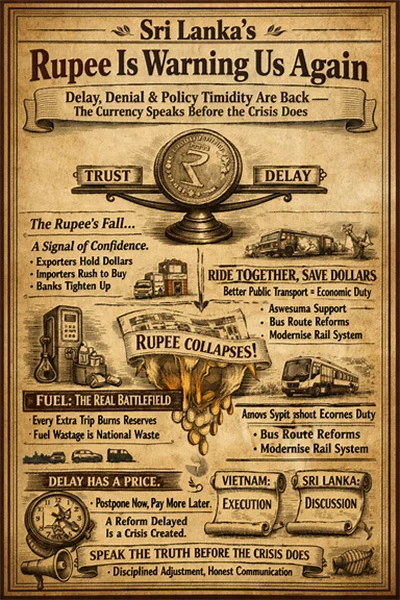 The government’s communication failure is equally serious. Leaders in India and Singapore have been willing to tell citizens that conditions are difficult and that behaviour must adjust. Use public transport. Reduce unnecessary consumption. Work from home where possible. Conserve fuel. Be careful with imports. These are not signs of weakness. They are signs of mature leadership.
In Sri Lanka, the message remains too soft. Officials appear afraid to say plainly that the country is not yet secure. The public is allowed to behave as if recovery means normalcy. Fuel is consumed, imports resume, roads fill, luxury vehicles appear, and private lifestyles continue with little sense of national constraint.
This is irresponsible. Citizens cannot be expected to act prudently if the state refuses to speak honestly. Economic management is not only about interest rates, reserves, and IMF reviews. It is also about shaping expectations. If leaders do not explain the seriousness of the situation early, the market will explain it later through far more painful consequences, such as runaway inflation and shortages of essential goods.
There is also a deeper governance problem. The issue today may not be crude corruption of the old kind. The more immediate danger may be hesitation. The government appears too slow in making necessary decisions. It overthinks. It delays. It waits. It consults. It hesitates. Meanwhile, markets move.
Delay is very expensive
In economics, delay is not neutral. Delay has a price. A decision postponed in May may become a crisis measure in August. A reform avoided today may become a forced adjustment tomorrow. The market does not wait for Cabinet comfort, bureaucratic neatness, or political messaging.
This is where Sri Lanka must learn from Vietnam, which did not become an investment magnet through speeches about development. It made decisions. It signed trade agreements. It improved investor access to land. It aligned policy with competitive advantage. It pushed digitalisation. It treated investment facilitation as practical statecraft, not ceremonial rhetoric.
Sri Lanka remains trapped in procedural delay. Land acquisition takes too long. Export-zone facilitation is too slow. Intellectual property reforms remain incomplete. The Madrid Protocol issue is not a minor technicality. For exporters and investors, brand protection, product security, and legal alignment with global systems matter. A country that cannot protect intellectual property cannot expect higher-value investment to arrive simply because officials request it.
The lesson is blunt: Investors do not reward potential. They reward execution. Sri Lanka has potential. It has always had potential. That is precisely the problem. Potential has become an excuse for underperformance. Vietnam converted potential into policy. Sri Lanka converted potential into discussion.
Disciplined adjustment means telling citizens the truth before the crisis does
If the country responds with another cycle of reassurance, delay, temporary restriction, and vague optimism, then the recovery will remain fragile. If, however, the government uses this moment to speak honestly, manage fuel demand, strengthen public transport, target subsidies, speed up reforms, and treat policy execution as urgent, the rupee’s warning may still be useful.
The choice is not between panic and denial. The choice is between disciplined adjustment and forced adjustment. Disciplined adjustment means telling citizens the truth before the crisis does. It means asking those who can work from home to do so. It means encouraging public transport while improving its quality. It means protecting the poor without subsidising waste. It means recognising that every unnecessary dollar spent today weakens the country’s room for manoeuvre tomorrow.
Forced adjustment is what happens when leaders avoid these choices. Then the exchange rate makes the decision. Prices make the decision. Queues make the decision. Import shortages make the decision. Public anger makes the decision, similar to Aragalaya in 2022. Sri Lanka has already paid once for denial. It should not pay again for hesitation.
The rupee is not only a price. It is a signal of trust. When it weakens, it tells us that markets are uncertain, citizens are unconvinced, and policy has not moved fast enough. The correct response is not to blame exporters, importers, consumers, or global conditions alone. The correct response is to govern. The country does not need another explanation after the damage is done. It needs timely action before the damage spreads.
That is the real message of this moment: the rupee is warning us again. This time, Sri Lanka must listen early.
(The writer, a senior Chartered
Accountant and professional banker,
is a professor at SLIIT, Malabe. Views expressed in this article are personal.)
The IMF staff and Sri Lankan authorities have reached a staff-level agreement to conclude the combined Fifth and Sixth Reviews of Sri Lanka’s reform programme under the Extended Fund Facility (EFF). If approved by the IMF Executive Board, Sri Lanka will gain access to about US$700 million in financing. While the IMF has acknowledged progress in reserves, growth, and revenue performance, it has also warned that Sri Lanka remains exposed to external shocks, including the Middle East conflict and the aftermath of Cyclone Ditwah.
This mixed picture of progress and vulnerability gives added significance to the recent warning by economist Dr. Ganeshan Wignaraja. Speaking on 4 May 2026 at a discussion held at the Regional Centre for Strategic Studies (RCSS) in Colombo, titled “A Global Economy in the Shadow of the Middle East War: Implications for Sri Lanka’s Debt Recovery,” he cautioned that Sri Lanka may once again have to consider the possibility of seeking further IMF assistance if current vulnerabilities are not addressed with urgency.
Dr. Wignaraja pointed out that although Sri Lanka’s current IMF programme is scheduled to conclude in 2027, the country will once again face major external debt repayment obligations beginning in 2028. At the same time, global economic instability, Middle Eastern conflicts, rising fuel prices, and climate-related disruptions could place Sri Lanka’s fragile recovery under renewed pressure.
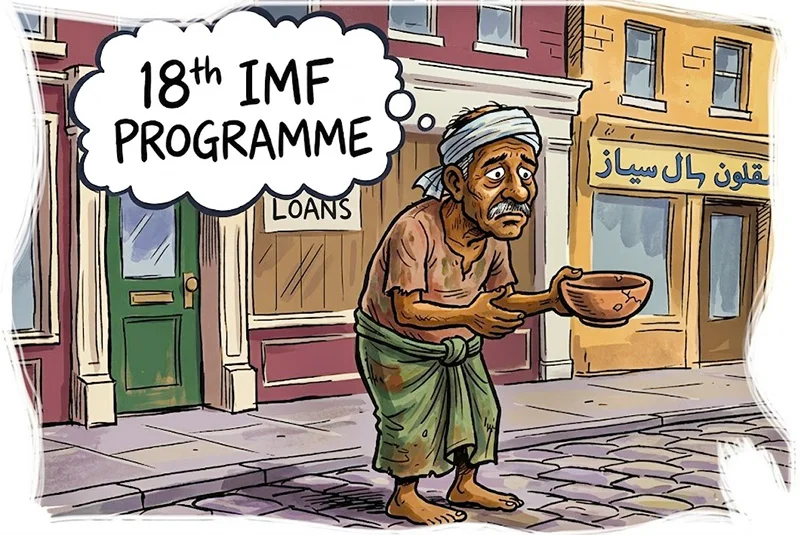
This is not merely an ordinary economic observation. It is a serious warning about the deep structural weaknesses that have shaped Sri Lanka’s economy for decades. In fact, turning to the IMF is not new for Sri Lanka. Since 1965, the country has entered into 17 IMF programmes, placing Sri Lanka among the nations that have relied most frequently on IMF assistance.
This recurring dependence is not simply the result of temporary financial shortages. It reflects deeper structural problems: weak productive capacity, insufficient export growth, poor fiscal discipline, and an economic model excessively dependent on borrowing. When a country repeatedly requires IMF support, it raises fundamental questions about the sustainability and resilience of its economic system.
According to Table 1.16, “Outstanding External Debt Position,” in the Central Bank of Sri Lanka’s Annual Economic Review 2025, Sri Lanka’s total external debt position at the end of 2025 was reported at USD 54.8 billion at market value and USD 56.2 billion at face value. Of this amount, the government’s external debt stood at approximately USD 36.7 billion at face value. In 2022, Sri Lanka suspended external debt repayments for the first time in its history, after which debt restructuring began under the IMF-supported programme. Although this provided short-term stability, many of the country’s core economic vulnerabilities remain unresolved.For example, Sri Lanka’s export earnings remain relatively low compared to GDP. Countries such as Vietnam, Bangladesh, and Thailand have transformed themselves into export-driven manufacturing economies, while Sri Lanka continues to depend heavily on tourism, worker remittances, and external borrowing for foreign exchange earnings.
Although tourism revenues and remittances improved somewhat during 2024 and 2025, these are not sufficiently stable foundations for long-term economic sustainability. External shocks such as Middle Eastern conflicts, fluctuations in global fuel prices, international market downturns, and climate-related disasters could disrupt these income sources at any time.
Dr. Wignaraja also emphasised that climate change itself may become a major factor affecting Sri Lanka’s future debt sustainability. Floods, droughts, and declining agricultural productivity increase food import costs and place further pressure on foreign exchange reserves, thereby worsening the country’s economic vulnerabilities.
At the same time, IMF programmes carry significant social costs. Since 2023, tax increases, electricity tariff revisions, reductions in government spending, and state-sector reforms have imposed severe pressures on ordinary citizens. The middle class has weakened considerably, poverty levels have risen, and many small and medium-sized enterprises have struggled to survive rising operational costs. Youth unemployment and migration aspirations have also intensified during this period.
Nevertheless, it must also be acknowledged that recovering from the 2022 crisis without IMF support would have been extremely difficult. The IMF not only provides financial assistance but also offers a framework of credibility that enables countries to secure support from institutions such as the World Bank, the Asian Development Bank, and other international lenders. In Sri Lanka’s case, the IMF programme helped restore a degree of investor confidence and international credibility.
However, the deeper problem lies elsewhere. Sri Lanka has repeatedly used IMF programmes as temporary crisis-management tools rather than as opportunities for genuine economic transformation. The 2024 review of the current IMF-supported Extended Fund Facility again highlighted several specific reform commitments that Sri Lanka was expected to continue. These included strengthening revenue mobilisation and tax administration, advancing public financial management and debt management reforms, maintaining cost-reflective fuel and electricity pricing to reduce fiscal risks from state-owned enterprises, improving governance and restructuring of state-owned enterprises and state-owned banks, and implementing stronger anti-corruption and governance reforms. The IMF also emphasized the need to protect vulnerable groups through better-targeted social safety nets while continuing fiscal consolidation.
More specifically, the 2024 programme review required stronger anti-corruption measures in revenue-collecting agencies such as Inland Revenue, Customs, and Excise; greater transparency in public procurement and tax exemptions; publication and implementation of governance reform action plans; stronger oversight of public assets; and reforms to improve the governance of state-owned banks. These were not merely technical conditions. They were meant to address the institutional weaknesses that have repeatedly pushed Sri Lanka back into external financing crises.
Yet Sri Lanka has historically struggled to fully implement such reforms. Tax administration, state-owned enterprise restructuring, public financial management, anti-corruption measures, and cost-reflective pricing have often been delayed, diluted, or weakened due to political resistance, weak institutions, and short-term policy decisions. As a result, IMF programmes have brought temporary stability, but not always lasting structural change. After almost every IMF programme, the country gradually returned to old habits: excessive government spending, politically driven populism, inefficient state-owned enterprises, and debt-financed development.
Therefore, the real issue is not simply whether Sri Lanka will enter an 18th IMF programme. The more important question is whether the country is capable of building an economy that no longer requires repeated IMF intervention.
Achieving this requires more than slogans or short-term political promises. It demands a clear and disciplined national economic strategy. Government expenditure must be prioritized carefully. Loss-making state-owned enterprises should be freed from political interference and placed under professional management. The tax system must broaden the revenue base fairly while encouraging investment and reducing tax evasion.
At the same time, Sri Lanka must transform itself into an export-oriented productive economy. Agriculture, manufacturing, tourism, information technology, port services, education services, and healthcare services should all be strategically developed as foreign exchange earning sectors. Investors do not seek tax concessions alone; they require policy consistency, legal stability, efficient approval processes, and an environment free from corruption.
True reform does not mean continuously burdening citizens with higher taxes and reduced living standards. Genuine reform means creating a more efficient state, reducing waste and corruption, increasing productivity, and expanding income-generating opportunities for ordinary people. Whether under an IMF programme or outside one, Sri Lanka urgently needs this kind of national economic discipline.
Ultimately, the IMF is not a symbol of economic success. It is an emergency support mechanism used during periods of crisis. The national objective should not be to secure yet another IMF programme, but to build an economy strong enough to function without repeated external rescue packages.
Otherwise, today’s question — “Will Sri Lanka need an 18th IMF programme?” — may eventually become “When will the 19th programme begin?”
That is not the future Sri Lanka should aspire to. The country does not need an economy that survives by repeatedly seeking external assistance. It needs a mature national economy that produces, exports, innovates, earns global confidence, and builds its future through its own strength and productivity.
by Professor Ranjith Bandara, PhD (Qld.,)
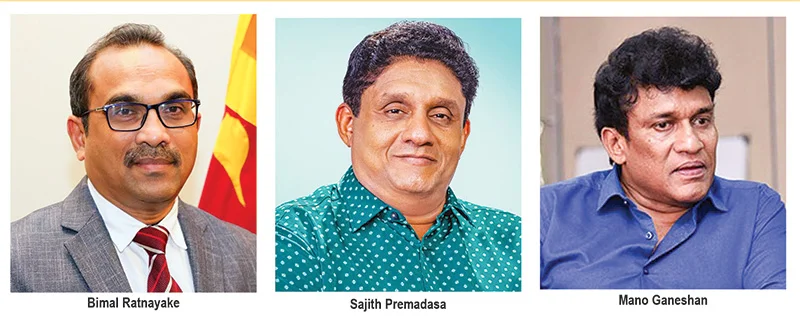
At a symposium on reconciliation organised by the National Peace Council last week, more than 250 religious clergy, civic activists and political representatives from different communities gathered to discuss the country’s future. Speaking at the event, Minister Bimal Rathnayake explained the government’s approach to national reconciliation. He said the government viewed the country’s recovery in terms of a three stage process. The first stage was stabilisation, the second was development and the third was transformation. Reconciliation, he implied, would come in that final stage. The participation of Opposition Leader Sajith Premadasa at the same symposium, and the constructive nature of his comments, strengthens that hope.
When the present NPP government took office in 2024, the country was emerging from one of the gravest crises in its post Independence history. The economic collapse of 2022 had led to shortages of fuel, food, medicines and electricity. Inflation soared, foreign reserves disappeared and long queues became part of daily life. The political upheaval that followed culminated in the resignation of former President Gotabaya Rajapaksa after mass public protests under the banner of the Aragalaya movement. The country was then governed by a leadership that spoke the language of reform and reconciliation but was widely perceived as lacking a direct popular mandate.
Sri Lanka’s past experience suggests that stabilisation and transformation cannot be treated as entirely separate stages. Postponing reconciliation until some future moment risks repeating the failures of the past. If transformation is endlessly delayed until a supposedly perfect moment arrives, there will always be new crises and new reasons for postponement. Minister Rathnayake’s contention that the government’s immediate priority has necessarily been stabilisation flows from the government’s awareness of the precarious situation the country is. Over the past two years, the government has succeeded to a significant extent in restoring economic and political stability. Inflation has reduced, shortages have ended and public institutions have regained a degree of functionality.
Guaranteed Changes
On the other hand, the country’s development continues to face challenges due to adverse global conditions, including disruptions caused by conflict in the Middle East and extreme weather events that have affected tourism, trade and the cost of living. The danger is that reconciliation may be indefinitely postponed in the name of stabilisation. This danger can be reduced if the government works proactively with the opposition and civil society to commence practical measures of transformation now rather than later. The participation of Opposition Leader Sajith Premadasa at the symposium, and the constructive nature of his comments, has strengthened the sense that bipartisan engagement on reconciliation may now be possible.
The urgency of transformation came through strongly in the presentations made by representatives of the Sri Lanka Tamil and Malaiyaha Tamil communities. ITAK parliamentarian S.Shritharan spoke of the frustration caused by unresolved post war issues in the north and east. He referred to disputes regarding land occupied during the war years, including controversies linked to Buddhist temples and state sponsored settlement activity in areas claimed by local communities. He also pointed to the continuing large scale presence of the security forces in the north and east nearly two decades after the end of the war. These grievances have remained central to Tamil political discourse since the end of the armed conflict in 2009. Families displaced by war continue to seek the return of ancestral lands. Civil society organisations in the north have repeatedly called for greater civilian control over local administration and a reduction in military involvement in civilian life.
Academic research and practical work on the ground have shown that reconciliation cannot be separated from questions of dignity, equality and justice. Former minister Mano Ganesan, leader of the Democratic People’s Front, focused on the longstanding problems faced by the Malaiyaha Tamil community. He spoke passionately about continuing housing shortages, landlessness and economic marginalisation, issues that have persisted since Independence. He also highlighted the devastating impact of recent extreme weather events on estate communities that remain socially and economically vulnerable. The condition of the Malaiyaha Tamil community remains one of the enduring social justice issues in Sri Lanka.
After Independence in 1948, a large proportion of them were denied citizenship and voting rights through legislation that rendered them stateless. Though citizenship rights were eventually restored, the social and economic consequences of exclusion continue to be felt generations later.
Many families still lack secure housing and land ownership despite their immense contribution to the country’s plantation economy. Minister Rathnayake’s responses to both these concerns were politically significant. He argued that recent political developments, including the declining influence of narrow ethnic politics across communities, indicated a major shift in public attitudes. According to him, the political ground has changed in ways that make it increasingly difficult for politicians who rely primarily on ethnic division and communal insecurity to retain public support.
Inter-Connected
There is evidence to support the assessment about the changing political grounding which sees future prospects in the resolution of long standing problems. . The economic collapse of 2022 affected all communities alike and generated a new politics centred on governance, anti corruption, accountability and economic justice. The Aragalaya protests brought together Sinhalese, Tamils and Muslims in a common demand for political change. Although ethnic grievances have not disappeared, the crisis created space for a broader understanding that the country’s future depends on cooperation rather than division. Opposition Leader Premadasa’s comments at the symposium reflected this changing political climate. He emphasised that national reconciliation could not be separated from economic justice and the need to address disparities between regions and social classes.v He also mentioned the need for civil society organisations to take this message to the community. This wider understanding of reconciliation is important because ethnic inequality and economic inequality have often reinforced each other in Sri Lanka’s history.
Academic studies have identified the denial of citizenship rights after Independence as a historic injustice that set back the Malaiyaha community for decades. The challenge now is to ensure that transformation becomes part of the stabilisation and development process itself. Practical first steps are both possible and necessary. The release of civilian lands still under state control, greater devolution of administrative authority, reduction of military involvement in civilian affairs, language equality in public administration and accelerated housing and land ownership programmes in the plantation sector are all measures that can begin immediately without waiting for a final stage of transformation.
The government’s recent commitment that provincial council elections will finally be held this year is therefore significant. These elections have been repeatedly postponed by successive governments. Holding them would not solve the ethnic conflict by itself. But it would signal a willingness to restore democratic institutions and share power in a meaningful way.
Sri Lanka has repeatedly postponed difficult reforms in the hope that a more convenient political moment would eventually arrive. But opportunities are invariably created and fought for instead of being provided as a gift by a benevolent government.
The present moment, shaped by the economic crisis and public demand for accountable government, offers a rare opportunity to move simultaneously towards stability, development and reconciliation. Provincial council elections can be the first meaningful step. But they must not be the last.
by Jehan Perera

Five people found alive after week trapped in flooded Laos cave

Peace deal to fully reopen Hormuz as US military pulls out

World Cup contenders England and India hope to get their combinations right

Do not be misled by Fake news created using the PM’s name, photographs, and video footage – Prime Minister’s Media Division

Israeli strike in Gaza City kills new head of Hamas’s military wing

Sri Lanka Cricket launch a program to enhance coaching standards of school cricket

‘Dates have the highest sugar content to fight Coronavirus’

Sunday Island 27 December – Headlines

#SundayIsland 17th December – Headlines

Sunday Island – 28th March

Sunday Island Headlines – 21 March

Sunday Island – 21st February – Headlines
-

 Business6 days ago
Historic launch of CCWE Fashion Week & International Summit 2026
-

 Opinion7 days ago
Murder of Ehelepola family, Bogambara Wewa and Sightings of Wangediya
-
 News7 days ago
Steps underway to safeguard Sri Lanka’s maritime heritage
-

 News4 days ago
All-New GRAVITE launches at LKR 6.99 Mn
-
 News3 days ago
Police probe underway to ascertain links between criminals deported from UAE and local politicians
-
 Features4 days ago
The NPP’s pivot to the past
-
 News2 days ago
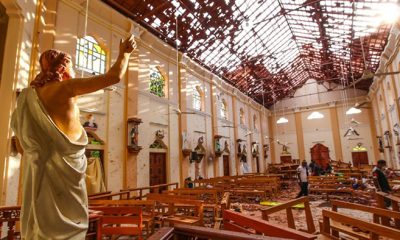
Easter Sunday carnage: Court told Maulana’s statement cannot be accepted without cross-examination
-

 Opinion6 days ago
The need to reform Buddhist ecclesiastical order