
News
Teachers threaten strike against education reforms and ‘bid to shut down more than 1,500 schools’


Eight schools already closed down in NCP – CTU
More than 1,500 schools across Sri Lanka have been earmarked for closure under proposed education reforms, sparking outrage among the trade unions of teachers and principals. The move, which, unions claim, is being carried out at the behest of the International Monetary Fund (IMF), has drawn widespread opposition from educators, parents, and students.
According to the Teachers and Principals Trade Union Alliance, a total of 1,508 schools, including eight from the North Central Province, the home province of President Anura Kumara Dissanayake, are set to be closed down. The closures reportedly target schools with fewer than 50 students each, as part of a government plan to “rationalise resources” in the education sector, according to President of the Ceylon Teachers’ Union (CTU) Priyantha Fernando.
Trade unions of teachers and principals have announced plans for a countrywide strike in the coming weeks in protest against both the proposed school closures and the government’s decision to extend school hours by 30 minutes with effect from 2026. Under the reform package, school hours would run until 2:00 p.m. for students in Grade 7 and above.
At a recent CTU conference in Anuradhapura, the representatives of teachers and principals accused the Ministry of Education of planning to implement “unresearched and arbitrary” reforms. “Extending school hours does not address the real problems in our education system,” said Joseph Stalin, General Secretary of the CTU.
“The ministry is pushing through changes without proper consultation or pilot testing. If this fails, it will be the children who suffer.”
Stalin alleged that key officials at the National Education Institute lacked the qualifications relevant to their positions, claiming that those leading the Mathematics and Science divisions held arts degrees. He also argued that the reforms were not new, but rather a revival of those proposed under the Gotabaya Rajapaksa administration.
The unions have issued a 07 November deadline for the government to withdraw or amend the decisions. Failing that, they plan to launch a one-day strike at the commence of the new school term in December, followed by larger coordinated trade union action early next year.
Meanwhile, Education Secretary Nalaka Kaluwewa defended the reforms, insisting that they were essential to modernising Sri Lanka’s education system. “We have consulted all major stakeholders, and the time adjustment is a necessary component of the new module-based and credit-based learning system,” he said.
Prime Minister and Education Minister Dr. Harini Amarasuriya has stressed that there is no plan to close down schools.
Despite the ministry’s assurances, unions remain adamant. “If the government continues to ignore our concerns,” Stalin warned, “we will unite all teachers and principals for a massive countrywide strike.”
All trade unions in the education sector, except the ones affiliated to the JVP, have closed ranks to campaign against the proposed educational reforms.
by Saman Indirajith ✍️





Convenor of the Samagi Joint Trade Union Alliance affiliated with the Samagi Jana Balawegaya, Ananda Palitha, yesterday (16) said that the Ceylon Electricity Board was seeking to raise electricity tariffs by 13.56% percent although it had earned a profit of more than Rs 22,000 mn.
The CEB recently submitted its proposal to the Public Utilities Commission of Sri Lanka (PUCSL) for an electricity tariff revision for the second quarter of this year – the period effective from April 1 to June 30.
Palitha alleged that the PUCSL, in spite of knowing the massive profit earned by the CEB, at the expense of the hapless public, had chosen to allow the state enterprise to propose an additional burden.
The economic, technical and safety regulator of the electricity industry, and the designated regulator for petroleum and water services industries, should exercise its powers in terms of the PUCSL Act No. 35 of 2002 and the Sri Lanka Electricity Act No. 20 of 2009 to provide relief, the veteran trade unionist said.
Palitha emphasised that the PUCSL had the right to intervene on behalf of electricity consumers but, unfortunately, chose to facilitate the CEB’s despicable strategy. “The proposal to increase tariffs by 13.56% was meant to divert attention. The real issue at hand is the percentage of electricity tariff reduction,” Palitha said. The former UNPer found fault with the Opposition for failing to expose the CEB.
Taking into consideration the Rs 22,000 millionplus profit, the PUCSL could order the CEB to grant relief to consumers, Palitha said, adding that the CEB and PUCSL, together, deprived electricity consumers tariff reduction in the first quarter of this year, too.
In January this year, the CEB asked for a 11.59% tariff increase though it was enjoying Rs 22,000 mn profit at that time, the trade unionist said.
Palitha said that as the PUCSL received all data available to the CEB it was fully aware of the finances of the state enterprise.
In January, 2025, regardless of the NPP government floating the idea regarding as much as a 37% tariff increase, the PUCSL granted a 20% tariff reduction (25% of Rs 22,000 mn profit), Palitha said.
According to him, as a result of relief granted to the consumers, the profits had been reduced to Rs 16,000 mn but by June 2025 profits had increased to Rs 18,000 mn and there was a need to grant tariff reduction. But, the NPP, having always lashed out at the International Monetary Fund (IMF) in the run up to the presidential election, held in September 2024, started playing a different tune.
Responding to The Island queries, Palitha said that contrary to claims that the CEB proposed a 13.56% tariff increase to cover up losses caused by the importation of low-quality coal for the Norochcholai Lakvijaya coal-fired power plant, the current strategy seemed to have been adopted at the behest of the IMF.
Instead of granting tariff reduction for the third quarter in 2025, the PUCSL ordered an 18% increase, Palitha said. The trade unionist claimed that the Finance Ministry, at the behest of the IMF, directed both the CEB and the PUCSL to increase electricity tariffs by 20% in violation of the relevant Acts, he said.
Then in Oct, 2025, the CEB proposed a 6.8 % tariff increase at a time its profits were around Rs 22,000 mn. The CEB and PUCSL staged a drama over that proposal and finally, on the false pretext of the CEB’s failure to furnish its proposal on time, the revision was dropped, Palitha said. The SJB activist pointed out that the Opposition failed to highlight that consumers had been deprived of downward revision in spite of massive profits earned by the Board. “In fact, when Energy Minister Kumara Jayakody met trade unions, he very clearly declared that they were considering electricity power reduction, perhaps by 10%, 12% or 15%. But in the end nothing happened.”
Now the same drama is being enacted by the government, the CEB and the PUCSL, Palitha said.
By Shamindra Ferdinando
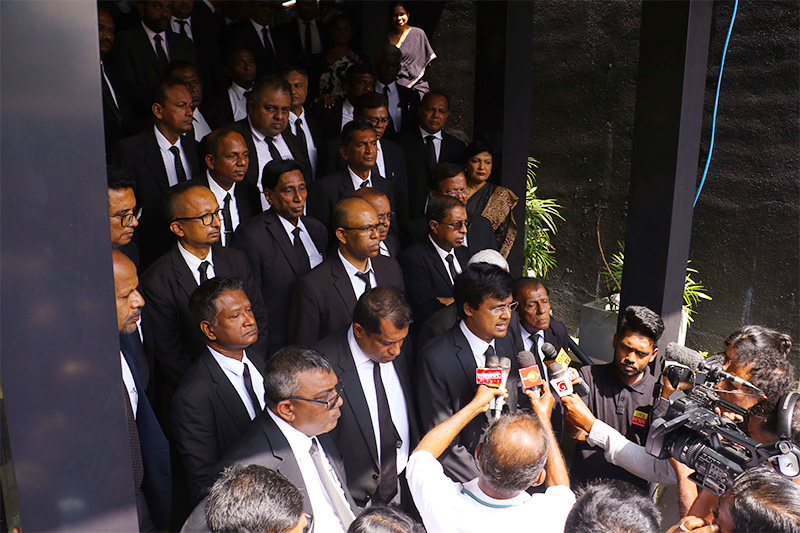
Members of the BASL yesterday (16) staged a protest march over the murder of a lawyer and his wife in Akuregoda, Thalangama, last week. The BASL staged a protest march from the Supreme Court Complex to the BASL Head Office.
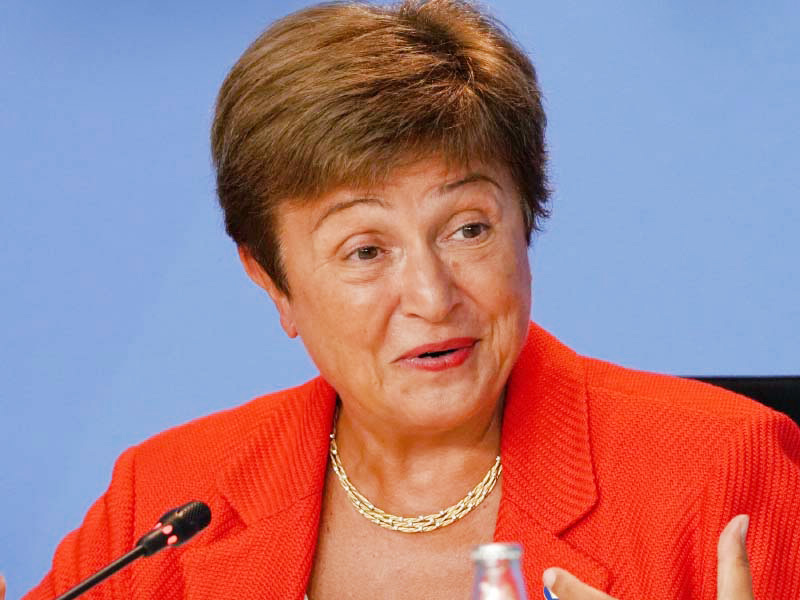
Managing Director of the International Monetary Fund (IMF) Kristalina Georgieva arrived in Colombo yesterday (16) for top level discussions with the government. She is scheduled to leave tomorrow (18) after meeting government authorities and key stakeholders, observing firsthand the impact of Cyclone Ditwah, and discussing ways in which the IMF could support recovery efforts and contribute to building a more resilient future for all Sri Lankans, sources said.

Nepal, Scotland chase win to close out what-if tournament

How dark web agent spotted bedroom wall clue to rescue girl from years of harm

US build-up of warships and fighter jets tracked near Iran

Showers above 75 mm are likely at some places in the Central, Uva and Eastern provinces and in Polonnaruwa district

Zimbabwe take on Ireland with clarity about Super Eights path

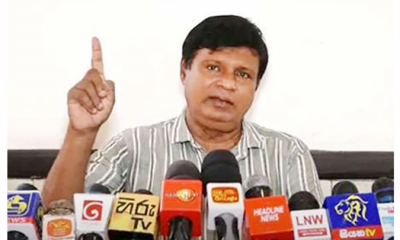
CEB seeking tariff hike while making huge profits, says opposition trade union leader

‘Dates have the highest sugar content to fight Coronavirus’

Sunday Island 27 December – Headlines

#SundayIsland 17th December – Headlines

Sunday Island – 28th March

Sunday Island Headlines – 21 March

Sunday Island – 21st February – Headlines
-
 Life style2 days ago
Marriot new GM Suranga
-

 Business1 day ago
Ministry of Brands to launch Sri Lanka’s first off-price retail destination
-

 Features2 days ago
Monks’ march, in America and Sri Lanka
-

 Midweek Review6 days ago
A question of national pride
-

 Business6 days ago
Autodoc 360 relocates to reinforce commitment to premium auto care
-
 Opinion5 days ago
Will computers ever be intelligent?
-
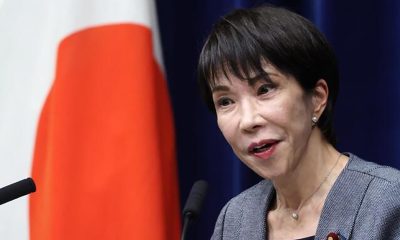
 Features2 days ago
The Rise of Takaichi
-

 Features2 days ago
Wetlands of Sri Lanka: